Ingredients
Scale
For the Sponge Cake:
- 1 cup (225g) unsalted butter, softened to room temperature
- 1 cup (200g) caster sugar (superfine sugar)
- 4 large eggs, at room temperature
- 2 cups (250g) self-rising flour
- 2 teaspoons pure vanilla extract
- 2 tablespoons whole milk
- Pinch of salt (if using regular self-rising flour)
For the Filling:
- ¾ cup (240g) high-quality raspberry jam (seedless preferred)
- 1 cup (240ml) heavy whipping cream, cold
- 2 tablespoons powdered sugar, plus extra for dusting
- ½ teaspoon vanilla extract
Instructions
Prepare for Baking:
- Preheat and prep pans: Preheat your oven to 350°F (180°C, Gas Mark 4). Grease two 8-inch round cake pans with butter, then line the bottoms with parchment paper circles. Grease the parchment as well and dust lightly with flour, tapping out excess. This ensures easy release after baking.
- Bring ingredients to room temperature: Make sure your butter is soft enough to leave an indent when pressed (about 65-68°F), and your eggs aren’t cold from the fridge. This is crucial for proper mixing and texture.
Make the Cake Batter:
- Cream butter and sugar: In a large bowl using an electric mixer, beat the softened butter on medium speed for 1 minute until smooth. Add the caster sugar and beat on medium-high speed for 3-4 minutes until the mixture is very pale, light, and fluffy. It should look almost white and have increased in volume. Scrape down the sides of the bowl halfway through.
- Add eggs one at a time: Add eggs one at a time, beating well after each addition (about 30 seconds per egg). The mixture should look smooth and creamy after each egg. If it starts to look curdled, add 1 tablespoon of flour and continue. Don’t worry—it will come together.
- Add vanilla: Beat in the vanilla extract until just combined.
- Fold in flour: Sift the self-rising flour directly over the batter. Using a rubber spatula or large metal spoon, gently fold the flour into the mixture using a figure-eight motion. Fold just until no flour streaks remain—overmixing will create a tough cake.
- Add milk: Add the milk and fold gently just until the batter is smooth and has a soft dropping consistency. The batter should fall from the spoon slowly when lifted. If it’s too stiff, add another tablespoon of milk.
Bake the Cakes:
- Divide batter: Divide the batter evenly between the two prepared pans. Use a kitchen scale for accuracy, or eyeball it—each pan should get about 500g of batter. Smooth the tops gently with a spatula, making a very slight dip in the center (this helps the cakes rise evenly).
- Bake: Place both pans on the middle rack of your preheated oven, spacing them apart so air can circulate. Bake for 23-25 minutes, until the cakes are golden brown, spring back when lightly touched in the center, and a toothpick inserted into the center comes out clean or with just a few moist crumbs.
- Cool in pans: Remove from oven and let the cakes cool in their pans for 5 minutes. This allows them to set and makes them easier to handle.
- Turn out and cool completely: Run a knife around the edges of each pan to loosen. Invert the cakes onto a wire cooling rack, peel off the parchment paper, then flip them right-side up. Let cool completely before filling—at least 30 minutes. Warm cakes will melt the cream and make the jam run.
Prepare the Filling:
- Whip the cream: In a chilled bowl using clean, chilled beaters, whip the cold heavy cream on medium speed until it starts to thicken. Add the 2 tablespoons powdered sugar and vanilla extract, then continue whipping on medium-high speed until stiff peaks form. Don’t overbeat or it will turn to butter—stop when the cream holds its shape firmly.
Assemble the Cake:
- Choose the bottom layer: Select the cake layer that’s most even and place it on your serving plate or cake stand, flat-side up. If the cakes have domed significantly, you can level them by slicing off the dome with a serrated knife, though this isn’t traditional.
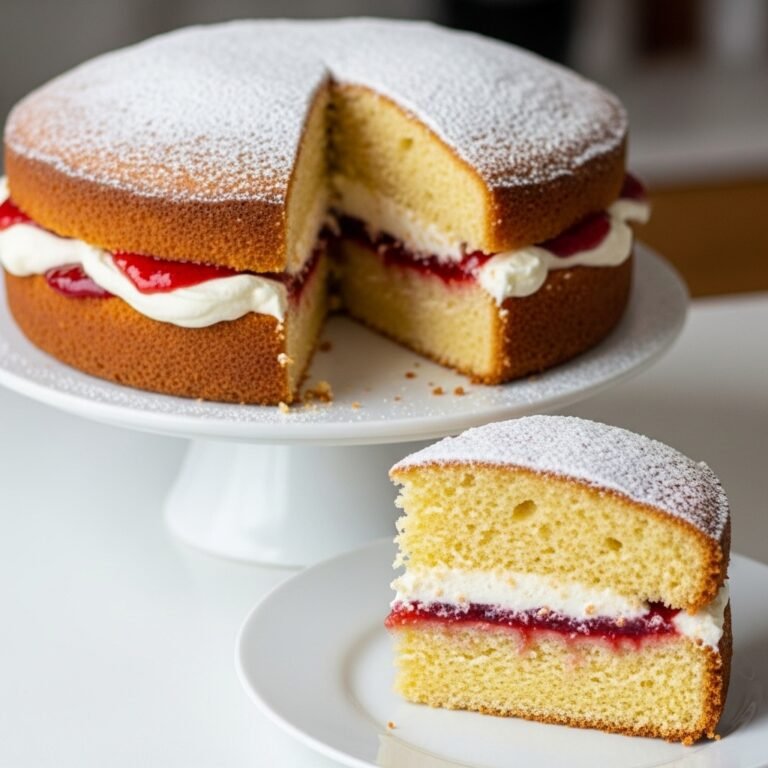
- Spread the jam: Spread the raspberry jam evenly over the bottom layer, going all the way to the edges but leaving about ¼ inch border. Use about ¾ cup jam—don’t be stingy! The jam layer should be visible and generous.
- Add the cream: Spoon or pipe the whipped cream over the jam layer, spreading it evenly but keeping it slightly mounded in the center. The weight of the top layer will spread it naturally.
- Top layer: Carefully place the second cake layer on top, flat-side down. Press very gently to help the layers adhere, but don’t squash all the cream out.
- Final touch: Place a paper doily or a stencil on top if desired (for a pretty pattern), then dust generously with powdered sugar using a fine-mesh sieve. Remove the doily carefully if using one. Traditionally, Victoria Sponge has only a simple dusting of sugar on top—no frosting on the sides.
- Serve: Let the assembled cake sit for 15-20 minutes before slicing to allow the filling to set slightly. Cut with a sharp knife, wiping it clean between slices for neat portions.
Notes
- Measuring flour correctly: Spoon flour into your measuring cup and level it off with a knife. Don’t pack it down or scoop directly from the bag, as this adds too much flour and creates a dry cake.
- Testing doneness: The cake should spring back when lightly touched in the center and pull away slightly from the pan sides. Overbaking creates a dry sponge.
- Room temperature ingredients are essential: Cold eggs can curdle the butter mixture, and cold butter won’t cream properly. Plan ahead!
- Don’t skip the cooling time: Warm cakes will melt the cream and make assembly messy and difficult.
- Traditional filling: Authentic Victoria Sponge uses only jam (no cream), but the cream version has become equally traditional and beloved.
- Prep Time: 20 minutes
- Cook Time: 25 minutes
- Category: Desert
- Method: Baking
- Cuisine: British
- Diet: Vegetarian
Nutrition
- Serving Size: 1 slice (1/10 of cake)
- Calories: 445
- Sugar: 38g
- Sodium: 220mg
- Fat: 2g
- Saturated Fat: 15g
- Unsaturated Fat: 8g
- Trans Fat: 0g
- Carbohydrates: 51g
- Fiber: 1g
- Protein: 5g
- Cholesterol: 135mg