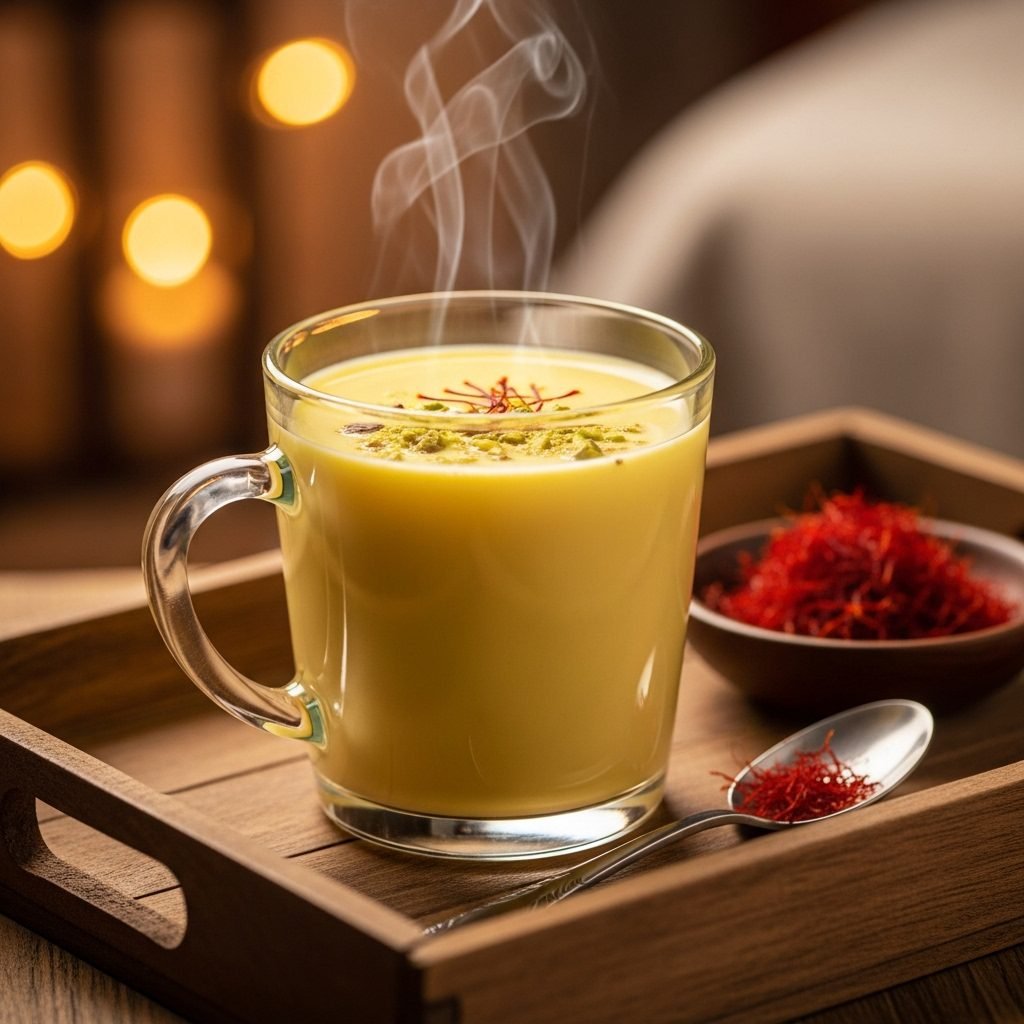
Golden Saffron Milk Recipe: The Luxurious Bedtime Drink That Soothes & Nourishes

Imagine sipping on liquid gold—warm, fragrant, and utterly comforting. That’s saffron milk, or “kesar doodh” as it’s known in India. This ancient beverage is essentially warm milk infused with precious saffron threads, a touch of sweetness, and aromatic spices that create the most soothing, luxurious drink you can imagine. It’s the kind of beverage that makes you feel instantly pampered and cared for.
Saffron milk isn’t just delicious—it’s been treasured for thousands of years for its potential health benefits and calming properties. The beautiful golden-yellow color comes from the saffron threads, which are actually the most expensive spice in the world. But don’t worry—you only need a tiny pinch to create this magical drink, making it surprisingly affordable for such an elegant treat.
This warming beverage is traditionally served before bedtime in many Indian households, believed to promote restful sleep and overall wellness. However, it’s also wonderful as a morning ritual, an afternoon pick-me-up, during cold winter months when you need warming from the inside out, or when you’re feeling under the weather and need something nourishing and comforting. Pregnant women in India often drink saffron milk (in moderation after the first trimester), and it’s served to celebrate special occasions and festivals.
The best part? You can make this restaurant-quality, ancient wellness drink in your own kitchen in just 10 minutes with ingredients you might already have. It requires minimal effort but delivers maximum comfort and sophistication. Whether you’re looking to establish a calming bedtime routine, want to try traditional remedies for better sleep, or simply love exploring new flavors, saffron milk is about to become your new favorite ritual.
History / Background
Saffron milk has a rich, fascinating history that stretches back thousands of years across multiple ancient civilizations. Saffron itself—those precious crimson threads harvested from the Crocus sativus flower—has been one of the world’s most valuable commodities since antiquity, prized not just as a spice but as a medicine, dye, and symbol of wealth and luxury.
The use of saffron in milk dates back to ancient Persia (modern-day Iran), where saffron cultivation began around 3,500 years ago. Persian royalty and nobility consumed saffron-infused beverages for their purported health benefits and as a display of opulence. Historical texts describe saffron being used in various milk-based preparations served at royal banquets and as medicinal tonics prescribed by Persian physicians.
From Persia, saffron traveled along ancient trade routes to India, where it became deeply embedded in Ayurvedic medicine—the traditional Indian system of healing that dates back over 5,000 years. In Ayurvedic texts, saffron is classified as having heating properties that balance the body’s doshas (biological energies). Saffron milk, or “kesar doodh,” became a staple remedy recommended for improving complexion, enhancing mood, promoting restful sleep, supporting digestion, and boosting overall vitality.
In traditional Indian culture, saffron milk holds special significance during pregnancy (typically consumed after the first trimester), as it’s believed to contribute to the baby’s fair complexion—though this is more cultural belief than scientific fact. New brides are often served saffron milk as a welcoming gesture in their new homes. During festivals like Diwali and special celebrations like weddings, saffron milk is offered to guests as a mark of hospitality and respect.
The Mughal Empire, which ruled much of India from the 16th to 19th centuries, elevated saffron milk to an art form. The Mughal courts, known for their sophisticated cuisine influenced by Persian traditions, served elaborate versions of saffron milk flavored with additional aromatics like cardamom, rose water, and garnished with nuts. These royal recipes filtered down through generations, evolving into the versions we enjoy today.
In Kashmir, the northernmost region of India where some of the world’s finest saffron is cultivated in the high-altitude plateaus of Pampore, saffron milk is known as “Kong Dhood” and is an integral part of daily life and the traditional Kashmiri tea ceremony called “Kahwa.” Kashmiri saffron, with its deep red color and intense aroma, is considered among the finest globally, and locals take great pride in their saffron-infused beverages.
Beyond South Asia, saffron milk variations exist in Middle Eastern cultures, Spanish traditions (though less common), and have recently gained popularity in wellness communities worldwide as people discover ancient food wisdom and seek natural remedies for modern stressors. The global interest in Ayurveda, mindfulness, and holistic health has brought saffron milk from ancient tradition into contemporary wellness culture, making it a bridge between timeless wisdom and modern lifestyle.
Why You’ll Love This Recipe
This saffron milk recipe is about to transform your evening routine and introduce you to one of the most elegant, comforting drinks in the world. It’s the kind of beverage that makes you feel like royalty without requiring royal effort or expense.
What I absolutely love about saffron milk is how it engages all your senses—the gorgeous golden color is visually stunning, the aroma is deeply calming and exotic, and that first sip delivers warmth, subtle sweetness, and complex flavors that feel both familiar and wonderfully different. It’s like a warm hug in a mug, but with sophistication.
Here’s why you’re going to fall head over heels for this saffron milk recipe:
- Ready in 10 minutes – Faster than your favorite TV show intro, you’ll have this luxurious drink in hand
- Only 5 core ingredients – Simple pantry staples plus those special saffron threads
- Naturally calming – Traditionally used to promote relaxation and better sleep quality
- Gorgeous presentation – That golden hue makes it absolutely Instagram and Pinterest-worthy
- Rich in tradition – You’re sipping on thousands of years of cultural wisdom
- Potential wellness benefits – Saffron has been studied for mood support, antioxidant properties, and more
- Affordable luxury – A little saffron goes a long way, making this an accessible indulgence
- Naturally gluten-free – Perfect for those with gluten sensitivities
- Kid-friendly option – Children can enjoy this nourishing drink (just adjust sweetness)
- Impressive yet easy – Guests will think you’ve gone to extraordinary lengths
- Customizable warmth – Adjust spices and sweetness to your exact preferences
- Gentle on digestion – Warm milk with beneficial spices can be soothing to the stomach
- Perfect cold-weather drink – Ideal for cozy nights, holiday gatherings, or winter wellness routines
Whether you’re a wellness enthusiast exploring Ayurvedic traditions, someone seeking better sleep naturally, a foodie who loves trying exotic flavors, or simply someone who appreciates a beautiful, comforting beverage, this saffron milk recipe delivers on every level. It’s sophisticated enough to impress yet simple enough to become part of your regular routine.
Ingredient Notes
The magic of saffron milk lies in the quality and balance of just a few key ingredients. Let’s talk about what makes this drink so special:
Saffron Threads: These are the star ingredient—those precious crimson-red threads that give the drink its name, color, and distinctive flavor. Saffron is the world’s most expensive spice because it must be hand-harvested from crocus flowers (each flower yields only three stigmas), requiring about 75,000 flowers to produce one pound of saffron. But don’t let that scare you—you only need 8-10 threads (about a large pinch) per serving, making it quite affordable. Look for high-quality saffron with deep red threads and minimal yellow or white parts. Spanish, Kashmiri, and Iranian saffron are considered the finest. Store saffron in an airtight container away from light to preserve its potency. Important: Make sure you’re buying real saffron threads, not cheap imitations or “safflower” which is sometimes misleadingly sold as saffron. Real saffron has a distinctive honey-like, slightly earthy aroma and costs roughly $10-15 per gram (which lasts quite a while since you use so little). Avoid powdered saffron for this recipe as it’s easier to use too much and harder to verify authenticity.
Milk: The base of your drink! Whole milk creates the richest, most luxurious saffron milk with a beautifully creamy texture that feels indulgent. The fat in whole milk also helps extract and carry the flavor compounds from saffron more effectively. However, 2% milk works perfectly well if you prefer something lighter, and skim milk is acceptable though noticeably thinner. For traditional preparation, many Indian households use full-fat buffalo milk, which is even richer than cow’s milk. Non-dairy options: Full-fat coconut milk (from a can) creates a wonderfully creamy, slightly sweet saffron milk with tropical undertones. Cashew milk is another excellent dairy-free option with a naturally creamy texture. Oat milk works well and has a mild sweetness. Almond milk is okay but tends to be thinner—choose unsweetened “barista” or “extra creamy” versions for best results. Whatever milk you choose, you’ll want about 1½ to 2 cups per serving.
Sweetener: Traditionally, sugar or honey is used to sweeten saffron milk. The sweetness should be gentle and balanced, not overwhelming—you want to enhance the saffron’s flavor, not mask it. White sugar is most common and dissolves easily in warm milk. Honey adds complexity and has its own wellness properties that complement saffron beautifully—choose raw, unprocessed honey when possible. Jaggery (unrefined cane sugar) is traditional in Indian households and adds a deep, caramel-like sweetness with mineral richness. Maple syrup, coconut sugar, or date syrup work wonderfully as alternatives. For sugar-free versions, stevia or monk fruit sweetener can be used, though start with less as they’re more intensely sweet. The amount of sweetener needed varies by personal preference—start with 1-2 teaspoons and adjust to taste.
Cardamom: This aromatic spice is optional but highly traditional and absolutely transforms saffron milk from simple to sublime. Cardamom has a warm, sweet-spicy flavor with notes of citrus and mint that complements saffron perfectly. Use freshly ground cardamom from green cardamom pods for the best, most vibrant flavor—the pre-ground stuff loses potency quickly. You’ll only need a tiny pinch (⅛ teaspoon or 1-2 crushed pods’ worth of seeds) as cardamom is quite potent. If you don’t have cardamom, a tiny bit of cinnamon or nutmeg can substitute, though the flavor profile will be different.
Optional Additions – Nuts: Sliced almonds, pistachios, or cashews are commonly added to saffron milk, either blended into the drink for creaminess or used as garnish for texture. Almonds are believed in Ayurveda to be brain-nourishing and are often soaked overnight and peeled before adding. Nuts add healthy fats, protein, and make the drink more substantial—almost like a light meal.
Optional – Rose Water: Just a few drops (¼ teaspoon maximum) of food-grade rose water adds a delicate floral note that pairs beautifully with saffron. This is common in Mughlai-style preparations and creates a more complex, perfumed drink. Don’t overdo it—rose water is potent!
Warm Water for Blooming: You’ll need 2 tablespoons of warm water or warm milk to “bloom” or steep the saffron threads before adding them to your milk. This crucial step helps release the saffron’s color, flavor, and beneficial compounds more effectively.
Equipment Needed
The wonderful thing about making saffron milk is that you need minimal, basic kitchen equipment that you almost certainly already own:
- Small saucepan or milk pot: For heating the milk—a 2-quart saucepan works perfectly. A heavy-bottomed pan helps prevent scorching.
- Small bowl or cup: For blooming the saffron threads in warm water before adding to milk
- Measuring spoons and cups: For accurate measurements, especially of saffron (which is precious!) and sweetener
- Whisk or spoon: For stirring the milk as it heats and ensuring even distribution of flavors
- Serving mug or cup: Choose something heat-safe and pretty—saffron milk deserves a beautiful presentation! Traditional clay cups, glass mugs, or decorative ceramic cups all work wonderfully.
- Mortar and pestle (optional): If you’re grinding whole cardamom seeds or want to crush your saffron threads slightly before steeping
- Fine-mesh strainer (optional): If you’ve added whole spices or nuts that you want to strain out before serving
- Milk frother or immersion blender (optional): For creating a frothy, cafe-style top on your saffron milk
That’s it! No fancy equipment, no complicated gadgets—just simple tools for a simple but elegant drink. The focus here is on quality ingredients rather than specialized equipment.
Print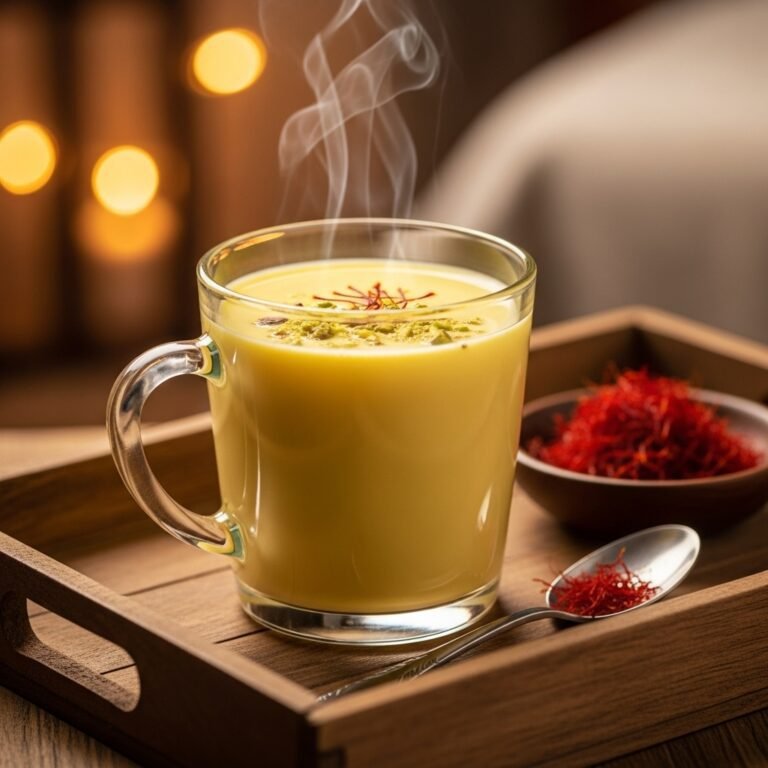
Saffron Milk Recipe
This luxurious Saffron Milk (Kesar Doodh) is a traditional Indian beverage made with warm milk infused with precious saffron threads, cardamom, and a touch of sweetness. It’s naturally calming, nourishing, and perfect for bedtime or whenever you need comfort in a cup!
- Total Time: 10 minutes
- Yield: 1 large serving (can easily be multiplied) 1x
Ingredients
- 8-10 saffron threads (a generous pinch)
- 2 tablespoons warm water or warm milk (for blooming saffron)
- 1½ cups whole milk (or milk of choice)
- 1-2 teaspoons sugar or honey (adjust to taste)
- ⅛ teaspoon ground cardamom (or seeds from 1-2 green cardamom pods, crushed)
- Pinch of ground nutmeg (optional)
- 1 tablespoon sliced almonds or pistachios, blanched and chopped (optional)
- 2-3 drops rose water (optional)
- Extra saffron threads for garnish (optional)
Instructions
- Bloom the saffron: This is the most important step! Place the saffron threads in a small bowl and add 2 tablespoons of warm (not boiling) water or warm milk. Use your fingers or the back of a spoon to gently crush the threads slightly against the bowl—this helps release their color and flavor. Let this sit for at least 5 minutes while you prepare everything else. You’ll notice the liquid turning a beautiful golden-yellow color.
- Prepare your nuts (if using): If you’re adding almonds, it’s traditional to soak them in hot water for 10-15 minutes, then slip off their skins and slice them thinly. This makes them easier to digest. Pistachios can be used as-is, roughly chopped. Set aside a few pieces for garnish and keep the rest ready to add to your milk.
- Heat the milk gently: Pour the milk into a small saucepan and place over medium-low heat. You want to heat it slowly and gently—rushing this with high heat can cause the milk to scorch on the bottom. Stir occasionally to prevent a skin from forming on top and to ensure even heating.
- Add the bloomed saffron: Once your milk is warm (but before it starts to simmer), pour in the bloomed saffron along with all its golden liquid. Stir gently and watch as that gorgeous color begins to infuse throughout the milk. The transformation is truly magical!
- Add cardamom and sweetener: Sprinkle in the ground cardamom (and nutmeg if using) and add your sweetener of choice. Stir well to dissolve the sugar or honey completely. If using honey, make sure the milk isn’t boiling hot as excessive heat can destroy some of honey’s beneficial properties—let it cool slightly first.
- Add nuts (if using): If you’re adding nuts directly to the drink (rather than just as garnish), add them now. Let them simmer gently in the milk for 2-3 minutes to soften and infuse their flavor. Some people prefer to blend a few almonds into the milk for extra creaminess.
- Heat to perfect temperature: Continue heating gently, stirring occasionally, until the milk is hot and steaming but not boiling. Boiling can change the milk’s texture and nutritional properties, so aim for just below boiling point. This usually takes about 4-5 minutes total from when you started heating.
- Add rose water (if using): If you’re using rose water, add it now—just 2-3 drops maximum. It’s incredibly potent, and too much will make your drink taste like perfume rather than a delicate floral complement.
- Final touches and serve: Remove from heat. Taste and adjust sweetness if needed. Pour into your favorite mug, making sure to get those beautiful saffron threads in your cup. Garnish with a few sliced almonds or pistachios and an extra saffron thread or two on top for that restaurant-quality presentation. Some people like to create a slight froth on top by using a milk frother or vigorously whisking for a few seconds.
- Sip mindfully: Saffron milk is meant to be sipped slowly and mindfully, not gulped down. Take your time, enjoy the aroma, the warmth, and let it work its calming magic. Perfect for sipping while reading, meditating, or winding down before bed.
Notes
- Saffron quality matters: Invest in good-quality saffron threads. While expensive, a little goes a long way, and quality saffron makes a noticeable difference in color, aroma, and flavor.
- Don’t skip blooming: Always bloom your saffron in warm liquid first. Adding threads directly to milk doesn’t extract their full potential.
- Temperature control: Never boil the milk vigorously. Gentle heating preserves the milk’s nutritional properties and prevents skin formation or scorching.
- Sweetness is personal: Some prefer their saffron milk lightly sweet, others like it sweeter. Start conservative and adjust to your preference.
- Pregnancy note: While saffron milk is traditionally consumed during pregnancy in India, it’s typically avoided during the first trimester and consumed in moderation thereafter. Always consult your healthcare provider before consuming saffron during pregnancy.
- Make it richer: For an extra-luxurious version, replace ¼ cup of the milk with heavy cream.
- Prep Time: 5 minutes (mostly for blooming saffron)
- Cook Time: 5 minutes
- Category: Beverage, Drink
- Method: Stovetop
- Cuisine: Indian, Middle Eastern, Ayurvedic
- Diet: Gluten Free
Nutrition
- Serving Size: 1 large mug (about 12 oz)
- Calories: 195
- Sugar: 17g
- Sodium: 145mg
- Fat: 8g
- Saturated Fat: 5g
- Unsaturated Fat: 2.5g
- Trans Fat: 0g
- Carbohydrates: 21g
- Fiber: 0g
- Protein: 12g
- Cholesterol: 24mg
Tips & Variations
Saffron milk is wonderfully adaptable, and there are countless ways to customize it to your preferences, dietary needs, or simply to keep things interesting:
Kesar Badam Milk (Saffron Almond Milk): This is a popular variation where you blend 8-10 soaked and peeled almonds into the milk along with the saffron. This creates an incredibly creamy, protein-rich drink that’s more substantial and makes a great breakfast beverage or post-workout drink.
Vegan saffron milk: Use full-fat coconut milk, cashew milk, or oat milk instead of dairy. Coconut milk creates the richest result. Sweeten with maple syrup or coconut sugar, and everything else remains the same. The flavor profile is slightly different but equally delicious!
Turmeric saffron milk (Golden Milk Plus): Combine saffron milk with the trendy “golden milk” by adding ¼ teaspoon turmeric powder along with the saffron. This creates a super-powered wellness drink with the benefits of both spices. Add a tiny pinch of black pepper to enhance turmeric absorption.
Iced saffron milk: Yes, you can enjoy this cold! Prepare as directed, then chill completely in the refrigerator. Serve over ice, perhaps blended into a smoothie-like consistency. It’s refreshing in summer while still delivering saffron’s benefits.
Saffron milk pudding: Use the same flavoring but with less liquid and add a thickening agent like cornstarch or chia seeds to create a pudding-like consistency. Pour into small cups and chill for a elegant dessert.
Coffee-saffron fusion: Add a shot of espresso to your saffron milk for a unique saffron latte that combines the calming properties of saffron with the energizing effects of coffee. It sounds unusual but is genuinely delicious!
Extra-spiced version: Add a small cinnamon stick, 2-3 whole cloves, or a slice of fresh ginger while heating the milk for additional warming spices. Strain before serving.
Protein-boosted: Blend in a scoop of vanilla protein powder once the milk has cooled slightly (not hot, which can denature the protein). This makes it a more substantial recovery drink.
Sweetener variations: Try date syrup for a caramel-like sweetness, jaggery for traditional Indian flavor, or even a bit of condensed milk for extra richness.
Rose saffron milk: Increase the rose water to ½ teaspoon and add a few dried rose petals as garnish for a more floral, Persian-inspired version.
Pro Chef Tips
After researching traditional recipes and experimenting extensively, I’ve discovered some professional tricks that elevate saffron milk from good to absolutely exceptional:
The blooming secret: Here’s something most recipes don’t tell you—after crushing your saffron threads in warm liquid, let them bloom for at least 10-15 minutes if you have time, not just 5. The longer bloom time (up to 30 minutes is even better) extracts more color, flavor, and beneficial compounds. Some people bloom saffron overnight in the refrigerator for the most intense result!
Temperature precision matters: Use a thermometer if you have one. The ideal temperature for saffron milk is between 160-180°F (71-82°C). This is hot enough to be comforting and extract flavors but not so hot that it boils, which can damage milk proteins and create an unpleasant skin on top.
The double-heating method: For the most aromatic saffron milk, try this professional technique: heat your milk once just to warm, add all ingredients, remove from heat, let it sit covered for 5 minutes to steep, then reheat gently just before serving. This double process extracts maximum flavor.
Crush your saffron: Before blooming, very gently crush or crumble the saffron threads between your fingers or with a mortar and pestle. This breaks down the cell walls and helps release more color and flavor compounds. Don’t pulverize it—just a gentle crush.
Use saffron-infused sugar: For an elegant make-ahead hack, store a few saffron threads in your sugar jar for a few days. The sugar absorbs the saffron aroma and creates a beautiful infused sweetener. Use this saffron-scented sugar in your milk for deeper flavor.
Layer the spices: Add cardamom at the beginning when you start heating the milk, but add nutmeg (if using) right at the end. Cardamom benefits from longer infusion, while nutmeg’s volatile oils are best preserved with minimal heat exposure.
The skin prevention trick: To prevent that annoying milk skin from forming on top, stir the milk in one direction consistently every minute or so while heating. This keeps the proteins from clumping together on the surface. Alternatively, place a lid slightly ajar on your pot—this reduces evaporation that contributes to skin formation.
Froth like a pro: For that gorgeous frothy top you see at fancy cafes, use an immersion blender or milk frother for just 5-10 seconds right before serving. This incorporates air and creates a light, airy texture with tiny bubbles that look stunning and feel luxurious.
Rest before serving: After heating, let your saffron milk rest off the heat for 2-3 minutes before pouring. This allows all the flavors to marry together and ensures the temperature is perfect for immediate sipping without burning your tongue.
Common Mistakes to Avoid
Even with such a simple recipe, there are several pitfalls that can prevent your saffron milk from being as wonderful as it should be:
Using too much or too little saffron: This is probably the most common error. Too much saffron creates an almost medicinal, overly intense flavor with potential bitterness, and wastes this precious spice. Too little means you won’t get that beautiful color or distinctive flavor. Stick to 8-10 threads per 1½ cups of milk—this ratio has been perfected over centuries and really is ideal.
Boiling the milk vigorously: When milk boils hard, several bad things happen: it can boil over and make a mess, it develops a thick skin on top, the proteins can denature and change texture, and beneficial nutrients can be damaged. Gentle heating to steaming hot (but not boiling) is the key. You want to see gentle movement and steam, but not aggressive bubbling.
Adding saffron directly to cold milk: Saffron needs warmth to release its color and flavor compounds, but adding threads directly to heating milk isn’t as effective as blooming them first in a small amount of warm liquid. Always bloom separately first—this crucial step makes all the difference in your final result.
Using fake or poor-quality saffron: Unfortunately, saffron adulteration is common because of its high price. Dyed corn silk, safflower (which is sometimes misleadingly called “American saffron”), or other imposters won’t give you the right color, flavor, or any of the traditional benefits. Real saffron has deep red threads with slightly wider tops, an intense aroma, and costs at least $10 per gram. If your “saffron” seems suspiciously cheap, it’s probably not authentic.
Over-sweetening: It’s easy to add too much sweetener, especially if you’re used to very sweet drinks. Saffron has delicate, subtle flavors that can be completely masked by excess sugar. Start with 1 teaspoon of sweetener, taste, and add more only if needed. You can always add more sweetness, but you can’t take it away!
Storing saffron incorrectly: Saffron loses potency when exposed to light, heat, and moisture. Store your saffron threads in an airtight container in a cool, dark place (not in the refrigerator, despite what some people say—temperature fluctuations can cause condensation). Properly stored saffron stays potent for 2-3 years.
Storage & Meal Prep
Saffron milk is definitely best enjoyed fresh and warm, right after preparation. However, life gets busy, and it’s helpful to know your options:
Can you refrigerate saffron milk? Yes, you can store prepared saffron milk in an airtight container in the refrigerator for up to 2 days. The flavor will actually deepen slightly as it sits, though you’ll lose that fresh-made magic. Shake or stir well before reheating as the saffron color may settle slightly.
Reheating instructions: Gently reheat refrigerated saffron milk in a saucepan over low heat, stirring frequently. Don’t microwave if possible—stovetop reheating preserves the texture and flavor better. Heat just until warm and steaming, not boiling. You may want to whisk it vigorously or use a frother to revive the texture.
Texture after storage: Stored saffron milk may separate slightly or develop a thin layer on top—this is normal. Just stir or whisk it back together before reheating. If you added nuts, they’ll have softened considerably, which some people prefer while others find it less appealing.
Not ideal for long storage: Because saffron milk is a fresh dairy-based drink, it doesn’t keep as long as plain milk. The added ingredients can actually speed up spoilage slightly. After 48 hours, the quality declines noticeably, so make fresh batches rather than trying to store large quantities.
Batch preparation considerations: If you make saffron milk regularly, you can prepare larger batches of the saffron infusion (bloom more saffron in milk or water), store that in the refrigerator for up to a week, and add it to fresh warm milk as needed. This saves the blooming time on busy days.
Make-Ahead & Freezer Notes
While fresh is best, there are some smart strategies for making saffron milk more convenient:
Pre-bloom saffron concentrate: Create a concentrated saffron infusion by blooming 20-30 saffron threads in ½ cup warm milk or water. Store this in an airtight container in the refrigerator for up to one week. When you want saffron milk, just add 2 tablespoons of this concentrate to 1½ cups fresh warm milk along with sweetener and spices. This cuts your prep time significantly!
Prepare spice mix: Combine ground cardamom, a tiny bit of nutmeg, and your sweetener of choice in small portions (enough for one serving each). Store these in small containers or bags. When you want saffron milk, just heat milk, add your pre-measured spice mixture and bloomed saffron, and you’re done!
Can you freeze saffron milk? Technically yes, but it’s not recommended for drinking as-is. Frozen and thawed milk undergoes textural changes that make it slightly grainy and separated. However, frozen saffron milk works wonderfully as a base for smoothies, blended into protein shakes, or made into popsicles!
Saffron milk popsicles: This is actually a fantastic use of the recipe! Prepare saffron milk as directed, let it cool completely, pour into popsicle molds, and freeze for at least 4 hours. These make elegant, grown-up popsicles with wellness benefits—perfect for summer. They’ll keep in the freezer for up to 2 months.
Saffron milk ice cubes: Freeze prepared saffron milk in ice cube trays. Pop a few cubes into regular milk or coffee for instant saffron flavor, or blend them into smoothies for a nutritious boost. This is especially good if you’ve made too much and don’t want to waste precious saffron!
Best practice: Despite these make-ahead options, saffron milk takes so little time to make that preparing it fresh is really the best approach. The 10 minutes it takes can actually become a lovely, meditative ritual that’s part of the experience—the process itself becomes part of the relaxation.
Serving Suggestions
Saffron milk is traditionally a standalone drink, sipped slowly on its own, but it pairs beautifully with many foods and fits various occasions:
Bedtime ritual: This is the most traditional serving suggestion. Drink your saffron milk 30-60 minutes before bed, perhaps while reading, journaling, or practicing light stretching. The ritual itself becomes part of your wind-down routine, signaling to your body that it’s time to relax.
With breakfast: In some Indian households, saffron milk is enjoyed as a nourishing breakfast beverage alongside dishes like poha (flattened rice), upma (savory semolina), parathas, or even Western-style toast and eggs. The warm, lightly sweet milk complements savory breakfast foods wonderfully.
Afternoon wellness break: Instead of your afternoon coffee or energy drink, try saffron milk as a gentler pick-me-up that provides sustained energy without the jitters or crash.
With Indian sweets and desserts: Saffron milk is a perfect accompaniment to Indian desserts like gulab jamun, jalebi, kheer, barfi, ladoo, or halwa. The beverage and dessert enhance each other’s flavors.
During festivals and celebrations: In India, saffron milk is served during Diwali, weddings, baby showers, and other special occasions. It’s a gesture of warmth and hospitality that shows you’ve put thought and care into welcoming guests.
When feeling unwell: Many people turn to saffron milk when they have a cold, feel run down, or are recovering from illness. The warmth, nutrition, and traditional belief in saffron’s immune-supporting properties make it a comforting choice.
Popular food pairings:
- Indian cookies like nankhatai or digestive biscuits
- Baklava or other Middle Eastern pastries
- Shortbread or butter cookies
- Fresh dates or dried figs
- Toast with butter and honey
- Samosas or savory pastries
- Rice kheer or other rice puddings
- Almond or pistachio-based desserts
- Light vegetarian meals
Time of day: While evening is most traditional, saffron milk can be enjoyed any time—morning for nourishment, afternoon for comfort, or night for relaxation. Let your body and mood guide you.
FAQs Section
What does saffron milk taste like?
Saffron milk has a unique, subtle flavor that’s slightly sweet, gently floral, and earthy with warm spice notes from the cardamom. The saffron itself contributes a honey-like, almost hay-like aroma and taste that’s delicate rather than overpowering. It’s not as intensely flavored as you might expect—the taste is refined and sophisticated, warming rather than spicy, and the overall experience is more about the subtle complexity than any single dominant flavor. The best description is “luxuriously comforting with elegant floral and earthy undertones.” Think of it as warm milk elevated to something special—familiar but with an exotic, almost mysterious quality that makes each sip interesting.
What are the benefits of drinking saffron milk?
In traditional Ayurvedic medicine and Persian healing practices, saffron milk has been valued for centuries for numerous potential benefits, though it’s important to note that scientific research is still ongoing. Traditional uses include promoting better sleep quality and relaxation due to saffron’s potential mild sedative properties. Saffron contains antioxidants like crocin and safranal that may support overall health. It’s traditionally believed to improve mood and may help with mild depression—some studies have shown promising results in this area. The warm milk itself provides calcium, protein, and vitamin D, while the combination is thought to support digestion and soothe the stomach. Many believe it promotes healthy skin when consumed regularly. However, these are traditional beliefs and emerging research—saffron milk should be enjoyed as part of a balanced diet rather than as a cure or treatment for any specific condition. Always consult healthcare providers for medical concerns.
Is it safe to drink saffron milk every day?
For most healthy adults, drinking saffron milk daily in the amounts used in this recipe (8-10 threads per serving) is considered safe and is actually a common practice in many Indian households. However, moderation is key—saffron in large quantities (more than 5 grams or about 1 teaspoon of threads) can be toxic and cause serious side effects. Stick to the small pinch recommended in recipes. Pregnant women should be particularly cautious and should only consume saffron milk in very moderate amounts (typically only after the first trimester) and only with their doctor’s approval, as excessive saffron may stimulate the uterus. People with bipolar disorder should avoid saffron as it may trigger mood changes. If you’re on any medications, particularly antidepressants or blood pressure medications, check with your healthcare provider as saffron can interact with some drugs. For healthy individuals following recipe guidelines, daily consumption is generally considered beneficial.
Can children drink saffron milk?
Yes, saffron milk is generally safe for children over the age of two and is actually quite popular among kids in Indian families. Children often love the pretty golden color and mild, sweet taste. The nutrients from milk combined with the traditional wellness properties of saffron make it a nourishing drink option. However, use even less saffron for children—about 4-5 threads per serving is plenty. You might want to make it slightly sweeter to appeal to young palates, and ensure it’s not too hot before serving. Some parents prepare saffron milk as an occasional treat rather than daily, especially for younger children. As with introducing any new food or spice to children, start with small amounts and watch for any unusual reactions, though allergies to saffron are quite rare. Always consult your pediatrician if you have concerns, especially for children under two or those with any health conditions.
How can I tell if my saffron is real?
Unfortunately, saffron fraud is common due to its high price. Here are reliable tests: Visual inspection – Real saffron threads are deep crimson-red with slightly lighter orange tips, and each thread should have a wider, trumpet-like top that narrows to a thin thread. Water test – Drop a few threads in warm water. Real saffron slowly releases golden-yellow color over 10-15 minutes while the threads retain their red color. Fake saffron dyes the water immediately and the threads lose their color or turn pale. Aroma test – Real saffron has a distinctive, strong, honey-like smell with earthy, hay-like notes. If it smells like nothing, it’s likely fake. If it smells overly sweet or chemical, it’s also suspect. Price check – If it seems too cheap (under $8-10 per gram), it’s probably not authentic. Real saffron is expensive, period. Source – Buy from reputable spice merchants, Middle Eastern or Indian grocery stores, or trusted online retailers. Look for ISO 3632 grading on packaging. Kashmiri, Spanish, and Iranian saffron are the most reliable origins.
Can I make saffron milk without dairy?
Absolutely! Saffron milk adapts beautifully to dairy-free diets. Full-fat coconut milk (from a can, not the carton) creates the richest, creamiest result with a subtle tropical sweetness that actually complements saffron wonderfully. Cashew milk is another excellent choice with naturally creamy texture and mild flavor that lets the saffron shine. Oat milk works well—its natural sweetness means you might need less added sweetener. Almond milk is acceptable but tends to be thinner; choose “barista” or “extra creamy” versions for best results. Soy milk can work but has a more distinctive flavor that competes with the delicate saffron. The process remains exactly the same—bloom your saffron, heat your non-dairy milk gently, add spices and sweetener, and enjoy. The flavor profile will be slightly different from traditional dairy versions, but it’s equally delicious in its own right.
Why is my saffron milk not turning golden?
If your saffron milk isn’t developing that beautiful golden color, several things might be wrong. First, you might not have bloomed the saffron properly—remember to crush the threads slightly and let them steep in warm liquid for at least 5-10 minutes (longer is better). Second, your saffron might be old and has lost potency—saffron loses color and flavor over time, especially if stored improperly. Third, you might not be using enough saffron—while 8-10 threads is standard, some batches are weaker than others, so you may need a few more threads. Fourth, and most concerning, your saffron might not be authentic—fake or adulterated saffron won’t produce the proper color. Finally, if you’re using a non-dairy milk that’s very white or opaque, the golden color might be less visible than in regular dairy milk. Try blooming your saffron for longer, using fresh high-quality threads, and ensuring you’re crushing them before steeping to release maximum color.
Conclusion
And there you have it—your complete guide to making the most luxurious, comforting, and beautiful saffron milk right in your own kitchen! This ancient beverage is so much more than just a drink; it’s a connection to thousands of years of wellness wisdom, a moment of self-care in our busy lives, and a delicious way to wind down and nourish your body.
What I love most about saffron milk is how it transforms something as simple as a glass of warm milk into an experience—from the mesmerizing way those crimson threads bloom and release their golden color, to that first aromatic sip, to the calm, cozy feeling that settles over you as you drink it slowly and mindfully. It’s a reminder that taking care of ourselves doesn’t have to be complicated or time-consuming. Sometimes, the most powerful wellness rituals are also the simplest.
Whether you make this as part of a bedtime routine to support better sleep, serve it to guests as an impressive and hospitable gesture, share it with your family as a nourishing treat, or simply enjoy it whenever you need a moment of peace and comfort, saffron milk delivers on every level. And now that you know all the tips, tricks, and traditional wisdom behind this ancient beverage, you’re fully equipped to make it perfectly every single time.
I absolutely can’t wait to hear about your saffron milk journey! Did it become part of your evening ritual? Did the beautiful golden color wow your family? How did you customize it to make it your own? Drop a comment below and share your experience—I read every single one and love hearing from you! And if this recipe brought some golden magic into your life (or you know it would brighten someone else’s day), please pin it to your Pinterest boards and share it with friends who appreciate comfort, wellness, and delicious drinks. Help spread the saffron milk love!
Now grab those precious saffron threads, warm up some milk, and treat yourself to this liquid gold. Your mind, body, and taste buds will thank you! ✨🥛
Sweet dreams and happy sipping!