Authentic Sachertorte Recipe: The Famous Viennese Chocolate Cake
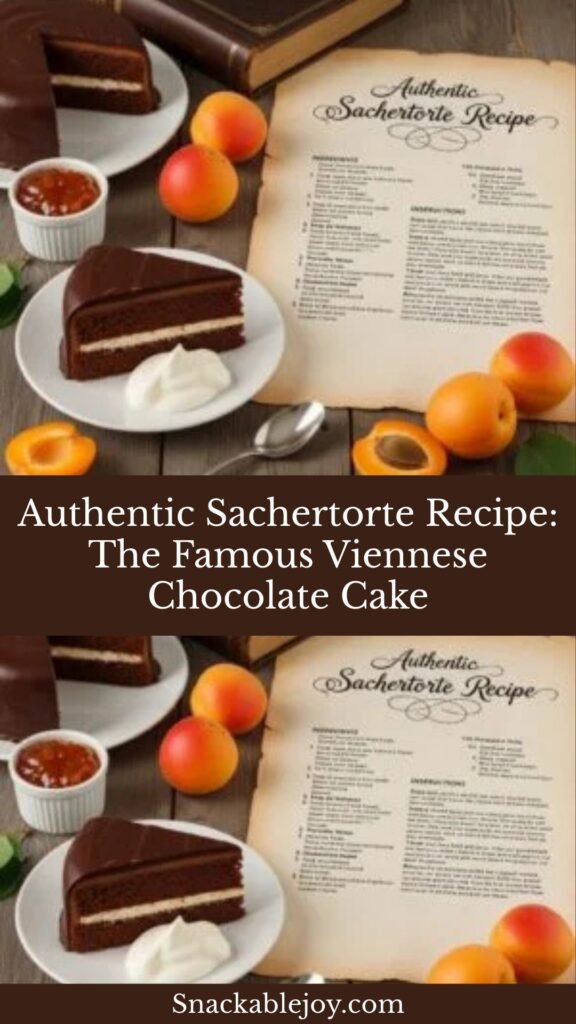
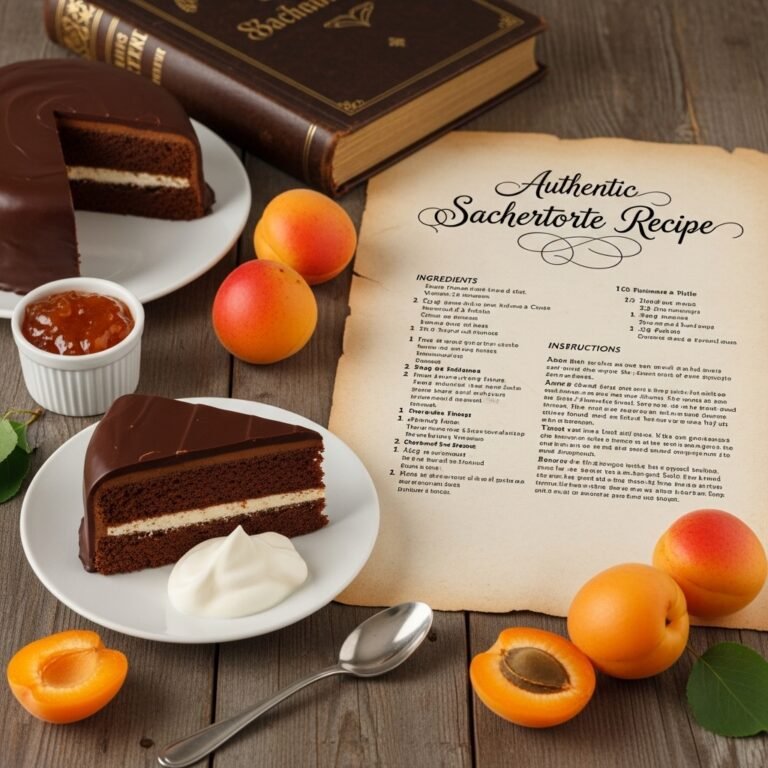
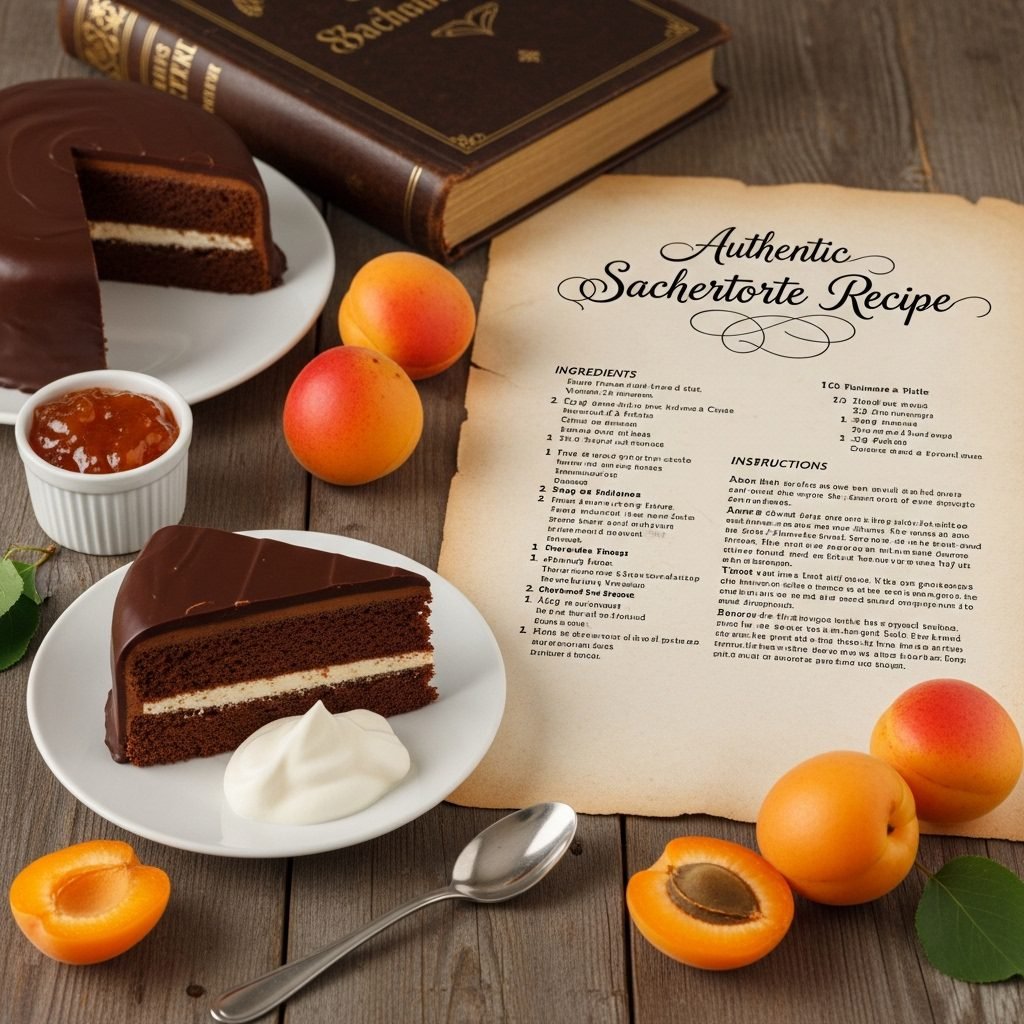
Sachertorte is the crown jewel of Viennese pastry—a luxurious chocolate cake that has captivated dessert lovers for nearly two centuries. This iconic Austrian torte features layers of dense, moist chocolate sponge cake separated by a thin layer of apricot jam, all enrobed in a glossy dark chocolate glaze that shatters delicately with each forkful. The result is a sophisticated dessert that’s not overly sweet, allowing the deep chocolate flavor to shine through beautifully.
What makes Sachertorte truly special is its perfect balance of textures and flavors. The cake itself is incredibly tender yet substantial, with a fine crumb that melts on your tongue. The apricot preserves add a subtle fruity tartness that cuts through the richness, while the dark chocolate coating provides that satisfying snap. Traditionally served with a generous dollop of unsweetened whipped cream (Schlagobers in German), this cake is pure elegance on a plate.
Perfect for special celebrations, dinner parties, or any time you want to impress your guests with European sophistication, Sachertorte is surprisingly approachable for home bakers. While it has a reputation for being fancy, the techniques are straightforward, and the ingredients are simple. This is your chance to bring a piece of Viennese café culture into your own kitchen!
History / Background
The story of Sachertorte begins in 1832 in Vienna, Austria, during a time when the city was the cultural and culinary heart of Europe. Prince Wenzel von Metternich, a prominent Austrian statesman, demanded that his kitchen staff create a special dessert for important guests. The head chef was ill that day, leaving the task to his 16-year-old apprentice, Franz Sacher. Despite his youth and inexperience, young Franz rose to the challenge and created what would become one of the world’s most famous cakes.
The original Sachertorte was relatively simple compared to other ornate Viennese pastries of the era, but its refined elegance made it an instant success among Vienna’s aristocracy. Franz Sacher went on to have a distinguished culinary career, but it was his son Eduard who truly cemented the cake’s legendary status. Eduard perfected his father’s recipe and began serving it at the Hotel Sacher, which his family established in Vienna in 1876.
What followed was one of the most famous legal battles in culinary history—the “Tortenstreit” (Cake War) that lasted from 1938 to 1963. The dispute was between Hotel Sacher and Demel, another prestigious Viennese café, over who had the right to call their chocolate cake the “Original Sachertorte.” The courts eventually ruled in favor of Hotel Sacher, which is why today, only Hotel Sacher can use the seal “Original Sacher-Torte” on their cakes.
The original recipe remains a closely guarded secret, known only to a handful of pastry chefs at Hotel Sacher. However, various versions have emerged over the years, and the cake has become a symbol of Vienna itself—featured in travel guides, exported worldwide, and recreated in kitchens across the globe. When you make Sachertorte at home, you’re participating in a delicious tradition that spans nearly 200 years!
Why You’ll Love This Recipe
This Sachertorte recipe delivers authentic Viennese flavor and texture that rivals what you’d find in the finest European cafés. While it might seem intimidating at first glance, the process is actually quite manageable when broken down into steps, and the results are absolutely spectacular.
Here’s why this recipe deserves a spot in your baking repertoire:
- Impressive presentation – That glossy chocolate mirror glaze looks like it came straight from a professional bakery
- Sophisticated flavor – Not your typical overly-sweet American chocolate cake; this has refined, complex chocolate notes
- Perfect for special occasions – Birthdays, anniversaries, holidays, or whenever you want to create a “wow” moment
- Surprisingly simple ingredients – Made with pantry staples: chocolate, butter, eggs, sugar, flour, and jam
- Make-ahead friendly – Actually improves after a day or two as flavors meld and the texture becomes even more velvety
- Conversation starter – The fascinating history makes this cake a great dinner party topic
- Texture perfection – Dense yet tender crumb that’s never dry or crumbly
- Chocolate lover’s dream – Rich chocolate cake plus chocolate glaze equals pure bliss for cocoa enthusiasts
- European elegance at home – Bring that Viennese café experience to your own dining table
Ingredient Notes
Let’s explore the key components that make Sachertorte so special:
For the Chocolate Cake:
- Dark chocolate (60-70% cacao) – The star ingredient! Use high-quality chocolate for the best flavor. Brands like Ghirardelli, Guittard, or Valrhona work beautifully. Don’t use chocolate chips as they contain stabilizers that affect texture.
- Unsalted butter – Must be at room temperature for proper creaming. European-style butter adds extra richness.
- Granulated sugar – Divided between the butter mixture and egg whites. This provides structure and sweetness without overwhelming the chocolate.
- Eggs (separated) – Room temperature eggs separate more easily and whip better. The yolks add richness while whipped whites provide lift and lightness.
- All-purpose flour – Just enough to provide structure without making the cake cakey. Some authentic recipes use even less!
- Vanilla extract – Enhances the chocolate flavor rather than competing with it.
- Salt – A small amount amplifies all the other flavors.
For the Apricot Filling:
- Apricot preserves or jam – Traditional and essential! The apricot’s tartness balances the chocolate’s richness. Use smooth preserves rather than chunky for easier spreading. In a pinch, raspberry or sour cherry jam works, though purists would object!
For the Chocolate Glaze:
- Dark chocolate – Same quality considerations as the cake chocolate. The glaze should be deeply flavored.
- Heavy cream – Creates a smooth, pourable ganache that sets to a beautiful sheen.
- Light corn syrup or honey – Just a touch adds shine and prevents the glaze from becoming dull. This is the secret to that professional mirror finish!
- Butter – Added at the end for extra glossiness and smooth texture.
Equipment Needed
Having the right tools makes this elegant cake much easier to create:
- 9-inch round cake pan – Preferably a springform pan for easy removal
- Parchment paper – For lining the pan to prevent sticking
- Electric mixer (stand or hand) – Essential for whipping egg whites to stiff peaks
- Multiple mixing bowls – For separating components (egg whites, yolk mixture, chocolate)
- Double boiler or microwave-safe bowl – For melting chocolate gently
- Rubber spatula – For folding egg whites without deflating them
- Fine-mesh strainer or small sieve – For warming and straining apricot jam
- Small saucepan – For making the chocolate glaze
- Wire cooling rack – For cooling the cake and glazing it evenly
- Offset spatula or butter knife – For spreading jam and smoothing glaze
- Serrated knife – For carefully splitting the cake layer (optional)
- Pastry brush – For applying apricot glaze evenly
- Instant-read thermometer – Helpful for getting glaze temperature just right
Print

Authentic Sachertorte Recipe
An authentic Sachertorte recipe featuring rich chocolate cake layers brushed with apricot preserves and covered in a glossy dark chocolate glaze. This iconic Viennese dessert is sophisticated yet surprisingly achievable at home!
- Total Time: 3 hours 25 minutes
- Yield: 12-14 servings 1x
Ingredients
ScaleFor the Chocolate Cake:
- 6 ounces (170g) dark chocolate (60-70% cacao), chopped
- ¾ cup (170g) unsalted butter, room temperature
- ¾ cup (150g) granulated sugar, divided
- 6 large eggs, separated, room temperature
- 1 teaspoon vanilla extract
- 1 cup (125g) all-purpose flour, sifted
- ¼ teaspoon salt
- ⅛ teaspoon cream of tartar
For the Apricot Glaze:
- 1 cup (320g) apricot preserves
- 2 tablespoons water
For the Chocolate Glaze:
- 6 ounces (170g) dark chocolate (60-70% cacao), finely chopped
- ¾ cup (180ml) heavy cream
- 2 tablespoons light corn syrup or honey
- 2 tablespoons unsalted butter
For Serving:
- 1 cup heavy whipping cream
- 1 tablespoon powdered sugar (optional)
- ½ teaspoon vanilla extract
Instructions
- Preheat and prep: Preheat your oven to 350°F (175°C). Grease a 9-inch round cake pan (preferably springform) with butter and line the bottom with parchment paper. Grease the parchment as well and lightly dust with flour, tapping out excess.
- Melt the chocolate: Place chopped chocolate in a heatproof bowl set over a pan of barely simmering water (double boiler method), stirring occasionally until smooth and completely melted. Alternatively, microwave in 20-second intervals, stirring between each. Remove from heat and let cool slightly, about 5 minutes.
- Cream butter and sugar: In a large mixing bowl, beat the room-temperature butter with an electric mixer on medium speed for 1-2 minutes until creamy. Add ½ cup (100g) of the sugar and beat for another 3-4 minutes until light, fluffy, and nearly white in color. This step incorporates air that helps the cake rise.
- Add egg yolks: Add the egg yolks one at a time, beating well after each addition. The mixture should be smooth and glossy. Beat in the vanilla extract.
- Incorporate chocolate: Pour in the slightly cooled melted chocolate and beat on low speed until completely combined and uniform in color. The mixture will be thick and glossy.
- Add flour: Sift the flour and salt together, then gently fold it into the chocolate mixture using a rubber spatula. Fold just until no white streaks remain—don’t overmix! Set this bowl aside.
- Whip egg whites: In a completely clean, grease-free bowl, beat the egg whites with the cream of tartar on medium speed until foamy. Gradually add the remaining ¼ cup (50g) sugar, one tablespoon at a time, beating continuously. Increase speed to medium-high and beat until stiff, glossy peaks form. When you lift the beaters, the peaks should stand straight up without drooping. This takes about 4-5 minutes total.
- Fold egg whites: Take about one-third of the whipped egg whites and fold them gently into the chocolate batter using a rubber spatula. Use a light hand and a folding motion (cutting down through the center, across the bottom, and up the side). This lightens the batter. Now fold in the remaining egg whites in two additions, being careful not to deflate them. The batter should be airy and mousse-like with no white streaks remaining.
- Bake: Pour the batter into the prepared pan and smooth the top gently. Tap the pan lightly on the counter twice to release any large air bubbles. Bake for 35-40 minutes, until a toothpick inserted in the center comes out with just a few moist crumbs (not wet batter). The top should spring back lightly when touched.
- Cool: Let the cake cool in the pan for 15 minutes, then run a knife around the edges to loosen. If using a springform pan, release the sides. Carefully invert the cake onto a wire rack, remove the pan bottom and parchment, then flip right-side up onto another rack. Cool completely, about 1-2 hours.
Preparing the Apricot Glaze:
- Warm and strain: In a small saucepan, combine apricot preserves and water. Heat over medium-low heat, stirring, until the preserves melt and become liquid. If your preserves are chunky, press the mixture through a fine-mesh strainer into a bowl to remove any fruit pieces. Return to the saucepan and keep warm.
- Split the cake (optional but traditional): Using a long serrated knife, carefully slice the cooled cake horizontally into two even layers. This is optional—some bakers prefer a single layer cake, which is also acceptable.
- Brush with glaze: Place the bottom layer (or whole cake if not splitting) on a wire rack set over a baking sheet or parchment paper. Brush the top generously with warm apricot glaze. If you split the cake, place the second layer on top and brush the top and sides with the remaining apricot glaze, creating a thin, even coating all around. The apricot layer seals in moisture and provides a smooth surface for the chocolate glaze. Let this set for 15-20 minutes.
Making the Chocolate Glaze:
- Prepare the ganache: Place the finely chopped dark chocolate in a heatproof bowl. In a small saucepan, heat the heavy cream until it just begins to simmer (small bubbles around the edges—don’t let it boil). Immediately pour the hot cream over the chocolate. Let sit for 1 minute, then add the corn syrup and butter.
- Create smooth glaze: Whisk gently from the center outward until the mixture is completely smooth, glossy, and uniform. Let it cool for 5-10 minutes, stirring occasionally. The glaze should be slightly warm (about 90-95°F) and have a thick but pourable consistency—like heavy cream. If it’s too thick, warm it gently; if too thin, let it cool a bit more.
- Glaze the cake: Ensure your apricot-coated cake is on a wire rack over a pan to catch drips. Pour the chocolate glaze over the center of the cake, letting it flow naturally over the top and down the sides. Use an offset spatula to gently encourage the glaze to cover any bare spots, working quickly as the glaze begins to set. Aim for smooth, even coverage. Don’t overwork it—a few drips add rustic charm!
- Set the glaze: Let the glazed cake sit at room temperature for at least 1 hour, or until the chocolate glaze is completely set and no longer tacky to a light touch. For best results, refrigerate for 30 minutes to set the glaze quickly, then bring back to room temperature before serving.
- Serve with cream: When ready to serve, whip the heavy cream with powdered sugar (if using) and vanilla until soft peaks form. Slice the Sachertorte with a sharp knife (wipe clean between cuts) and serve each slice with a generous dollop of unsweetened or lightly sweetened whipped cream on the side, as is traditional in Vienna.
Notes
- Room temperature ingredients: Eggs and butter should be at room temperature for best results. Cold eggs won’t whip properly, and cold butter won’t cream well.
- Chocolate quality matters: Since chocolate is the star, use the best quality you can afford. Avoid baking chocolate or chocolate chips.
- Don’t skip the apricot layer: It’s not just traditional—the slight tartness balances the richness and creates a moisture barrier.
- Glaze temperature: If your glaze is too hot, it will be too thin and slide off. Too cool, and it won’t spread smoothly. Aim for body temperature warmth.
- Patience with setting: Let the glaze set completely before slicing, or it will smudge and lose that beautiful finish.
- Traditional presentation: Write “Sacher” in chocolate on top if you want to be authentic! Use melted chocolate in a piping bag or ziplock with a tiny corner cut off.
- Prep Time: 45 minutes
- Cook Time: 40 minutes
- Category: Desert
- Method: Baking
- Cuisine: Austrian
- Diet: Vegetarian
Nutrition
- Serving Size: 1 slice (1/12 of cake)
- Calories: 445
- Sugar: 38g
- Sodium: 95mg
- Fat: 28g
- Saturated Fat: 17g
- Unsaturated Fat: 9g
- Trans Fat: 0g
- Carbohydrates: 47g
- Fiber: 3g
- Protein: 6g
- Cholesterol: 135mg
Tips & Variations
Flavor Variations:
- Orange Sachertorte: Add 1 tablespoon orange zest to the cake batter and use orange marmalade instead of apricot. The chocolate-orange combination is divine!
- Raspberry Sachertorte: Substitute seedless raspberry preserves for apricot for a more tart, berry-forward flavor.
- Espresso Sachertorte: Add 1 tablespoon instant espresso powder to the melted chocolate to intensify the chocolate flavor with coffee notes.
- Boozy Sachertorte: Brush the cake layers with 2-3 tablespoons of dark rum or Grand Marnier before applying apricot glaze for an adult twist.
Decoration Ideas:
- Classic “Sacher” script: Pipe the word “Sacher” on top using melted dark chocolate for an authentic Hotel Sacher look.
- Gold leaf: Add elegant gold leaf accents on the glossy chocolate for a luxurious touch.
- Chocolate curls: Top with dark chocolate curls or shavings for added texture and visual interest.
Dietary Considerations:
- Gluten-free: Replace all-purpose flour with a 1:1 gluten-free baking blend plus ¼ teaspoon xanthan gum if your blend doesn’t contain it.
- Reduce sugar: You can reduce the sugar in the cake by 2-3 tablespoons if you prefer less sweetness, though this is already less sweet than typical American cakes.
Pro Chef Tips
Perfect egg white foam: The secret to a light, airy Sachertorte is properly whipped egg whites. Make sure your bowl and beaters are completely clean and grease-free—even a drop of yolk or oil will prevent proper whipping. Add cream of tartar for stability, and beat until you have stiff, glossy peaks that hold their shape.
Folding technique is crucial: When incorporating whipped egg whites, use a gentle folding motion rather than stirring. Cut down through the center of the mixture with your spatula, sweep across the bottom, and bring it up the side in a circular motion. Rotate the bowl a quarter turn and repeat. This preserves the air bubbles you worked so hard to create.
Temperature control for chocolate: Never melt chocolate over direct heat or at high temperatures—it can seize and become grainy. Keep the double boiler water at a gentle simmer, not a rolling boil. The chocolate should melt slowly and smoothly. If using a microwave, work in short 15-20 second bursts.
The apricot layer is your friend: Many home bakers skip the apricot preserves, thinking it’s just traditional. But it serves multiple purposes: it keeps the cake moist, provides flavor balance, and creates a smooth surface for the glaze to adhere to. Warm the preserves until they’re fluid and brush generously.
Glaze consistency is everything: The chocolate glaze should be warm enough to pour smoothly but not so hot that it slides right off. Test it by letting a spoonful drip—it should coat the spoon and drip in a steady stream. If it’s too thick, warm it gently. If too thin, let it cool another minute or two.
Chill before slicing: For the cleanest slices with that satisfying chocolate shell crack, refrigerate the finished cake for 15-20 minutes before slicing. Use a sharp knife dipped in hot water and wiped clean between each cut.
Common Mistakes to Avoid
1. Overbeating the batter after adding flour: Once you add flour to any cake batter, you want to mix as little as possible. Overworking develops gluten, which makes the cake tough and dense instead of tender. Fold just until the flour disappears.
2. Deflating the egg whites: This is the most common error that results in a heavy, dense cake. Be incredibly gentle when folding whipped egg whites into the chocolate batter. It should take 30-40 folds total—don’t rush it, but don’t overwork it either. It’s okay if you see a few small white streaks.
3. Applying glaze to a warm cake: If your cake is even slightly warm, the chocolate glaze will slide right off or create an uneven, thin coating. The cake must be completely cool, and the apricot layer should be set before adding the chocolate glaze.
4. Making the glaze too far in advance: Ganache continues to thicken as it cools. If you make it more than 15-20 minutes before you need it, it may become too thick to pour smoothly. You can gently rewarm it over a double boiler, but it’s better to time it right.
5. Skipping the room temperature ingredient step: Cold eggs are hard to separate and won’t whip up properly. Cold butter won’t cream smoothly with sugar. Give yourself 30-60 minutes to let your eggs and butter come to room temperature before starting—it makes a huge difference in texture!
Storage & Meal Prep
Room Temperature Storage:
Once the glaze has fully set, Sachertorte can be stored at room temperature for up to 3 days if your kitchen isn’t too warm (below 70°F). Cover loosely with a cake dome or inverted bowl—don’t use plastic wrap directly on the glaze as it will stick and mar the beautiful finish.Refrigerator Storage:
For longer storage or in warmer weather, refrigerate the cake for up to 5-6 days. Bring it to room temperature 30-45 minutes before serving for the best flavor and texture. The chocolate flavors are much more pronounced at room temperature than when cold.Serving Temperature:
Sachertorte is traditionally served at cool room temperature, not cold from the refrigerator. The chocolate should be soft enough to cut easily but the glaze should still have that satisfying snap.Texture Evolution:
Like many European tortes, Sachertorte actually improves over the first 1-2 days as the flavors meld and the apricot layer adds moisture to the cake. Day 2 or 3 Sachertorte is often more flavorful and tender than freshly made!Make-Ahead & Freezer Notes
Component Make-Ahead:
- Bake the cake: You can bake the cake layer up to 2 days in advance. Wrap it tightly in plastic wrap and store at room temperature. Apply the apricot and chocolate glazes the day you plan to serve.
- Apricot glaze: Can be made up to 1 week ahead and stored in the refrigerator. Gently rewarm before using.
Fully Assembled Cake: While you can store a finished Sachertorte for several days, it’s actually best to assemble it 1-2 days before serving. This gives the flavors time to develop and the cake becomes even more moist and delicious.
Freezing Options:
- Unfrosted cake: The baked cake layer freezes beautifully for up to 3 months. Wrap tightly in plastic wrap, then aluminum foil. Thaw overnight in the refrigerator, then bring to room temperature before glazing.
- Fully glazed cake: Technically possible but not ideal, as the glaze can develop condensation when thawing. If you must freeze a glazed cake, freeze it unwrapped until solid (1-2 hours), then wrap carefully and store for up to 1 month. Thaw overnight in the refrigerator, still wrapped, then unwrap and bring to room temperature.
Best Make-Ahead Strategy: For entertaining, bake the cake 1-2 days ahead, wrap well, and store at room temperature. On the day before serving, apply the apricot glaze and chocolate coating. This timeline spreads out the work and allows the flavors to mature perfectly.
Serving Suggestions
Sachertorte is rich and elegant, and its serving accompaniments should complement rather than compete with its sophisticated flavors:
Traditional Viennese Serving:
- Unsweetened whipped cream (Schlagobers) – This is absolutely essential and non-negotiable in Vienna! The unsweetened cream balances the cake’s richness perfectly. You can very lightly sweeten it if you prefer, but traditional service uses plain whipped cream.
- Strong coffee or espresso – A Viennese melange (similar to a cappuccino) or straight espresso cuts through the chocolate richness beautifully.
Beverages That Pair Beautifully:
- Viennese coffee drinks – Melange, Einspänner (coffee with whipped cream in a glass), or traditional Turkish coffee
- Dessert wines – A sweet Tokaji, Port, or late-harvest Riesling complements the chocolate
- After-dinner drinks – Cognac, dark rum, or coffee liqueur like Kahlúa
- Hot chocolate – For the ultimate chocolate experience
- Black tea – Earl Grey or English Breakfast provides a nice tannin contrast
Plating Suggestions:
- Slice into thin wedges (this is rich!) using a hot, clean knife
- Place on a white or simple-colored plate to showcase the dark chocolate
- Add a generous dollop of whipped cream to one side
- Dust very lightly with cocoa powder (optional)
- Garnish with a single fresh raspberry or edible flower for color contrast
Special Occasion Presentation: For birthdays or celebrations, you can write on the chocolate glaze with white chocolate or add a single sparkler candle. The dark chocolate surface is perfect for personalized messages!
What NOT to Serve: Avoid serving Sachertorte with ice cream, fruit sauces, or other sweet additions. The beauty of this dessert is its sophisticated simplicity—it doesn’t need embellishment beyond the traditional whipped cream.
FAQs Section
Q: Can I use milk chocolate instead of dark chocolate?
A: While you technically could, it would no longer be an authentic Sachertorte. The entire character of this cake comes from the deep, slightly bitter dark chocolate that’s balanced by the sweet apricot and served with cream. Milk chocolate would make it overly sweet and lose the sophisticated Viennese character. Stick with 60-70% cacao dark chocolate for best results.Q: Why is my cake dry and dense instead of moist and tender?
A: This usually comes from overbeating the batter after adding the flour, or not whipping the egg whites to stiff enough peaks. The egg whites are your leavening agent in this cake, so they need to be beaten until stiff and glossy. Also, make sure you’re folding them in gently rather than stirring vigorously. Finally, check your oven temperature with a thermometer—overbaking dries out any cake.Q: Do I really need to use apricot preserves? Can I skip it?
A: The apricot layer is traditional and essential for authentic Sachertorte! It’s not just for flavor—it serves multiple purposes. The tartness balances the rich chocolate, it keeps the cake moist, and it provides a smooth surface for the chocolate glaze to adhere to. If you absolutely can’t find apricot, use seedless raspberry or sour cherry preserves, but don’t skip this step entirely.Q: My chocolate glaze looks dull instead of shiny. What went wrong?
A: Several factors create that gorgeous gloss: using high-quality chocolate, adding the corn syrup or honey (which adds shine), and making sure the glaze is the right temperature when applied (warm but not hot). If you stirred the glaze too vigorously or applied it when it was too cool, it can look dull. The butter added at the end also contributes to the shine. For next time, make sure all these elements are in place!Q: How thin should I slice Sachertorte?
A: Sachertorte is quite rich and dense, so slices should be relatively thin—about ¾ to 1 inch wide, similar to how you’d slice a cheesecake. A 9-inch cake easily serves 12-14 people with this slice size. The whipped cream on the side helps cut the richness, so you don’t need a huge portion to feel satisfied!Q: Can I make individual mini Sachertortes?
A: Absolutely! Use a muffin tin to make individual portions. Fill each cup about 2/3 full and bake for 18-22 minutes. Let cool completely, then brush with apricot glaze and dip the tops in chocolate ganache. These are perfect for parties and make portion control easy. You’ll get about 18-20 mini tortes from this recipe.Q: Is Sachertorte supposed to be very sweet?
A: No! This is an important distinction between Sachertorte and typical American chocolate cakes. Authentic Sachertorte is rich and chocolaty but not intensely sweet. The dark chocolate has natural bitterness, which is intentional. That’s why it’s served with unsweetened whipped cream—the combination creates perfect balance. If you’re expecting super-sweet chocolate cake, this might taste understated at first, but that sophisticated balance is exactly what makes it special!Conclusion
Congratulations—you now have everything you need to create an authentic, bakery-worthy Sachertorte in your own kitchen! This iconic Viennese chocolate cake might seem intimidating at first, but as you’ve seen, it’s really just a series of straightforward steps that come together to create something absolutely spectacular.
The beauty of Sachertorte lies in its refined elegance and perfect balance. It’s not trying to be the sweetest or most decorated cake—instead, it lets quality chocolate shine, complemented by just the right amount of apricot tartness and that gorgeous glossy glaze. When you slice into it and hear that satisfying crack of chocolate, see those perfect layers, and take that first bite with a dollop of cream, you’ll understand why this cake has been treasured for nearly 200 years.
Whether you’re making it for a special celebration, a dinner party, or simply because you want to challenge yourself with a classic European dessert, Sachertorte is worth every minute. Yes, it takes some time and attention, but the process itself is rewarding, and the results are absolutely show-stopping. Your family and guests will be incredibly impressed!
I’d love to hear about your Sachertorte adventures! Did you write “Sacher” on top? How did the glaze turn out? What did your guests say? Drop a comment below and share your experience. And if this recipe inspired you to bring a taste of Vienna into your home, please save it to your Pinterest boards so you can find it again and help other home bakers discover this magnificent dessert!
Happy baking, and enjoy every elegant, chocolatey bite! ☕🍫✨