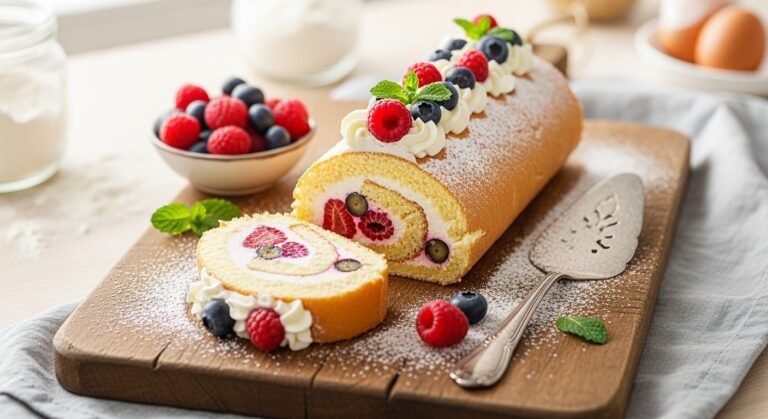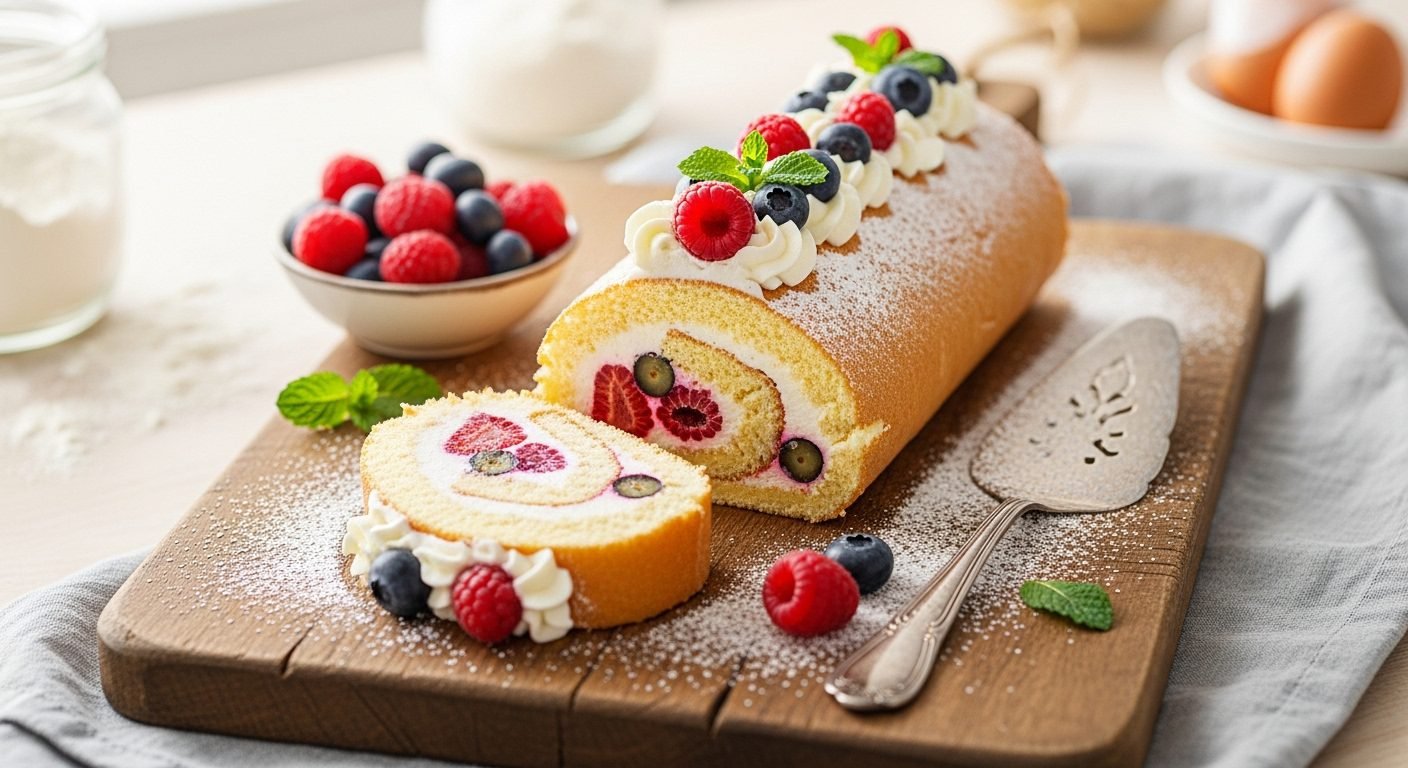
Easy Roulade Cake Recipe – Light, Fluffy Filled with Creamy Goodness

A roulade cake is an elegant, show-stopping dessert that looks incredibly impressive but is surprisingly simple to make at home. This delicate sponge cake is baked thin, rolled with a luscious filling, and sliced to reveal beautiful swirls that will have everyone thinking you’re a professional pastry chef. Whether you’re serving it at a holiday gathering, birthday celebration, or just treating yourself to something special, this roulade cake delivers on both presentation and flavor.
The beauty of a roulade lies in its versatility. You can fill it with whipped cream, buttercream, jam, chocolate ganache, or even fruit curd. The light, airy sponge pairs perfectly with almost any filling you can imagine, making it the ultimate customizable dessert. Serve it at afternoon tea, as a stunning dinner party finale, or slice it up for a special weekend brunch. Once you master the basic technique, you’ll find yourself making this elegant cake again and again.
History / Background
The roulade cake has deep roots in European baking traditions, with variations found across multiple countries and cultures. The word “roulade” comes from the French verb “rouler,” meaning “to roll,” which perfectly describes this dessert’s signature technique. While France popularized the name, similar rolled cakes have been enjoyed throughout Europe for centuries.
In Switzerland, the roulade takes the form of a chocolate roll, often filled with buttercream or whipped cream. The Swiss became particularly famous for their chocolate roulades in the 19th century, showcasing their exceptional confectionery skills. Germany has its own beloved version called “Biskuitrolle,” typically filled with jam or buttercream and served during festive occasions like Christmas and Easter.
The British adopted the roulade with enthusiasm, creating their famous Swiss roll (despite the Swiss connection being somewhat tenuous). Victorian-era cookbooks feature numerous recipes for jam rolls and cream-filled sponges, cementing the roulade’s place in British tea culture. The iconic chocolate log cake, or “Bûche de Noël,” is essentially a decorated roulade that became a traditional Christmas dessert in France and French-speaking regions.
In America, the roulade gained popularity in the mid-20th century as home bakers sought impressive yet achievable desserts. The introduction of improved baking techniques and reliable ovens made it easier for home cooks to achieve the perfect sponge. Today, the roulade remains a beloved dessert worldwide, celebrated for its elegant appearance and delightful combination of light cake and creamy filling.
Why You’ll Love This Recipe
This roulade cake recipe strikes the perfect balance between impressive presentation and easy execution. While it may look like something from a fancy bakery, the technique is actually quite forgiving once you understand the basics. The sponge cake is incredibly light and airy, providing the perfect canvas for your favorite fillings without being overly sweet or heavy.
Here’s why this recipe will become your go-to showstopper:
- Surprisingly Simple – Despite its elegant appearance, the recipe uses basic ingredients and straightforward techniques that any home baker can master
- Incredibly Versatile – Customize with endless filling options from classic whipped cream to chocolate ganache, lemon curd, or seasonal fruit compotes
- Make-Ahead Friendly – The cake can be baked in advance and filled when you’re ready to serve, perfect for stress-free entertaining
- Lighter Than Traditional Cake – The sponge contains no butter, making it wonderfully light while still being moist and flavorful
- Portion Control Built-In – Pre-sliced presentation makes serving easy and helps with portion sizes
- Freezer-Friendly – You can freeze the unfilled cake or even the completed roulade for future enjoyment
- Budget-Friendly Elegance – Uses affordable pantry staples to create a dessert that looks like it cost a fortune
- Perfect for Special Diets – Easily adaptable for gluten-free or dairy-free requirements with simple substitutions
Ingredient Notes
Eggs – The foundation of your roulade. Room temperature eggs whip up better and create more volume. You’ll need to separate the yolks from the whites, as they’re whipped separately to create that signature light texture.
Granulated Sugar – Provides sweetness and helps stabilize the egg whites when whipped. The sugar dissolves into the eggs, creating a smooth, glossy meringue that gives the cake its airy structure.
All-Purpose Flour – Just a small amount creates the cake’s structure without making it heavy. Cake flour can be substituted for an even lighter texture, or use a gluten-free flour blend for dietary needs.
Vanilla Extract – Adds depth and enhances the overall flavor. Pure vanilla extract is preferred over imitation for the best taste.
Salt – A pinch brightens all the flavors and balances the sweetness of the cake.
Powdered Sugar – Used for dusting the towel when rolling and can be sifted over the finished cake for presentation. It prevents sticking and adds a beautiful finish.
Heavy Whipping Cream – The classic filling base that whips into stable, luscious peaks. Must be cold for best results. Can substitute with coconut cream for a dairy-free option.
Cream Cheese (optional) – Adds tanginess and stability to the filling when beaten with whipped cream, creating a sturdier filling that holds up well.
Jam or Preserves (optional) – Raspberry, strawberry, or apricot jam can be spread alongside or mixed into the cream for extra flavor and visual appeal.
Equipment Needed
- Jelly Roll Pan (10×15 inches) – The standard size for roulade cakes, also called a half-sheet pan or Swiss roll pan
- Parchment Paper – Essential for lining the pan and preventing sticking
- Electric Mixer – Stand mixer or hand mixer for whipping eggs and cream to proper volume
- Large Mixing Bowls – At least two for separating egg whites and yolks
- Rubber Spatula – For gently folding ingredients without deflating the batter
- Fine-Mesh Sieve – For sifting flour and dusting powdered sugar
- Clean Kitchen Towel – For rolling the warm cake (not terry cloth, use a smooth dish towel)
- Wire Cooling Rack – Allows air circulation while the cake cools
- Offset Spatula – Makes spreading filling evenly much easier
- Measuring Cups and Spoons – For accurate ingredient measurements
- Sharp Serrated Knife – For clean slicing when serving
Print

Roulade Cake Recipe
This elegant roulade cake features a light, fluffy sponge cake rolled around a sweet whipped cream filling. The impressive swirled presentation makes it perfect for special occasions, yet it’s simple enough for any home baker to master. Customize with your favorite fillings and toppings for a truly personalized dessert.
- Total Time: 32 minutes (plus cooling time
- Yield: 10 servings 1x
Ingredients
ScaleFor the Cake:
- 4 large eggs, separated, room temperature
- ¾ cup granulated sugar, divided
- 1 teaspoon pure vanilla extract
- ¾ cup all-purpose flour (or cake flour)
- ¼ teaspoon salt
- ¼ cup powdered sugar (for rolling)
For the Filling:
- 1½ cups heavy whipping cream, cold
- ¼ cup powdered sugar
- 1 teaspoon vanilla extract
- 4 oz cream cheese, softened (optional, for stability)
- 2 tablespoons jam or preserves (optional)
For Topping:
- 2 tablespoons powdered sugar (for dusting)
- Fresh berries (optional)
- Chocolate shavings (optional)
Instructions
Step 1: Prepare Your Pan
Preheat your oven to 350°F (175°C). Line a 10×15-inch jelly roll pan with parchment paper, making sure it extends slightly over the edges for easy removal. Lightly spray the parchment with non-stick spray or brush with a thin layer of butter.Step 2: Whip the Egg Whites
In a large, clean mixing bowl, beat the egg whites with an electric mixer on medium-high speed until soft peaks form, about 2-3 minutes. Gradually add ¼ cup of the granulated sugar while continuing to beat until stiff, glossy peaks form, another 2-3 minutes. Set aside.Step 3: Beat the Egg Yolks
In another large bowl, beat the egg yolks with the remaining ½ cup granulated sugar on high speed until the mixture is thick, pale yellow, and falls in ribbons from the beaters, about 3-4 minutes. Beat in the vanilla extract.Step 4: Fold in Dry Ingredients
Sift the flour and salt together. Gently fold the flour mixture into the egg yolk mixture using a rubber spatula, mixing just until no flour streaks remain. Be gentle to avoid deflating the mixture.Step 5: Combine with Egg Whites
Add about one-third of the beaten egg whites to the yolk mixture and fold gently to lighten it. Then carefully fold in the remaining egg whites in two additions, using a gentle folding motion until just combined. Some small white streaks are okay – over-mixing will deflate your batter.Step 6: Bake the Cake
Pour the batter into your prepared pan and spread it evenly into the corners using an offset spatula. Tap the pan gently on the counter to release any large air bubbles. Bake for 10-12 minutes, until the cake springs back when lightly touched and is just starting to turn golden.Step 7: Roll the Warm Cake
While the cake bakes, lay out a clean kitchen towel and dust it generously with the ¼ cup powdered sugar. When the cake is done, immediately run a knife around the edges and turn it out onto the prepared towel. Carefully peel off the parchment paper. Starting from a short end, roll the warm cake up with the towel inside. Let it cool completely in this rolled position, about 1 hour.Step 8: Make the Filling
In a large bowl, beat the cold heavy cream with ¼ cup powdered sugar and vanilla extract until stiff peaks form, 3-4 minutes. If using cream cheese, beat it separately until smooth, then fold it into the whipped cream. If using jam, gently swirl it in at the end.Step 9: Fill and Re-Roll
Carefully unroll the cooled cake (it will want to stay slightly curved – that’s perfect). Spread the filling evenly over the cake, leaving about a ½-inch border around the edges. Starting from the same short end, carefully roll the cake back up (without the towel this time), using the towel to help guide it if needed. The cake should roll fairly easily since it’s already been shaped.Step 10: Chill and Serve
Transfer the rolled cake seam-side down to a serving platter. Cover loosely with plastic wrap and refrigerate for at least 1 hour before serving to help it set. Before serving, dust with powdered sugar and add any optional toppings like fresh berries or chocolate shavings. Slice with a sharp serrated knife using a gentle sawing motion.Notes
- Make sure your jelly roll pan is the correct size (10×15 inches) – too large and the cake will be too thin, too small and it may overflow.
- Don’t skip rolling the cake while it’s still warm – this creates the “memory” that prevents cracking when you fill it later.
- The cake can be rolled and stored in the towel overnight at room temperature before filling.
- If your cake does crack slightly when rolling, don’t worry – the powdered sugar topping will hide minor imperfections.
- For a chocolate roulade, replace ¼ cup of the flour with unsweetened cocoa powder.
- The filled roulade tastes best within 24 hours but can be stored for up to 3 days in the refrigerator.
- Prep Time: 20 minutes
- Cook Time: 12 minutes
- Category: Desert
- Method: Baking
- Cuisine: European
- Diet: Vegetarian
Nutrition
- Serving Size: 1 slice (1/10 of cake)
- Calories: 245
- Sugar: 24g
- Sodium: 95mg
- Fat: 13g
- Saturated Fat: 8g
- Unsaturated Fat: 4g
- Trans Fat: 0g
- Carbohydrates: 28g
- Fiber: 0g
- Protein: 4g
- Cholesterol: 115mg
Tips & Variations
Chocolate Roulade: Replace ¼ cup of flour with Dutch-process cocoa powder and add 1 tablespoon of espresso powder to intensify the chocolate flavor. Fill with chocolate ganache or chocolate whipped cream.
Lemon Roulade: Add 2 teaspoons of lemon zest to the egg yolk mixture and fill with lemon curd mixed with whipped cream. Top with additional lemon zest and fresh blueberries.
Pumpkin Spice Roulade: Add 1 teaspoon pumpkin pie spice to the dry ingredients and fill with cream cheese frosting mixed with whipped cream. Perfect for autumn gatherings.
Berry Roulade: Fold fresh or frozen berries (well-drained) into your whipped cream filling and add a thin layer of berry jam before spreading the cream.
Mocha Roulade: Add 1 tablespoon instant espresso powder to the cake batter and fill with coffee-flavored whipped cream or mocha buttercream.
Gluten-Free Version: Substitute the all-purpose flour with a 1:1 gluten-free baking flour blend. The texture will be just as light and delicious.
Dairy-Free Option: Use coconut cream (the thick part from a chilled can of full-fat coconut milk) whipped with powdered sugar as your filling.
Lower Sugar: Reduce the sugar in the filling by half or use a sugar substitute like monk fruit sweetener for a less sweet dessert.
Pro Chef Tips
Room Temperature Eggs Separate Better: Cold eggs are easier to separate without breaking the yolks, but room temperature eggs whip to greater volume. Separate cold, then let them sit for 30 minutes before using.
Test Your Oven Temperature: Invest in an oven thermometer to ensure accuracy. Even 25 degrees off can mean the difference between a perfectly moist cake and a dry one that cracks.
The Ribbon Test is Key: When beating egg yolks with sugar, the mixture should fall from the beaters in thick ribbons that sit on the surface for a few seconds before dissolving. This means you’ve incorporated enough air.
Fold, Don’t Stir: Use a gentle folding motion by cutting down through the center, sweeping across the bottom, and bringing the spatula up along the side. This preserves the air bubbles you worked so hard to create.
Roll While Warm, Always: This is the most crucial step. A warm cake is flexible and will form a “memory” of being rolled. A cool cake will crack every single time.
Use Parchment as a Rolling Aid: If you’re nervous about rolling, leave the parchment attached to the cake and use it to help roll the cake up after filling. Peel it away as you roll.
Chill Before Slicing: A properly chilled roulade (at least 1-2 hours) slices much cleaner than one at room temperature. Wipe your knife between cuts for the prettiest slices.
Stabilize Your Filling: Adding cream cheese or a small amount of gelatin to your whipped cream helps it hold its shape better, especially important if you’re serving the cake at room temperature or making it in advance.
Common Mistakes to Avoid
Over-Baking the Cake: The cake should be baked just until it springs back when touched. Over-baking makes it dry and prone to cracking. Check at 10 minutes and watch carefully.
Deflating the Batter: When folding egg whites into the yolk mixture, use a gentle hand. Vigorous stirring or over-mixing destroys the air bubbles that make your cake light and fluffy.
Letting the Cake Cool Before Rolling: This is the number one mistake. You must roll the cake while it’s still warm from the oven. Once cool, it loses flexibility and will crack when rolled.
Using Too Much Filling: Overfilling causes the filling to squish out the sides and makes the roll unstable. Use about 1½ to 2 cups of filling spread evenly, leaving borders clear.
Skipping the Powdered Sugar on the Towel: The powdered sugar prevents the cake from sticking to the towel. Without it, you’ll struggle to unroll the cake and may tear it.
Not Sifting the Flour: Lumps in your batter create an uneven texture. Always sift your flour (and cocoa powder if using) to ensure a smooth, uniform cake.
Rolling Too Tightly: While you want a nice spiral, rolling too tightly can crack the cake and squeeze out the filling. Aim for a firm but gentle roll.
Storage & Meal Prep
Refrigerator Storage: Once filled and rolled, the roulade should be stored in the refrigerator. Cover it loosely with plastic wrap or place it in an airtight container. It will keep for 3-4 days, though it’s best enjoyed within the first 2 days for optimal texture and freshness.
Unfilled Cake Storage: If you’ve baked the cake but haven’t filled it yet, you can keep it rolled in the towel at room temperature for up to 24 hours. For longer storage, wrap the rolled cake (still in the towel) in plastic wrap and refrigerate for up to 3 days.
Bringing to Room Temperature: For the best flavor and texture, remove the roulade from the refrigerator about 15-20 minutes before serving. This takes the chill off the filling while keeping everything stable.
Transporting Tips: If you need to bring your roulade to a party or potluck, transport it on a flat platter or cutting board, covered loosely with foil or in a cake carrier. Keep it chilled until just before serving.
Leftover Slices: Individual slices can be wrapped in plastic wrap and stored in an airtight container for up to 3 days. They can also be individually wrapped and frozen for quick single servings.
Make-Ahead & Freezer Notes
One Day Ahead: Bake the cake, roll it in the towel, and let it cool completely. Wrap the rolled cake (still in the towel) in plastic wrap and store at room temperature or in the refrigerator. Fill and frost up to 6 hours before serving.
Two Days Ahead: Bake and roll the cake, then wrap well and refrigerate. The night before serving, prepare your filling, unroll the cake, fill it, and re-roll. Cover and refrigerate overnight.
Freezing the Unfilled Cake: After baking and rolling in the towel, wrap the cooled cake tightly in plastic wrap, then in aluminum foil. Freeze for up to 2 months. Thaw overnight in the refrigerator (still wrapped) before filling.
Freezing the Filled Cake: Once filled and rolled, wrap the entire roulade tightly in plastic wrap, then aluminum foil. Freeze for up to 1 month. Thaw overnight in the refrigerator before serving. The texture may be slightly softer after freezing but will still taste delicious.
Freezing Individual Slices: Slice the filled roulade and wrap each slice individually in plastic wrap, then place in a freezer bag. This allows you to thaw individual portions as needed. Thaw in the refrigerator for 2-3 hours or at room temperature for 30-45 minutes.
Best Reheating Method: Roulade cake is best served chilled or at room temperature and doesn’t require reheating. If you prefer it less cold, simply let it sit at room temperature for 15-20 minutes before serving.
Serving Suggestions
A roulade cake is stunning enough to stand alone, but pairing it with complementary sides elevates the entire dessert experience.
Fresh Berries: Serve alongside a mix of fresh raspberries, strawberries, and blueberries. The tartness of fresh berries cuts through the sweetness of the cream filling beautifully.
Fruit Coulis: A raspberry or strawberry sauce drizzled on the plate adds color and a bright, fruity contrast. Simply blend fresh or frozen berries with a touch of sugar and strain.
Whipped Cream Dollop: Even though the cake contains whipped cream, an extra rosette on the side of each slice adds elegance and richness.
Ice Cream or Gelato: Vanilla, chocolate, or berry ice cream served alongside creates a temperature contrast that’s delightful. Try pairing chocolate roulade with vanilla bean ice cream.
Coffee or Tea: This is the perfect cake for afternoon tea service. Pair with hot coffee, espresso, English breakfast tea, or Earl Grey for a sophisticated dessert course.
Dessert Wine: For adult gatherings, serve with a sweet Moscato, late-harvest Riesling, or a sparkling Prosecco that complements the light, airy texture.
Chocolate Sauce: Drizzle warm chocolate ganache over each slice for chocolate lovers, creating a decadent combination of textures and flavors.
Candied Nuts: Scatter candied pecans or almonds on the serving platter for added crunch and visual interest.
Mint Garnish: A small sprig of fresh mint on each plate adds a pop of color and a hint of freshness.
FAQs Section
Q: Why did my roulade crack when I rolled it?
A: The most common reason is rolling the cake after it has cooled. You must roll it while still warm from the oven so it forms a “memory” of the rolled shape. Other causes include over-baking (which dries it out) or using too much flour. If minor cracks appear, the powdered sugar topping will hide them.Q: Can I make this cake without a jelly roll pan?
A: While a 10×15-inch jelly roll pan is ideal, you can use a similar-sized baking sheet with raised edges. The depth should be about 1 inch. Cookie sheets without edges won’t work as the batter will spread too much. The pan size matters because it affects the thickness and rollability of the cake.Q: How do I know when the cake is done baking?
A: The cake should spring back when lightly pressed with your finger and just be starting to turn golden around the edges. It typically takes 10-12 minutes at 350°F. Don’t wait for it to brown significantly or pull away from the edges – these are signs of over-baking that will cause cracking.Q: Can I use store-bought whipped topping instead of making whipped cream?
A: While you can use Cool Whip or similar products for convenience, homemade whipped cream provides better flavor and a more luxurious texture. If using store-bought, look for real whipped cream rather than oil-based toppings for the best results.Q: What’s the difference between a roulade and a Swiss roll?
A: They’re essentially the same dessert! “Roulade” is the French term for any rolled cake, while “Swiss roll” is the British name for the same concept. The terms are often used interchangeably, though some people use “Swiss roll” specifically for jam-filled versions.Q: My egg whites won’t whip to stiff peaks. What went wrong?
A: Even a tiny bit of fat (from egg yolk or a greasy bowl) can prevent egg whites from whipping properly. Make sure your bowl and beaters are completely clean and dry. Use room temperature eggs, and if you accidentally get any yolk in the whites, it’s best to start over with fresh eggs.Q: Can I add food coloring to make a colorful cake?
A: Absolutely! Gel food coloring works best as it won’t thin out your batter. Add it to the egg yolk mixture after beating with sugar. You can create beautiful ombré effects or fun colors for themed parties. Just remember that colors may darken slightly during baking.Conclusion
Making a roulade cake is one of those wonderful baking experiences that looks far more complicated than it actually is. With just a few simple techniques – whipping eggs properly, rolling while warm, and spreading filling evenly – you can create an absolutely stunning dessert that will impress everyone at your table. The beauty of this recipe lies not just in its elegant presentation, but in its versatility and make-ahead friendliness, making it perfect for both spontaneous weekend treats and planned celebrations.
Whether you stick with the classic whipped cream filling or venture into chocolate ganache, lemon curd, or seasonal fruit variations, this roulade cake will become your go-to showstopper. The light, fluffy sponge paired with creamy filling creates a dessert that feels indulgent without being heavy – perfect for ending any meal on a high note.
Don’t be intimidated by the rolling technique. Remember, even if your first attempt has a few cracks, it will still taste absolutely delicious, and the powdered sugar dusting covers a multitude of imperfections. Each time you make it, you’ll gain more confidence and skill. Before you know it, you’ll be creating beautiful roulades for every special occasion, experimenting with new flavors, and maybe even starting a few baking traditions of your own.
Now it’s your turn to roll up your sleeves (and your cake!) and create this elegant dessert. Your friends and family will be amazed, and you’ll have the satisfaction of knowing you created something truly special right in your own kitchen. Happy baking!