Easy Homemade Plum Sorbet Recipe – Fresh, Fruity & Dairy-Free
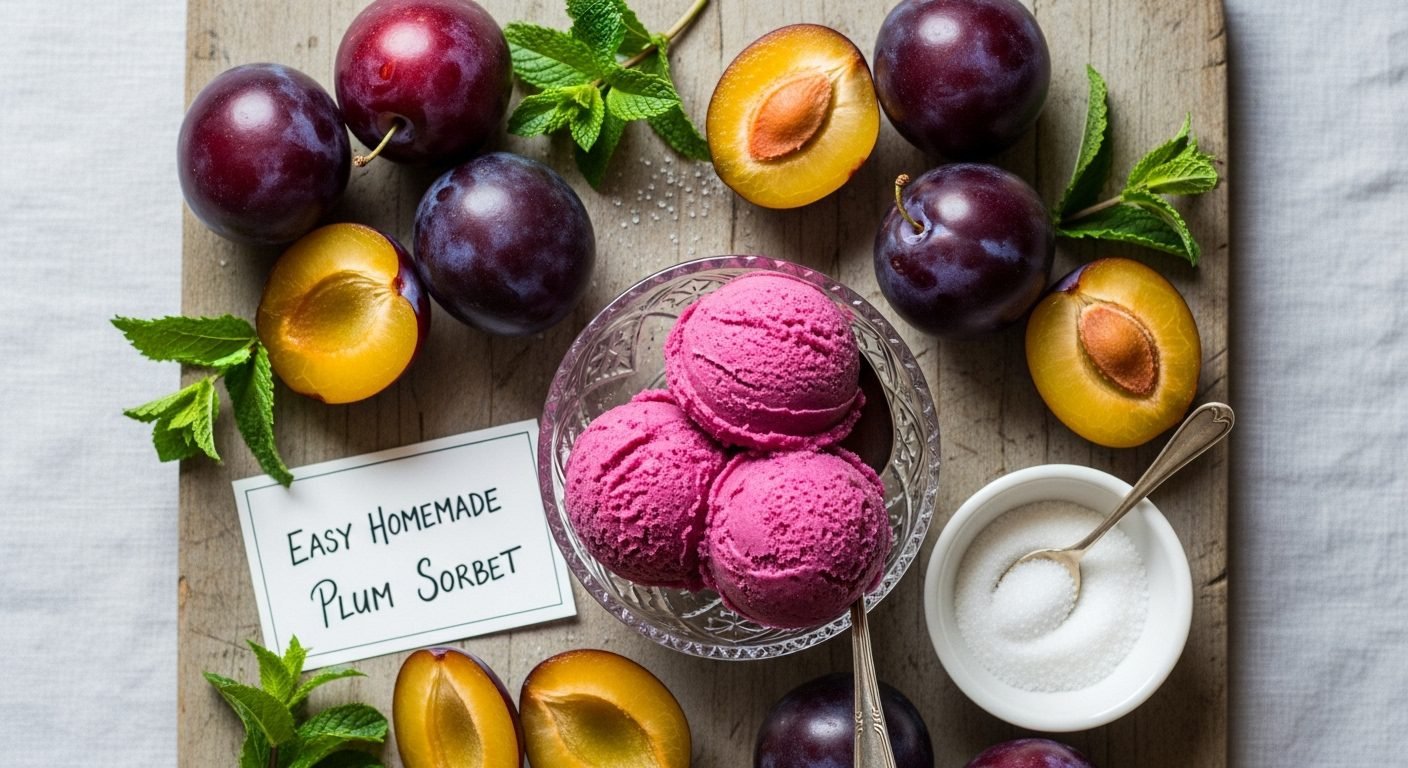
There’s something magical about a scoop of homemade plum sorbet on a warm summer evening. This stunning dessert combines the natural sweetness and tartness of ripe plums with just a touch of sugar and lemon juice, creating a refreshing frozen treat that’s both elegant and simple to make. Unlike ice cream, sorbet is completely dairy-free, making it perfect for vegans, lactose-intolerant guests, or anyone looking for a lighter dessert option that doesn’t compromise on flavor.
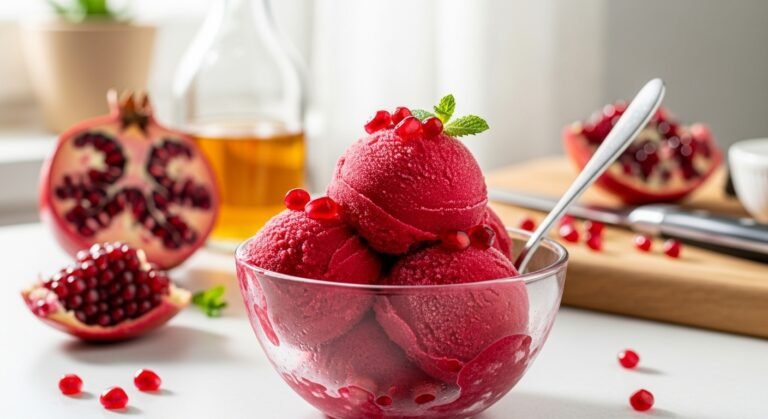
Plum sorbet is the perfect way to use up an abundance of summer plums when they’re at their peak ripeness and bursting with flavor. The beautiful purple-pink color makes it Instagram-worthy and Pinterest-perfect, while the smooth, icy texture provides a palate-cleansing finish to any meal. Whether you’re hosting a backyard barbecue, planning a fancy dinner party, or simply treating yourself to something special, this plum sorbet recipe delivers restaurant-quality results right from your home kitchen.
What makes this recipe particularly appealing is its simplicity. You don’t need any fancy equipment beyond a blender and an ice cream maker (or even just a freezer-safe container if you don’t have one). The ingredient list is refreshingly short, and the hands-on time is minimal. Yet the result tastes like something you’d pay premium prices for at an artisan gelato shop.
History / Background
Sorbet has a fascinating history that dates back thousands of years. The earliest versions originated in ancient Persia, where people would combine ice from the mountains with fruit juices and flavorings. The word “sorbet” itself comes from the Arabic word “sharbat,” which refers to a sweetened fruit drink. As trade routes expanded, this frozen delicacy traveled westward through the Middle East and eventually reached Europe during the medieval period.
Italian and French aristocrats fell in love with sorbet during the Renaissance, and it became a symbol of luxury and refinement at royal courts throughout Europe. Catherine de Medici is often credited with introducing sorbet to France when she married King Henry II in 1533, bringing her Italian chefs along with her. The French refined the technique, developing the smooth, fine-textured frozen dessert we know today.
Plums themselves have been cultivated for over 2,000 years, with origins in China and the Caucasus region. European plums made their way to America with colonists, and California eventually became one of the world’s largest plum-producing regions. The combination of European sorbet-making techniques with abundant American plums created a natural partnership.
Traditionally, sorbets were served between courses during elaborate multi-course meals as a palate cleanser, preparing diners for the next dish. Today, while they can still serve that purpose, sorbets have become beloved desserts in their own right. Plum sorbet specifically captures the essence of late summer, when plums reach their peak sweetness and flavor intensity. Making it at home allows you to control the sugar content and create a pure, natural frozen treat that celebrates the fruit’s inherent deliciousness.
Why You’ll Love This Recipe
This plum sorbet recipe is an absolute game-changer for home cooks who want to create impressive desserts without spending hours in the kitchen. The natural sweetness of ripe plums means you need far less added sugar than many other desserts, making this a relatively guilt-free indulgence. The vibrant color and elegant presentation make it look like you’ve spent all day preparing, when in reality, most of the work is done by your freezer.
Here’s why this recipe will become your summer go-to:
- Naturally dairy-free and vegan – Perfect for guests with dietary restrictions or anyone avoiding dairy
- Only 5 basic ingredients – No complicated shopping list or hard-to-find items required
- Gorgeous presentation – The deep purple-pink color is stunning in any serving dish
- Uses seasonal fruit – A wonderful way to preserve the taste of summer plums
- Healthier than ice cream – Lower in calories and fat while still satisfying your sweet tooth
- Make-ahead friendly – Prepare days or even weeks in advance for stress-free entertaining
- Customizable sweetness – Easy to adjust sugar levels based on your plums’ natural sweetness
- Impressive yet easy – Tastes gourmet but requires minimal skill or effort
- Refreshing palate cleanser – Perfect between courses or as a light dessert after heavy meals
- Budget-friendly – Especially economical when plums are in season and abundant
Ingredient Notes
Understanding your ingredients is key to sorbet success. Here’s what you need to know about each component:
Fresh Plums – The star of the show. Choose ripe, slightly soft plums that are fragrant and give slightly when pressed. Red, black, or purple plums all work beautifully. Italian prune plums create a more intense flavor, while larger varieties like Santa Rosa provide a sweeter, more delicate taste. Avoid underripe plums as they’ll be too tart and lack the natural sugar needed for great sorbet. You’ll need about 2 pounds of plums, which typically equals 8-10 medium plums.
Granulated Sugar – Provides sweetness and affects the texture by preventing the sorbet from freezing too hard. The sugar amount can be adjusted based on your plums’ sweetness and personal preference. Don’t skip the sugar entirely, as it’s crucial for achieving the right scoopable consistency. For a less refined option, you can substitute with coconut sugar or organic cane sugar, though this may slightly alter the color.
Water – Helps create the syrup base and dilutes the fruit puree to the perfect consistency. Use filtered water if your tap water has a strong taste that might interfere with the delicate plum flavor.
Fresh Lemon Juice – Brightens the flavor and balances the sweetness while preventing the sorbet from tasting flat. The acidity also helps preserve the beautiful color. Always use fresh lemon juice rather than bottled for the best flavor. You’ll need approximately 2-3 tablespoons, or about one large lemon.
Pinch of Salt – Though optional, a tiny amount of salt enhances all the other flavors and makes the plum taste more pronounced. It’s a chef’s secret ingredient that brings everything together.
Substitutions: If you don’t have fresh plums, you can use frozen plums (thawed and drained). Lime juice can replace lemon juice for a slightly different citrus note. Honey or agave can substitute for half the sugar, though they’ll change the flavor profile slightly.
Equipment Needed
Making plum sorbet doesn’t require a professional kitchen, but having the right tools makes the process much smoother:
- Medium saucepan – For making the simple syrup
- Blender or food processor – A high-speed blender creates the smoothest texture, but any blender works
- Fine-mesh strainer – Essential for removing plum skins and creating silky-smooth sorbet
- Wooden spoon or silicone spatula – For stirring and pushing puree through the strainer
- Large mixing bowl – To catch the strained puree
- Measuring cups and spoons – For accurate ingredient measurements
- Ice cream maker (optional but recommended) – Produces the creamiest texture with the finest ice crystals
- Freezer-safe container with lid – A shallow, airtight container is ideal for storage
- Sharp knife and cutting board – For pitting and quartering plums
- Ice cream scoop – For serving perfect scoops
Don’t have an ice cream maker? No problem! You can still make excellent sorbet using the still-freeze method (explained in the instructions).
Print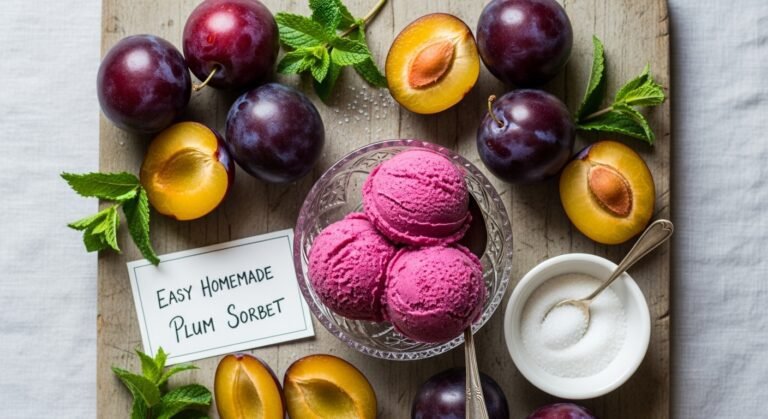
Plum Sorbet Recipe
Smooth, refreshing homemade plum sorbet made with fresh ripe plums, a touch of sugar, and bright lemon juice. This naturally dairy-free frozen dessert captures the essence of summer in every spoonful and requires just 5 simple ingredients.
- Total Time: 4 hours 30 minutes
- Yield: 6 servings (about 1 pint) 1x
Ingredients
- 2 pounds fresh ripe plums (8-10 medium plums)
- ¾ cup granulated sugar (adjust to taste based on plum sweetness)
- ¾ cup water
- 2-3 tablespoons fresh lemon juice
- Pinch of salt (optional)
Instructions
- Prepare the plums: Wash the plums thoroughly, then cut them in half and remove the pits. Quarter each plum half. You don’t need to peel them – the skins will be strained out later and add beautiful color.
- Make the simple syrup: In a medium saucepan, combine the sugar and water. Heat over medium heat, stirring occasionally, until the sugar completely dissolves (about 5 minutes). You’ll know it’s ready when the liquid is clear and no sugar granules remain. Remove from heat and let cool for 10 minutes.
- Cook the plums: Add the quartered plums to the simple syrup in the saucepan. Return to medium heat and cook for 8-10 minutes, stirring occasionally, until the plums are very soft and breaking down. They should look jammy and smell incredibly fragrant.
- Blend until smooth: Carefully transfer the hot plum mixture to your blender. Add the lemon juice and salt. Blend on high speed for 60-90 seconds until completely smooth and no chunks remain. The mixture will be bright and frothy.
- Strain for silky texture: Set a fine-mesh strainer over a large bowl. Pour the blended plum mixture through the strainer, using a spatula or wooden spoon to press and push the puree through. This removes the skins and any remaining bits for a perfectly smooth sorbet. Discard the solids left in the strainer.
- Chill completely: Cover the bowl with plastic wrap and refrigerate for at least 4 hours or overnight. The mixture must be completely cold before churning – this is crucial for the best texture.
- Churn the sorbet (if using ice cream maker): Pour the chilled plum mixture into your ice cream maker and churn according to the manufacturer’s instructions, typically 20-25 minutes. The sorbet should look thick and slushy, similar to soft-serve consistency.
- Freeze until firm: Transfer the churned sorbet to a freezer-safe container, smooth the top, and press plastic wrap directly onto the surface to prevent ice crystals. Freeze for at least 3-4 hours until firm enough to scoop.
- Alternative method without ice cream maker: Pour the chilled mixture into a shallow freezer-safe container. Freeze for 45 minutes, then vigorously whisk or use a fork to break up ice crystals. Repeat this process every 30-45 minutes for 3-4 hours until the sorbet reaches the desired consistency. This method requires more effort but produces good results.
- Serve and enjoy: Let the sorbet sit at room temperature for 5-10 minutes before scooping if it’s very hard. Scoop into bowls or cones and serve immediately.
Notes
- Ripeness matters: Using perfectly ripe plums is essential for the best flavor. They should smell sweet and yield slightly to gentle pressure.
- Sugar adjustment: Taste your cooked plum mixture before blending. If your plums are very sweet, reduce sugar to ½ cup. If they’re tart, increase to 1 cup.
- Smooth texture secret: Don’t skip the straining step! It’s what gives your sorbet that professional, velvety texture.
- Storage: Sorbet can become very hard in the freezer. If too firm to scoop, let it sit at room temperature for 10 minutes or pulse in a food processor briefly to make it scoopable again.
- Corn syrup option: For an even smoother texture that’s easier to scoop, replace 2 tablespoons of water with light corn syrup. This is a professional technique that reduces ice crystal formation.
- Prep Time: 20 minutes
- Cook Time: 10 minutes
- Category: Desert
- Method: Frozen
- Cuisine: French-inspired
- Diet: Gluten Free
Nutrition
- Serving Size: ⅔ cup (approximately 4 oz)
- Calories: 142
- Sugar: 34g
- Sodium: 2mg
- Fat: 0.3g
- Saturated Fat: 0g
- Unsaturated Fat: 0.2g
- Trans Fat: 0g
- Carbohydrates: 36g
- Fiber: 1.2g
- Protein: 0.7g
- Cholesterol: 0mg
Tips & Variations
Flavor Variations:
- Plum-Ginger Sorbet: Add 1 tablespoon grated fresh ginger to the simple syrup while cooking for a warming spice note
- Plum-Basil Sorbet: Steep 8-10 fresh basil leaves in the hot simple syrup for 15 minutes before adding plums, then strain them out
- Spiced Plum Sorbet: Add ½ teaspoon cinnamon and a pinch of cardamom to the cooking plums for a chai-inspired version
- Plum-Vanilla Sorbet: Scrape in half a vanilla bean or add 1 teaspoon vanilla extract after blending
- Plum-Orange Sorbet: Replace the lemon juice with fresh orange juice and add 1 teaspoon orange zest
- Wine-Infused Plum Sorbet: Replace ¼ cup of the water with red wine for an adult version
Texture Modifications:
- For a chunkier, more rustic sorbet, reserve some diced fresh plums and stir them in during the last few minutes of churning
- For an ultra-smooth, almost granita-like texture, increase the water to 1 cup
- Add 1 tablespoon vodka or other alcohol before churning to keep the sorbet softer and easier to scoop (alcohol doesn’t freeze)
Sweetener Alternatives:
- Replace half the sugar with honey for a more complex flavor
- Use maple syrup for a subtle caramel note
- Try coconut sugar for a hint of butterscotch flavor
Dietary Customizations:
- This recipe is already vegan, dairy-free, and gluten-free
- For lower sugar, use a sugar substitute like erythritol, though texture may be affected
- For paleo, use honey or maple syrup instead of granulated sugar
Pro Chef Tips
Maximizing Flavor Intensity: Professional pastry chefs know that roasting plums before making sorbet concentrates their flavor dramatically. Try halving and pitting the plums, then roasting them cut-side up at 400°F for 20-25 minutes before proceeding with the recipe. The caramelization adds incredible depth.
The Perfect Scoop Consistency: The ratio of sugar to liquid affects not just sweetness but texture. Professional sorbets typically aim for a specific Brix level (sugar concentration) of 20-24%. If you have a refractometer, you can measure this, but tasting is just as effective. The mixture should taste slightly too sweet before freezing, as cold temperatures dull our perception of sweetness.
Ice Crystal Prevention: For the smoothest possible texture, chefs often add a tablespoon of corn syrup or glucose to the mixture. These invert sugars prevent large ice crystal formation better than regular sugar. Alternatively, adding a tablespoon of vodka has the same effect and won’t affect the flavor.
Color Preservation: The vibrant plum color can fade or brown slightly. To maintain that gorgeous purple hue, some chefs add a tiny drop of purple or red food coloring. A completely natural alternative is a tablespoon of beet juice, which enhances the color without affecting flavor.
Proper Churning: If using an ice cream maker, make sure the mixture is ice-cold (under 40°F) before churning. A warmer mixture takes longer to freeze and develops larger ice crystals. Also, don’t over-churn – stop when it reaches soft-serve consistency. Over-churning incorporates too much air and creates a grainy texture.
Restaurant-Style Presentation: Before serving, drag the edge of your ice cream scoop across the surface of the sorbet rather than digging straight down. This creates beautiful, restaurant-quality quenelles or rosettes instead of boring round scoops.
Balancing Act: Professional pastry chefs taste their sorbet base before freezing and adjust not just sweetness but also acidity. The mixture should have a perfect sweet-tart balance. If it’s too sweet, add more lemon juice. If too tart, add a tablespoon more sugar dissolved in a little warm water.
Common Mistakes to Avoid
Using Underripe Plums: This is the most common error. Underripe plums lack natural sugar and have an astringent quality that no amount of added sugar can fix. Always wait until your plums are fragrant, slightly soft, and at peak ripeness. The sorbet can only be as good as the fruit you start with.
Skipping the Straining Step: Some home cooks think they can skip straining to save time, but this leaves bits of skin that create an unpleasant texture. Professional-quality sorbet requires that silky-smooth consistency that only straining provides. It takes just five extra minutes and makes a world of difference.
Not Chilling the Base Completely: Adding a warm or even room-temperature mixture to your ice cream maker is a recipe for disaster. It takes much longer to freeze, develops larger ice crystals, and can even damage some ice cream makers. Always chill your base to at least 40°F, or overnight for best results.
Over-Freezing: Sorbet stored at standard freezer temperatures (0°F or below) can become rock-hard and impossible to scoop. This isn’t actually a mistake in making the sorbet, but in storage. Either store your sorbet in the warmest part of your freezer or let it temper at room temperature for 10 minutes before serving.
Adding Too Little Sugar: While we all want to reduce sugar, it serves a crucial function beyond sweetness in sorbet. Sugar prevents the mixture from freezing into a solid block of ice. If your sorbet is icy and hard rather than smooth and scoopable, you likely didn’t use enough sugar. The solution is to add a tablespoon of corn syrup or vodka next time, which helps without adding more sweetness.
Not Tasting Before Freezing: Freezing dulls flavors significantly, especially sweetness. Your sorbet base should taste slightly too sweet and too tart before you freeze it. If it tastes perfectly balanced at room temperature, it will taste bland after freezing.
Using Old or Oxidized Lemon Juice: Pre-squeezed lemon juice that’s been sitting in your fridge loses its bright, fresh flavor and can even taste bitter. Always squeeze lemons fresh right before using for the best results.
Storage & Meal Prep
Proper storage is essential for maintaining your plum sorbet’s quality and texture. Transfer the churned or frozen sorbet to an airtight, freezer-safe container with a tight-fitting lid. Shallow, wide containers work better than deep, narrow ones as they allow for easier scooping. Before sealing, press a piece of plastic wrap directly onto the surface of the sorbet to prevent ice crystals from forming and freezer burn.
Shelf Life: Homemade plum sorbet will maintain peak quality for about 2 weeks in the freezer. After this point, it’s still safe to eat but may develop ice crystals and lose some of its vibrant flavor. Unlike store-bought varieties that contain stabilizers and emulsifiers, homemade sorbet is best enjoyed relatively fresh.
Preventing Ice Crystals: Ice crystal formation is the enemy of smooth sorbet. To minimize this, always keep your sorbet in the coldest part of your freezer (usually the back), away from the door where temperature fluctuations occur. Every time the freezer door opens, temperature changes can cause ice crystals to form.
Reheating/Refreshing: If your sorbet has been in the freezer for a while and has developed ice crystals, you can refresh it. Let it soften slightly at room temperature, then pulse it briefly in a food processor to break up crystals and restore a smooth texture. Return immediately to the freezer to refreeze.
Portioning for Convenience: Consider freezing individual portions in small containers or even muffin tins for easy single-serving access. Once frozen solid in the muffin tin, pop them out and store in a freezer bag. This is perfect for portion control and quick desserts.
Labeling: Always label your container with the date made and the flavor. Trust me, after a few weeks in the freezer, all sorbets start looking similar, and you don’t want to confuse your plum sorbet with something else.
Make-Ahead & Freezer Notes
Plum sorbet is an exceptionally make-ahead-friendly dessert, which makes it perfect for stress-free entertaining. You can prepare the entire recipe up to 1 month in advance, though it’s at its absolute best within the first 2 weeks.
Timeline Options:
1-2 Days Ahead: Make and chill the plum base, then churn and freeze 1-2 days before serving. This gives you the freshest possible flavor while still getting the work done ahead of time.
1 Week Ahead: Complete the entire recipe a week before your event. The texture and flavor will still be excellent, and you’ll have one less thing to worry about as your party approaches.
2-4 Weeks Ahead: Make large batches when plums are in season and at their peak. The flavor will be slightly less vibrant but still delicious.
Freezer Storage Tips: Store the sorbet at a consistent temperature without frequent thawing and refreezing. Each freeze-thaw cycle creates more ice crystals and degrades texture. For optimal texture after long-term storage, let the sorbet soften at room temperature for 10-15 minutes before scooping, or use a hot ice cream scoop (dipped in hot water and dried between scoops).
Best Reheating Method: While you don’t exactly “reheat” sorbet, the best method to restore serving consistency is to let it temper at room temperature. Remove it from the freezer 10-15 minutes before serving. If you’re in a hurry, place scoops in the refrigerator for 20-30 minutes rather than on the counter. For sorbet that’s been frozen for several weeks and has become very hard, brief pulses in a food processor can restore a smooth, scoopable texture. Add it back to the freezer for 20 minutes after processing to firm up slightly before serving.
Seasonal Preparation: When plums are at their peak and inexpensive, make multiple batches. Double or triple the recipe and freeze in separate containers. This way, you can enjoy summer plum sorbet all year long, even when fresh plums are out of season or expensive.
Serving Suggestions
Plum sorbet’s elegant simplicity makes it incredibly versatile. Here are some beautiful ways to serve this stunning dessert:
Classic Presentations:
- Serve in chilled martini glasses or coupe dishes for an elegant dinner party finish
- Present in small espresso cups or ramekins as an intermezzo between courses
- Scoop into hollowed-out plum halves for a dramatic, Instagram-worthy presentation
- Layer in clear glass parfait dishes with fresh berries for a colorful dessert
Accompaniments:
- Fresh Fruit: Sliced fresh plums, blackberries, raspberries, or peaches
- Cookies: Pair with delicate butter cookies, almond biscotti, or crispy tuile cookies
- Sauces: Drizzle with chocolate sauce, caramel, or a berry coulis for added decadence
- Nuts: Sprinkle with toasted sliced almonds, pistachios, or candied walnuts for texture contrast
- Herbs: Garnish with fresh mint leaves, basil, or lavender flowers for visual appeal and subtle flavor
- Prosecco Float: Place a scoop in a champagne flute and top with prosecco for an adult treat
- Waffle Cones: Serve in crispy waffle cones or cups for a casual, summer vibe
Pairing with Other Desserts: Plum sorbet makes an excellent companion to richer desserts. Serve a small scoop alongside warm apple pie, chocolate tart, or almond cake to cut through the richness. The tart, refreshing flavor provides balance and prevents palate fatigue.
Beverage Pairings:
- Sparkling water with a splash of elderflower cordial
- Light, fruity white wines like Riesling or Moscato
- Champagne or prosecco for celebrations
- Hot green tea or chamomile tea for a relaxing finish
- Cold brew coffee for an unexpected but delightful combination
Seasonal Serving Ideas:
- Summer: Serve poolside or at outdoor barbecues as a refreshing treat
- Fall: Pair with spiced desserts like pumpkin pie or apple crisp
- Winter: Create an elegant palate cleanser between courses at holiday dinners
- Spring: Serve at garden parties with fresh berries and edible flowers
FAQs Section
Can I make plum sorbet without an ice cream maker?
Absolutely! While an ice cream maker produces the smoothest texture, you can make excellent sorbet without one using the still-freeze method. Pour your chilled plum mixture into a shallow, freezer-safe container and freeze. Every 30-45 minutes for the first 3-4 hours, remove the container and vigorously whisk or use a fork to break up ice crystals. This manual churning mimics what an ice cream maker does. The result won’t be quite as creamy but will still be delicious. Alternatively, you can freeze the mixture solid, break it into chunks, and process it in a food processor until smooth, then refreeze.
Why is my plum sorbet icy instead of smooth?
Icy texture usually results from one of three issues: insufficient sugar (sugar prevents hard freezing), the mixture being too warm when churned, or ice crystal formation during storage. Make sure you’re using the full amount of sugar specified, as it’s crucial for texture, not just sweetness. Always chill your base completely before churning. For already-made icy sorbet, let it soften slightly and pulse in a food processor to break up crystals, then refreeze. Adding a tablespoon of vodka or corn syrup to your next batch will help prevent this issue.
Can I use frozen plums instead of fresh?
Yes, frozen plums work well, especially when fresh plums are out of season. Thaw them completely and drain excess liquid before proceeding with the recipe. You may need to adjust the sugar slightly as frozen plums can be more tart than fresh ones. The advantage of frozen plums is that they’re typically picked at peak ripeness, so they often have excellent flavor. Just make sure to buy unsweetened frozen plums without any added syrup.
How do I make my sorbet easier to scoop?
Professional ice cream makers use several tricks to keep sorbet scoopable. First, add 1-2 tablespoons of vodka, corn syrup, or glucose to your mixture before freezing – these ingredients don’t freeze solid and keep the texture soft. Second, store sorbet in a shallow, wide container rather than a deep one; this allows it to freeze more evenly. Third, let the sorbet sit at room temperature for 10 minutes before scooping. Finally, store your sorbet in the warmest part of your freezer (usually near the door) rather than the very back.
Can I reduce the sugar in this recipe?
While you can reduce sugar slightly, be aware that sugar serves two important functions in sorbet: it provides sweetness and prevents the mixture from freezing into solid ice. Reducing sugar by more than 25% will significantly affect texture, making it harder and icier. If you want less sweetness, try using riper, naturally sweeter plums and reducing sugar to ½ cup. You can also replace 2 tablespoons of sugar with corn syrup, which has less perceived sweetness but maintains good texture.
What plum varieties work best for sorbet?
Most plum varieties work well, but some are better than others. Dark purple and red plums like Santa Rosa, Black Amber, or Friar plums create a beautiful deep color and have a nice sweet-tart balance. Italian prune plums (also called Italian plums) are excellent but more tart, so you may need to increase sugar slightly. Yellow plums work too but produce a less vibrant color. Avoid using only greengage or very underripe plums as they’re too tart. The key is ripeness rather than variety – perfectly ripe plums of any type will make great sorbet.
How long does homemade plum sorbet last in the freezer?
Homemade plum sorbet maintains peak quality for about 2 weeks in the freezer when stored properly in an airtight container. It’s technically safe to eat for 2-3 months, but the texture and flavor will gradually decline over time. Ice crystals will form, and the vibrant flavor will fade. Unlike commercial sorbet that contains stabilizers and emulsifiers, homemade versions are best enjoyed relatively fresh. For the best experience, make smaller batches that you’ll finish within 2 weeks, or refresh older sorbet by processing it briefly in a food processor before serving.
Conclusion
There’s something wonderfully satisfying about making your own plum sorbet from scratch. This recipe proves that you don’t need professional training or fancy equipment to create restaurant-quality frozen desserts at home. With just a handful of simple ingredients and a little patience, you can transform summer’s bounty of fresh plums into a stunning, refreshing treat that will impress everyone who tries it.
The beauty of this plum sorbet lies in its simplicity and versatility. It’s equally at home at an elegant dinner party or a casual backyard barbecue. It accommodates virtually every dietary need – vegan, dairy-free, gluten-free – without compromising on flavor or texture. And perhaps best of all, it’s a wonderful way to preserve the fleeting magic of plum season, allowing you to enjoy that perfect summer taste even months later.
I encourage you to make this recipe your own. Experiment with different plum varieties, try the flavor variations, adjust the sweetness to your preference. Once you master this basic technique, you’ll find yourself making sorbet with all kinds of seasonal fruits throughout the year.
If you make this plum sorbet recipe, I’d love to hear about your experience! Share your photos, let me know which plums you used, and tell me how your guests reacted. Happy sorbet making, and here’s to delicious, homemade frozen treats all summer long!