Pineapple Smoothie Bowl Recipe – Tropical, Creamy & Perfectly Refreshing!
Introduction of Recipe
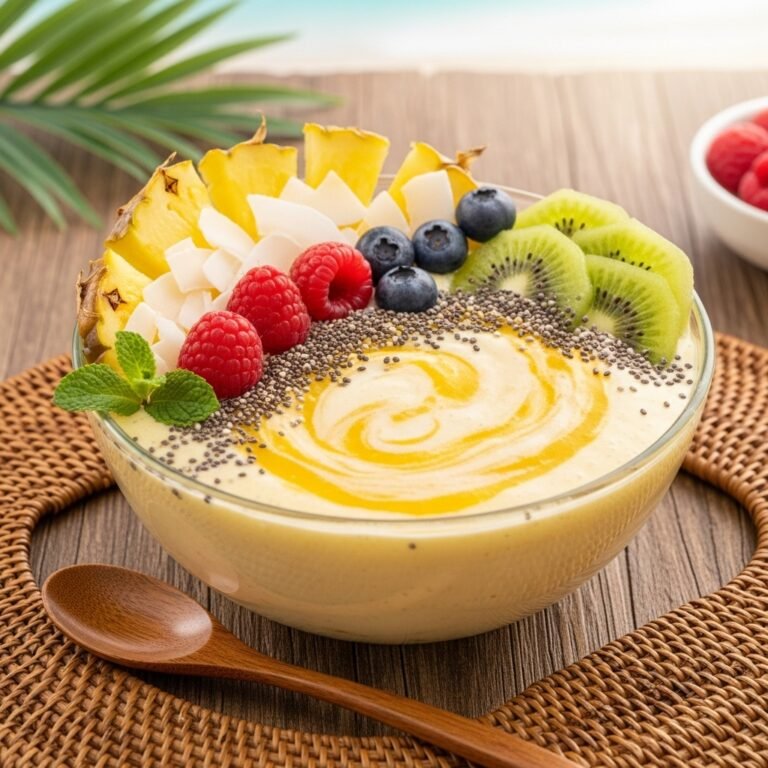
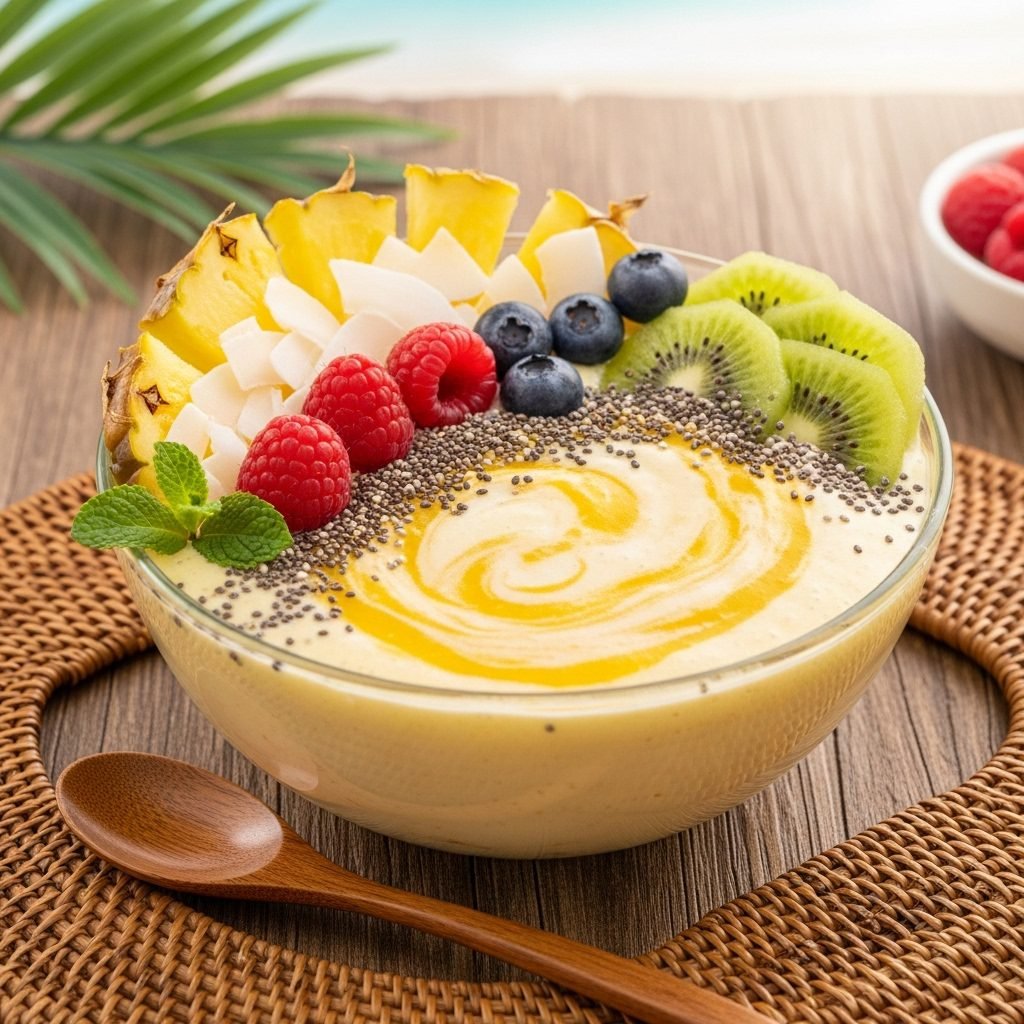
Imagine waking up to a taste of the tropics right in your own kitchen—that’s exactly what this Pineapple Smoothie Bowl delivers! This sunshine-in-a-bowl breakfast is thick, creamy, naturally sweet, and bursting with tropical flavors that transport you straight to a Hawaiian beach. Unlike regular smoothies that you sip through a straw, this spoonable creation is thick enough to hold a gorgeous array of toppings, from crunchy coconut flakes to fresh mango slices and granola clusters.
The Pineapple Smoothie Bowl has become a breakfast sensation for good reason. It’s incredibly refreshing, packed with vitamin C and digestive enzymes from fresh pineapple, and customizable to fit any dietary preference. Whether you’re looking for a post-workout protein boost, a kid-friendly breakfast that feels like a treat, or simply a nutritious way to start your day, this tropical bowl checks all the boxes.
What makes this recipe particularly special is its versatility and stunning visual appeal. The bright golden-yellow color is instantly cheerful and photogenic—perfect for sharing on Pinterest and Instagram. You can serve it year-round as a reminder of sunny days, make it for weekend brunch with friends, or prep the components in advance for quick weekday mornings. The combination of frozen pineapple, creamy banana, and your choice of tropical add-ins creates a thick, luxurious texture that’s satisfying, nourishing, and absolutely delicious.
History / Background
The smoothie bowl phenomenon has its roots firmly planted in tropical beach cultures, and pineapple has been a star player from the very beginning. While the açaí bowl from Brazil is often credited as the original smoothie bowl that sparked the trend, tropical variations featuring pineapple, mango, and coconut emerged simultaneously from Hawaiian surf culture and Australian beach communities in the early 2010s.
Pineapple itself has a fascinating history. Native to South America, particularly Brazil and Paraguay, pineapples were spread throughout the tropics by indigenous peoples long before European contact. When Christopher Columbus encountered the fruit in the Caribbean in 1493, he brought it back to Europe where it became a symbol of hospitality and exotic luxury. By the 1700s, pineapples were so valuable that wealthy families would rent them as centerpieces for parties!
Hawaii’s association with pineapple began in the early 1900s when James Dole established commercial pineapple plantations, eventually earning Hawaii the nickname “Pineapple Island.” This deep cultural connection made pineapple-based smoothie bowls a natural evolution of Hawaiian health food culture, where fresh tropical fruit, outdoor living, and wellness practices intersect beautifully.
The specific concept of a pineapple smoothie bowl gained mainstream popularity around 2015-2016, riding the wave of the broader smoothie bowl trend. Health-conscious communities in California, Hawaii, and Australia’s Gold Coast began posting these vibrant yellow bowls on social media, and their cheerful appearance made them instantly shareable. The tropical aesthetic—complete with coconut bowls, fresh flower garnishes, and beach backgrounds—resonated deeply with people seeking healthy, beautiful, Instagram-worthy meals.
Today, pineapple smoothie bowls represent more than just a trendy breakfast—they embody a lifestyle centered around fresh ingredients, mindful eating, and bringing a little tropical joy into everyday life. The recipe has evolved to include various additions like mango, coconut, banana, and even turmeric for an anti-inflammatory boost, but the essence remains the same: a thick, creamy, tropical breakfast that nourishes both body and soul.
Why You’ll Love This Recipe
This Pineapple Smoothie Bowl isn’t just another breakfast option—it’s a tropical vacation in a bowl that happens to be incredibly good for you! The natural sweetness of pineapple means you don’t need added sugars, while the fruit’s bromelain enzyme supports digestion and reduces inflammation. The thick, spoonable texture is far more satisfying than a drinkable smoothie, keeping you full and energized throughout your morning.
Here’s why this recipe will become your new breakfast obsession:
- Ready in 5 minutes – Faster than waiting in line at a smoothie shop and costs a fraction of the price
- Naturally gluten-free and vegan-friendly – Easily adapted to any dietary preference or restriction
- Loaded with vitamin C – One bowl provides over 100% of your daily vitamin C needs for immune support
- Anti-inflammatory properties – Pineapple’s bromelain enzyme helps reduce inflammation and aids digestion
- Budget-friendly – Frozen pineapple is affordable and available year-round, no expensive exotic ingredients needed
- Kid and picky-eater approved – The tropical sweetness and fun toppings make it exciting for children
- Meal prep champion – Portion frozen fruit packs in advance for even faster morning preparation
- Infinitely customizable – Adjust thickness, sweetness, and choose from dozens of topping combinations
- No cooking required – Just blend and serve; absolutely zero heat, pots, or pans needed
- Gorgeous presentation – That sunny yellow color and tropical toppings make it Pinterest-perfect every time
- Energy boosting – Natural fruit sugars provide quick energy while fiber ensures steady release throughout the morning
- Supports hydration – Pineapple has high water content, helping you stay hydrated on warm days
Ingredient Notes
Each ingredient in this tropical masterpiece serves a specific purpose, working together to create that perfect thick, creamy, spoonable texture while delivering maximum nutrition and flavor.
Frozen Pineapple – The absolute star of this bowl! Using frozen pineapple chunks is essential for achieving that thick, ice-cream-like consistency that makes smoothie bowls different from regular smoothies. Frozen pineapple is often more affordable than fresh, pre-cut for convenience, and available year-round regardless of season. If you prefer fresh pineapple, you’ll need to freeze it yourself first—just cut a whole pineapple into chunks and freeze on a baking sheet before transferring to freezer bags. Fresh pineapple without freezing will result in a thin, watery consistency that won’t hold toppings.
Frozen Banana – This ingredient is the secret to creaminess! Frozen banana acts as a natural thickener and adds subtle sweetness that complements the tangy pineapple perfectly. The banana’s pectin content creates that smooth, velvety texture similar to soft-serve ice cream. Always peel and slice your bananas before freezing—trying to peel a frozen banana is nearly impossible! If you can’t have bananas due to allergies or preferences, substitute with frozen mango, frozen cauliflower (surprisingly neutral-tasting), or half an avocado for creaminess.
Coconut Milk – Brings that essential tropical flavor and creates an ultra-creamy base. You can use full-fat canned coconut milk for maximum richness, refrigerated coconut milk from a carton for a lighter option, or coconut water for a thinner, more refreshing bowl. Other alternatives include regular dairy milk, almond milk, oat milk, or cashew milk. The critical rule: use LESS liquid than you would for a drinkable smoothie—start with just 1/4 cup and add more only if absolutely necessary for blending.
Greek Yogurt or Coconut Yogurt (Optional) – Adds protein, probiotics for gut health, and extra creaminess. Greek yogurt provides about 10g of protein per 1/4 cup, transforming your smoothie bowl from a light snack into a substantial meal. For vegan or dairy-free versions, coconut yogurt works beautifully and enhances the tropical flavor profile. If you skip yogurt entirely, consider adding a scoop of protein powder to maintain the protein content.
Mango (Optional but Recommended) – Adding a handful of frozen mango chunks creates a more complex tropical flavor profile and increases the nutritional value. Mango pairs perfectly with pineapple, adding its own vitamin A benefits and slightly different sweetness. This combination is what you’d find in many professional smoothie shop tropical bowls.
Honey or Agave (Optional) – Most people find that pineapple and banana provide sufficient natural sweetness, but if your pineapple is particularly tart or you prefer sweeter flavors, add 1 teaspoon of honey, agave nectar, or maple syrup. Always taste before adding sweeteners—you might not need them at all!
Lime Juice (Secret Ingredient) – Just a squeeze of fresh lime juice brightens all the tropical flavors and adds a subtle tangy note that prevents the bowl from tasting one-dimensional. This is an optional ingredient but highly recommended by professional chefs for elevating the flavor profile.
Toppings – This is where creativity and personalization shine! Popular tropical-themed toppings include coconut flakes (toasted or raw), fresh pineapple chunks, sliced kiwi, mango chunks, passion fruit pulp, granola, macadamia nuts, chia seeds, hemp hearts, bee pollen, edible flowers, and drizzles of coconut cream or nut butter. Choose 3-5 different toppings for the perfect balance of textures and visual appeal.
Equipment Needed
Creating the perfect pineapple smoothie bowl requires minimal equipment, but having the right tools makes the process significantly easier and produces better results:
- High-powered blender – This is your most important tool. A strong blender like a Vitamix, Blendtec, or Ninja handles frozen fruit effortlessly and creates that perfectly smooth, thick texture. Less powerful blenders can work but require more patience—let frozen fruit sit at room temperature for 5-10 minutes before blending, and stop frequently to scrape down the sides.
- Tamper or spatula – Essential for pushing thick mixtures down toward the blades while blending. Most high-powered blenders include a tamper tool designed specifically for this purpose. If your blender doesn’t have one, a sturdy silicone spatula works for stopping and scraping between pulses.
- Measuring cups and spoons – For accurately measuring your liquid ingredients. Precision matters with smoothie bowls since too much liquid ruins the consistency.
- Knife and cutting board – For preparing fresh fruit toppings and slicing any fresh pineapple if you’re using it.
- Wide, shallow serving bowls – Traditional deep bowls don’t showcase your beautiful toppings properly. Look for bowls that are at least 6-7 inches in diameter. Coconut bowls are incredibly popular for their authentic tropical aesthetic and make for stunning photos, but any wide ceramic or wooden bowl works beautifully.
- Freezer-safe containers or bags – For storing pre-portioned frozen fruit packs if you’re meal prepping.
- Spoon – Regular eating spoons work perfectly. Skip the straw—this is meant to be savored spoonful by spoonful!
Print

Pineapple Smoothie Bowl Recipe
This thick and creamy Pineapple Smoothie Bowl brings tropical paradise to your breakfast table! Made with frozen pineapple, banana, and coconut milk, it’s naturally sweet, refreshing, and topped with your favorite crunchy granola, fresh fruit, and toasted coconut. Ready in just 5 minutes and completely customizable!
- Total Time: 5 minutes
- Yield: 1 large bowl (or 2 smaller servings) 1x
Ingredients
ScaleFor the Smoothie Bowl Base:
- 2 cups frozen pineapple chunks
- 1 medium frozen banana, sliced
- 1/2 cup frozen mango chunks (optional but recommended)
- 1/3 cup coconut milk (or milk of choice)
- 1/4 cup plain Greek yogurt or coconut yogurt
- 1 teaspoon honey or agave nectar (optional)
- Juice of 1/2 lime (about 1 tablespoon)
For Toppings (choose your favorites):
- 1/4 cup granola
- 3-4 fresh pineapple chunks
- 1/4 cup fresh mango slices
- 2 tablespoons toasted coconut flakes
- 2 tablespoons sliced kiwi
- 1 tablespoon chia seeds
- 1 tablespoon macadamia nuts or cashews, chopped
- 2 tablespoons passion fruit pulp (if available)
- Drizzle of coconut cream or almond butter
- Fresh mint leaves for garnish
Instructions
- Prepare your ingredients: Remove frozen pineapple, banana, and mango from the freezer. If your blender is less powerful, let them sit at room temperature for 5-10 minutes to soften slightly.
- Layer your blender properly: Add coconut milk and yogurt to the blender first (liquids on the bottom help the blending process), then add the frozen pineapple, banana, and mango chunks on top.
- Add flavor enhancers: Squeeze in the lime juice and add honey if using. The lime juice really brightens the tropical flavors!
- Blend strategically: Start on the lowest speed setting to break down the frozen fruit, using your tamper to push ingredients toward the blades. Gradually increase to high speed once the fruit starts breaking down. The mixture will be very thick—this is exactly what you want! Total blending time should be 30-60 seconds.
- Check consistency: The mixture should be thick enough that a spoon stands upright in it. If it’s too thick to blend and your motor is struggling, add just 1-2 tablespoons more liquid at a time. Remember: thicker is better for smoothie bowls!
- Taste and adjust: Sample your smoothie base before pouring. Add more lime for tanginess, honey for sweetness, or a pinch of sea salt to enhance all the flavors.
- Transfer to bowl: Pour or scoop the thick smoothie base into your serving bowl. Use a spatula to spread it evenly and create a smooth surface that’s perfect for arranging toppings.
- Create your tropical masterpiece: Arrange your toppings in sections or artistic patterns. Start with the larger items like pineapple chunks and mango slices, then add granola, sprinkle with coconut flakes, chia seeds, and nuts. Finish with a drizzle of coconut cream and a few fresh mint leaves for that restaurant-quality presentation.
- Serve immediately: Enjoy your tropical creation right away while the base is still thick and frozen. The contrast between the cold, creamy base and crunchy toppings is perfection!
Notes
- Thickness is everything: If your smoothie bowl is too thin, you’ve added too much liquid. Start conservatively—you can always add more liquid, but you can’t remove it once added.
- Frozen fruit is non-negotiable: Fresh fruit (unless you freeze it yourself first) will not give you the thick, spoonable consistency. Always use frozen pineapple and banana.
- Coconut milk options: Full-fat canned coconut milk creates the richest, creamiest result. Light coconut milk or coconut milk beverages are lighter but still delicious.
- Make it a protein bowl: Add a scoop of vanilla or unflavored protein powder to boost protein content to 25-30g per bowl.
- Prep frozen packs: Pre-portion your frozen fruit into individual bags for incredibly quick morning assembly.
- No mango? No problem: You can use all pineapple, or substitute with frozen peaches or papaya for different tropical flavors.
- Prep Time: 5 minutes
- Cook Time: 0 minutes
- Category: Breakfast
- Method: Blending
- Cuisine: Hawaiian / Tropical
Nutrition
- Serving Size: 1 large bowl (with toppings as listed)
- Calories: 405
- Sugar: 48g
- Sodium: 65mg
- Fat: 14g
- Saturated Fat: 8g
- Unsaturated Fat: 5g
- Trans Fat: 0g
- Carbohydrates: 72g
- Fiber: 10g
- Protein: 10g
- Cholesterol: 3mg
Tips & Variations
Tropical Flavor Twists:
- Piña Colada Style: Add 2 tablespoons of coconut cream and a splash of coconut extract for authentic piña colada vibes
- Tropical Sunset: Blend half the base with pineapple, half with mango and dragonfruit for a stunning two-tone effect
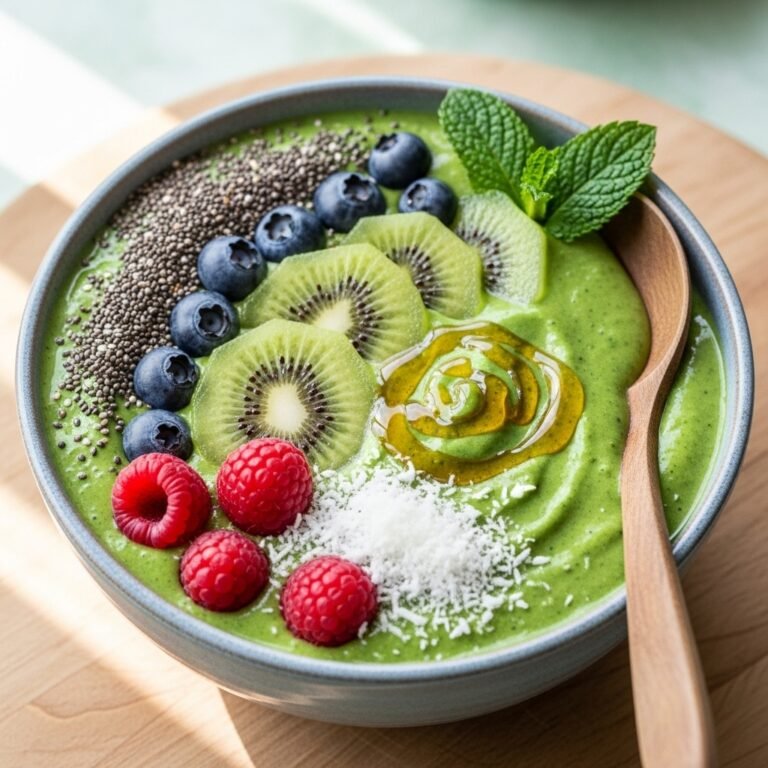
- Green Tropical: Add 1 cup fresh spinach or kale—the pineapple masks any green taste completely
- Papaya Paradise: Substitute half the pineapple with frozen papaya for a different tropical flavor profile
Protein Power-Ups:
- Add 1 scoop vanilla or tropical-flavored protein powder for 15-25g extra protein
- Blend in 2 tablespoons cashew butter or macadamia nut butter for healthy fats and protein
- Use high-protein Greek yogurt (look for brands with 15-20g protein per serving)
- Top with hemp hearts, providing complete plant-based protein and omega-3s
- Add a tablespoon of collagen peptides for protein that supports skin, hair, and joint health
Wellness Boosters:
- Anti-Inflammatory Gold: Add 1/2 teaspoon fresh turmeric and a pinch of black pepper
- Immunity Boost: Blend in 1/2 teaspoon fresh ginger for immune support and digestive benefits
- Superfood Enhanced: Add 1 tablespoon maca powder for energy and hormonal balance
- Gut Health Focus: Mix in 1 tablespoon ground flaxseed for prebiotics and omega-3s
Lower Sugar Options:
- Use 1/2 banana instead of a whole one and add 1/4 avocado for creaminess without extra sugar
- Skip honey and rely entirely on the natural fruit sweetness
- Add a few drops of stevia if you need more sweetness without calories
- Choose unsweetened granola and coconut flakes for toppings
Allergy-Friendly Adaptations:
- Nut-free: Use oat milk or rice milk instead of nut-based milks; top with seeds instead of nuts
- Banana-free: Replace banana with extra mango or 1/2 avocado for creaminess
- Coconut-free: Use regular dairy milk, almond milk, or oat milk as your liquid base
Pro Chef Tips
Freeze pineapple at peak ripeness: Choose a pineapple that’s golden yellow (not green) with a sweet fragrance at the stem end. The fruit should give slightly when pressed. Cut and freeze at this perfect stage for maximum sweetness and flavor. Under-ripe pineapple will be too tart even with added sweeteners.
Use the “pulse then blend” technique: Don’t just hit the high-speed button immediately. Pulse 5-7 times first to break the frozen fruit into smaller, more manageable pieces. This prevents your blender motor from overworking and creates a smoother final texture without gaps or chunks.
Master the liquid ratio: The golden ratio for thick smoothie bowls is approximately 4:1 fruit to liquid. For every 2 cups of frozen fruit, use no more than 1/2 cup liquid total (including yogurt). Start with less—you can always add more, but you cannot remove liquid once added.
Create temperature contrast: Work quickly and serve in a chilled bowl to maintain that thick, frozen consistency longer. Some professionals even freeze their serving bowls for 10-15 minutes before assembly. This prevents the base from melting too quickly and keeps toppings crisp.
Layer flavors strategically: That squeeze of lime juice isn’t optional for professional-quality results—it brightens and balances the sweetness while enhancing the tropical flavors. A tiny pinch of sea salt (just 1/8 teaspoon) also amplifies all the flavors without making the bowl taste salty.
Toast your coconut flakes: Raw coconut is fine, but toasting coconut flakes in a dry skillet for 3-4 minutes until golden creates an incredible depth of flavor and irresistible aroma. Watch carefully—they burn quickly! This small step elevates your bowl from homemade to gourmet.
Arrange toppings in odd numbers: Professional food stylists know that odd numbers (3 strawberry slices, 5 granola clusters) are more visually appealing than even numbers. Arrange in sections or lines rather than scattering randomly for that Instagram-worthy look.
Add texture variety: The magic of smoothie bowls lies in textural contrast. Your base should be smooth and creamy, while toppings provide crunch (granola, nuts), chewiness (coconut, dried fruit), and juicy freshness (fresh fruit). Always include at least two different textures.
Common Mistakes to Avoid
Using too much liquid: This is the #1 mistake that ruins smoothie bowls! Many people are used to making drinkable smoothies and automatically add too much liquid. Remember: you’re making a spoonable bowl, not a beverage. Start with just 1/3 cup of liquid and add more only if your blender absolutely cannot process the ingredients. If you accidentally add too much, blend in more frozen fruit, a handful of ice, or a few frozen cauliflower florets to thicken it back up.
Skipping the frozen banana: Some people think they can substitute fresh banana or skip it entirely without consequences. The frozen banana is essential for that creamy, thick texture—it acts as a natural ice cream base. Fresh bananas make your bowl thin and watery. If you truly cannot use banana due to allergies, substitute with frozen mango, avocado, or frozen cauliflower, but you must use something creamy and frozen.
Not using a tamper with thick mixtures: If your blender comes with a tamper tool and you’re not using it, you’re making life unnecessarily difficult! The tamper pushes frozen fruit down toward the blades without requiring you to stop the blender repeatedly. Without it, you’ll need to stop every 10-15 seconds to scrape down sides, which allows the mixture to melt slightly and lose that perfect thick consistency.
Adding toppings too slowly: Once your base is poured, you have a limited window before it starts melting, especially in warm kitchens. Prep all your toppings before you even start blending, then work quickly to arrange them once the base is in the bowl. Taking five minutes to perfectly arrange toppings means you’ll be eating a soup instead of a bowl.
Using low-quality frozen pineapple: Not all frozen fruit is equal. Look for individually quick-frozen (IQF) pineapple chunks without added sugars, syrups, or preservatives. Check for ice crystals in the bag—excessive frost indicates the fruit has been thawed and refrozen, which ruins texture and flavor. Organic frozen pineapple typically has better flavor and fewer additives.
Forgetting to taste before serving: Your final chance to adjust flavors is before pouring into the bowl. Take a quick taste—does it need more lime for brightness? A touch more sweetness? A pinch of salt to enhance flavors? Once you’ve added elaborate toppings, you can’t easily remix and adjust the base.
Over-blending and creating heat: Blenders generate heat through friction. Over-blending not only creates unnecessary heat that melts your frozen ingredients, but it can also make the texture less appealing—almost gummy rather than creamy. Blend just until smooth and combined, then stop immediately. Total blending time should rarely exceed 60 seconds.
Storage & Meal Prep
Immediate Consumption is Best: Smoothie bowls are designed to be enjoyed immediately after preparation. The thick, frozen consistency is temporary—within 15-20 minutes at room temperature, the base begins melting and toppings can become soggy. This is truly a fresh-made, eat-immediately creation for optimal texture and enjoyment.
Storing the Base (Emergency Only): If you absolutely must store the smoothie base without toppings, transfer it to an airtight container and freeze immediately for up to 24 hours. The texture will become very firm, almost like ice cream or sorbet. When ready to eat, let it thaw on the counter for 10-15 minutes until it reaches a scoopable consistency, stir vigorously to restore some creaminess, then add fresh toppings. Note that the texture will never be quite the same as freshly blended.
The Ultimate Meal Prep Strategy: Pre-portioning frozen fruit packs is the game-changer for quick mornings! Measure 2 cups frozen pineapple, 1 sliced frozen banana, and 1/2 cup frozen mango into individual freezer-safe bags or containers. Label with the date and store flat in your freezer for up to 3 months. In the morning, dump one pack into your blender with your liquid ingredients, blend for 60 seconds, and you’re done. This reduces morning prep to under 3 minutes total.
Topping Organization: Create a “smoothie bowl station” in your kitchen for maximum efficiency. Use a small divided container or several small jars to store frequently used toppings like granola, coconut flakes, chia seeds, and nuts. Keep these in your pantry for easy access. Pre-slice fresh fruit toppings the night before and store in the refrigerator in airtight containers, though freshly cut fruit always looks and tastes better.
Freezing Fresh Pineapple: If you buy whole fresh pineapples, cut and freeze your own chunks for maximum freshness and cost savings. Cut the pineapple into 1-inch chunks, spread on a parchment-lined baking sheet, and freeze until solid (2-3 hours). Transfer to freezer bags, removing as much air as possible. Home-frozen pineapple often tastes sweeter and fresher than store-bought frozen fruit.
Leftover Base Uses: If you somehow have leftover smoothie base (rare but possible), repurpose it creatively:
- Thin with coconut water and drink as a regular smoothie
- Pour into popsicle molds for homemade tropical popsicles
- Mix into overnight oats for tropical-flavored breakfast
- Blend into nice cream (add more frozen banana and reblend for a dairy-free ice cream)
- Freeze in ice cube trays and add to future smoothies for extra flavor
Make-Ahead & Freezer Notes
Pre-Portioned Freezer Packs (Highest Recommendation): This is hands-down the best way to enjoy smoothie bowls regularly without morning stress. Every Sunday, portion out 5-7 individual servings into freezer bags: 2 cups frozen pineapple, 1 sliced banana, and 1/2 cup mango per bag. Remove excess air, label with date, and store flat in your freezer for up to 3 months. Each bag represents one perfect smoothie bowl—just add liquids and blend.
Freezing Fresh Tropical Fruit: When pineapples or mangoes go on sale, buy several and freeze for future use. For pineapple: cut into chunks, freeze on a baking sheet until solid, then transfer to bags. For mango: slice cheeks off the pit, score flesh in a grid pattern, scoop out chunks, freeze on a sheet, then bag. Home-frozen fruit at peak ripeness often surpasses store-bought frozen fruit in both flavor and quality.
Banana Freezing Technique: Never throw away overripe bananas! These are actually perfect for smoothie bowls because they’re sweeter. Peel completely (frozen peels are impossible to remove), slice into 1-inch coins, arrange on a parchment-lined sheet without touching, freeze until solid (about 2 hours), then transfer to freezer bags. Label with the date—frozen bananas keep for 3-6 months. Pro tip: freeze bananas at different ripeness stages to control sweetness in different bowls.
Can You Make the Bowl in Advance? Unfortunately, no. Assembled smoothie bowls don’t hold up when stored—the base becomes icy and separated, toppings become soggy or sink into the base, and the overall eating experience suffers dramatically. This is genuinely a make-and-enjoy-immediately recipe, which is why the pre-portioned frozen fruit method is so valuable.
Freezing Coconut Milk: If you open a can of full-fat coconut milk and don’t use it all, pour the remainder into ice cube trays. Each cube equals about 2 tablespoons. Pop out frozen cubes and store in a freezer bag for up to 3 months. Add 2-3 cubes directly to your smoothie bowl base for extra creaminess without measuring.
Batch-Prepping Toasted Coconut: Toast a large batch of coconut flakes (1-2 cups) in a dry skillet over medium heat for 3-4 minutes, stirring constantly until golden. Let cool completely, then store in an airtight container at room temperature for 2-3 weeks. This gives you restaurant-quality toasted coconut ready at a moment’s notice.
Tropical Smoothie Bowl Kits: Create complete “kits” that include both frozen fruit packs AND portioned toppings. Use quart-size freezer bags for the frozen fruit, and include a small paper bag or container attached with the granola, coconut, and seeds portioned out. Write any fresh fruit additions needed on the label. This system is perfect for busy mornings or for people new to smoothie bowls who want foolproof results.
Serving Suggestions
Complete Breakfast Ideas: Make your smoothie bowl part of a more substantial breakfast spread:
- Protein pairing: Serve alongside scrambled eggs, hard-boiled eggs, or a veggie omelet for balanced macros
- Whole grain toast: Add avocado toast or almond butter toast for healthy fats and sustained energy
- Tropical breakfast board: Create a brunch board with your smoothie bowl as the centerpiece, surrounded by fresh tropical fruit, yogurt, and granola
Beverage Pairings:
- Coffee: Cold brew coffee or iced latte complements the sweet tropical flavors beautifully
- Coconut water: Extra hydration with natural tropical flavor
- Green juice: Celery-cucumber-apple juice adds vegetables while maintaining the fresh, healthy vibe
- Herbal tea: Passion fruit tea or mango tea (served cold or hot) enhances tropical notes
- Sparkling water: Lime-flavored sparkling water with fresh mint is refreshing alongside the sweet bowl
Brunch Party Ideas: Create a DIY Tropical Smoothie Bowl Bar for entertaining:
- Three different bases: Pineapple, mixed berry, and green tropical
- Topping station: Set out 8-10 different topping options in small bowls
- Coconut bowls: Use coconut shell bowls for authentic tropical presentation
- Fresh flowers: Add hibiscus or orchid flowers as edible garnishes
- Hawaiian music: Set the tropical mood with ukulele music playing
- Provide recipe cards: Let guests know what ingredients went into each base option
Seasonal Serving Ideas:
- Summer: Serve poolside or at beach-themed brunches; add watermelon chunks as a topping
- Fall: Add seasonal toppings like pomegranate arils and pumpkin seed granola
- Winter: The bright tropical flavors are especially welcome during cold, gray months—serve as a sunshine reminder
- Spring: Garnish with edible flowers like pansies or violets for beautiful presentation
For Kids:
- Tropical treasure hunt: Hide frozen pineapple chunks (the “treasures”) throughout the bowl base for kids to discover
- Build-your-own mini bowls: Give children small bowls and let them create their own topping designs
- Smoothie bowl faces: Use fruit toppings to create funny faces or favorite characters
- Serve with tropical fruit kabobs: Thread pineapple, kiwi, and mango on child-safe skewers as a side
Post-Workout Refueling:
- Add an extra scoop of protein powder to the base (25-30g protein total)
- Top with granola and extra nuts for complex carbohydrates
- Serve with a handful of dates or dried pineapple for quick carb replenishment
- Pair with a protein shake chaser if you need higher calorie intake
- Add chia seeds and hemp hearts for omega-3 fatty acids and recovery support
FAQs Section
Q: Can I use fresh pineapple instead of frozen?
A: You can, but you’ll need to freeze it first or add significant ice to achieve the thick consistency. Fresh pineapple without freezing creates a thin, watery smoothie that won’t hold toppings. If using fresh pineapple, cut it into chunks and freeze on a baking sheet for at least 2-3 hours before using. Alternatively, use 1 cup fresh pineapple plus 1 cup ice cubes, though the texture won’t be quite as creamy as using all frozen fruit. Most smoothie bowl enthusiasts prefer frozen for convenience and consistency.Q: Why is my smoothie bowl too thin and runny?
A: This almost always happens because too much liquid was added. Smoothie bowls require significantly less liquid than drinkable smoothies—think 1/3 cup liquid for 2+ cups of frozen fruit. Start conservatively and add only 1 tablespoon more at a time if needed for blending. If your bowl is already too thin, save it by blending in more frozen pineapple, a frozen banana, or a handful of ice. You can also add 2 tablespoons of frozen cauliflower (completely flavorless) to thicken without changing the taste.Q: Can I make this smoothie bowl without banana?
A: Yes! While banana adds ideal creaminess, you have several alternatives: use frozen mango for natural sweetness and creaminess (1 cup extra mango instead of banana), add 1/4-1/2 ripe avocado for creaminess without banana flavor, use frozen cauliflower (1/2 cup florets add thickness with zero taste impact), or increase frozen pineapple and add 2 tablespoons chia seeds for thickness.MUYou may need slightly more sweetener since banana contributes natural sugar. The texture will be slightly different but still delicious!
Q: How can I add more protein to make this a complete meal?
A: There are many effective ways to boost protein content: blend in one scoop of vanilla or tropical-flavored protein powder (adds 15-25g protein), use high-protein Greek yogurt like Fage Total (look for 15-20g protein per serving), blend 2 tablespoons almond butter, cashew butter, or macadamia nut butter into the base, add 1/4 cup silken tofu (5g protein with no flavor change), top with hemp hearts (3g protein per tablespoon), or sprinkle with nuts and seeds. Combining several of these methods can easily create a 25-30g protein bowl that serves as a complete post-workout meal.Q: Can I prep smoothie bowls for the entire week?
A: Unfortunately, you cannot pre-make the assembled bowls as they don’t maintain quality when stored. However, you absolutely CAN prep the components! Create frozen fruit packs (one per serving) with all your frozen ingredients portioned into individual bags. Store these for up to 3 months. Prep your toppings by portioning granola, coconut, and nuts into small containers. In the morning, blend one frozen pack with your liquids (takes 2 minutes), add toppings, and enjoy. This gives you the convenience of meal prep with the quality of fresh-made.Q: What’s the best way to cut and prepare fresh pineapple?
A: Here’s the easiest method: Cut off both ends of the pineapple so it sits flat. Stand it upright and slice downward following the curve to remove the skin in strips. Remove any remaining “eyes” (brown spots) with the tip of your knife or a peeler. Cut into quarters lengthwise, then cut out the tough core from each quarter. Slice the quarters into chunks. One medium pineapple yields about 4 cups of chunks—enough for 2 large smoothie bowls. Fresh-cut pineapple should be frozen within 24 hours for best quality.Q: Is this smoothie bowl suitable for kids and toddlers?
A: Absolutely! This is an excellent choice for children because it’s naturally sweet without refined sugars, packed with vitamin C for immune support, and fun to eat. The topping options make it exciting and engaging for kids. For toddlers, cut any large fruit toppings into smaller, age-appropriate pieces to prevent choking. Let children help choose and arrange their own toppings to increase buy-in. You can also sneak in spinach without them noticing—the pineapple completely masks any green taste. Just avoid honey for babies under 12 months old.Q: Can I use coconut water instead of coconut milk?
A: Yes, but understand the difference in results. Coconut water creates a lighter, less creamy bowl with a thinner consistency and more refreshing quality—similar to a tropical sorbet. Coconut milk (especially canned full-fat) creates a rich, creamy, indulgent bowl similar to ice cream. Both are delicious but serve different preferences. If using coconut water, you might want to add a tablespoon or two of coconut cream or Greek yogurt to maintain some creaminess. Start with just 1/4 cup coconut water as it’s thinner than milk and requires less volume.Conclusion
There you have it—everything you need to create a stunning, restaurant-quality Pineapple Smoothie Bowl right in your own kitchen! This tropical treasure proves that healthy eating doesn’t have to be boring, complicated, or time-consuming. With just a handful of simple ingredients, five minutes of effort, and a good blender, you can transport yourself to a Hawaiian beach every single morning, no matter where you actually live or what the weather looks like outside.
The beauty of this recipe lies in its perfect balance of nutrition, convenience, and pure deliciousness. You’re getting massive amounts of vitamin C for immune support, bromelain for digestion and inflammation, natural energy from fruit sugars, and the satisfaction of a thick, creamy breakfast that keeps you full until lunch. Plus, it’s endlessly customizable—make it protein-packed for post-workout recovery, load it with superfoods for wellness benefits, or keep it simple and classic for everyday enjoyment.
Remember the keys to smoothie bowl success: use frozen fruit (non-negotiable!), add minimal liquid for that thick, spoonable consistency, prep your toppings before blending, and work quickly once assembled to maintain that perfect frozen texture. Don’t be afraid to experiment with different tropical fruit combinations, creative toppings, and flavor add-ins until you discover your perfect bowl. Every single one is an opportunity to nourish your body while indulging in something that tastes like a tropical vacation.
I absolutely can’t wait to see your beautiful pineapple smoothie bowl creations! Snap a photo of your masterpiece, share it on Pinterest, and tag your post so I can admire your tropical artistry. Did you discover an amazing topping combination? Did your kids devour it? Did you find a creative variation that’s now your new obsession? Drop a comment below and share your experience—I read every single comment and your feedback helps me create more recipes that you’ll love!
If this recipe brightened your morning (literally and figuratively!), please pin it to your breakfast boards and smoothie collections on Pinterest. Your shares help other home cooks discover these detailed, tested recipes and support food bloggers like me in continuing to create free, comprehensive content for you.
Now go grab that frozen pineapple, fire up your blender, and bring some tropical sunshine into your morning! Your taste buds, your body, and your Instagram feed will thank you! 🍍🥥☀️