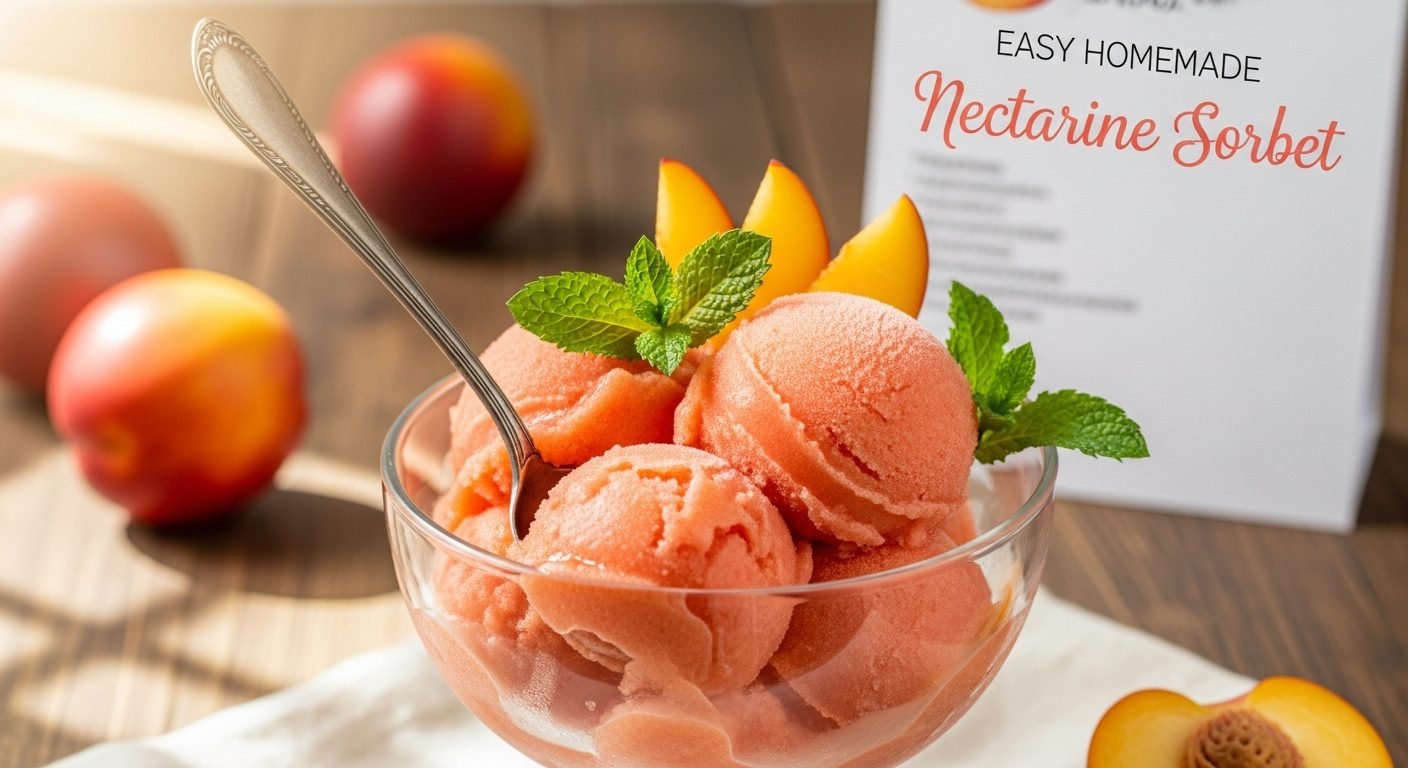
Easy Homemade Nectarine Sorbet Recipe – Fresh, Fruity & Foolproof

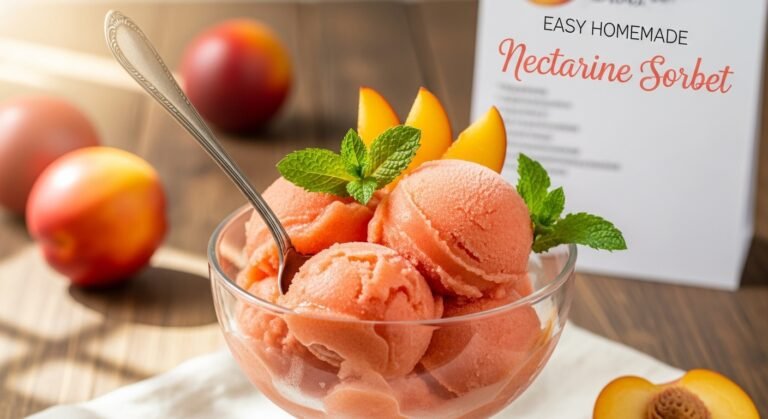
There’s nothing quite like a scoop of homemade nectarine sorbet on a hot summer day. This refreshing frozen dessert captures the essence of peak-season nectarines in every spoonful, delivering a naturally sweet and tangy flavor that store-bought versions simply can’t match. Unlike ice cream, sorbet is dairy-free, making it a lighter option that lets the vibrant fruit flavor shine through without any cream or eggs weighing it down.
This nectarine sorbet is incredibly versatile and perfect for so many occasions. Serve it as a palate cleanser between courses at a dinner party, offer it as a guilt-free dessert after a backyard barbecue, or simply enjoy it as an afternoon treat when you’re craving something cool and sweet. The best part? You only need a handful of simple ingredients and an ice cream maker to create this restaurant-quality frozen dessert right in your own kitchen. Whether you’re an experienced home cook or a complete beginner, this recipe is remarkably forgiving and delivers stunning results every single time.
History / Background
Sorbet has a fascinating history that dates back thousands of years, with origins that historians trace to ancient Persia and China, where people would mix fruit juices with snow or ice to create refreshing treats. The word “sorbet” itself comes from the Turkish “şerbet,” which was derived from the Arabic “sharba,” meaning “to drink.” These icy confections traveled along trade routes throughout the Middle East and eventually made their way to Europe during the Middle Ages.
By the Renaissance period, Italian and French chefs had perfected the art of making sorbetto and sorbet, turning it into an elegant palate cleanser served at lavish feasts. Catherine de Medici is often credited with introducing sorbet to France when she married King Henry II in 1533, bringing along her Italian chefs who dazzled the French court with their frozen creations.
Nectarines themselves are believed to have originated in China over 2,000 years ago, though the smooth-skinned fruit we know today was developed through natural mutation of peaches. The name “nectarine” comes from the Greek word “nektar,” the drink of the gods, which perfectly describes the fruit’s sweet, ambrosial flavor. California became the major producer of nectarines in the United States during the 20th century, and today, American home cooks embrace nectarine sorbet as a celebration of summer’s bounty, transforming this ancient dessert tradition into an accessible treat that showcases the season’s best fruit.
Why You’ll Love This Recipe
This nectarine sorbet recipe is about to become your new summer obsession, and here’s why: it manages to be incredibly simple while delivering sophisticated, restaurant-quality results that will impress everyone who tries it. The natural sweetness of ripe nectarines means you don’t need excessive amounts of sugar, and the smooth, creamy texture rivals any premium gelato shop despite being completely dairy-free.
Here’s what makes this recipe absolutely irresistible:
- Minimal ingredients – Just four basic components create magic
- Naturally dairy-free and vegan – Perfect for those with dietary restrictions or preferences
- Lower in calories than traditional ice cream while still feeling indulgent
- No artificial flavors or preservatives – You control exactly what goes into your dessert
- Kid-friendly – Children love the fruity sweetness and bright color
- Perfect for entertaining – Elegant enough for dinner parties yet casual enough for family meals
- Customizable – Easy to adjust sweetness levels or add complementary flavors
- Great way to use peak-season fruit – Take advantage of summer’s abundance
- Impressive presentation – The vibrant orange-pink color looks stunning in any serving dish
- Beginner-friendly – No complicated techniques or professional skills required
Ingredient Notes
Let’s talk about what you’ll need to make this spectacular nectarine sorbet. Each ingredient plays a crucial role in creating the perfect texture and flavor balance.
Nectarines – The star of the show! Choose ripe, fragrant nectarines that yield slightly to gentle pressure. They should smell sweet and aromatic at the stem end. You’ll need about 2 pounds, which is typically 6-8 medium nectarines. If nectarines aren’t available, you can substitute peaches (just peel them first), apricots, or even a combination of stone fruits. Avoid underripe fruit, as it will result in a tart, lackluster sorbet.
Granulated Sugar – This sweetens the sorbet while also lowering the freezing point, which helps create a scoopable texture rather than a solid ice block. The amount can be adjusted based on the natural sweetness of your fruit and your personal preference. For a healthier option, you can substitute honey, agave nectar, or even maple syrup, though these will slightly alter the flavor profile.
Fresh Lemon Juice – This is the secret ingredient that makes everything pop! Lemon juice brightens the nectarine flavor, adds a pleasant tang, and prevents the fruit from oxidizing and turning brown. Always use fresh lemon juice rather than bottled for the best flavor. You’ll need about 2-3 tablespoons. Lime juice can work as a substitute in a pinch.
Water – Used to create a simple syrup that helps distribute the sugar evenly throughout the sorbet. Some recipes use all fruit puree, but a little water creates a lighter, more refreshing texture that’s perfect for hot summer days.
Vanilla Extract (Optional) – A small splash enhances the nectarine flavor without making the sorbet taste like vanilla. It’s subtle but makes a difference. You can also experiment with almond extract for a different flavor dimension.
Equipment Needed
Making nectarine sorbet doesn’t require a professional kitchen, but having the right tools makes the process smooth and enjoyable:
- Ice Cream Maker – This is the most important piece of equipment. Whether you have a traditional churn-style maker or a modern compressor model, it’s essential for creating that smooth, scoopable texture. Make sure to freeze the bowl at least 24 hours in advance if your model requires it.
- Blender or Food Processor – You’ll need a high-powered blender or food processor to puree the nectarines until completely smooth. A quality blender like a Vitamix works wonderfully, but any standard blender will do the job.
- Medium Saucepan – For making the simple syrup by dissolving sugar in water.
- Fine-Mesh Strainer – Optional but recommended for removing any fibrous bits or skin pieces to ensure an ultra-smooth sorbet.
- Sharp Knife and Cutting Board – For cutting and pitting the nectarines.
- Measuring Cups and Spoons – Accurate measurements ensure consistent results.
- Mixing Bowls – For combining ingredients before churning.
- Freezer-Safe Container – A shallow, airtight container (like a loaf pan covered with plastic wrap or a dedicated ice cream storage container) for storing the finished sorbet.
- Ice Cream Scoop – For serving those perfect scoops.
Print

Nectarine Sorbet Recipe
This homemade nectarine sorbet is a refreshing, naturally sweet frozen dessert that captures the essence of summer stone fruit. With just a few simple ingredients and an ice cream maker, you can create a smooth, scoopable sorbet that rivals any gourmet shop. Perfect for hot days, entertaining, or as a light ending to any meal.
- Total Time: 4 hours 50 minutes
- Yield: 6 servings (about 1 quart) 1x
Ingredients
Scale- 2 pounds ripe nectarines (about 6-8 medium nectarines)
- ¾ cup granulated sugar
- ½ cup water
- 3 tablespoons fresh lemon juice
- ½ teaspoon vanilla extract (optional)
- Pinch of salt
Instructions
- Prepare the nectarines: Wash the nectarines thoroughly under cool water. Cut them in half, remove the pits, and chop the fruit into rough chunks. You don’t need to peel nectarines since their skin is thin and will blend smoothly, plus it adds beautiful color and extra nutrients.
- Make the simple syrup: In a medium saucepan, combine the sugar and water. Place over medium heat and stir occasionally until the sugar completely dissolves, about 3-5 minutes. You’ll know it’s ready when the liquid is clear and no sugar granules remain. Remove from heat and let cool for 10 minutes.
- Blend the fruit: Place the chopped nectarines in your blender or food processor. Add the cooled simple syrup, fresh lemon juice, vanilla extract (if using), and a pinch of salt. Blend on high speed for 1-2 minutes until the mixture is completely smooth and silky with no chunks remaining.
- Strain (optional): For an ultra-smooth sorbet, pour the mixture through a fine-mesh strainer set over a large bowl, using a spatula or the back of a spoon to press the puree through. This removes any fibrous bits. If you prefer a more rustic texture, you can skip this step.
- Chill the mixture: Cover the bowl with plastic wrap and refrigerate for at least 4 hours or overnight. The mixture needs to be very cold (ideally around 40°F) before churning to achieve the best texture. Cold mixture = smoother sorbet!
- Churn the sorbet: Pour the chilled mixture into your ice cream maker and churn according to the manufacturer’s instructions, typically 20-25 minutes. The sorbet is ready when it reaches a soft-serve consistency and pulls away from the sides of the bowl.
- Freeze until firm: Transfer the freshly churned sorbet to a freezer-safe container, pressing plastic wrap directly onto the surface to prevent ice crystals from forming. Freeze for at least 2-3 hours until firm enough to scoop.
- Serve: Let the sorbet sit at room temperature for 5-10 minutes before scooping for the best texture. Scoop into bowls or cones and enjoy immediately!
Notes
- Ripeness matters: Using perfectly ripe nectarines is crucial for the best flavor. Underripe fruit will result in tart, less flavorful sorbet.
- Sugar adjustments: Taste your nectarine puree before churning. If it’s too tart, add 1-2 tablespoons more sugar. If it’s very sweet, reduce sugar slightly. Remember that freezing dulls sweetness, so it should taste slightly sweeter than you want the final product.
- No ice cream maker? You can still make sorbet! Pour the mixture into a shallow pan and freeze, stirring vigorously every 30 minutes for 3-4 hours to break up ice crystals.
- Alcohol tip: Adding 1-2 tablespoons of vodka or fruit liqueur will make your sorbet softer and easier to scoop, as alcohol doesn’t freeze.
- Prep Time: 20 minutes
- Cook Time: 5 minutes
- Category: Desert
- Method: Churning
- Cuisine: American
- Diet: Gluten Free
Nutrition
- Serving Size: ⅔ cup (approximately 135g)
- Calories: 142 kcal
- Sugar: 33g
- Sodium: 12mg
- Fat: 0.5g
- Saturated Fat: 0g
- Unsaturated Fat: 0.4g
- Trans Fat: 0g
- Carbohydrates: 36g
- Fiber: 2g
- Protein: 1g
- Cholesterol: 0mg
Tips & Variations
The beauty of homemade sorbet is how easily you can customize it to suit your preferences or experiment with different flavor combinations:
Flavor Variations:
- Nectarine-Basil Sorbet: Add 8-10 fresh basil leaves to the simple syrup while it cools, then strain them out before blending with the nectarines. The herbal notes create a sophisticated, restaurant-worthy dessert.
- Ginger-Nectarine: Add 1 tablespoon of freshly grated ginger to the simple syrup for a warming, spicy kick that complements the sweet fruit beautifully.
- Berry Swirl: Ripple in some raspberry or strawberry puree during the last minute of churning for a stunning marbled effect.
- Honey-Lavender: Replace half the sugar with honey and add ½ teaspoon of culinary lavender to the simple syrup for an elegant, floral variation.
Dietary Modifications:
- Lower Sugar: Reduce sugar to ½ cup if your nectarines are very ripe and sweet, or use a sugar substitute like erythritol or monk fruit sweetener.
- Refined Sugar-Free: Use coconut sugar, date sugar, or maple syrup instead of white sugar for a less processed option.
- Boozy Version: Add 2-3 tablespoons of white rum, vodka, Cointreau, or amaretto for an adult-only treat that stays scoopable.
Texture Adjustments:
- For a smoother texture, strain through a fine-mesh sieve and churn longer.
- For a chunky, rustic style, reserve some diced nectarines and fold them in during the last few minutes of churning.
Pro Chef Tips
Take your nectarine sorbet from good to absolutely spectacular with these professional techniques:
1. The Ripeness Test: Professional pastry chefs know that fruit ripeness makes or breaks frozen desserts. Press gently near the stem end – it should give slightly and smell fragrant. If you buy firm nectarines, leave them at room temperature in a paper bag for 2-3 days to ripen naturally. Never refrigerate unripe stone fruit, as it stops the ripening process.
2. The Taste-As-You-Go Rule: Always taste your base before churning. The mixture should taste sweeter than you want the final product because freezing significantly dulls sweetness perception. If it tastes perfect at room temperature, it will taste bland when frozen. Aim for a mixture that’s about 15-20% sweeter than your target.
3. Chill Everything: Beyond chilling the mixture, also chill your storage container in the freezer before transferring the sorbet. This prevents immediate melting and helps maintain the texture you worked hard to create. Some pros even chill their serving bowls!
4. The Alcohol Secret: Professional ice cream makers often add a tablespoon or two of alcohol (vodka is neutral, but liqueurs add flavor) because alcohol interferes with ice crystal formation, keeping sorbet scoopable even after days in the freezer. This is the secret to gelato-shop-quality texture at home.
5. Press and Seal: When storing sorbet, press a piece of plastic wrap or parchment paper directly onto the surface before sealing the container. This prevents ice crystals from forming on top, which can create a grainy texture and freezer burn.
6. The Five-Minute Rule: Always let sorbet sit at room temperature for 5-10 minutes before scooping. This allows it to soften slightly for easier serving and better flavor release. If you try to scoop it straight from the freezer, you’ll struggle with hard, icy texture.
Common Mistakes to Avoid
Even with a simple recipe like this, a few pitfalls can affect your results. Here’s what to watch out for:
1. Using Underripe Fruit: This is the number one mistake home cooks make. Underripe nectarines are starchy, tart, and lack the natural sugars needed for great sorbet. The result will be icy, bland, and disappointing. Always choose fruit that’s at peak ripeness – it should smell sweet and feel slightly soft.
2. Not Chilling the Base Long Enough: Impatience here will cost you! If you churn warm or room-temperature mixture, it takes much longer to freeze and can result in a grainy texture with large ice crystals. The base must be very cold (40°F or below) before churning. Plan ahead and chill overnight for best results.
3. Over-Sweetening or Under-Sweetening: Too much sugar makes sorbet syrupy and prevents proper freezing; too little makes it rock-hard and icy. The key is tasting before churning and adjusting. Remember: it should taste slightly too sweet at room temperature.
4. Skipping the Lemon Juice: Some cooks think lemon is optional, but it’s really not. Without acid, nectarine sorbet tastes flat and one-dimensional. Lemon juice brightens flavors, balances sweetness, and prevents browning. Don’t skip it!
5. Churning Too Long or Not Long Enough: Over-churning incorporates too much air, creating a foamy texture that melts quickly. Under-churning leaves you with an icy, grainy result. Follow your ice cream maker’s instructions and stop when it reaches soft-serve consistency.
6. Storing Improperly: Storing sorbet in a deep container makes it freeze too hard, and leaving it unsealed allows ice crystals to form and absorb freezer odors. Use shallow containers with tight-fitting lids, and always press plastic wrap onto the surface.
Storage & Meal Prep
Proper storage ensures your homemade nectarine sorbet stays fresh, flavorful, and scoopable for as long as possible.
Refrigerator Storage: The unchurned nectarine base can be stored in the refrigerator for up to 3 days before churning. In fact, letting it sit overnight allows flavors to meld and intensify. Store in an airtight container or covered bowl.
Freezer Storage: Once churned and frozen solid, nectarine sorbet will keep in the freezer for up to 2 weeks at peak quality. After that, it’s still safe to eat but may develop ice crystals and lose some vibrant flavor. Store in a shallow, freezer-safe container with an airtight lid. Press plastic wrap or parchment paper directly onto the surface before sealing to prevent freezer burn.
Reheating/Thawing: Sorbet doesn’t need reheating, but it does need tempering. Remove from the freezer and let sit at room temperature for 5-10 minutes before scooping. If it becomes too hard after extended freezing, you can let it soften slightly in the refrigerator for 15-20 minutes. Never microwave sorbet, as it will melt unevenly and separate.
Shelf Life Tips: For longest shelf life, keep your freezer at 0°F or below and avoid temperature fluctuations by storing sorbet toward the back of the freezer rather than in the door. Each time the container is opened and closed, moisture can enter and create ice crystals, so portion what you need and return the rest to the freezer quickly.
Make-Ahead & Freezer Notes
This nectarine sorbet is wonderfully make-ahead friendly, which makes it perfect for entertaining and meal planning.
Make-Ahead Instructions:
- Up to 3 days ahead: Prepare the nectarine base completely (through step 5), store it covered in the refrigerator, and churn the day you plan to serve.
- Up to 2 weeks ahead: Churn the sorbet and freeze it completely. Let it soften at room temperature for 5-10 minutes before serving.
- Peak freshness window: For absolute best flavor and texture, sorbet is at its peak within the first week of freezing. The vibrant fruit flavor is most pronounced, and the texture is smoothest.
Freezer-Friendly Details: This sorbet is completely freezer-friendly and designed to be stored frozen. Unlike some frozen desserts that become icy or grainy over time, this recipe’s balance of sugar and fruit keeps it relatively scoopable even after two weeks. The key is proper storage – always use an airtight container and press plastic wrap onto the surface.
Best Reheating/Serving Method: Since sorbet is served frozen, there’s no “reheating,” but tempering is crucial. The best method is to transfer the container from freezer to refrigerator 20-30 minutes before serving, or let it sit at room temperature for 5-10 minutes. If you’re in a hurry, you can microwave in 5-second bursts, but be careful – it melts quickly! For dinner parties, scoop portions ahead of time onto a parchment-lined baking sheet, freeze until solid, then transfer to serving bowls just before serving.
Batch-Making Tip: This recipe doubles or triples easily! Make multiple batches when nectarines are abundant and inexpensive at peak season. You’ll have homemade sorbet ready whenever you want it, and it’s a wonderful way to preserve summer’s flavors for fall and winter enjoyment.
Serving Suggestions
Nectarine sorbet is delicious on its own, but pairing it with complementary foods takes it from simple dessert to memorable experience.
Classic Pairings:
- Fresh Berries: Serve scoops of nectarine sorbet alongside fresh raspberries, blackberries, or sliced strawberries for a beautiful summer fruit dessert.
- Shortbread Cookies: The buttery, crisp texture of shortbread contrasts beautifully with the smooth, fruity sorbet.
- Biscotti: Almond or vanilla biscotti is perfect for dipping and adds a satisfying crunch.
- Pound Cake: A slice of simple pound cake or angel food cake makes the sorbet feel more substantial.
Elevated Presentations:
- Affogato-Style: Pour a shot of chilled Prosecco or sparkling wine over a scoop of nectarine sorbet for an elegant cocktail-dessert hybrid.
- Sorbet Sandwich: Scoop sorbet between two crisp pizzelle cookies or thin almond tuiles for a sophisticated frozen sandwich.
- With Whipped Cream: Add a dollop of fresh whipped cream (or coconut whipped cream for dairy-free) and a sprig of fresh mint.
- Fruit Salad Topping: Use a scoop as a “dressing” for fresh fruit salad – as it melts, it creates a natural fruit syrup.
Beverage Pairings:
- Iced Tea: Unsweetened or lightly sweetened iced tea cleanses the palate between bites.
- Sparkling Water: A squeeze of lime in sparkling water refreshes without competing with the fruit flavors.
- Sweet Wine: A glass of Moscato d’Asti or late-harvest Riesling complements the stone fruit beautifully.
- Coffee or Espresso: The bitterness of coffee creates a delightful contrast with the sweet sorbet.
Meal Context: Nectarine sorbet works wonderfully as a palate cleanser between courses at dinner parties, as a light dessert after heavy meals (like barbecue or Italian food), or as a refreshing afternoon snack on hot summer days.
FAQs Section
Q: Can I make this sorbet without an ice cream maker?
A: Yes! While an ice cream maker produces the smoothest texture, you can make sorbet without one. Pour the chilled mixture into a shallow, freezer-safe pan and place it in the freezer. Every 30-45 minutes for about 3-4 hours, remove the pan and vigorously stir with a fork or whisk to break up ice crystals. This manual method requires more attention but produces surprisingly good results. For even better texture, you can also freeze the mixture in ice cube trays, then blend the frozen cubes in a high-powered blender just before serving.
Q: Why is my sorbet icy instead of smooth?
A: Ice crystals form when there’s too much water in the recipe, the mixture wasn’t cold enough before churning, or it was churned too slowly. Make sure to chill your base for at least 4 hours, use ripe (naturally sweet) nectarines which have less water content, and follow your ice cream maker’s instructions carefully. Adding a tablespoon of vodka or corn syrup can also help prevent ice crystal formation. Finally, storing sorbet in a shallow container rather than a deep one helps it freeze more evenly.
Q: Can I use frozen nectarines?
A: Absolutely! Frozen nectarines work well, especially when fresh ones aren’t in season. Thaw them completely first, and don’t drain the liquid – use it as part of the recipe since frozen fruit releases juice as it thaws. You may need to reduce the water slightly (by 2-3 tablespoons) to account for this extra liquid. The flavor will be slightly less vibrant than peak-season fresh fruit, but it’s still delicious.
Q: How do I know if my nectarines are ripe enough?
A: Ripe nectarines should give slightly when gently pressed near the stem end, similar to a ripe avocado. They should smell sweet and fragrant. The skin color deepens, and any green undertones disappear when the fruit is ready. If your nectarines are firm and have no give, place them in a paper bag at room temperature for 2-3 days to ripen. Never refrigerate unripe stone fruit, as cold temperatures stop the ripening process.
Q: Can I reduce the sugar to make it healthier?
A: You can reduce sugar somewhat, but be aware that sugar serves two purposes in sorbet: sweetness and texture. Sugar lowers the freezing point, which keeps sorbet scoopable rather than rock-hard. If you reduce sugar by more than 25%, your sorbet will likely freeze very solid and be difficult to scoop. Consider using naturally sweeter, very ripe fruit and reducing sugar to ½ cup. You can also substitute honey or agave nectar, which provide some anti-freezing properties while adding different flavors.
Q: How long does homemade sorbet last in the freezer?
A: Properly stored nectarine sorbet will last up to 2 weeks at peak quality. After that, it’s still safe to eat for several months, but the texture may become icier and the vibrant fruit flavor will fade. For best results, store in an airtight container with plastic wrap pressed directly onto the surface. Unlike commercial sorbet which contains stabilizers and preservatives, homemade versions are best enjoyed within the first week or two.
Q: My sorbet tastes bland. What went wrong?
A: Bland sorbet usually comes from underripe fruit or not enough acidity. Make sure you’re using perfectly ripe, fragrant nectarines at their peak. Don’t skip the lemon juice – it’s essential for brightening flavors. Also remember that freezing dulls sweetness, so your base should taste slightly too sweet and flavorful before churning. Finally, a pinch of salt enhances all the other flavors, so don’t leave it out even though the recipe only calls for a small amount.
Conclusion
There you have it – everything you need to make spectacular homemade nectarine sorbet that will transport you straight to a sun-drenched summer afternoon with every spoonful! This recipe proves that incredible desserts don’t need to be complicated or require professional equipment. With just a few ripe nectarines, basic pantry staples, and a little patience, you can create a frozen treat that rivals anything you’d find at a fancy gelato shop.
The beauty of this nectarine sorbet lies in its simplicity and versatility. Whether you’re serving it at an elegant dinner party, enjoying it as a light afternoon refreshment, or offering it as a healthier dessert option for your family, this sorbet always impresses. Plus, knowing exactly what goes into your frozen desserts means no artificial colors, flavors, or preservatives – just pure, vibrant fruit flavor captured at its absolute peak.
I hope you love this recipe as much as my family and I do! There’s something truly special about making frozen desserts from scratch, and nectarine sorbet is the perfect place to start your homemade ice cream journey. Don’t forget to experiment with the variations I’ve shared – the basil version is particularly stunning for dinner parties!
If you try this recipe, I’d absolutely love to hear about your experience! Did you add any creative twists? How did your family react? Drop a comment below and let me know, and if you loved it, please consider sharing this recipe with your friends on Pinterest or Facebook. Happy churning, and here’s to many delicious scoops of homemade sorbet in your future! 🍑✨