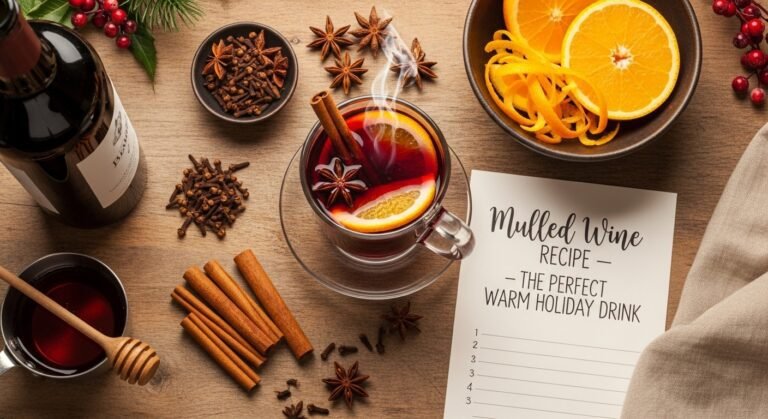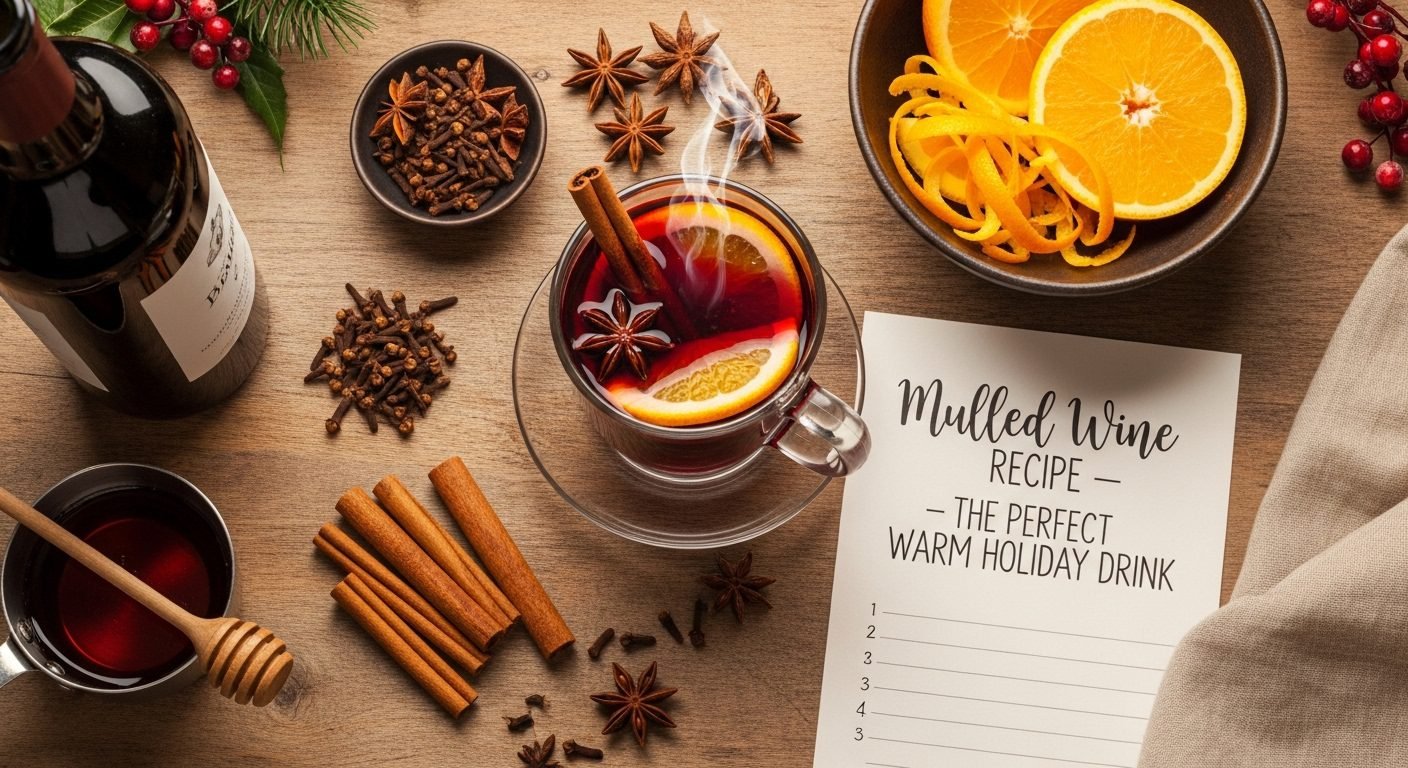
Mulled Wine Recipe – The Perfect Warm Holiday Drink

Few things capture the magic of the holiday season quite like the aromatic warmth of mulled wine. This traditional spiced wine beverage fills your home with the intoxicating scent of cinnamon, cloves, and citrus while delivering a cozy, warming drink that’s perfect for cold winter nights. Also known as glühwein in Germany or vin chaud in France, mulled wine transforms an ordinary bottle of red wine into something extraordinary with just a handful of spices and a bit of gentle heating.
What makes mulled wine so special is how the warming spices and citrus enhance the wine’s natural flavors while creating something entirely new. The cinnamon adds sweetness and warmth, the cloves bring aromatic depth, the orange contributes brightness, and the gentle heat melds everything together into a comforting beverage that tastes like the holidays in liquid form. It’s festive without being fussy, impressive without being complicated.
This drink is absolutely perfect for holiday parties, Christmas gatherings, winter weddings, New Year’s Eve celebrations, or any cold evening when you want something special. It’s also wonderful for entertaining because you can make a large batch easily, it keeps warm for hours, and it makes your entire house smell amazing. Whether you’re hosting a crowd or just treating yourself to something cozy, mulled wine is the ultimate winter warmer.
History / Background
Mulled wine has an incredibly rich history that dates back over two millennia. The Romans are credited with creating the first versions of spiced wine, which they called “conditum paradoxum.” This ancient recipe combined wine with honey, pepper, saffron, dates, and bay leaves. The Romans believed that heating wine with spices had medicinal properties and would help ward off illness during cold weather. They spread this tradition throughout their empire, introducing spiced wine to regions across Europe.
During the Middle Ages, mulled wine became increasingly popular throughout Europe, particularly in colder northern regions. The drink was known by different names in different countries: hippocras in England and France, glögg in Scandinavia, and eventually glühwein in Germany. Medieval Europeans added various spices brought back from the Crusades, including cinnamon, ginger, cardamom, and cloves, making their spiced wine increasingly complex and aromatic.
In Victorian England, mulled wine was called “smoking bishop” when made with port wine, and Charles Dickens famously referenced it in “A Christmas Carol.” The drink became firmly associated with Christmas celebrations and winter festivities throughout Europe. Each region developed its own variation: Germans prefer their glühwein made with red wine and served at Christmas markets, Scandinavians make glögg with added spirits like brandy or aquavit, and the French enjoy vin chaud at ski resorts.
Today, mulled wine remains a beloved holiday tradition across Europe and has gained popularity in the United States as Americans embrace global holiday customs. Christmas markets in cities worldwide serve steaming cups of mulled wine to cold visitors, creating a festive atmosphere that’s become synonymous with the season. The recipe has evolved over centuries, but the essential appeal remains the same: warming wine, aromatic spices, and the comfort of sharing something special during the coldest, darkest time of year.
Why You’ll Love This Recipe
This mulled wine recipe is everything you want in a holiday beverage – simple to prepare, absolutely delicious, and guaranteed to impress your guests. It’s the perfect combination of elegant and approachable, delivering restaurant-quality results with minimal effort.
Here’s why this recipe will become your holiday tradition:
- Ready in just 20 minutes – Quick enough for last-minute entertaining
- Makes your house smell incredible – The aromatic spices create instant holiday ambiance
- Budget-friendly – Uses affordable wine and pantry spices
- Easily scalable – Double or triple for large gatherings
- Can be made in advance – Prepare ahead and keep warm for hours
- Uses simple ingredients – No exotic or hard-to-find components
- Naturally gluten-free and dairy-free – Suitable for most dietary needs
- Impressive presentation – Looks and tastes fancy with zero effort
- Customizable to taste – Adjust sweetness and spice levels easily
- Perfect for non-wine drinkers – The spices transform inexpensive wine beautifully
- Great for holiday gifting – Package the spice blend in jars for thoughtful gifts
- Keeps you warm from the inside – Genuinely comforting on cold days
Whether you’re an experienced entertainer or hosting your first holiday party, this mulled wine recipe delivers consistent, crowd-pleasing results every single time.
Ingredient Notes
Understanding each ingredient helps you create the perfect mulled wine and make smart substitutions when needed.
Red Wine – The foundation of mulled wine that provides the body and fruitiness. Choose a dry or semi-dry red wine that’s drinkable but not expensive, as the spices will transform it completely. Merlot, Cabernet Sauvignon, Zinfandel, Pinot Noir, or any affordable red blend work beautifully. Don’t waste expensive wine on mulling – save your premium bottles for drinking straight. The wine should be fruit-forward without excessive tannins, which can become bitter when heated.
Fresh Orange – Provides citrus brightness that balances the sweetness and spices. Both the juice and the peel are used because they contain different flavor compounds. The peel holds aromatic essential oils that release when heated, while the juice adds natural acidity. Use organic oranges if possible, especially if using the peel, to avoid pesticide residues. Navel oranges are ideal for their sweetness and minimal seeds.
Whole Cinnamon Sticks – The star spice that defines mulled wine’s flavor profile. Whole sticks are essential rather than ground cinnamon, which would make the wine cloudy and gritty. Ceylon cinnamon is sweeter and more delicate, while Cassia cinnamon is stronger and more common. Either works well. The cinnamon sticks infuse the wine with warm, sweet spice notes that scream “holidays.”
Whole Cloves – Provide aromatic depth and that distinctive warm-spicy flavor that’s essential to mulled wine. These small flower buds pack intense flavor, so a little goes a long way. Whole cloves are preferred over ground because they can be easily strained out, and they release flavor more gradually. Too many cloves can make the wine taste medicinal, so stick to the recommended amount.
Star Anise – Adds a subtle licorice-like sweetness and beautiful visual appeal. This star-shaped spice pod is traditional in many European mulled wine recipes. It’s optional but highly recommended for authentic flavor. If you dislike licorice, you can omit it or use just one pod for subtle complexity.
Honey or Sugar – Sweetens the wine and balances the spices’ intensity. Honey adds complexity and a smooth mouthfeel, while sugar provides straightforward sweetness. Brown sugar adds molasses notes that work beautifully with the spices. The amount is adjustable based on your wine’s sweetness and personal preference. Start with less and add more to taste.
Brandy or Orange Liqueur (Optional) – Adds extra warmth and complexity. Brandy is traditional in many European recipes and increases the alcohol content slightly. Grand Marnier, Cointreau, or Triple Sec enhance the orange flavor. This is optional but makes the mulled wine feel more special.
Equipment Needed
Making mulled wine requires minimal equipment, most of which you already have in your kitchen.
- Large pot or Dutch oven – At least 4-quart capacity for holding wine and allowing spices to infuse
- Wooden spoon – For stirring without reacting with acidic wine
- Ladle – For serving the hot wine into mugs
- Fine mesh strainer – For straining out spices before serving
- Cutting board and knife – For slicing oranges
- Measuring cups and spoons – For accurate ingredient measurements
- Heat-resistant mugs or glasses – Traditional mulled wine glasses or Irish coffee mugs work perfectly
- Vegetable peeler (optional) – For creating orange peel strips
- Slow cooker (optional) – For keeping mulled wine warm at parties
- Instant-read thermometer (optional) – For monitoring temperature to prevent boiling
Print

Mulled Wine Recipe
Traditional mulled wine made with red wine, oranges, cinnamon, cloves, and warming spices. This aromatic holiday beverage takes just 20 minutes to prepare and fills your home with the most incredible festive scent. Perfect for holiday parties, winter gatherings, or cozy nights by the fire.
- Total Time: 20 minutes
- Yield: 6-8 servings 1x
Ingredients
Scale- 1 bottle (750ml) red wine (Merlot, Cabernet Sauvignon, or Zinfandel)
- 1 large orange, sliced into rounds
- ¼ cup honey or brown sugar (adjust to taste)
- 3 cinnamon sticks
- 6-8 whole cloves
- 3 star anise (optional but recommended)
- 2 cardamom pods, lightly crushed (optional)
- ¼ cup brandy or orange liqueur (optional)
Instructions
- Combine ingredients in pot: Pour the entire bottle of red wine into a large pot or Dutch oven. Add the orange slices, honey or brown sugar, cinnamon sticks, cloves, star anise, and cardamom if using. Stir gently to help the sweetener begin dissolving.
- Heat gently: Place the pot over medium-low heat. Heat the mixture slowly, stirring occasionally to dissolve the honey or sugar completely. This should take about 8-10 minutes. Do not let the wine boil as this will cook off the alcohol and can create bitter flavors.
- Simmer and infuse: Once the wine is steaming and small bubbles form around the edges (around 160-180°F), reduce heat to low. Let the mulled wine simmer very gently for 10-15 minutes to allow the spices to infuse. The longer it simmers (without boiling), the more developed the flavors become.
- Taste and adjust: After simmering, taste the mulled wine carefully (it’s hot!). Add more honey if you prefer it sweeter, or let it simmer longer if you want stronger spice flavors. The spices should be prominent but balanced, not overwhelming.
- Add spirits (optional): If using brandy or orange liqueur, remove the pot from heat and stir it in now. This preserves the alcohol content of the spirits while adding complexity.
- Strain and serve: Using a ladle and fine mesh strainer, pour the mulled wine into heat-resistant mugs or glasses. Alternatively, leave the spices in for visual appeal and rustic presentation, just warn guests not to drink them.
- Garnish: Add a fresh orange slice and a cinnamon stick to each mug for beautiful presentation and aromatic enhancement.
- Keep warm: If serving at a party, transfer the strained mulled wine to a slow cooker set on warm, or keep the pot on the lowest heat setting. Serve within 2-3 hours for best flavor.
Notes
- Don’t use expensive wine; mid-range ($8-12) bottles work perfectly
- Never let the wine boil or it will become bitter and lose alcohol
- Taste before adding all the sweetener; some wines need less
- For larger batches, multiply recipe and use multiple pots or a large stockpot
- Mulled wine continues to develop flavor as it sits
- Can be made up to 2 days ahead and gently reheated
- For non-alcoholic version, substitute wine with grape juice or cranberry juice
- Adjust spices to taste; some prefer more cinnamon, others more cloves
- Prep Time: 5 minutes
- Cook Time: 15 minutes
- Category: Beverage / Hot Cocktail
- Method: Stovetop
- Cuisine: European
- Diet: Gluten Free
Nutrition
- Serving Size: 1 cup (8 oz)
- Calories: 185
- Sugar: 14g
- Sodium: 8mg
- Fat: 0g
- Saturated Fat: 0g
- Unsaturated Fat: 0g
- Trans Fat: 0g
- Carbohydrates: 16g
- Fiber: 0g
- Protein: 0g
- Cholesterol: 0mg
Tips & Variations
Mulled wine is wonderfully flexible and can be customized for different tastes and occasions.
Wine Variations:
- White Wine Mulled Wine: Use white wine instead of red for a lighter, more delicate version
- Rosé Mulled Wine: Perfect for spring or Valentine’s Day celebrations
- Port Mulled Wine: Use ruby port for richer, sweeter “smoking bishop” style
- Sparkling Mulled Wine: Add prosecco or champagne just before serving for festive bubbles
Flavor Enhancements:
- Apple Cider Mulled Wine: Replace half the wine with apple cider for fall flavor
- Cranberry Mulled Wine: Add ½ cup cranberry juice and fresh cranberries
- Pomegranate Mulled Wine: Add pomegranate juice and fresh arils for tartness
- Ginger Mulled Wine: Add 6-8 slices of fresh ginger for spicy warmth
- Vanilla Mulled Wine: Add a vanilla bean or 1 teaspoon vanilla extract
Spice Adjustments:
- Add whole allspice berries for additional warmth
- Include a few black peppercorns for subtle heat
- Add fresh or dried bay leaves for herbal complexity
- Use a strip of lemon peel alongside orange for brightness
- Include juniper berries for gin-like botanical notes
Sweetener Options:
- Use maple syrup instead of honey for earthy sweetness
- Try agave nectar for a neutral sweet profile
- Use demerara or turbinado sugar for molasses notes
- Add a splash of simple syrup for easy dissolving
Dietary Modifications:
- Non-Alcoholic: Use alcohol-free wine, grape juice, or cranberry juice
- Lower Sugar: Reduce sweetener to 2 tablespoons or use stevia
- Keto-Friendly: Use low-carb red wine and sugar-free sweetener
Regional Variations:
- German Glühwein: Add rum and reduce sweetener
- Swedish Glögg: Add raisins, blanched almonds, and aquavit
- French Vin Chaud: Keep it simple with minimal spices
- British Wassail: Add apples and cider
Pro Chef Tips
These professional insights will elevate your mulled wine from good to absolutely outstanding.
Never let the wine boil – This is the cardinal rule of mulled wine. Boiling cooks off alcohol, makes the wine taste bitter, and destroys delicate flavor compounds. Keep the temperature between 160-180°F, where the wine steams gently but never bubbles vigorously. If it starts to boil, immediately remove from heat and reduce temperature.
Choose the right wine – Don’t waste expensive wine on mulling, but don’t use undrinkable wine either. Look for fruit-forward reds with moderate tannins in the $8-15 range. Merlot and Zinfandel are ideal because they’re naturally fruity and smooth. Avoid heavily oaked wines like big Californian Cabernets, as the oak becomes bitter when heated.
Use whole spices, never ground – Ground spices make mulled wine cloudy, gritty, and unpleasant to drink. Whole spices release their flavors gradually and can be easily strained out. They also create a beautiful presentation if you choose to leave them in. Invest in whole cinnamon sticks, cloves, and star anise for the best results.
Infuse low and slow for maximum flavor – While you can drink mulled wine after 10 minutes, letting it infuse for 20-30 minutes over very low heat develops much deeper, more complex flavors. The spices need time to release their aromatic compounds fully. Just ensure you maintain gentle heat that never boils.
Adjust sweetness based on your wine – Different wines have different residual sugar levels. Taste your mulled wine after the initial simmering and add sweetener gradually. Start with less than the recipe calls for and add more to taste. Remember that the sweetness will intensify as it continues to warm.
Add citrus at the beginning, spirits at the end – Orange slices should go in at the start so their oils infuse throughout the cooking process. However, if adding brandy or liqueurs, stir them in at the very end after removing from heat. This preserves their alcohol content and complex flavors rather than cooking them off.
Use a slow cooker for parties – For entertaining, make the mulled wine on the stovetop, then transfer it to a slow cooker set on warm. This keeps it at the perfect temperature for hours without overcooking and frees up your stovetop for other dishes.
Common Mistakes to Avoid
Even experienced cooks can make missteps with mulled wine. Here’s how to avoid the most common problems.
Boiling the wine – This is the most common and most damaging mistake. Boiling cooks off the alcohol, creates bitter flavors from the tannins, and destroys the delicate aromatics that make mulled wine special. Always keep the heat low enough that you see steam and maybe tiny bubbles at the edges, but never a rolling boil. If you accidentally boil it, the damage is done and the flavor will be compromised.
Using ground spices instead of whole – Ground cinnamon, cloves, or other powdered spices will make your mulled wine cloudy, gritty, and unpleasant to drink. The texture becomes chalky and you can’t strain out the sediment effectively. Always use whole spices that can be easily removed. This one mistake can ruin an otherwise perfect batch.
Adding too much sweetener at once – Different wines need different amounts of sugar, and it’s easy to over-sweeten. Once you’ve added too much, you can’t take it back. Always start with less sweetener than the recipe calls for, taste after simmering, and add more gradually if needed. Remember that the wine will taste slightly less sweet when it cools a bit.
Using expensive wine or wine you wouldn’t drink – Don’t waste your $40 bottle of Bordeaux on mulled wine; the spices will mask its subtle qualities. But also don’t use wine that tastes awful on its own, thinking the spices will fix it. Bad wine makes bad mulled wine. Use a decent, drinkable wine in the $8-15 range for the best balance of quality and value.
Not letting it infuse long enough – If you serve mulled wine after just 5 minutes of heating, the spices haven’t had time to properly infuse and the flavors will be weak and one-dimensional. Give it at least 15 minutes of gentle simmering for the spices to release their aromatic compounds and create that complex, layered flavor profile.
Forgetting to taste and adjust – Every batch of mulled wine is slightly different because wines vary. Always taste before serving and adjust sweetness, spice level, or citrus as needed. This simple step is what separates good mulled wine from great mulled wine.
Storage & Meal Prep
Mulled wine stores beautifully and can be made well in advance, making it perfect for stress-free entertaining.
Immediate Storage:
If you have leftover mulled wine (though this is rare because it’s so delicious), let it cool to room temperature, then transfer it to an airtight container or bottle. Strain out the spices and fruit before storing to prevent over-infusion and bitterness. Store in the refrigerator for up to 3 days.Reheating:
To reheat refrigerated mulled wine, pour it into a pot and warm over low heat until steaming, about 5-10 minutes. Do not boil. You can also reheat individual servings in the microwave in 30-second intervals, stirring between each, until hot. The flavors may be even more developed after sitting.Keeping Warm for Parties:
For extended serving periods, transfer mulled wine to a slow cooker set on warm or low. It will stay at the perfect temperature for 2-3 hours without overcooking. Alternatively, keep the pot on your stovetop’s lowest setting. Stir occasionally and taste periodically to ensure it’s not becoming too concentrated.Shelf Life:
- Freshly made: Serve immediately or keep warm for 2-3 hours
- Refrigerated: Up to 3 days in airtight container
- Frozen: Up to 3 months (see freezer notes below)
Container Choice:
Store in glass bottles, mason jars, or food-safe plastic containers. Avoid reactive metal containers as the wine’s acidity can interact with certain metals and create off-flavors.Make-Ahead & Freezer Notes
Mulled wine is an excellent make-ahead beverage, perfect for holiday party planning.
Make-Ahead Method:
Make the complete mulled wine recipe 1-2 days before your event. Let it cool completely, strain out all spices and fruit, then refrigerate in airtight containers. On the day of serving, gently reheat in a pot over low heat until steaming. The flavors actually improve with time as everything continues to meld.Spice Blend Preparation:
For ultimate convenience, prepare individual spice packets ahead of time. Combine the cinnamon sticks, cloves, star anise, and other spices in cheesecloth sachets or large tea bags. Make several of these and store in an airtight container for up to 6 months. When ready to make mulled wine, just drop a sachet into the pot.Freezing Mulled Wine:
While not traditional, you can freeze mulled wine for up to 3 months. Prepare the recipe completely, cool to room temperature, strain thoroughly, then freeze in airtight containers leaving 1-2 inches headspace for expansion. The alcohol content prevents it from freezing solid. Thaw overnight in the refrigerator, then reheat gently.Mulled Wine Concentrate:
Make a concentrated version with half the wine but all the spices and sweetener. Simmer for 30 minutes, strain, and refrigerate up to 1 week or freeze up to 3 months. When ready to serve, add fresh wine and heat gently. This is perfect for making small batches or single servings.Batch Preparation for Large Parties:
For crowds, multiply the recipe and make it in a large stockpot the day before. Refrigerate overnight, then reheat in slow cookers or multiple pots. This approach actually improves the flavor while reducing day-of stress.Gift-Giving Preparation:
Create DIY mulled wine spice kits in decorative jars with all the dried spices. Attach a recipe card with wine recommendations and instructions. These make thoughtful, affordable holiday gifts that recipients will actually use and appreciate.Serving Suggestions
Mulled wine creates a festive atmosphere and pairs beautifully with various holiday foods and occasions.
Perfect Food Pairings:
- Cheese and charcuterie – Aged cheddar, Gouda, salami, prosciutto, and crackers
- Holiday cookies – Gingerbread, sugar cookies, shortbread, and biscotti
- Roasted nuts – Spiced almonds, candied pecans, or rosemary walnuts
- Chocolate desserts – Dark chocolate truffles, chocolate bark, or brownies
- Warm bread – Fresh dinner rolls, crusty baguette, or stollen
- Savory appetizers – Stuffed mushrooms, cheese straws, or sausage rolls
- Holiday main courses – Roast turkey, prime rib, or honey-glazed ham
- Winter salads – Arugula with pear, cranberries, and blue cheese
Occasion Ideas:
- Christmas Eve gatherings – Serve while opening one gift before bed
- Holiday open houses – Keep a pot warming throughout the event
- New Year’s Eve parties – Offer as a warming alternative to champagne
- Winter weddings – Perfect for outdoor ceremonies or cocktail hours
- Tree trimming parties – Serve while decorating the Christmas tree
- Caroling events – Warm up guests when they return from singing
- Ski trips – Pack in thermoses for après-ski enjoyment
- Outdoor winter activities – Bring to ice skating, winter festivals, or bonfires
Presentation Ideas:
- Serve in clear glass mugs to showcase the beautiful ruby color
- Use Irish coffee glasses with handles for elegant presentation
- Garnish each serving with fresh orange slice and cinnamon stick
- Rim mugs with cinnamon sugar for extra festivity
- Float star anise on top for stunning visual appeal
- Serve from a decorative punch bowl with ladle
- Use rustic ceramic mugs for cozy, homey feel
Accompanying Beverages:
- Offer hot apple cider as non-alcoholic alternative
- Provide hot chocolate for children or non-drinkers
- Have coffee available for guests who want caffeine
- Serve sparkling water with citrus for palate cleansing
Serving Tips:
- Keep the pot or slow cooker accessible so guests can serve themselves
- Provide small plates of orange slices and cinnamon sticks for garnish
- Set up a mulled wine bar with optional additions like brandy, honey, or extra spices
- Warn guests that it’s hot to prevent burns
FAQs Section
What type of wine is best for mulled wine?
Dry or semi-dry red wines with moderate tannins work best. Merlot, Cabernet Sauvignon, Zinfandel, Pinot Noir, or affordable red blends are ideal choices. Look for fruit-forward wines in the $8-15 range. Avoid heavily oaked or expensive wines as the spices will mask subtle flavors. Don’t use wine you wouldn’t drink on its own, but save your premium bottles for drinking straight.Can you make mulled wine ahead of time?
Yes! Mulled wine actually improves when made 1-2 days ahead as the flavors continue to develop. Make the complete recipe, cool it completely, strain out spices and fruit, then refrigerate in airtight containers. Gently reheat before serving. The spices infuse more deeply and the flavors become more balanced. This makes entertaining much easier.Why shouldn’t you boil mulled wine?
Boiling cooks off the alcohol, makes the wine taste bitter due to tannins becoming more astringent, and destroys delicate aromatic compounds that give mulled wine its appealing flavor. Keep the temperature between 160-180°F where it steams gently but never bubbles vigorously. If you accidentally boil it, the flavor will be compromised and there’s no way to fix it.Can you make non-alcoholic mulled wine?
Absolutely! Substitute the wine with grape juice, cranberry juice, pomegranate juice, or alcohol-free wine. Use the same spices and preparation method, though you can reduce the simmering time to 10 minutes. The result is a delicious spiced juice that’s perfect for all ages. Apple cider also makes an excellent non-alcoholic base.How do you keep mulled wine warm at a party?
The best method is transferring the mulled wine to a slow cooker set on warm or low, which maintains perfect temperature for 2-3 hours without overcooking. Alternatively, keep it in a pot on your stovetop’s lowest setting, stirring occasionally. For outdoor events, use insulated beverage dispensers or thermoses. Avoid keeping it warm for more than 3 hours as the flavors can become too concentrated.What if my mulled wine is too sweet or not sweet enough?
If too sweet, add more wine to dilute or a squeeze of fresh lemon juice to balance. If not sweet enough, stir in additional honey, sugar, or simple syrup while the wine is still hot to help it dissolve. Always taste before adding sweetener as different wines require different amounts. Start with less and add more gradually.Can you reheat mulled wine?
Yes, leftover mulled wine reheats beautifully. Warm it gently in a pot over low heat until steaming (don’t boil), or microwave individual servings in 30-second intervals. The flavors are often even better after sitting. Store refrigerated for up to 3 days. Some people actually prefer reheated mulled wine because the spices have had more time to infuse.Conclusion
And there you have it – everything you need to make the most aromatic, perfectly spiced mulled wine that will make your home smell like the holidays and warm you from the inside out! This classic European beverage is proof that simple ingredients, when treated with care, can create something truly magical. The combination of wine, citrus, and warming spices transforms an ordinary evening into a special occasion.
The beauty of mulled wine lies not just in its delicious taste, but in the experience it creates. The wonderful scent that fills your kitchen, the warmth that radiates through the mug into your hands, the festive atmosphere it brings to any gathering – these are the things that make mulled wine so much more than just a hot cocktail.
I hope this recipe becomes a cherished part of your holiday traditions! I’d love to hear how your mulled wine turns out – did you try any variations? What occasion did you serve it for? How did your guests react? Drop a comment below and share your experience. And if this recipe brought warmth and holiday cheer to your home, please pin it to your favorite Pinterest board so you can find it year after year.
Here’s to cozy evenings, wonderful gatherings, and the sim