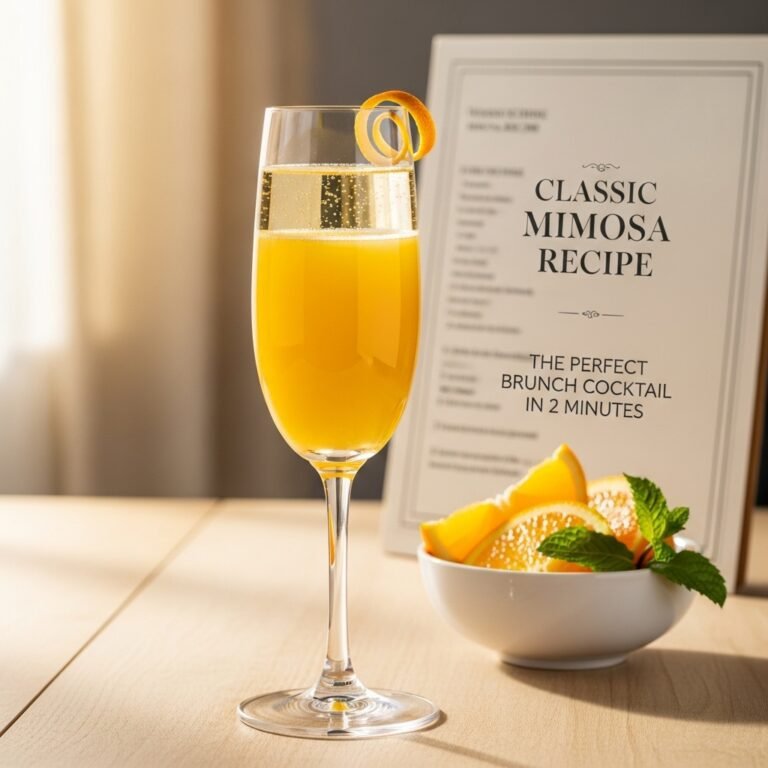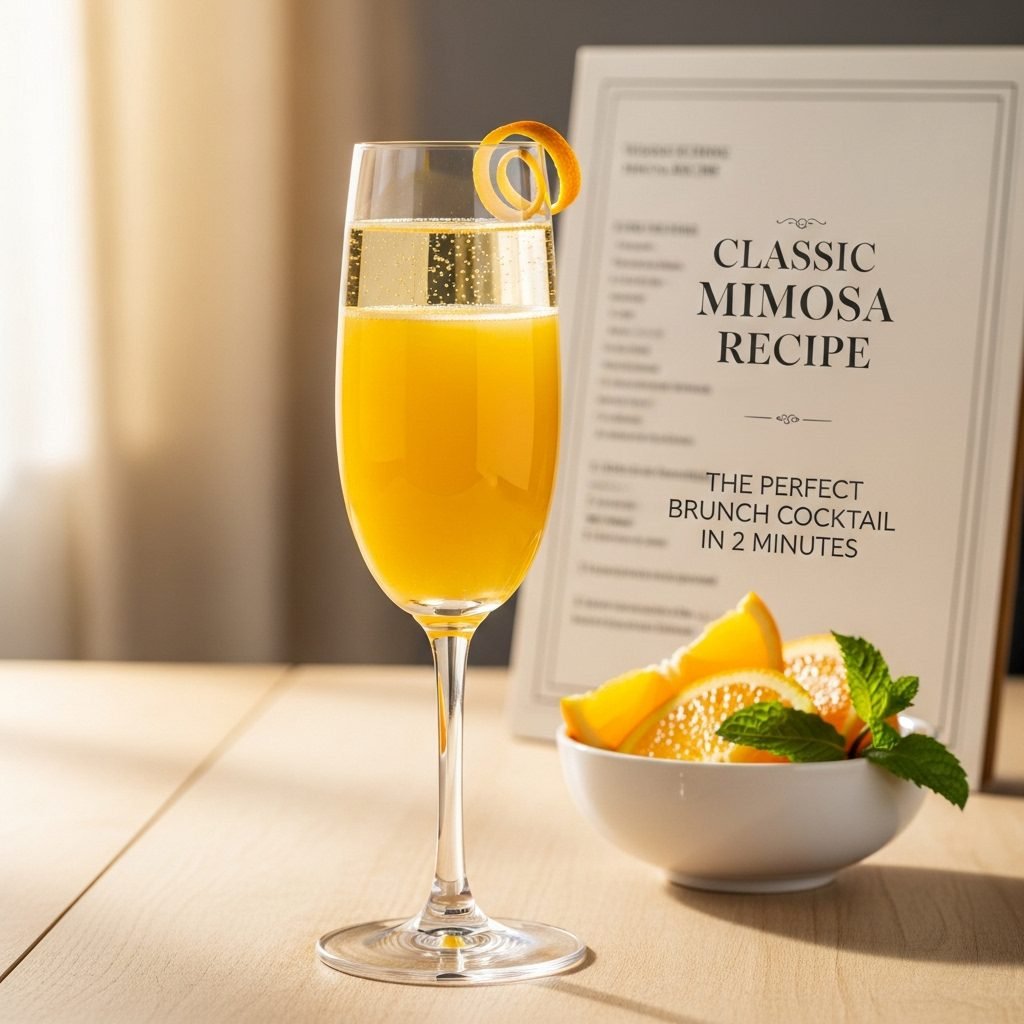
Classic Mimosa Recipe – The Perfect Brunch Cocktail in 2 Minutes
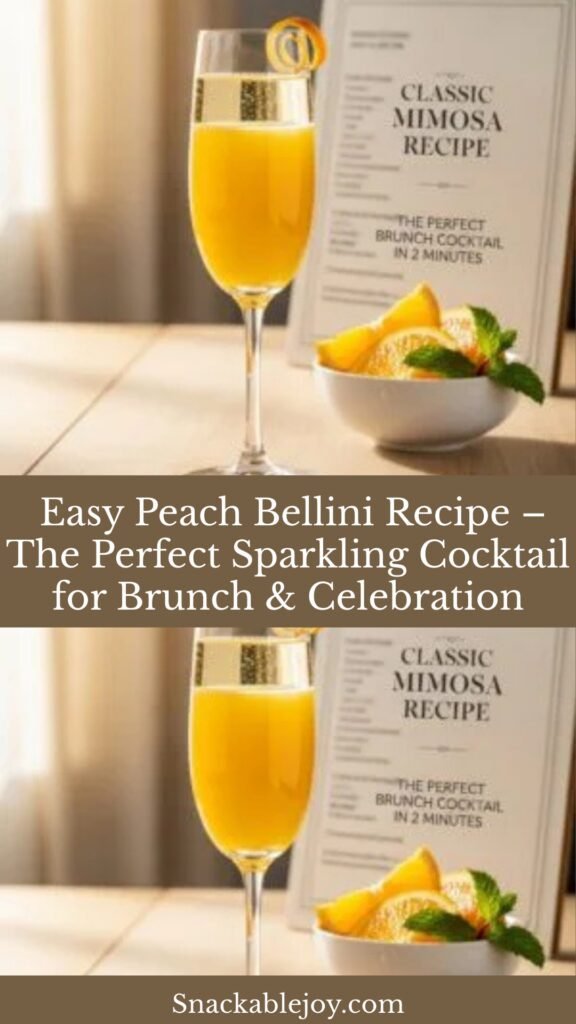
If there’s one cocktail that instantly says “celebration,” it’s the Mimosa. This effortlessly elegant drink combines freshly squeezed orange juice with sparkling champagne or prosecco, creating a refreshing, bubbly cocktail that’s become synonymous with weekend brunch, holiday mornings, and special celebrations. Whether you’re hosting a baby shower, celebrating Mother’s Day, or simply want to make your Sunday morning feel a little more special, the Mimosa is your go-to drink.
What makes the Mimosa so universally loved is its beautiful simplicity. With just two ingredients and literally two minutes of prep time, you can serve a cocktail that feels fancy without any complicated mixing or expensive bar tools. The bright citrus flavor balanced with effervescent bubbles creates a light, refreshing drink that’s perfect for daytime sipping – not too strong, not too sweet, just absolutely perfect for leisurely mornings and celebratory gatherings.
I adore making Mimosas because they’re incredibly versatile and crowd-pleasing. They’re sophisticated enough for wedding receptions yet casual enough for a lazy Saturday brunch at home. Plus, that gorgeous golden-orange color looks absolutely stunning in photos, making them Pinterest gold. Best of all, everyone can customize their own glass to their preferred ratio of juice to champagne, ensuring every guest gets exactly the drink they want.
History & Background of the Mimosa
The Mimosa has a fascinating origin story that begins in 1920s Paris, during the golden age of cocktail culture. The drink was invented at the Hôtel Ritz Paris, one of the world’s most luxurious hotels, where it quickly became a favorite among the international jet-set crowd. The bartender Frank Meier is credited with creating this elegant cocktail, naming it after the mimosa flower, which has bright yellow blossoms that beautifully match the drink’s sunny color.
The Mimosa was designed as a “pick-me-up” cocktail for the hotel’s sophisticated clientele, offering a gentler alternative to stronger morning drinks. Its lower alcohol content made it socially acceptable for daytime consumption, particularly at fashionable brunch gatherings that were becoming popular among Paris’s elite society in the 1920s and 1930s.
Interestingly, there’s a bit of rivalry about the drink’s origins. Some cocktail historians point to Buck’s Fizz, a nearly identical cocktail invented in 1921 at the Buck’s Club in London. The main difference? Buck’s Fizz traditionally uses a higher ratio of champagne to orange juice (2:1), while the classic Mimosa uses equal parts of each. Despite this friendly dispute, it’s the name “Mimosa” that stuck and became famous worldwide.
The cocktail crossed the Atlantic and became hugely popular in America during the mid-20th century, particularly as brunch culture exploded in the 1980s and 1990s. Today, Mimosas are the quintessential brunch cocktail in the United States, served at everything from upscale restaurants to casual home gatherings. The rise of “bottomless brunch” specials – where restaurants offer unlimited Mimosas with brunch meals – has cemented this drink’s place in American dining culture.
What’s particularly special about the Mimosa is its democratic appeal. Unlike more complex cocktails that require bartending skills, anyone can make a perfect Mimosa. This accessibility, combined with its elegant presentation and delicious flavor, has made it one of the most enduring and beloved cocktails of all time.
Why You’ll Love This Mimosa Recipe
This classic Mimosa recipe is about to become your signature brunch drink, and for good reason. It’s the kind of recipe that makes you look like an effortless host while requiring almost zero effort – and honestly, that’s the best kind of recipe, isn’t it? There’s something wonderful about serving drinks that taste like they came from a fancy restaurant when you know you literally just poured two ingredients into a glass.
Here’s why you’ll return to this recipe again and again:
- Incredibly Simple – Just 2 ingredients and no measuring required
- Ready in 2 Minutes – Faster than making coffee, seriously
- Budget-Friendly – No expensive spirits or exotic ingredients needed
- Perfectly Customizable – Everyone can adjust their own ratio to taste
- Crowd-Pleaser – I’ve never met anyone who doesn’t love a good Mimosa
- Low Alcohol Content – Perfect for daytime drinking without overindulging
- Scales Effortlessly – Make 2 drinks or 20 with the same ease
- Naturally Gluten-Free – Safe for guests with dietary restrictions
- Instagram-Worthy – That golden color is absolutely stunning in photos
- No Bar Skills Required – If you can pour, you can make perfect Mimosas
- Morning-Appropriate – Sophisticated enough for any time before noon
- Vitamin C Bonus – Fresh orange juice adds a nutritional perk to your cocktail
Ingredient Notes
Fresh Orange Juice: This is the star ingredient that makes or breaks your Mimosa. Freshly squeezed orange juice is absolutely worth the minimal extra effort – the flavor difference is dramatic. Fresh juice has a bright, vibrant citrus taste with natural sweetness and just the right amount of acidity. Look for Valencia or navel oranges, which are juicier and sweeter than other varieties. One medium orange yields about ¼ cup of juice, so plan on 2-3 oranges per person for mimosas. Substitution: If you’re short on time, high-quality store-bought orange juice works, but choose 100% pure juice (not from concentrate) without added sugar. Brands like Simply Orange or Tropicana Pure Premium are solid choices. Avoid “orange drinks” or juice cocktails that contain added sweeteners and artificial flavors.
Champagne or Sparkling Wine: The bubbles are what make a Mimosa special, so choose wisely! You don’t need expensive Dom Pérignon, but avoid anything under $8-10 as it will taste harsh and overly acidic. For classic Mimosas, choose a brut (dry) champagne or prosecco – the slight dryness balances the sweetness of orange juice perfectly. Extra-dry champagne actually tastes slightly sweeter than brut (confusing, I know!) and also works beautifully. Prosecco is more affordable than champagne and has a lighter, fruitier character that many people prefer for Mimosas. Cava (Spanish sparkling wine) is another excellent, budget-friendly option. Important: Always keep your bubbly well-chilled (at least 4 hours in the refrigerator) before making Mimosas. Temperature is crucial for maintaining carbonation and achieving the perfect refreshing quality.
Optional Garnishes: While not necessary, a few simple garnishes can elevate your Mimosas from nice to spectacular. Fresh orange slices, raspberries, strawberries, or a sprig of fresh mint add visual appeal and a touch of sophistication. These are especially nice if you’re serving Mimosas for a special occasion or taking photos for Instagram.
Optional Sweetener: Traditional Mimosas don’t include added sweetener, but if your oranges are particularly tart or you prefer a sweeter drink, you can add a small splash of orange liqueur (like Grand Marnier or Cointreau) or a teaspoon of simple syrup to each glass. Taste first before adding – you might not need it at all.
Equipment Needed
One of the best things about Mimosas is the minimal equipment required. You probably already have everything you need:
- Champagne Flutes or Wine Glasses – Traditional tall, narrow flutes showcase the bubbles beautifully and keep drinks colder longer. Standard wine glasses work perfectly too if you don’t have flutes
- Citrus Juicer – A handheld juicer, electric citrus press, or even just a fork for manual squeezing will work
- Knife and Cutting Board – For cutting oranges and preparing garnishes
- Measuring Cup – Optional, for those who prefer precise ratios, though most people just eyeball it
- Pitcher – Helpful if you’re making Mimosas for a crowd and want to prepare juice in advance
- Champagne Stopper – Essential for keeping leftover champagne bubbly if you don’t use the entire bottle
- Ice Bucket – Not required but nice for keeping your champagne bottle chilled tableside
Print

Mimosa Recipe
The classic Mimosa is an elegant, refreshing cocktail made with just two simple ingredients: fresh orange juice and champagne or prosecco. Perfect for brunch, celebrations, or any time you want to add a touch of sparkle to your day. Light, bubbly, and absolutely delicious!
- Total Time: 5 minutes
- Yield: 1 serving (easily multiplied) 1x
Ingredients
Scale- 2-3 ounces fresh orange juice (about ⅓ cup), chilled
- 3-4 ounces champagne or prosecco (about ½ cup), well-chilled
- Optional: 1 fresh orange slice for garnish
- Optional: 2-3 fresh raspberries or strawberries for garnish
- Optional: Fresh mint sprig for garnish
Instructions
- Chill Everything First: Ensure your orange juice and champagne are thoroughly chilled. Cold ingredients are essential for a perfect Mimosa. If needed, refrigerate orange juice for at least 1 hour and champagne for at least 4 hours before serving.
- Prepare Your Garnishes (Optional): If using, slice a fresh orange wheel, wash berries, or prepare mint sprigs. Set aside on a small plate.
- Pour the Orange Juice: Start by pouring the chilled orange juice into your champagne flute or wine glass. Fill the glass about one-third to half full with orange juice, depending on your preferred ratio. The classic ratio is 1:1 (equal parts juice and champagne), but feel free to adjust to your taste.
- Add the Champagne: Slowly pour the chilled champagne or prosecco over the orange juice. Tilt the glass slightly and pour down the side to minimize foam and preserve the bubbles. Fill to about three-quarters full, leaving room at the top to prevent spills.
- Stir Gently (Very Gently!): Give the drink just one or two very gentle stirs with a cocktail spoon or regular spoon. Don’t over-stir – you want to preserve those beautiful bubbles! The ingredients will naturally mix somewhat as the champagne is poured.
- Garnish and Serve: If desired, add your orange slice to the rim of the glass or float it on top. Drop in a few berries or add a mint sprig for extra elegance. Serve immediately while the bubbles are at their liveliest!
- Adjust to Taste: Remember, Mimosas are highly customizable. Some prefer more juice (sweeter, fruitier), while others prefer more champagne (drier, more wine-forward). There’s no wrong answer – make it exactly how you like it!
Notes
- The Classic Ratio: Traditional Mimosas use equal parts orange juice and champagne (1:1 ratio). However, many people prefer 1 part juice to 2 parts champagne for a drier, more sophisticated drink.
- Batch Preparation: For parties, place a pitcher of fresh orange juice on the table alongside chilled champagne bottles. Let guests pour their own to their preferred ratio.
- Temperature Matters: Everything must be cold! Warm champagne goes flat quickly and warm orange juice creates a lackluster cocktail.
- Don’t Premix: Never pre-mix Mimosas in a pitcher with champagne already added. The bubbles will dissipate quickly. Always add champagne just before serving.
- Leftover Champagne: Seal opened champagne bottles with a proper champagne stopper and refrigerate. It will stay bubbly for 1-2 days max.
- Prep Time: 5 minutes
- Cook Time: 0 minutes
- Category: Cocktail
- Method: Mixing
- Cuisine: French
- Diet: Gluten Free
Nutrition
- Serving Size: 1 Mimosa (approximately 6 oz total)
- Calories: 100
- Sugar: 9g
- Sodium: 2mg
- Fat: 0g
- Saturated Fat: 0g
- Unsaturated Fat: 0g
- Trans Fat: 0g
- Carbohydrates: 11g
- Fiber: 0g
- Protein: 0.5g
- Cholesterol: 0mg
Tips & Variations
Juice Variations:
- Blood Orange Mimosa: Use blood orange juice for a stunning ruby-red color and slightly berry-like flavor
- Grapefruit Mimosa: Substitute with fresh grapefruit juice for a tart, sophisticated twist
- Pineapple Mimosa: Fresh pineapple juice creates a tropical version perfect for summer
- Mango Mimosa: Blend fresh mango with a splash of orange juice for an exotic variation
- Cranberry Mimosa: Mix equal parts orange juice and cranberry juice for holiday celebrations
Fruit-Enhanced Mimosas:
- Berry Mimosa: Muddle fresh strawberries, raspberries, or blackberries in the bottom of the glass before adding juice
- Peach Mimosa: Add a tablespoon of peach purée or peach nectar
- Pomegranate Mimosa: Add 1-2 tablespoons pomegranate juice for gorgeous color and antioxidant boost
Flavor Infusions:
- Lavender Mimosa: Add a tiny splash of lavender simple syrup for floral sophistication
- Rosemary Mimosa: Muddle a small sprig of fresh rosemary with the orange juice
- Elderflower Mimosa: Add ½ ounce St. Germain elderflower liqueur for a fancy upgrade
- Grand Mimosa: Add a splash of Grand Marnier or Cointreau for extra orange intensity
Sweetness Adjustments:
- For a drier Mimosa, use more champagne and less juice (2:1 ratio)
- For a sweeter version, use more juice or add ½ teaspoon simple syrup
- Try honey syrup instead of simple syrup for a richer sweetness
Non-Alcoholic Version:
- Replace champagne with chilled sparkling water, lemon-lime soda, or non-alcoholic sparkling wine
- Add a squeeze of fresh lemon juice for brightness
Presentation Ideas:
- Sugar-rim the glasses for extra sparkle (dip rim in water, then in sugar)
- Freeze orange juice in ice cube trays and use orange juice cubes to keep drinks cold without dilution
- Serve with colorful paper straws for a fun, casual touch
- Use vintage coupe glasses instead of flutes for a 1920s glamour vibe
Pro Chef Tips
Tip #1: Master the Perfect Pour Sequence
Always add orange juice first, then champagne. This order is crucial! Pouring champagne first and then adding juice causes excessive foaming and releases carbonation rapidly. The juice-first method creates a gentler integration and preserves those precious bubbles. When adding champagne, pour it slowly down the side of a slightly tilted glass – this technique minimizes foam and keeps your Mimosa properly effervescent.Tip #2: Temperature is Non-Negotiable
Professional bartenders know that temperature control separates good Mimosas from great ones. Both ingredients must be refrigerator-cold (ideally 38-45°F). Warm champagne loses carbonation within minutes, creating a flat, disappointing drink. Pro move: chill your glasses in the freezer for 15 minutes before serving. The cold glass keeps your Mimosa perfectly chilled from first sip to last.Tip #3: Choose the Right Champagne Dryness
The term “extra dry” champagne is misleading – it’s actually slightly sweet! For classic Mimosas, choose “brut” (truly dry) champagne, which balances the sweetness of orange juice beautifully. If you prefer sweeter Mimosas, “extra dry” or “sec” champagnes work well. Avoid “demi-sec” (sweet) champagne unless you’re specifically making dessert Mimosas – it will taste cloying when mixed with orange juice.Tip #4: Juice Quality Makes or Breaks the Drink
Use the absolute freshest orange juice possible, ideally squeezed within 2-3 hours of serving. Fresh juice has vibrant flavor compounds that deteriorate quickly when exposed to air. If you must buy juice, check the “use by” date and choose the furthest date available. Never use frozen concentrate or “orange drinks” with added sugar – the artificial sweetness completely ruins the elegant balance of a proper Mimosa.Tip #5: The Minimal Stir Technique
This is where amateurs often go wrong: they over-stir and kill the bubbles. Your Mimosa needs just one or two incredibly gentle circular motions with a spoon – think of it as “encouraging” the liquids to blend rather than forcefully mixing them. The champagne’s natural bubbling action will continue mixing the drink as you sip. When in doubt, under-stir rather than over-stir.Common Mistakes to Avoid
Mistake #1: Using Poor Quality Champagne
I know it’s tempting to grab the cheapest bottle of bubbly for Mimosas, but this is a false economy. Super cheap champagne (under $8) tastes harsh, overly acidic, and sometimes metallic. Since champagne is literally half your drink, its quality matters tremendously. Spend $10-15 on decent prosecco or cava – your Mimosas will taste restaurant-quality instead of regrettable.Mistake #2: Making Mimosas Too Far in Advance
Never, ever pre-mix champagne and orange juice in a pitcher and let it sit. The carbonation escapes rapidly, and within 15-20 minutes you’ll have flat, sad-looking drinks. Champagne-based cocktails must be assembled immediately before serving. If hosting a crowd, keep juice and champagne separate and let guests pour their own, or assign someone to continuously make fresh drinks.Mistake #3: Wrong Glass Size and Shape
Using oversized wine glasses or beer mugs for Mimosas is a mistake. Large glasses require too much champagne per serving (expensive!) and cause drinks to warm up before you finish them. Champagne flutes or standard wine glasses (8-10 oz capacity) are ideal – they’re perfectly portioned, showcase the bubbles beautifully, and keep drinks colder longer due to less surface area exposure.Mistake #4: Neglecting to Taste Your Juice First
Oranges vary wildly in sweetness and acidity depending on variety, season, and ripeness. Always taste your orange juice before making Mimosas. Too tart? Add a tiny bit of simple syrup. Too sweet? Use slightly more champagne. This 30-second taste test ensures every Mimosa batch is perfectly balanced instead of disappointingly off.Mistake #5: Over-Complicating a Simple Classic
Mimosas are beautiful in their simplicity. Don’t feel pressured to add five different liqueurs, exotic fruits, or complicated garnishes unless you genuinely want to. Sometimes the classic version – just good orange juice and good champagne – is absolutely perfect as-is. Respect the elegance of simplicity, especially when serving traditionalists or older guests who appreciate the authentic experience.Storage & Meal Prep
Storing Fresh Orange Juice:
Freshly squeezed orange juice should be stored in an airtight container (glass jar or pitcher with tight-fitting lid) in the refrigerator. It will stay fresh for 2-3 days maximum, though flavor and vitamin C content decline daily. Always give it a good stir before using, as natural pulp and sediment settle at the bottom. For best results, squeeze oranges the morning you plan to serve Mimosas.Storing Opened Champagne:
Once opened, champagne begins losing carbonation immediately. Use a proper champagne stopper (those spring-loaded ones that lock onto the bottle) and refrigerate. Properly sealed champagne stays bubbly for 1-3 days, though quality declines each day. Regular wine corks won’t work – they can’t withstand the pressure and will pop out. Never store champagne on its side after opening; keep it upright in the refrigerator.Pre-Juicing for Parties:
If you’re hosting a large gathering, juice your oranges 2-4 hours before guests arrive and refrigerate in a sealed pitcher. This time frame preserves fresh flavor while reducing last-minute stress. Any longer than 4 hours and you’ll notice flavor degradation. Pro tip: add a squeeze of lemon juice to prevent oxidation and browning.Storing Assembled Mimosas:
Unfortunately, there’s no good way to store assembled Mimosas. They must be made fresh and consumed immediately. Once champagne and juice are mixed, you have about 20-30 minutes before the drink goes significantly flat. This is why Mimosas are always made to order, even in restaurants.Make-Ahead & Freezer Notes
Make-Ahead Orange Juice:
You can juice oranges up to 24 hours ahead if necessary, though 2-4 hours ahead is ideal. Store in an airtight container in the coldest part of your refrigerator (usually the back of the bottom shelf). Stir well before using, as pulp settles. The juice will darken slightly due to oxidation, but this won’t affect taste significantly.Freezing Orange Juice:
Fresh orange juice freezes beautifully for up to 3 months. Pour into freezer-safe containers, leaving 1 inch of headspace for expansion. Ice cube trays work great too – each cube is roughly 2 tablespoons, perfect for making individual Mimosas. Thaw completely in the refrigerator overnight before using. Give it a vigorous shake or stir after thawing, as some separation occurs.Champagne Cannot Be Frozen:
Never freeze champagne or prosecco. Freezing destroys the carbonation and can cause bottles to explode due to liquid expansion. Champagne must be purchased fresh and stored properly in the refrigerator.Party Prep Timeline:
- 1 day ahead: Purchase champagne and refrigerate
- Morning of (2-4 hours ahead): Squeeze orange juice, refrigerate in sealed container
- 30 minutes before: Chill glasses in freezer
- Just before serving: Assemble Mimosas fresh
- During party: Keep champagne in ice bucket, juice in pitcher, let guests serve themselves
Best Method for Large Gatherings:
Set up a self-serve Mimosa bar! Provide chilled champagne in ice buckets, a large pitcher of fresh orange juice kept cold in an ice bath, empty flutes, and various garnishes. Add small instruction cards with suggested ratios. Guests love customizing their own drinks, and it eliminates the need for you to play bartender all morning.Serving Suggestions
Perfect Pairings:
Classic Brunch Dishes:
Mimosas are the quintessential brunch cocktail and pair beautifully with eggs Benedict, quiche Lorraine, French toast with berries, Belgian waffles, smoked salmon bagels with cream cheese, breakfast burritos, or a classic frittata. The citrus acidity cuts through rich, eggy dishes perfectly and refreshes your palate between bites.Pastries & Baked Goods:
Serve alongside fresh croissants, blueberry muffins, cinnamon rolls, scones with jam and clotted cream, coffee cake, or pain au chocolat. The light, bubbly nature of Mimosas complements buttery pastries without overwhelming your taste buds.Fresh & Light Options:
Pair with fresh fruit salad, Greek yogurt parfaits with granola, avocado toast, caprese salad, or a colorful crudité platter with hummus. These lighter pairings keep your brunch feeling fresh and energizing rather than heavy.Breakfast Proteins:
Mimosas complement crispy bacon, breakfast sausage links, honey-glazed ham, or smoked salmon. The champagne’s acidity and bubbles cut through fatty, salty proteins beautifully.Brunch Salads:
Serve with spinach and strawberry salad, Caesar salad, Niçoise salad, or any salad with citrus vinaigrette. The wine-based cocktail harmonizes perfectly with vinegar-based dressings.Occasion-Specific Serving Ideas:
- Easter Brunch: Serve in pastel-colored vintage glasses with edible flowers
- Mother’s Day: Create a Mimosa bar with multiple juice options and fresh berries
- Baby Showers: Offer both alcoholic and non-alcoholic versions in pretty champagne flutes
- Wedding Receptions: Serve as a welcome drink when guests first arrive
- Birthday Brunches: Add colorful sugar rims and festive garnishes
- Holiday Mornings: Christmas, Thanksgiving, or New Year’s Day brunch is incomplete without Mimosas
FAQs About Mimosas
What’s the proper ratio of orange juice to champagne in a Mimosa?
The classic ratio is 1:1 (equal parts orange juice and champagne), which creates a balanced, moderately sweet cocktail. However, ratios are highly customizable based on preference. Many people prefer 1 part juice to 2 parts champagne for a drier, more wine-forward drink. Buck’s Fizz, the British cousin of the Mimosa, traditionally uses 2 parts champagne to 1 part juice. There’s no wrong answer – adjust to your taste!Can I use prosecco instead of champagne for Mimosas?
Absolutely yes! Prosecco is actually my preferred choice for Mimosas. It’s more affordable than French champagne, has a slightly sweeter and fruitier profile that complements orange juice beautifully, and its lighter body makes it perfect for morning drinking. Spanish cava is another excellent, budget-friendly alternative. Save expensive champagne for drinking on its own and use good-quality prosecco or cava for Mimosas.Is it better to use fresh-squeezed orange juice or store-bought?
Fresh-squeezed is definitely better if you have the time – the flavor is brighter, more vibrant, and naturally sweeter without any processed taste. That said, high-quality store-bought 100% pure orange juice (not from concentrate) works perfectly fine, especially for large gatherings where juicing dozens of oranges isn’t practical. Just avoid “orange drinks” or juice cocktails with added sugars and artificial flavors.How do I keep my Mimosas from going flat?
Keep everything ice-cold, pour champagne slowly down the side of the glass, stir minimally (just 1-2 gentle motions), and most importantly, assemble Mimosas immediately before serving. Never pre-mix champagne and juice. The carbonation escapes quickly once champagne is poured, so Mimosas are best consumed within 20-30 minutes of being made. For parties, set up a self-serve station where guests can make fresh drinks as needed.Can I make a non-alcoholic Mimosa?
Yes! Replace the champagne with non-alcoholic sparkling wine, sparkling water, or lemon-lime soda. Non-alcoholic sparkling wines have improved dramatically in recent years and create the most authentic alcohol-free Mimosa experience. If using plain sparkling water, add a squeeze of fresh lemon or lime juice for brightness. Sparkling cider also works but creates a much sweeter drink.What type of champagne is best for Mimosas?
Choose a brut (dry) or extra-dry champagne, prosecco, or cava in the $10-15 price range. Brut is the driest and balances orange juice’s sweetness perfectly. Avoid very expensive champagnes (wasted when mixed) and very cheap ones (harsh, acidic taste). Look for Italian prosecco or Spanish cava for the best value. Avoid sweet champagnes labeled “demi-sec” unless you specifically want a dessert-style Mimosa.How many Mimosas does one bottle of champagne make?
A standard 750ml champagne bottle yields approximately 5-6 Mimosas, depending on your glass size and preferred juice-to-champagne ratio. Plan on one bottle per 5 guests for a casual brunch, or one bottle per 3-4 guests if you’re offering unlimited refills. Always buy an extra bottle or two – it’s better to have leftovers than to run out!Conclusion
And there you have it – everything you need to know to make perfect, restaurant-quality Mimosas at home! This simple yet elegant cocktail proves that sometimes the best recipes are the simplest ones. With just fresh orange juice and good champagne, you’re minutes away from creating a drink that makes every occasion feel special and celebratory.
What I love most about Mimosas is their democratic nature – they’re equally at home at a black-tie wedding reception and a casual Sunday morning in pajamas. They make hosting effortless because guests can customize their own drinks to their exact preferences. And honestly, is there anything more cheerful than that gorgeous golden color sparkling in the morning sunlight?
Remember, the secrets to perfect Mimosas are simple: use quality ingredients, keep everything ice-cold, add champagne just before serving, and stir minimally to preserve those beautiful bubbles. Follow these basic principles and your Mimosas will rival anything you’d get at a fancy brunch spot – and your guests will be none the wiser that it took you literally two minutes to make them!
Ready to raise a glass? I’d absolutely love to hear about your Mimosa-making adventures! Drop a comment below telling me when you served these, which variations you tried, or what your favorite juice-to-champagne ratio is. And if this recipe helped you create a memorable brunch or celebration, please share it on Pinterest using the pin button above – your followers deserve to discover the perfect Mimosa recipe too!
Here’s to making ordinary mornings extraordinary, one bubbly, citrusy sip at a time! 🍊🥂 Cheers!