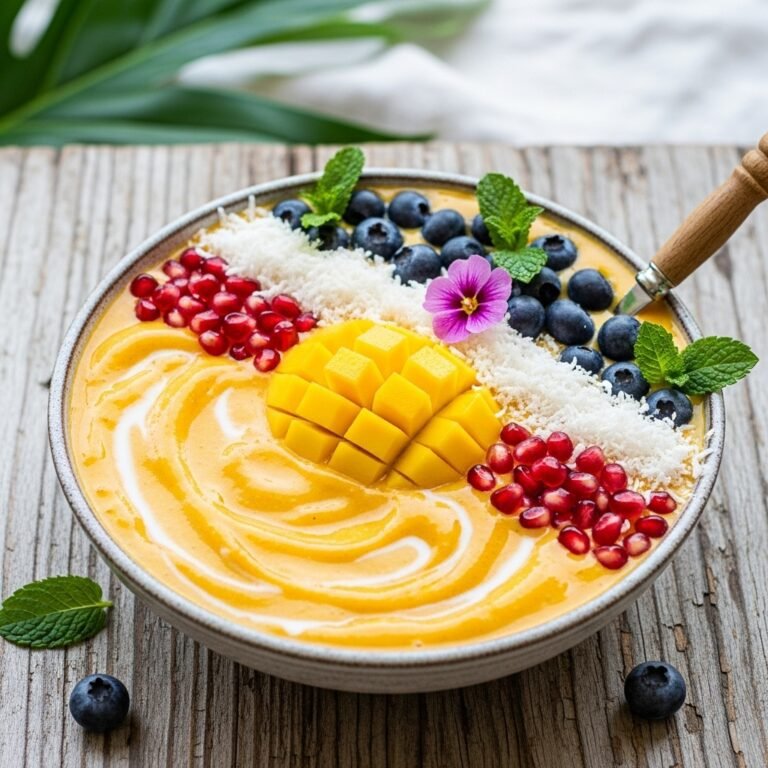
Tropical Mango Smoothie Bowl Recipe – Thick, Creamy & Pinterest Perfect!
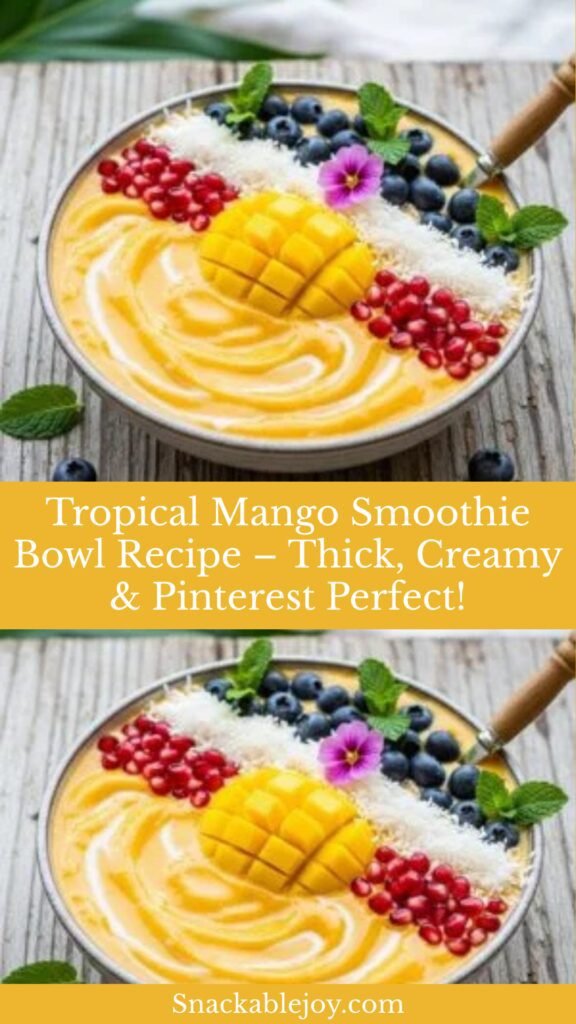
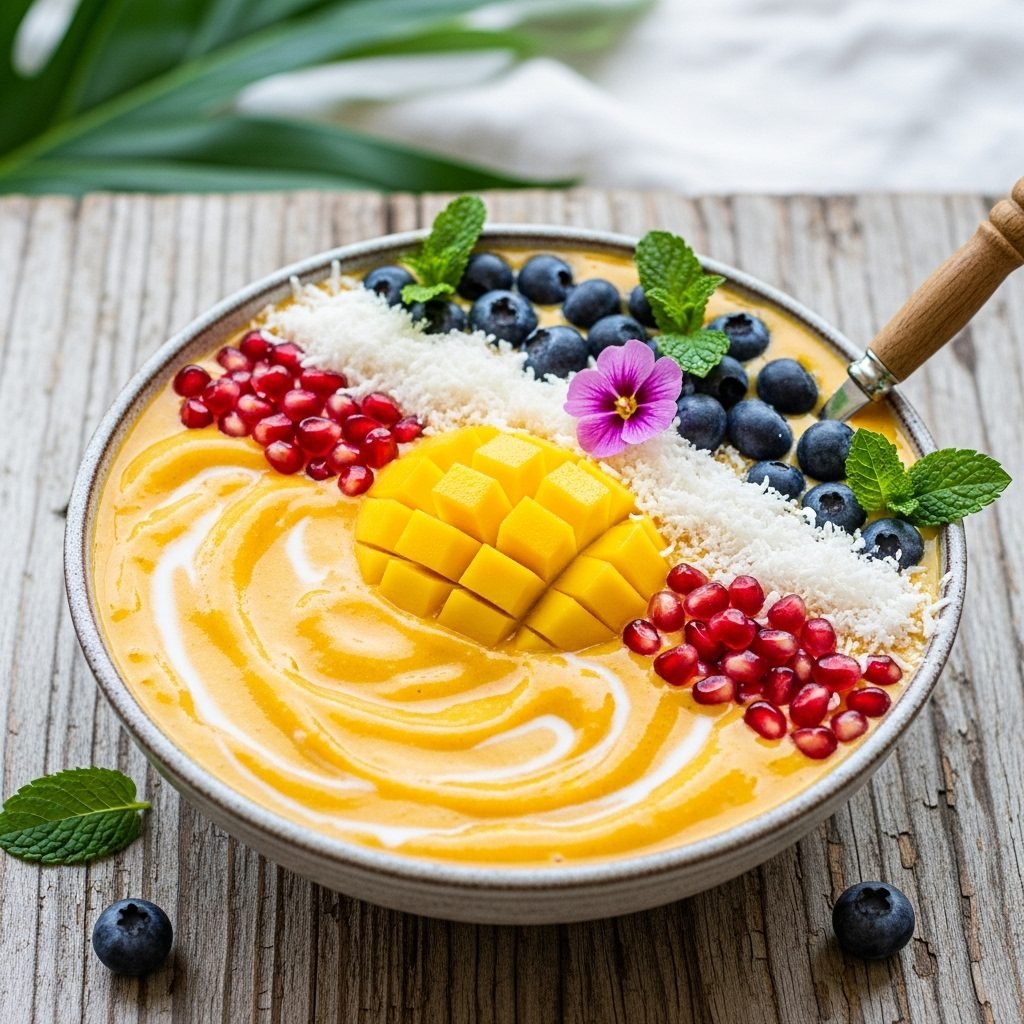
There’s something absolutely magical about starting your day with a vibrant, tropical mango smoothie bowl that looks like sunshine in a dish. This isn’t just another smoothie thrown into a glass—it’s a thick, spoonable, Instagram-worthy breakfast experience that tastes like a vacation in every bite.
A mango smoothie bowl is essentially a thicker version of your favorite smoothie, designed to be eaten with a spoon and topped with an array of colorful fruits, nuts, seeds, and crunchy granola. Unlike traditional smoothies that you drink on the go, smoothie bowls invite you to slow down, savor the moment, and nourish your body with wholesome ingredients. They’re perfect for leisurely weekend mornings, post-workout fuel, healthy dessert alternatives, or even as a refreshing afternoon snack on hot summer days.
What makes this mango smoothie bowl particularly special is its naturally sweet flavor profile that requires no added refined sugar, its gorgeous golden-orange color that photographs beautifully for Pinterest and Instagram, and its versatility—you can customize the toppings based on your preferences, dietary needs, or whatever’s in your pantry. Whether you’re a busy parent looking for a nutritious breakfast the kids will actually eat, a fitness enthusiast seeking clean fuel, or someone who simply loves tropical flavors, this recipe checks all the boxes.
History / Background
Smoothie bowls emerged as a health food trend in the early 2010s, gaining massive popularity through social media platforms like Instagram and Pinterest. While smoothies themselves have been around since the 1960s health food movement in California, the concept of making them thick enough to eat with a spoon and beautifully decorating the top is a relatively modern innovation.
The smoothie bowl trend is often credited to the acai bowl craze that originated from Brazilian surf culture and Hawaiian health cafes. Surfers and beach communities in Southern California, Hawaii, and Australia popularized these vibrant, nutrient-dense bowls as the perfect post-surf meal—refreshing, energizing, and packed with antioxidants. As acai bowls gained traction, creative home cooks and café owners began experimenting with other fruit bases, and the mango smoothie bowl quickly became a beloved variation.
Mangoes themselves have an ancient and revered history. Cultivated for over 4,000 years in South Asia, mangoes are considered the “king of fruits” in India and hold cultural significance across tropical regions worldwide. When Portuguese explorers introduced mangoes to Africa and Brazil in the 15th and 16th centuries, and when they eventually made their way to Florida and California in the 19th century, this tropical treasure became increasingly accessible to American consumers.
Today’s mango smoothie bowl represents a beautiful fusion of ancient fruit tradition and modern wellness culture—combining the nutritional wisdom of whole foods with the visual appeal that makes healthy eating exciting and shareable. The Pinterest community has particularly embraced smoothie bowls, with millions of pins showcasing colorful variations and creative topping arrangements that inspire home cooks to make breakfast beautiful.
Why You’ll Love This Recipe
This mango smoothie bowl recipe will become your new morning obsession because it delivers restaurant-quality results with minimal effort and maximum nutrition. The texture is perfectly thick and creamy—almost like soft-serve ice cream—making it satisfying and substantial enough to keep you full for hours.
Here’s why this recipe stands out:
- Ready in 5 minutes – Perfect for busy mornings when you need something quick but don’t want to sacrifice nutrition or flavor
- Naturally sweetened – The frozen mango provides all the sweetness you need without any added sugar, making it a truly wholesome choice
- Customizable toppings – Make it your own with endless topping combinations from fresh berries to chocolate chips to coconut flakes
- Kid-friendly – The vibrant color and sweet tropical taste appeal to even picky eaters, and they’ll love helping arrange the toppings
- Budget-friendly – Uses simple, affordable ingredients that are often on sale, especially when you buy frozen mango in bulk
- Meal prep friendly – You can pre-portion the smoothie ingredients into freezer bags for grab-and-go convenience
- Dairy-free adaptable – Easily made vegan by using plant-based milk and yogurt alternatives
- Nutrient-dense – Packed with vitamin C, fiber, healthy fats, and protein when topped thoughtfully
- Visually stunning – The gorgeous golden color and artfully arranged toppings make it perfect for sharing on Pinterest and social media
Whether you’re new to smoothie bowls or a seasoned pro, this recipe delivers consistent, delicious results every single time.
Ingredient Notes
Understanding your ingredients helps you make smart substitutions and achieve the best possible results. Here’s what goes into this tropical masterpiece:
Frozen Mango Chunks: This is the star of the show! Frozen mango creates the thick, spoonable texture that defines a smoothie bowl. Fresh mango won’t give you the same consistency unless you add lots of ice, which dilutes the flavor. Look for frozen mango chunks at stores like Trader Joe’s, Costco, or any grocery store’s frozen fruit section. Substitution: Frozen peaches or pineapple work well, though the flavor will change.
Banana: Adds natural sweetness and creates an ultra-creamy texture. The riper the banana, the sweeter your bowl will be. Freezing your bananas ahead of time makes the bowl even thicker. Substitution: Frozen cauliflower (yes, really!) provides creaminess without the banana flavor, or use avocado for healthy fats.
Greek Yogurt: Provides protein, probiotics, and that signature tangy-sweet balance. Full-fat Greek yogurt creates the richest texture. Substitution: Use coconut yogurt, almond yogurt, or silken tofu for dairy-free versions. You can also use regular yogurt, though it’s less thick.
Milk: Helps blend everything smoothly. Use just enough to get the blender moving—too much makes it drinkable instead of spoonable. Substitution: Any milk works—almond milk, coconut milk, oat milk, cashew milk, or regular dairy milk.
Honey or Maple Syrup (optional): Only needed if your mango isn’t very sweet or you prefer sweeter flavors. Taste before adding! Substitution: Agave nectar, date syrup, or stevia.
Toppings: This is where creativity shines! Popular choices include fresh fruit (sliced banana, berries, kiwi), granola, chia seeds, hemp hearts, coconut flakes, sliced almonds, cacao nibs, and drizzled nut butter. The toppings add texture, visual appeal, and additional nutrients.
Equipment Needed
You don’t need any fancy equipment to make an incredible smoothie bowl. Here’s what you’ll use:
- High-powered blender – A Vitamix, Blendtec, or Ninja blender works best for achieving that perfect thick consistency. Regular blenders work too but may require more patience and stopping to scrape down the sides.
- Tamper (if your blender has one) – Helps push ingredients toward the blades without adding extra liquid.
- Measuring cups and spoons – For accurate ingredient portions.
- Shallow bowl – A wide, shallow bowl (not a deep cereal bowl) works best for arranging toppings beautifully.
- Spatula – For scraping every last bit of smoothie goodness from your blender.
- Sharp knife and cutting board – For slicing fresh fruit toppings.
Print

Mango Smoothie Bowl Recipe
This thick and creamy mango smoothie bowl tastes like tropical sunshine in a dish! Made with frozen mango, banana, and Greek yogurt, it’s naturally sweet, nutrient-packed, and ready in just 5 minutes. Top it with your favorite fruits, granola, and seeds for a beautiful breakfast that’s as delicious as it is Instagram-worthy.
- Total Time: 5 minutes
- Yield: 1 large smoothie bowl or 2 small bowls 1x
Ingredients
ScaleFor the Smoothie Bowl Base:
- 2 cups frozen mango chunks
- 1 medium frozen banana (sliced before freezing)
- ½ cup Greek yogurt (plain or vanilla)
- ¼ cup milk of choice (add more only if needed)
- 1 teaspoon honey or maple syrup (optional, only if needed for sweetness)
Topping Suggestions (choose 4-6):
- ½ banana, sliced
- ¼ cup fresh berries (strawberries, blueberries, raspberries)
- 2 tablespoons granola
- 1 tablespoon chia seeds
- 1 tablespoon coconut flakes
- 1 tablespoon sliced almonds
- 1 kiwi, sliced
- Drizzle of almond butter or peanut butter
- Fresh mint leaves for garnish
Instructions
- Prepare your ingredients: Make sure your mango chunks and banana slices are completely frozen. If using fresh fruit, this won’t work—you need frozen fruit for the proper thick consistency.
- Add ingredients to blender: Place the frozen mango, frozen banana, Greek yogurt, and ¼ cup milk into your high-powered blender. Always start with less liquid—you can add more if needed, but you can’t take it out once it’s too thin.
- Blend on low, then increase speed: Start blending on the lowest setting to break up the frozen fruit. Use your tamper to push ingredients down toward the blades. Gradually increase to high speed. The mixture should be very thick—like soft-serve ice cream. Stop and scrape down the sides as needed.
- Check consistency: The smoothie should be thick enough that it doesn’t pour easily. It should mound up when scooped. If it’s too thick to blend, add milk 1 tablespoon at a time until the blender can process it. If it’s too thin, add more frozen fruit.
- Taste and adjust sweetness: Taste the smoothie base. If it’s not sweet enough, blend in honey or maple syrup. Remember that toppings like granola and banana will add sweetness too.
- Transfer to bowl: Use a spatula to scoop the thick smoothie into a wide, shallow bowl. Smooth the top surface so you have a nice canvas for your toppings.
- Arrange toppings: This is the fun part! Arrange your chosen toppings in sections, rows, or whatever pattern appeals to you. Fresh fruit, granola, seeds, and nuts not only add flavor and nutrition but also create visual interest.
- Serve immediately: Smoothie bowls are best enjoyed right away while they’re still thick and cold. Grab a spoon and dig in!
Notes
- Thickness is key: The secret to a perfect smoothie bowl is using as little liquid as possible. If your blender struggles, be patient and use the tamper rather than adding more milk.
- Frozen fruit is non-negotiable: Fresh fruit won’t create the right texture. Always use frozen mango and banana.
- Make it vegan: Use coconut yogurt or cashew yogurt and plant-based milk.
- Protein boost: Add a scoop of vanilla protein powder or a tablespoon of nut butter to the base for extra staying power.
- Prep ahead: Pre-portion smoothie bowl ingredients into freezer bags (except the liquid) so you can just dump and blend on busy mornings.
- Banana-free version: Replace banana with ½ avocado, ½ cup frozen cauliflower, or an extra ½ cup frozen mango.
- Prep Time: 5 minutes
- Cook Time: 0 minutes
- Category: Breakfast
- Method: Blending
- Cuisine: American
- Diet: Gluten Free
Nutrition
- Serving Size: 1 smoothie bowl (base only, without toppings)
- Calories: 285
- Sugar: 48g
- Sodium: 45mg
- Fat: 2g
- Saturated Fat: 1g
- Unsaturated Fat: 1g
- Trans Fat: 0g
- Carbohydrates: 64g
- Fiber: 6g
- Protein: 10g
- Cholesterol: 5mg
Tips & Variations
Make it a Green Smoothie Bowl: Add 1 cup fresh spinach or kale to the base—the mango flavor is strong enough that you won’t taste the greens, but you’ll get extra nutrients.
Chocolate Mango Bowl: Add 1 tablespoon cacao powder or chocolate protein powder to the base for a chocolate-tropical combo.
Tropical Paradise: Use coconut milk and coconut yogurt, then top with pineapple chunks, coconut flakes, and macadamia nuts.
Berry Mango Fusion: Add ½ cup frozen strawberries or mixed berries to the base for a sweeter, more complex flavor.
Peanut Butter Lover’s: Blend 2 tablespoons peanut butter into the base and top with banana slices, cacao nibs, and a peanut butter drizzle.
Protein-Packed Version: Add vanilla protein powder and top with Greek yogurt, hemp hearts, and nut butter for a post-workout powerhouse.
Kid-Friendly Fun: Let kids create faces or patterns with the toppings. Use sliced banana for smiles, berries for eyes, and granola for hair.
Sugar-Free: Skip the honey and use unsweetened yogurt. The fruit provides natural sweetness.
Extra Thick: Freeze your Greek yogurt in ice cube trays and blend those in for an incredibly thick, almost ice cream-like texture.
Pro Chef Tips
Invest in frozen fruit quality: Not all frozen mango is created equal. Look for brands that freeze mango at peak ripeness without added sugars or preservatives. The fruit should be bright golden-orange, not pale yellow.
Layer your blender strategically: Put liquids and yogurt at the bottom (near the blades), then add frozen fruit on top. This helps create a vortex that pulls everything down for smoother blending.
The tamper technique: If your blender has a tamper, use it constantly while blending to push fruit toward the blades. This eliminates the need for extra liquid.
Pre-slice bananas before freezing: Slice bananas into coins before freezing them in a single layer on a baking sheet. Once frozen, transfer to a freezer bag. This makes them much easier to blend than whole frozen bananas.
Contrast your toppings: Balance textures and flavors—pair soft fruits with crunchy granola, sweet mango with tart berries, and creamy nut butter with crispy coconut flakes.
Toast your toppings: Lightly toast coconut flakes, nuts, or oats before using them as toppings. This enhances their flavor and adds an extra dimension of crunch.
Temperature matters: Eat your smoothie bowl while it’s still very cold. As it warms up, the texture becomes less appealing.
The sauce drizzle trick: Warm nut butter slightly in the microwave (about 10 seconds) before drizzling so it creates beautiful, Pinterest-worthy swirls.
Common Mistakes to Avoid
Adding too much liquid: This is the number one mistake that turns your bowl into a drinkable smoothie. Start with very little liquid and add more only if absolutely necessary. You want a thick, spoonable consistency.
Using fresh fruit instead of frozen: Fresh mango and banana won’t give you that thick, ice-cream-like texture. The frozen fruit is what creates the signature smoothie bowl consistency.
Blending too long: Over-blending can make your smoothie bowl melt and become watery. Blend just until smooth and thick, then stop immediately.
Not balancing toppings: All fruit toppings make it too sweet and one-dimensional. Combine different textures—some crunch (granola, nuts), some freshness (fruit), and some healthy fats (seeds, nut butter).
Using a deep bowl: A wide, shallow bowl works better for arranging toppings and makes each spoonful include both base and toppings. Deep bowls make it hard to get that perfect bite.
Waiting too long to eat: Smoothie bowls start to melt and separate within 15-20 minutes. Make them right before you’re ready to sit down and enjoy them.
Forgetting to pre-freeze: If you’re using a regular blender (not a high-powered one), you absolutely must freeze your fruit solid. Partially frozen or fresh fruit won’t blend into the right consistency.
Storage & Meal Prep
Smoothie bowls are best fresh, but you can definitely prep components ahead for quick assembly:
Freezer Prep Packs: Pre-portion your frozen mango, banana slices, and measured yogurt into individual freezer-safe bags or containers. In the morning, dump one pack into your blender with liquid and blend. These packs last 3 months in the freezer.
Leftover Storage: If you have leftover smoothie bowl base (unlikely!), transfer it to an airtight container and freeze. It will freeze solid and can be thawed slightly in the microwave or eaten like ice cream. It won’t regain the exact same texture, but it’s still delicious.
Topping Prep: Prep your toppings in advance by washing and slicing fruit, portioning granola, and storing everything in small containers in the fridge. This makes morning assembly lightning-fast.
How Long It Lasts: The smoothie bowl base must be consumed immediately for best texture. However, your freezer prep packs last 3 months frozen, and fresh fruit toppings last 3-5 days refrigerated.
Reheating: Not applicable—this recipe is meant to be enjoyed cold! If your smoothie melts, you can refreeze it and blend again, though the texture may be slightly different.
Make-Ahead & Freezer Notes
Ultimate Make-Ahead Strategy: Sunday meal prep for smoothie bowls is a game-changer! Prepare 5-7 individual freezer bags with portioned frozen mango (2 cups), banana slices (1 banana’s worth), and the measured amount of any add-ins like protein powder or spinach. Label each bag with the date and the amount of liquid to add. Store flat in your freezer for easy stacking.
Partial Prep Method: If freezer space is limited, just pre-slice and freeze your bananas in portion sizes. Keep a large bag of frozen mango on hand. In the morning, you’re just measuring and dumping.
Yogurt Cubes: Freeze Greek yogurt in ice cube trays, then pop out the cubes and store in freezer bags. Add 3-4 yogurt cubes directly to your smoothie bowl for extra thickness without adding liquid.
Topping Containers: Portion your dry toppings (granola, seeds, coconut flakes, nuts) into small containers or bags for grab-and-go convenience. These don’t need refrigeration and stay fresh for weeks.
Can You Freeze the Finished Bowl?: Technically yes, but it becomes more like frozen yogurt or ice cream. The texture changes significantly—it’s no longer scoopable and smooth. If you do freeze leftovers, let them sit at room temperature for 5-10 minutes before eating, or blend them again with a splash of milk.
Best Practices: Always label your freezer packs with dates and contents. Use freezer-safe bags to prevent freezer burn. Squeeze out excess air before sealing. Your prep packs maintain best quality for up to 3 months, though they’re safe indefinitely.
Serving Suggestions
This mango smoothie bowl is substantial enough to be a complete breakfast, but here are beautiful pairings and serving ideas:
Complete Breakfast Spread: Serve alongside a cup of hot coffee or green tea, some avocado toast, or a small protein-rich side like hard-boiled eggs or turkey sausage for a truly satisfying meal.
Brunch Centerpiece: Make a smoothie bowl bar for weekend brunch! Set out the blended base and an array of toppings so everyone can customize their own bowl. This is perfect for hosting friends or keeping kids entertained.
Post-Workout Fuel: Pair with a small handful of nuts or a protein ball for balanced post-exercise recovery.
Afternoon Snack: Serve a smaller portion (use half the recipe) as a healthy afternoon pick-me-up that satisfies sweet cravings.
Healthy Dessert Alternative: This naturally sweet bowl makes a guilt-free dessert option. Add dark chocolate chips, cacao nibs, or a drizzle of melted dark chocolate for an extra treat.
Light Lunch: Make the bowl extra-filling by adding plenty of protein-rich toppings like nut butter, hemp hearts, and Greek yogurt, plus substantial toppings like granola. Pair with a green smoothie or herbal tea.
Best Toppings for Balance: Aim for a mix of textures and nutrients—something crunchy (granola or nuts), something fresh (berries or kiwi), something creamy (nut butter or coconut), and something for added nutrition (seeds or bee pollen).
FAQs Section
Can I make a smoothie bowl without a high-powered blender? Yes, but it requires more patience. Use a regular blender and let your frozen fruit thaw for 3-5 minutes first. Add ingredients in layers with liquid at the bottom, and stop frequently to stir and scrape down the sides. You may need to add slightly more liquid, so add it 1 tablespoon at a time. The texture might not be quite as thick and creamy as with a Vitamix, but it will still be delicious.
Why is my smoothie bowl too runny? You added too much liquid! The key to a thick smoothie bowl is using minimal liquid—just barely enough to get the blender moving. If it’s already too thin, add more frozen mango or banana, or add a handful of ice and blend again. You can also add frozen cauliflower (it’s flavorless) to thicken without changing the taste.
Can I use fresh mango instead of frozen? Fresh mango won’t give you the thick, spoonable texture that defines a smoothie bowl. If you only have fresh mango, you’d need to add lots of ice, which dilutes the flavor. For best results, always use frozen fruit. If you have fresh mango, slice it and freeze it overnight before making your bowl.
Is a smoothie bowl healthier than a regular smoothie? Not necessarily—it depends on what you put in it and on top! The benefit of a smoothie bowl is that it encourages mindful eating and allows you to add nutritious toppings like seeds, nuts, and additional fruit. However, be mindful that toppings add calories. A smoothie bowl with ½ cup of granola and lots of nut butter can be quite calorie-dense. Keep portions balanced.
How can I make my smoothie bowl sweeter without adding sugar? Use very ripe, spotty bananas—they’re much sweeter. Add a Medjool date or two while blending. Use vanilla-flavored Greek yogurt instead of plain. Add a tiny pinch of cinnamon or vanilla extract to enhance perceived sweetness. Make sure your frozen mango is high quality and naturally sweet.
Can I make this smoothie bowl the night before? Unfortunately, no. Smoothie bowls don’t hold their texture when stored. They’ll separate, become icy, or turn watery in the fridge. However, you can prep all your ingredients the night before—pre-portion the frozen fruit, measure the yogurt, and prep your toppings so that morning assembly takes just 2 minutes.
What’s the best way to get my smoothie bowl Instagram-worthy? Use a wide, shallow white or neutral-colored bowl for contrast. Smooth the surface of your smoothie base with the back of a spoon. Arrange toppings in neat rows or sections rather than scattering them randomly. Use colorful fresh fruit as focal points. Add height with banana slices standing up or berries stacked. Natural lighting near a window works best for photos. Garnish with fresh mint leaves for a pop of color.
Conclusion
There you have it—everything you need to create the perfect tropical mango smoothie bowl right in your own kitchen! This recipe proves that healthy eating doesn’t have to be boring or complicated. In just 5 minutes, you can blend up a nutritious, delicious, beautiful breakfast that rivals anything from your favorite smoothie café—and you’ll save money while doing it.
The beauty of this mango smoothie bowl is its versatility. Make it exactly as written, or use it as a canvas for your creativity. Try different topping combinations, experiment with mix-ins, prep ahead for busy mornings, or make it a fun weekend activity with your family. However you choose to enjoy it, you’re nourishing your body with wholesome fruits, protein-rich yogurt, and whatever nutritious toppings you select.
I’d love to see your mango smoothie bowl creations! Take a photo of your beautiful bowl and share it on Pinterest—tag me so I can see your tropical breakfast masterpieces. Don’t forget to save this recipe to your favorite Pinterest board so you can find it again when you need breakfast inspiration.
If you try this recipe, please leave a comment below and let me know how it turned out. Did you discover an amazing topping combination? Did your kids love it? Do you have questions or suggestions? I read every comment and love hearing from you!
Now grab your blender and get ready to feel like you’re having breakfast on a tropical island—minus the plane ticket! 🥭🌴☀️