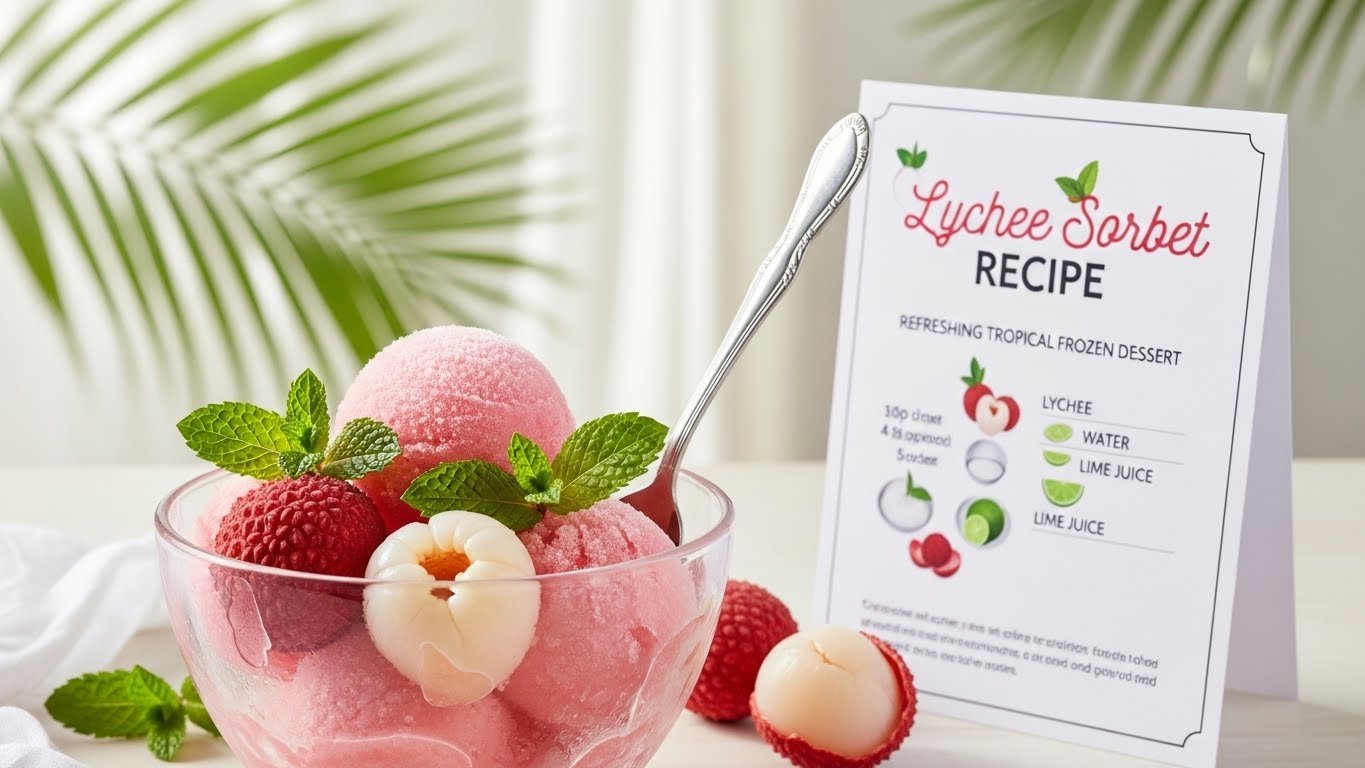
Lychee Sorbet Recipe – Refreshing Tropical Frozen Dessert
If you’re craving something exotic, refreshing, and absolutely stunning to serve at your next gathering, this Lychee Sorbet is about to become your new favorite frozen dessert! Made with fragrant lychees, this elegant sorbet captures the delicate floral sweetness of one of Asia’s most beloved fruits. With just three simple ingredients and no ice cream maker required, you can create a sophisticated dessert that tastes like it came straight from a high-end restaurant.
Lychee sorbet has a unique flavor profile that’s hard to describe—imagine a perfect balance of sweet and tart with subtle notes of rose, grape, and watermelon all in one. The texture is silky smooth, refreshingly light, and utterly addictive. This dessert is perfect for summer entertaining, dinner parties, Asian-themed meals, or whenever you want to impress guests with something truly special. Plus, it’s naturally vegan, gluten-free, and dairy-free, making it an inclusive option that everyone can enjoy!
Whether you’re serving it as a palate cleanser between courses, a light ending to a heavy meal, or as a cooling treat on a hot afternoon, this lychee sorbet delivers restaurant-quality results with minimal effort. The pale pink color and delicate flavor make it an Instagram-worthy dessert that’s as beautiful as it is delicious.
History / Background
The lychee fruit has a rich history dating back over 2,000 years in southern China, where it was cultivated in the provinces of Guangdong and Fujian. Historical records show that lychees were considered such a delicacy that they were transported thousands of miles to the Imperial Court, even requiring relay horsemen to rush the fresh fruit to emperors and nobility. The famous Tang Dynasty concubine Yang Guifei was said to be so fond of lychees that the emperor had them delivered to her via fast horse from southern China to the capital—a journey that took several days!
Lychees hold deep cultural significance throughout Asia. In Chinese culture, they symbolize love, romance, and good fortune, which is why they’re often given as gifts during festivals and celebrations, particularly during the Lunar New Year. The fruit spread throughout Southeast Asia over centuries, becoming integral to the cuisines of Thailand, Vietnam, India, and the Philippines. European explorers first encountered lychees in the 17th century, and the fruit eventually made its way to the Americas, where it’s now grown in Florida, California, and Hawaii.
The art of making sorbet has ancient roots, with frozen desserts appearing in Persian, Chinese, and Roman cultures. The Chinese were making ice-based desserts as early as 3000 BCE, using ice stored in underground cellars mixed with fruit juices and honey. When these traditions met the delicate lychee fruit, a perfect marriage was born. Today, lychee sorbet is a popular dessert throughout Asia and has gained tremendous popularity in Western fine dining establishments, where chefs appreciate its sophisticated flavor and versatility.
Creating lychee sorbet at home brings together this ancient fruit with the timeless tradition of frozen desserts, giving you a taste of culinary history while showcasing the incredible flavor of one of the world’s most prized tropical fruits.
Why You’ll Love This Recipe
This lychee sorbet recipe is pure magic in its simplicity. Unlike complicated desserts that require precise techniques and professional equipment, this recipe welcomes beginners while still delivering professional results. The naturally perfumed sweetness of lychees creates a sorbet that’s both exotic and approachable, with a flavor that’s memorable without being overwhelming.
Here’s why this recipe deserves a spot in your dessert rotation:
- Just 3 ingredients – Canned lychees, sugar, and lemon juice create perfection
- No ice cream maker needed – Simple freezer method works beautifully
- Ready in 4 hours – Mostly hands-off freezing time
- Naturally vegan & dairy-free – Perfect for guests with dietary restrictions
- Exotic yet accessible flavor – Sophisticated without being intimidating
- Uses canned lychees – No need to hunt for fresh (though you can use them!)
- Budget-friendly – Canned lychees are surprisingly affordable at Asian markets
- Impressive presentation – Looks and tastes like a restaurant dessert
- Light and refreshing – Perfect for hot weather or after heavy meals
- Make-ahead friendly – Prepare days in advance for stress-free entertaining
- Low in calories – Naturally lighter than ice cream at around 110 calories per serving
- Kid-approved – The sweet, mild flavor appeals to even picky eaters
- Pairs beautifully – Complements Asian cuisine and adds elegance to any menu
- Customizable – Easy to add flavors like rose water, coconut, or lime
Ingredient Notes
Canned Lychees in Syrup: This is the star ingredient and the foundation of your sorbet! Canned lychees are peeled, pitted, and packed in light or heavy syrup, making them incredibly convenient. You’ll find them in the Asian section of most major supermarkets or at any Asian grocery store. The syrup is actually a bonus since it contributes both sweetness and liquid to the sorbet. Don’t drain them completely—you’ll use some of that syrup! The brand doesn’t matter much, but look for whole lychees rather than broken pieces for better presentation if you want to garnish with them. If you can find fresh lychees (available May through July), you can absolutely use them! You’ll need about 2 pounds of fresh lychees, which you’ll peel and pit yourself, then add simple syrup separately.
Granulated Sugar: While the canned lychees come in syrup, additional sugar helps achieve the perfect sweetness level and proper sorbet texture. Sugar isn’t just for taste—it’s crucial for preventing your sorbet from freezing into a solid ice block. Sugar lowers the freezing point of water, creating that scoopable, smooth texture we love. You can reduce the sugar slightly if using lychees in heavy syrup, but don’t eliminate it entirely or your texture will suffer. Alternative sweeteners like honey or agave can be used, though they’ll slightly change the delicate lychee flavor. For a healthier option, try monk fruit sweetener, though the texture may be slightly icier.
Fresh Lemon Juice: This might seem like an odd addition to such a delicate fruit, but lemon juice is absolutely essential! It serves multiple purposes: it brightens the lychee flavor, prevents the sorbet from tasting flat or one-dimensional, balances the sweetness, and adds necessary acidity to enhance all the other flavors. Always use fresh-squeezed lemon juice—bottled juice has a stale, metallic taste that will detract from your sorbet’s elegance. You only need 2-3 tablespoons, so one large lemon is sufficient. In a pinch, fresh lime juice works wonderfully too and adds a slightly different but equally delicious flavor profile.
Optional Rose Water (1/2 teaspoon): This is completely optional but highly recommended if you want to amplify the natural floral notes in lychees. Rose water is available at Middle Eastern markets, specialty stores, and online. A little goes a very long way—too much will make your sorbet taste like perfume! Start with 1/4 teaspoon, taste, and add more if desired.
Optional Vodka or White Rum (1-2 tablespoons): Adding a small amount of alcohol is a professional technique that improves texture. Since alcohol doesn’t freeze, it keeps the sorbet from becoming too hard, making it easier to scoop straight from the freezer. The alcohol flavor completely dissipates, leaving only improved texture behind.
Equipment Needed
This recipe requires minimal equipment, and you probably already have everything you need:
- Blender or food processor – A high-powered blender (like a Vitamix or Ninja) creates the smoothest texture, but any blender or food processor works fine. Even an immersion blender will do in a pinch!
- Can opener – For opening your canned lychees
- Measuring cups and spoons – For accurate measurements
- Citrus juicer or reamer – Makes squeezing lemons easier, though you can squeeze by hand
- Fine-mesh strainer (optional but recommended) – For an ultra-smooth, silky sorbet without any pulp or fibers
- Large bowl – If you’re straining the mixture
- Rubber spatula – For scraping down the blender and transferring mixture
- Freezer-safe container with lid – A shallow container like a loaf pan, baking dish, or plastic container works perfectly. Shallow is better than deep for faster, more even freezing.
- Fork or whisk – For stirring during the freezing process
- Ice cream scoop – For serving beautiful portions (a spring-loaded scoop works best)
That’s it! No fancy equipment required, making this an accessible recipe for any home cook.
Print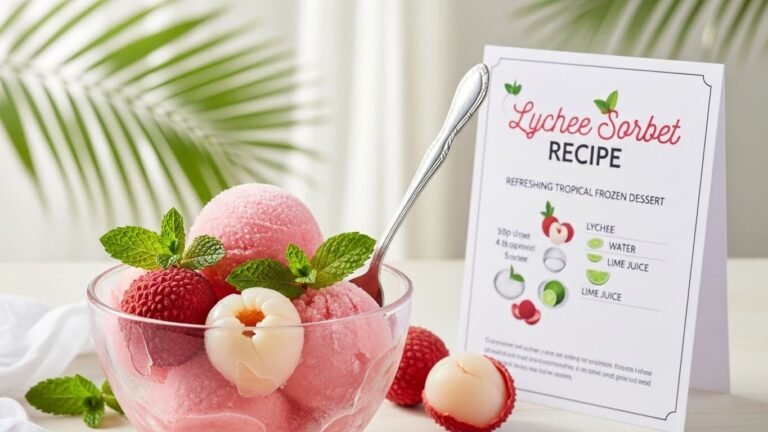
Lychee Sorbet Recipe
This elegant Lychee Sorbet showcases the delicate, floral sweetness of lychee fruit in a refreshingly light frozen dessert. Made with just three simple ingredients—canned lychees, sugar, and lemon juice—this no-churn sorbet delivers restaurant-quality results without an ice cream maker. The result is a silky-smooth, exotic treat perfect for summer entertaining or as a sophisticated palate cleanser.
- Total Time: 4 hours 10 minutes
- Yield: 6 servings 1x
Ingredients
- 2 cans (20 ounces each) lychees in syrup (about 40 lychees total)
- 1/2 cup reserved lychee syrup from the cans
- 1/3 cup granulated sugar
- 3 tablespoons fresh lemon juice (about 1 large lemon)
- 1/4 cup water
- 1/2 teaspoon rose water (optional, for enhanced floral notes)
- 1-2 tablespoons vodka or white rum (optional, for improved texture)
Instructions
- Drain the lychees: Open both cans of lychees and drain them over a bowl to catch the syrup. Reserve 1/2 cup of the syrup and set aside. You should have about 40 whole lychees (roughly 2 1/2 to 3 cups). If you want to save a few lychees for garnish, set 4-6 aside now and refrigerate them.
- Blend the mixture: Add the drained lychees, reserved 1/2 cup lychee syrup, sugar, fresh lemon juice, and water to your blender or food processor. Blend on high speed for 60-90 seconds until completely smooth with no chunks remaining. The mixture should be pale white with a slight pinkish tint and have a pourable, smoothie-like consistency.
- Taste and adjust: This is crucial! Taste the mixture before freezing. It should taste sweeter than you want the final sorbet to be, as freezing dulls sweetness perception. If it tastes too tart, add 1-2 tablespoons more sugar and blend again. If it needs more brightness, add another tablespoon of lemon juice. If using rose water, add it now—start with 1/4 teaspoon, blend briefly, taste, and add up to 1/4 teaspoon more if desired.
- Strain for smoothness (optional): For an ultra-silky texture, pour the blended mixture through a fine-mesh strainer set over a large bowl. Use a spatula to press the liquid through, leaving behind any pulp or fibers. This step is optional but creates a more refined, restaurant-quality texture. Most people find the unstrained version perfectly smooth and delicious.
- Add alcohol if using: If you’re adding vodka or rum for improved texture, stir it in now. This helps keep the sorbet scoopable by preventing it from freezing too hard.
- Pour into container: Transfer the mixture to a shallow, freezer-safe container. A 9×5-inch loaf pan or similar shallow dish is ideal. The shallower the container, the faster and more evenly your sorbet will freeze.
- Initial freeze: Place the container in the freezer and set a timer for 45 minutes.
- First stir: After 45 minutes, remove the container from the freezer. You’ll notice ice crystals forming around the edges. Use a fork to vigorously stir and scrape these frozen edges into the still-liquid center, breaking up all ice crystals. This is crucial for smooth texture!
- Continue stirring: Return to the freezer and repeat this stirring process every 30-45 minutes for the next 3-4 hours. Each time, scrape the frozen portions from the edges and bottom, breaking up ice crystals and mixing them into the center. This process mimics what an ice cream maker does, incorporating air and preventing large ice crystals.
- Final freeze: After 3-4 hours of periodic stirring, your sorbet should be thick, scoopable, and uniformly frozen with a smooth, creamy texture. Cover the surface with plastic wrap pressed directly against the sorbet, then cover with the lid to prevent freezer burn.
- Temper before serving: Remove the sorbet from the freezer 5-10 minutes before serving to soften slightly for easier scooping. Scoop into chilled serving bowls or glasses.
- Garnish and serve: Garnish with fresh mint leaves, a reserved lychee, edible flowers, or a light drizzle of rose syrup. Serve immediately and enjoy!
Notes
- Fresh vs. canned: If using fresh lychees (about 2 pounds), peel and pit them, then prepare a simple syrup with 3/4 cup sugar and 3/4 cup water. Blend the fresh lychees with the cooled simple syrup and lemon juice.
- Sweetness variation: Lychees packed in light syrup need more added sugar than those in heavy syrup. Always taste before freezing and adjust.
- Storage tip: Homemade sorbet is best within 1-2 weeks. After that, ice crystals begin forming even with perfect storage.
- No-stir method: If you prefer not to stir every 30 minutes, freeze the mixture completely (6 hours), then break into chunks and re-blend until smooth. Re-freeze for 1-2 hours before serving.
- Texture troubleshooting: If too icy, add 1 tablespoon vodka next time. If too soft, reduce liquid slightly or ensure freezer is at proper temperature (0°F/-18°C).
- Prep Time: 10 minutes
- Cook Time: 0 minutes
- Category: Desert
- Method: Blending, Freezing
- Cuisine: Asian Fusion
- Diet: Gluten Free
Nutrition
- Serving Size: 1/2 cup (approximately 90g)
- Calories: 112
- Sugar: 26g
- Sodium: 8mg
- Fat: 0.2g
- Saturated Fat: 0g
- Unsaturated Fat: 0.2g
- Trans Fat: 0g
- Carbohydrates: 29g
- Fiber: 0.6g
- Protein: 0.5g
- Cholesterol: 0mg
Lychee Sorbet Recipe – Refreshing Tropical Frozen Dessert
Introduction of Recipe
Imagine a frozen dessert so elegant, so refreshing, and so intoxicatingly fragrant that every spoonful transports you to a tropical paradise. That’s the magic of homemade Lychee Sorbet! This stunning frozen treat captures the delicate floral sweetness of fresh lychees in a light, smooth sorbet that’s both sophisticated and incredibly easy to make. With its beautiful pale pink color and enchanting perfume-like aroma, lychee sorbet is a show-stopping dessert that never fails to impress.
This recipe is perfect for summer dinner parties, elegant brunches, special celebrations, or anytime you want a light, refreshing dessert that feels luxurious. It’s ideal for those hot days when you crave something cold and sweet but not heavy or overly rich. Serve it as a palate cleanser between courses at a formal dinner, as the grand finale to an Asian-inspired meal, or simply as a beautiful afternoon treat. The natural sweetness and exotic flavor of lychees create a dessert that’s both crowd-pleasing and conversation-starting, while being naturally dairy-free, vegan, and allergy-friendly for most guests.
History / Background
The lychee fruit has a rich history spanning thousands of years in Chinese culture. Native to southern China, lychees have been cultivated since at least 2000 BC and were so prized that ancient emperors had them transported hundreds of miles to the imperial court—a significant feat in an era without refrigeration. The fruit was considered a symbol of love and romance, and according to legend, Emperor Xuanzong of the Tang Dynasty had fresh lychees rushed to the imperial palace to satisfy his beloved concubine Yang Guifei’s cravings, cementing the fruit’s association with luxury and devotion.
Lychees gradually spread throughout Southeast Asia, becoming beloved in Thailand, Vietnam, the Philippines, and beyond. The fruit’s distinctive appearance—rough red shell concealing translucent white flesh—and its unique flavor profile of floral sweetness with hints of rose and grape made it highly sought after. When explorers and traders introduced lychees to the Western world, they quickly became associated with exotic luxury and refined tastes.
The tradition of sorbet itself dates back centuries, with roots in ancient Persia and China, where ice and snow were combined with fruit juices and honey to create frozen refreshments for the wealthy. Italian and French confectioners later refined sorbet-making into an art form during the Renaissance, creating elegant palate cleansers and light desserts. The word “sorbet” comes from the Turkish “şerbet,” which in turn derives from the Arabic “sharba,” meaning “to drink.”
Combining lychee with the classic sorbet technique is a relatively modern innovation that brings together Eastern ingredient tradition with Western dessert refinement. The result is a dessert that honors the lychee’s Chinese heritage while presenting it in an internationally recognized frozen format. Lychee sorbet has become especially popular in fine dining establishments, Asian fusion restaurants, and among home cooks looking to create restaurant-quality desserts that are both impressive and refreshingly simple to prepare.
Why You’ll Love This Recipe
This Lychee Sorbet is about to become your go-to impressive dessert that requires surprisingly little effort. It combines exotic elegance with straightforward preparation, proving that sophisticated desserts don’t have to be complicated. The delicate floral sweetness and perfume-like aroma of lychees create a flavor experience that’s both unique and universally appealing.
Here’s why this recipe will transform your dessert repertoire:
- Restaurant-quality results at home – This sorbet rivals what you’d find at upscale restaurants, but you can make it in your own kitchen with just a few ingredients.
- Naturally allergy-friendly – Dairy-free, egg-free, gluten-free, and vegan, making it perfect for guests with dietary restrictions without seeming like a “substitute” dessert.
- Incredibly refreshing – Light, not overly sweet, and perfectly palate-cleansing. Ideal for hot summer days or after rich meals.
- Exotic yet approachable – The unique lychee flavor is intriguing without being intimidating. Even people new to lychees typically love this sorbet.
- Minimal ingredients – Just lychees, sugar, water, and a touch of citrus. Simple ingredients that let the lychee flavor shine.
- Make-ahead perfection – Prepare days or even weeks in advance. Perfect for stress-free entertaining since all the work is done ahead of time.
- Visually stunning – The beautiful pale pink color and elegant presentation make it Instagram-worthy and perfect for special occasions.
- Light and guilt-free – No cream, no eggs, just fruit and simple syrup. A dessert you can feel good about serving.
- Impressive but easy – Guests will think you spent hours on this sophisticated dessert, but it’s actually incredibly simple.
- Versatile serving options – Serve in elegant coupe glasses, make popsicles, or use as a component in more complex desserts.
Ingredient Notes
Understanding your ingredients ensures the best possible lychee sorbet. Here’s everything you need to know about what goes into this elegant frozen dessert.
Fresh or Canned Lychees: The star ingredient! You can use either fresh or canned lychees with excellent results. Fresh lychees provide the most delicate, floral flavor and are worth seeking out during their peak season (typically May through July). Look for lychees with bright red, somewhat rough shells. The flesh should be translucent white and juicy. Canned lychees in syrup are available year-round at Asian grocery stores and many supermarkets. They work beautifully for sorbet—just drain them and reserve the syrup, which can replace some of your simple syrup. If using fresh, you’ll need about 2 pounds to yield the peeled fruit required.
Granulated Sugar: Creates the simple syrup that provides sweetness and prevents the sorbet from freezing rock-hard. The sugar doesn’t just sweeten—it affects texture by lowering the freezing point, keeping the sorbet scoopable. You can substitute part of the sugar with honey for a different flavor profile, but don’t eliminate it entirely or the sorbet will freeze too hard.
Water: Combined with sugar to create simple syrup. Use filtered water if your tap water has a strong taste, as this will affect the delicate lychee flavor.
Fresh Lime or Lemon Juice: A small amount of citrus brightens the lychee flavor and prevents it from tasting flat or one-dimensional. Lime is traditional and complements the floral notes beautifully, but lemon works too. Always use fresh citrus juice—bottled juice lacks the vibrant acidity needed.
Vodka or White Rum (optional): A tablespoon of alcohol improves texture by preventing the sorbet from freezing completely solid, making it easier to scoop. The alcohol doesn’t add noticeable flavor but significantly improves consistency. This is optional but highly recommended for the best texture.
Rose Water (optional): A few drops enhance the natural floral notes of lychee. Use sparingly—rose water is potent and can easily overpower if you use too much. This is completely optional but adds an extra dimension of elegance.
Equipment Needed
Making sorbet requires some specific equipment, but nothing too specialized. Here’s what you’ll need:
- Blender or food processor – Essential for pureeing the lychees into a smooth mixture. A high-powered blender like a Vitamix produces the silkiest results, but any blender works.
- Medium saucepan – For making the simple syrup.
- Fine-mesh strainer or cheesecloth – To strain out any pulp or fibers for ultra-smooth sorbet. This step is optional but recommended for the finest texture.
- Ice cream maker – This is the key piece of equipment. A machine that churns while freezing creates the smooth, scoopable texture that makes sorbet special. Options range from affordable manual models to electric versions with built-in compressors.
- Freezer-safe container – A loaf pan or shallow container for storing the finished sorbet. Shallow containers freeze more evenly than deep ones.
- Measuring cups and spoons – For accurate proportions.
- Ice cream scoop – For serving beautiful portions.
- Optional: Instant-read thermometer – Helpful for monitoring simple syrup temperature, though not essential.
Recipe Card
Prep Time: 20 minutes (plus chilling time)
Cook Time: 5 minutes
Total Time: 6-8 hours (includes freezing time)
Yield: 6 servings (about 1 quart)
Category: Dessert
Method: Frozen, Ice Cream Maker
Cuisine: Asian-Inspired, French Technique
Diet: Vegan, Gluten-Free, Dairy-Free
Description
Elegant and refreshing, this homemade Lychee Sorbet captures the delicate floral sweetness of lychees in a silky-smooth frozen dessert. Light, naturally dairy-free, and beautifully pink, it’s the perfect sophisticated treat for warm weather or special occasions.
Ingredients
For the Sorbet:
- 2 pounds fresh lychees (about 3 cups peeled and seeded) OR 2 cans (20 oz each) lychees in syrup, drained
- 1 cup granulated sugar (reduce to ¾ cup if using canned lychees in syrup)
- 1 cup water
- 3 tablespoons fresh lime juice (about 1-2 limes)
- 1 tablespoon vodka or white rum (optional, for better texture)
- 2-3 drops rose water (optional, for enhanced floral notes)
- Pinch of salt
Instructions
Step 1: Prepare the Lychees
If using fresh lychees, peel away the rough red outer shell—it should come off easily by cracking it with your fingers. Remove the translucent white flesh and discard the shiny brown seed in the center. You should have about 3 cups of lychee flesh. If using canned lychees, simply drain them, reserving the syrup if desired. Rinse the lychees gently under cool water to remove excess syrup.
Step 2: Make the Simple Syrup
In a medium saucepan, combine the sugar and water. Bring to a gentle boil over medium heat, stirring occasionally until the sugar completely dissolves (about 3-5 minutes). You’ll know it’s ready when the liquid is completely clear with no sugar granules visible. Remove from heat and let the simple syrup cool to room temperature. This cooling step is important—adding hot syrup to fruit can cook it and change the flavor.
Step 3: Blend the Lychee Mixture
Place your prepared lychees in a blender or food processor. Add the cooled simple syrup, fresh lime juice, vodka or rum (if using), rose water (if using), and a pinch of salt. Blend on high speed for 1-2 minutes until completely smooth. The mixture should be silky with no visible chunks.
Step 4: Strain for Silky Texture (Optional but Recommended)
For the smoothest possible sorbet, strain the mixture through a fine-mesh strainer into a bowl, pressing down with a spatula or the back of a spoon to extract all the liquid. This removes any fibrous bits and creates restaurant-quality smoothness. You can skip this step if you don’t mind a slightly more textured sorbet.
Step 5: Chill Thoroughly
Cover the bowl and refrigerate the mixture for at least 4 hours or overnight. This step is crucial! Churning cold mixture produces better texture than churning room-temperature mixture. The colder your base, the faster it will freeze and the smoother your sorbet will be.
Step 6: Churn in Ice Cream Maker
Once thoroughly chilled, pour the mixture into your ice cream maker and churn according to the manufacturer’s instructions. This typically takes 20-30 minutes. The sorbet is ready when it reaches a soft-serve consistency—thick enough to hold its shape but still soft enough to scoop.
Step 7: Freeze Until Firm
Transfer the churned sorbet to a freezer-safe container. Press plastic wrap directly onto the surface to prevent ice crystals from forming, then cover with a lid. Freeze for at least 4 hours or until firm enough to scoop. For best texture, let it sit at room temperature for 5-10 minutes before serving if it’s very hard.
Notes
Fresh vs. Canned Lychees: Both work beautifully! Fresh lychees have a more delicate, floral flavor, while canned lychees are sweeter and more intense. If using canned lychees in syrup, reduce the sugar in your simple syrup to ¾ cup since the canned fruit is already sweetened.
Texture Perfection: The vodka or rum is optional but strongly recommended. Alcohol doesn’t freeze, which keeps the sorbet from becoming rock-hard and makes it much easier to scoop. You won’t taste the alcohol at all—it’s purely functional.
Storage: Homemade sorbet is best within 1-2 weeks. After that, it may develop ice crystals and lose its smooth texture, though it’s still safe to eat.
No Ice Cream Maker?: You can still make this! Pour the mixture into a shallow freezer-safe container and freeze. Every 30-45 minutes for the first 3-4 hours, remove it and stir vigorously with a fork to break up ice crystals. This method requires more hands-on time but produces good results.
Sweetness Adjustment: Taste your lychee mixture before churning. If it tastes slightly too sweet, it’s perfect—sweetness perception decreases when frozen. If it tastes just right at room temperature, it will taste bland when frozen.
Nutrition Facts Table
Serving Size: ½ cup (approximately 4 oz)
Servings Per Recipe: 6
Per Serving:
- Calories: 180
- Total Fat: 0g
- Saturated Fat: 0g
- Unsaturated Fat: 0g
- Trans Fat: 0g
- Cholesterol: 0mg
- Sodium: 25mg
- Total Carbohydrates: 46g
- Dietary Fiber: 1g
- Total Sugars: 44g
- Protein: 1g
Note: Nutrition information is approximate and varies based on specific brands and whether you use fresh or canned lychees. Calculations do not include optional alcohol.
Tips & Variations
The beauty of sorbet is its versatility. Here are creative ways to customize your lychee sorbet:
Lychee Raspberry Swirl: Blend a handful of fresh or frozen raspberries separately, strain to remove seeds, and swirl into the sorbet before the final freeze. The tart berries complement the sweet lychee beautifully.
Coconut Lychee: Replace half the water with coconut milk for a creamier, tropical variation. This is technically a sherbet rather than sorbet, but it’s absolutely delicious.
Prosecco Lychee: Replace the water with sparkling wine (Prosecco or Champagne) for an elegant adult version. The bubbles add complexity and prevent the sorbet from freezing too hard.
Mint Lychee: Add 10-12 fresh mint leaves when blending for a refreshing herbal note that complements the floral lychee flavor.
Ginger Lychee: Add 1 teaspoon of freshly grated ginger to the simple syrup while it cools. The spicy warmth of ginger creates an interesting contrast with sweet lychee.
Lychee Basil: Infuse the simple syrup with Thai basil leaves for an exotic, slightly spicy variation that’s popular in Southeast Asian desserts.
Lower Sugar Version: Reduce sugar to ¾ cup and add an extra tablespoon of vodka to maintain texture. The sorbet will be less sweet but still delicious.
Lychee Popsicles: Pour the mixture into popsicle molds instead of churning for easy frozen treats perfect for kids and summer parties.
Champagne Float: Serve a scoop of lychee sorbet in a glass of Champagne or Prosecco for an elegant dessert cocktail.
Pro Chef Tips
Choose Ripe Lychees: When buying fresh lychees, look for bright red shells that give slightly when pressed. Avoid green (unripe) or brown (overripe) ones. The fruit should smell sweetly fragrant—if there’s no aroma, it won’t have much flavor.
Master the Sweet Test: Before churning, taste your mixture. It should taste slightly too sweet at room temperature because sweetness perception diminishes significantly when frozen. If it tastes perfectly sweet at room temperature, it will taste bland when frozen.
Embrace Texture Boosters: Professional pastry chefs often add a tablespoon of corn syrup or glucose to sorbet recipes. These invert sugars create smoother texture by preventing large ice crystals from forming. This is optional but creates exceptionally silky sorbet.
Control Freezing Speed: Faster freezing creates smaller ice crystals and smoother texture. Ensure your ice cream maker’s bowl is completely frozen (usually 24 hours minimum). Some people keep their ice cream maker bowl in the freezer permanently so it’s always ready.
The Plastic Wrap Trick: Always press plastic wrap directly onto the surface of your sorbet before covering with a lid. This prevents ice crystals from forming on the surface, which can ruin the smooth texture.
Serve at the Right Temperature: Remove sorbet from the freezer 5-10 minutes before serving. This allows it to soften slightly, making scooping easier and improving the creamy mouthfeel. Sorbet served too cold tastes icy and the flavors are muted.
Pre-Chill Everything: For best results, chill not only your sorbet base but also the container you’ll freeze it in. Cold container + cold mixture = faster freezing = smaller ice crystals = smoother sorbet.
Balance Is Key: The perfect sorbet balances sweetness, acidity, and alcohol content. Too sweet and it’s cloying; too tart and it’s harsh; too much alcohol and it won’t freeze properly. The recipe provided hits the sweet spot, but don’t be afraid to adjust based on your lychees’ natural sweetness.
Common Mistakes to Avoid
Not Chilling the Mixture Before Churning: This is the most common mistake. Room temperature or warm mixture takes much longer to freeze in the ice cream maker, resulting in larger ice crystals and a grainy texture. Always chill thoroughly—at least 4 hours or overnight.
Skipping the Alcohol: Many people omit the alcohol thinking it’s unnecessary, but it makes a significant difference. Without it, homemade sorbet freezes rock-hard and is difficult to scoop. Just one tablespoon keeps it perfectly scoopable without adding any noticeable alcohol flavor.
Over-Sweetening or Under-Sweetening: Finding the right sweetness level is crucial. Too much sugar makes sorbet sickly sweet and prevents proper freezing; too little makes it icy and hard. Always taste before churning and remember it should taste slightly too sweet at room temperature.
Using Low-Quality or Brown Lychees: Overripe lychees with brown shells or dried-out flesh will produce sorbet with off flavors. Fresh lychees should have bright red shells and juicy, translucent flesh. For canned lychees, choose reputable brands.
Not Straining the Mixture: While optional, skipping the straining step can leave fibrous bits in your sorbet that detract from the silky texture. Professional sorbets are always strained for supreme smoothness.
Freezing Too Deep: Storing sorbet in a tall, narrow container makes the center freeze more slowly than the edges, creating uneven texture. Use a shallow, wide container for more consistent freezing and easier scooping.
Letting It Sit Too Long: Homemade sorbet is best within the first two weeks. After that, ice crystals form and texture deteriorates. Unlike commercial sorbet with stabilizers, homemade versions are best enjoyed relatively fresh.
Storage & Meal Prep
Proper storage ensures your lychee sorbet maintains its beautiful texture and flavor.
Optimal Storage Container: Store sorbet in a shallow, freezer-safe container with an airtight lid. Loaf pans or rectangular plastic containers work perfectly. Avoid tall, narrow containers which freeze unevenly.
The Plastic Wrap Method: Always press plastic wrap directly onto the surface of the sorbet before covering with a lid. This creates a barrier against air and prevents ice crystals from forming on the surface—the biggest enemy of smooth sorbet.
Freezer Placement: Store sorbet toward the back of your freezer where temperature is most consistent. Avoid the door, where temperature fluctuates every time you open the freezer, causing ice crystals to form.
Shelf Life: Homemade sorbet is at its absolute best within the first week and remains excellent for up to 2 weeks. After that, it’s still safe to eat but texture may deteriorate as ice crystals form. For best quality, plan to consume within 2 weeks.
Preventing Freezer Burn: If you notice ice crystals forming on the surface, scrape them off before serving. To prevent this, ensure your container is truly airtight and that plastic wrap is pressed directly against the sorbet surface.
Softening Before Serving: If your sorbet becomes very hard after several days in the freezer, let it sit at room temperature for 5-10 minutes before scooping. This makes serving easier and improves the creamy texture.
Portioning Tip: For easy serving at parties, pre-scoop sorbet into individual portions on a parchment-lined baking sheet, freeze until firm, then store the scoops in a freezer bag. This allows guests to grab individual servings without waiting for the container to soften.
Make-Ahead & Freezer Notes
One of the greatest advantages of sorbet is that it’s designed to be made ahead—it actually requires advance preparation!
Make-Ahead Timeline: You can make lychee sorbet up to 2 weeks in advance with excellent results. For special occasions, preparing it 3-5 days ahead is ideal—this gives the flavors time to fully develop while the texture remains perfect.
Freezer Storage: Sorbet is meant to be frozen! Store in an airtight, shallow container with plastic wrap pressed directly on the surface for up to 2 weeks for optimal texture, or up to 1 month if you’re okay with slightly more ice crystal formation.
No Thawing Required: Unlike many frozen desserts, sorbet goes straight from freezer to serving with minimal wait time. Simply let it sit at room temperature for 5-10 minutes if it’s too hard to scoop.
Batch Preparation: This recipe doubles or triples beautifully. Make multiple batches during lychee season and store them separately. Having homemade sorbet ready in your freezer means you’re always prepared for impromptu entertaining.
Texture Maintenance: For the first 2-3 days, sorbet texture is at its absolute peak. After a week, you may notice slight ice crystal formation. After 2 weeks, texture begins to deteriorate noticeably. While still delicious and safe, it won’t have that restaurant-quality smoothness.
Reviving Old Sorbet: If sorbet has been in the freezer too long and become icy, you can revive it! Let it soften significantly, then re-blend and re-churn in your ice cream maker. This breaks up ice crystals and restores smooth texture.
Freezing in Portions: Consider freezing in smaller containers so you only take out what you need. Every time sorbet thaws and refreezes, texture deteriorates. Individual portions prevent this issue.
Serving Suggestions
Lychee sorbet is versatile and elegant—here are beautiful ways to serve it:
Classic Presentation: Serve scoops in chilled martini glasses or elegant coupe glasses. Garnish with a fresh mint sprig and a whole peeled lychee for sophisticated presentation.
Asian-Inspired Dessert Platter: Pair with fortune cookies, sesame seed cookies, and fresh fruit like dragon fruit, mango, and more lychees for a restaurant-style Asian dessert spread.
Champagne or Prosecco Float: Place a scoop of lychee sorbet in a champagne flute and top with sparkling wine for an elegant dessert cocktail. The sorbet slowly melts into the wine, creating a delicious drink-dessert hybrid.
Between Courses: Serve small portions between heavy courses as a palate cleanser at dinner parties. This is traditional in fine dining and helps guests enjoy each course fully.
Fruit Salad Topper: Serve a scoop atop a tropical fruit salad with mango, pineapple, papaya, and kiwi for a refreshing summer dessert.
With Coconut Desserts: Pair with coconut sticky rice, coconut macaroons, or coconut cake. The tropical coconut flavors complement lychee beautifully.
Afternoon Tea: Serve small scoops in demitasse cups or tiny bowls alongside tea sandwiches and pastries for an elegant afternoon tea spread.
Ice Cream Sundae Bar: Include lychee sorbet in a build-your-own sundae bar alongside vanilla ice cream, fresh fruit, nuts, and sauces for interactive dessert fun.
With Fresh Berries: Serve with a side of fresh raspberries, strawberries, or blueberries. The tart berries beautifully contrast the sweet floral lychee.
Beverage Pairing: Pair with jasmine tea, oolong tea, or sweet dessert wines like Moscato d’Asti or late-harvest Riesling.
FAQs Section
Can I make this without an ice cream maker?
Yes, though the texture won’t be quite as smooth. Pour the chilled mixture into a shallow freezer-safe container and freeze. Every 30-45 minutes for the first 3-4 hours, remove from the freezer and stir vigorously with a fork to break up ice crystals. This manual churning method requires more hands-on time but produces decent results. The sorbet will be slightly icier than machine-churned versions.
What’s the difference between sorbet and sherbet?
Sorbet is dairy-free, made only from fruit, sugar, and water. Sherbet contains a small amount of dairy (usually milk or cream), making it slightly richer and creamier. Sorbet is naturally vegan and lighter, while sherbet falls somewhere between sorbet and ice cream in richness.
Can I use frozen lychees?
Absolutely! Frozen lychees work well for sorbet. Thaw them completely and drain excess liquid before using. The flavor will be good, though not quite as delicate as fresh lychees. Adjust sweetness to taste as frozen fruit can vary in sweetness.
Why is my sorbet too hard or too icy?
Hard sorbet usually means too little sugar or no alcohol was added. Sugar and alcohol both lower the freezing point, keeping sorbet scoopable. Icy texture often results from churning the mixture when it wasn’t cold enough, or from temperature fluctuations during storage. Ensure your mixture is thoroughly chilled before churning and store sorbet in the back of the freezer.
How do I know when my lychees are ripe?
Fresh lychees should have bright red, slightly rough shells that yield to gentle pressure. They should smell sweetly fragrant. Avoid green lychees (underripe and sour) or brown lychees (overripe and potentially fermented). If you gently shake the fruit, you shouldn’t hear the seed rattling—that indicates dried-out flesh.
Can I reduce the sugar for a healthier version?
You can reduce sugar slightly (to ¾ cup instead of 1 cup), but reducing too much affects both flavor and texture. Sugar doesn’t just sweeten—it prevents sorbet from freezing rock-hard. If you significantly reduce sugar, add an extra tablespoon of vodka to maintain scoopable texture.
What does lychee taste like?
Lychee has a unique flavor that’s hard to compare to anything else. It’s sweet with floral notes, somewhat like a combination of grape, rose, and a hint of strawberry. The texture is similar to peeled grapes. The flavor is delicate and perfumed rather than intensely fruity. Most people who try lychee for the first time love its exotic, refreshing taste.
Conclusion
There you have it—your complete guide to making absolutely stunning Lychee Sorbet at home! This recipe proves that restaurant-quality desserts can be simple, approachable, and made in your own kitchen. With just a few ingredients and some advance planning, you can create an elegant frozen dessert that impresses guests, delights family, and provides the perfect refreshing finale to any meal.
The magic of lychee sorbet lies in its delicate balance—sweet but not cloying, exotic but not intimidating, light yet completely satisfying. The beautiful pale pink color, the enchanting floral aroma, and the silky-smooth texture combine to create a dessert experience that feels truly special. Whether you’re serving it at a formal dinner party, enjoying it on a hot summer afternoon, or surprising someone special with a homemade treat, lychee sorbet delivers elegance and refreshment in every spoonful.
Don’t be intimidated by the ice cream maker or the exotic fruit—this recipe is remarkably forgiving and straightforward. Try the variations, experiment with serving presentations, and discover why lychee sorbet has captivated dessert lovers around the world. Once you taste the difference between homemade and store-bought, you’ll understand why making your own is worth every bit of effort.
So grab those lychees (fresh or canned!), dust off your ice cream maker, and create some frozen magic! Your future self will thank you when you open the freezer to find this elegant, refreshing dessert waiting—ready to transform any ordinary day into something special. Here’s to beautiful desserts, tropical flavors, and the joy of creating something truly delicious with your own hands!
If you loved this recipe, I’d be thrilled if you’d leave a comment below sharing your experience! Did you use fresh or canned lychees? What variations did you try? How did your guests react? Your feedback and creativity inspire me and help other home cooks. And be sure to explore my other frozen dessert recipes and Asian-inspired treats for more culinary adventures. Happy freezing, and enjoy every silky, fragrant spoonful!