Beautiful Linzer Cookies Recipe (Austrian Christmas Tradition!)

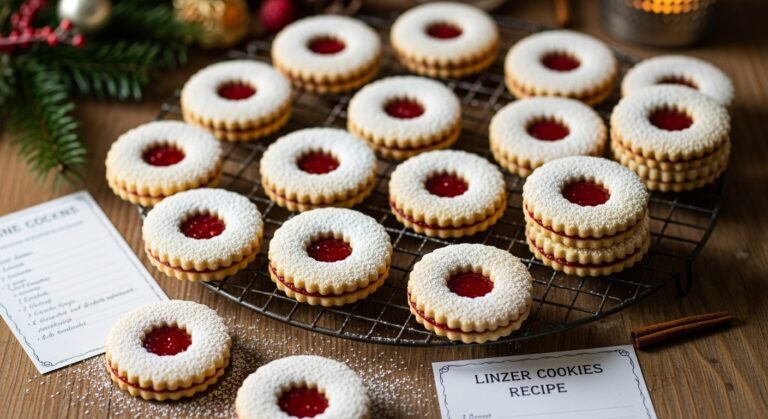
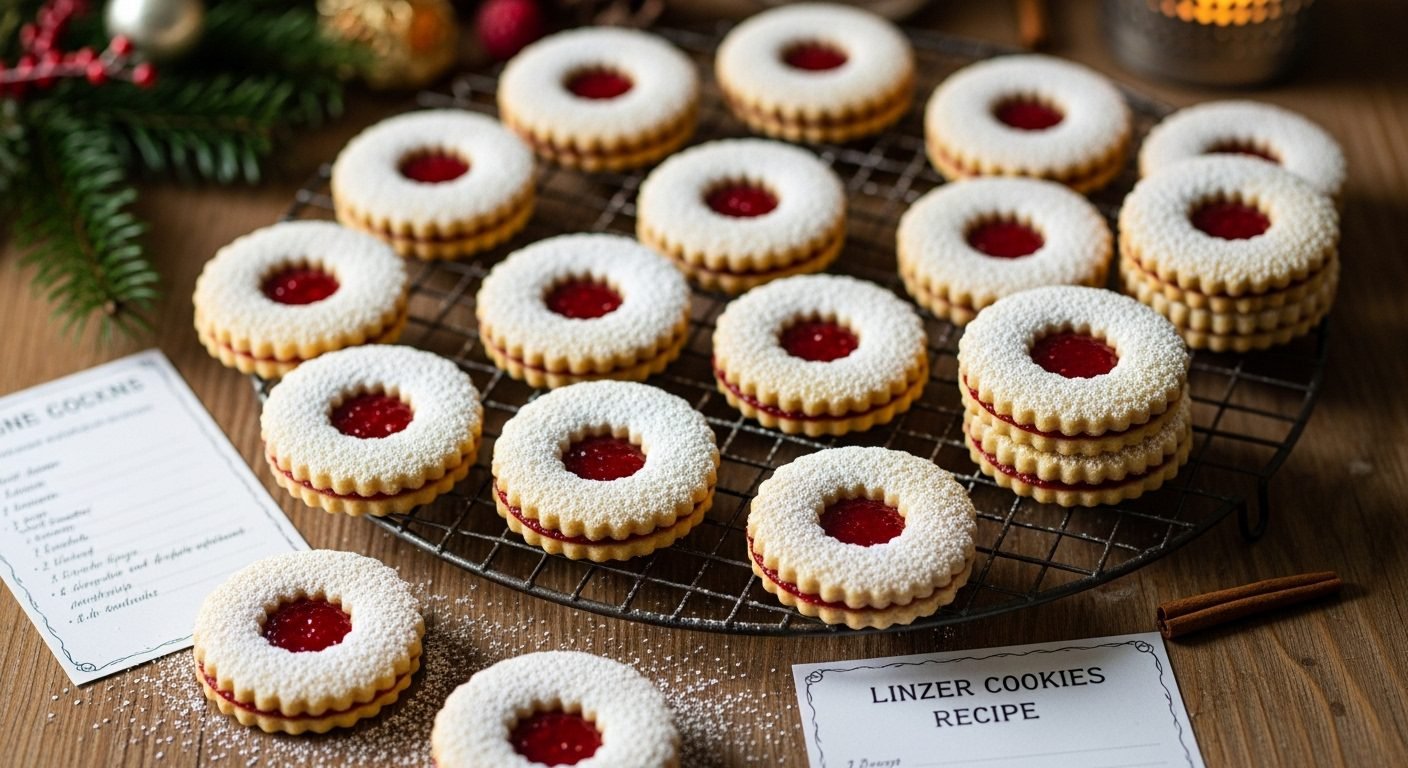
Welcome to the enchanting world of Linzer Cookies—one of the most beautiful and delicious cookies you’ll ever make! These stunning Austrian sandwich cookies feature tender, nutty almond dough spiced with cinnamon, sandwiched together with jewel-toned raspberry jam, and dusted with snowy powdered sugar. The cutout window on top reveals the gorgeous red jam underneath, creating a cookie that’s as visually stunning as it is delicious. Often called “Linzer Tarts” in their smaller cookie form, these treats are derived from the famous Linzer Torte, considered one of the oldest known tart recipes in the world.
Linzer cookies are an absolute showstopper for any occasion, but they’re especially beloved during the Christmas holiday season. Their elegant appearance makes them perfect for cookie exchanges, holiday gift boxes, festive dessert trays, and afternoon tea parties. Despite their fancy look, they’re surprisingly approachable for home bakers! Serve them at Christmas gatherings, include them in your holiday baking lineup, package them as homemade gifts, or enjoy them year-round whenever you want something special. The combination of buttery almond cookies, tart-sweet jam, and delicate powdered sugar creates a flavor and texture experience that’s simply unforgettable.
History / Background
Linzer cookies trace their origins to Linz, Austria, a beautiful city on the Danube River that has been celebrated for its culinary traditions since medieval times. These delicate sandwich cookies are directly inspired by the Linzer Torte, which dates back to at least 1653, making it one of the oldest documented tart recipes in existence. The original recipe was found in the archives of the Admont Abbey in Austria, though the torte likely existed even earlier.
The Linzer Torte itself was a grand creation—a spiced almond pastry filled with red currant preserves and topped with a decorative lattice crust. It became famous throughout the Austro-Hungarian Empire and was considered a specialty of Linz, with local bakers competing to make the finest versions. The torte featured ground almonds or hazelnuts, warm spices like cinnamon and cloves, and that signature red fruit filling that gave it both flavor and visual appeal.
By the late 19th and early 20th centuries, creative bakers began adapting the beloved Linzer Torte into smaller, individual cookie form—perfect for tea time, holidays, and gifting. These “Linzer Augen” (Linzer eyes) maintained all the essential elements of the original torte: nutty dough, warm spices, and fruit preserves, but in a more portable, elegant package. The cutout window on top (traditionally heart-shaped, round, or star-shaped) allowed the vibrant jam to peek through, creating that iconic appearance that makes Linzer cookies instantly recognizable.
Austrian and German immigrants brought Linzer cookie traditions to the United States in the late 1800s and early 1900s, where they quickly became a beloved part of American Christmas baking, particularly in areas with strong German and Austrian heritage like Pennsylvania, Wisconsin, and the Midwest. Today, Linzer cookies are considered an essential part of Christmas cookie collections across America and Europe. They represent the beautiful fusion of Austrian baking tradition with holiday celebration, proving that sometimes the most elegant treats have the most enduring appeal.
Why You’ll Love This Recipe
These Beautiful Linzer Cookies are everything a special-occasion cookie should be! They combine stunning presentation with incredible flavor and surprisingly manageable technique.
Here’s why this recipe deserves a place in your holiday baking tradition:
- Absolutely Gorgeous – The cutout window revealing red jam creates a stunning, professional appearance
- Sophisticated Flavor – Ground almonds and warm spices create complex, refined taste
- Perfect Texture Combination – Tender, buttery cookies with sweet-tart jam filling
- Impressive Yet Manageable – They look difficult but are actually achievable for home bakers
- Holiday Classic – A traditional European Christmas cookie that feels special and festive
- Versatile Shapes – Use any cookie cutter shapes you love for endless variations
- Make-Ahead Friendly – Can be made in stages or frozen for convenience
- Beautiful for Gifting – Package them in tins or boxes for stunning homemade presents
- Long Shelf Life – Stay fresh for 2+ weeks when stored properly
- Freezer-Friendly – Both dough and assembled cookies freeze beautifully
- Customizable Flavors – Change the jam flavor for different color and taste variations
- Kid-Friendly Activity – Fun to make with children who love using cookie cutters
- Elegant Tea Cookie – Perfect for afternoon tea parties and elegant entertaining
- Traditional Recipe – Authentic Austrian formula with centuries of perfection behind it
Ingredient Notes
Each ingredient plays an important role in creating authentic Linzer cookies:
All-Purpose Flour – Provides structure for tender cookies. You can substitute with gluten-free flour blend (add 1/2 teaspoon xanthan gum if your blend doesn’t include it), though the texture will be slightly more delicate.
Almond Flour/Ground Almonds – The signature ingredient that gives Linzer cookies their distinctive nutty flavor and tender texture. Use finely ground blanched almond flour for the best results. You can substitute with hazelnut flour for a traditional variation, or use a combination of both.
Butter – Use unsalted butter at room temperature for proper creaming. European-style butter creates richer flavor. Never substitute margarine for authentic taste.
Granulated Sugar – Sweetens the dough without overpowering the delicate almond and spice flavors.
Egg Yolks – Provide richness and help bind the dough without adding too much moisture. Room temperature yolks incorporate more easily. Using just yolks (not whole eggs) creates a more tender, crumbly texture.
Lemon Zest – Adds brightness that balances the richness and complements the jam filling. Fresh zest is essential—bottled doesn’t compare.
Ground Cinnamon – The primary spice that gives Linzer cookies their warm, festive flavor. Use fresh, high-quality cinnamon for best results.
Ground Cloves – A tiny amount adds depth and complexity without being overwhelming. Don’t add more than called for as cloves can easily overpower.
Salt – Enhances all the flavors and balances the sweetness.
Raspberry Jam/Preserves – Traditional Linzer cookies use red currant or raspberry jam. Choose a high-quality seedless jam for easier assembly. The jam should be thick enough to hold its shape—runny jam will leak during baking.
Powdered Sugar – For dusting the tops, creating that signature snowy appearance and adding extra sweetness.
Optional: Vanilla Extract – While not traditional, many modern recipes include 1 teaspoon for added depth.
Optional: Ground Nutmeg – A tiny pinch (1/8 teaspoon) adds extra warmth if you love heavily spiced cookies.
Equipment Needed
Gather these tools for beautiful Linzer cookie success:
- Large Mixing Bowl – For combining ingredients
- Medium Mixing Bowl – For whisking dry ingredients
- Electric Mixer – Stand mixer or hand mixer for creaming butter and sugar
- Measuring Cups and Spoons – For accurate measurements
- Microplane or Zester – For zesting the lemon
- Whisk – For combining dry ingredients
- Rubber Spatula – For scraping bowl sides and folding
- Plastic Wrap – For wrapping dough during chilling
- Rolling Pin – For rolling out the dough
- Cookie Cutters – Two sizes: one larger (2-3 inches) and one smaller (1-1.5 inches) for the cutout window. Round, heart, or star shapes are traditional
- Baking Sheets – Two or three sheets for efficient baking
- Parchment Paper or Silicone Baking Mats – Essential for preventing sticking
- Small Offset Spatula or Butter Knife – For spreading jam
- Wire Cooling Rack – For proper cooling
- Fine-Mesh Sieve or Sifter – For dusting powdered sugar
- Pastry Brush (Optional) – For brushing away excess flour
Print

Linzer Cookies Recipe
Traditional Austrian Linzer Cookies with tender almond-spiced dough, raspberry jam filling, and powdered sugar topping. These stunning sandwich cookies are perfect for Christmas, holidays, or special occasions!
- Total Time: 2 hours 45 minutes (includes chilling time)
- Yield: 24 sandwich cookies (48 individual cookies) 1x
Ingredients
ScaleFor the Cookie Dough:
- 2 cups all-purpose flour
- 1 cup almond flour (finely ground blanched almonds)
- 1 teaspoon ground cinnamon
- 1/4 teaspoon ground cloves
- 1/4 teaspoon salt
- 1 cup unsalted butter, softened to room temperature
- 3/4 cup granulated sugar
- 2 large egg yolks, room temperature
- 1 tablespoon lemon zest (from 1 large lemon)
- 1 teaspoon vanilla extract (optional)
For Assembly:
- 3/4 to 1 cup seedless raspberry jam or preserves (high quality, thick consistency)
- 1/2 cup powdered sugar (for dusting)
Instructions
- Mix Dry Ingredients – In a medium bowl, whisk together the all-purpose flour, almond flour, cinnamon, cloves, and salt until well combined. Set aside.
- Cream Butter and Sugar – In a large mixing bowl, use an electric mixer to cream the softened butter and granulated sugar together on medium-high speed for 2-3 minutes until light, fluffy, and pale. Scrape down the sides of the bowl as needed.
- Add Egg Yolks and Zest – Beat in the egg yolks one at a time, mixing well after each addition. Add the lemon zest (and vanilla extract if using) and mix until fully incorporated.
- Combine Wet and Dry – With the mixer on low speed, gradually add the flour mixture to the butter mixture. Mix just until the dough comes together and no flour streaks remain. Don’t overmix! The dough will be soft and slightly sticky.
- Chill the Dough – Divide the dough in half and shape each half into a flat disk. Wrap each disk tightly in plastic wrap and refrigerate for at least 2 hours, or up to 3 days. The dough must be well-chilled to roll out properly.
- Preheat Oven – When ready to bake, preheat your oven to 350°F (175°C). Line two baking sheets with parchment paper or silicone baking mats.
- Roll Out Dough – Remove one disk from the refrigerator. On a lightly floured surface (or between two sheets of parchment paper), roll the dough to about 1/8 to 1/4 inch thickness. If the dough is too hard to roll, let it sit at room temperature for 5-10 minutes.
- Cut Cookie Shapes – Using your larger cookie cutter (2-3 inches), cut out shapes and place them on the prepared baking sheets, spacing about 1 inch apart. These will be your bottom cookies.
- Cut Window Shapes – Re-roll scraps and continue cutting cookies. For the top cookies, use the same large cutter to cut shapes, then use a smaller cutter (1-1.5 inches) to cut out a window in the center of each cookie. The cutout window should be significantly smaller than the outer shape. Set the tiny cutouts aside—you can bake these as mini cookies!
- Chill Again (Optional but Helpful) – If the dough becomes too soft while working, place the cut cookies on the baking sheets in the refrigerator for 10-15 minutes before baking. This helps them hold their shape.
- Bake – Bake for 10-12 minutes, until the edges are very lightly golden and the cookies look dry and set. Don’t overbake—they should remain pale. The cookies will be soft when hot but will firm up as they cool.
- Cool Completely – Let the cookies cool on the baking sheet for 5 minutes, then carefully transfer to a wire cooling rack to cool completely. They must be completely cool before assembly or the jam will melt and make them soggy.
- Prepare Jam – While cookies cool, if your jam is very thick or has large fruit pieces, you can gently warm it and stir until smooth, then let it cool to room temperature. It should be spreadable but not runny.
- Dust Top Cookies – Place the cookies with the cutout windows on a clean surface. Using a fine-mesh sieve, generously dust them with powdered sugar. Set aside.
- Assemble Cookies – Place about 1 teaspoon of jam in the center of each bottom cookie (the solid ones without windows). Use a small offset spatula or butter knife to spread it evenly, leaving a small border around the edges. Don’t overfill or the jam will squeeze out.
- Create Sandwiches – Carefully place a powdered-sugar-dusted top cookie on each jam-covered bottom cookie, pressing very gently. The jam should be visible through the window but shouldn’t squeeze out the sides.
- Let Set – Let the assembled cookies sit for at least 1 hour to allow the jam to set and the cookies to “marry.” They actually taste even better the next day!
- Store and Enjoy – Store in an airtight container at room temperature for up to 2 weeks, or freeze for longer storage.
Notes
- Chilling is Essential – Don’t skip chilling the dough! It must be cold to roll out properly without sticking or spreading excessively during baking.
- Roll Between Parchment – For easiest rolling with minimal flour, roll dough between two sheets of parchment paper. This prevents adding too much flour which can make cookies dry.
- Jam Consistency Matters – Use thick, high-quality jam. Runny or thin jam will leak during assembly and make cookies soggy. Seedless is easier but seeded preserves work too.
- Don’t Overbake – Linzer cookies should remain pale. Overbaking makes them hard instead of tender. Remove when edges are barely golden.
- Complete Cooling Required – Never assemble warm cookies! The heat will melt the jam and soften the cookies. Wait until completely cool to room temperature.
- Dust Before Assembly – Always dust the top cookies with powdered sugar before assembling. It’s nearly impossible to do neatly after assembly.
- Prep Time: 30 minutes
- Cook Time: 12 minutes
- Category: Desert
- Method: Baking
- Cuisine: Austrian
- Diet: Vegetarian
Nutrition
- Serving Size: 1 sandwich cookie
- Calories: 145
- Sugar: 11g
- Sodium: 30mg
- Fat: 8g
- Saturated Fat: 4g
- Unsaturated Fat: 4g
- Trans Fat: 0g
- Carbohydrates: 17g
- Fiber: 1g
- Protein: 2g
- Cholesterol: 35mg
-
Tips & Variations
Customize your Linzer cookies while maintaining their authentic charm:
Different Jam Flavors – Try strawberry, apricot, black currant, cherry, or fig jam for different colors and flavors. Red currant is traditional in Austria but harder to find in the US.
Hazelnut Linzer Cookies – Replace the almond flour with hazelnut flour for the traditional Viennese variation. This creates a richer, more complex nutty flavor.
Chocolate Linzer Cookies – Add 3 tablespoons cocoa powder to the dough and reduce flour by 3 tablespoons. Fill with raspberry jam for a chocolate-raspberry combination.
Orange Linzer Cookies – Replace lemon zest with orange zest and add 1/2 teaspoon orange extract for citrusy variation.
Lemon Curd Filling – Use homemade or store-bought lemon curd instead of jam for a tangy, bright alternative.
Spiced Variation – Add 1/2 teaspoon ground cardamom and a pinch of black pepper for more complex spice profile.
Nutella Filling – For a modern twist, use Nutella or chocolate-hazelnut spread instead of jam. Kids love this!
Mini Linzer Cookies – Use smaller cutters (1-1.5 inches) for adorable bite-sized versions perfect for tea parties.
Gluten-Free Linzer Cookies – Use gluten-free 1:1 flour blend plus 1/2 teaspoon xanthan gum. The texture will be slightly more delicate but still delicious.
Vegan Version – Use vegan butter and replace egg yolks with 2 tablespoons of aquafaba (chickpea liquid) or flax eggs. The texture will differ slightly but they’re still tasty.
Different Cutout Shapes – Use stars, trees, or other holiday shapes. Just ensure the inner cutout is significantly smaller than the outer shape.
Pro Chef Tips
Elevate your Linzer cookies from homemade to bakery-perfection:
Tip #1: The Two-Stage Chill – For the easiest handling, chill the dough as directed, then roll it out and cut your shapes. Place the cut shapes on the baking sheet and chill again for 10-15 minutes before baking. This double chill ensures perfect shape retention and prevents spreading.
Tip #2: Flour Control is Critical – Too much flour makes dry, tough cookies. When rolling, use the absolute minimum flour necessary—better yet, roll between parchment paper sheets. Brush off any excess flour from the cookies before baking.
Tip #3: The Jam Warming Trick – Gently warm your jam just until it’s easily spreadable (30 seconds in the microwave), then let it cool back to room temperature before assembling. This makes spreading much easier and ensures an even layer without tearing the delicate cookies.
Tip #4: Match Your Pairs – Before baking, arrange your cut cookies so each solid bottom has a matching cutout top of the same exact size and shape. This makes assembly much easier and ensures perfectly matched sandwich cookies.
Tip #5: The Even Spread Technique – When adding jam to bottom cookies, pipe it from a piping bag or use a small offset spatula to spread it evenly, leaving a 1/8-inch border. This prevents jam from squeezing out the sides and keeps cookies neat and professional-looking.
Tip #6: The Resting Period – After assembly, let cookies sit uncovered at room temperature for 2-3 hours, or better yet, overnight. The jam will set, the cookies will soften slightly from the moisture, and the flavors will meld beautifully. Linzer cookies always taste better the next day!
Tip #7: Store Tops and Bottoms Separately – For the freshest cookies, store the solid bottom cookies and cutout top cookies separately in airtight containers. Assemble them 1-2 hours before serving. This keeps the tops crispy and the powdered sugar fresh-looking.
Tip #8: The Professional Finish – For extra elegance, dust the finished assembled cookies with a second light layer of powdered sugar just before serving. This creates that stunning, bakery-fresh appearance.
Common Mistakes to Avoid
Learn from these common errors to ensure perfect Linzer cookies:
Mistake #1: Not Chilling Dough Long Enough – This is the number one mistake! Unchilled dough is impossible to roll out—it sticks to everything, tears easily, and spreads excessively during baking. Always chill for at least 2 hours, preferably overnight. If your kitchen is very warm, chill the cut cookies again before baking.
Mistake #2: Using Too Much Flour When Rolling – Overcompensating for sticky dough by adding lots of flour creates dry, tough cookies that taste floury. Instead of fighting sticky dough with flour, roll between parchment paper or chill longer. Use flour sparingly.
Mistake #3: Overfilling with Jam – Too much jam squeezes out the sides, makes cookies soggy, and looks messy. Use only about 1 teaspoon of jam per cookie and spread it carefully, leaving a border. Less is more!
Mistake #4: Assembling Warm Cookies – If cookies aren’t completely cool, the jam will be too runny, the cookies will be too soft, and the powdered sugar will melt and disappear. Always wait for complete cooling to room temperature—at least 30 minutes after baking.
Mistake #5: Using Runny or Low-Quality Jam – Thin, cheap jam makes soggy cookies and leaks everywhere. Invest in high-quality, thick preserves or jam. If your jam is thin, simmer it gently to reduce and thicken it before using, then cool completely.
Mistake #6: Overbaking – Linzer cookies should remain pale with barely golden edges. Overbaking makes them hard, dry, and brittle instead of tender and delicate. Watch them carefully and remove as soon as edges look set.
Mistake #7: Dusting Powdered Sugar After Assembly – If you try to dust powdered sugar onto cookies after they’re assembled, it will make a mess and won’t look neat. Always dust the top cookies individually before assembly, handling them gently to preserve the coating.
Storage & Meal Prep
Proper storage keeps Linzer cookies fresh and maintains their beautiful appearance:
Room Temperature Storage – Store completely assembled cookies in an airtight container at room temperature for up to 2 weeks. Place parchment paper between layers to prevent sticking. The cookies actually improve over the first 2-3 days as the jam softens them slightly and flavors meld.
Separate Storage Method – For longest freshness and crispest texture, store the solid bottom cookies and cutout top cookies in separate airtight containers. Assemble them 1-2 hours before serving. This keeps the tops crispy and the powdered sugar pristine.
Preventing Moisture Issues – Linzer cookies will soften over time from the jam’s moisture. This is normal and actually desirable—they become more tender. However, if you prefer crispier cookies, use the separate storage method described above.
Refreshing Powdered Sugar – The powdered sugar on top will absorb moisture and may look less white over time. Give assembled cookies a fresh dusting of powdered sugar just before serving to restore that snowy appearance.
Container Choice – Tin containers work beautifully for Linzer cookies and are traditional for European cookies. Glass or plastic containers with tight seals also work well. Avoid stacking too many layers (3-4 maximum) to prevent crushing.
Humidity Considerations – In very humid environments, store cookies with a food-safe silica gel packet to absorb excess moisture. Don’t refrigerate Linzer cookies as refrigerator humidity makes them soggy.
Gift Packaging – These cookies are stunning when gifted! Package them in clear boxes so the beautiful cutout windows are visible, layer them in decorative tins with parchment between layers, or wrap individual cookies in cellophane bags tied with ribbon.
Make-Ahead & Freezer Notes
Linzer cookies are perfect for advance preparation—ideal for holiday planning!
Freezing Cookie Dough – Unbaked dough freezes beautifully for up to 3 months. Wrap the formed disks tightly in plastic wrap, then aluminum foil. Thaw overnight in the refrigerator before rolling and cutting. This is perfect for spreading out holiday baking.
Freezing Cut Unbaked Cookies – Cut your cookie shapes, place them on a parchment-lined baking sheet, and freeze until solid (2 hours). Transfer to a freezer bag with parchment between layers. Bake directly from frozen, adding 1-2 minutes to baking time.
Freezing Baked Unfilled Cookies – Bake the cookies completely and let them cool. Freeze the solid bottom cookies and cutout top cookies separately in airtight containers with parchment between layers for up to 3 months. Thaw at room temperature for 30 minutes, then assemble with fresh jam.
Freezing Assembled Cookies – Fully assembled Linzer cookies freeze well for up to 2 months. Place them in a single layer on a baking sheet and freeze until solid (2 hours), then transfer to an airtight container with parchment between layers. Thaw at room temperature for 1 hour. You may need to dust with fresh powdered sugar after thawing.
Make-Ahead Timeline – Make the dough up to 3 days in advance and keep it refrigerated. Bake cookies up to 5 days ahead and store airtight. Assemble 1-3 days before serving for best appearance and texture.
Holiday Preparation Strategy – Make and freeze several batches of dough in November. Throughout December, roll, cut, and bake small batches as needed. This spreads out the work and ensures you always have fresh cookies for gifts and entertaining.
Day-Of Assembly – For absolute best appearance, assemble cookies the morning of serving. The powdered sugar will look pristine and the cookies will still have perfect texture.
Serving Suggestions
Linzer cookies shine in many elegant serving situations:
Christmas Cookie Platter – Arrange these stunning cookies on a festive platter with other holiday favorites like gingerbread, sugar cookies, and chocolate crinkles. The red jam peeking through makes them instantly festive.
Afternoon Tea Service – Perfect for traditional tea time! Serve alongside scones, finger sandwiches, and petit fours with Earl Grey, Darjeeling, or English Breakfast tea.
Coffee Pairing – Excellent with cappuccino, espresso, or dark roast coffee. The almond and spice flavors complement coffee beautifully.
Dessert Wine Pairing – Traditional Austrian serving includes sweet dessert wine like Sauternes, late-harvest Riesling, or Austrian Eiswein. The wine’s sweetness balances the cookies perfectly.
With Hot Chocolate – Lovely alongside thick European-style hot chocolate or regular hot cocoa during winter months.
Ice Cream Accompaniment – Serve alongside vanilla bean, almond, or raspberry ice cream for an elegant plated dessert.
Holiday Gift Boxes – Package 6-12 cookies in decorative boxes or tins lined with tissue paper. Include a card with the Austrian history of Linzer cookies for a thoughtful touch.
Cookie Exchange – These are always the star of cookie swaps! Package them beautifully in clear bags or boxes so the gorgeous cutout windows are visible.
Wedding Favors – Miniature Linzer cookies make elegant wedding or shower favors when packaged in clear bags with ribbons.
Cheese Course Addition – Surprisingly delicious on a cheese board with soft, creamy cheeses like brie or mascarpone, plus fresh berries.
Children’s Tea Party – Kids love the pretty window showing the jam inside! Serve with milk or hot chocolate for a special treat.
Austrian-Themed Dinner – Serve as dessert after an Austrian meal with coffee or tea, continuing the authentic cultural experience.
FAQs Section
Q: Can I use whole eggs instead of just egg yolks?
A: While you can technically use 1 whole egg, egg yolks only are traditional and create a more tender, delicate cookie. Whole eggs add more moisture and structure, making the cookies slightly tougher and less crumbly. For authentic texture, stick with yolks only.Q: Why is my dough too sticky to roll out?
A: The dough must be thoroughly chilled—at least 2 hours, preferably overnight. If your dough is still too sticky after chilling, your kitchen may be very warm. Try rolling between two sheets of parchment paper, which eliminates the need for flour. You can also freeze the dough for 20 minutes for easier handling.Q: Can I make Linzer cookies without almond flour?
A: Almond flour is essential for authentic Linzer cookie flavor and texture. However, if you have nut allergies, you can substitute with an equal amount of all-purpose flour. The cookies will still be delicious but won’t have that distinctive nutty flavor and tender texture. You could also try sunflower seed flour as a nut-free alternative.Q: How do I prevent the jam from leaking out?
A: Use thick, high-quality jam or preserves—never jelly which is too runny. Apply only about 1 teaspoon per cookie and spread carefully, leaving a small border. Don’t overfill! Let cookies cool completely before assembly. If your jam is thin, simmer it gently to thicken before using.Q: My cookies spread too much during baking. What happened?
A: This usually means the dough wasn’t cold enough when it went into the oven, or your oven temperature was too low. Make sure dough is well-chilled before rolling, and chill the cut cookies again if they’ve warmed up. Verify your oven temperature with an oven thermometer. Using too little flour can also cause spreading.Q: Can I use store-bought almond flour?
A: Absolutely! Store-bought finely ground blanched almond flour works perfectly and is actually more consistent than grinding your own. Bob’s Red Mill and Blue Diamond Almond Flour are excellent brands readily available in most grocery stores.Q: Do Linzer cookies need to be refrigerated?
A: No! Store them at room temperature in an airtight container. Refrigeration actually makes them soggy from condensation. They’ll stay fresh at room temperature for 2 weeks. The jam provides enough acidity to be shelf-stable at room temperature.Conclusion
And there you have it—everything you need to create absolutely stunning, authentic Austrian Linzer Cookies! These beautiful sandwich cookies prove that sometimes the most elegant treats come from centuries-old traditions perfected over time. From that first glimpse of jewel-toned jam through the delicate cutout window to the final bite of tender, spiced almond cookie, these treats deliver pure magic with every element.
The wonderful thing about Linzer cookies is that while they look incredibly impressive and sophisticated, they’re actually achievable for home bakers willing to follow a few simple steps. Yes, they require some patience with chilling and assembly, but the results are so worth it. Whether you’re building your holiday cookie collection, creating homemade gifts that will be treasured, or simply treating yourself and loved ones to something special, these classic cookies never disappoint.
I hope this recipe becomes a cherished part of your baking tradition, one that you return to year after year and perhaps even pass down to future generations. There’s something magical about continuing a tradition that dates back to 17th-century Austria, and every time you make these cookies, you’re connecting with centuries of bakers who perfected this beautiful, delicious art.
Happy baking, and may your Linzer cookies always be beautiful, tender, and filled with love! 🇦🇹🍪✨