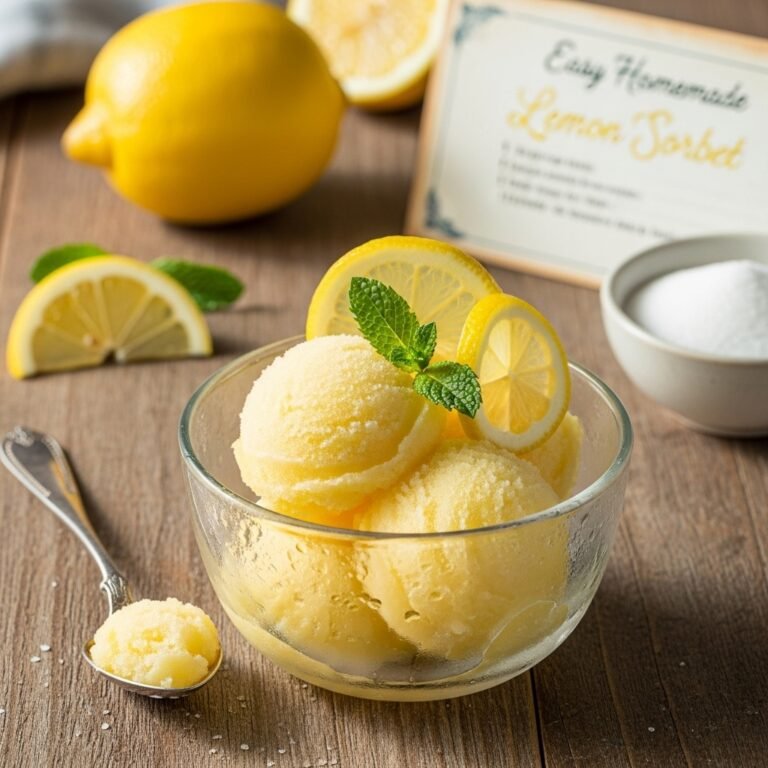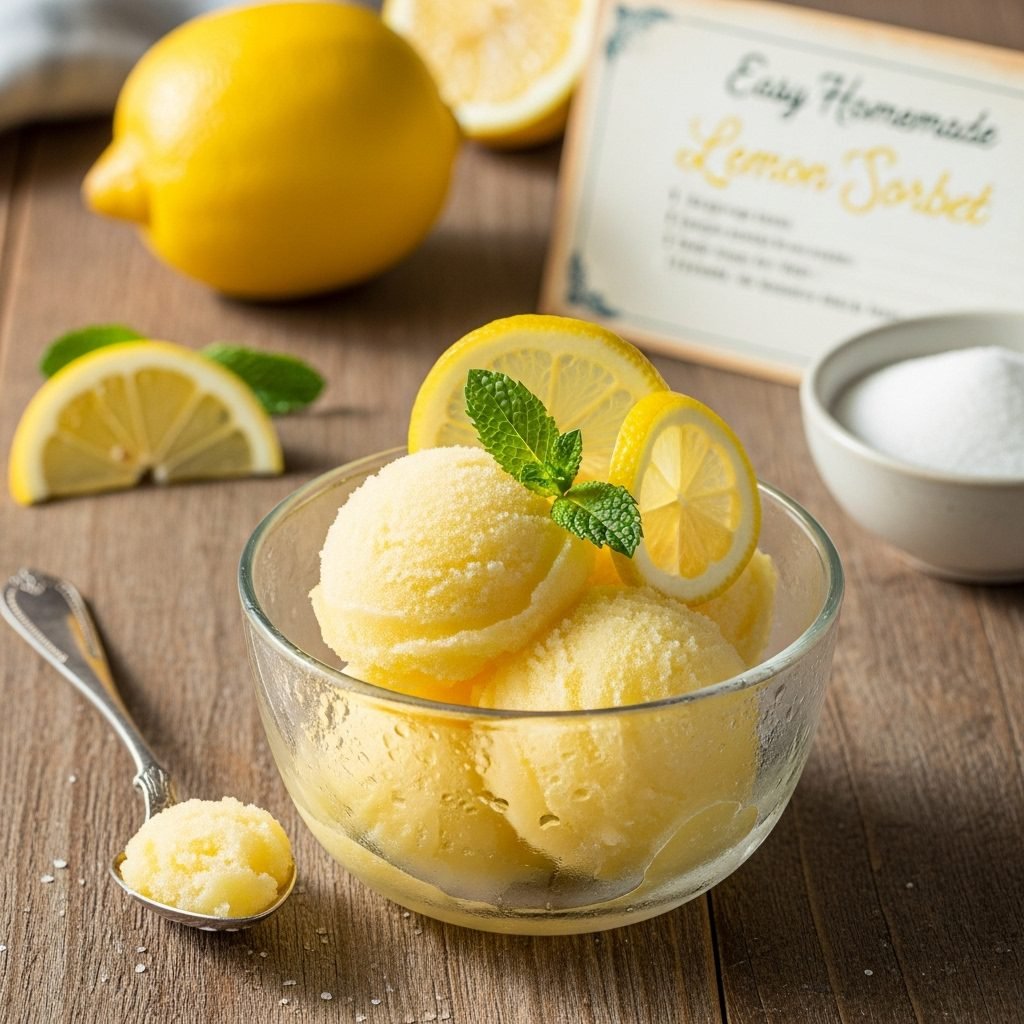
Easy Homemade Lemon Sorbet Recipe: Refreshing Italian-Style Frozen Dessert
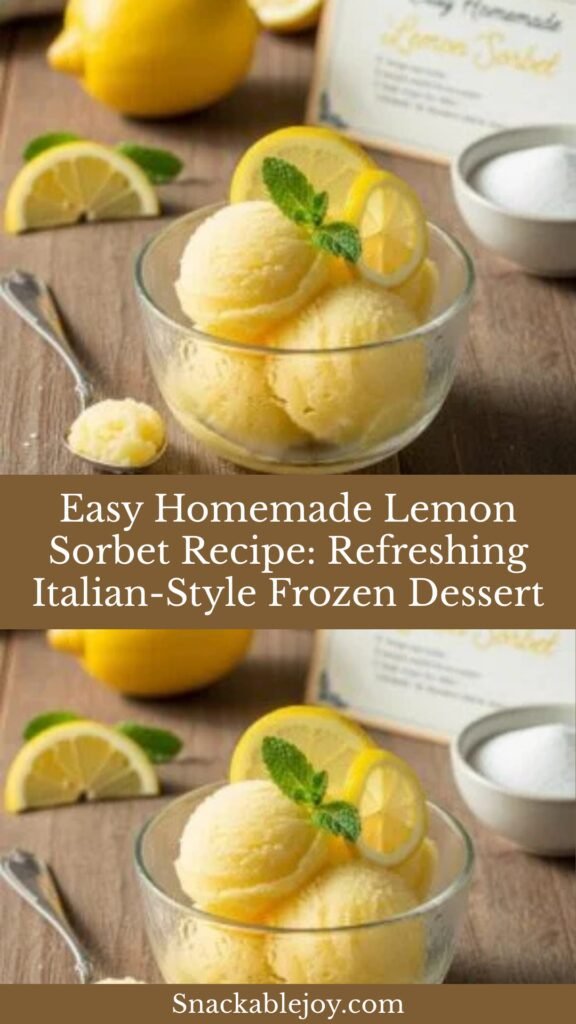
Nothing beats the bright, zingy refreshment of homemade lemon sorbet on a warm day—it’s like capturing sunshine in a frozen treat! If you’ve ever wanted to create that restaurant-quality palate cleanser or light dessert that tastes like pure summer bliss, this lemon sorbet recipe is your golden ticket. Today, I’m sharing my foolproof method for making intensely lemony, perfectly smooth sorbet that’s dairy-free, vegan, and incredibly simple to prepare. This recipe creates a beautifully balanced sorbet with vibrant citrus flavor and a silky texture that melts on your tongue. Whether you’re serving it between courses at an elegant dinner party, offering a light finish to a heavy meal, or simply craving a guilt-free frozen treat, this lemon sorbet delivers bright, tangy perfection every single time.
Introduction of Recipe
Lemon sorbet is the epitome of refreshing simplicity—a frozen dessert made from just three core ingredients: fresh lemon juice, sugar, and water. Unlike ice cream or gelato, sorbet contains no dairy whatsoever, making it naturally vegan and lighter than its creamy cousins while still delivering incredible flavor intensity. This Italian-inspired frozen treat (known as “sorbetto” in Italy) has been delighting palates for centuries as both a dessert and a traditional palate cleanser served between courses during multi-course meals. The beauty of homemade lemon sorbet lies in its pure, unadulterated flavor—when you make it yourself, you control the quality of ingredients and the perfect balance of sweet and tart that suits your taste. It’s ideal for hot summer afternoons, fancy dinner parties, light desserts after rich meals, wedding receptions, bridal showers, or anytime you crave something refreshing and sophisticated. The best part? This sorbet comes together quickly with minimal ingredients, yet tastes incredibly luxurious and impressive.
History / Background
Sorbet’s history stretches back thousands of years, with origins that remain delightfully disputed among food historians. Some trace frozen desserts to ancient Persia, where people combined snow with fruit juices and honey around 400 BCE. Others credit ancient Rome, where Emperor Nero allegedly sent runners into the mountains to fetch snow, which was then flavored with fruit and honey for royal banquets. The Arabic word “sharbat” (meaning a sweet, chilled drink) likely gave us the modern words “sorbet” and “sherbet,” and Arab traders certainly spread ice-preservation techniques throughout the Mediterranean during the Middle Ages.
However, it was Renaissance Italy where sorbet truly evolved into the elegant frozen dessert we know today. Sicilians, with access to Mount Etna’s snow and the region’s abundant citrus groves, became masters of sorbetto-making. The combination of snow (stored in special ice houses called “neviere”), fresh lemon juice from Sicily’s legendary lemons, and cane sugar created the classic lemon sorbetto that remains a Sicilian specialty. Catherine de’ Medici is credited with introducing Italian sorbetto to France when she married King Henry II in 1533, bringing her Italian chefs and their frozen dessert techniques to the French court. The French refined sorbet-making into an art form, establishing the tradition of serving it as a palate cleanser (called “trou normand” when paired with spirits) between courses during elaborate dinners.
Lemon sorbet became particularly significant in European fine dining during the 18th and 19th centuries, when multi-course meals could include ten or more dishes. A small serving of lemon sorbet between the fish course and meat course would refresh and reset diners’ palates, preparing them to appreciate the flavors ahead. This tradition continues in upscale restaurants worldwide today. The popularity of lemon specifically comes from its perfect balance—tart enough to cleanse the palate, bright enough to invigorate, and universally beloved. Today, sorbet has evolved from aristocratic luxury to accessible home dessert, but the basic preparation remains remarkably similar to those ancient recipes: fresh fruit, sugar, and proper freezing technique to create that signature smooth, icy-yet-creamy texture.
Why You’ll Love This Recipe
This homemade lemon sorbet recipe delivers professional-quality results that taste like you’ve been secretly training in a Sicilian gelateria. The bright, intensely lemony flavor tastes incredibly fresh and sophisticated, while the smooth texture melts beautifully on your tongue without being icy or grainy.
Here’s why this recipe is absolutely brilliant:
- Incredibly refreshing – The perfect balance of tart and sweet that awakens your taste buds
- Naturally dairy-free and vegan – No modifications needed for dietary restrictions
- Only 4 simple ingredients – Fresh lemon juice, sugar, water, and optional lemon zest
- Light and guilt-free – Far fewer calories than ice cream while still feeling indulgent
- Impressively elegant – Looks and tastes restaurant-quality, perfect for entertaining
- Palate-cleansing properties – Ideal for serving between courses at dinner parties
- Endlessly versatile – Serve as dessert, use in cocktails, or enjoy as a refreshing snack
- No artificial ingredients – Pure, natural flavor from real lemons
- Make-ahead friendly – Prepare days in advance for stress-free entertaining
- Budget-friendly – Costs a fraction of store-bought gourmet sorbet
- Customizable sweetness – Adjust sugar to your perfect sweet-tart balance
Ingredient Notes
Fresh Lemon Juice: This is the star of your sorbet, so quality matters tremendously. Always use freshly squeezed lemon juice—never bottled. You’ll need about 8-10 medium lemons to yield 1½ cups of juice. Meyer lemons create a sweeter, more floral sorbet, while Eureka lemons (the standard grocery store variety) provide that classic bright, tart flavor. Roll lemons firmly on the counter before juicing to extract maximum juice. Strain the juice to remove seeds and large pulp pieces, though some fine pulp adds wonderful texture.
Granulated White Sugar: Sugar does double duty in sorbet—it sweetens the mixture and lowers the freezing point, which keeps the sorbet smooth and scoopable rather than rock-hard. The exact amount can be adjusted to taste, but don’t reduce it by more than ¼ cup or your sorbet will freeze too hard and become icy. Superfine sugar dissolves more quickly, but regular granulated sugar works perfectly when dissolved in warm simple syrup.
Water: Forms the base of your simple syrup and dilutes the lemon juice to the proper consistency. Use filtered water if your tap water has strong mineral flavors that might affect the delicate lemon taste. The water-to-lemon-juice ratio creates the perfect texture—too much water and the sorbet becomes icy, too little and it won’t freeze properly.
Fresh Lemon Zest (Optional): Adding zest intensifies the lemon flavor beautifully and adds gorgeous flecks of yellow throughout the sorbet. Zest before juicing your lemons, and use only the bright yellow outer layer—the white pith underneath is bitter. For the brightest flavor, zest directly into the warm simple syrup so the oils release immediately.
Lemon Extract (Optional): A small amount (½-1 teaspoon) can amplify lemon flavor, especially if your lemons aren’t particularly aromatic. Use pure lemon extract, not imitation, and add it after the mixture has cooled.
Corn Syrup or Vodka (Optional): Professional sorbet makers sometimes add 1-2 tablespoons of light corn syrup or vodka, which prevents the sorbet from freezing rock-hard and improves scoopability. The alcohol doesn’t freeze solid, keeping the texture smooth even after days in the freezer. This is optional but helpful if you plan to store the sorbet for more than a few days.
Substitution Notes: For lower-sugar versions, you can replace up to ⅓ of the sugar with honey or agave nectar, though the flavor will change slightly. Stevia or monk fruit sweetener don’t work well in sorbet because they don’t affect freezing point like sugar does, resulting in icy texture. For those avoiding refined sugar, organic cane sugar or coconut sugar work, though coconut sugar will darken the color slightly.
Equipment Needed
- Medium saucepan – For making the simple syrup
- Citrus juicer or reamer – Manual or electric, for extracting lemon juice
- Microplane or fine grater – For zesting lemons (if using zest)
- Fine-mesh strainer – To strain out seeds and pulp from lemon juice
- Large mixing bowl – For combining the sorbet mixture
- Whisk or wooden spoon – For stirring the simple syrup
- Measuring cups and spoons – For accurate ingredient measurements
- Ice cream maker – Essential for proper churning and smooth texture
- Freezer-safe container with lid – For storing finished sorbet (shallow containers work best)
- Plastic wrap – To press against sorbet surface and prevent freezer burn
- Digital thermometer (optional) – To check simple syrup temperature
- Ice cream scoop – For serving beautifully rounded portions
Print

Lemon Sorbet Recipe
Bright, refreshing homemade lemon sorbet with intense citrus flavor and perfectly smooth texture. This Italian-style sorbetto is dairy-free, naturally vegan, and incredibly easy to make with just four simple ingredients. The ideal palate cleanser or light summer dessert!
- Total Time: 3-4 hours (including cooling and churning)
- Yield: 6-8 servings (approximately 1 quart) 1x
Ingredients
ScaleFor the Lemon Sorbet:
- 1½ cups (360ml) fresh lemon juice (from about 8-10 lemons)
- 1 cup (200g) granulated white sugar
- 1 cup (240ml) water
- 2 tablespoons fresh lemon zest (from about 2-3 lemons, optional but recommended)
- ⅛ teaspoon fine sea salt
- 1 tablespoon light corn syrup or vodka (optional, for smoother texture)
Optional Enhancements:
- ½ teaspoon pure lemon extract (for extra bright lemon flavor)
- Fresh mint leaves (for garnish)
- Vodka or limoncello (for adult version)
Instructions
Step 1: Make the Simple Syrup
In a medium saucepan, combine the water, sugar, and salt. If using lemon zest, add it now. Heat over medium heat, stirring occasionally with a whisk or wooden spoon, until the sugar completely dissolves and the mixture comes to a gentle simmer (about 3-5 minutes). You should see small bubbles around the edges, and the liquid should look clear with no sugar granules visible. Do not let it boil vigorously. Remove from heat immediately once the sugar dissolves.Step 2: Cool the Syrup
Let the simple syrup cool at room temperature for about 15 minutes, then transfer to a large mixing bowl. For faster cooling, you can set the bowl in an ice bath (a larger bowl filled with ice and cold water), stirring occasionally. The syrup needs to be completely cool before mixing with the lemon juice to preserve the fresh, bright lemon flavor.Step 3: Juice and Strain the Lemons
While the syrup cools, juice your lemons. Roll each lemon firmly on the counter with your palm before cutting and juicing—this breaks down the internal membranes and releases more juice. Cut lemons in half crosswise and juice using a citrus reamer or juicer. Strain the juice through a fine-mesh strainer into a measuring cup to remove seeds and large pulp pieces. You should have 1½ cups of fresh lemon juice. A little fine pulp is fine and adds nice texture.Step 4: Combine the Mixture
Once the simple syrup is completely cool, add the fresh lemon juice and stir well to combine. Taste the mixture at this point—it should taste slightly sweeter than you want the final sorbet to be, since freezing dulls sweetness. If it’s too tart, add 1-2 tablespoons more sugar and stir until dissolved. If using lemon extract, corn syrup, or vodka, stir them in now. The mixture should taste intensely lemony and pleasantly sweet-tart.Step 5: Chill Thoroughly
Cover the bowl with plastic wrap and refrigerate for at least 2-4 hours, or preferably overnight. The mixture must be completely cold (40°F or below) before churning for the smoothest texture. Cold mixture churns faster and incorporates less air, creating a denser, more authentic sorbet texture. This chilling step is crucial—don’t skip it!Step 6: Churn the Sorbet
Make sure your ice cream maker bowl has been frozen for at least 24 hours (check your machine’s instructions). Pour the chilled lemon mixture into your ice cream maker and churn according to manufacturer’s instructions, typically 20-25 minutes. The sorbet is ready when it reaches a thick, slushy consistency similar to a frozen margarita—it should hold its shape but still be soft and somewhat pourable. Don’t over-churn or it can become grainy.Step 7: Freeze to Firm
Transfer the freshly churned sorbet to a freezer-safe container. For the smoothest texture, use a shallow container rather than a deep one—this allows the sorbet to freeze more evenly. Press plastic wrap directly onto the surface of the sorbet to prevent ice crystals and freezer burn, then cover with an airtight lid. Freeze for at least 3-4 hours or until firm enough to scoop.Step 8: Temper Before Serving
Sorbet freezes quite hard, so remove it from the freezer 5-10 minutes before serving to soften slightly for easier scooping and the best texture. Run your ice cream scoop under warm water between scoops for clean, beautiful portions.Notes
- Juice quality is everything: Always use fresh-squeezed lemon juice for the brightest, most authentic flavor.
- Taste before churning: The mixture should taste slightly sweeter than desired since freezing dulls sweetness perception.
- Don’t skip the chilling: The mixture must be completely cold before churning for smooth, non-icy texture.
- Storage matters: Press plastic wrap directly against the sorbet surface before sealing to prevent ice crystals.
- Best within 1 week: Homemade sorbet has the finest texture within the first 3-5 days of making it.
- Too hard to scoop? Let it sit at room temperature for 5-10 minutes, or add 1 tablespoon vodka to the base before churning.
- No ice cream maker? See the FAQs section for a no-churn method using a food processor.
- Prep Time: 15 minutes (plus cooling time: 2-4 hours)
- Cook Time: 5 minutes
- Category: Desert
- Method: Stovetop + Ice Cream Maker
- Cuisine: Italian
- Diet: Gluten Free
Nutrition
- Serving Size: 110 kcal
- Calories: 0g
- Sugar: 26g
- Sodium: 40mg
- Fat: 0g
- Saturated Fat: 0g
- Unsaturated Fat: 0g
- Trans Fat: 0g
- Carbohydrates: 28g
- Fiber: 0g
- Protein: 0g
- Cholesterol: 0mg
Tips & Variations
Flavor Variations:
- Lemon-Basil Sorbet: Steep ¼ cup fresh basil leaves in the hot simple syrup for 10 minutes, strain before cooling
- Lemon-Lavender: Add 1 teaspoon dried culinary lavender to hot simple syrup, steep 5 minutes, strain
- Pink Lemonade Sorbet: Replace ¼ cup water with fresh strawberry or raspberry puree
- Limoncello Sorbet: Add 3-4 tablespoons limoncello liqueur after cooling for an adult version
- Lemon-Mint: Steep fresh mint in the simple syrup, or finely chop and add after churning
- Meyer Lemon: Use Meyer lemons for a sweeter, more floral, less acidic sorbet
- Ginger-Lemon: Add 2 tablespoons fresh grated ginger to the simple syrup, steep and strain
Texture Adjustments:
- For softer, more scoopable sorbet, add 1-2 tablespoons vodka or light corn syrup
- For a more granita-like texture, skip the ice cream maker and freeze in a shallow pan, scraping with a fork every 30 minutes
- For extra-smooth sorbet, strain the mixture through cheesecloth before churning to remove all pulp
Sweetness Modifications:
- Reduce sugar by 2-3 tablespoons for a more tart, less sweet sorbet
- Replace ¼ cup sugar with honey for a subtle floral sweetness
- Add a pinch of citric acid for extra tartness without more lemon juice
Presentation Ideas:
- Serve in hollowed-out lemon halves for dramatic presentation
- Layer with other sorbet flavors in clear glasses for a colorful parfait
- Freeze in popsicle molds for refreshing lemon ice pops
- Shape into quenelles using two spoons for elegant restaurant-style plating
Pro Chef Tips
Perfect Your Sweet-Tart Balance: The key to exceptional lemon sorbet is tasting the base before churning. It should taste slightly too sweet when it’s still liquid, as freezing dramatically dulls our perception of sweetness. Professional pastry chefs taste their sorbet bases at room temperature and aim for a sweetness level that seems just slightly excessive—this translates to perfect balance once frozen.
Zest for Maximum Flavor: Don’t skip the lemon zest! The aromatic oils in lemon peel contain compounds that aren’t present in the juice, adding complexity and depth. Zest directly into the hot simple syrup so the heat releases those essential oils immediately. Some chefs add even more zest than the recipe calls for, then strain it out before churning for ultra-lemony flavor without affecting texture.
Master the Chilling Step: Temperature matters enormously in sorbet-making. A completely cold base (40°F or colder) churns in 20-25 minutes and develops a smooth, dense texture. A warm or room-temperature base takes much longer to churn and incorporates excess air, creating icy, crystalline sorbet. Always chill overnight if time permits—the extra aging allows flavors to meld and intensifies lemon flavor.
Use the Vodka Trick: Adding 1-2 tablespoons of vodka (or any neutral spirit) to your sorbet base is a professional secret that prevents the sorbet from freezing rock-hard. Alcohol doesn’t freeze at typical freezer temperatures, so it keeps the sorbet scoopable even after days in the freezer. This doesn’t make the sorbet boozy—the alcohol is undetectable at this proportion but dramatically improves texture.
Invest in Quality Lemons: Not all lemons are created equal. Organic lemons often have more aromatic oils in their peel and more complex flavor. If possible, find unwaxed lemons—commercial lemons are often coated with wax that can add off-flavors to your zest. Farmers’ market lemons, especially when in season, provide superior flavor that’s absolutely worth seeking out.
Don’t Over-Churn: Watch your sorbet carefully during churning. The moment it reaches soft-serve consistency and pulls away from the sides of the machine, transfer it immediately to your storage container. Over-churning incorporates too much air and can make the texture grainy and icy. Remember: it will firm up considerably in the freezer.
Common Mistakes to Avoid
Using Bottled Lemon Juice: This is the biggest mistake home cooks make with sorbet. Bottled lemon juice has been pasteurized and often contains preservatives that create off-flavors and prevent proper freezing. The flavor is flat and chemical-tasting compared to fresh juice. Always—and I mean always—use fresh-squeezed lemon juice. There’s simply no substitute that produces authentic results.
Not Chilling the Base Properly: Pouring warm or room-temperature mixture into your ice cream maker is a recipe for disaster. It takes much longer to freeze, incorporates too much air, and develops large ice crystals that make the sorbet gritty. The base must be refrigerator-cold (ideally overnight) before churning. This is non-negotiable for smooth texture.
Reducing Sugar Too Much: Many health-conscious cooks try to cut the sugar significantly, thinking they’re making a healthier dessert. However, sugar isn’t just for sweetness in sorbet—it’s structurally essential. Sugar lowers the freezing point and prevents the sorbet from becoming a rock-hard, unscoopable block of ice. You can reduce sugar by 2-3 tablespoons maximum, but cut more than that and your sorbet will be icy and difficult to serve.
Storing Improperly: Sorbet is particularly susceptible to freezer burn and ice crystal formation because it contains no fat to protect it. Always press plastic wrap directly against the surface before covering with a lid. Store in the coldest part of your freezer (the back, not the door) where temperature remains constant. Every time you open and close the container, you introduce warm air that creates ice crystals.
Not Adjusting for Lemon Acidity: Different lemons have different acidity levels. If your lemons are extremely tart, you may need to add 2-3 tablespoons more sugar. If they’re mild (like Meyer lemons), you might need slightly less sugar or additional regular lemon juice for proper tartness. Always taste your base and adjust before churning—this is when you have control over the final flavor.
Storage & Meal Prep
Short-Term Storage: Transfer freshly churned sorbet to a shallow, freezer-safe container with an airtight lid. Press a sheet of plastic wrap directly onto the sorbet surface before covering to create a barrier against air and prevent ice crystal formation. Properly stored sorbet maintains optimal smooth texture for 3-5 days and remains good for up to 1-2 weeks, though texture gradually becomes slightly icier over time.
Long-Term Storage: While sorbet is best enjoyed fresh, you can store it for up to 1 month in the freezer. For extended storage, use these protection layers: press parchment paper directly on the surface, cover with plastic wrap, then seal with the container lid. This triple-layer protection minimizes ice crystals and freezer burn. Store in the back of your freezer where temperature is most stable.
Preventing Ice Crystals: Ice crystals are sorbet’s worst enemy, making it grainy and unpleasant. Always use airtight containers and press plastic wrap directly against the surface with no air pockets. Minimize opening the container repeatedly—scoop what you need quickly and immediately return to the freezer. Temperature fluctuations cause ice crystals, so maintain consistent freezer temperature (0°F or below).
Serving from Frozen: Sorbet freezes much harder than ice cream due to its lack of fat. Remove from the freezer 5-10 minutes before serving to soften slightly—this makes scooping easier and improves the eating experience dramatically. Sorbet should be soft enough to scoop but cold enough to maintain its shape. If yours is consistently too hard, add 1 tablespoon of vodka next time you make it.
Reviving Icy Sorbet: If your sorbet develops ice crystals or becomes grainy after storage, break it into chunks and pulse in a food processor until smooth, then immediately refreeze. This won’t restore it to original perfection, but it dramatically improves texture. Alternatively, let it soften slightly and blend with a splash of lemon juice before refreezing.
Make-Ahead & Freezer Notes
Advance Preparation: The simple syrup base can be made up to 1 week in advance and stored in the refrigerator. You can even juice your lemons 1-2 days ahead and store the juice refrigerated in an airtight container, though it’s best to juice them the day you plan to churn for the brightest flavor. The complete sorbet mixture can be refrigerated for up to 3 days before churning, and some chefs prefer this aging period as it intensifies flavor.
Freezer-Friendly Details: Sorbet is inherently freezer-friendly—it’s literally a frozen dessert! However, homemade sorbet without stabilizers will gradually lose its smooth texture over time. For the silkiest consistency, consume within 5-7 days of making. After that, it’s still safe and delicious but may develop slight iciness. Professional kitchens churn sorbet to order or within 24 hours of service for peak texture.
Best Storage Practices: Use shallow, wide containers rather than deep, narrow ones for more even freezing and easier scooping. Label containers with the date made so you know how long it’s been stored. If making multiple flavors, use separate containers to prevent flavor transfer and clearly label each one.
Batch Preparation: This recipe doubles or triples easily if your ice cream maker can accommodate larger batches (check your machine’s capacity). If making multiple batches, you can prepare several different sorbet bases on the same day, store them in the refrigerator, then churn them one after another. Having several flavors on hand creates an impressive dessert buffet for parties.
Make-Ahead for Parties: For entertaining, churn sorbet 1-2 days before your event and store properly. On the day of your party, you can pre-scoop portions onto a parchment-lined baking sheet, freeze them individually, then transfer to a container. This allows for quick, beautiful service without scrambling to scoop during the event.
Serving Suggestions
Lemon sorbet is wonderfully versatile, gorgeous on its own or paired with complementary flavors:
Classic Elegant Service:
- Serve small scoops in chilled coupes or martini glasses with a fresh mint sprig garnish
- Present in hollowed-out lemon halves for stunning visual impact
- Offer between courses as a palate cleanser during multi-course dinners
- Serve with crisp Italian amaretti cookies or delicate pizzelle on the side
Dessert Combinations:
- Pair with fresh berries (especially raspberries, blueberries, or blackberries) for color contrast
- Serve alongside a slice of almond cake or lemon pound cake
- Layer with raspberry or mango sorbet for a beautiful multi-colored presentation
- Top with candied lemon peel or sugared edible flowers for elegance
Beverage Pairings:
- Float a small scoop in prosecco or champagne for a sophisticated cocktail
- Serve with limoncello in small glasses for a traditional Italian finish
- Blend with vodka and fresh fruit for adult smoothies
- Pair with iced herbal tea (especially mint or chamomile) on hot days
Creative Presentations:
- Make lemon sorbet popsicles by freezing in molds
- Create sorbet “sandwiches” between thin lemon cookies
- Blend with fresh fruit for instant sorbet smoothies
- Freeze in ice cube trays to add to summer cocktails or sparkling water
Garnishing Ideas:
- Fresh mint leaves or lemon verbena
- Thin candied lemon wheels or twists of lemon zest
- Edible flowers like pansies or violets
- Fresh berries or berry coulis
- A drizzle of honey or light honey syrup
- Crushed amaretti cookies for textural contrast
FAQs Section
Q: Can I make sorbet without an ice cream maker?
A: Yes! While an ice cream maker produces the smoothest texture, you can use the no-churn method. Pour your prepared mixture into a shallow metal pan and freeze for 45 minutes. Remove and vigorously stir with a fork, breaking up ice crystals. Repeat this process every 30 minutes for 3-4 hours until you achieve a smooth, scoopable consistency. Alternatively, freeze completely, break into chunks, and blend in a food processor until smooth, then refreeze.Q: Why is my sorbet icy and grainy instead of smooth?
A: Icy texture usually results from insufficient sugar (which lowers freezing point), not chilling the base before churning, or temperature fluctuations during storage. Make sure you’re using the full amount of sugar, chill the base overnight, and store with plastic wrap pressed against the surface. Adding 1 tablespoon of corn syrup or vodka also helps prevent iciness.Q: How long does homemade lemon sorbet last in the freezer?
A: Homemade sorbet is best within 3-5 days for optimal smooth texture, but remains safe to eat for up to 2 weeks when stored properly. Unlike commercial sorbet with stabilizers, homemade versions gradually develop ice crystals over time. For best results, consume within the first week.Q: Can I use bottled lemon juice?
A: I strongly advise against it. Bottled lemon juice is pasteurized and contains preservatives that create off-flavors and don’t freeze properly. The flavor is flat and chemical-tasting compared to fresh juice. Fresh-squeezed lemon juice is absolutely essential for authentic, bright lemon flavor. This is the one ingredient where there’s simply no acceptable substitute.Q: My sorbet is too hard to scoop. What did I do wrong?
A: This is actually normal for homemade sorbet! Without commercial stabilizers, sorbet freezes quite hard. Remove it from the freezer 5-10 minutes before serving to soften. For future batches, add 1-2 tablespoons of vodka or light corn syrup to the base before churning—this significantly improves scoopability without affecting flavor.Q: How can I make my sorbet taste more intensely lemony?
A: Use fresh lemon zest (the aromatic oils intensify flavor dramatically), consider adding ½ teaspoon pure lemon extract, or increase the lemon juice by 2-3 tablespoons (adjusting sugar accordingly). Some cooks also add a small pinch of citric acid for extra brightness. Taste your base before churning and adjust—it should taste very lemony and slightly sweeter than desired since freezing dulls both flavor and sweetness perception.Q: Can I make this sorbet sugar-free or low-sugar?
A: Unfortunately, sugar serves a critical structural purpose in sorbet beyond just sweetness—it prevents the mixture from freezing rock-solid. You can reduce sugar by 2-3 tablespoons maximum, but reducing more will create icy, hard, unscoopable sorbet. Artificial sweeteners don’t work because they don’t affect freezing point like sugar does. Your best option for lower sugar is to make smaller portions and enjoy it as an occasional treat rather than trying to reformulate the recipe.Conclusion
Making homemade lemon sorbet is one of those magical kitchen experiences where minimal effort yields maximum wow factor. There’s something incredibly satisfying about transforming just a handful of simple ingredients—fresh lemons, sugar, and water—into this bright, refreshing frozen dessert that tastes like pure sunshine captured in a bowl. The intensely lemony flavor, the silky-smooth texture, and that perfect balance of sweet and tart create a dessert that’s both sophisticated enough for elegant dinner parties and simple enough for weeknight treats.
Whether you serve this sorbet as a palate cleanser between courses, a light finish to a summer meal, or simply enjoy it on a hot afternoon, you’ll love how incredibly fresh and vibrant it tastes. The beauty of homemade sorbet is that you control the quality—real lemons, real sugar, real flavor, with no artificial ingredients or stabilizers. Plus, being naturally dairy-free and vegan means everyone at your table can enjoy it without worry.
I encourage you to try this recipe this weekend and experience the pure refreshment of homemade lemon sorbet. The active preparation takes just 15 minutes, and your ice cream maker does most of the work! Don’t forget to share your sorbet success stories! Leave a comment below telling me how yours turned out, pin this recipe to your Pinterest boards for easy access (trust me, you’ll make this again and again), and share photos of your beautiful lemon sorbet on social media. Tag me so I can see your gorgeous creations—I absolutely love seeing how these recipes come to life in your kitchens!
Now grab those fresh lemons and get ready to make the most refreshing, bright, intensely lemony sorbet you’ve ever tasted. Your taste buds will thank you! 🍋✨