Easy Homemade Guava Sorbet Recipe (Dairy-Free, Refreshing & So Delicious!)
If you’re craving a tropical, refreshing dessert that’s naturally sweet and incredibly easy to make, this homemade guava sorbet is about to become your new favorite treat! This vibrant pink frozen dessert captures the exotic flavor of ripe guavas in every spoonful, delivering a smooth, creamy texture without any dairy whatsoever. Whether you’re serving it at a summer barbecue, as a palate cleanser between courses, or simply enjoying it on a hot afternoon, this guava sorbet offers the perfect balance of sweet and tangy flavors that will transport you straight to the tropics.
This recipe is perfect for anyone looking for a lighter alternative to ice cream, those following a vegan or dairy-free lifestyle, or anyone who simply wants to enjoy the incredible taste of fresh guava. With just a handful of ingredients and minimal effort, you’ll have a restaurant-quality frozen dessert that’s both beautiful and delicious. The best part? You don’t need any fancy equipment or professional skills to achieve sorbet perfection right in your own kitchen!
History / Background
Sorbet has a fascinating history that dates back thousands of years, with origins often traced to ancient Persia, where people would combine ice from the mountains with fruit juices and flavorings. The word “sorbet” itself comes from the Turkish “şerbet” and Arabic “sharba,” meaning “to drink.” As trade routes expanded, the concept of frozen fruit desserts spread throughout the Mediterranean, eventually reaching Europe where it became a delicacy enjoyed by royalty and the wealthy elite.
Guava, on the other hand, is native to tropical America, particularly regions spanning from Mexico through Central America and into South America. The fruit has been cultivated for thousands of years by indigenous peoples, who recognized both its incredible flavor and nutritional benefits. When Spanish and Portuguese colonizers encountered guava, they brought it to other tropical regions around the world, including Asia, Africa, and the Pacific Islands, where it thrived and became integrated into local cuisines.
The marriage of European sorbet-making techniques with tropical guava is a beautiful example of culinary fusion. In Latin American countries, the Caribbean, and tropical Asian regions, guava sorbet and similar frozen treats have become beloved desserts. In countries like Brazil, Cuba, Mexico, and the Philippines, guava-based frozen desserts are commonly found at street vendors, restaurants, and family gatherings. The dessert represents the perfect way to celebrate the abundance of guava harvests while providing relief from tropical heat. Today, guava sorbet has gained popularity worldwide as people discover the unique, aromatic flavor profile of this incredible fruit and seek out healthier, dairy-free dessert options.
Why You’ll Love This Recipe
This guava sorbet recipe is an absolute game-changer for anyone who loves simple, wholesome desserts that don’t compromise on flavor. The natural sweetness and tropical aroma of guava shine through beautifully, creating a dessert that tastes incredibly luxurious despite being remarkably easy to prepare.
Here’s why this recipe will become your go-to frozen treat:
- Incredibly Simple – Only 4 main ingredients and straightforward steps that anyone can follow
- Naturally Dairy-Free & Vegan – Perfect for those with dietary restrictions or anyone looking for lighter desserts
- Bursting with Tropical Flavor – The authentic taste of guava in every refreshing bite
- Beautiful Presentation – That gorgeous natural pink color makes it Instagram-worthy and perfect for entertaining
- Healthier Dessert Option – Made with real fruit and no artificial colors or flavors
- Budget-Friendly – Uses affordable ingredients that go a long way
- No Ice Cream Maker Required – Achieve smooth, scoopable sorbet without specialized equipment
- Customizable Sweetness – Adjust the sugar level to suit your taste preferences
- Impressive Yet Easy – Looks and tastes like something from a fancy restaurant
- Refreshing & Light – The perfect ending to any meal without feeling too heavy
Ingredient Notes
Understanding your ingredients is key to making the best guava sorbet possible. Here’s what you’ll need and why each component matters:
Fresh or Frozen Guava – This is the star of the show! Fresh ripe guavas offer the most intense flavor and aroma, but high-quality frozen guava works beautifully and is often more convenient. Look for guavas that are fragrant and slightly soft when ripe. If using fresh guava, you can use whole guavas or guava pulp. Substitution: Canned guava nectar can work in a pinch, though you’ll need to adjust the sugar significantly downward.
Granulated Sugar – This sweetens the sorbet and also affects the texture by lowering the freezing point, which helps keep your sorbet scoopable rather than rock-hard. The amount can be adjusted based on the sweetness of your guavas and personal preference. Substitution: You can use honey, agave nectar, or maple syrup, though these will slightly alter the flavor profile.
Fresh Lime Juice – The acidity from lime juice is crucial! It brightens the flavor of the guava, prevents the sorbet from tasting flat, and helps balance the sweetness. Always use fresh lime juice rather than bottled for the best flavor. Substitution: Fresh lemon juice can be used, though lime provides a more tropical flavor that complements guava better.
Water – This helps create the right consistency for blending and affects the final texture of your sorbet. Some recipes use all fruit puree, but a small amount of water ensures a smoother, more scoopable texture.
Optional: Light Corn Syrup or Vodka – Professional pastry chefs often add a tablespoon or two of corn syrup or vodka to sorbet recipes. These ingredients don’t freeze solid, which helps keep your sorbet smooth and easy to scoop straight from the freezer. This is completely optional but highly recommended if you want restaurant-quality results.
Equipment Needed
You don’t need a lot of fancy equipment to make incredible guava sorbet at home. Here’s what you’ll need:
- Blender or Food Processor – Essential for pureeing the guava into a smooth mixture. A high-powered blender works best for the smoothest texture.
- Fine-Mesh Strainer – Critical for removing seeds and any fibrous bits from the guava puree, ensuring silky-smooth sorbet.
- Medium Saucepan – For making the simple syrup if you choose to dissolve your sugar before adding it to the fruit.
- Whisk or Spoon – For stirring and combining ingredients.
- Shallow, Freezer-Safe Container – A loaf pan, baking dish, or similar container works perfectly. Shallow containers allow the mixture to freeze more quickly and evenly.
- Fork or Whisk – For stirring the mixture during the freezing process to break up ice crystals.
- Ice Cream Scoop – For serving your beautiful sorbet once it’s frozen.
- Measuring Cups and Spoons – For accurate ingredient measurements.
- Spatula – Helpful for scraping down the sides of your blender and transferring the mixture.
Optional but helpful:
- Ice Cream Maker – If you have one, it will make the process even easier and produce an exceptionally smooth texture, though it’s absolutely not necessary for great results.
Print

Guava Sorbet Recipe
This refreshing homemade guava sorbet is a tropical frozen dessert that’s naturally dairy-free and bursting with authentic guava flavor. With a smooth, creamy texture and beautiful pink color, it’s the perfect light treat for warm weather or any time you’re craving something sweet and refreshing.
- Total Time: 4 hours 20 minutes
- Yield: 6 servings 1x
Ingredients
Scale- 4 cups fresh or frozen guava (about 1.5-2 lbs whole guavas, or 3 cups guava pulp)
- 1 cup granulated sugar
- 1 cup water
- ¼ cup fresh lime juice (about 2-3 limes)
- 1 tablespoon light corn syrup or vodka (optional, for smoother texture)
- Pinch of salt
Instructions
- Prepare the Guava: If using fresh guavas, wash them thoroughly, cut them in half, and scoop out the flesh. If using frozen guava, allow it to thaw slightly. Cut the guava into chunks for easier blending.
- Make the Simple Syrup: In a medium saucepan, combine the sugar and water over medium heat. Stir continuously until the sugar completely dissolves, about 3-5 minutes. Remove from heat and let it cool to room temperature. (Alternatively, you can skip this step and blend the sugar directly with the fruit, though the simple syrup method creates a smoother texture.)
- Blend the Guava: Place the guava chunks in your blender or food processor. Add the cooled simple syrup, fresh lime juice, corn syrup or vodka (if using), and a pinch of salt. Blend on high speed until completely smooth, about 1-2 minutes.
- Strain the Mixture: Pour the blended mixture through a fine-mesh strainer set over a large bowl. Use a spatula or the back of a spoon to press the puree through the strainer, extracting as much liquid as possible while leaving behind the seeds and any fibrous material. This step is crucial for achieving a smooth, silky texture. Discard the seeds and pulp.
- Taste and Adjust: Taste your guava mixture at this point. Add more lime juice if you want more tartness, or more sugar if you prefer it sweeter. Remember that flavors will taste slightly less intense once frozen, so it should taste just a touch sweeter than you ultimately want.
- Chill the Mixture: Cover the bowl with plastic wrap and refrigerate for at least 2 hours, or until completely cold. This step helps the sorbet freeze faster and more evenly.
- Freeze Without an Ice Cream Maker: Pour the chilled mixture into a shallow, freezer-safe container (a 9×9-inch baking dish or loaf pan works well). Place in the freezer. After 45 minutes, remove and vigorously stir with a fork or whisk, breaking up any ice crystals forming around the edges. Return to freezer. Repeat this process every 30-45 minutes for the next 3-4 hours until the mixture is frozen but still slightly soft and scoopable. For the final freeze, leave it for 1-2 hours without stirring.
- Freeze With an Ice Cream Maker: If you have an ice cream maker, pour the chilled mixture into your machine and churn according to the manufacturer’s instructions, usually about 20-30 minutes. Transfer to a freezer-safe container and freeze for 2-3 hours until firm.
- Serve: Remove the sorbet from the freezer about 5-10 minutes before serving to soften slightly for easier scooping. Scoop into bowls or cones and enjoy immediately!
Notes
- The quality of your guava makes all the difference! Look for ripe, fragrant guavas for the best flavor.
- Don’t skip the straining step – it’s essential for smooth, seed-free sorbet.
- If your sorbet becomes too hard in the freezer, let it sit at room temperature for 10-15 minutes, or microwave for 10-15 seconds before scooping.
- The optional corn syrup or vodka really does make a difference in texture, keeping the sorbet smoother and easier to scoop.
- Store in an airtight container with plastic wrap pressed directly on the surface to prevent ice crystals from forming.
- Prep Time: 15 minutes
- Cook Time: 5 minutes (for simple syrup)
- Category: Desert
- Method: Freezing
- Cuisine: Latin American, Tropical
- Diet: Gluten Free
Nutrition
- Serving Size: ¾ cup (about 120g)
- Calories: 145
- Sugar: 33g
- Sodium: 25mg
- Fat: 0.5g
- Saturated Fat: 0g
- Unsaturated Fat: 0.5g
- Trans Fat: 0g
- Carbohydrates: 37g
- Fiber: 3g
- Protein: 1g
- Cholesterol: 0mg
Tips & Variations
Sweeten to Your Taste: Guavas vary significantly in sweetness depending on variety and ripeness. Start with ¾ cup of sugar if your guavas are very sweet, or increase up to 1¼ cups if they’re more tart. Always taste before freezing!
Add Complementary Flavors: Try adding a teaspoon of vanilla extract, a pinch of ground cardamom, or a few fresh mint leaves to the blender for interesting flavor variations. Ginger also pairs beautifully with guava – add a small piece of fresh ginger when blending.
Make it Tropical: Combine guava with other tropical fruits like mango, pineapple, or passion fruit for a multi-fruit sorbet. Use about 2-3 cups guava and 1-2 cups of your chosen fruit.
Create a Champagne Float: For an elegant adult dessert, place a scoop of guava sorbet in a champagne flute and top with prosecco or champagne.
Mix and Match Citrus: While lime is traditional, experiment with orange juice, grapefruit juice, or a combination of citrus fruits for different flavor profiles.
Spice It Up: For a unique twist, add a small pinch of cayenne pepper or a split vanilla bean to the simple syrup while it’s heating. The subtle heat or vanilla background enhances the guava flavor beautifully.
Make it a Smoothie Bowl: If your sorbet becomes too soft, blend it with a little coconut milk or almond milk to create a delicious guava smoothie bowl. Top with granola, coconut flakes, and fresh fruit.
Pro Chef Tips
Chill Everything First: Professional pastry chefs know that starting with cold ingredients and a cold mixture produces the smoothest sorbet with the smallest ice crystals. Always refrigerate your mixture thoroughly before freezing.
The Sugar Matters: Sugar isn’t just for sweetness – it’s crucial for texture. Too little sugar and your sorbet will freeze rock-hard; too much and it won’t freeze properly. The recipe’s sugar ratio is carefully calculated for optimal texture.
Master the Stirring Technique: When freezing without a machine, consistent stirring every 30-45 minutes breaks up large ice crystals that form around the edges. Use a fork to really break up any chunks, then whisk or stir vigorously to incorporate them back into the mixture. This mimics the churning action of an ice cream maker.
Consider the Freezer Temperature: Most home freezers are set around 0°F (-18°C). If yours runs warmer, your sorbet may take longer to freeze; if it runs colder, check it more frequently to avoid it becoming too hard.
Layer Flavors with Acid: The lime juice isn’t just for flavor balance – acid actually enhances your perception of the guava’s natural sweetness and aroma. Don’t skip it or reduce it significantly.
Use the Peel Wisely: If using whole guavas, save some of the peel! Guava peel is incredibly aromatic. Add a few small pieces to your blender (they’ll be strained out) for even more intense guava flavor.
Create Texture Variations: For a granita-style treat, freeze without stirring, then scrape with a fork to create beautiful ice crystals. For extra smooth sorbet, blend the partially frozen mixture in a food processor before the final freeze.
Common Mistakes to Avoid
Not Straining Thoroughly: Guava seeds are hard and incredibly numerous. If you don’t strain properly, you’ll end up with unpleasant, gritty sorbet. Take your time with this step and really press that puree through the strainer to extract all the smooth goodness while leaving the seeds behind.
Skipping the Chilling Step: Putting warm or room-temperature mixture directly into the freezer creates larger ice crystals and an icy, unpleasant texture. Always chill your mixture thoroughly in the refrigerator first. This patience pays off with noticeably smoother results.
Over-Sweetening: It’s tempting to add extra sugar, but remember that frozen desserts taste less sweet when frozen than at room temperature. Your mixture should taste just slightly sweeter than you want the final product to be. Too much sugar also interferes with proper freezing.
Using an Inappropriate Container: Deep containers freeze unevenly – the outside gets too hard while the center remains liquid. Always use a shallow container for even freezing and easier stirring. A metal container conducts cold better than plastic or glass, so if you have a metal baking pan, use that.
Not Stirring Frequently Enough: In the first few hours of freezing, the mixture needs regular attention. Set a timer! Missing those crucial stirring intervals allows large ice crystals to form, resulting in icy rather than smooth sorbet. Consistency is key – stir every 30-45 minutes without fail during the initial freeze.
Storage & Meal Prep
Refrigerator Storage: The unstrained guava mixture can be stored in the refrigerator for up to 2 days before freezing. This actually works in your favor, as it allows the flavors to meld beautifully.
Freezer Storage: Once fully frozen, transfer your guava sorbet to an airtight container. Press a piece of plastic wrap or parchment paper directly onto the surface of the sorbet before sealing with the lid – this prevents ice crystals from forming on top. Properly stored, homemade sorbet maintains optimal quality for up to 1 month in the freezer. While it’s technically safe to eat for up to 3 months, the texture and flavor are best within the first month.
Preventing Freezer Burn: The enemy of frozen desserts is air exposure. Always store in an airtight container and minimize the amount of air space in the container. If your container is larger than the amount of sorbet, fill the empty space with plastic wrap.
Texture After Storage: Homemade sorbet without stabilizers will gradually become harder and more icy over time as ice crystals grow. This is completely normal! Simply let it sit at room temperature for 10-15 minutes before serving, or give it a few seconds in the microwave (10-15 seconds at a time, checking frequently).
Scooping Tips: For easier scooping, dip your ice cream scoop in hot water between scoops, shaking off excess water. This allows the scoop to glide through the frozen sorbet more easily. Alternatively, run the scoop under hot water for a few seconds.
Make-Ahead & Freezer Notes
Perfect for Advance Preparation: Sorbet is an ideal make-ahead dessert for entertaining! The entire recipe can and should be prepared at least a day in advance. In fact, it needs to be, given the freezing time required. This makes it perfect for dinner parties, holidays, and special occasions when you want dessert completely handled ahead of time.
Preparation Timeline: For best results, prepare the guava mixture up to 2 days before you need it and keep it refrigerated. Then, start the freezing process at least 6-8 hours before serving (or the night before). This gives you plenty of time to achieve the perfect texture with proper stirring intervals.
Freezer-Friendly Details: This sorbet is completely freezer-friendly and actually requires freezing, which makes it one of the most convenient desserts you can make. Unlike cakes or cookies that might dry out, sorbet is meant to be stored frozen. Just follow the proper storage guidelines above for best results.
Serving from Frozen: When you’re ready to serve, remove the container from the freezer and let it sit at room temperature for 5-10 minutes to soften slightly. The exact time depends on your room temperature and how hard the sorbet froze. You want it soft enough to scoop but not melting.
Refreshing Before Serving: If your sorbet has been in the freezer for more than a week and has become quite hard, you can refresh its texture. Break it into chunks and pulse briefly in a food processor until smooth but still frozen, then serve immediately or return to the freezer for 30 minutes to firm up slightly.
Individual Portions: For easy entertaining, scoop the sorbet into individual serving cups or bowls and keep them in the freezer. When it’s time for dessert, simply pull them out – no scooping required!
Serving Suggestions
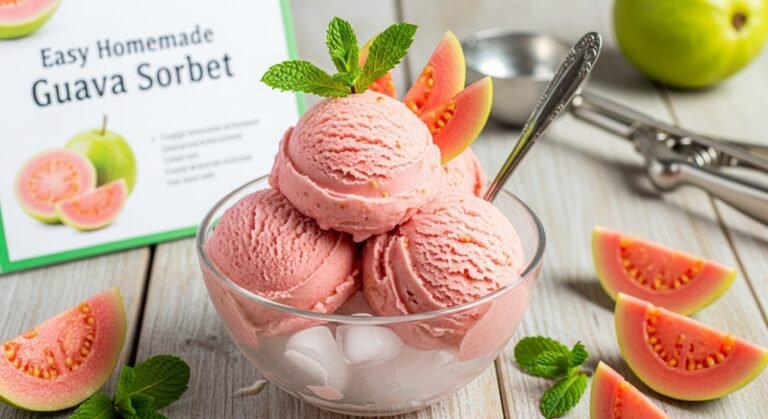
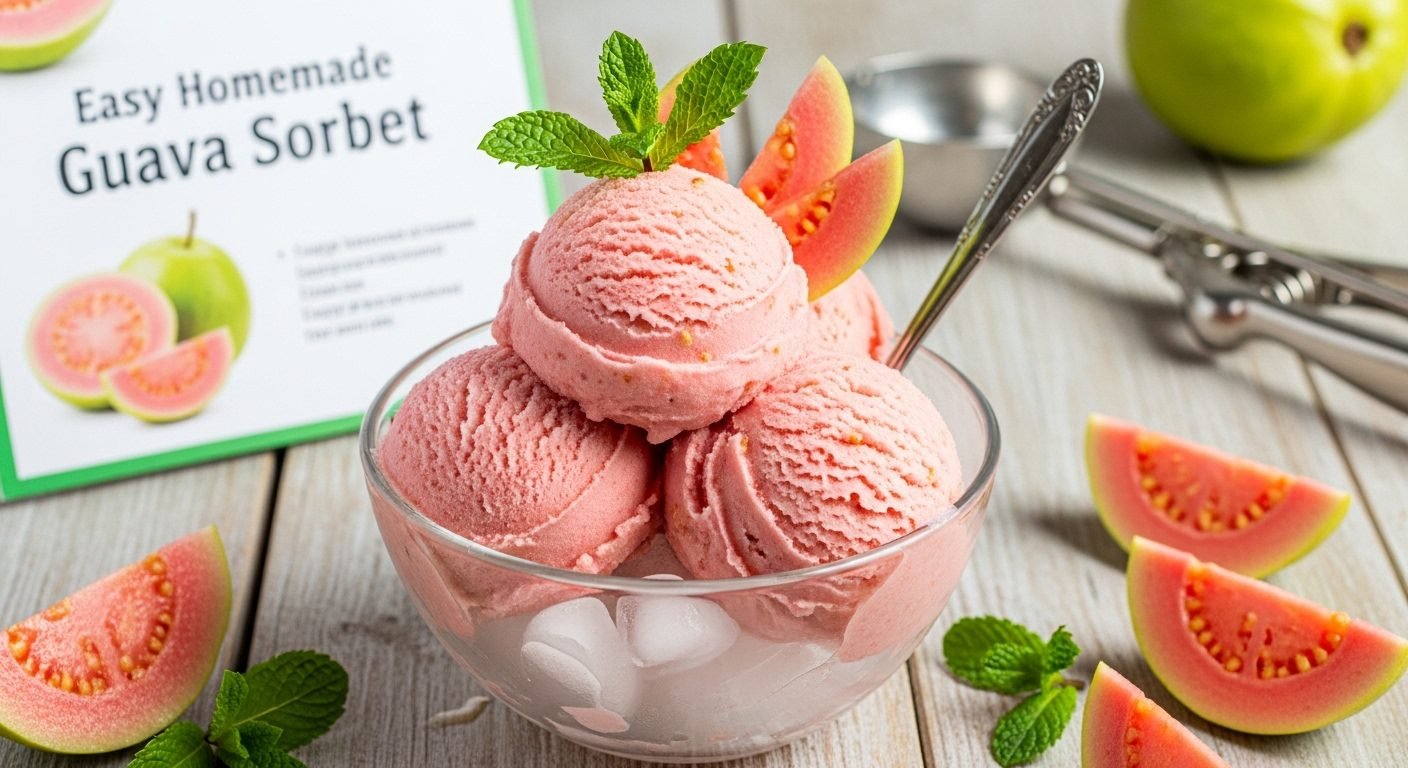
Classic Presentation: Serve beautiful scoops of guava sorbet in chilled dessert bowls or champagne coupes. Garnish with a fresh mint sprig, a thin lime wheel, or a few fresh guava slices if available. The vibrant pink color looks stunning in clear glass dishes.
Between-Course Refresher: In fine dining, sorbet is traditionally served as a palate cleanser between courses. Serve small portions (about ½ cup) between your appetizer and main course, or between heavy courses during a holiday meal. The tartness and cold temperature refresh the palate beautifully.
With Fresh Fruit: Create a tropical fruit plate with fresh mango slices, pineapple chunks, papaya, and passion fruit, then top with a scoop of guava sorbet. The combination of fresh and frozen fruit is absolutely delightful.
Dessert Pairings: Serve alongside crispy sugar cookies, shortbread, or delicate wafer cookies for textural contrast. Mexican wedding cookies or coconut macaroons pair especially well with the tropical flavors. For a more substantial dessert, serve with a slice of tres leches cake or flan.
Beverage Pairings: Guava sorbet pairs beautifully with sparkling water, iced tea, or coffee. For adults, it’s spectacular with prosecco, champagne, or a light dessert wine like Moscato d’Asti. The sorbet can even be served in champagne as an elegant float.
Build a Sundae: Create a tropical sundae with guava sorbet, whipped coconut cream, toasted coconut flakes, chopped macadamia nuts, and a drizzle of passion fruit sauce or caramel.
Breakfast Treat: While unconventional, a small scoop of sorbet makes a fun addition to morning parfaits with yogurt, granola, and fresh fruit. It’s also delicious blended into tropical smoothies.
Float Ideas: Create stunning beverage floats by adding scoops to Mexican Jarrito sodas, coconut water, lemonade, or ginger ale for a refreshing drink-dessert hybrid.
FAQs Section
Can I make this sorbet without a blender? While a blender or food processor produces the smoothest results, you can make guava sorbet with just a fork if necessary. Mash the guava flesh very thoroughly, then press it through a strainer. The texture won’t be quite as smooth, but it will still be delicious. Alternatively, you can purchase pre-made guava pulp or nectar, which is already smooth and just needs to be mixed with the other ingredients.
Why is my sorbet too hard to scoop? This is the most common issue with homemade sorbet. It typically happens when there’s not enough sugar in the recipe (sugar lowers the freezing point), when the sorbet has been in the freezer for an extended period, or when your freezer runs very cold. Solutions: Let it sit at room temperature for 10-15 minutes before scooping, add a tablespoon of corn syrup or vodka next time (these don’t freeze solid), or store it in a slightly warmer part of your freezer. You can also break it into chunks and pulse in a food processor to make it smooth again.
Can I use canned guava nectar instead of fresh guava? Yes, but with adjustments! Guava nectar is already sweetened and diluted, so you’ll need to reduce or eliminate the added sugar entirely. Start with 2 cups of guava nectar, ¼ cup lime juice, and no added sugar. Taste and adjust from there. The texture may also be slightly different since nectar has a different consistency than fresh fruit puree. For best results, always use fresh or frozen guava when possible.
How can I tell when my guavas are ripe enough? Ripe guavas should have a strong, sweet, tropical fragrance – you should be able to smell them before you even cut into them. They’ll give slightly when gently squeezed (similar to a ripe avocado), and the skin color will have deepened. Depending on variety, ripe guavas can be yellow, pink, or white when cut open. If your guavas are still hard and have no aroma, let them ripen at room temperature for a few days.
Is it necessary to remove all the guava seeds? Absolutely! Guava seeds are very hard and numerous, and they would make your sorbet unpleasantly gritty and difficult to eat. The straining step is non-negotiable for good sorbet. Take your time with it – really press and work that puree through the strainer to extract all the delicious fruit while leaving the seeds behind. This step is what separates restaurant-quality sorbet from a disappointing homemade version.
Can I add alcohol to this recipe? Yes! A tablespoon or two of vodka, white rum, or tequila can be added for two reasons: First, it adds flavor complexity (especially with rum or tequila). Second, since alcohol doesn’t freeze solid, it helps keep your sorbet smooth and scoopable straight from the freezer. Don’t add more than 2 tablespoons though, or the sorbet won’t freeze properly. This is completely optional, and the recipe works perfectly without it, especially if you’re serving to children.
What’s the difference between sorbet and sherbet? Great question! Sorbet is completely dairy-free and made only with fruit, sugar, and water. Sherbet (also spelled “sherbert” by some) contains a small amount of dairy – usually milk or cream – which gives it a slightly creamier texture. This recipe is a true sorbet with no dairy whatsoever, making it vegan-friendly and lighter than sherbet. Both are delicious, just slightly different!
Conclusion
There you have it – your complete guide to making absolutely stunning guava sorbet right in your own kitchen! This refreshing tropical dessert proves that you don’t need a culinary degree or expensive equipment to create restaurant-quality frozen treats at home. With its vibrant color, incredible flavor, and wonderfully smooth texture, this guava sorbet is guaranteed to impress your family and friends while satisfying your craving for something sweet, cold, and delicious.
The beauty of this recipe lies in its simplicity and versatility. Whether you’re looking for a light ending to a heavy meal, a palate-cleansing course for your dinner party, or just a guilt-free treat to enjoy on a warm afternoon, this guava sorbet delivers every time. Plus, knowing that it’s made with real fruit, contains no artificial ingredients, and is naturally dairy-free makes it feel like a treat you can actually feel good about enjoying.
I hope you love this guava sorbet as much as I do! It’s become a staple in my freezer, especially during the warmer months. Don’t forget to experiment with the variations and make it your own – maybe add some mint, try it with champagne, or combine it with other tropical fruits. The possibilities are endless!
If you try this recipe, I’d absolutely love to hear how it turned out for you! Leave a comment below with your experience, any tweaks you made, or how you served it. And if you loved it (which I know you will!), please share this recipe with your friends and family. Don’t forget to pin it to your Pinterest boards so you can find it easily whenever that sorbet craving hits!
Happy scooping, and here’s to many refreshing bowls of homemade guava sorbet in your future! 🍧💕