Gingerbread Baked Oatmeal Recipe – Cozy Spiced Breakfast for the Holidays
Imagine waking up to the warm, inviting aroma of gingerbread cookies baking in your oven—those heavenly scents of molasses, ginger, cinnamon, and cloves filling every corner of your home. Now imagine capturing all those cozy holiday flavors in a wholesome, nutritious breakfast that actually keeps you full and energized all morning long. That’s exactly what this Gingerbread Baked Oatmeal delivers!
This isn’t just another boring bowl of oats. It’s a celebration of the season transformed into a make-ahead breakfast casserole that tastes like dessert but fuels your body with whole grains, fiber, and sustained energy. Every bite brings those nostalgic gingerbread flavors we all crave during the holidays—warm spices, deep molasses sweetness, and a hint of that signature ginger kick that makes gingerbread so special.
Perfect for Christmas morning when you want something festive but don’t want to spend hours in the kitchen, cozy winter weekends when comfort food is calling your name, or weekly meal prep that makes December mornings feel magical. Whether you’re feeding a crowd of holiday houseguests or just want to bring some seasonal cheer to your regular breakfast routine, this recipe is your new secret weapon. It’s holiday baking meets healthy eating, and trust me, nobody will guess this wholesome breakfast casserole is actually good for them!
History / Background
To truly appreciate this recipe, we need to talk about gingerbread itself—one of the world’s most beloved and ancient baked goods with a rich history spanning centuries and continents. Ginger, the star spice, has been used in cooking for over 5,000 years, originating in Southeast Asia before spreading along ancient trade routes to Europe and beyond.
Gingerbread as we know it today has its roots in medieval Europe, particularly in Germany, where elaborate gingerbread houses and cookies became synonymous with Christmas celebrations. The tradition gained massive popularity in the 16th century when Queen Elizabeth I of England commissioned gingerbread cookies shaped like her visiting dignitaries—essentially creating the first gingerbread men! These spiced treats were often sold at fairs and festivals, becoming associated with celebration and festivity.
The magical combination of ginger, cinnamon, cloves, and molasses creates that distinctive warm, spicy-sweet flavor profile we instantly recognize as gingerbread. In colonial America, gingerbread became a staple, with molasses being readily available from the Caribbean trade. Different regions developed their own variations—from soft, cake-like gingerbread to crispy cookies, from elaborate European Lebkuchen to American gingerbread men.
The use of molasses wasn’t just about flavor—it was practical. Before refined sugar became affordable, molasses was the primary sweetener for common folk. Its deep, slightly bitter sweetness paired perfectly with warming spices, creating a flavor combination that not only tasted incredible but also made homes smell absolutely divine during the cold winter months.
Now, baked oatmeal has its own separate history as a practical, hearty breakfast dish popular in Amish and Pennsylvania Dutch communities, where feeding large families efficiently was essential. By bringing together the iconic flavors of traditional gingerbread with the wholesome simplicity of baked oatmeal, we’ve created something that honors centuries of culinary tradition while perfectly fitting into modern, health-conscious lifestyles.
This fusion makes beautiful sense—both gingerbread and oatmeal are ultimate comfort foods. One typically comes at the end of a meal or as a holiday treat, while the other starts your day. By combining them, we get a breakfast that feels special enough for Christmas morning but practical enough for everyday enjoyment throughout the winter months.
Why You’ll Love This Recipe
This Gingerbread Baked Oatmeal is about to become your go-to breakfast throughout the entire holiday season (and honestly, all winter long). It delivers all those warm, spiced flavors you crave when the weather turns cold, wrapped up in a breakfast that actually nourishes your body and keeps you satisfied for hours.
Here’s why this recipe will become a seasonal staple in your kitchen:
- Holiday flavors for breakfast – All the cozy gingerbread taste you love in a wholesome morning meal; it’s like Christmas in a baking dish
- Perfect for Christmas morning – Prep the night before and pop it in the oven while opening presents; zero stress, maximum festivity
- Makes your house smell incredible – The aroma alone is worth making this recipe; guests will think you’ve been baking all day
- Naturally sweetened with molasses – Rich, complex sweetness without refined sugar; molasses also adds iron and minerals
- Family-friendly and kid-approved – Even picky eaters love these familiar gingerbread flavors; it’s basically dessert for breakfast
- Meal prep champion – Bake once, enjoy all week; future you will be so grateful
- Budget-friendly – Uses simple pantry spices and everyday ingredients; no expensive specialty items required
- Freezer-friendly – Makes double batches and freeze portions for busy mornings all season long
- Customizable warmth level – Adjust the ginger and spices to your preference; mild for kids, spicy for ginger lovers
- Filling and satisfying – Whole grains and protein keep you full until lunch; no mid-morning energy crashes
- Holiday brunch showstopper – Impressive presentation with minimal effort; looks like you hired a caterer
- Naturally dairy-free option – Easy to make vegan and allergy-friendly without sacrificing flavor or texture
- Comforting and nostalgic – Evokes all those warm holiday memories in every single bite
Ingredient Notes
Let’s dive into what makes this recipe so special and why each ingredient plays an important role:
Rolled Oats – The foundation of this recipe! You must use old-fashioned rolled oats, never instant or quick oats. Rolled oats maintain their structure during baking, creating that perfect tender-yet-hearty texture we’re after. Instant oats will turn to complete mush. Steel-cut oats won’t soften properly in the baking time. For gluten-free needs, certified gluten-free oats work beautifully and taste identical.
Molasses – This is what gives us authentic gingerbread flavor! Use unsulphured molasses for the best taste—it’s sweeter and milder than blackstrap molasses, which can be quite bitter and overpowering. Molasses provides that deep, rich sweetness and creates moisture and tenderness in baked goods. It’s also nutritionally superior to refined sugar, containing iron, calcium, and B vitamins. Don’t skip this ingredient; it’s absolutely essential for gingerbread flavor.
Milk – Any milk works wonderfully here! Whole milk creates the richest result, but 2%, 1%, or skim all work fine. For dairy-free, almond milk, oat milk, or cashew milk are excellent choices. Coconut milk adds extra richness and a subtle tropical note that pairs surprisingly well with ginger. The milk provides moisture and helps create that tender, cake-like texture.
Eggs – These bind everything together, add protein, and create structure. They’re essential for the texture, so they’re hard to substitute. For vegan versions, flax eggs work (1 tablespoon ground flaxseed mixed with 3 tablespoons water per egg, let sit 5 minutes), though the texture will be slightly different—a bit denser but still delicious.
Ground Ginger – The star of the show! Ground ginger provides that distinctive warm, slightly spicy kick that defines gingerbread. Use fresh ground ginger if possible—spices lose potency over time. If your ginger has been sitting in your cabinet for years, it’s time for a new jar. The amount listed gives good ginger flavor; increase by ½ teaspoon if you love a strong ginger punch.
Cinnamon – Works in harmony with ginger to create warmth and depth. Cinnamon adds sweetness and complexity without adding sugar. Ceylon cinnamon is sweeter and more delicate; cassia cinnamon (the common grocery store variety) is bolder and spicier. Either works great here.
Ground Cloves – A little goes a long way! Cloves add that distinctive holiday spice note and slight numbing warmth. Don’t be tempted to add more than the recipe calls for—too much and it becomes medicinal and overpowering. But the right amount is magic.
Ground Nutmeg – Rounds out the spice blend with warm, slightly sweet, nutty notes. Freshly grated nutmeg has superior flavor if you have a whole nutmeg and a microplane, but pre-ground works perfectly fine.
Maple Syrup or Honey – Adds additional sweetness beyond the molasses and complements the spices beautifully. Maple syrup brings subtle caramel notes; honey adds floral complexity. Use whichever you prefer or have on hand.
Vanilla Extract – Enhances and rounds out all the other flavors. Pure vanilla extract is always superior to imitation. The vanilla adds depth and makes all the spices sing together harmoniously.
Baking Powder – Provides lift and lightness, preventing the oatmeal from being too dense and heavy. Fresh baking powder is essential—if yours is old, test it first in warm water (it should bubble vigorously).
Salt – Never, ever skip the salt! It balances the sweetness, enhances the spices, and makes every other flavor more pronounced. Without it, the dish tastes flat and one-dimensional.
Butter or Oil – Adds richness, moisture, and helps create tender texture. Melted butter brings the best flavor, but coconut oil works wonderfully for dairy-free versions and adds a subtle complementary flavor.
Equipment Needed
You won’t need any fancy gadgets for this recipe. Here’s your simple equipment list:
- 8×8-inch or 9×9-inch baking dish – Glass, ceramic, or metal all work perfectly; this size serves 6-8 people
- Large mixing bowl – For combining wet ingredients
- Medium mixing bowl – For mixing dry ingredients and spices
- Whisk – Essential for lump-free, smooth batter
- Measuring cups and spoons – Accurate measurements matter in baking for consistent results
- Spatula or wooden spoon – For folding ingredients together gently
- Small microwave-safe bowl or saucepan – To melt the butter
- Cooking spray or butter – For greasing the baking dish
- Cooling rack – Allows air circulation after baking
- Mixing spoon – For stirring everything together
Print

Gingerbread Baked Oatmeal Recipe
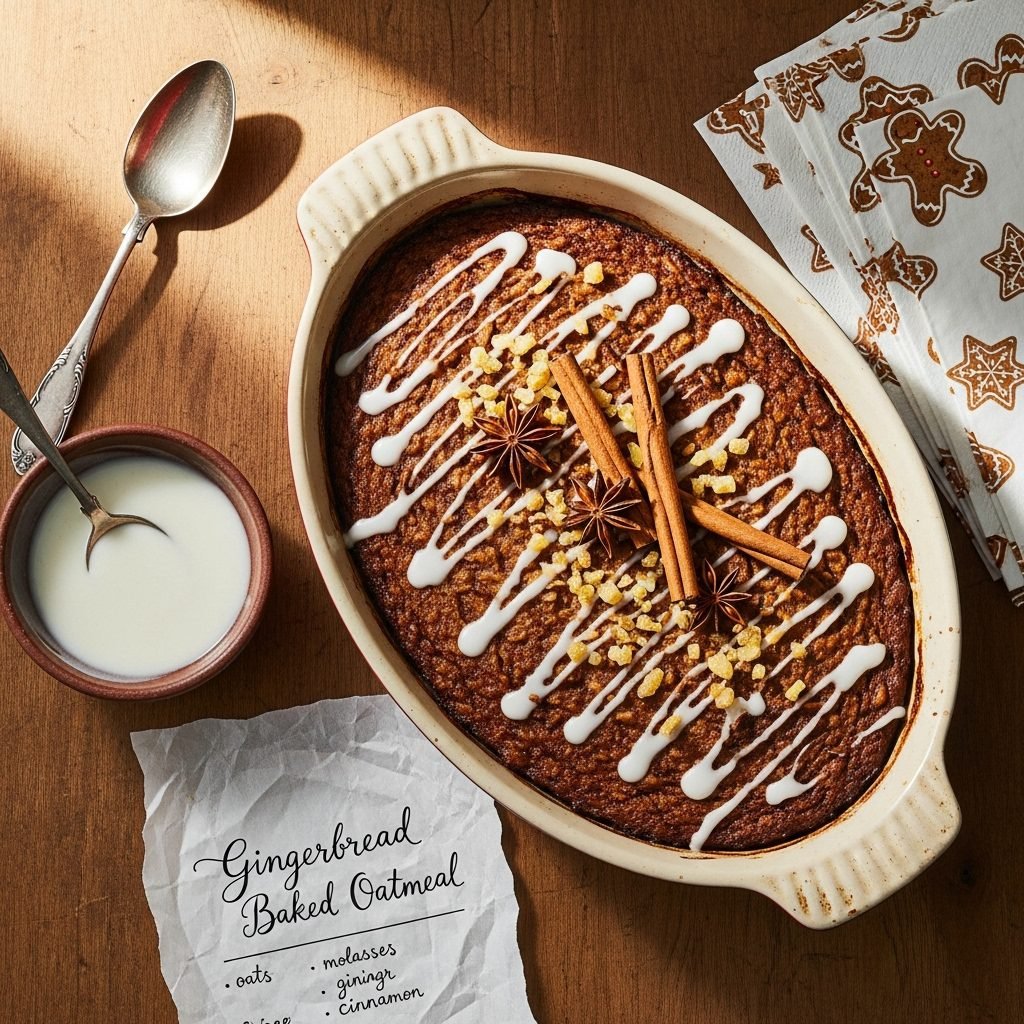
This Gingerbread Baked Oatmeal captures all the warm, spiced flavors of classic gingerbread cookies in a wholesome, make-ahead breakfast casserole. With molasses, ginger, cinnamon, and cloves baked into tender oats, it’s the perfect cozy breakfast for the holiday season.
- Total Time: 50 minutes
- Yield: 6-8 servings 1x
Ingredients
Scale- 2 cups old-fashioned rolled oats
- 1½ cups milk (dairy or non-dairy)
- 2 large eggs
- ⅓ cup molasses (unsulphured)
- ¼ cup maple syrup or honey
- ¼ cup melted butter or coconut oil
- 2 teaspoons vanilla extract
- 2 teaspoons ground ginger
- 1½ teaspoons ground cinnamon
- 1 teaspoon baking powder
- ½ teaspoon ground cloves
- ½ teaspoon ground nutmeg
- ½ teaspoon salt
- Optional toppings: whipped cream, candied ginger, powdered sugar, Greek yogurt
Instructions
- Preheat Your Oven: Preheat your oven to 350°F (175°C). Generously grease an 8×8-inch baking dish with butter or cooking spray, making sure to coat the bottom and sides thoroughly. Set aside.
- Mix the Wet Ingredients: In a large mixing bowl, whisk together the eggs, milk, molasses, maple syrup, melted butter, and vanilla extract. Whisk vigorously for about 30 seconds until everything is smooth and well combined. The molasses can be thick, so make sure it’s fully incorporated with no streaks remaining.
- Combine the Dry Ingredients: In a medium bowl, stir together the rolled oats, ground ginger, cinnamon, baking powder, cloves, nutmeg, and salt. Mix thoroughly to ensure the spices are evenly distributed throughout the oats. This is important so every bite has consistent flavor.
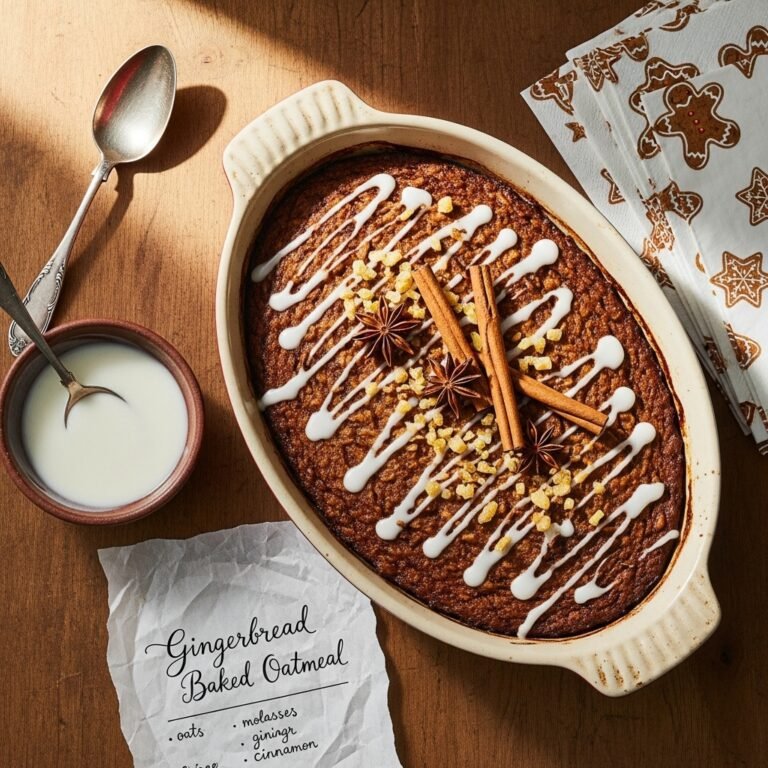
- Combine Everything: Pour the dry ingredients into the wet ingredients. Using a spatula, gently fold everything together until just combined. Don’t overmix—stir just until you no longer see dry oats. The mixture should look like thick, lumpy batter with a beautiful deep brown color from the molasses.
- Transfer to Baking Dish: Pour the oatmeal mixture into your prepared baking dish and spread it out evenly with your spatula, smoothing the top. Give the dish a gentle tap on the counter a couple of times to release any air bubbles and ensure even distribution.
- Bake: Place the baking dish in the preheated oven and bake for 35-42 minutes. The oatmeal is done when the edges are set and slightly darker, the top looks dry and no longer wet or shiny, and the center has only the slightest jiggle when you gently shake the pan. A toothpick inserted in the center should come out with just a few moist crumbs.
- Cool and Serve: Remove from the oven and let cool on a wire rack for 10 minutes. This resting time allows the structure to set properly so it cuts into neat squares. The texture will firm up significantly during cooling. Cut into squares and serve warm with your favorite toppings.
- Add Toppings: Serve with a dollop of whipped cream or Greek yogurt, a sprinkle of chopped candied ginger, or a light dusting of powdered sugar. A drizzle of additional maple syrup or cream also makes it extra special!
Notes
- The oatmeal continues to set as it cools, so don’t overbake or it will be dry. A slight jiggle in the center is perfect.
- Molasses can vary in strength and bitterness. If using blackstrap molasses (which is very strong), reduce to ¼ cup and increase maple syrup to ⅓ cup.
- For a stronger ginger flavor, add ½ teaspoon more ground ginger or fold in 2 tablespoons finely chopped crystallized ginger before baking.
- This tastes even better the next day after the spices have had time to bloom and meld!
- Store leftovers covered in the refrigerator for up to 5 days.
- Prep Time: 10 minutes
- Cook Time: 40 minutes
- Category: Breakfast
- Method: Baking
- Cuisine: American
- Diet: Gluten Free
Nutrition
- Serving Size: 1 piece (based on 8 servings)
- Calories: 235
- Sugar: 16g
- Sodium: 210mg
- Fat: 8g
- Saturated Fat: 4g
- Unsaturated Fat: 3.5g
- Trans Fat: 0g
- Carbohydrates: 36g
- Fiber: 3g
- Protein: 6g
- Cholesterol: 55mg
Tips & Variations
The beauty of this recipe is its versatility! Here are some ways to customize it to your preferences:
Extra Gingery Version: If you’re a serious ginger lover, increase the ground ginger to 2½ or even 3 teaspoons for a more pronounced kick. You can also fold in 2-3 tablespoons of finely chopped crystallized (candied) ginger before baking for bursts of intense ginger flavor and chewy texture.
Apple Gingerbread: Fold in 1 cup of diced apples (peeled or unpeeled) before baking. Granny Smith apples add tartness that balances the molasses sweetness beautifully. This variation is incredibly popular with kids!
Pear Gingerbread: Dice a ripe but firm pear and fold it into the batter. Pears and ginger are a classic combination, and the fruit adds natural sweetness and moisture.
Cranberry Orange: Add ½ cup dried cranberries and 1 tablespoon orange zest to the dry ingredients for a festive twist. The tartness of cranberries cuts through the rich molasses perfectly.
Chocolate Chip Gingerbread: Fold in ½ cup dark chocolate chips before baking. The combination of chocolate and ginger is sophisticated and delicious—like a grown-up gingerbread cookie!
Protein-Boosted: Add ¼ cup of vanilla or unflavored protein powder to the dry ingredients and increase the milk by 3-4 tablespoons to compensate. This significantly increases the protein content and staying power.
Nutty Variation: Fold in ½ cup of chopped walnuts, pecans, or almonds for added crunch, healthy fats, and protein. Toast the nuts first for even better flavor.
Dairy-Free/Vegan: Use plant-based milk (almond, oat, or coconut work beautifully), replace eggs with flax eggs (2 tablespoons ground flaxseed mixed with 6 tablespoons water, let sit 5 minutes), and use coconut oil instead of butter. Works perfectly!
Lower Sugar: Reduce the maple syrup to 2 tablespoons and add a few drops of liquid stevia or monk fruit sweetener. The molasses provides enough sweetness that you can definitely reduce the added sugar.
Chai-Spiced Gingerbread: Add ¼ teaspoon ground cardamom and a pinch of black pepper to the spice mix for a chai-inspired version that’s absolutely heavenly.
Individual Servings: Divide the mixture among 12 greased muffin cups and bake for 18-22 minutes. These portable breakfast muffins are perfect for grab-and-go mornings!
Pro Chef Tips
Want to elevate this recipe from great to absolutely outstanding? Here are professional tricks that’ll make all the difference:
Toast Your Oats First: Before mixing anything, spread your oats on a baking sheet and toast them in a 350°F oven for 6-8 minutes until they smell nutty and fragrant. This step adds incredible depth of flavor and prevents any raw oat taste. It’s a total game-changer that takes just a few extra minutes!
Warm Your Molasses: Molasses is thick and can be hard to measure and incorporate. Warm it slightly in the microwave (10-15 seconds) or run the bottle under hot water before measuring. It pours more easily and combines more smoothly with the other wet ingredients.
Use Fresh Spices: This cannot be overstated! Ground spices lose their potency significantly after 6-12 months. If your ginger, cinnamon, or cloves have been sitting in your spice cabinet for years, they’re likely contributing very little flavor. Invest in fresh spices for this recipe—the difference is night and day.
Room Temperature Ingredients: Take your eggs and milk out of the refrigerator 30 minutes before starting. Room temperature ingredients mix together more smoothly and create better texture. Cold ingredients don’t emulsify as well and can cause uneven baking.
Don’t Overmix: Once you combine the wet and dry ingredients, stir just until the oats are moistened and you no longer see dry patches. Overmixing develops gluten and can make the texture tough and dense instead of tender. A few lumps are completely fine!
Test Your Oven Temperature: Home ovens are often off by 25°F or more. Use an oven thermometer to verify your actual oven temperature. If your oven runs hot, the edges will overbake before the center is done. If it runs cool, everything will take longer and potentially dry out.
Create Steam for Moisture: Place a small oven-safe dish with water on the bottom rack while baking. The steam helps keep the oatmeal moist and prevents the top from drying out or cracking. This professional bakery technique works wonderfully for baked oatmeal!
Let It Rest Fully: That 10-minute cooling period is not optional—it’s essential! During this time, the structure sets, the texture firms up, and cutting becomes much easier. If you try to cut into it immediately, it’ll be too soft and fall apart completely.
Bloom Your Spices: For even more intense flavor, add your ground spices to the melted butter and let them sit for 2-3 minutes before adding to the wet ingredients. The fat helps release and intensify the aromatic compounds in the spices. This is a pro technique that creates incredible depth.
Score Before Baking: Use a butter knife to lightly score the surface into serving portions before baking. This makes cutting easier after it’s baked and creates nice clean edges on your squares.
Common Mistakes to Avoid
Even straightforward recipes can go wrong without proper technique. Here’s what to watch out for:
Using Quick Oats or Instant Oats: This is the number one mistake that completely ruins the texture! Quick oats and instant oats are pre-cooked and processed to cook faster, which means they turn into complete mush when baked. You’ll end up with a gummy, porridge-like consistency instead of that wonderful tender-yet-hearty texture. Always use old-fashioned rolled oats—check the label carefully!
Using Blackstrap Molasses: Blackstrap molasses is very bitter and intensely flavored. It’s great for health purposes (highest in minerals), but it can overwhelm this recipe and make it taste medicinal. Use unsulphured or “mild” molasses for the best balance of sweetness and that characteristic gingerbread flavor. If you accidentally bought blackstrap, reduce the amount to ¼ cup and increase the maple syrup.
Old or Weak Spices: Ground spices lose their potency over time, especially if stored improperly (in light, heat, or moisture). If your spices smell weak or barely fragrant, they won’t provide much flavor to your oatmeal. This is a spice-forward recipe, so fresh, aromatic spices are absolutely crucial. When in doubt, buy new spices—they’re inexpensive and make a huge difference.
Overbaking: The most common mistake leading to dry, crumbly baked oatmeal! Remember, it continues cooking from residual heat even after you remove it from the oven. When you take it out, the center should still have the slightest jiggle—think barely set custard or Jell-O. If you wait until it’s completely firm, it will be overdone and dry once cooled. Start checking at 35 minutes.
Not Greasing the Pan Properly: Baked oatmeal sticks tenaciously to ungreased pans, and the molasses makes it even stickier. Spray or butter your pan generously, getting into all the corners. Even better, line the pan with parchment paper with overhanging edges—this creates handles for easy removal and foolproof serving.
Measuring Molasses Incorrectly: Molasses is sticky and thick. To measure accurately, spray your measuring cup with cooking spray first—the molasses will slide right out without sticking. Or better yet, if you have a kitchen scale, weigh it (⅓ cup molasses = about 113g). Otherwise, you might end up with significantly less than the recipe calls for.
Adding Mix-ins Too Early: If you’re adding fruits, nuts, or chocolate chips, fold them in at the very end, right before transferring to the baking dish. If you add them to the dry ingredients, they’ll sink during mixing, creating an uneven distribution.
Storage & Meal Prep
This recipe is absolutely perfect for meal prep and stores beautifully throughout the week!
Refrigerator Storage: Once completely cooled to room temperature, cover the entire baking dish tightly with plastic wrap or aluminum foil. Alternatively (and I prefer this method), cut the baked oatmeal into individual portions and store them in airtight containers—this makes grabbing breakfast even faster and easier. Properly stored, it will stay fresh and delicious in the refrigerator for up to 5 days. Actually, the flavors improve and deepen after a day or two as the spices have time to bloom!
Reheating Individual Portions: For single servings, microwave for 50-70 seconds until heated through. I always add a splash of milk before reheating to restore moisture and keep it from drying out—this little trick makes a big difference! You can also reheat in a toaster oven at 350°F for 5-8 minutes for a slightly crispier top. Some people even enjoy it cold straight from the fridge—it’s firmer and almost granola-bar-like, which is surprisingly good!
Reheating Larger Portions: To reheat multiple servings or the whole pan, cover tightly with aluminum foil and warm in a 325°F oven for 15-20 minutes until heated through. The foil traps steam and prevents the top from burning or drying out while the center warms.
Meal Prep Strategy: My favorite approach is cutting the cooled baked oatmeal into 8 squares and wrapping each piece individually in plastic wrap or parchment paper. Then I store all the wrapped portions together in a large container or gallon-size bag in the refrigerator. This way, anyone in the family can grab exactly one portion for a quick, easy breakfast without any fuss or mess.
Texture Evolution: As baked oatmeal sits in the fridge, it firms up considerably as the oats continue absorbing liquid. This is completely normal and actually makes it easier to cut clean squares and eat on-the-go. If you prefer a softer, more cake-like texture, just add a tablespoon or two of milk before reheating.
Make-Ahead & Freezer Notes
This recipe is a busy person’s dream—make it once, enjoy for weeks!
Night-Before Method: You can prepare the entire mixture the evening before, pour it into your greased baking dish, cover tightly with plastic wrap, and refrigerate overnight. This is perfect for Christmas morning or when hosting weekend guests! In the morning, remove from the fridge and let sit at room temperature while your oven preheats (about 10-15 minutes). Bake as directed, adding 3-5 minutes to the baking time since it’s starting cold.
Freezing Baked Portions (Best Method): This freezes exceptionally well and is perfect for long-term meal prep! After baking and cooling completely, cut into individual portions. Wrap each piece tightly in plastic wrap, pressing out as much air as possible. Then place all wrapped pieces into a freezer-safe container or heavy-duty freezer bag. Label with the date and contents. It will keep beautifully frozen for up to 3 months without any loss in quality, flavor, or texture.
Freezing the Whole Pan: You can also freeze the entire uncut baked oatmeal if you prefer. Let it cool completely, then wrap the entire baking dish tightly in plastic wrap, followed by a layer of aluminum foil for extra protection against freezer burn. When ready to enjoy, thaw overnight in the refrigerator, then reheat covered in a 325°F oven for 20-25 minutes.
Thawing and Reheating from Frozen: For best results, transfer a frozen portion to the refrigerator the night before you want to eat it. By morning, it’ll be perfectly thawed and ready to reheat in the microwave for 60-90 seconds. In a time crunch? You can microwave directly from frozen—place the frozen square on a microwave-safe plate, cover with a damp paper towel to prevent drying, and microwave for 2½-3 minutes, checking and flipping halfway through.
Quick-Thaw Method: If you forget to transfer to the fridge overnight, leave a wrapped frozen portion on the counter for 30-40 minutes at room temperature, then microwave for 1-2 minutes. It won’t be quite as evenly heated, but it works in a pinch for those rushing-out-the-door mornings!
Freezing Unbaked Batter: I don’t recommend freezing the mixture before baking because the liquid ingredients separate when frozen and thawed, resulting in an uneven, grainy texture. However, you can prepare your dry ingredients in one container and measure your wet ingredients into another, refrigerate both separately, then combine and bake when ready.
Pro Freezing Tips: For the absolute best texture after freezing, slightly underbake the oatmeal by 5 minutes. This prevents it from becoming dry when reheated later. Always wrap portions airtight to prevent freezer burn—air exposure is the enemy of quality frozen food!
Serving Suggestions
This Gingerbread Baked Oatmeal is wonderful on its own, but these serving ideas take it to the next level:
Classic Pairings: Serve warm with a generous dollop of lightly sweetened whipped cream or coconut whipped cream—the cool creaminess against the warm spices is absolutely divine. Vanilla Greek yogurt adds protein, creaminess, and a pleasant tang that balances the molasses sweetness perfectly. A drizzle of heavy cream or half-and-half poured over the top creates a luxurious, almost bread-pudding-like experience.
Festive Toppings: Sprinkle with chopped candied (crystallized) ginger for extra ginger punch and chewy texture. A light dusting of powdered sugar makes it look festive and snow-covered. Drizzle with cream cheese glaze (mix softened cream cheese, powdered sugar, and a splash of milk) for a gingerbread-meets-cinnamon-roll vibe that’s incredible!
Fresh Fruit Additions: Top with sliced bananas and a drizzle of almond butter for extra protein and healthy fats. Diced apples or pears (especially if you sauté them quickly with butter and cinnamon) add freshness and another layer of fall flavor. Pomegranate arils add beautiful color, festive flair, and bright tartness that cuts the richness.
Nut Butters and Spreads: Warm almond butter, peanut butter, or cashew butter and drizzle over individual servings for extra protein and richness. The combination of nut butter with gingerbread spices is absolutely phenomenal!
Extra Sweetness: A drizzle of pure maple syrup, honey, or even caramel sauce adds decadent sweetness if you like things on the sweeter side. Chocolate sauce might sound odd but is actually delicious with ginger!
Crunchy Elements: Top with granola, chopped toasted pecans or walnuts, or a sprinkle of pepitas (pumpkin seeds) for textural contrast. The crunch against the tender oatmeal makes every bite more interesting. Crushed ginger snap cookies as a topping is meta but amazing!
Beverage Pairings: This pairs beautifully with hot coffee, chai latte, or spiced apple cider—the spices in your drink complement the gingerbread flavors perfectly. Hot chocolate is wonderful for kids or non-coffee drinkers. English breakfast tea with milk is classic. Fresh orange juice provides bright citrus contrast.
Holiday Brunch Spread: When serving for a holiday gathering, pair with savory items like scrambled eggs, crispy bacon, or breakfast sausage to balance the sweetness. A fresh fruit salad with citrus segments keeps things light. Set up a toppings bar with various options so guests can customize their bowls—this is always a hit!
Dessert-Style Serving: Warm it up, top with a scoop of vanilla ice cream or ginger ice cream, drizzle with caramel sauce, and suddenly you have a restaurant-worthy dessert that happens to be made from healthy breakfast ingredients!
FAQs Section
Can I use steel-cut oats instead of rolled oats?
Unfortunately, no. Steel-cut oats are much harder and denser than rolled oats and won’t soften properly during the baking time. They’d still be chewy and undercooked when everything else is done. You could technically soak them overnight in the milk and increase baking time substantially, but the texture still won’t be right. Stick with old-fashioned rolled oats for the best, most reliable results.What if I can’t find unsulphured molasses?
Most grocery stores carry unsulphured molasses in the baking aisle near the honey and syrups. Look for brands like Grandma’s Original Molasses or Brer Rabbit. If you can only find sulphured molasses, it will work but may have a slightly stronger, more acidic flavor. Avoid blackstrap molasses unless you really love bitter flavors—it’s very intense and can overpower the recipe. In a pinch, you could substitute dark corn syrup or all maple syrup, but you’ll lose that authentic gingerbread flavor.Can I make this without eggs?
Yes! For vegan or egg-free versions, replace the 2 eggs with flax eggs: mix 2 tablespoons ground flaxseed with 6 tablespoons water, stir well, and let sit for 5 minutes until it gels and thickens. The texture will be slightly denser and less fluffy than the egg version, but it’s still delicious! Make sure to use plant-based milk and coconut oil instead of butter as well.Why is my baked oatmeal gummy and wet?
This usually means it’s underb aked or you used instant/quick oats instead of rolled oats. Make sure you’re baking the full time until the center is just barely jiggly and a toothpick comes out with moist crumbs, not wet batter. Also double-check you’re using old-fashioned rolled oats. If you accidentally used quick oats, there’s not much you can do to fix it this time, but you’ll know for next batch!