Dobos Torte Recipe: Elegant Hungarian Layer Cake with Caramel Top
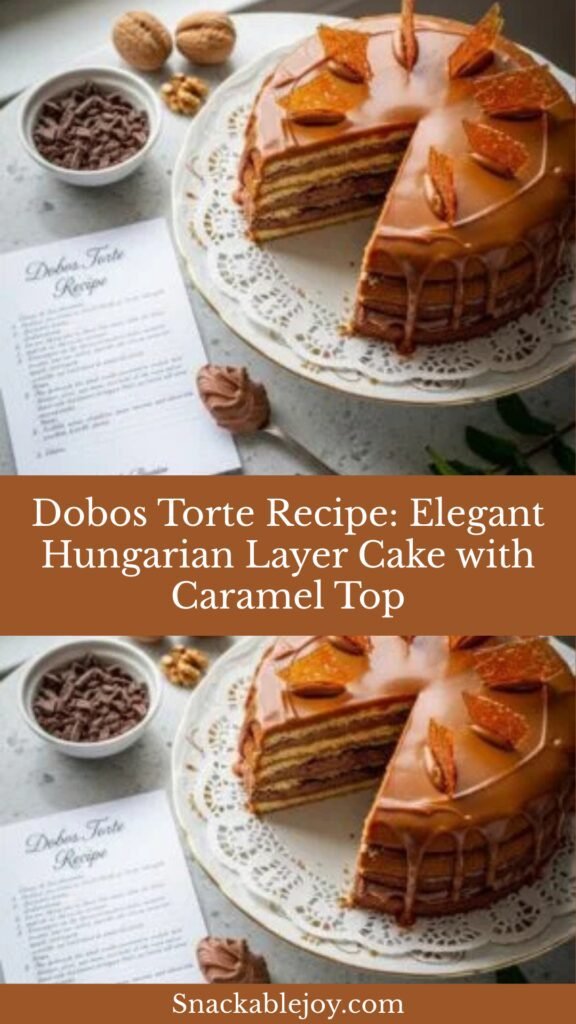
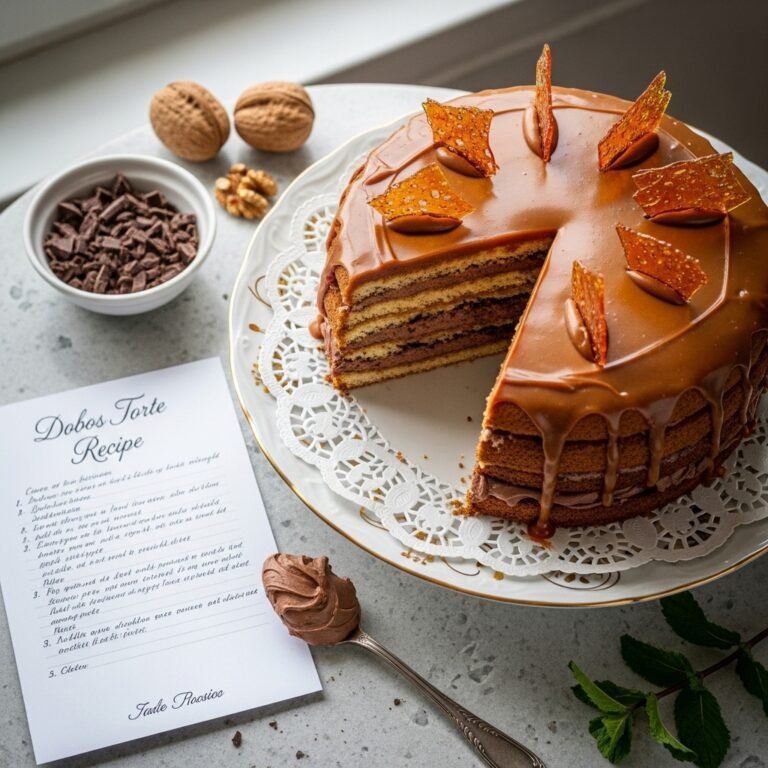
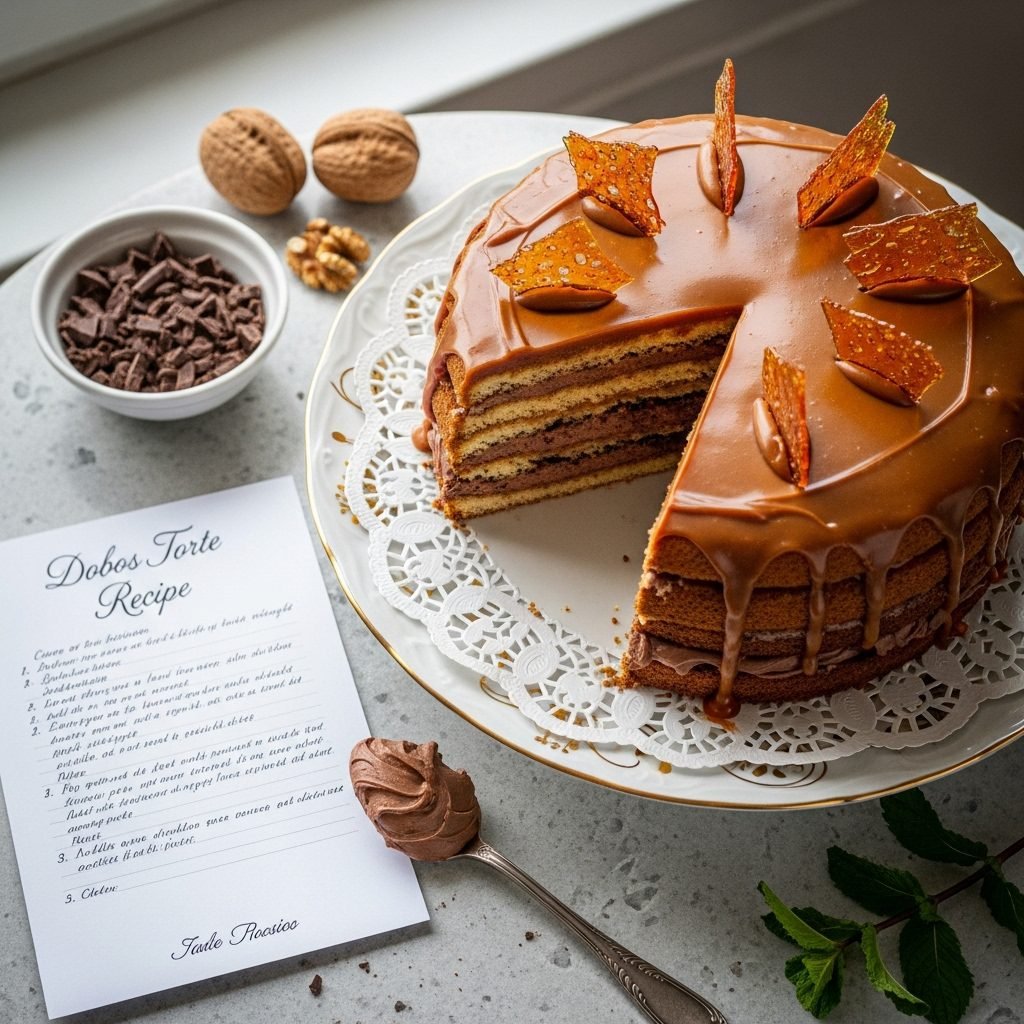
Dobos Torte is a stunning Hungarian layer cake that’s guaranteed to impress at any celebration! This show-stopping dessert features multiple thin layers of delicate sponge cake sandwiched with rich chocolate buttercream, all crowned with glossy caramel shards that add both visual drama and delicious crunch. Pronounced “DOH-bosh,” this elegant European cake has been captivating dessert lovers since the late 1800s with its sophisticated appearance and incredible flavor combination.
The thin cake layers create a beautiful striped effect when sliced, while the chocolate buttercream provides luxurious richness, and that signature caramel topping adds a sweet, slightly bitter contrast that ties everything together perfectly. While Dobos Torte is undeniably a special occasion cake—think birthdays, anniversaries, holidays, or any event where you want to pull out all the stops—it’s more approachable than it looks! Yes, this recipe requires some time and attention to detail, but the steps are actually quite manageable when broken down, and the result is a bakery-worthy masterpiece that will have everyone asking for your secret. Serve this at your next celebration, and prepare for the compliments to roll in!
History / Background
Dobos Torte has a fascinating history that begins in 1885 Budapest, Hungary. This iconic cake was created by József C. Dobos, a renowned Hungarian chef and delicatessen owner who was passionate about innovation in the culinary world. At the time, Dobos was known for his creative approach to food and his dedication to using only the finest ingredients—a philosophy that was revolutionary for the era.
Dobos unveiled his masterpiece cake at the National General Exhibition of Budapest in 1885, where it caused an immediate sensation. What made this cake so groundbreaking wasn’t just its delicious taste, but its ingenious design. In the late 19th century, refrigeration was not widely available, making it difficult to preserve cakes with cream fillings. Dobos solved this problem by creating a buttercream that could withstand room temperature better than traditional cream fillings, and by topping the cake with a hard caramel layer that acted as a protective seal, helping to keep the cake fresh for longer periods.
The caramel top wasn’t just functional—it was also a brilliant marketing move. The shiny, golden caramel adorned with decorative scored lines or geometric patterns became instantly recognizable, turning the cake into a status symbol. Serving Dobos Torte at gatherings became a way to demonstrate sophistication and wealth, as the cake required skill to make and quality ingredients that weren’t always accessible to everyone.
For years, Dobos kept his recipe a closely guarded secret, refusing to share the details of his creation. The cake was exclusively made in his delicatessen, adding to its mystique and desirability. However, in 1906, Dobos decided to retire and, in an act of generosity, he donated his secret recipe to the Budapest Pastry and Honey-Bread Makers’ Guild. This allowed the recipe to be preserved and shared, ensuring that future generations could enjoy and continue the tradition of making this spectacular cake.
Today, Dobos Torte remains one of Hungary’s most famous culinary exports and is considered a classic of European patisserie. It’s traditionally served at weddings, celebrations, and special occasions throughout Hungary and Austria. The cake has inspired countless variations around the world, but the traditional version—with its distinctive caramel top cut into triangular shards arranged on top of the cake—remains the gold standard for this elegant dessert.
Why You’ll Love This Recipe
While Dobos Torte might look intimidating at first glance, this recipe breaks down every step into manageable parts, making it totally achievable for dedicated home bakers! The result is absolutely worth the effort—a truly spectacular cake that delivers on both appearance and flavor. The combination of light sponge layers, silky chocolate buttercream, and crunchy caramel creates an incredible textural experience with every bite, while the balanced sweetness keeps it from being overwhelming despite its richness.
This is the kind of cake that makes people stop mid-conversation and ask, “Did you really make this?” It’s a showstopper that demonstrates serious baking skills and makes any occasion feel extra special. Plus, despite its elegant appearance, the flavors are universally appealing—chocolate and caramel are a classic combination that everyone loves!
Here’s why this Dobos Torte recipe will become your go-to showstopper dessert:
- Impressive Presentation – This is hands-down one of the most beautiful cakes you can make
- Incredible Flavor Combination – Chocolate buttercream and caramel are a match made in heaven
- Perfect Texture Balance – Tender cake layers, creamy filling, and crunchy caramel top
- Feeds a Crowd – Makes 12-14 generous servings, perfect for celebrations
- Better Than Bakery – Fresher and more flavorful than store-bought versions
- Special Occasion Star – Ideal for birthdays, anniversaries, holidays, or any celebration
- Cultural Experience – Learn an authentic European baking technique
- Clear Instructions – Step-by-step guidance makes this achievable
- Make-Ahead Friendly – Components can be prepared separately over multiple days
- Unforgettable – Guests will remember this cake long after the event
- Skill-Building – Master techniques you’ll use in other advanced baking projects
Ingredient Notes
Dobos Torte uses simple ingredients, but quality matters here! Let’s break down each component and understand its role.
For the Sponge Cake Layers:
Large Eggs: The foundation of the sponge cake. You’ll need quite a few—eggs provide structure, moisture, and help create those light, tender layers. Room temperature eggs whip up better. Tip: Separate eggs carefully; even a trace of yolk in the whites will prevent proper whipping.
Granulated Sugar: Sweetens the cake and helps stabilize the egg foam. Substitution: Superfine sugar dissolves even faster for an ultra-smooth batter.
All-Purpose Flour: Creates structure in the thin cake layers. Measure carefully using the spoon-and-level method. Substitution: Cake flour makes even more delicate layers if you have it.
Vanilla Extract: Adds depth of flavor to the subtle sponge cake.
Salt: Essential for balancing sweetness and enhancing all other flavors.
For the Chocolate Buttercream:
Unsalted Butter: The base of European buttercream. Must be softened to perfect room temperature—not cold, not melted. Quality butter makes a huge difference in flavor.
Powdered Sugar: Sweetens and helps stabilize the buttercream. Sift it to avoid lumps!
Egg Yolks: Creates a rich, silky texture and gorgeous yellow color. This is a traditional European-style buttercream that’s less sweet than American buttercream.
Dark Chocolate: Use good-quality chocolate (60-70% cacao). The chocolate flavor is prominent, so quality matters! Substitution: Semi-sweet chocolate works if you prefer less intense chocolate flavor.
Milk or Heavy Cream: Helps achieve the perfect spreading consistency.
Vanilla Extract: Complements the chocolate flavor beautifully.
For the Caramel Top:
Granulated Sugar: Melts into that gorgeous golden caramel. Don’t use powdered sugar here!
Butter: Adds richness and shine to the caramel.
Lemon Juice or Vinegar: Just a tiny amount prevents crystallization and helps create smooth caramel.
Equipment Needed
Gather these tools before starting—having everything ready makes the process much smoother:
For the Cake Layers:
- 9-inch round cake pans (you’ll need 2-3, or bake in batches)
- Parchment paper (essential for easy removal)
- Large mixing bowl (for whipping eggs)
- Electric hand mixer or stand mixer (stand mixer is ideal for extended whipping)
- Fine-mesh sieve (for sifting flour)
- Rubber spatula (for gentle folding)
- Offset spatula (for spreading batter evenly)
- Wire cooling rack
For the Buttercream:
- Medium mixing bowl
- Electric mixer
- Double boiler or heatproof bowl over simmering water
- Whisk
For the Caramel:
- Heavy-bottomed saucepan
- Pastry brush
- Sharp knife (for scoring while caramel is still warm)
- Oiled knife or kitchen shears (for cutting caramel shards)
For Assembly:
- Cake turntable (optional but helpful)
- Offset spatula (for spreading buttercream)
- Serrated knife (for trimming uneven layers)
- Cake board or serving plate
Print

Dobos Torte Recipe
Classic Hungarian Dobos Torte featuring six thin layers of delicate sponge cake filled with rich chocolate buttercream and topped with signature caramel shards. An elegant showstopper dessert perfect for special celebrations.
- Total Time: 3 hours (including cooling and assembly)
- Yield: 12-14 servings 1x
Ingredients
ScaleFor the Sponge Cake Layers (makes 6 thin layers):
- 6 large eggs, separated, room temperature
- ¾ cup (150g) granulated sugar, divided
- 1 cup (125g) all-purpose flour, sifted
- 1 teaspoon vanilla extract
- ¼ teaspoon salt
For the Chocolate Buttercream:
- 1 cup (225g) unsalted butter, softened to room temperature
- 1½ cups (180g) powdered sugar, sifted
- 4 large egg yolks, room temperature
- 6 ounces (170g) dark chocolate (60-70% cacao), melted and cooled slightly
- 2 tablespoons milk or heavy cream
- 1 teaspoon vanilla extract
- Pinch of salt
For the Caramel Top:
- 1 cup (200g) granulated sugar
- 2 tablespoons (30g) unsalted butter
- ½ teaspoon lemon juice or white vinegar
- Vegetable oil (for greasing)
Instructions
Make the Sponge Cake Layers:
- Prepare Pans: Preheat oven to 375°F (190°C). Line the bottoms of 2-3 nine-inch round cake pans with parchment paper circles. Do not grease the sides (the batter needs to cling as it rises). If you only have 2 pans, you’ll bake in batches.
- Whip Egg Whites: In a large clean bowl, beat egg whites with an electric mixer on medium speed until foamy. Gradually add ½ cup of sugar, one tablespoon at a time, beating on high speed until stiff, glossy peaks form (about 5-7 minutes). The meringue should be thick and hold its shape.
- Beat Egg Yolks: In a separate bowl, beat egg yolks with remaining ¼ cup sugar and vanilla extract until thick, pale yellow, and tripled in volume (about 3-4 minutes).
- Fold Together: Gently fold the egg yolk mixture into the whipped egg whites using a rubber spatula. Fold in large, sweeping motions to maintain airiness.
- Add Flour: Sift the flour and salt over the egg mixture in three additions, gently folding after each addition just until no flour streaks remain. Don’t overmix or you’ll deflate the batter!
- Portion Batter: Divide batter evenly among prepared pans (about 1 cup per pan for thin, even layers). Spread gently with an offset spatula to create even thickness.
- Bake: Bake for 8-10 minutes, or until the tops spring back when lightly touched and edges just begin to pull away from the pan. Don’t overbake or layers will be dry!
- Cool: Run a knife around the edges immediately and invert onto a wire rack. Peel off parchment and let cool completely. Repeat with remaining batter if baking in batches. You need 6 layers total.
Make the Chocolate Buttercream:
- Melt Chocolate: Melt dark chocolate in a double boiler or microwave in 30-second intervals, stirring between each. Let cool to room temperature but still liquid.
- Beat Butter: In a large bowl, beat softened butter on medium-high speed for 3-4 minutes until light, fluffy, and pale in color.
- Add Egg Yolks: Beat in egg yolks one at a time, mixing well after each addition. The mixture may look slightly curdled—this is normal!
- Add Sugar: Gradually beat in sifted powdered sugar on low speed, then increase to medium-high and beat for 2 minutes until fluffy.
- Add Chocolate: With mixer on low, slowly pour in the cooled melted chocolate. Add vanilla, salt, and milk/cream. Beat on medium-high speed for 2-3 minutes until smooth, silky, and spreadable. If buttercream is too thick, add more cream one teaspoon at a time.
Make the Caramel Top:
- Prepare Surface: Lightly oil a baking sheet or marble slab and have an oiled knife ready.
- Cook Caramel: In a heavy-bottomed saucepan, combine sugar and lemon juice. Cook over medium heat without stirring (you can swirl the pan gently) until sugar melts and turns deep golden amber (about 8-10 minutes). Watch carefully—it can burn quickly!
- Add Butter: Remove from heat and carefully stir in butter. The mixture will bubble vigorously—be careful!
- Pour and Score: Immediately pour caramel onto the oiled surface and spread quickly to a thin circle slightly larger than your cake layers. Let cool for about 30 seconds, then use an oiled knife to score the caramel into 12-14 triangular wedges (like cutting a pizza). Work quickly—caramel hardens fast!
- Cool Completely: Let caramel cool and harden completely (about 15 minutes), then carefully break along scored lines into wedges.
Assemble the Cake:
- Trim Layers: Using a serrated knife, trim any uneven edges from cake layers so they’re uniform.
- First Layer: Place one cake layer on a serving plate or cake board. Spread with a generous layer of chocolate buttercream (about ⅓ cup).
- Stack Layers: Continue layering: cake, buttercream, cake, buttercream, repeating until you have 5 layers stacked. The 6th cake layer will be the top.
- Reserve Buttercream: Before placing the top layer, reserve about ⅓ cup buttercream for decorating the sides if desired.
- Top with Final Layer: Place the final cake layer on top (smooth side up).
- Frost Sides: Use remaining buttercream to frost the sides of the cake in a thin layer. You can leave the top unfrosted or spread a very thin layer.
- Add Caramel Shards: Arrange the caramel triangles on top of the cake in a circular pattern, standing them up slightly for dramatic effect or laying flat.
- Chill: Refrigerate for at least 2 hours before serving to allow buttercream to set.
Notes
- Egg Temperature: Room temperature eggs are crucial—they whip better and incorporate more easily.
- Gentle Folding: Maintain airiness in the batter by folding gently and thoroughly.
- Even Layers: Weigh or measure batter for each pan to ensure uniform thickness.
- Buttercream Temperature: If buttercream becomes too soft while working, chill briefly. If too firm, let it sit at room temperature.
- Caramel Timing: Work quickly with caramel—it hardens fast! Have everything ready before you start.
- Make-Ahead: Cake layers can be made a day ahead, wrapped tightly, and stored at room temperature.
- Prep Time: 1 hour
- Cook Time: 40 minutes
- Category: Desert
- Method: Baking
- Cuisine: Hungarian
- Diet: Vegetarian
Nutrition
- Serving Size: 1 slice (1/12 of cake)
- Calories: 485
- Sugar: 42g
- Sodium: 95mg
- Fat: 28g
- Saturated Fat: 16g
- Unsaturated Fat: 10g
- Trans Fat: 0g
- Carbohydrates: 54g
- Fiber: 2g
- Protein: 7g
- Cholesterol: 215mg
Tips & Variations
Coffee Buttercream: Add 2 tablespoons of instant espresso powder to the buttercream for a sophisticated mocha flavor that complements the chocolate beautifully.
Hazelnut Dobos: Toast and finely grind ½ cup hazelnuts, then fold into the cake batter for a nutty variation. You can also add hazelnut liqueur to the buttercream.
White Chocolate Version: Substitute white chocolate for dark chocolate in the buttercream for a sweeter, more delicate flavor profile.
Orange Zest: Add 1 tablespoon of fresh orange zest to the buttercream for a chocolate-orange combination that’s absolutely divine.
Rum Syrup: Brush each cake layer lightly with rum-flavored simple syrup before spreading buttercream for extra moisture and adult flavor.
Mini Dobos Tortes: Make individual servings using 3-inch cake rings for elegant plated desserts perfect for dinner parties.
Chocolate Cake Layers: Add 2 tablespoons of cocoa powder to the batter for chocolate sponge layers instead of vanilla.
Dulce de Leche Filling: Alternate chocolate buttercream layers with dulce de leche for a caramel-throughout experience.
Pro Chef Tips
Perfect Egg Foam is Everything: The entire structure of this cake depends on properly whipped eggs. Make sure your bowl and beaters are completely clean and dry—even a trace of grease will prevent proper whipping. Beat egg whites until they hold very stiff peaks; they should stand straight up when you lift the beaters.
Fold, Don’t Stir: When incorporating flour and folding mixtures together, use a gentle folding motion—cut down through the center, sweep across the bottom, and bring up the sides. This motion maintains the air bubbles you worked so hard to create. Stirring deflates the batter and results in dense, flat layers.
Temperature Control for Buttercream: European buttercream is temperature-sensitive. The butter must be at perfect room temperature (68-72°F)—soft enough to dent easily with a finger but not at all melty or greasy. If your buttercream looks curdled, it’s likely too cold; if it’s soupy, it’s too warm. Adjust temperature and beat again until silky.
Caramel Confidence: Making caramel can be intimidating, but confidence is key! Once sugar begins to color, watch it like a hawk—it goes from perfect to burned in seconds. Have all your tools ready before you start, and commit to working quickly once it’s ready. If you’re nervous, practice making caramel once before the big day.
Use a Scale: For the most consistent results, especially with the thin cake layers, weigh your ingredients and portion the batter by weight. This ensures perfectly even layers that bake at the same rate.
Level Your Layers: Even if your layers look flat, use a serrated knife to trim off any domed tops or uneven edges. Perfectly level layers stack better and create that beautiful striped appearance when sliced.
Chill Between Steps: If at any point your buttercream becomes too soft to work with, pop the entire cake in the refrigerator for 10-15 minutes. Cold buttercream is easier to spread and holds its shape better.
Common Mistakes to Avoid
Deflating the Egg Foam: The most common error is deflating the carefully whipped eggs during folding. Overmixing or stirring instead of folding will knock out all the air, resulting in dense, heavy cake layers instead of light, delicate ones. Fold gently but thoroughly—it’s okay if you see a few flour streaks; they’ll incorporate as you spread the batter.
Greasing the Pans: Don’t grease the sides of your cake pans! The batter needs to cling to the pan sides as it rises. Only line the bottoms with parchment. If you grease the sides, your thin layers won’t rise properly and may even slide down.
Overbaking the Layers: These thin layers bake quickly—usually just 8-10 minutes. Overbaking even by 2-3 minutes will dry them out significantly. They should spring back lightly when touched but still look pale, not golden brown. Remember, they continue cooking from residual heat after removal from the oven.
Not Cooling Chocolate Completely: If you add hot melted chocolate to buttercream, it will melt the butter and turn your buttercream into a soupy mess. Let melted chocolate cool to room temperature (but still liquid) before adding to buttercream. Touch-test it—it should feel cool or barely warm.
Waiting Too Long to Score Caramel: Caramel hardens quickly! You have maybe 30-60 seconds after pouring to score your wedges. If you wait too long, the caramel becomes rock-hard and will shatter irregularly instead of breaking along clean lines. Have your oiled knife ready and work fast!
Assembling with Warm Components: Never assemble this cake with warm buttercream or warm cake layers. Everything must be completely cool, or the buttercream will melt and slide, creating a lopsided disaster. Patience is essential!
Storage & Meal Prep
Refrigeration Required: Dobos Torte must be stored in the refrigerator due to the egg-based buttercream. Keep it in an airtight container or cover loosely with plastic wrap (don’t let wrap touch the caramel shards). It will stay fresh for 4-5 days.
Bring to Room Temperature: For best flavor and texture, remove the cake from the refrigerator 30-45 minutes before serving. Cold buttercream is firmer and less creamy; room temperature brings out the silky texture and full chocolate flavor.
Caramel Considerations: The caramel shards may soften slightly in the refrigerator due to humidity, especially after the first day. This is normal and doesn’t affect taste, though they may lose some of their dramatic crunch. Some bakers prefer to add caramel shards just before serving to maintain maximum crispness.
Covering Without Damage: Because of the tall caramel shards, covering this cake can be tricky. Use a cake carrier with a high dome, or carefully tent aluminum foil over the cake, supporting it on toothpicks inserted around the edges so the foil doesn’t touch the caramel.
Leftover Slices: Individual slices can be wrapped in plastic wrap and stored in an airtight container in the refrigerator for up to 5 days. The layers hold up beautifully!
Make-Ahead & Freezer Notes
Component Approach: The best strategy for managing this cake is to break it into components over 2-3 days. This makes the process much less overwhelming!
Make-Ahead Schedule:
- Day 1: Bake all cake layers, cool completely, wrap tightly in plastic wrap, and store at room temperature.
- Day 2: Make buttercream and caramel shards. Store buttercream in an airtight container in the refrigerator (bring to room temperature and re-whip before using). Store caramel shards in an airtight container with parchment between layers at room temperature.
- Day 3 (Serving Day): Assemble the cake 2-4 hours before serving.
Freezing Cake Layers: Baked cake layers freeze beautifully! Wrap each layer individually in plastic wrap, then aluminum foil. Freeze for up to 2 months. Thaw at room temperature for 1-2 hours before assembling.
Freezing Assembled Cake: You can freeze the fully assembled cake (before adding caramel shards) for up to 1 month. Wrap very carefully in multiple layers of plastic wrap, then foil. Freeze on a flat surface. Thaw overnight in the refrigerator, then add caramel shards before serving.
Buttercream Storage: Buttercream can be made up to 3 days ahead and refrigerated, or frozen for up to 2 months. Bring to room temperature and re-whip with electric mixer until fluffy before using.
Don’t Freeze Caramel: The caramel shards don’t freeze well and can become sticky or crystallize. Always make these within 1-2 days of serving and store at room temperature in an airtight container.
Serving Suggestions
Classic Presentation: Serve thin slices (this is a rich cake!) on dessert plates with a small dollop of lightly sweetened whipped cream on the side and a dusting of cocoa powder or a few fresh raspberries for color contrast.
Coffee Pairing: Dobos Torte is traditionally served with strong black coffee or espresso. The rich chocolate buttercream and sweet caramel are perfectly balanced by bitter coffee.
Dessert Wine: Pair with a sweet dessert wine like Tokaji (another Hungarian specialty!), Port, or late-harvest Riesling for an elegant ending to a special dinner.
Ice Cream Accompaniment: Serve with a small scoop of vanilla bean ice cream or coffee ice cream for temperature and texture contrast.
Champagne Celebration: This elegant cake pairs beautifully with champagne or sparkling wine for celebrations, anniversaries, or New Year’s Eve.
Hungarian Dinner Party: Serve as the finale to a Hungarian-themed dinner featuring goulash, chicken paprikash, or stuffed cabbage rolls.
Afternoon Tea: Cut smaller slices and serve as part of an elegant afternoon tea or coffee service with other petits fours and pastries.
Fresh Berries: Garnish individual slices with fresh raspberries, strawberries, or a berry compote to cut the richness with bright acidity.
FAQs Section
Q: Do I really need to make 6 separate cake layers? Can I make fewer, thicker layers?
A: While you technically could make fewer layers, the multiple thin layers are part of what makes Dobos Torte special! The delicate layers create that beautiful striped effect and provide the perfect cake-to-buttercream ratio. Thicker layers would completely change the character of the cake. The thin layers also make each bite more refined and less heavy.Q: My buttercream looks curdled or separated. Is it ruined?
A: Don’t panic—it’s probably salvageable! Curdled buttercream usually means it’s too cold. Set your bowl over a pan of barely simmering water (or use a hair dryer on low) and warm the bottom while beating continuously. Just a few seconds of gentle warmth should bring it back together. If it looks soupy instead, it’s too warm—refrigerate briefly and beat again.Q: Can I make this cake without the caramel top?
A: Technically yes, but the caramel top is really what makes it Dobos Torte! That said, if you’re intimidated by caramel, you could top with chocolate ganache or simply dust with cocoa powder. Just know that traditionalists would consider it a different cake. The caramel isn’t as hard as it seems—practice once and you’ll get the hang of it!Q: How do I cut through the hard caramel without destroying the cake?
A: Use a very sharp, long knife, and run it under hot water, then dry it completely. Make one decisive cut in a single motion rather than sawing back and forth. The caramel will crack cleanly if your knife is sharp and warm. Wipe and rewarm the knife between cuts.Q: Can I use American buttercream instead of this European-style buttercream?
A: You could, but it would significantly change the character of the cake. European buttercream (made with egg yolks) is less sweet, silkier, and more refined than American buttercream (made with just butter and powdered sugar). The traditional recipe uses European-style for good reason—it’s less cloying and lets the chocolate shine. If you’re going to invest the time in making Dobos Torte, use the traditional buttercream!Q: Why do my cake layers keep deflating?
A: This almost always comes from deflating the egg foam during mixing. Make sure you’re folding (not stirring) very gently, using proper folding technique. Also ensure your egg whites are beaten to truly stiff peaks—they should stand straight up when you lift the beaters. Under-beaten whites won’t have enough structure to maintain the rise.Q: How far in advance can I make this cake?
A: The fully assembled cake is actually best made at least 4-6 hours before serving (or even the day before) to allow the layers to soften slightly and the flavors to meld. The buttercream helps moisten the layers over time. It will stay delicious for up to 4-5 days in the refrigerator, though the caramel may soften slightly after day 2.Q: Is there a way to make this recipe easier for beginners?
A: Yes! Start by making each component on separate days to avoid feeling overwhelmed. You could also make just 4 layers instead of 6 for your first attempt (still delicious, just not as dramatic). Practice making caramel separately before the big day so you’re confident. And remember, even if it’s not perfect, it will still taste amazing!Conclusion
Congratulations—you now have all the knowledge you need to create an absolutely stunning Dobos Torte! Yes, this is an ambitious baking project that requires some time and attention to detail, but breaking it down into manageable steps makes it totally achievable. The sense of accomplishment you’ll feel when you present this show-stopping cake is incredible, and the look on your guests’ faces when they take that first bite of delicate sponge layers, silky chocolate buttercream, and crunchy caramel will make every minute worth it.
This is the kind of cake that creates memories and becomes legendary at gatherings. It’s a centerpiece, a conversation starter, and a delicious celebration all in one. Whether you’re making it for a milestone birthday, an anniversary, a holiday celebration, or simply because you want to challenge yourself and create something truly special, Dobos Torte is an unforgettable choice that honors a beautiful baking tradition.
I’d absolutely love to hear about your Dobos Torte adventure! Did you tackle it all in one day or spread it out over multiple days? How did your caramel shards turn out? What occasion did you make it for, and what was everyone’s reaction? Share your experience, tips, and photos in the comments below—I love celebrating your baking victories, and your feedback helps fellow bakers feel confident to try this masterpiece!
Don’t forget to pin this recipe to your Pinterest boards—save it to “Special Occasion Cakes,” “European Desserts,” or “Advanced Baking Projects” so you can find it when that next celebration rolls around. If you know someone who loves a baking challenge or has a special event coming up, share this recipe with them. Beautiful cakes (and great recipes) are meant to be shared!
Now go forth and create some caramel-topped magic! Happy baking! 🎂✨