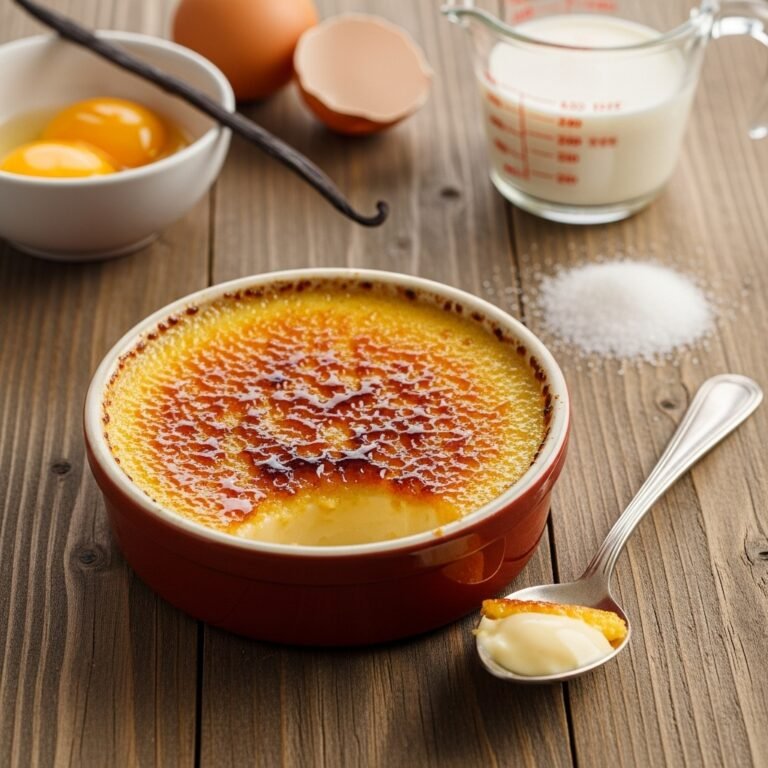
Ingredients
For the Custard:
- 2 cups (480ml) heavy cream
- 1 vanilla bean, split lengthwise (or 2 teaspoons pure vanilla extract)
- 5 large egg yolks
- ½ cup (100g) granulated sugar, divided
- Pinch of salt
For the Caramelized Topping:
- 3-6 tablespoons granulated sugar (about ½-1 tablespoon per ramekin)
Instructions
Step 1: Preheat Oven and Prepare Water Bath
Position your oven rack in the center and preheat to 325°F (165°C). Place a kitchen towel in the bottom of a large roasting pan or baking dish (this prevents ramekins from sliding and provides insulation). Arrange six 4-6 ounce ramekins on top of the towel. Put a kettle of water on to boil—you’ll need this for the water bath later.
Step 2: Infuse the Cream with Vanilla
Pour the heavy cream into a medium saucepan. If using a vanilla bean, split it lengthwise with a sharp knife and scrape out the seeds with the back of the knife. Add both the seeds and the scraped pod to the cream (the pod adds extra flavor). Heat over medium heat, stirring occasionally, until the cream just begins to simmer and small bubbles form around the edges—about 5 minutes. Don’t let it come to a rolling boil. Remove from heat and let it steep for 10-15 minutes to infuse maximum vanilla flavor. If using vanilla extract instead, you’ll add it later.
Step 3: Whisk Egg Yolks and Sugar
While the cream is steeping, combine the egg yolks, ¼ cup of the sugar, and a pinch of salt in a large mixing bowl. Whisk vigorously for about 2 minutes until the mixture becomes pale yellow, thick, and slightly ribbony when you lift the whisk. This step is important—it helps dissolve the sugar and creates the base for your silky custard.
Step 4: Temper the Egg Mixture
Remove the vanilla pod from the cream (rinse it, dry it, and save it for vanilla sugar!). Very slowly pour about ½ cup of the warm cream into the egg yolk mixture while whisking constantly. This is called tempering—it gradually raises the temperature of the eggs without scrambling them. Once incorporated, slowly whisk in the remaining cream until completely combined. If using vanilla extract instead of a vanilla bean, stir it in now.
Step 5: Strain the Custard
Pour the custard mixture through a fine-mesh strainer into a large measuring cup or bowl with a spout (this makes pouring easier). This crucial step removes any bits of cooked egg, vanilla bean seeds that clumped together, or any other particles, ensuring your custard is perfectly smooth and silky. Don’t skip this step!
Step 6: Fill the Ramekins
Carefully pour or ladle the strained custard into the prepared ramekins, filling each one about ¾ full, leaving about ¼ inch from the rim. If any bubbles form on the surface, gently skim them off with a spoon or pop them with a kitchen torch for a smooth finish.
Step 7: Create the Water Bath
Carefully place the roasting pan with the filled ramekins in the oven. Then, slowly pour hot water from your kettle into the roasting pan until it reaches about halfway up the sides of the ramekins. Be careful not to splash water into the custards! The water bath (called a “bain-marie”) ensures gentle, even cooking and prevents the edges from overcooking while the centers set.
Step 8: Bake Until Just Set
Bake for 40-45 minutes, until the custards are set around the edges but still have a slight jiggle in the center—about the size of a quarter. They should look like barely set Jell-O when you gently shake a ramekin. The centers will continue cooking from residual heat after you remove them. Don’t overbake or the custard will be grainy instead of silky! Start checking at 35 minutes if using shallow ramekins.
Step 9: Cool and Chill
Carefully remove the roasting pan from the oven. Using tongs or a towel, remove each ramekin from the water bath and place on a wire rack to cool to room temperature, about 30 minutes. Once cooled, cover each ramekin with plastic wrap and refrigerate for at least 2 hours, but preferably 4 hours or overnight. The custards need this time to fully set and develop flavor.
Step 10: Caramelize the Sugar Topping
When ready to serve, remove the ramekins from the refrigerator. Blot any condensation from the tops with a paper towel. Sprinkle ½ to 1 tablespoon of granulated sugar evenly over the top of each custard, tilting and tapping the ramekin to ensure even coverage and remove any excess. Using a kitchen torch, hold the flame 2-3 inches from the surface and move it in a circular motion until the sugar melts and caramelizes to a deep amber color. Let the sugar harden for 1-2 minutes before serving—it will crack beautifully when tapped with a spoon!
Step 11: Serve Immediately
Serve the crème brûlée within 10-15 minutes of torching for the best contrast between the warm, crispy sugar top and the cold, creamy custard. The caramelized sugar will gradually soften if it sits too long. Encourage guests to crack through the top with their spoons for that satisfying crunch!
Notes
- Temperature matters – Don’t let the cream boil, and don’t overbake the custard
- The jiggle test – Custards should wobble slightly in the center when done, like Jell-O
- Water bath is essential – It prevents curdling and ensures silky texture
- Chill completely – At least 2 hours, but overnight is even better
- Torch technique – Keep the flame moving to avoid burning spots
- Serve timing – Torch just before serving for optimal texture contrast
- Sugar amount – Use enough to create a thin, even layer but not so much it’s too thick to caramelize properly
- Prep Time: 15 minutes
- Cook Time: 40-45 minutes
- Category: Dessert
- Method: Baking water
- Cuisine: French
- Diet: Gluten Free
Nutrition
- Serving Size: 1 crème brûlée
- Calories: 365
- Sugar: 19g
- Sodium: 45mg
- Fat: 30g
- Saturated Fat: 18g
- Unsaturated Fat: 10g
- Trans Fat: 0g
- Carbohydrates: 20g
- Fiber: 0g
- Protein: 4g
- Cholesterol: 265mg