Ingredients
For the Cake Layers:
- 2 ¾ cups all-purpose flour
- 1 ½ cups granulated sugar
- ½ cup unsalted butter, room temperature
- ½ cup vegetable oil
- 4 large eggs, room temperature
- 1 cup buttermilk, room temperature
- 2 teaspoons pure vanilla extract
- 1 tablespoon baking powder
- ½ teaspoon baking soda
- ¾ teaspoon salt
- 15 Oreo cookies, coarsely crushed (about 1 ½ cups crushed)
For the Cookies and Cream Buttercream:
- 1 ½ cups unsalted butter, room temperature
- 6 cups powdered sugar, sifted
- ⅓ cup heavy cream
- 2 teaspoons pure vanilla extract
- ¼ teaspoon salt
- 15 Oreo cookies, finely crushed (about 1 ¼ cups crushed)
- 6-8 whole Oreo cookies for decoration
Instructions
Prepare the Cake Pans:
- Preheat your oven to 350°F (175°C). Grease two 9-inch round cake pans generously with butter or non-stick spray, then line the bottoms with parchment paper circles. Grease the parchment as well. This double insurance ensures your cakes will release perfectly.
Mix the Dry Ingredients: 2. In a medium bowl, whisk together the flour, baking powder, baking soda, and salt. Set this aside—you’ll add it to the wet ingredients later.
Cream Butter and Sugar: 3. In the bowl of your stand mixer (or large bowl if using a hand mixer), beat the room-temperature butter and sugar together on medium-high speed for 3-4 minutes. The mixture should become pale, fluffy, and increased in volume. This creaming process incorporates air that helps create a light cake texture, so don’t rush this step.
Add Eggs and Oil: 4. Reduce mixer speed to medium-low and add eggs one at a time, beating well after each addition and scraping down the bowl sides as needed. Pour in the vegetable oil and vanilla extract, mixing until fully incorporated. The batter may look slightly separated—this is normal and will come together when you add the flour.
Alternate Dry and Wet Ingredients: 5. With the mixer on low speed, add the flour mixture in three additions, alternating with the buttermilk in two additions. Begin and end with flour mixture. Mix each addition just until the flour streaks disappear—overmixing develops gluten and creates tough cake. The pattern is: flour, buttermilk, flour, buttermilk, flour.
Fold in Crushed Oreos: 6. Remove the bowl from the mixer and use a rubber spatula to gently fold in the coarsely crushed Oreos. Make sure they’re evenly distributed throughout the batter, but be careful not to overmix.
Bake the Cakes: 7. Divide the batter evenly between your prepared pans (I recommend using a kitchen scale for accuracy—each pan should have about 650-700g of batter). Smooth the tops with your spatula. Bake for 28-32 minutes, or until a toothpick inserted into the center comes out with just a few moist crumbs (not wet batter). The cake tops should spring back when lightly pressed.
Cool Completely: 8. Remove cakes from the oven and let them cool in the pans for 15 minutes on wire racks. This rest period helps the cakes set up so they won’t break when removed from the pans. After 15 minutes, run a knife around the edges, invert onto the cooling racks, peel off the parchment paper, and let cool completely (about 1 hour). The cakes must be completely cool before frosting, or the buttercream will melt.
Make the Buttercream: 9. While the cakes cool, prepare your frosting. In a clean stand mixer bowl, beat the room-temperature butter on medium speed for 2-3 minutes until creamy and smooth. Reduce speed to low and gradually add the sifted powdered sugar, one cup at a time, beating well after each addition.
Add Cream and Flavoring: 10. Once all the powdered sugar is incorporated, add the heavy cream, vanilla extract, and salt. Increase mixer speed to medium-high and beat for 3-4 minutes until the frosting becomes light, fluffy, and increased in volume. The frosting should hold stiff peaks.
Add Crushed Oreos to Frosting: 11. With the mixer on low speed (or by hand with a spatula), fold in the finely crushed Oreos. The frosting will turn a lovely speckled gray color. If it seems too thick, add a tablespoon of cream at a time until you reach your desired consistency.
Level and Layer: 12. If your cake layers have domed tops, use a cake leveler or long serrated knife to trim them flat. Place your first cake layer on a serving plate or cake board. If desired, place strips of parchment paper under the edges to keep your plate clean while frosting—you can remove them when finished.
Frost the Cake: 13. Spread about 1 cup of buttercream evenly over the first layer, going right to the edges. Place the second cake layer on top, cut side down. Apply a thin “crumb coat” of frosting over the entire cake—this seals in crumbs and creates a smooth base. Refrigerate for 15-20 minutes to set the crumb coat.
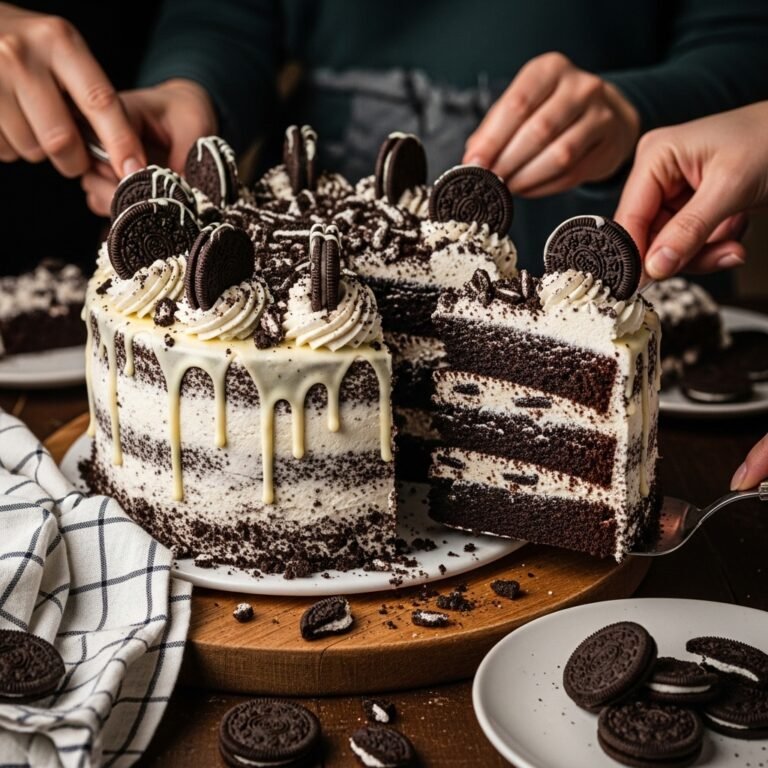
Final Frosting and Decoration: 14. Remove the cake from the refrigerator and apply the remaining frosting, smoothing it with an offset spatula. For clean sides, hold a bench scraper or straight-edge spatula against the side while slowly rotating the cake (this is where a turntable really helps). Decorate the top and sides with whole or halved Oreo cookies, pressing them gently into the frosting.
Chill and Serve: 15. Refrigerate the finished cake for at least 30 minutes before slicing—this sets the frosting and makes cutting much neater. For best flavor and texture, remove the cake from the refrigerator 20-30 minutes before serving so the frosting can soften slightly. Slice with a sharp knife, wiping it clean between cuts for beautiful, professional-looking slices.
Notes
- Room temperature ingredients are crucial – Cold eggs and buttermilk won’t incorporate properly, potentially creating a dense cake. Plan ahead and take them out of the refrigerator 1-2 hours before baking.
- Don’t overmix the batter – Once you add the flour, mix just until combined. Overmixing develops gluten, which creates tough, rubbery cake instead of tender crumb.
- Crush Oreos to different consistencies – For the cake, leave some larger pieces for texture. For the frosting, crush more finely so it spreads smoothly without lumps.
- Frosting consistency matters – If your buttercream is too stiff to spread easily, add cream one tablespoon at a time. If it’s too soft, add more powdered sugar or refrigerate briefly.
- Cake is best served at cool room temperature – The frosting needs to be chilled to hold its shape, but the cake tastes best when not ice-cold from the refrigerator.
- Prep Time: 30 minutes
- Cook Time: 28 minutes
- Category: Desert
- Method: Baking
- Cuisine: American
- Diet: Vegetarian
Nutrition
- Serving Size: 1 slice (1/14 of cake)
- Calories: 625
- Sugar: 68g
- Sodium: 320mg
- Fat: 32g
- Saturated Fat: 18g
- Unsaturated Fat: 12g
- Trans Fat: 0.5g
- Carbohydrates: 82g
- Fiber: 1g
- Protein: 5g
- Cholesterol: 115mg