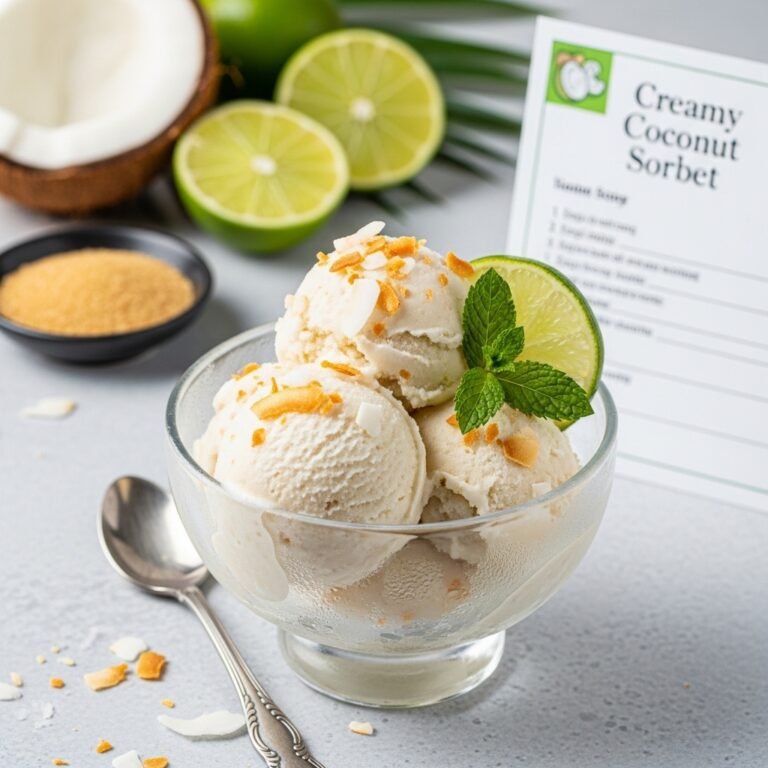
Creamy Coconut Sorbet Recipe: Tropical Frozen Dessert in Minutes
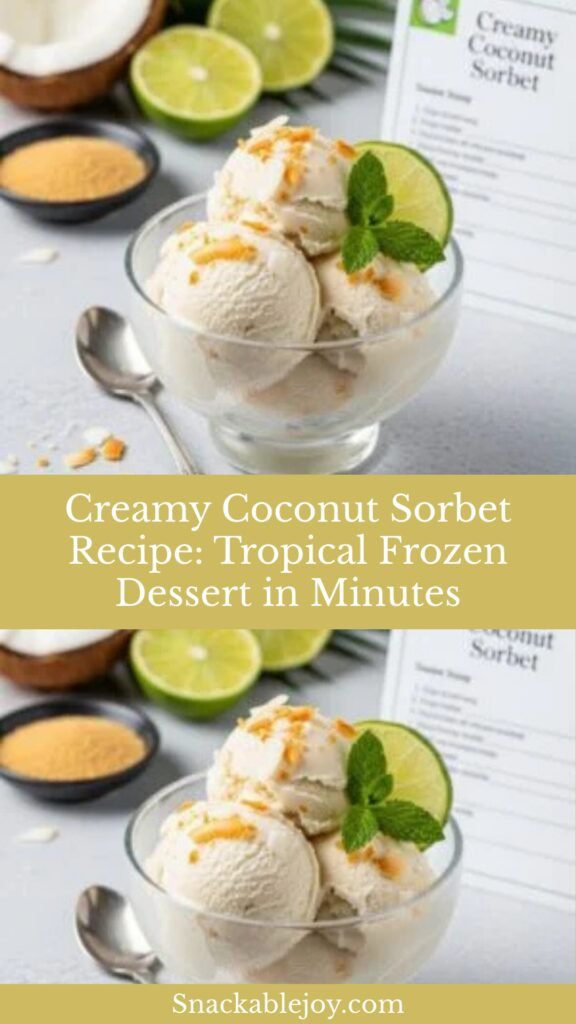
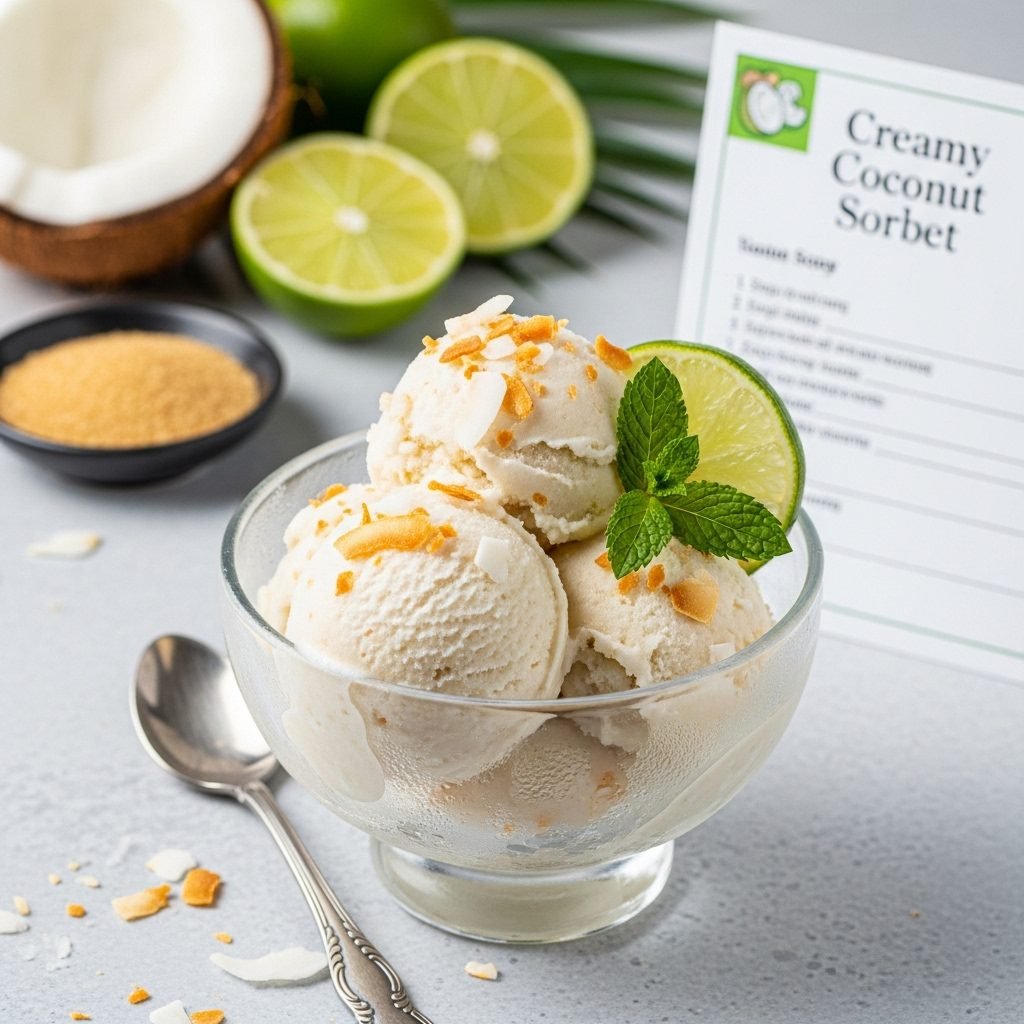
There’s something utterly irresistible about creamy coconut sorbet—it’s like capturing a tropical vacation in a frozen dessert! If you’ve been searching for that perfect dairy-free frozen treat that tastes indulgent while being naturally vegan, this coconut sorbet recipe is about to become your new summer obsession. Today, I’m sharing my foolproof method for creating luxuriously smooth, intensely coconutty sorbet that rivals any fancy gelato shop. This recipe delivers that perfect balance of creamy richness and refreshing lightness, with deep coconut flavor that transports you straight to a palm-fringed beach with every spoonful. Whether you’re serving it at a tropical-themed party, offering a dairy-free dessert option for guests, or simply treating yourself to something special, this coconut sorbet is pure frozen bliss that comes together with just a handful of ingredients.
Introduction of Recipe
Coconut sorbet is a dreamy frozen dessert that captures the essence of tropical paradise in every creamy spoonful. Unlike traditional fruit sorbets made primarily from juice and sugar, coconut sorbet uses rich coconut milk or coconut cream as its base, creating a luxuriously smooth texture that’s closer to ice cream than typical sorbet—yet it remains completely dairy-free and vegan. This makes it an absolute game-changer for anyone with dietary restrictions or lactose intolerance who still craves that creamy, indulgent frozen dessert experience. The beauty of coconut sorbet lies in its elegant simplicity: the natural richness of coconut milk provides body and creaminess without needing any dairy, while the subtle sweetness and tropical flavor shine through beautifully. It’s perfect for hot summer days when you need serious refreshment, as a palate cleanser between courses at dinner parties, as a light finish to spicy Asian or Caribbean meals, or anytime you’re craving something tropical and delicious. The best part? This recipe comes together in minutes with minimal ingredients, yet delivers restaurant-quality results that will have everyone asking for seconds.
History / Background
The history of coconut-based frozen desserts spans centuries and multiple continents, reflecting coconut’s importance in tropical cuisines worldwide. Coconuts have been cultivated in Southeast Asia, the Pacific Islands, and coastal regions for over 4,000 years, serving as a crucial food source providing hydration, nutrition, and culinary versatility. In traditional Thai, Filipino, and Indonesian cuisines, coconut milk and coconut cream have long been used to create rich, creamy desserts and beverages, often served chilled or frozen.
The concept of coconut sorbet as we know it today represents a beautiful marriage of ancient tropical ingredients and European frozen dessert techniques. While Europeans developed sophisticated ice cream and sorbet-making methods during the Renaissance, it wasn’t until colonial trade routes brought coconuts to Europe that creative cooks began experimenting with coconut in frozen desserts. In the Caribbean and Latin America, coconut-based frozen treats called “helado de coco” became beloved street food staples, with vendors selling freshly churned coconut ice cream from carts in town squares.
The modern coconut sorbet gained particular prominence in the mid-20th century as Asian and Pacific Islander cuisines became more popular in Western countries. Thai restaurants, especially, popularized coconut-based desserts like coconut sorbet served in young coconut shells—a presentation that became iconic in Thai dining experiences worldwide. The rise of vegan and dairy-free eating in recent decades has elevated coconut sorbet from specialty ethnic dessert to mainstream favorite, as people discovered it offered the creamy satisfaction of ice cream without any dairy products.
Today, coconut sorbet represents both tradition and innovation. In its homeland regions of Southeast Asia and the Pacific, it remains a connection to cultural heritage and tropical bounty. In Western kitchens, it’s celebrated as a sophisticated, health-conscious dessert that proves dairy-free doesn’t mean flavor-free. The natural fat content in coconut milk creates that luxurious mouthfeel typically achieved only with cream, making coconut sorbet uniquely positioned as the creamiest of all dairy-free frozen desserts.
Why You’ll Love This Recipe
This homemade coconut sorbet recipe delivers pure tropical indulgence with a creamy texture that’s absolutely dreamy—and surprisingly easy to achieve. The rich coconut flavor tastes authentic and luxurious, like you’ve been transported to a beachside resort, while the smooth, velvety texture melts beautifully on your tongue without any icy graininess.
Here’s why this recipe is absolutely fantastic:
- Incredibly creamy texture – Richer and smoother than typical fruit sorbets, rivals dairy ice cream
- Naturally dairy-free and vegan – Perfect for lactose intolerance, vegan diets, or anyone avoiding dairy
- Only 4 simple ingredients – Full-fat coconut milk, sugar, coconut extract, and salt
- No cooking required – Mix, chill, and churn—it’s that simple!
- Authentic tropical flavor – Tastes like real coconuts, not artificial flavoring
- Lighter than ice cream – Refreshing and satisfying without feeling heavy
- Allergy-friendly – Naturally gluten-free, nut-free (coconut is technically a fruit), and egg-free
- Impressive presentation – Elegant enough for dinner parties, fun enough for kids
- Customizable base – Add flavors like lime, pineapple, or chocolate easily
- Budget-friendly – Costs less than premium store-bought sorbet or ice cream
- Make-ahead friendly – Perfect for stress-free entertaining
Ingredient Notes
Full-Fat Coconut Milk or Coconut Cream: This is the star ingredient that creates the sorbet’s signature creamy texture and rich coconut flavor. Always use full-fat coconut milk—never light or reduced-fat versions, which contain too much water and will create icy, grainy sorbet. The best results come from Thai or Filipino coconut milk brands in cans, which typically have higher fat content (17-20%) than other brands. For even creamier sorbet, use coconut cream (which has less water than coconut milk). Before opening, shake the cans well or refrigerate overnight to check the fat content—high-quality coconut milk should have thick cream at the top. Brands like Chaokoh, Aroy-D, or Thai Kitchen work excellently.
Granulated White Sugar: Sweetens the sorbet while also serving a crucial structural role by lowering the freezing point, which keeps the texture smooth and scoopable rather than rock-hard. You can adjust the sweetness slightly to taste, but don’t reduce sugar by more than 2-3 tablespoons or the sorbet will freeze too hard and become icy. The sugar should dissolve completely into the coconut milk for the smoothest texture.
Coconut Extract (Optional but Recommended): Pure coconut extract intensifies the tropical coconut flavor dramatically, making your sorbet taste even more authentically coconutty. This is especially helpful if your coconut milk has a milder flavor. Use pure coconut extract rather than imitation for the best results—typically 1-2 teaspoons is perfect. If you can’t find coconut extract, you can substitute vanilla extract for a different but still delicious flavor profile, or simply omit it and let the coconut milk shine on its own.
Fine Sea Salt: Just a pinch enhances all the other flavors and balances the sweetness beautifully. Salt is a flavor amplifier that makes coconut taste more coconutty and prevents the sorbet from tasting flat or one-dimensional. Never skip this ingredient, even though it seems tiny—it makes a noticeable difference.
Lime Juice or Lime Zest (Optional): A small squeeze of fresh lime juice (1-2 tablespoons) or some lime zest brightens the coconut flavor and adds refreshing citrus notes that complement the tropical vibe perfectly. This is optional but highly recommended for added complexity.
Light Corn Syrup or Vodka (Optional): Adding 1-2 tablespoons of light corn syrup or vodka prevents the sorbet from freezing rock-hard and improves scoopability, especially if you plan to store it for several days. The alcohol or corn syrup doesn’t freeze solid, keeping the texture smooth and creamy. This is optional but helpful for long-term storage.
Substitution Notes: For refined sugar-free versions, you can use coconut sugar (which adds caramel notes) or organic cane sugar, though coconut sugar will slightly darken the color. Honey or agave can replace about ⅓ of the sugar, but they’ll change the flavor profile. For those avoiding coconut extract, vanilla extract or almond extract work as alternatives. You can also use a combination of coconut milk and coconut water for a lighter, less rich sorbet, though texture will be less creamy.
Equipment Needed
- Can opener – For opening coconut milk cans
- Large mixing bowl – For combining all ingredients
- Whisk or immersion blender – For thoroughly mixing and emulsifying the ingredients
- Measuring cups and spoons – For accurate ingredient measurements
- Fine-mesh strainer (optional) – For straining out any coconut solids for ultra-smooth texture
- Ice cream maker – Essential for proper churning and smooth texture
- Rubber spatula – For scraping bowls and transferring sorbet
- Freezer-safe container with lid – For storing finished sorbet (shallow containers work best)
- Plastic wrap – To press against sorbet surface and prevent freezer burn
- Ice cream scoop – For serving beautifully rounded portions
- Blender or food processor (optional) – For no-churn method or achieving extra-smooth texture
Print

Coconut Sorbet Recipe
Luxuriously creamy coconut sorbet with intense tropical flavor and silky-smooth texture. This dairy-free, vegan frozen dessert is made with rich coconut milk and tastes like a tropical vacation in every spoonful—perfect for summer entertaining or anytime you’re craving something refreshing!
- Total Time: 4 hours 35 minutes (including cooling and churning)
- Yield: 6-8 servings (approximately 1 quart) 1x
Ingredients
ScaleFor the Coconut Sorbet:
- 2 cans (13.5 oz each / 800ml total) full-fat coconut milk or 1 can (13.5 oz) coconut cream
- ¾ cup (150g) granulated white sugar
- 1-2 teaspoons pure coconut extract (optional but recommended)
- ⅛ teaspoon fine sea salt
- 2 tablespoons fresh lime juice (optional, for brightness)
- 1 tablespoon light corn syrup or vodka (optional, for smoother texture)
Optional Flavor Enhancements:
- 1 teaspoon vanilla extract
- ½ cup toasted shredded coconut (fold in after churning)
- 2 tablespoons rum (for adult version)
- Zest of 1 lime
Instructions
Step 1: Combine All Ingredients
Open your cans of coconut milk and pour them into a large mixing bowl. If you notice the coconut milk has separated into thick cream and watery liquid, this is perfectly normal—just whisk it together. Add the granulated sugar, coconut extract (if using), salt, lime juice (if using), and corn syrup or vodka (if using). Whisk vigorously for 2-3 minutes until the sugar is completely dissolved and the mixture is smooth and well combined. You can also use an immersion blender for 30-60 seconds to ensure everything is thoroughly emulsified and perfectly smooth.Step 2: Taste and Adjust
This is your chance to customize! Taste the mixture at room temperature—it should taste slightly sweeter than you want the final sorbet to be, since freezing dulls our perception of sweetness. If it’s not sweet enough, add 1-2 tablespoons more sugar and whisk until dissolved. If the coconut flavor isn’t strong enough, add another ½ teaspoon of coconut extract. Remember, the flavors will be less intense once frozen, so aim for bold flavor now.Step 3: Strain for Smoothness (Optional)
For the absolute smoothest texture, strain the mixture through a fine-mesh strainer into another bowl to remove any coconut solids or undissolved sugar granules. This step is optional but creates restaurant-quality smoothness. Use a rubber spatula to press the mixture through the strainer, then discard any solids left behind.Step 4: Chill Thoroughly
Cover the bowl with plastic wrap and refrigerate for at least 4 hours, but preferably overnight. The mixture must be completely cold (40°F/4°C or below) before churning for the best texture. Cold mixture churns faster and develops a creamier, denser consistency. This chilling step is absolutely crucial—don’t skip it or rush it!Step 5: Give It One More Whisk
Before churning, remove the mixture from the refrigerator and whisk it again for 30 seconds. Coconut milk can separate slightly in the fridge, and this quick whisk re-emulsifies everything for the smoothest possible sorbet.Step 6: Churn the Sorbet
Make sure your ice cream maker bowl has been frozen for at least 24 hours according to manufacturer’s instructions. Pour the chilled coconut mixture into your ice cream maker and churn according to the manufacturer’s directions, typically 20-25 minutes. The sorbet is ready when it reaches a thick, soft-serve consistency and pulls away from the sides of the machine. It should be creamy and smooth, not liquid. Don’t over-churn or it can become grainy.Step 7: Add Mix-Ins (Optional)
If you’re adding toasted coconut flakes, chocolate chips, or other mix-ins, fold them in gently during the last minute of churning or immediately after transferring to your storage container.Step 8: Freeze to Firm
Transfer the freshly churned sorbet to a freezer-safe container. For the smoothest texture, use a shallow, wide container rather than a deep, narrow one—this allows more even freezing. Press plastic wrap directly onto the surface of the sorbet to prevent ice crystals and freezer burn, then cover tightly with an airtight lid. Freeze for at least 3-4 hours or until firm enough to scoop properly.Step 9: Temper Before Serving
Remove the sorbet from the freezer 5-10 minutes before serving to soften slightly. This makes scooping easier and improves the creamy texture. Run your ice cream scoop under warm water between scoops for clean, beautiful portions.Notes
- Use full-fat coconut milk: Light or reduced-fat versions will create icy, grainy sorbet—don’t skimp!
- Chill completely: The mixture must be refrigerator-cold before churning for smooth, creamy texture.
- Taste before churning: Adjust sweetness and flavor while the mixture is still liquid—it’s too late once it’s frozen!
- Storage is key: Always press plastic wrap directly against the surface before sealing to prevent ice crystals.
- Best within 1 week: Homemade coconut sorbet has the finest texture within the first 5-7 days.
- Serving temperature matters: Let sorbet sit at room temperature 5-10 minutes for the creamiest texture.
- No ice cream maker? See FAQs for the no-churn food processor method.
- Prep Time: 10 minutes (plus cooling time: 4 hours or overnight)
- Cook Time: 0 minutes
- Category: Desert
- Method: Ice Cream Maker (No-Cook)
- Cuisine: Asian/Tropical
- Diet: Gluten Free
Nutrition
- Serving Size: ½ cup (approximately 85g)
- Calories: 185
- Sugar: 17g
- Sodium: 45mg
- Fat: 13g
- Saturated Fat: 12g
- Unsaturated Fat: 1g
- Trans Fat: 0g
- Carbohydrates: 18g
- Fiber: 0g
- Protein: 1g
- Cholesterol: 0mg
Tips & Variations
Flavor Variations:
- Coconut-Lime Sorbet: Add zest and juice of 2 limes for bright citrus notes
- Piña Colada Sorbet: Blend in ½ cup pineapple juice and 2 tablespoons rum
- Coconut-Mango: Puree 1 cup fresh mango and swirl through after churning
- Chocolate-Coconut: Add ⅓ cup cocoa powder and 2 oz melted dark chocolate
- Toasted Coconut: Fold in ½ cup toasted shredded coconut after churning for texture
- Coconut-Lemongrass: Steep 2 stalks bruised lemongrass in warmed coconut milk, cool, strain, then proceed
- Tropical Medley: Add passion fruit pulp, diced mango, or crushed pineapple
Texture Adjustments:
- For extra-creamy sorbet, use all coconut cream instead of coconut milk
- For lighter sorbet, use 1 can coconut milk + 1 cup coconut water
- Add 2 tablespoons tapioca starch for even creamier, scoopable texture
- For softer sorbet, increase corn syrup to 2-3 tablespoons
Sweetness Modifications:
- Reduce sugar by 2-3 tablespoons for less sweet, more coconut-forward flavor
- Replace half the sugar with honey for floral sweetness
- Use coconut sugar for caramel undertones (will darken the color)
- Add a splash of sweetened condensed coconut milk for extra richness
Presentation Ideas:
- Serve in hollowed-out coconut shells for dramatic tropical presentation
- Top with toasted coconut flakes, macadamia nuts, or fresh tropical fruit
- Drizzle with chocolate sauce, caramel, or passion fruit coulis
- Layer with other sorbet flavors in clear glasses for a beautiful parfait
- Freeze in popsicle molds for coconut ice pops
Pro Chef Tips
Choose High-Quality Coconut Milk: Not all coconut milk is created equal. Thai and Filipino brands typically have the highest fat content and most authentic coconut flavor. Check the ingredients list—it should contain only coconut and water, with no gums, thickeners, or preservatives. The fat content should be around 17-20% for the creamiest results. Shake the can before buying—if you hear lots of liquid sloshing, the coconut cream has separated and may be lower quality.
Emulsify for Ultra-Smooth Texture: The secret to restaurant-quality coconut sorbet is proper emulsification. Professional pastry chefs often blend the mixture with an immersion blender for 1-2 minutes, which breaks down any remaining fat molecules and creates an incredibly smooth, homogenous base. This prevents separation and ensures every spoonful is perfectly creamy. If you don’t have an immersion blender, whisking vigorously for 2-3 minutes achieves similar results.
The Overnight Chill Makes a Difference: While you can technically churn after 4 hours of chilling, leaving the mixture overnight in the refrigerator allows the flavors to meld and intensify beautifully. The sugar fully hydrates and dissolves, and the coconut flavor develops more depth. Professional kitchens always age their sorbet bases overnight for optimal results—this simple patience pays off tremendously.
Control Your Freezer Temperature: Home freezers are often warmer than ideal for sorbet storage. The best temperature for keeping sorbet smooth and scoopable is around -5°F to 0°F (-20°C to -18°C). If your freezer is warmer (most home freezers run at 0-5°F), your sorbet may be softer, while colder freezers create harder sorbet. Adjust the amount of corn syrup or vodka accordingly—warmer freezers need less, colder freezers benefit from an extra tablespoon.
Master the Churn: Watch your sorbet carefully during churning. The moment it reaches soft-serve consistency and starts pulling away from the sides of the machine (usually 20-25 minutes), stop immediately and transfer to your storage container. Over-churning incorporates too much air and can make the sorbet grainy and icy rather than smooth and creamy. Remember: it will firm up significantly in the freezer, so don’t wait for it to be completely solid in the machine.
Layer Your Storage Protection: Professional kitchens use a three-layer protection system: press plastic wrap directly on the sorbet surface, add a sheet of parchment paper on top of that, then seal with an airtight lid. This triple protection prevents ice crystals, freezer burn, and flavor absorption from other freezer items. It seems excessive but makes a dramatic difference in maintaining texture over several days.
Common Mistakes to Avoid
Using Light or Reduced-Fat Coconut Milk: This is the number one mistake that ruins homemade coconut sorbet. Light coconut milk contains too much water and not enough coconut fat, which results in icy, crystalline texture that’s closer to shaved ice than creamy sorbet. The fat in coconut milk is what creates that luxurious, smooth mouthfeel. Always use full-fat coconut milk or coconut cream—there’s simply no acceptable substitute if you want authentic results.
Not Chilling the Base Completely: Pouring warm or room-temperature mixture into your ice cream maker creates multiple problems: it takes much longer to freeze (sometimes never reaching proper consistency), incorporates too much air, and develops large ice crystals that make the sorbet grainy. The base must be refrigerator-cold (40°F/4°C or below) before churning. This is absolutely non-negotiable for smooth, creamy texture.
Reducing Sugar Too Much: Many health-conscious home cooks try to cut the sugar significantly, thinking they’re making a healthier dessert. However, sugar isn’t just for sweetness in sorbet—it’s structurally essential. Sugar molecules interfere with ice crystal formation and lower the freezing point, which keeps sorbet smooth and scoopable. Cut more than 2-3 tablespoons and your sorbet will freeze rock-hard and become icy and unpleasant. If you want less sweet sorbet, it’s better to reduce by just 2 tablespoons and add a pinch more salt to balance.
Forgetting to Re-Whisk Before Churning: Coconut milk naturally separates in the refrigerator, with the thick cream rising to the top and watery liquid settling below. If you don’t whisk it again right before churning, you’ll get uneven texture with fatty clumps and icy spots. Always give the chilled mixture one final vigorous whisk (or quick blend) immediately before pouring into your ice cream maker to re-emulsify everything.
Poor Storage Technique: Coconut sorbet is particularly vulnerable to ice crystal formation because of its high water content. Simply covering the container isn’t enough protection. Always press plastic wrap directly against the surface with no air gaps before sealing with a lid, and store in the back of your freezer where temperature is most consistent (never in the door where it fluctuates). Every time you scoop, smooth the surface again and replace the plastic wrap to maintain quality.
Storage & Meal Prep
Short-Term Storage: Transfer freshly churned coconut sorbet to a shallow, freezer-safe container with an airtight lid. Press a sheet of plastic wrap directly onto the sorbet surface, smoothing out any air pockets, then cover tightly. Properly stored coconut sorbet maintains optimal creamy texture for 5-7 days and remains good for up to 2 weeks, though texture gradually becomes slightly icier over time due to ice crystal formation.
Long-Term Storage: While coconut sorbet is best enjoyed within the first week, you can store it for up to 1 month in the freezer. For extended storage, use multiple protection layers: press plastic wrap directly on the surface, add a sheet of parchment paper, then seal with the container lid. Store in the coldest, most temperature-stable part of your freezer (typically the back of the bottom shelf). Label with the date so you know how long it’s been stored.
Preventing Ice Crystals: Ice crystals are the enemy of smooth sorbet texture. Minimize exposure to air and temperature fluctuations by always keeping the container tightly sealed and returning it to the freezer immediately after scooping. Smooth the surface after each use and replace the plastic wrap directly against the sorbet. Consider portioning sorbet into smaller containers if you won’t finish it within a few days—multiple small containers experience less temperature fluctuation than one large container opened repeatedly.
Serving from Frozen: Coconut sorbet contains natural fats that make it slightly softer than fruit-based sorbets, but it still freezes quite firm. Remove from the freezer 5-10 minutes before serving to soften to the perfect scoopable consistency. The sorbet should be soft enough to scoop easily but cold enough to hold its shape. If it’s consistently too hard, add an extra tablespoon of vodka or corn syrup next time you make it.
Reviving Stored Sorbet: If your coconut sorbet develops ice crystals or becomes grainy after storage, you can partially rescue it. Let it soften at room temperature for 10-15 minutes, break it into chunks, and pulse in a food processor until smooth. Immediately return to the freezer and let it firm up again. This won’t restore it to original perfection, but it significantly improves texture. For best results, consume coconut sorbet within the first 5-7 days when texture is optimal.
Make-Ahead & Freezer Notes
Advance Preparation: The beauty of coconut sorbet is that it’s an inherently make-ahead dessert—you must prepare it in advance since it requires freezing time. The coconut milk mixture can be prepared and refrigerated for up to 3 days before churning, which actually improves flavor as ingredients have more time to meld. For parties, churn the sorbet 1-2 days before your event and store properly. The texture is actually better on day 2-3 than when freshly churned, as it has time to properly firm up.
Freezer-Friendly Details: Coconut sorbet is naturally freezer-friendly—it’s literally designed for freezing! However, homemade versions without commercial stabilizers will gradually develop ice crystals over time. For optimal texture, consume within 5-7 days. After that, it remains safe to eat for up to 1 month but may require slight softening or re-processing for the best texture. Unlike ice cream, sorbet doesn’t contain eggs or dairy that can develop off-flavors, so it maintains flavor quality longer.
Best Serving Practices: For entertaining, you can pre-scoop portions onto a parchment-lined baking sheet, freeze them individually until solid (about 2 hours), then transfer to a container or bag. This allows you to quickly plate individual servings without struggling with hard-to-scoop sorbet during the event. Return pre-scooped portions to the freezer and remove 5 minutes before serving for the perfect consistency.
Batch Preparation: This recipe doubles or triples easily if you have a larger ice cream maker or want to make multiple batches. The mixture stores well in the refrigerator for several days, so you can prepare multiple batches of base, then churn them one at a time. Having several flavors of sorbet on hand creates an impressive dessert spread for parties. Try making coconut, then coconut-lime, then coconut-chocolate for variety.
Perfect Make-Ahead Timeline: For optimal results, follow this schedule: 2-3 days before serving, prepare and refrigerate the mixture; 1-2 days before, churn and freeze the sorbet; day of, let it sit at room temperature 5-10 minutes before scooping. This timeline ensures perfect texture and stress-free entertaining.
Serving Suggestions
Coconut sorbet is wonderfully versatile and pairs beautifully with tropical, Asian, and even chocolate flavors:
Classic Tropical Service:
- Serve in hollowed-out coconut shells or small bowls with toasted coconut flakes on top
- Present alongside fresh tropical fruits like mango, pineapple, papaya, or passion fruit
- Drizzle with honey, agave nectar, or coconut caramel sauce
- Garnish with fresh mint leaves, lime zest, or edible flowers for elegance
Asian-Inspired Pairings:
- Serve after Thai, Vietnamese, or Filipino meals as a refreshing finish
- Pair with sticky rice and fresh mango for a twist on Thai mango sticky rice
- Serve alongside coconut macaroons or sesame cookies
- Top with black sesame seeds or crushed peanuts for textural contrast
Dessert Combinations:
- Layer with chocolate sauce and chopped nuts for a coconut sundae
- Sandwich between chocolate cookies for elegant ice cream sandwiches
- Serve alongside warm chocolate lava cake or brownies
- Create a tropical sorbet trio with mango and passion fruit sorbets
Beverage Pairings:
- Float a scoop in coconut water or pineapple juice for a refreshing drink
- Add to piña coladas or tropical smoothies
- Serve with Thai iced tea or Vietnamese coffee for contrast
- Pair with coconut rum or tropical cocktails for adults
Elegant Presentations:
- Serve in chilled martini glasses with fresh lime wheels
- Create a sorbet bar with various toppings: toasted coconut, chocolate chips, macadamia nuts, tropical fruit, sauces
- Layer in parfait glasses with granola and fresh berries
- Use as a palate cleanser between courses at multi-course dinners
Garnishing Ideas:
- Toasted shredded coconut or coconut chips
- Fresh tropical fruit: mango, pineapple, kiwi, dragon fruit
- Lime zest or lime wheels
- Fresh mint, basil, or edible flowers
- Chocolate shavings or cacao nibs
- Crushed macadamia nuts or cashews
- Drizzles of passion fruit, mango, or chocolate sauce
FAQs Section
Q: Can I make coconut sorbet without an ice cream maker?
A: Yes! While an ice cream maker produces the smoothest texture, you can use the food processor method. Pour your prepared mixture into a shallow metal pan and freeze until solid (4-6 hours). Break into chunks and blend in a food processor until completely smooth and creamy. Immediately return to the freezer. The texture won’t be quite as smooth as machine-churned, but it’s still delicious. Repeat this process once more for even better texture.Q: Why is my coconut sorbet icy and grainy instead of creamy?
A: Icy texture usually results from using light/reduced-fat coconut milk (which has too much water), not chilling the base before churning, insufficient sugar (which prevents ice crystals), or temperature fluctuations during storage. Always use full-fat coconut milk, chill thoroughly overnight, use the full amount of sugar, and store with plastic wrap pressed against the surface in a consistent-temperature freezer.Q: Can I use coconut milk from a carton instead of canned?
A: Unfortunately, no. Coconut milk beverage in cartons (like Silk or So Delicious) is designed for drinking and contains only 2-5% coconut, with mostly water and additives. It’s far too watery for sorbet and will create icy, unpleasant texture. You must use canned full-fat coconut milk (like Thai Kitchen, Chaokoh, or Aroy-D) which contains 17-20% coconut fat. There’s no substitute that works.Q: How do I make my coconut sorbet taste more intensely coconutty?
A: Several strategies intensify coconut flavor: use coconut cream instead of coconut milk for higher fat content and stronger flavor; add 1-2 teaspoons pure coconut extract; toast shredded coconut and steep it in the mixture before straining; or use a combination of coconut milk and cream of coconut (like Coco Lopez). Always taste your base before churning and adjust—it should taste quite coconutty since freezing dulls flavor.Q: Is coconut sorbet healthy or lower in calories than ice cream?
A: Coconut sorbet is dairy-free and contains no cholesterol, making it suitable for vegan diets and lactose intolerance. However, it’s not necessarily “healthier” or lower in calories. Coconut milk is high in saturated fat, and sorbet contains significant sugar. A typical serving has 180-200 calories compared to 200-250 for premium ice cream. The benefit is that it’s plant-based, not that it’s low-calorie. Enjoy it as an occasional treat!Q: Can I make this sorbet sugar-free or keto-friendly?
A: Unfortunately, sugar serves a critical structural purpose in sorbet beyond just sweetness—it prevents ice crystal formation and keeps texture smooth. Artificial sweeteners don’t work because they don’t affect freezing point. For keto versions, you can try using powdered erythritol (not granulated) or monk fruit-erythritol blends, but expect the texture to be harder and icier. You’ll need to add extra vodka or MCT oil to compensate for the missing sugar molecules.Q: How long does homemade coconut sorbet last in the freezer?
A: Homemade coconut sorbet has optimal texture for 5-7 days when stored properly (plastic wrap pressed against surface, airtight container). It remains safe to eat for up to 1 month but gradually develops ice crystals and becomes icier over time. Unlike commercial sorbet with stabilizers, homemade versions are best enjoyed within the first week. Always let it soften 5-10 minutes at room temperature before serving for the best texture.Q: My coconut sorbet is too hard to scoop. What did I do wrong?
A: This is actually normal for homemade sorbet! Without commercial stabilizers, it freezes quite firm. Remove it from the freezer 10-15 minutes before serving to soften—coconut sorbet needs a bit longer than fruit sorbets because of the fat content. For future batches, add 1-2 tablespoons vodka or corn syrup to the base before churning, which significantly improves scoopability without affecting flavor.
Conclusion
Making homemade coconut sorbet is one of those wonderful kitchen projects that delivers maximum impact with minimal effort. There’s something incredibly satisfying about transforming simple coconut milk and sugar into this luxuriously creamy, tropically delicious frozen dessert that rivals anything you’d find at a fancy restaurant. The rich coconut flavor, the silky-smooth texture, and that perfect balance of sweet and refreshing create a dessert that feels both indulgent and light at the same time.
Whether you’re serving this coconut sorbet as a dairy-free dessert option for guests with dietary restrictions, offering a refreshing finish to a spicy Asian meal, or simply treating yourself to something special on a hot summer day, you’ll love how incredibly creamy and flavorful it tastes. The fact that it’s naturally vegan, gluten-free, and allergen-friendly is just a bonus—this sorbet stands on its own merit as an absolutely delicious dessert that everyone can enjoy.
I encourage you to try this recipe this weekend and experience the pure tropical bliss of homemade coconut sorbet. The active preparation takes just 10 minutes, and your ice cream maker does all the work! Don’t forget to share your coconut sorbet creations! Leave a comment below telling me how yours turned out and what flavor variations you tried, pin this recipe to your Pinterest boards so you can make it again and again (trust me, you will!), and share photos of your beautiful coconut sorbet on social media. Tag me so I can see your gorgeous tropical desserts—I absolutely love seeing these recipes come to life in your kitchens!
Now grab that coconut milk and get ready to create the creamiest, most delicious dairy-free frozen dessert you’ve ever tasted. Your taste buds are about to take a tropical vacation! 🥥🌴✨