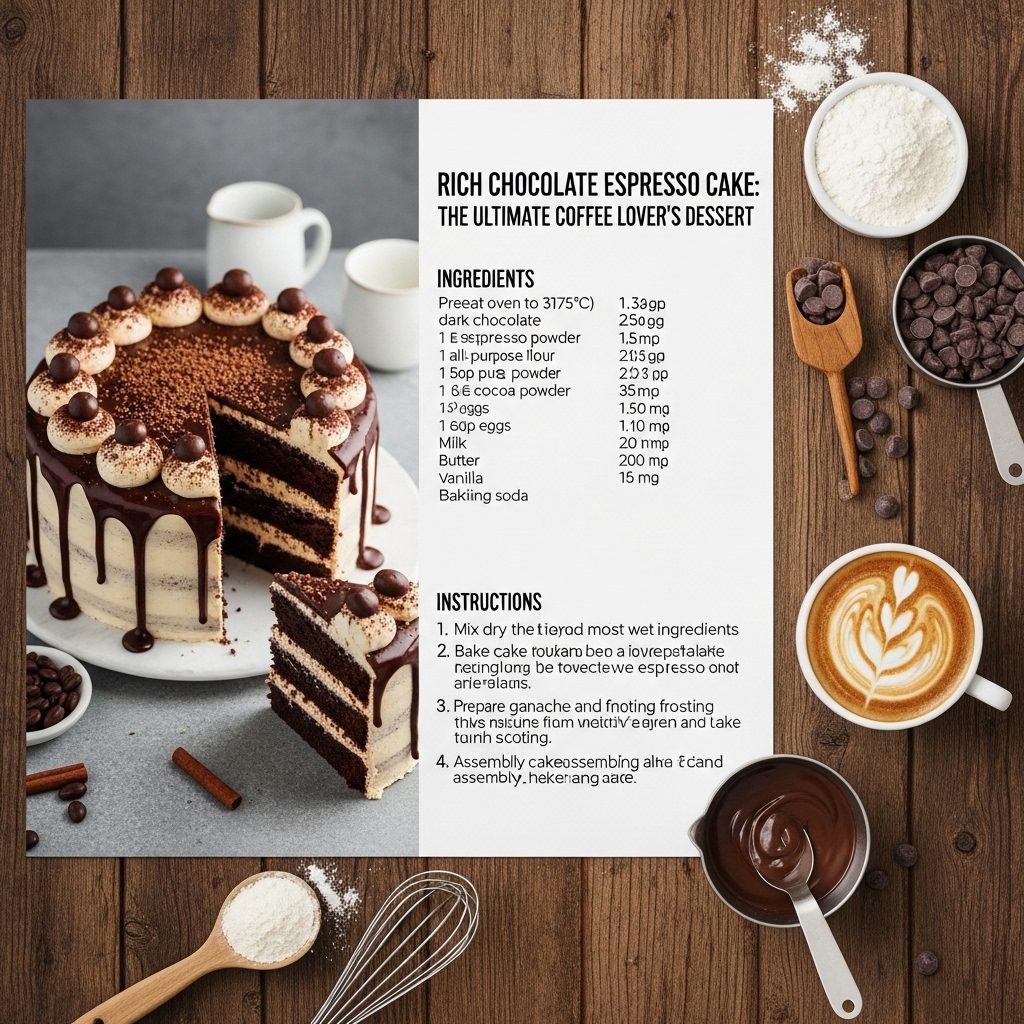
Rich Chocolate Espresso Cake Recipe: The Ultimate Coffee Lover’s Dessert
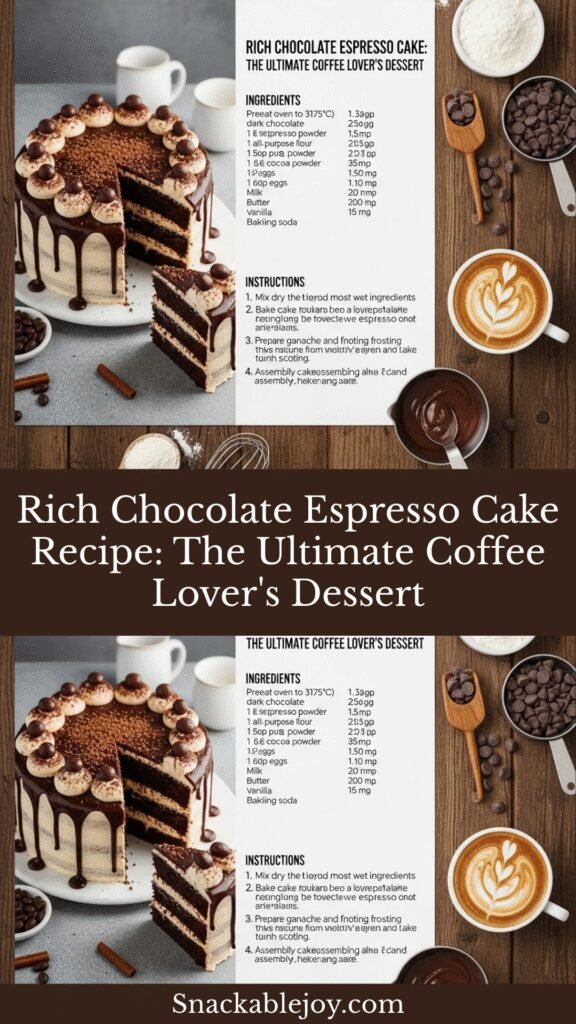
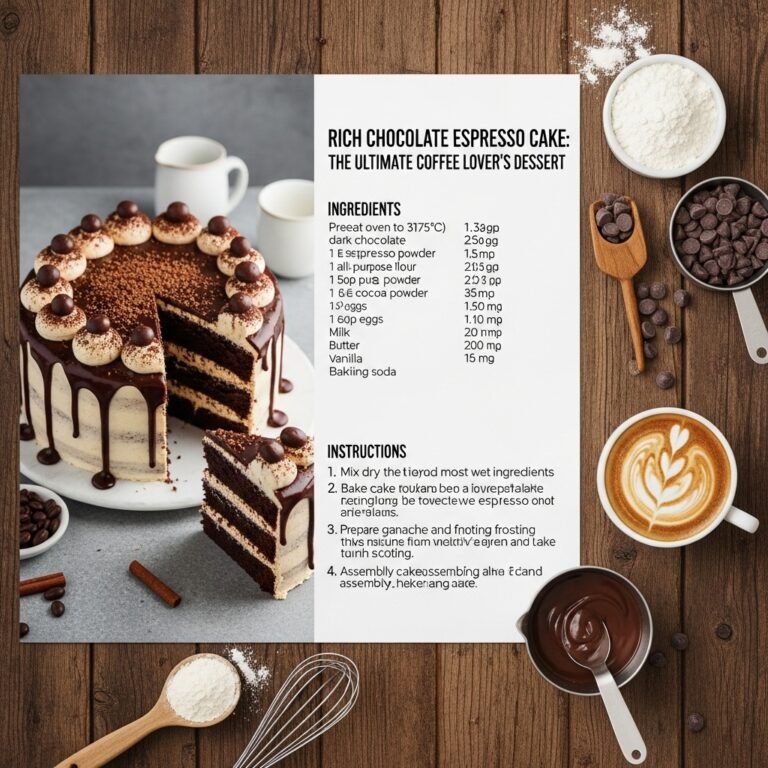
Get ready to experience pure chocolate heaven with a sophisticated coffee twist! This Chocolate Espresso Cake is the ultimate dessert for anyone who believes that chocolate and coffee are the perfect match made in culinary heaven. Picture this: moist, intensely chocolatey layers infused with bold espresso flavor, all covered in a silky smooth chocolate buttercream frosting that literally melts on your tongue. This isn’t just any chocolate cake—it’s an elevated, grown-up version that brings depth, richness, and complexity to every single bite.
What makes this cake truly special is how the espresso enhances the chocolate flavor without making it taste like coffee cake. Instead, the coffee acts as a flavor amplifier, making the chocolate taste more chocolatey, richer, and more intense. The result is a sophisticated dessert that’s perfect for dinner parties, birthday celebrations, anniversary dinners, or any time you want to impress with something that looks and tastes absolutely spectacular.
This Chocolate Espresso Cake is ideal for coffee enthusiasts, chocolate lovers, and anyone who appreciates a dessert that’s elegant yet comforting. It’s perfect for special occasions, holiday gatherings, or simply when you want to treat yourself to something extraordinary. Despite its impressive appearance and restaurant-quality taste, this cake is surprisingly straightforward to make at home with ingredients you probably already have in your pantry. Let me show you how to create this showstopper!
History / Background
The marriage of chocolate and coffee in desserts has a rich history that spans continents and centuries. While chocolate itself has been celebrated since ancient Mesoamerican civilizations and coffee originated in Ethiopia before spreading through the Arabian Peninsula, their combination in baking is a more recent culinary innovation that emerged in European and American kitchens during the 19th and 20th centuries.
The practice of adding coffee to chocolate desserts became particularly popular in Italian and French patisseries, where pastry chefs discovered that a small amount of coffee could dramatically enhance chocolate’s flavor profile. This technique is based on the scientific principle that certain compounds in coffee bind with chocolate’s flavor molecules, intensifying our perception of chocolate’s taste without adding a noticeable coffee flavor. Italian bakers, already masters of espresso, naturally incorporated their beloved coffee into chocolate cakes, creating sophisticated desserts like torta al caffè.
In America, the combination gained mainstream popularity during the mid-20th century as home baking became more adventurous and espresso culture began to spread beyond Italian-American communities. By the 1990s and 2000s, with the rise of specialty coffee shops and a growing appreciation for artisanal desserts, chocolate espresso cake became a staple in upscale bakeries and trendy cafés across the country.
Today, this cake represents the perfect fusion of two of the world’s most beloved flavors. It’s become a go-to recipe for home bakers who want to create something special—a dessert that’s both familiar (everyone loves chocolate cake) and elevated (the espresso adds sophistication and depth). The combination has proven so successful that it’s inspired countless variations, from chocolate espresso brownies to mocha lattes to tiramisu. This recipe honors that delicious tradition while making it accessible for home bakers everywhere.
Why You’ll Love This Recipe
This Chocolate Espresso Cake recipe has been tested and perfected to deliver consistent, amazing results every single time. I’ve made this cake for countless celebrations, and it never fails to be the star of the dessert table—people always come back for seconds and ask for the recipe!
Here’s what makes this recipe absolutely irresistible:
- Incredibly moist texture – Stays tender and soft for days thanks to the perfect ratio of ingredients
- Intense chocolate flavor – The espresso amplifies the chocolate, making it taste richer and more complex
- Not overly sweet – Perfectly balanced sweetness that adults especially appreciate
- Impressive presentation – Looks like something from a fancy bakery but made at home
- Sophisticated yet approachable – Elegant enough for special occasions, easy enough for weekend baking
- Versatile serving options – Perfect for birthdays, dinner parties, or casual family desserts
- Make-ahead friendly – Actually tastes better the next day as flavors develop
- Customizable – Easy to adapt with different frostings or decorations
- Coffee enhances, doesn’t overpower – Even non-coffee drinkers love it
- Feeds a crowd – Makes generous servings for 12-16 people
- Bakery-quality at home – Tastes professional but uses simple techniques
Ingredient Notes
Understanding your ingredients and their roles will help you create the best possible Chocolate Espresso Cake. Let’s explore what makes this cake so special.
All-Purpose Flour: This provides structure for your cake. I recommend measuring by spooning flour into your cup and leveling it off, or better yet, weighing it at 280g for 2¼ cups. For a more tender crumb, you can substitute cake flour (add 2 tablespoons per cup). Gluten-free? Use a 1:1 gluten-free baking flour blend.
Dutch-Process Cocoa Powder: This is crucial for deep, rich chocolate flavor. Dutch-process (also called alkalized) cocoa has been treated to neutralize acidity, giving it a smoother, more mellow flavor and darker color. Don’t substitute with natural cocoa powder as it will alter the texture and taste. Brands like Guittard or Valrhona deliver exceptional results.
Espresso Powder: This is the secret ingredient that transforms good chocolate cake into extraordinary chocolate cake! Instant espresso powder dissolves easily into the batter and enhances chocolate flavor without making the cake taste like coffee. If you can’t find espresso powder, you can substitute with very finely ground instant coffee, though espresso powder is preferred for its concentrated flavor.
Granulated Sugar: Provides sweetness and helps create tender texture. Sugar also helps the cake stay moist by attracting and holding water molecules. Don’t reduce the amount significantly or you’ll affect both flavor and texture.
Eggs: Use large eggs at room temperature. Room-temperature eggs incorporate more smoothly into batter and create better volume. To quickly warm cold eggs, place them in a bowl of warm water for 5-10 minutes before using.
Buttermilk: The acidity in buttermilk reacts with baking soda to create lift and also tenderizes the gluten, resulting in a softer, more tender crumb. If you don’t have buttermilk, make a substitute by adding 1 tablespoon lemon juice or vinegar to 1 cup of regular milk and letting it sit for 5 minutes.
Vegetable Oil: Unlike butter, oil creates an incredibly moist cake that stays tender for days. Oil coats flour proteins, preventing them from forming too much gluten, which keeps the cake soft. Use a neutral oil like canola, vegetable, or grapeseed—nothing with a strong flavor like olive oil.
Hot Coffee or Water: Hot liquid blooms the cocoa powder, intensifying its chocolate flavor and making it more soluble. You can use hot brewed coffee for even more depth, or hot water if you prefer to keep the espresso powder as the only coffee element.
Vanilla Extract: Pure vanilla extract adds warmth and complexity. It’s always worth using real vanilla rather than imitation for the best flavor.
Butter (for frosting): Use unsalted butter at room temperature for the frosting. It should be soft enough to leave a fingerprint but not greasy or melted.
Powdered Sugar: Also called confectioners’ sugar, this sweetens the frosting and creates that smooth, creamy texture. Always sift it before using to avoid lumps.
Equipment Needed
Having the right tools makes baking this cake easier and ensures better results. Here’s what you’ll need:
- Two 9-inch round cake pans – For creating beautiful layers
- Parchment paper – Line pan bottoms to prevent sticking
- Stand mixer or hand mixer – Makes mixing and frosting much easier
- Large mixing bowls (at least 2) – One for dry ingredients, one for wet
- Medium saucepan or microwave-safe bowl – For heating coffee/water
- Measuring cups and spoons – Accurate measurements are crucial in baking
- Kitchen scale (optional but recommended) – Most accurate way to measure
- Whisk – For combining dry ingredients
- Rubber spatula – For scraping bowls and folding
- Wire cooling racks – Essential for proper cooling
- Toothpick or cake tester – To check doneness
- Offset spatula – Makes frosting layers easier and more professional
- Serrated knife – For leveling cake layers if needed
- Sifter or fine-mesh strainer – For lump-free cocoa powder and powdered sugar
Print

Chocolate Espresso Cake Recipe
This decadent Chocolate Espresso Cake features moist, rich chocolate layers enhanced with espresso, all covered in silky chocolate buttercream frosting. The coffee amplifies the chocolate flavor without overpowering it, creating a sophisticated dessert that’s perfect for any celebration.
- Total Time: 55 minutes (plus cooling time)
- Yield: 12-16 servings 1x
Ingredients
ScaleFor the Chocolate Espresso Cake:
- 2¼ cups (280g) all-purpose flour
- ¾ cup (75g) Dutch-process cocoa powder
- 2 tablespoons instant espresso powder
- 2 teaspoons baking soda
- 1 teaspoon baking powder
- 1 teaspoon salt
- 1¾ cups (350g) granulated sugar
- 2 large eggs, room temperature
- 1 cup (240ml) buttermilk, room temperature
- ½ cup (120ml) vegetable oil
- 1 cup (240ml) hot brewed coffee or hot water
- 2 teaspoons pure vanilla extract
For the Chocolate Espresso Buttercream:
- 1½ cups (3 sticks or 339g) unsalted butter, room temperature
- 4-5 cups (480-600g) powdered sugar, sifted
- ¾ cup (75g) Dutch-process cocoa powder, sifted
- 1 tablespoon instant espresso powder
- ¼ cup (60ml) heavy cream or whole milk
- 2 teaspoons pure vanilla extract
- ¼ teaspoon salt
Instructions
Step 1: Preheat and Prepare Pans
Preheat your oven to 350°F (175°C). Grease two 9-inch round cake pans with butter or baking spray, then line the bottoms with parchment paper rounds. Grease the parchment too for extra insurance. This double protection ensures your cakes release perfectly every time.Step 2: Mix Dry Ingredients
In a large bowl, sift together the flour, cocoa powder, espresso powder, baking soda, baking powder, and salt. Whisk until well combined. Sifting prevents lumps and ensures the leavening agents and cocoa are evenly distributed. Set aside.Step 3: Combine Wet Ingredients
In another large bowl, whisk together the sugar and eggs until well combined and slightly lighter in color, about 1 minute. Add the buttermilk, oil, and vanilla extract. Whisk until smooth and fully incorporated. Don’t worry if it looks thin—that’s exactly what we want!Step 4: Combine Wet and Dry
Pour the wet ingredients into the dry ingredients. Using a whisk or electric mixer on low speed, mix just until combined—don’t overmix! Some small lumps are okay. Scrape down the bowl sides to ensure everything is incorporated.Step 5: Add Hot Coffee
Carefully stir in the hot coffee or water. The batter will be quite thin—this is normal and correct! The liquid batter is what creates an incredibly moist cake. Mix just until combined, about 30 seconds.Step 6: Bake the Cakes
Divide the batter evenly between your prepared pans (use a kitchen scale for precision if you have one). Bake for 28-32 minutes, or until a toothpick inserted in the center comes out with just a few moist crumbs (not wet batter). The tops should spring back when lightly touched.Step 7: Cool Completely
Let cakes cool in the pans on wire racks for 10-15 minutes. This rest helps them set without becoming soggy. Then carefully turn them out onto the racks, remove parchment, and let cool completely (at least 1 hour) before frosting. Frosting warm cakes will cause melting disasters!Step 8: Make the Chocolate Espresso Buttercream
In a large bowl using your mixer, beat room-temperature butter on medium speed for 2 minutes until creamy. Add 3 cups powdered sugar, cocoa powder, espresso powder, vanilla, and salt. Beat on low until combined, then increase to medium-high and beat for 2-3 minutes until fluffy. Add cream 1 tablespoon at a time until you reach desired consistency. Add remaining powdered sugar if frosting is too thin, or more cream if too thick.Step 9: Level and Layer
If your cake layers have domed tops, use a serrated knife to carefully level them so they stack evenly. Place your first layer on a cake stand or plate, spread about 1 cup of frosting evenly on top. Add the second layer and frost the top and sides of the entire cake. Use an offset spatula for smooth, professional results. A thin “crumb coat” first (refrigerate 15 minutes to set), then final frosting layer gives the cleanest finish.Step 10: Decorate and Serve
Decorate as desired—you can pipe rosettes around the top edge, add chocolate shavings, dust with cocoa powder, or keep it simple and elegant. Refrigerate for 30 minutes to set the frosting before slicing. Use a sharp knife dipped in hot water and wiped clean between cuts for beautiful slices!Notes
- Don’t skip the espresso powder – It enhances chocolate flavor without making it taste like coffee
- Batter will be thin – This is correct! It creates incredibly moist cake
- Room temperature ingredients – Essential for proper mixing and texture
- Cool completely before frosting – Warm cake melts frosting
- Cake tastes better the next day – Flavors develop and intensify overnight
- Store at room temp or refrigerate – Both work depending on your climate
- Prep Time: 25 minutes
- Cook Time: 30 minutes
- Category: Desert
- Method: Baking
- Cuisine: American
- Diet: Vegetarian
Nutrition
- Serving Size: 1 slice (1/14 of cake)
- Calories: 525
- Sugar: 52g
- Sodium: 345mg
- Fat: 28g
- Saturated Fat: 14g
- Unsaturated Fat: 12g
- Trans Fat: 0g
- Carbohydrates: 67g
- Fiber: 3g
- Protein: 5g
- Cholesterol: 75mg
Tips & Variations
Flavor Variations:
- Mocha Cake: Increase espresso powder to 3 tablespoons for stronger coffee flavor
- Mexican Chocolate: Add 1 teaspoon cinnamon and ¼ teaspoon cayenne pepper to batter
- Orange Chocolate: Add 2 tablespoons orange zest to batter and frosting
- Mint Chocolate: Add 1 teaspoon peppermint extract to frosting
- Salted Caramel: Drizzle with salted caramel sauce between layers
Frosting Variations:
- Cream Cheese Frosting: Replace half the butter with cream cheese for tang
- Ganache Topping: Pour chocolate ganache over cake instead of buttercream
- Whipped Chocolate: Fold cocoa powder into stabilized whipped cream for lighter option
- Coffee Buttercream: Reduce cocoa to ¼ cup, increase espresso powder to 3 tablespoons
Dietary Modifications:
- Gluten-Free: Use 1:1 gluten-free flour blend (add ½ teaspoon xanthan gum if not included)
- Dairy-Free: Use plant-based milk, vegan butter, and dairy-free chocolate
- Reduced Sugar: Reduce sugar in cake by ¼ cup (texture will be affected slightly)
Format Variations:
- Cupcakes: Make 24 cupcakes, bake 18-22 minutes
- Sheet Cake: Bake in 9×13″ pan for 35-40 minutes
- Three 6-inch Layers: Create taller, more dramatic presentation
- Bundt Cake: Use bundt pan, bake 45-55 minutes, drizzle with glaze
Pro Chef Tips
Blooming the Cocoa and Espresso: Professional pastry chefs always “bloom” cocoa powder by adding hot liquid to it. This process dissolves the cocoa particles and awakens dormant flavors, resulting in deeper, more intense chocolate taste. The hot coffee serves double duty here—blooming both the cocoa and espresso powder for maximum flavor impact.
The Thin Batter Secret: Don’t panic when you see how thin the batter is! Professional bakers know that thin batters create the moistest cakes. The high liquid ratio ensures the cake stays tender and never dries out. Thick batters might seem more substantial, but they often produce drier, denser cakes.
Room Temperature Matters for Structure: All dairy ingredients (eggs, buttermilk, butter for frosting) should be at room temperature (around 65-70°F). When everything is the same temperature, ingredients emulsify smoothly, creating even texture and proper structure. Cold ingredients can cause the batter to curdle or separate.
The Crumb Coat Technique: Professional cake decorators always apply a thin “crumb coat” layer of frosting first, then refrigerate the cake for 15-20 minutes until firm. This seals in all the crumbs. Then apply the final decorative layer of frosting over the crumb coat for a perfectly smooth, crumb-free finish that looks magazine-worthy.
Sifting Prevents Lumps: Always sift cocoa powder and powdered sugar before using. Both tend to form stubborn lumps that won’t dissolve even with vigorous mixing. Sifting takes 30 seconds and ensures silky-smooth batter and frosting without any grainy bits.
Taste as You Go with Frosting: Professional bakers always taste frosting and adjust. If it needs more chocolate intensity, add more cocoa. If the espresso flavor is too subtle, add another teaspoon of espresso powder. If it’s too sweet, add a pinch more salt. Adjust until it’s perfect for your palate!
Common Mistakes to Avoid
Overmixing the Batter: Once you add the dry ingredients to the wet, mix only until just combined. Overmixing develops gluten in the flour, creating tough, dense, chewy cake instead of tender, soft texture. Mix gently and stop as soon as you don’t see dry flour streaks anymore.
Using Natural Cocoa Instead of Dutch-Process: Natural cocoa powder has a much higher acidity level and will react differently with the leavening agents in this recipe. Dutch-process cocoa creates the deep, dark color and smooth chocolate flavor this cake is known for. Don’t substitute—the results will be noticeably different.
Frosting Warm Cake Layers: I cannot stress this enough—your cake must be completely cool to room temperature before frosting! Warm cake will melt buttercream, causing it to slide off and creating a mess. Always wait at least 1 full hour after baking, or refrigerate cooled layers for 15 minutes before assembling.
Skipping the Parchment Paper: Even with greased pans, chocolate cakes can stick stubbornly. That parchment paper round in the bottom is your insurance policy against disaster. It takes 30 seconds to cut and place but saves you from broken cake layers and heartbreak.
Overbaking: Chocolate cake should be removed from the oven when a toothpick comes out with a few moist crumbs—not completely clean. The cake continues cooking from residual heat after you remove it. If you wait until the toothpick is completely clean, your cake will be overbaked and dry once cooled.
Storage & Meal Prep
Room Temperature Storage: Frosted chocolate espresso cake can be stored covered at room temperature for up to 3 days. Use a cake dome or cover loosely with plastic wrap (don’t let it touch the frosting). The cake actually tastes better after sitting 24 hours as flavors meld and deepen!
Refrigerator Storage: Because this cake uses buttercream frosting with dairy, you can refrigerate it covered for up to 5 days. The cold will firm up the frosting considerably, so remove the cake 30-60 minutes before serving to let it come to room temperature for best flavor and texture.
Storing Unfrosted Layers: Unfrosted cake layers can be wrapped tightly in plastic wrap and stored at room temperature for up to 2 days, or refrigerated for up to 4 days. This is perfect for splitting up the work—bake layers one day, frost the next!
Leftover Slice Storage: Individual slices can be wrapped in plastic wrap and stored in an airtight container in the refrigerator for up to 5 days. Let them come to room temperature before eating, or warm for 10 seconds in the microwave for a fresh-baked feel.
Make-Ahead & Freezer Notes
Freezing Unfrosted Cake Layers: This is the ultimate make-ahead strategy! Bake your cake layers, let them cool completely, then wrap each layer tightly in two layers of plastic wrap followed by aluminum foil. Freeze flat for up to 3 months. When ready to use, thaw overnight in the refrigerator (still wrapped), then bring to room temperature before frosting. The texture remains perfect!
Freezing Frosted Cake: You can freeze fully frosted cake! Place it in the freezer uncovered for 1-2 hours until the frosting is rock-hard, then wrap carefully in plastic wrap and foil. Freeze for up to 2 months. Thaw overnight in refrigerator, then bring to room temperature before serving.
Freezing Individual Slices: Cut cake into slices, wrap each slice tightly in plastic wrap, then place all wrapped slices in a freezer bag. Freeze for up to 3 months. Thaw individual slices at room temperature for 1-2 hours or microwave for 20-30 seconds for instant cake!
Make-Ahead Frosting: Buttercream frosting can be made up to 1 week ahead and refrigerated in airtight container, or frozen for up to 3 months. When ready to use, bring to room temperature, then re-whip with your mixer for 2-3 minutes to restore fluffy texture.
Strategic Timeline: For stress-free entertaining, bake cake layers 2-3 days ahead (or weeks ahead if freezing), make frosting 1-2 days ahead (refrigerate), then assemble and decorate the morning of or night before your event!
Serving Suggestions
Chocolate Espresso Cake is stunning on its own, but thoughtful accompaniments can elevate the experience.
Beverage Pairings:
- Espresso or Coffee: The obvious choice—strong coffee complements the cake perfectly
- Red Wine: A bold Cabernet Sauvignon or Port pairs beautifully with chocolate
- Hot Chocolate: For the ultimate chocolate lover’s experience
- Baileys or Kahlúa: Coffee liqueurs enhance the espresso notes
- Cold Milk: Classic pairing that never disappoints
Accompaniments:
- Vanilla Ice Cream: Cold, creamy contrast to rich chocolate cake
- Whipped Cream: Lightly sweetened whipped cream adds lightness
- Fresh Berries: Raspberries or strawberries provide tart contrast
- Chocolate Sauce: Extra chocolate drizzle for serious chocolate lovers
- Caramel Sauce: Adds sweet, buttery complexity
Plating Ideas:
- Dust plates with cocoa powder before placing slices
- Add a few fresh berries and mint sprig for color
- Drizzle plate with chocolate or caramel sauce
- Top each slice with a chocolate-covered espresso bean
- Serve with a small cup of espresso on the side
Special Occasions:
- Birthdays: Add candles and pipe “Happy Birthday” on top
- Dinner Parties: Serve with dessert wine and coffee
- Holidays: Decorate with seasonal themes
- Valentine’s Day: Top with chocolate hearts and fresh strawberries
FAQs Section
Can I make this without espresso powder?
While espresso powder significantly enhances the chocolate flavor, you can omit it if necessary. The cake will still be delicious but won’t have that depth and intensity. Alternatively, substitute with very finely ground instant coffee (use the same amount), though espresso powder is preferred for its concentrated flavor.
Why is my cake dry instead of moist?
The most common causes are: overbaking (check a few minutes early), using too much flour (measure by spooning and leveling, not scooping), or substituting ingredients (don’t replace oil with butter in this recipe). The cake should come out when a toothpick has moist crumbs, not when completely clean.
Can I use regular cocoa powder instead of Dutch-process?
I don’t recommend it. Dutch-process cocoa has been alkalized to neutralize acidity, giving it a mellower flavor and darker color that’s essential for this recipe. Natural cocoa is much more acidic and will react differently with the leavening agents, affecting both taste and texture.
My frosting is too thick/thin—how do I fix it?
If too thick: Add more cream or milk, 1 tablespoon at a time, beating after each addition. If too thin: Add more powdered sugar, ¼ cup at a time, or refrigerate for 10-15 minutes to firm up. Room temperature also affects consistency—if your kitchen is very warm, the frosting will be softer.
Can I make this as cupcakes?
Absolutely! This recipe makes about 24 cupcakes. Fill cupcake liners ⅔ full and bake at 350°F for 18-22 minutes, until a toothpick comes out with moist crumbs. Let cool completely before frosting. The same frosting recipe works perfectly for cupcakes.
How do I get smooth, professional-looking frosting?
Use an offset spatula and work in stages: First apply a thin crumb coat, refrigerate for 15 minutes, then add the final smooth layer. For ultra-smooth sides, hold the spatula vertically against the cake while slowly rotating the cake stand. A bench scraper also works beautifully for smooth sides.
Will non-coffee drinkers taste the coffee?
No! The espresso powder enhances the chocolate flavor without making the cake taste like coffee. It’s a flavor amplifier that makes chocolate taste more chocolatey. Even people who don’t drink coffee consistently love this cake and often can’t identify coffee as an ingredient.
Conclusion
There you have it—everything you need to create the most incredible, sophisticated Chocolate Espresso Cake that will have everyone convinced you’re a professional baker! This recipe combines the beloved comfort of chocolate cake with the elegant depth that espresso provides, creating a dessert that’s both familiar and exciting. Whether you’re celebrating a birthday, hosting a dinner party, or simply treating yourself to something special, this cake delivers every single time.
The beauty of this recipe is that it looks and tastes like something from an upscale bakery but comes together with straightforward techniques and accessible ingredients. Once you’ve made it, you’ll find yourself returning to this recipe again and again—it’s the kind of showstopper that becomes your signature dessert, the one everyone requests and remembers.
I’d absolutely love to hear how your Chocolate Espresso Cake turns out! Are you making it for a special occasion or just because you deserve something amazing? Did you try any of the variations? Drop a comment below and share your baking adventures—I read every comment and genuinely love connecting with fellow dessert enthusiasts!
Please save this recipe to your Pinterest dessert board so you’ll have it ready for every celebration (trust me, once people taste this cake, they’ll request it constantly!). And if you snap a photo of your gorgeous chocolate creation, tag me on social media—I absolutely love seeing your beautiful bakes!
Now grab that cocoa powder and espresso, and get ready to create some chocolate magic. Your kitchen is about to smell absolutely incredible, and you’re about to serve the most decadent, sophisticated cake that celebrates everything wonderful about chocolate and coffee. Happy baking, friends! ☕🍫✨