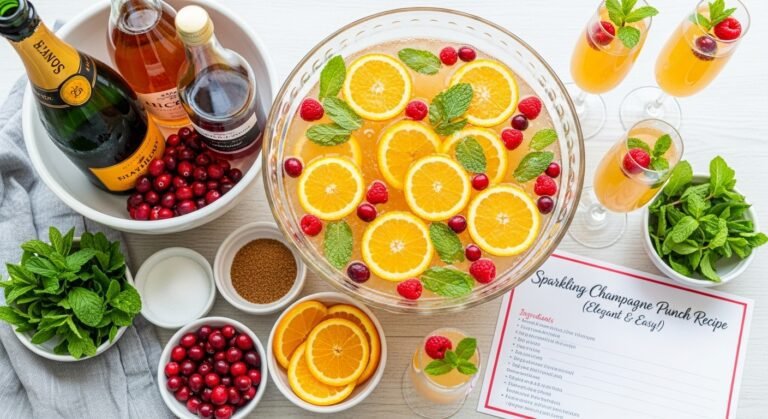
Sparkling Champagne Punch Recipe (Elegant & Easy!)
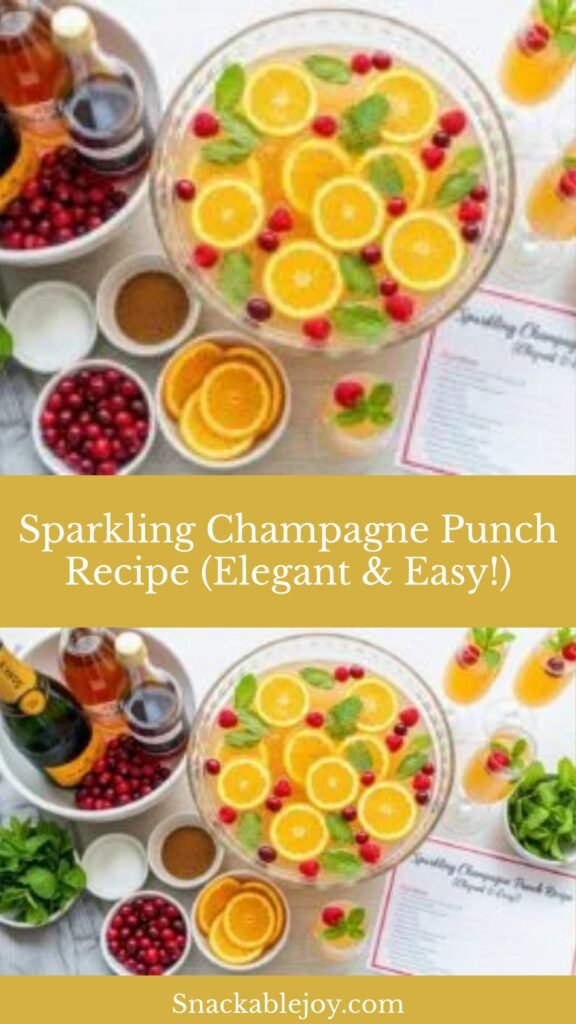
Looking for a sophisticated yet simple beverage that will elevate any celebration? This Champagne Punch is the answer! This effervescent, golden cocktail combines bubbly champagne or prosecco with fruit juices, liqueur, and fresh fruit for a drink that’s both elegant and approachable. It’s the perfect choice for weddings, bridal showers, baby showers, New Year’s Eve parties, anniversary celebrations, graduation parties, or any special occasion where you want to add a touch of sparkle and class.
What makes this champagne punch so wonderful is that it takes something luxurious—champagne—and transforms it into an affordable crowd-pleaser that stretches your budget without sacrificing elegance. By combining champagne with complementary flavors like orange juice, pineapple juice, and a splash of liqueur, you create a punch that tastes expensive and impressive while actually being quite economical. A single bottle of champagne typically serves 4-6 people, but when made into punch, it can serve 12-15 guests beautifully.
This recipe has become a staple at upscale gatherings because it strikes the perfect balance between fancy and fuss-free. Your guests will think you hired a professional bartender, but you’ll know you simply mixed a few ingredients together and let the natural elegance of champagne do the heavy lifting. The gentle fizz, the beautiful pale gold color, and the floating fruit create an Instagram-worthy presentation that makes every occasion feel more special and memorable.
History / Background
Champagne punch has aristocratic roots that trace back to European high society in the 18th and 19th centuries. Champagne itself originates from the Champagne region of France, where Benedictine monk Dom Pérignon famously perfected the method of creating sparkling wine in the late 1600s. By the 1700s, champagne had become the drink of royalty and the wealthy elite across Europe, symbolizing celebration, luxury, and refined taste.
The transformation of champagne into punch form began in England and France during the Victorian era, when elaborate punch bowls were centerpieces at society balls and aristocratic gatherings. Hosts discovered that by stretching expensive champagne with fruit juices, liqueurs, and fresh fruit, they could serve more guests while creating a drink that was actually more complex and interesting than champagne alone. These champagne punches became fixtures at weddings, coronations, military celebrations, and high-society events throughout the 19th century.
In America, champagne punch gained tremendous popularity during the Gilded Age (1870s-1900s) when wealthy families hosted lavish parties inspired by European customs. The famous Delmonico’s Restaurant in New York City, which catered to the city’s elite, became known for its spectacular champagne punch served at society weddings and debutante balls. Recipe variations appeared in American cookbooks throughout the early 1900s, with each region and hostess adding her own special touches.
The post-World War II era saw champagne punch become more democratized as sparkling wines became more affordable and accessible to middle-class Americans. The 1950s and 1960s brought a golden age of cocktail parties and entertaining at home, and champagne punch became a staple of sophisticated suburban gatherings. Hostesses prided themselves on their signature punch recipes, often adding tropical fruits and juices to reflect the era’s fascination with Hawaiian and Polynesian flavors.
Today’s champagne punch carries forward this legacy of elegance and celebration while being more inclusive and affordable than ever. Modern versions often use prosecco, cava, or other quality sparkling wines instead of traditional French champagne, making this luxurious drink accessible for everyday celebrations. The essence remains the same: a beautiful, bubbly punch that makes every gathering feel like a special occasion and creates moments worth toasting.
Why You’ll Love This Recipe
This Champagne Punch embodies everything you want in a party beverage: it’s stunning to look at, delicious to drink, surprisingly affordable, and ridiculously easy to prepare. Whether you’re planning an intimate brunch for ten or a grand celebration for fifty, this recipe scales beautifully and consistently impresses guests of all ages and tastes.
The genius of this punch lies in its perceived elegance versus its actual simplicity. Champagne automatically elevates any occasion, making guests feel pampered and special. But unlike serving straight champagne, which requires multiple bottles and constant refilling, punch allows you to create a memorable champagne experience for a large group with just a few bottles of bubbly. The addition of fruit juices and liqueur actually enhances the champagne rather than diminishing it, creating layers of flavor that make each sip more interesting.
Here’s why this recipe deserves a permanent spot in your entertaining repertoire:
- Surprisingly affordable – Stretch expensive champagne or use budget-friendly prosecco without anyone knowing the difference
- Effortlessly elegant – Looks and tastes like you spent hours crafting when it takes just 10 minutes
- Flexible budget – Works beautifully with $10 prosecco or $40 champagne, depending on your occasion and budget
- Natural conversation piece – A sparkling punch bowl draws guests together and creates a focal point
- Universally loved – The balanced sweet-tart-bubbly combination appeals to nearly everyone
- Photo-ready presentation – The golden color, floating fruit, and elegant glassware are naturally Instagram-worthy
- Scalable for any crowd – Double or triple the recipe easily for larger gatherings
- Low alcohol option available – Can be made lighter or even as a mocktail for diverse guests
- Quick to prepare – From ingredients to serving in under 15 minutes with no special skills required
- Appropriate year-round – Works for winter holidays, spring brunches, summer weddings, and fall celebrations
- Less waste – One communal bowl means fewer partially empty bottles
- Gender-neutral appeal – Unlike some cocktails perceived as “for women” or “for men,” punch welcomes everyone
Ingredient Notes
The beauty of champagne punch is that relatively few ingredients create such an impressive result. Understanding each component helps you make smart choices at the store and adjust the recipe to your preferences and budget.
Champagne or Sparkling Wine – This is your star ingredient, providing the signature bubbles and elegance. You have several excellent options: champagne from France is traditional but pricey ($30-100+ per bottle); prosecco from Italy is affordable, slightly sweeter, and perfectly appropriate ($10-20 per bottle); cava from Spain offers great value and dryness ($8-15 per bottle); and California or other sparkling wines provide reliable quality at various price points. For punch, prosecco is often the smartest choice because it’s affordable, has pleasant sweetness that balances the citrus, and guests genuinely cannot tell the difference when mixed with other ingredients. Choose “brut” for drier punch or “extra dry” (which is actually sweeter) for a more dessert-like version. You’ll need 2-3 bottles for a standard batch serving 12-15 people.
Orange Juice – Fresh-squeezed orange juice is ideal and worth the extra effort for its bright, vibrant flavor and natural sweetness. However, quality store-bought orange juice (not from concentrate) works beautifully too. The citrus provides natural sweetness, vitamin C, and a sunny color that lightens the champagne to a beautiful golden hue. Orange juice also helps balance the acidity of the sparkling wine. You’ll need about 3 cups for a standard batch.
Pineapple Juice – This tropical addition brings exotic sweetness and complexity to the punch. Pineapple juice contains natural enzymes and adds a sophisticated fruity layer that complements both the citrus and the champagne. Use 100% pineapple juice rather than pineapple “drink” or “cocktail” which contain added sugars and less real fruit. If pineapple isn’t your favorite, you can substitute with white grape juice, peach nectar, or additional orange juice.
Brandy or Cognac – A splash of brandy adds depth, warmth, and traditional punch authenticity. Brandy is the classic choice for champagne punch, bringing subtle vanilla and oak notes that marry beautifully with the fruit flavors. You don’t need expensive cognac—a mid-range brandy works perfectly since the flavor will be subtle. If you prefer, substitute with Grand Marnier (orange liqueur), Chambord (raspberry liqueur), or St. Germain (elderflower liqueur) for different flavor profiles. For a lighter punch, you can reduce or omit the brandy entirely.
Triple Sec or Cointreau – This orange liqueur adds concentrated citrus flavor and a touch of sweetness. Cointreau is premium and more refined, while triple sec is budget-friendly and works perfectly well in punch. The liqueur amplifies the orange notes and helps marry all the flavors together. If you don’t have orange liqueur, you can substitute with a tablespoon of orange zest steeped in the juice mixture for 30 minutes.
Fresh Fruit – The floating fruit is both decorative and functional, adding flavor as it soaks and creating visual appeal. Traditional choices include orange slices, lemon slices, strawberries (whole or halved), raspberries, fresh pineapple chunks, and seasonal berries. The fruit should be fresh, ripe, and washed thoroughly. Remove any stems, leaves, or seeds before adding to the punch. Frozen fruit can work in a pinch but may water down the punch as it thaws.
Simple Syrup or Sugar – Depending on your sparkling wine’s sweetness and your guests’ preferences, you may want to add sweetener. Simple syrup (equal parts sugar and water, dissolved) blends seamlessly into cold punch. Start with 1/4 cup and adjust to taste. If using dry champagne or brut prosecco, you’ll likely want sweetener. If using extra dry prosecco, you may not need any.
Fresh Herbs – Optional but lovely, fresh mint or basil adds an aromatic element and sophisticated touch. A few sprigs floating in the punch look elegant and provide subtle herbal notes that complement the fruit.
Equipment Needed
Champagne punch requires minimal equipment, most of which you likely already own. Here’s what you’ll need to create a beautiful presentation:
- Large Punch Bowl – A 4-6 quart glass punch bowl showcases the beautiful golden color and floating fruit. Crystal or cut glass bowls are stunning for formal events, while simple glass works for casual gatherings. If you don’t own a punch bowl, a large glass pitcher, beverage dispenser, or even a clean, large mixing bowl can substitute.
- Ladle – For serving the punch into individual glasses. A ladle with a hook that rests on the bowl’s edge is most convenient and keeps your serving station tidy.
- Measuring Cups and Spoons – For accurate measurements of juices, spirits, and sweeteners. Precision matters less in punch than in baking, but ballpark measurements ensure consistency.
- Citrus Juicer – If using fresh-squeezed orange juice, a hand juicer or electric citrus press makes the job quick and easy.
- Sharp Knife and Cutting Board – For slicing fruit garnishes. Thin, uniform slices look most elegant.
- Large Mixing Spoon or Gentle Whisk – For combining ingredients without agitating the champagne too much and losing carbonation.
- Champagne Flutes, Coupe Glasses, or Punch Cups – While any glass works, champagne flutes or vintage coupe glasses enhance the elegant presentation. Small punch cups (4-6 oz) are traditional and help with portion control.
- Ice Bucket or Bowl – To keep extra champagne bottles and ice nearby for refills throughout your event.
- Fine-Mesh Strainer – Optional, for straining fresh-squeezed juice to remove pulp and seeds.
- Decorative Ice Mold – Optional but impressive, for creating a decorative ice ring that keeps punch cold without diluting it quickly.
Print

Champagne Punch Recipe
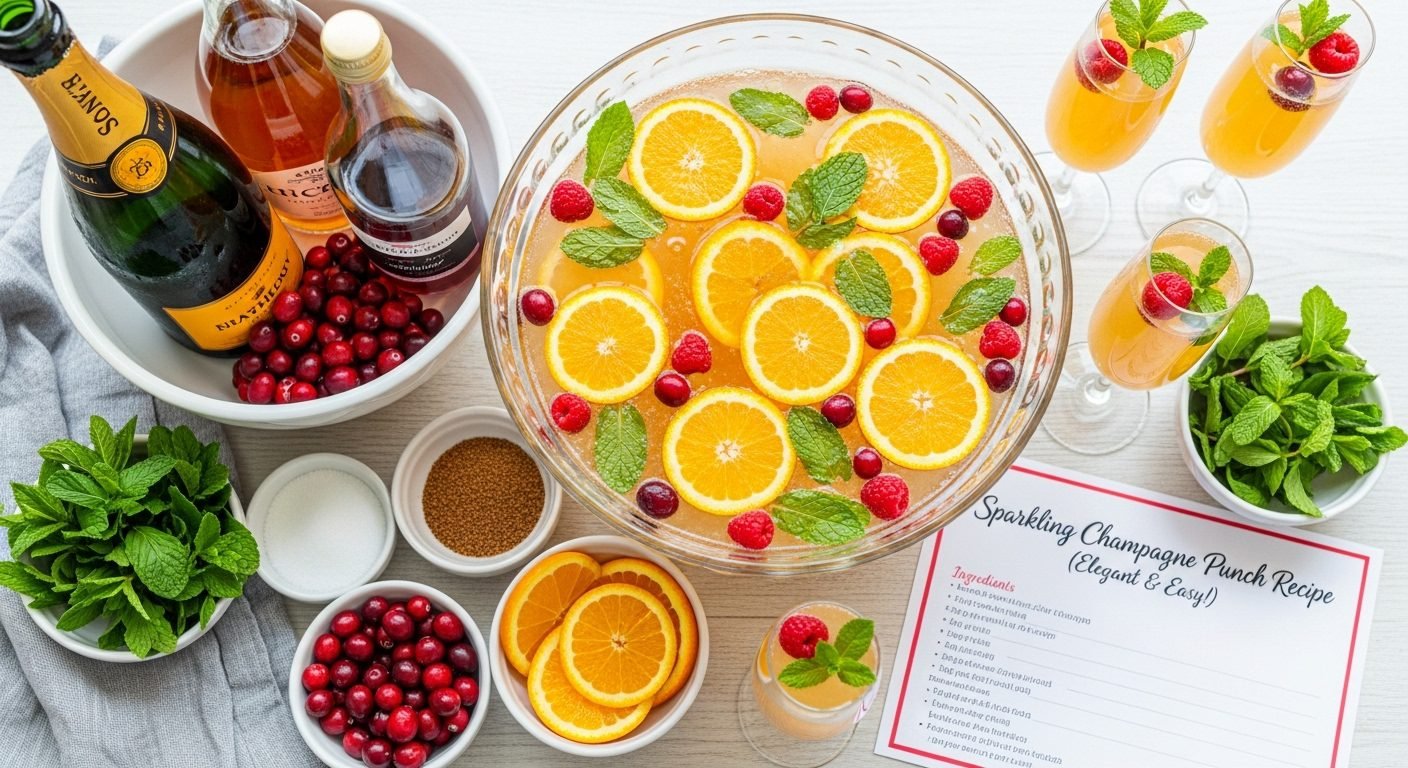
An elegant and effervescent champagne punch combining sparkling wine, fresh fruit juices, brandy, and floating fruit. Perfect for weddings, showers, holidays, and celebrations. This sophisticated yet simple punch looks expensive and impressive while being budget-friendly and quick to prepare.
- Total Time: 15 minutes
- Yield: 12-15 servings 1x
Ingredients
Scale- 2 bottles (750ml each) champagne, prosecco, or sparkling wine, chilled
- 3 cups orange juice, chilled (fresh-squeezed or quality store-bought)
- 2 cups pineapple juice, chilled
- 1/2 cup brandy or cognac
- 1/4 cup triple sec or Cointreau
- 1/4 cup simple syrup (optional, adjust to taste)
- 1 orange, thinly sliced
- 1 lemon, thinly sliced
- 1 cup fresh strawberries, hulled and halved
- 1 cup fresh raspberries or blueberries
- Fresh mint or basil sprigs (optional garnish)
- Ice ring or ice cubes as needed
Instructions
- Chill All Ingredients – The single most important step for perfect champagne punch is ensuring every ingredient is thoroughly chilled before mixing. Place your champagne bottles, fruit juices, and even your punch bowl in the refrigerator for at least 2-4 hours before your event. Cold ingredients mean you’ll need less ice, which prevents dilution and keeps flavors bright.
- Prepare Fruit Garnishes – Wash all fresh fruit thoroughly. Slice oranges and lemons into thin rounds (about 1/4 inch thick), removing any seeds you encounter. Hull strawberries and cut them in half. Place all prepared fruit in the refrigerator until ready to assemble the punch so they stay fresh and cold.
- Mix the Non-Carbonated Base – In your punch bowl, combine the chilled orange juice, pineapple juice, brandy, and triple sec. Stir gently but thoroughly to blend all the flavors. This base can be prepared up to 4 hours in advance and kept refrigerated until you’re ready to add the champagne.
- Taste and Adjust Sweetness – Dip a clean spoon into the base mixture and taste it. If it seems too tart, add simple syrup 2 tablespoons at a time, stirring and tasting after each addition. Remember that the champagne will add more acidity, so the base should taste slightly sweeter than you want the final punch to be. Most recipes need about 1/4 cup of simple syrup, but this varies based on your juice sweetness and sparkling wine choice.
- Add Ice or Ice Ring – About 20-30 minutes before serving, add ice to the punch bowl. You can use regular ice cubes, but a decorative ice ring is more elegant and melts more slowly. To make an ice ring, freeze water with some of your fruit slices and mint in a bundt pan overnight. The ice ring floats beautifully and keeps punch cold for hours without significant dilution.
- Add the Champagne – Just before your guests arrive or right when they’re being seated, slowly pour the chilled champagne into the punch bowl. Pour gently down the side of the bowl rather than directly into the center to preserve as much carbonation as possible. Use a long-handled spoon to give one or two very gentle stirs to incorporate the champagne without releasing all the bubbles.
- Add Fresh Fruit Garnishes – Float the orange slices, lemon slices, strawberries, and berries on top of the punch. They should bob gently on the surface, creating a beautiful, colorful display. Add a few sprigs of fresh mint or basil if using. The fruit will gradually absorb some of the punch flavor and become delicious tipsy fruit that guests enjoy fishing out of their glasses.
- Serve Immediately – Ladle the punch into champagne flutes, coupe glasses, or punch cups, making sure each serving gets a piece or two of the soaked fruit. Encourage guests to help themselves throughout the event. The punch is best consumed within 2-3 hours while the carbonation is still lively.
- Refresh as Needed – As the punch level drops and the ice melts, you may need to add more champagne and a splash of fruit juice to maintain the right balance. Keep extra chilled bottles of sparkling wine nearby for easy refreshing.
Notes
- Budget tip: Use prosecco instead of champagne—guests won’t notice in punch, and you’ll save $20+ per bottle
- Advance prep: Make the juice/liqueur base up to 4 hours ahead and refrigerate; add champagne right before serving
- Alcohol adjustment: For lighter punch, reduce brandy to 1/4 cup or omit entirely
- Mocktail version: Replace champagne with sparkling white grape juice or ginger ale; omit brandy and triple sec
- Color variation: Add a splash of grenadine or cranberry juice for a blush pink punch
- Always add champagne last to preserve maximum carbonation and bubbles
- Leftovers: Can be refrigerated for up to 24 hours but will lose carbonation; refresh with fresh sparkling wine
- Prep Time: 15 minutes
- Cook Time: 0 minutes
- Category: Cocktail, Dessert Drink
- Method: Mixing
- Cuisine: French
- Diet: Gluten Free
Nutrition
- Serving Size: 6 oz (3/4 cup)
- Calories: 135
- Sugar: 12g
- Sodium: 8mg
- Fat: 0g
- Saturated Fat: 0g
- Unsaturated Fat: 0g
- Trans Fat: 0g
- Carbohydrates: 14g
- Fiber: 0.5g
- Protein: 0.5g
- Cholesterol: 0mg
Tips & Variations
The basic champagne punch formula is wonderfully adaptable. Once you’ve mastered the classic version, try these creative variations to match different seasons, occasions, or flavor preferences:
Berry Bliss Champagne Punch – Muddle fresh raspberries and blackberries in the base, strain if desired, and garnish with floating berries and edible flowers. Add Chambord (raspberry liqueur) instead of triple sec for intense berry flavor. This version is stunning for summer weddings and garden parties.
Tropical Paradise Punch – Increase pineapple juice to 3 cups, add 1 cup coconut water, use white rum instead of brandy, and garnish with pineapple chunks, mango slices, and maraschino cherries. This creates a vacation-inspired punch perfect for destination weddings or beach-themed celebrations.
Autumn Harvest Punch – Use apple cider instead of orange juice, add a cinnamon stick and star anise to steep in the base for 30 minutes, use apple brandy (Calvados) instead of regular brandy, and garnish with thin apple slices and fresh cranberries. Beautiful for fall weddings and Thanksgiving.
Winter Wonderland Punch – Add pomegranate juice for a ruby color, use blood orange juice when in season, include fresh cranberries and sugared rosemary sprigs as garnish, and add a splash of elderflower liqueur (St. Germain) for floral notes. Perfect for holiday parties and New Year’s Eve.
Peach Bellini Punch – Puree fresh or frozen peaches and strain, replace pineapple juice with peach nectar, reduce orange juice to 2 cups, and garnish with fresh peach slices. This is essentially a party-sized Bellini and is absolutely divine for brunches and baby showers.
Lavender Champagne Punch – Steep 2 tablespoons dried culinary lavender in the simple syrup while making it, strain before adding to punch, use St. Germain elderflower liqueur, and garnish with lemon slices and fresh lavender sprigs. Elegant and aromatic for spring celebrations.
Rosé Champagne Punch – Use rosé champagne or sparkling rosé wine for a beautiful pink color, add strawberry puree to the base, use Aperol instead of brandy for a sophisticated bitter note, and garnish with strawberries and grapefruit slices. Stunning for Valentine’s Day and girls’ celebrations.
Lighter Lower-Calorie Version – Use extra-dry sparkling wine, skip the simple syrup, reduce brandy and triple sec by half, add club soda to stretch the volume, and use primarily berries for low-sugar fruit garnish. This maintains elegance while cutting calories significantly.
Non-Alcoholic Sparkling Punch – Replace champagne with sparkling white grape juice or high-quality ginger ale, omit all spirits, increase fruit juices slightly, and add fresh lime juice for acidity. Everyone, including pregnant guests, designated drivers, and children, can enjoy this version.
Pro Chef Tips
Professional caterers and experienced hosts know these secrets to elevating champagne punch from good to extraordinary:
Freeze Your Garnish Fruit – Place some of your orange slices, berries, and lemon rounds in the freezer for at least 2 hours before your event. These frozen fruit pieces act as edible ice cubes, keeping your punch cold without diluting it. They look beautiful, taste great, and serve a functional purpose. Plus, guests love the frozen fruit-soaked treats in their glasses.
Create a Show-Stopping Ice Ring – The night before your party, arrange citrus slices, berries, and herb sprigs in a bundt pan in a decorative pattern. Fill halfway with water or diluted juice and freeze for 2 hours, then fill the rest of the way and freeze overnight. This creates a stunning centerpiece that floats in your punch bowl and keeps everything cold for hours. For crystal-clear ice, use distilled water or water that’s been boiled and cooled.
Layer Your Liquids – For maximum visual impact when first presenting the punch, pour the juice base first, add fruit and ice, then slowly pour champagne down the side of the bowl. The champagne will create a natural cascade and mixing effect that’s mesmerizing to watch. Do this final pour in front of guests for dramatic effect.
Balance Sweet, Tart, and Bubbles – Professional bartenders follow this ratio: for every bottle of sparkling wine, use approximately 1.5 cups of juice, 2-3 ounces of liqueur, and adjust sweetness from there. This maintains enough champagne flavor and bubbles while creating a balanced punch. If your punch tastes too alcoholic, add more juice. Too sweet? Add lemon juice. Too tart? Add simple syrup.
Temperature Control is Everything – Keep your punch bowl sitting in a larger bowl filled with ice, or use a double-wall insulated punch bowl. Champagne is best served at 45-50°F, and maintaining this temperature keeps the bubbles lively and the flavor crisp. Warm champagne punch is flat, unpleasant, and tastes noticeably alcoholic.
Use Quality Juice – This is where you shouldn’t skimp. The difference between fresh-squeezed or premium not-from-concentrate juice and cheap juice-from-concentrate is dramatic in punch. The fresh juice provides brighter color, better flavor, and natural sweetness that makes the entire punch taste more expensive. If budget is tight, splurge on good juice and use affordable prosecco rather than the reverse.
Don’t Over-Mix – When combining champagne with the base, stir only 2-3 times very gently. Over-stirring releases all the precious bubbles that make champagne special. Those bubbles are also what make your punch feel light and celebratory rather than heavy and syrupy. Gentle incorporation is key.
Keep Extra Bottles on Ice – Always have at least one extra bottle of chilled champagne or prosecco at your beverage station. As the party progresses and ice melts, you can top off the punch bowl with fresh sparkling wine to revive the carbonation and maintain the right flavor balance. Nothing’s worse than running out of punch at the height of your celebration.
Rim Glasses with Sugar – For an extra-special touch, rim champagne flutes with colored sugar (gold or rose gold for elegance, pink for baby showers, etc.). Moisten the rim with a lemon wedge, dip in superfine sugar, and allow to dry. When you ladle punch into these prepared glasses, they look professionally crafted and special.
Taste Throughout Preparation – As you build your punch, taste after adding each major component. This allows you to adjust and balance flavors before adding the expensive champagne. It’s much easier to fix a too-tart juice base than to try correcting a bowl of finished punch.
Common Mistakes to Avoid
Even a simple recipe can go wrong without awareness of these common pitfalls. Here’s what to watch out for:
Adding Champagne Too Early – The number one mistake is adding champagne to the punch bowl too far in advance of your event. Sparkling wine loses its carbonation relatively quickly once opened and mixed, especially when combined with acidic fruit juices. Add champagne no more than 15-20 minutes before guests begin serving themselves, and refresh with additional bottles as needed throughout the event. Flat punch is disappointing and tastes significantly more alcoholic without the bubbles to lighten it.
Using Warm Ingredients – Room temperature juice, champagne, or fruit will melt your ice immediately, creating a diluted, watery punch before your party even starts. Every single ingredient and vessel should be thoroughly chilled for at least 2-4 hours before assembly. Some hosts even freeze their juice in ice cube trays to use instead of water ice, ensuring no dilution occurs. Temperature management is critical for punch success.
Skimping on Quality Sparkling Wine – While you don’t need Dom Pérignon for punch, avoid the absolute bottom-shelf sparkling wines that taste harsh and chemical. These unpleasant flavors will permeate your entire punch, and no amount of fruit juice can mask them. Mid-range prosecco ($12-20 per bottle) is the sweet spot—affordable enough for large gatherings but quality enough to taste good. Your guests will notice bad champagne even in punch form.
Over-Sweetening – Champagne punch should be refreshing and balanced, not candy-sweet. Remember that most fruit juices and sparkling wines already contain natural sugars. Start with minimal added sweetener and increase gradually if needed. You can always add more simple syrup, but you can’t remove sweetness once it’s mixed in. Overly sweet punch becomes cloying after one glass and causes faster intoxication because the sugar masks the alcohol content.
Neglecting to Have Backup Supplies – Running out of punch mid-party is a hosting disaster. Always prepare more than you think you’ll need—guests drink more at open-bar events than you’d expect. Have extra bottles of sparkling wine, fruit juice, and garnishes ready to quickly create more punch when your bowl runs low. A good rule is to budget for at least 2-3 servings per guest over a 2-3 hour event. Better to have leftovers than run dry while guests are still celebrating.
Storage & Meal Prep
Understanding how to properly store and prep champagne punch helps you plan ahead and manage leftovers efficiently:
Preparing Components in Advance – You can prepare the non-carbonated base (fruit juices, brandy, triple sec, and simple syrup) up to 4 hours before your event. Combine these ingredients in your punch bowl or a large pitcher, cover tightly with plastic wrap, and refrigerate. Prepare and chill your fruit garnishes separately in an airtight container. Keep champagne bottles in the refrigerator. This advance prep means you can assemble the final punch in just 5 minutes when guests arrive.
During Your Event – Keep the punch bowl at your beverage station rather than letting it sit in a warm room. If hosting outdoors in warm weather, place the punch bowl in a larger container filled with ice to maintain temperature. Refresh the punch as needed by adding more chilled champagne and a splash of fruit juice to maintain the right flavor balance. Plan to replenish every 45-60 minutes during active parties.
Storing Leftover Punch – If you have leftover punch after your event, understand that it will lose all carbonation once stored. Remove fruit garnishes and ice from the punch, transfer the liquid to an airtight pitcher or bottles, and refrigerate for up to 24 hours. The flat punch base can be refreshed by pouring over ice and topping with fresh sparkling wine or club soda for individual servings. It can also be frozen in ice cube trays and used to chill future batches without dilution.
Leftover Components – Unused bottles of unopened champagne store indefinitely in a cool, dark place or refrigerator. Once opened, champagne stays bubbly for only about 24 hours even with a champagne stopper; use it quickly or freeze in ice cube trays. Fruit juice bases keep refrigerated for 3-4 days. Any prepared fruit garnishes should be consumed within 24 hours for best quality.
Make-Ahead & Freezer Notes
Champagne punch is naturally party-friendly with excellent make-ahead potential if you understand what can be prepped in advance:
Timeline for Make-Ahead Preparation –
- 1 week ahead: Purchase all ingredients and supplies; chill champagne
- 2 days ahead: Make your decorative ice ring if using
- 1 day ahead: Make simple syrup and refrigerate; wash and prep fruit garnishes
- 4 hours ahead: Mix the non-carbonated base and refrigerate
- 30 minutes ahead: Add ice or ice ring to punch bowl
- 15 minutes ahead: Add champagne and fruit garnishes
Freezing Components – While you cannot freeze assembled punch (carbonation and texture would be destroyed), you can freeze several components:
- Juice concentrate: Freeze your mixed juice base (orange and pineapple juice with brandy and triple sec) in freezer bags or containers for up to 3 months. Thaw in refrigerator overnight before using.
- Fruit juice ice cubes: Freeze pure fruit juice in ice cube trays, then transfer to freezer bags. Use these instead of water ice to prevent dilution—they’ll keep punch cold while adding flavor as they melt.
- Flavored ice ring: Make these up to 2 weeks ahead and store wrapped in freezer until party day.
- Simple syrup: Freezes beautifully for up to 6 months in a sealed container.
No Reheating Needed – This is a cold beverage, so reheating doesn’t apply. However, if you’ve frozen components, proper thawing is important. Always thaw juice bases and simple syrup in the refrigerator rather than at room temperature for food safety and quality. Allow 8-12 hours for complete thawing.
Best Practices for Batch Making – If hosting multiple events, you can pre-measure individual batches of the juice base into separate containers, label them, and freeze. On party day, thaw one container, add fresh champagne, and serve. This is especially helpful for caterers or frequent entertainers who want a reliable go-to recipe ready to deploy at any time.
Serving Suggestions
Champagne punch is versatile and pairs beautifully with various occasions and menus. Here’s how to serve it to maximum effect:
Brunch & Morning Events – Champagne punch is traditional for bridal showers, baby showers, Easter brunch, Mother’s Day celebrations, and graduation brunches. Pair with quiche, frittatas, fresh fruit platters, croissants and pastries, smoked salmon bagels, Belgian waffles, and yogurt parfait bars. The light, bubbly nature of the punch complements rich breakfast foods without being too heavy for morning festivities.
Afternoon Tea & Garden Parties – For sophisticated afternoon events, serve punch alongside finger sandwiches (cucumber, chicken salad, egg salad), scones with jam and cream, petit fours and macarons, fresh berries with cream, tea cakes, and cheese and crackers. Use vintage teacups or small punch cups for an elegant Victorian-inspired presentation.
Wedding & Anniversary Celebrations – Champagne punch makes an economical and beautiful welcome drink for wedding receptions or anniversary parties. Serve during cocktail hour with passed hors d’oeuvres like shrimp cocktail, bruschetta, caprese skewers, spanakopita, stuffed mushrooms, and crudités. The punch allows you to offer champagne to 100+ guests without the expense of 100 individual glasses.
Holiday Celebrations – At Christmas, New Year’s Eve, Thanksgiving, or Fourth of July parties, serve punch with holiday-appropriate foods: Christmas cookies and fudge, cheese boards with seasonal fruits, glazed ham sliders, roasted nuts, and festive desserts. Adjust the garnishes to match the season (cranberries for winter, strawberries for summer).
Dessert Pairing – The slight sweetness of champagne punch pairs wonderfully with desserts. Serve alongside wedding cake, vanilla bean panna cotta, lemon bars, fruit tarts, cream puffs, angel food cake with berries, or light mousses. The carbonation acts as a palate cleanser between sweet bites.
Glassware Matters – While champagne flutes are traditional and elegant, don’t feel constrained by convention. Vintage coupe glasses create a 1920s glamorous vibe, small punch cups (4-6 oz) are traditional and encourage refills, wine glasses work for casual events, and even pretty mason jars with ribbon work for rustic outdoor celebrations. Whatever you choose, smaller portions encourage people to refill (and mingle at the punch bowl) rather than nurse one large glass all evening.
Beverage Station Setup – Create an elegant self-serve station with your punch bowl as the centerpiece. Include stacked glasses or cups, small plates for fruit garnishes, cocktail napkins, a few serving spoons or ladles, an