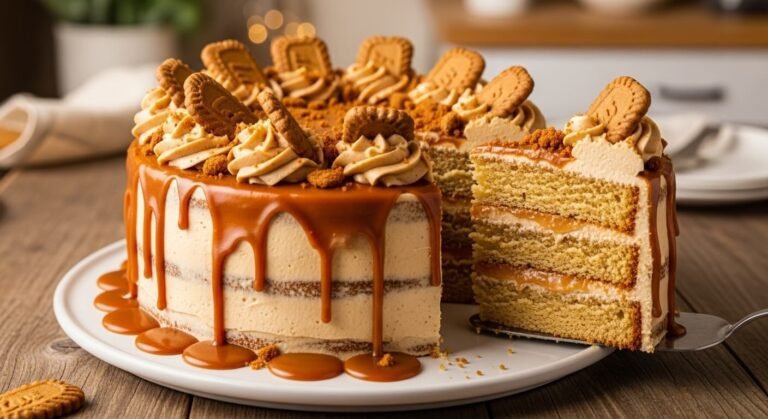
Ingredients
For the Cake:
- 3 cups all-purpose flour
- 1 tablespoon baking powder
- ½ teaspoon baking soda
- ¾ teaspoon salt
- 1 cup (2 sticks) unsalted butter, room temperature
- ¾ cup Biscoff cookie butter (smooth), room temperature
- 2 cups granulated sugar
- 4 large eggs, room temperature
- 2 teaspoons pure vanilla extract
- 1½ cups buttermilk, room temperature
For the Biscoff Buttercream Frosting:
- 1½ cups (3 sticks) unsalted butter, room temperature
- 1 cup Biscoff cookie butter (smooth), room temperature
- 5-6 cups powdered sugar, sifted
- ¼ cup heavy cream
- 2 teaspoons vanilla extract
- Pinch of salt
For Decoration (Optional):
- 10-12 Biscoff cookies, crushed or whole
- Extra cookie butter for drizzling
- Caramel sauce
Instructions
Step 1: Prepare Your Pans and Preheat Oven
Preheat your oven to 350°F (175°C). Grease three 8-inch or 9-inch round cake pans with butter or baking spray, then line the bottoms with parchment paper rounds. Grease the parchment too. This double insurance prevents any sticking disasters.
Step 2: Mix Dry Ingredients
In a large bowl, whisk together the flour, baking powder, baking soda, and salt. Set this aside. Whisking ensures everything is evenly distributed, which means even rising and consistent texture throughout your cake.
Step 3: Cream Butter, Cookie Butter, and Sugar
In your stand mixer bowl (or large bowl with hand mixer), beat the room temperature butter and Biscoff cookie butter together on medium speed for about 2 minutes until smooth and combined. Add the sugar and beat on medium-high speed for 3-4 minutes until light, fluffy, and pale in color. This creaming process incorporates air, which creates a lighter cake texture. Scrape down the bowl sides occasionally.
Step 4: Add Eggs and Vanilla
With the mixer on medium-low speed, add eggs one at a time, beating well after each addition. The mixture might look slightly curdled—that’s normal! Add the vanilla extract and mix until combined. Scrape down the bowl.
Step 5: Alternate Dry Ingredients and Buttermilk
With the mixer on low speed, add the flour mixture in three additions, alternating with the buttermilk in two additions. Start and end with flour. The pattern looks like this: flour, buttermilk, flour, buttermilk, flour. Mix just until no streaks remain after each addition. Don’t overmix, or your cake will be tough! The batter should be thick but pourable.
Step 6: Divide and Bake
Divide the batter evenly among your three prepared pans (use a kitchen scale for precision—about 22-24 ounces per pan). Smooth the tops with a spatula. Bake for 26-30 minutes, or until a toothpick inserted in the center comes out with just a few moist crumbs. The tops should spring back when lightly touched.
Step 7: Cool the Cakes
Let cakes cool in pans on wire racks for 15 minutes, then carefully turn them out onto the racks to cool completely. Removing them too early can cause breakage; waiting too long makes them stick. Once cooled, you can wrap them in plastic wrap and refrigerate for easier frosting.
Step 8: Make the Biscoff Buttercream
In a clean mixer bowl, beat the room temperature butter on medium speed for 2 minutes until creamy. Add the Biscoff cookie butter and beat for another 2 minutes until smooth and combined. Reduce speed to low and gradually add the powdered sugar, one cup at a time, mixing well after each addition.
Step 9: Finish the Frosting
Once all the sugar is incorporated, add the heavy cream, vanilla, and salt. Increase speed to medium-high and beat for 3-4 minutes until the frosting is light, fluffy, and spreadable. If it’s too thick, add more cream one teaspoon at a time. If too thin, add more powdered sugar.
Step 10: Assemble the Cake
Place your first cake layer on a serving plate or cake board. Spread about 1 cup of frosting evenly across the top, leaving a small border around the edge. Place the second layer on top and repeat. Add the final layer and spread frosting over the top and sides of the entire cake. Use an offset spatula for smooth, professional results. A crumb coat (thin layer of frosting to seal in crumbs) first, then refrigerate for 15 minutes before adding the final frosting layer, gives the best finish.
Step 11: Decorate and Serve
Decorate the top with crushed Biscoff cookies, arrange whole cookies around the edges, or drizzle with warmed cookie butter or caramel sauce. Get creative! Refrigerate the cake for 30 minutes to set the frosting before slicing for clean cuts.
Notes
Notes
- Room temperature ingredients are crucial – They combine more smoothly and create better texture
- Don’t overbake – Check at 26 minutes; overbaking dries out the cake
- Make cake layers ahead – Bake up to 2 days in advance, wrap tightly, and refrigerate
- Frosting consistency matters – It should spread easily but hold its shape
- Level your layers – Use a serrated knife to trim domed tops for stable stacking
- Warming cookie butter – If it’s too thick to incorporate, warm it gently for 10-15 seconds in the microwave
- Prep Time: 25 minutes
- Cook Time: 28 minutes
- Category: Dessert
- Method: Baking
- Cuisine: American
- Diet: Vegetarian
Nutrition
- Serving Size: 1 slice (1/14 of cake)
- Calories: 685
- Sugar: 68g
- Sodium: 285mg
- Fat: 35g
- Saturated Fat: 21g
- Unsaturated Fat: 12g
- Trans Fat: 0g
- Carbohydrates: 88g
- Fiber: 1g
- Protein: 6g
- Cholesterol: 125mg