Easy Homemade Apricot Sorbet Recipe (Just 4 Ingredients!)

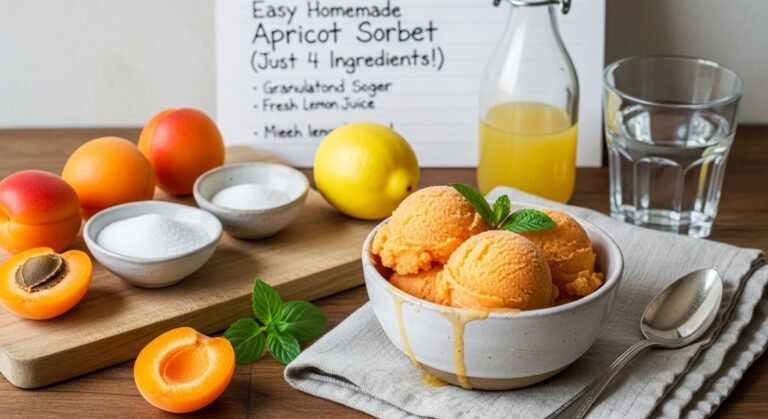
There’s nothing quite like the bright, refreshing taste of homemade apricot sorbet on a warm summer day. This elegant frozen dessert captures the essence of perfectly ripe apricots in a smooth, scoopable treat that’s both sophisticated and surprisingly simple to make. Unlike ice cream, sorbet is dairy-free, naturally lighter, and allows the pure fruit flavor to shine through without any cream or milk competing for attention.
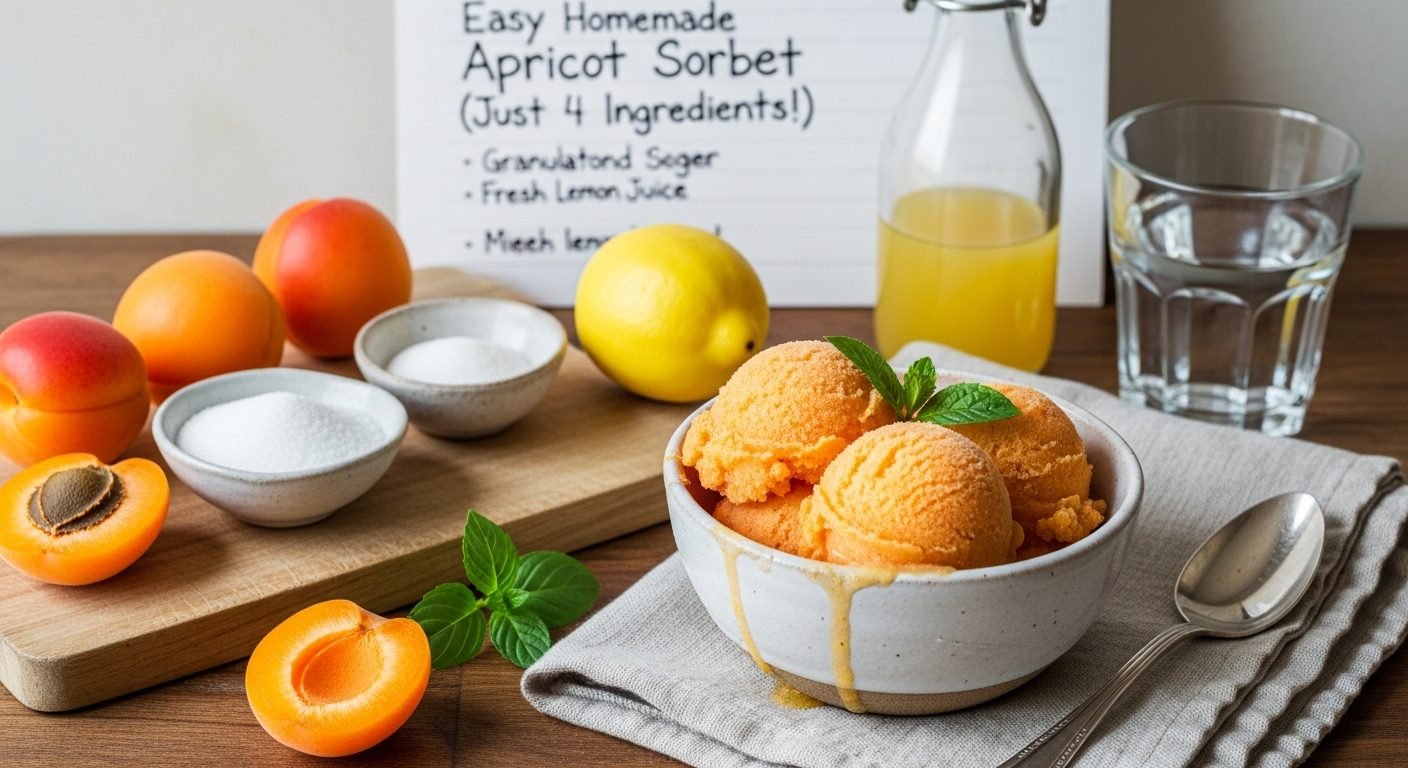
Perfect for hot summer afternoons, dinner party finales, palate cleansers between courses, or as a refreshing dessert after grilled meals, apricot sorbet delivers a burst of fruity sweetness that feels indulgent yet wholesome. The beautiful golden-orange color makes it visually stunning in serving bowls or glass dessert cups, and the velvety texture rivals anything you’d find at a fancy restaurant or gelato shop. Whether you’re using peak-season fresh apricots from the farmers market or convenient frozen fruit, this recipe transforms simple ingredients into an impressive frozen treat that everyone will love. Best of all, it requires no ice cream maker—just a blender and your freezer!
History / Background
Sorbet has a fascinating history that stretches back thousands of years. The earliest versions originated in ancient Persia and China, where people discovered they could preserve fruit flavors by mixing them with snow and ice from mountain peaks. These primitive frozen treats were considered luxuries reserved for royalty and the wealthy elite who had access to ice storage.
The word “sorbet” itself comes from the Turkish “şerbet” and Arabic “sharba,” meaning “to drink,” which evolved from the Persian “sharbat”—a sweet, chilled beverage. As trade routes expanded, these frozen delicacies traveled along the Silk Road to the Mediterranean, where the concept evolved and refined. The Italians embraced frozen desserts enthusiastically, developing what they called “sorbetto,” while the French created their own sophisticated versions called “sorbet.”
By the Renaissance, sorbet had become a fashionable dessert served at elaborate banquets throughout Europe. Catherine de Medici is credited with introducing sophisticated frozen desserts to France when she married King Henry II in 1533, bringing Italian recipes and techniques with her. French chefs elevated sorbet to an art form, serving it as a palate cleanser between courses during multi-course meals—a tradition that continues in fine dining today.
Apricots themselves have an equally rich history. Native to China, where they’ve been cultivated for over 4,000 years, apricots traveled west along the Silk Road to Central Asia, the Middle East, and eventually the Mediterranean region. The Romans called them “precious” (from which the word “apricot” derives), and they became beloved throughout Europe for their sweet-tart flavor and beautiful golden color. Today, California produces the majority of apricots in the United States, with peak season running from May through August.
The combination of apricots and sorbet is particularly popular in Mediterranean and Middle Eastern cuisines, where both ingredients have long histories. The fruit’s natural sweetness, vibrant color, and slightly tangy flavor make it ideal for sorbet, creating a refreshing dessert that perfectly captures summer’s essence. Modern home cooks have embraced apricot sorbet because it’s naturally dairy-free, vegan-friendly, and showcases seasonal fruit at its absolute best.
Why You’ll Love This Recipe
This homemade apricot sorbet is about to become your go-to frozen dessert all summer long. It tastes incredibly fresh and fruity—miles better than anything you can buy at the store—and the beautiful golden color makes every serving feel special. The best part? You only need four simple ingredients and a blender to create this restaurant-quality treat in your own kitchen.
Here’s why this recipe deserves a permanent spot in your summer dessert rotation:
- Just 4 ingredients: Apricots, sugar, water, and lemon juice—that’s it!
- No ice cream maker needed: A regular blender and your freezer are all you need
- Naturally dairy-free and vegan: Perfect for guests with dietary restrictions
- Captures peak summer flavor: Tastes like biting into a perfectly ripe apricot
- Impressive but easy: Looks and tastes like something from a fancy restaurant
- Budget-friendly: Uses simple, affordable ingredients, especially when apricots are in season
- Make-ahead friendly: Prepare days or weeks in advance and keep frozen until serving
- Refreshingly light: Not heavy or overly sweet—just pure, fruity goodness
- Gorgeous presentation: The vibrant orange color is naturally Instagram-worthy
- Healthier dessert option: Made with real fruit and no artificial ingredients or additives
- Versatile serving: Works as dessert, palate cleanser, or refreshing snack
Ingredient Notes
Apricot sorbet’s beauty lies in its simplicity. With just four ingredients, each one plays an important role in creating the perfect frozen treat. Let’s explore what you need and why it matters.
Fresh or Frozen Apricots: This is your star ingredient, so quality matters! Fresh apricots at peak ripeness (late spring through summer) deliver the most vibrant flavor and natural sweetness. Look for fruits that are deeply colored, slightly soft to the touch, and fragrant—they should smell sweet and fruity. Avoid rock-hard apricots, which are underripe and will taste bland and tart. If fresh apricots aren’t available or are out of season, frozen apricots work beautifully and are often picked at peak ripeness. You can also use canned apricots packed in water or light syrup (drain them well), though fresh or frozen are preferable for the best flavor. Plan on about 2 pounds of fresh apricots, which yields roughly 4 cups once pitted and chopped.
Granulated Sugar: Sugar does double duty in sorbet—it provides sweetness and affects texture. The right amount of sugar keeps sorbet scoopable rather than rock-hard because sugar lowers the freezing point. Too little sugar results in an icy, hard block; too much makes it overly sweet and prevents proper freezing. Granulated white sugar is standard, but you can experiment with superfine sugar (which dissolves more easily) or reduce the amount if your apricots are exceptionally sweet. The recipe can be adjusted based on your fruit’s natural sweetness—taste as you go!
Water: Water helps create the proper consistency and makes the sorbet easier to blend and scoop. It also helps distribute the sugar evenly throughout the mixture. You’ll make a simple syrup by heating water and sugar together, which ensures the sugar dissolves completely and creates a smooth base that blends seamlessly with the fruit puree.
Fresh Lemon Juice: This is the secret ingredient that makes apricot sorbet truly shine! Lemon juice brightens the apricot flavor, adds a pleasant tartness that balances the sweetness, and prevents the fruit from oxidizing and turning brown. The acidity enhances all the fruity notes and makes the finished sorbet taste more complex and interesting rather than one-dimensionally sweet. Always use fresh lemon juice rather than bottled—it makes a noticeable difference in flavor. You’ll need about 2-3 tablespoons, which is roughly one large lemon.
Optional Additions: While not essential, a tiny pinch of salt enhances all the flavors. Some recipes include a tablespoon of corn syrup or honey, which creates a smoother texture by preventing large ice crystals from forming. A splash of liqueur (like amaretto or Grand Marnier) adds sophistication and also improves texture since alcohol doesn’t freeze, keeping the sorbet softer.
Equipment Needed
Making apricot sorbet is surprisingly straightforward and doesn’t require specialized equipment:
- Blender or food processor: For pureeing the apricots into a smooth mixture; a high-powered blender works best but any blender will do
- Medium saucepan: For making the simple syrup by dissolving sugar in water
- Fine-mesh strainer or sieve: Optional but recommended for removing any chunks or apricot skin for ultra-smooth sorbet
- 9×13 inch baking dish or large shallow container: For freezing the sorbet; shallow dishes freeze faster and more evenly
- Wooden spoon or sturdy spatula: For stirring the sorbet as it freezes
- Measuring cups and spoons: For accurate ingredient measurements
- Sharp knife and cutting board: For pitting and chopping apricots
- Airtight freezer-safe container: For storing the finished sorbet
- Ice cream scoop: For serving perfect scoops once frozen
Print

Apricot Sorbet Recipe
This homemade apricot sorbet is a refreshing frozen dessert that tastes like pure summer. Made with just four simple ingredients—ripe apricots, sugar, water, and lemon juice—it’s naturally vegan, dairy-free, and incredibly easy to make without an ice cream maker. The result is a smooth, scoopable treat with bright apricot flavor and a beautiful golden color.
- Total Time: 4 hours 20 minutes (including freezing time)
- Yield: 6-8 servings (about 1 quart) 1x
Ingredients
Scale- 2 pounds fresh apricots (about 10-12 medium apricots, or 4 cups frozen apricots)
- 1 cup granulated sugar
- 1 cup water
- 3 tablespoons fresh lemon juice (from about 1 large lemon)
- Pinch of salt (optional)
Instructions
- Prepare the apricots: If using fresh apricots, wash them thoroughly under cold water. Cut each apricot in half along the natural seam, twist to separate the halves, and remove the pit. Roughly chop the apricot halves into chunks—no need to be precise since you’ll be blending them. If using frozen apricots, allow them to thaw slightly at room temperature for about 10-15 minutes until they’re soft enough to blend. You should have approximately 4 cups of prepared fruit.
- Make the simple syrup: In a medium saucepan, combine the sugar and water. Place over medium heat and stir frequently until the sugar completely dissolves, about 3-5 minutes. You’ll know it’s ready when the liquid is clear and you can’t see or feel any sugar granules when you stir. Don’t let it boil—you’re just dissolving the sugar, not making candy. Remove from heat and let the syrup cool to room temperature, about 15-20 minutes. For faster cooling, you can refrigerate it.
- Blend the mixture: Place the prepared apricots in your blender or food processor. Add the cooled simple syrup, fresh lemon juice, and a pinch of salt if using. Blend on high speed for 1-2 minutes until completely smooth and no chunks remain. The mixture should be silky and uniform in color. If you notice any bits of skin or texture, that’s fine—you can strain it in the next step.
- Strain for smoothness (optional but recommended): For the smoothest, most professional texture, pour the blended mixture through a fine-mesh strainer or sieve set over a large bowl. Use a rubber spatula or the back of a spoon to press the mixture through, leaving behind any apricot skin or fibrous bits. This step takes an extra few minutes but results in restaurant-quality texture. If you don’t mind a slightly more rustic texture with tiny bits of fruit, you can skip this step.
- Initial freeze: Pour the strained (or unstrained) apricot mixture into a 9×13 inch baking dish or large shallow container. The shallow dish helps it freeze more quickly and evenly than a deep container. Place the dish in your freezer uncovered.
- Stir frequently: After 30-45 minutes, remove the dish from the freezer. You’ll notice ice crystals beginning to form around the edges. Use a wooden spoon or sturdy spatula to scrape and stir vigorously, breaking up the frozen edges and mixing them into the still-liquid center. Return to the freezer. Repeat this stirring process every 30-40 minutes for about 3-4 hours total. This frequent stirring breaks up ice crystals as they form, creating a smooth, scoopable texture rather than a solid ice block. The sorbet is ready when it’s frozen throughout but still scoopable and has a fluffy, uniform texture.
- Final freeze and storage: Once the sorbet reaches the desired consistency, transfer it to an airtight freezer-safe container. Press a piece of plastic wrap directly onto the surface of the sorbet before sealing the container—this prevents freezer burn and ice crystals from forming on top. Freeze until firm, at least 2 hours or overnight. The sorbet will keep well for up to 2 weeks, though it’s best enjoyed within the first week for optimal flavor and texture.
- Serve: When ready to serve, let the sorbet sit at room temperature for 5-10 minutes to soften slightly, which makes it easier to scoop. Use an ice cream scoop dipped in warm water for the prettiest presentation. Serve in chilled bowls, glass dessert cups, or even hollowed-out lemon halves for an elegant touch.
Notes
- If your apricots are very sweet, reduce the sugar to ¾ cup. If they’re quite tart, you might need up to 1¼ cups sugar. Taste your apricot mixture before freezing and adjust sweetness.
- Adding 1-2 tablespoons of corn syrup or honey creates a smoother texture by preventing large ice crystals.
- For an adult version, add 2 tablespoons of amaretto liqueur or apricot brandy—this also helps keep the sorbet softer.
- If your sorbet becomes too hard after extended freezing, let it thaw slightly before serving or reblend it in a food processor to restore smoothness.
- An ice cream maker produces the smoothest texture. If you have one, follow the manufacturer’s instructions after making your apricot mixture, then freeze until firm.
- Prep Time: 15 minutes
- Cook Time: 5 minutes
- Category: Desert
- Method: Freezing
- Cuisine: French/Mediterranean
- Diet: Gluten Free
Nutrition
- Serving Size: ½ cup (about 4 oz)
- Calories: 130
- Sugar: 30g
- Sodium: 5mg
- Fat: 0g
- Saturated Fat: 0g
- Unsaturated Fat: 0g
- Trans Fat: 0g
- Carbohydrates: 33g
- Fiber: 2g
- Protein: 1g
- Cholesterol: 0mg
Tips & Variations
Reduce sugar for less sweetness: If you prefer a less sweet sorbet that lets the natural apricot flavor shine more prominently, reduce the sugar to ¾ cup. Keep in mind that less sugar means the sorbet will freeze harder, so you may need to let it soften longer at room temperature before scooping.
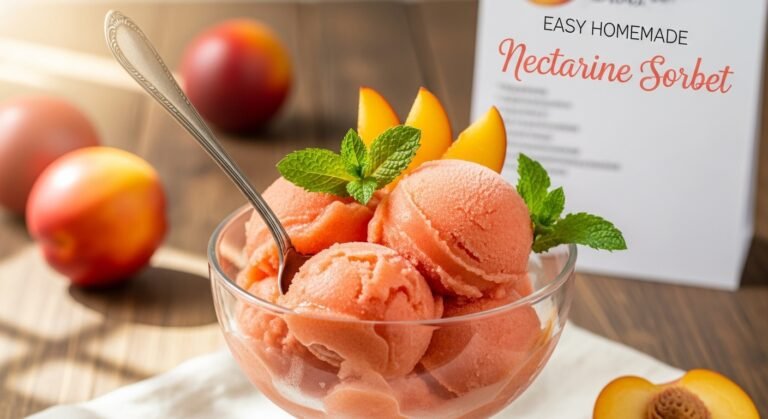
Mix in other fruits: Combine apricots with other stone fruits for interesting flavor variations. Try 3 cups apricots plus 1 cup peaches, nectarines, or plums. You can also add ½ cup of raspberries or strawberries for a more complex fruity profile.
Add herbs for sophistication: A few fresh basil leaves, mint leaves, or even lavender blended into the mixture creates an elegant, restaurant-style dessert with unexpected depth. Start with 5-6 small basil leaves or 1 tablespoon fresh mint, blend them in, then taste and add more if desired.
Make it creamy (sorbet vs. sherbet): For a creamier texture closer to sherbet, add ¼ cup of coconut cream or regular heavy cream to the mixture before freezing. This creates a richer mouthfeel while still showcasing the apricot flavor.
Boost the apricot intensity: Add ¼-½ teaspoon of pure almond extract, which has a natural affinity with stone fruits and enhances their flavor without tasting like almonds. This is a classic pastry chef trick!
Create swirls: When the sorbet is nearly finished freezing, swirl in some apricot jam, honey, or even chocolate sauce for visual appeal and pockets of concentrated sweetness.
Make it sugar-free: Replace the granulated sugar with your preferred sugar substitute like erythritol or monk fruit sweetener. The texture will be slightly different (potentially harder), so you may need to add a tablespoon of vodka or corn syrup to improve scoopability.
Roast the apricots first: For deeper, caramelized flavor, halve and pit your apricots, then roast them cut-side up at 400°F for 20-25 minutes until softened and slightly caramelized. Let them cool before blending. This technique intensifies the fruit flavor beautifully.
Pro Chef Tips
Choose perfectly ripe fruit: The single most important factor in exceptional sorbet is using fruit at peak ripeness. Apricots should be fragrant, give slightly when gently pressed, and have deep color. Underripe fruit lacks sweetness and flavor, resulting in bland sorbet no matter how much sugar you add. If your apricots are underripe, leave them at room temperature for a few days until they ripen.
Taste and adjust before freezing: Flavors dull slightly when frozen, so your apricot mixture should taste a bit sweeter and more intense than you want the final product to be. Before freezing, taste your blended mixture and adjust—add more lemon juice for brightness, more sugar for sweetness, or a pinch of salt to enhance all the flavors. Once frozen, it’s too late to adjust!
The simple syrup method is crucial: Don’t skip making the simple syrup by just adding sugar directly to your fruit. Dissolving sugar in water first ensures even distribution and creates a smoother texture. Undissolved sugar crystals create iciness and graininess in the finished product.
Frequent stirring prevents ice crystals: The key to smooth, professional sorbet without an ice cream maker is disrupting ice crystal formation through frequent stirring during the freezing process. Set a timer every 30-40 minutes for the first 3-4 hours. Yes, it’s time-consuming, but the difference between sorbet stirred regularly and sorbet left to freeze solid is dramatic—one is smooth and scoopable, the other is an icy block.
Shallow containers freeze faster and more evenly: Professional kitchens use shallow pans when making frozen desserts without machines because they increase surface area, allowing faster, more even freezing. A 9×13 baking dish is ideal—it freezes in about 4 hours with stirring, whereas a deep container might take 6-8 hours and result in uneven texture.
Add alcohol for better texture: Professional pastry chefs often add a tablespoon or two of alcohol (vodka, liqueur, or spirits) to sorbet because alcohol doesn’t freeze. This keeps the sorbet softer and more scoopable straight from the freezer. It won’t taste boozy—the small amount just improves texture.
Strain for restaurant quality: The difference between home-style and restaurant-style sorbet often comes down to straining. Professional kitchens always strain their sorbet base to remove any fibrous bits, skin fragments, or texture irregularities. It takes an extra three minutes but elevates your sorbet from homemade to professional.
Common Mistakes to Avoid
Using underripe or flavorless apricots: This is the biggest mistake people make. If your apricots are hard, pale, and have no fragrance, they’re underripe and will produce bland, disappointing sorbet. No amount of sugar can fix flavorless fruit. Wait for peak season (late May through August in most of the US) or buy high-quality frozen apricots that were picked at their prime. The fruit quality directly determines your sorbet quality.
Adding hot simple syrup to fruit: If you pour hot simple syrup directly onto your apricots and blend immediately, you’ll end up with warm apricot soup that takes forever to freeze and may result in an unpleasant cooked fruit flavor. Always let your simple syrup cool to room temperature before combining it with the fruit. If you’re in a hurry, refrigerate the syrup or place the saucepan in an ice bath to cool it quickly.
Not stirring frequently enough during freezing: The most common texture complaint with homemade sorbet is that it’s too icy or hard. This happens when the mixture is left to freeze undisturbed, allowing large ice crystals to form. You must stir vigorously every 30-40 minutes during the initial freezing period to break up ice crystals as they form. Set timers on your phone—this step is not optional if you want smooth, scoopable sorbet!
Using too little or too much sugar: Sugar isn’t just for sweetness—it’s crucial for texture. Too little sugar (less than ¾ cup for this recipe) results in rock-hard sorbet that’s impossible to scoop. Too much sugar (more than 1¼ cups) prevents proper freezing and creates a slushy consistency that never fully sets. Follow the recipe amounts and only adjust slightly based on your fruit’s natural sweetness.
Skipping the lemon juice: Some people think they can leave out the lemon juice if they don’t want tartness, but lemon juice serves multiple purposes: it prevents oxidation (browning), brightens the apricot flavor, and adds necessary acidity that makes the sorbet taste balanced rather than flat and one-dimensional. Without it, your sorbet will taste dull and may turn an unappealing brown color.
Storage & Meal Prep
Proper container storage: Always store sorbet in an airtight, freezer-safe container to prevent freezer burn and ice crystal formation. Glass or plastic containers with tight-fitting lids work well. For best results, press a piece of plastic wrap or parchment paper directly onto the surface of the sorbet before sealing the container—this extra barrier prevents air exposure and keeps the sorbet fresh longer.
Shelf life: Homemade apricot sorbet maintains optimal flavor and texture for about 1-2 weeks in the freezer. After two weeks, it’s still safe to eat but may develop ice crystals on the surface or lose some of its vibrant flavor. For the best experience, try to finish it within the first week when the flavor and texture are at their peak.
Preventing iciness during storage: If you notice your sorbet becoming icy after several days in the freezer, you can refresh it by breaking it into chunks and reblending in a food processor until smooth, then refreezing. This is a common technique in professional kitchens for reviving sorbet that’s been stored too long.
Portioning for easy serving: Consider freezing sorbet in individual portions using a muffin tin or silicone molds. Once frozen solid, pop them out and store in a freezer bag. This makes it easy to grab single servings without having to scoop from a large container, and individual portions thaw to the perfect consistency more quickly.
Thawing for scooping: If your sorbet becomes too hard after extended freezing (especially in very cold freezers), let it sit at room temperature for 5-10 minutes before serving. The edges will soften first, making it much easier to scoop. Alternatively, microwave it for 10-15 seconds at 50% power, checking frequently to avoid melting.
Make-Ahead & Freezer Notes
Perfect make-ahead dessert: Apricot sorbet is an ideal make-ahead dessert for entertaining because it must be made in advance—there’s no last-minute preparation required. You can make it up to two weeks before your event, though it’s at its absolute best within the first week. This frees you up to focus on other dishes on the day of your gathering.
Batch preparation: If apricots are abundant during peak season, consider making multiple batches to enjoy throughout the year. Sorbet freezes beautifully for up to 3 months when properly stored. Make several batches when fruit is cheapest and at its best, and you’ll have delicious summer flavor available even in winter.
Freezer-friendly by design: Unlike many desserts that suffer in the freezer, sorbet is specifically designed to be frozen. It’s one of the few desserts that actually requires freezer storage. The key to maintaining quality over time is proper storage—airtight containers with direct surface coverage (plastic wrap pressed against the sorbet) prevent freezer burn and ice crystal formation.
Reheating method: There is no reheating with sorbet—it’s always served frozen! However, if it becomes too hard, the best “reheating” method is actually letting it temper at room temperature for 5-10 minutes before serving. This softens it just enough for easy scooping while maintaining the frozen texture.
Advance prep for parties: For gatherings, you can pre-scoop sorbet into individual serving portions on a parchment-lined baking sheet, freeze until solid, then transfer to a freezer bag. When it’s time for dessert, simply place pre-scooped portions into serving bowls or glasses—no struggling with a hard block of frozen sorbet while guests wait!
Seasonal fruit preservation: Making sorbet is an excellent way to preserve the fleeting flavor of peak-season apricots. When they’re abundant and affordable at farmers markets or on sale at grocery stores, buy extra and turn them into sorbet. It captures summer’s essence and allows you to enjoy apricot flavor long after the season ends.
Serving Suggestions
Apricot sorbet is versatile and pairs beautifully with numerous accompaniments, making it suitable for casual family dinners or elegant dinner parties:
Classic simple serving: Serve scoops in chilled glass bowls or dessert cups with a fresh mint sprig garnish and a couple of fresh apricot slices on the side. The simplicity lets the pure fruit flavor shine.
With fresh fruit: Top with fresh berries (raspberries, blueberries, or blackberries), sliced peaches or nectarines, or additional fresh apricot halves. The combination of frozen and fresh fruit creates a lovely temperature and texture contrast.
Alongside baked goods: Serve with almond biscotti, amaretti cookies, shortbread, or buttery madeleines for dipping. The crispy texture and buttery richness complement the smooth, fruity sorbet perfectly.
Elegant plated dessert: Pair with a small slice of pound cake, angel food cake, or vanilla sponge cake. Add a mint garnish and a drizzle of honey or apricot coulis for a restaurant-style presentation.
With other sorbets or ice cream: Create a beautiful trio by serving apricot sorbet alongside lemon sorbet and raspberry sorbet, or pair it with vanilla ice cream or gelato for contrasting flavors and temperatures.
As a palate cleanser: Serve small portions (just 2-3 tablespoons) in shot glasses or tiny bowls between courses at formal dinners. This is traditional in multi-course French meals, where sorbet cleanses the palate between fish and meat courses.
Summer fruit salads: Scoop sorbet on top of a fresh fruit salad for an elegant summer dessert that’s light, colorful, and refreshing.
With sparkling wine or champagne: For adults, pour a small amount of prosecco, champagne, or sparkling wine over a scoop of apricot sorbet for a sophisticated “sorbetto al prosecco” that’s popular in Italy.
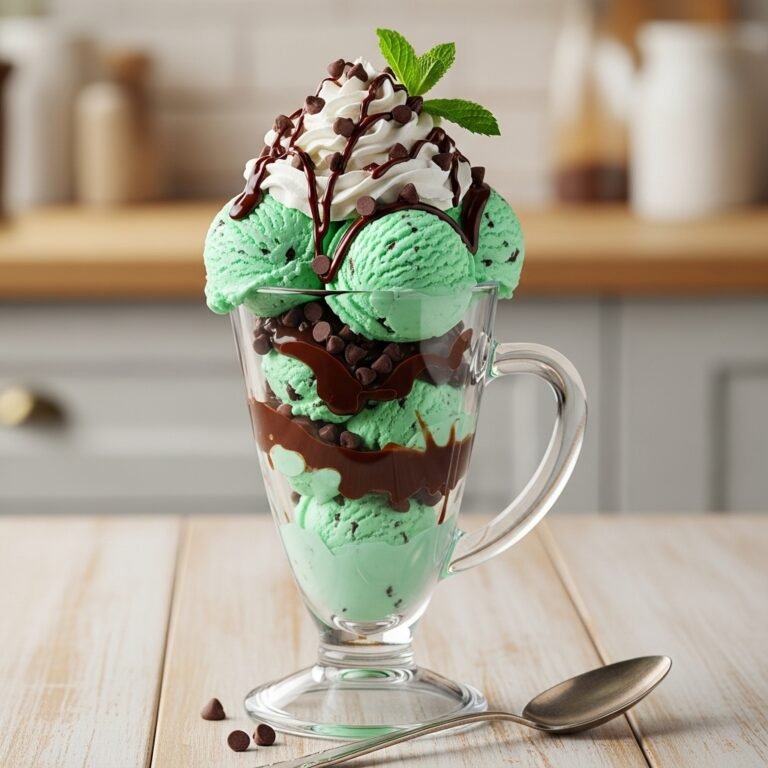
As a sundae base: Create an elegant sundae with apricot sorbet, toasted slivered almonds, a drizzle of honey, and whipped cream (dairy or coconut). Garnish with a fresh cherry or apricot slice.
BBQ and grilled meal finisher: Apricot sorbet is the perfect light, refreshing ending to heavy grilled meals. After burgers, steaks, or barbecue, guests appreciate something fruity and palate-cleansing.
FAQs Section
Can I make this without a blender?
While a blender produces the smoothest results, you can make apricot sorbet without one if necessary. Mash very ripe, soft apricots with a potato masher or fork until as smooth as possible, then mix with cooled simple syrup and lemon juice. Push the mixture through a fine-mesh strainer to remove lumps and create a smoother puree. The texture won’t be quite as silky as blender-made sorbet, but it will still be delicious. A food processor also works if you don’t have a blender.
Do I really need an ice cream maker?
No! This recipe is specifically designed for making sorbet without an ice cream maker, using just a blender and your freezer. The key is stirring the mixture every 30-40 minutes as it freezes to break up ice crystals and create a smooth texture. If you do have an ice cream maker, by all means use it—it produces exceptionally smooth sorbet with less hands-on time. Simply blend your apricot mixture, chill it thoroughly in the refrigerator, then churn according to your machine’s instructions.
Can I use canned apricots instead of fresh?
Yes, canned apricots work in a pinch, especially when fresh ones are out of season. Use canned apricots packed in water or light syrup (not heavy syrup, which is too sweet). Drain them very well, pressing out excess liquid. You’ll need about 4 cups of drained fruit. Reduce the sugar in the recipe to ¾ cup since canned fruit is often sweeter. The flavor won’t be quite as bright and fresh as using ripe fresh apricots or high-quality frozen ones, but it’s a convenient alternative that still produces good results.
Why is my sorbet too hard to scoop?
Sorbet that’s rock-hard usually means there’s not enough sugar in the recipe, or your freezer is extremely cold. Sugar lowers the freezing point and keeps sorbet scoopable. If your sorbet is too hard, try these fixes: let it sit at room temperature for 10 minutes before serving, add 1-2 tablespoons of corn syrup or vodka to the recipe next time (these ingredients prevent hardening), or increase the sugar slightly. You can also break hard sorbet into chunks and reblend in a food processor to restore scoopability, then refreeze.
How do I prevent my sorbet from being too icy?
Icy texture usually results from large ice crystals forming during freezing, which happens when the mixture isn’t stirred frequently enough. The solution is vigorous, frequent stirring—every 30-40 minutes during the first 3-4 hours of freezing. Each time you stir, you break up ice crystals as they form. Other helpful tips: add a tablespoon of corn syrup or honey, which prevents large ice crystals; make sure your sugar is fully dissolved; and use the proper amount of sugar (don’t reduce it too much). An ice cream maker eliminates this problem by constant churning.
Can I make this with other stone fruits?
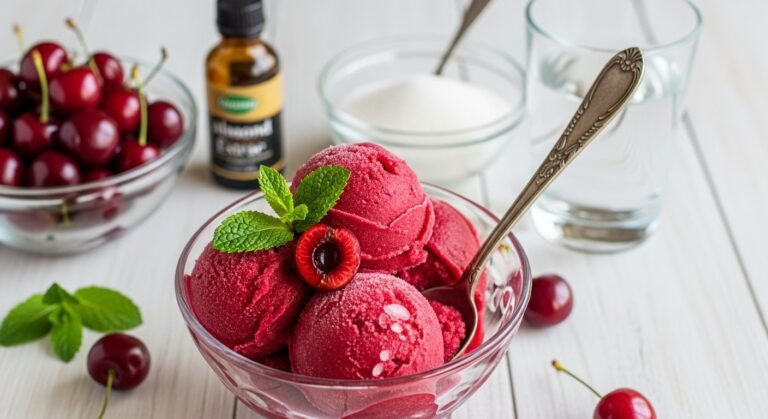
Absolutely! This recipe works beautifully with any stone fruit. Try peaches, nectarines, plums, or cherries using the same proportions. You can also mix fruits—try half apricots and half peaches for apricot-peach sorbet. Each fruit has different natural sweetness levels, so taste your mixture before freezing and adjust sugar accordingly. Plums tend to be more tart and may need slightly more sugar, while ripe peaches are very sweet and may need less.
Is sorbet healthier than ice cream?
Sorbet is generally lower in calories and fat than ice cream since it contains no dairy or cream. It’s naturally cholesterol-free, vegan, and dairy-free. However, sorbet typically contains more sugar per serving than ice cream because sugar is necessary for texture and to balance the fruit’s tartness. Sorbet made with real fruit does provide vitamins, minerals, and fiber that you won’t find in most ice creams. If you’re looking for a lighter dessert with real fruit flavor, sorbet is an excellent choice, though neither should be considered a “health food.”
Conclusion
Making homemade apricot sorbet is one of those recipes that seems fancy and complicated but is actually surprisingly simple once you try it. With just four basic ingredients and a blender, you can create a frozen dessert that rivals anything from an upscale restaurant or gelato shop. The pure, intense apricot flavor, beautiful golden color, and refreshingly light texture make this sorbet a summer showstopper that everyone will love.
The best part? You can customize it to your exact preferences—sweeter, tarter, with herbs, or combined with other fruits. Once you master the basic technique, you’ll find yourself making sorbet with all kinds of seasonal fruits throughout the year. It’s also a wonderful way to use up an abundance of peak-season apricots when they’re at their most flavorful and affordable.
So when apricot season arrives and you see those beautiful golden fruits at the farmers market or grocery store, grab a couple pounds and try this recipe. Your freezer will thank you, your family will be impressed, and you’ll have a delicious frozen treat ready whenever the mood strikes. Don’t forget to pin this recipe to your Pinterest boards so you can find it easily whenever summer fruit season rolls around! If you make this apricot sorbet, I’d love to hear about it—leave a comment below and let me know how it turned out. Happy freezing, friends!