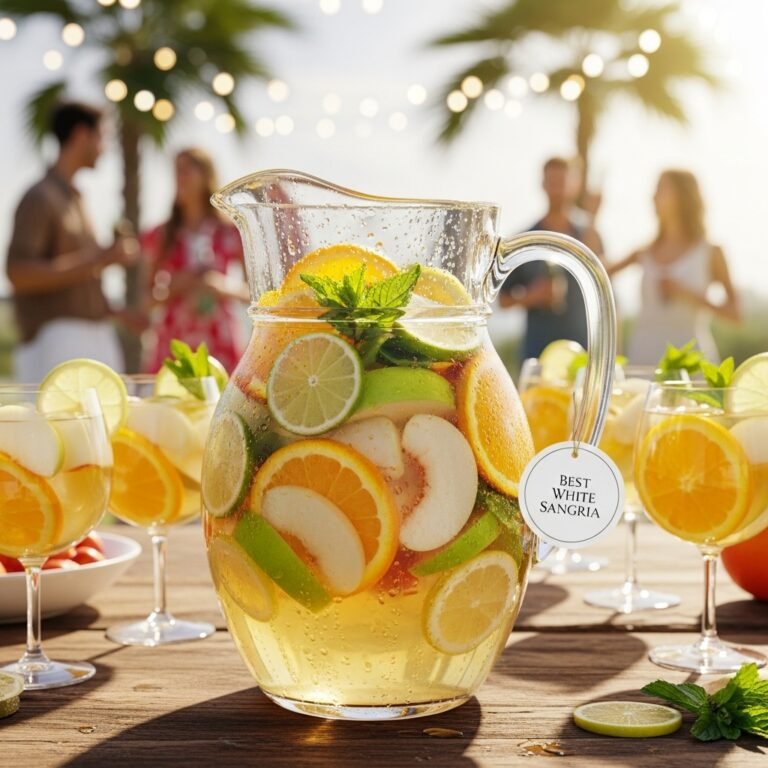
Best White Sangria Recipe – Light, Fruity & Perfect for Summer Parties

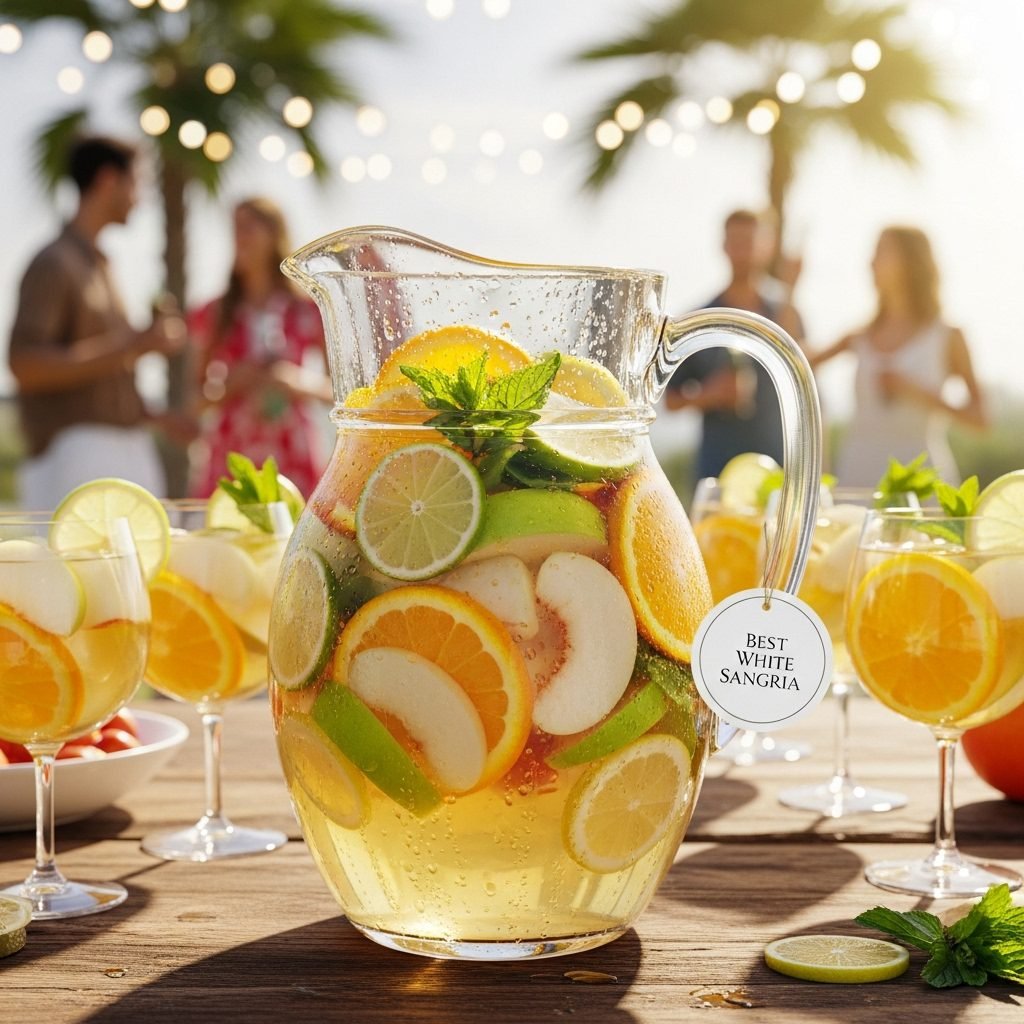
If you’re looking for the ultimate warm-weather cocktail that’s light, refreshing, and absolutely gorgeous to look at, white sangria is your answer. This sophisticated twist on traditional red sangria swaps robust red wine for crisp white wine, creating a lighter, more delicate drink that’s perfect for hot summer days, garden parties, bridal showers, and poolside lounging. Loaded with fresh fruit like peaches, strawberries, and citrus, then finished with a splash of sparkling water, white sangria is like sunshine in a glass.
What makes white sangria so incredibly popular is its versatility and crowd-pleasing appeal. It’s elegant enough for upscale gatherings yet casual enough for backyard barbecues. The pale golden color dotted with vibrant fruit creates an Instagram-worthy presentation that Pinterest users absolutely love. Plus, unlike heavy cocktails that weigh you down on hot days, white sangria is light and refreshing – you can sip it all afternoon without feeling too full or overly tipsy.
I adore making white sangria because it’s ridiculously easy yet tastes like something from a fancy resort. You can customize it with whatever seasonal fruit looks best at the market, make it hours (or even a day!) ahead to let the flavors develop, and serve it to a crowd without breaking a sweat. Whether you’re hosting a summer brunch, throwing a baby shower, or just want to make your Friday feel more festive, white sangria instantly elevates the occasion with minimal effort.
History & Background of White Sangria
While traditional red sangria has centuries of history in Spain and Portugal, white sangria (sangria blanca in Spanish) is a more modern creation that emerged as a lighter alternative to the classic version. The exact origins of white sangria are less documented than its red counterpart, but it gained significant popularity in Spain during the late 20th century, particularly in coastal regions where lighter, more refreshing drinks were preferred during scorching Mediterranean summers.
White sangria represents the evolution of Spanish drinking culture, showing how traditional recipes adapt to modern tastes and occasions. While red sangria remains the classic choice in Spain, white sangria has become increasingly popular in beach towns, resort areas, and contemporary restaurants that cater to lighter, fruit-forward flavors. The Catalonian coast and Valencia region, known for their vibrant food scenes and beautiful beaches, are particularly associated with white sangria culture.
The drink gained explosive popularity in the United States during the early 2000s, coinciding with the rise of wine culture and the farm-to-table movement that celebrated fresh, seasonal ingredients. American adaptations tend to be fruitier and sweeter than Spanish versions, incorporating a wider variety of fruits and often adding elderflower liqueur or other flavor enhancers. The drink’s light, photogenic quality made it a natural fit for the Instagram and Pinterest era, where beautiful food and drink photography drives recipe popularity.
Interestingly, white sangria reflects a broader trend in cocktail culture toward lighter, lower-alcohol options that can be enjoyed throughout the day. Unlike heavy, spirit-forward cocktails, white sangria’s wine base and abundance of fresh fruit make it feel more like a sophisticated refreshment than a serious drink. This positioning has made it particularly popular for daytime events like bridal showers, baby showers, garden parties, and brunch gatherings where guests want something special but not too strong.
Today, white sangria has become just as beloved as its red predecessor, especially in warm-weather months. It’s the signature drink at countless summer weddings, appears on restaurant menus nationwide, and has inspired countless variations incorporating everything from tropical fruits to herbs to sparkling rosé. Despite being a relative newcomer compared to traditional red sangria, white sangria has earned its place as a modern classic.
Why You’ll Love This White Sangria Recipe
This white sangria recipe is about to become your signature summer drink – I’m calling it right now! I’ve served this at countless gatherings over the years, and it never fails to get compliments. There’s something magical about watching guests gravitate toward that beautiful pitcher of golden wine with colorful fruit floating in it, and the conversation that starts when everyone’s comparing which fruit pieces they managed to score.
Here’s why this recipe will be on repeat all summer long:
- Incredibly Refreshing – Light, fruity, and perfect for hot weather
- Make-Ahead Friendly – Actually tastes better when made the night before
- Budget-Friendly – Uses affordable wine that tastes expensive when mixed
- Visually Stunning – Those floating fruit slices are pure Pinterest magic
- Customizable – Adjust sweetness, fruit, and strength to your preference
- Crowd-Pleaser – Appeals to both wine lovers and fruity cocktail fans
- Lower Alcohol – Lighter than straight wine, perfect for day drinking
- Scales Effortlessly – Double or triple for large gatherings with ease
- No Bartending Skills – If you can slice fruit and pour wine, you’ve got this
- Seasonal Flexibility – Adapts beautifully to whatever fruit is in season
- Light & Summery – Won’t weigh you down like heavier cocktails
- Interactive Serving – Guests love fishing out those wine-soaked fruit pieces
Ingredient Notes
White Wine: This is your foundation, so choose wisely but don’t overthink it! You want a crisp, slightly sweet white wine that’s not too dry or too oaky. Pinot Grigio, Sauvignon Blanc, Albariño, or a dry Riesling all work beautifully. Spanish white wines like Verdejo or white Rioja are traditional and excellent, but any quality white wine in the $8-12 range is perfect. The key is choosing something fruity and refreshing that you’d enjoy drinking on its own. Avoid: Very oaky Chardonnay (the oak flavor clashes with fruit) or bone-dry wines that taste too sharp. You want fruit-forward and approachable, not austere and serious.
Elderflower Liqueur (St. Germain): This is the secret ingredient that elevates white sangria from good to absolutely incredible. Elderflower liqueur adds delicate floral notes and a subtle sweetness that complements the fruit beautifully without making the drink cloying. St. Germain is the most popular brand and worth seeking out. Substitution: If you don’t have elderflower liqueur, use brandy (more traditional), white rum (tropical vibe), or vodka (neutral). You can also substitute with simple syrup plus a squeeze of lemon, though you’ll lose that gorgeous floral complexity.
Fresh Peaches or Nectarines: Stone fruits are quintessential white sangria ingredients! They add natural sweetness, beautiful color, and a luscious, summery flavor. Choose ripe but firm peaches or nectarines that yield slightly to pressure. If your peaches aren’t quite ripe, let them sit on the counter in a paper bag for 1-2 days. Substitution: In off-season, use frozen peaches (thawed and sliced), mango, or pineapple.
Strawberries: Fresh strawberries add gorgeous color, natural sweetness, and that classic summer berry flavor. Choose ripe, fragrant berries with vibrant red color. Hull and slice them to maximize surface area for flavor infusion. Substitution: Raspberries, blueberries, or blackberries all work beautifully.
Citrus (Lemon, Lime, Orange): A mix of citrus adds brightness, acidity, and complexity that balances the sweetness. The combination creates a more interesting flavor profile than single citrus alone. Always use fresh citrus, never bottled juice – the difference is dramatic. Important: Slice citrus thin (about ¼-inch) for visual appeal without overwhelming bitterness.
Green Grapes: These add a refreshing, slightly tart element and look absolutely beautiful floating in the wine. They also stay firm and don’t get mushy like some fruits. Choose seedless green grapes for ease. Substitution: White grapes or even halved strawberries work well.
White Grape Juice or Apple Juice: A splash of fruit juice adds natural sweetness and enhances the fruity character without making sangria overly alcoholic. White grape juice is traditional and blends seamlessly. Substitution: Apple juice, white cranberry juice, or peach nectar all work nicely.
Sweetener (Simple Syrup or Honey): White sangria needs a touch of sweetness to balance the wine’s acidity and the citrus. Simple syrup dissolves instantly and is my preferred choice. Substitution: Honey (adds floral notes), agave nectar (vegan-friendly), or granulated sugar (dissolves slowly, requires stirring).
Club Soda or Sparkling Water: Added just before serving, the bubbles lighten the sangria and add refreshing effervescence. This is optional but highly recommended for that crisp, sparkly quality. Substitution: Lemon-lime soda (sweeter), prosecco (more elegant and boozy), or skip entirely for a wine-forward version.
Equipment Needed
White sangria requires minimal equipment – another reason it’s perfect for stress-free entertaining:
- Large Glass Pitcher – At least 2-quart capacity. Glass lets you showcase the beautiful fruit and wine color
- Cutting Board and Sharp Knife – For prepping all that gorgeous fruit
- Citrus Juicer – Handheld or electric for squeezing citrus (optional but helpful)
- Measuring Cups and Spoons – For accurate ingredient measurements
- Long-Handled Spoon or Muddler – For gently stirring and very lightly pressing fruit
- Wine Glasses or Tumblers – Any style works, though stemmed glasses feel more elegant
- Ladle or Large Spoon – For serving, making sure everyone gets fruit
- Vegetable Peeler (Optional) – For removing peach skins if desired
- Strainer (Optional) – If you prefer serving sangria without floating fruit pieces
Print

White Sangria Recipe
Light and refreshing white sangria made with crisp white wine, fresh summer fruits, elderflower liqueur, and a splash of sparkling water. This elegant wine cocktail is perfect for warm weather gatherings, brunch parties, and celebrations. Make it ahead for the best flavor!
- Total Time: 2-4 hours
- Yield: 6-8 servings 1x
Ingredients
Scale- 1 bottle (750ml) white wine (Pinot Grigio, Sauvignon Blanc, or Albariño)
- ¼ cup elderflower liqueur (St. Germain) or brandy
- ¼ cup white grape juice or apple juice
- 2-3 tablespoons simple syrup or honey (adjust to taste)
- 2 ripe peaches or nectarines, pitted and sliced
- 1 cup fresh strawberries, hulled and sliced
- 1 cup green grapes, halved if large
- 1 lemon, sliced into thin rounds
- 1 lime, sliced into thin rounds
- 1 orange, sliced into thin rounds
- 1-2 cups club soda or sparkling water (added just before serving)
- Ice cubes for serving
- Optional garnishes: fresh mint sprigs, additional fruit
Instructions
- Prep All Your Fruit: Wash all fruit thoroughly. Pit and slice the peaches or nectarines into thin wedges (you can peel them if you prefer, but the skin adds color and holds the fruit together better). Hull and slice the strawberries. Halve the grapes if they’re very large, or leave them whole if medium-sized. Slice the lemon, lime, and orange into thin rounds (about ¼-inch thick), removing any seeds.
- Combine Wine Base: In a large pitcher (at least 2-quart capacity), combine the white wine, elderflower liqueur (or brandy), white grape juice, and simple syrup or honey. Stir well until the honey is completely dissolved if using honey. If using simple syrup, it will incorporate immediately.
- Add All the Beautiful Fruit: Add all your prepared fruit to the pitcher – the peaches, strawberries, grapes, lemon slices, lime slices, and orange slices. The pitcher should look abundant and colorful! Use a wooden spoon or muddler to very gently press on the fruit pieces 2-3 times. You want to lightly bruise the fruit to help release juices, not mash it into pulp. Gentle pressure is key.
- Stir Everything Together: Give everything a thorough stir with a long-handled spoon, making sure all the fruit is submerged in the wine mixture. The colors will already look gorgeous!
- Refrigerate and Let Flavors Develop: Cover the pitcher (or transfer to a container with a lid) and refrigerate for at least 2-4 hours, but ideally overnight. This resting time is absolutely crucial – it allows the fruit to release its juices and flavors into the wine, creating that signature sangria taste. The longer it rests (up to 24 hours), the more flavorful it becomes. Give it a gentle stir once or twice during the chilling time.
- Taste and Adjust Before Serving: After chilling, taste your white sangria. Too tart? Add another tablespoon of simple syrup or honey and stir well. Too sweet? Add a squeeze of fresh lemon or lime juice. Perfect? Leave it as is! Everyone’s sweetness preference differs, so adjust to your taste.
- Add the Sparkle: Just before serving (within 15-20 minutes), add 1-2 cups of chilled club soda or sparkling water to the pitcher. Stir very gently – you want to preserve those bubbles! The amount of club soda depends on how light and bubbly you want your sangria. More club soda = lighter and less boozy, less club soda = more wine-forward.
- Serve Over Ice with Fruit: Fill glasses with ice cubes (fill them generously!). Using a ladle or large spoon, pour the white sangria into glasses, making absolutely sure each person gets a generous portion of the wine-soaked fruit. The fruit is the best part – don’t be stingy!
- Garnish and Enjoy: If desired, garnish each glass with a sprig of fresh mint or an additional piece of fruit on the rim. Serve immediately while the bubbles are fresh and lively!
- Keep Chilled During Service: If serving outdoors or during a party, keep the pitcher in an ice bucket or add a few ice cubes to the pitcher itself to maintain that refreshing coldness.
Notes
- Wine Selection: Use a wine you’d enjoy drinking solo, but nothing too expensive. The fruit and other ingredients enhance modest wines beautifully.
- Elderflower Liqueur: St. Germain adds incredible floral complexity. If you love white sangria, this bottle is a worthy investment – it lasts for months and elevates countless cocktails.
- Sweetness Level: Start conservative with sweetener – you can always add more after tasting. The fruit releases natural sugars as it sits, naturally sweetening the sangria.
- Fruit Flexibility: Use whatever looks freshest and best at your market. Stone fruits, berries, and citrus are traditional, but tropical fruits work too!
- Club Soda Timing: Critical rule – add bubbles only right before serving, never hours ahead, or you’ll have flat sangria.
- Alcohol Strength: For stronger sangria, use ½ cup elderflower liqueur or add ¼ cup vodka. For lighter, increase club soda to 2-3 cups.
- Prep Time: 15 minutes
- Cook Time: 0 minutes (plus 2-4 hours chilling time)
- Category: Cocktail/Beverage
- Method: Mixing/Chilling
- Cuisine: Spanish
- Diet: Gluten Free
Nutrition
- Serving Size: 1 cup (8 oz) without club soda
- Calories: 140
- Sugar: 14g
- Sodium: 10mg
- Fat: 0g
- Saturated Fat: 0g
- Unsaturated Fat: 0g
- Trans Fat: 0g
- Carbohydrates: 18g
- Fiber: 1g
- Protein: 0.5g
- Cholesterol: 0mg
Tips & Variations
Wine Variations:
- Rosé Sangria: Use rosé wine instead of white for a gorgeous pink drink
- Sparkling White Sangria: Replace club soda with prosecco or cava for extra elegance
- Moscato Sangria: Use sweet Moscato for a dessert-style, sweeter sangria
- Blend It: Use half white wine and half rosé for a unique blush-colored sangria
Fruit Combinations:
- Tropical White Sangria: Use pineapple, mango, kiwi, and passion fruit
- Berry Blast: Load it with strawberries, raspberries, blueberries, and blackberries
- Melon Madness: Add honeydew, cantaloupe, and watermelon balls
- Stone Fruit Spectacular: Use peaches, nectarines, plums, and apricots
- Citrus Grove: Focus on oranges, lemons, limes, grapefruit, and blood oranges
- Apple Orchard: Use green apples, pears, and add a cinnamon stick
Flavor Enhancers:
- Herbal Notes: Add fresh mint, basil, rosemary, or lavender sprigs
- Ginger Zing: Include thin slices of fresh ginger for spicy warmth
- Vanilla Depth: Add a vanilla bean (split and scraped) for subtle richness
- Cucumber Cool: Add cucumber ribbons or slices for spa-like refreshment
- Jalapeño Kick: Add 2-3 jalapeño slices (seeded) for surprising heat
Liqueur Additions:
- Peach Schnapps: Enhances peach flavor beautifully
- Cointreau or Triple Sec: Adds orange intensity
- Limoncello: Creates a lemon-forward Italian variation
- Coconut Rum: Brings tropical, beachy vibes
- Chambord: Adds raspberry elegance
Sweetness Adjustments:
- For drier sangria: Reduce or omit sweetener entirely
- For sweeter sangria: Increase simple syrup to ⅓ cup or add a splash of fruit juice
- Natural sweetness: Use sweet Riesling or Moscato instead of dry wine
Non-Alcoholic Version:
- Use non-alcoholic white wine or white grape juice as base
- Skip the elderflower liqueur or use elderflower cordial (non-alcoholic)
- Increase club soda for bubbles
- Add a splash of white balsamic vinegar for complexity
Pro Chef Tips
Tip #1: The Overnight Transformation
While 2-4 hours produces good white sangria, overnight refrigeration creates truly exceptional sangria. The extended maceration time allows fruit juices to fully infuse the wine, alcohol to mellow slightly, and all flavors to integrate harmoniously. Professional bartenders at upscale restaurants always prepare sangria at least 12 hours before service. The difference between 4-hour sangria and 24-hour sangria is remarkable – the latter tastes smoother, fruitier, and more balanced. Plan ahead whenever possible for superior results.Tip #2: The Fruit Hierarchy – Timing Matters
Not all fruits should be added at the same time. Stone fruits (peaches, nectarines) and citrus can handle long marination (12-24 hours) without breaking down. However, delicate berries and tropical fruits can become mushy if left too long. Pro technique: add your heartier fruits when you first make sangria, then add delicate fruits like strawberries and raspberries 2-4 hours before serving for perfect texture and maximum visual appeal.Tip #3: Temperature is Critical
White sangria must be served icy cold – much colder than you’d typically serve white wine. Warm white sangria tastes flat and overly alcoholic. Always fill glasses completely with ice before pouring, and if your pitcher has been sitting out for more than 20 minutes, add fresh ice directly to the pitcher. Some restaurants freeze grapes or citrus slices to use as decorative “ice cubes” that keep sangria cold without diluting it – genius move that looks gorgeous!Tip #4: The Elderflower Advantage
If you’re serious about white sangria, invest in a bottle of St. Germain elderflower liqueur. Yes, it costs around $30-35, but it lasts for months and transforms white sangria from “nice” to “absolutely incredible.” The delicate floral notes add sophistication that brandy simply can’t match. Elderflower complements white wine’s natural acidity and fruit flavors without competing – it’s the secret weapon that makes people ask, “What IS that amazing flavor?” One bottle will make 6-8 pitchers of sangria, so the per-serving cost is minimal.Tip #5: The Gentle Muddle Technique
When muddling fruit, restraint is everything. You want to gently bruise the fruit to release natural oils and juices, not pulverize it into mush. Press each piece 2-3 times with light pressure – you should see some juice release but fruit should remain recognizable and attractive. Over-muddling citrus releases bitter compounds from the pith that make sangria taste harsh and unpleasant. Think of it as “encouraging” the fruit rather than “destroying” it. Professional bartenders use the lightest touch possible for the most elegant results.Common Mistakes to Avoid
Mistake #1: Using Cheap, Harsh Wine
The biggest mistake people make with white sangria is buying the absolute cheapest wine they can find, thinking the fruit will mask it. Wrong! While you don’t need expensive wine, you do need decent wine. Wines under $7 often taste harsh, overly acidic, or have off-flavors that no amount of fruit can fix. The $8-12 sweet spot gets you wine that tastes good enough on its own but won’t break the bank when mixed. Remember – wine is literally 70% of your drink, so its quality fundamentally matters.Mistake #2: Making It Too Sweet
Many white sangria recipes are cloyingly sweet, tasting more like fruit punch than wine cocktail. The combination of sweet wine, fruit juice, fruit sugars, and added sweetener can quickly become overwhelming. Start with minimal sweetener (2 tablespoons), taste after chilling, then adjust upward if needed. You can always add sweetness but never remove it. Great sangria should taste balanced and refreshing, not like liquid candy. Let the natural fruit sweetness shine rather than masking it with sugar.Mistake #3: Not Giving It Enough Time
Impatience ruins more sangria than any other factor. Freshly mixed white sangria tastes disjointed – you can taste individual components rather than a harmonious blend. The magic happens during those hours in the refrigerator when fruit releases juices, flavors meld, and everything integrates. Serving sangria immediately is like serving cookie dough instead of baked cookies – technically possible, but you’re missing the whole point. Always plan ahead and give your sangria proper resting time.Mistake #4: Using Oaky Chardonnay
Heavily oaked Chardonnay is terrible for white sangria. Those buttery, vanilla, oak flavors clash horribly with fresh fruit and create a confusing, unpleasant taste. Stick with unoaked or lightly oaked white wines with crisp, fruity profiles. If you love Chardonnay, choose a very light, unoaked version – but honestly, Pinot Grigio, Sauvignon Blanc, or Albariño are much safer bets that work beautifully every single time.Mistake #5: Adding Club Soda Too Early
This error ruins countless pitchers of otherwise perfect sangria. Club soda or sparkling water loses carbonation rapidly when mixed with alcohol. Add it hours before serving and you’ll have completely flat, lifeless sangria with no refreshing fizz. Always – and I mean always – add bubbles within 15-20 minutes of serving. If hosting a long party, add bubbles to individual glasses instead of the pitcher for maximum freshness throughout your event.Storage & Meal Prep
Storing Prepared White Sangria:
White sangria (without club soda) stores excellently in the refrigerator for up to 3 days. Keep it covered in the pitcher or transfer to a sealed container. The fruit continues releasing flavor, so day-two sangria often tastes even better than day-one! Give it a good stir before serving, as fruit settles at the bottom. Remember to add club soda fresh right before each serving.Fruit Freshness Timeline:
After 24-48 hours, citrus peels can start releasing bitter compounds. Berries remain fresh for about 48 hours before becoming too soft. Stone fruits like peaches hold up beautifully for 3 days. If you’re keeping sangria longer than 2 days, consider removing citrus slices after day one and adding fresh ones before serving.Leftover Sangria:
Leftover white sangria (a rare occurrence!) keeps for up to 4 days refrigerated. After 3 days, strain out the fruit to prevent bitterness. The remaining sangria wine is fantastic for cooking – use it to deglaze pans, poach chicken or fish, or add to risotto for incredible flavor.Freezing Considerations:
You can freeze white sangria (without club soda) in airtight containers for up to 2 months, though texture changes upon thawing. Frozen sangria is best repurposed as wine slushies (blend partially thawed) or popsicles rather than thawed and served traditionally. The fruit becomes mushy after freezing, so strain it out before refreezing.Component Storage:
For maximum control, store the wine mixture and fruit separately, combining them 4-6 hours before serving. This method ensures fruit stays at peak freshness and you can adjust quantities based on guest count.Make-Ahead & Freezer Notes
Perfect Make-Ahead Timeline:
White sangria is the ultimate make-ahead party drink. Here’s the ideal timeline:- 24 hours ahead: Best option for maximum flavor development
- 12 hours ahead (overnight): Excellent results, perfect for morning prep for evening parties
- 4-6 hours ahead: Very good, allows proper infusion time
- 2-3 hours ahead: Minimum acceptable time, though flavors won’t fully develop
Party Prep Strategy:
For stress-free entertaining, make white sangria the night before your event. Store covered in the refrigerator, then add ice and club soda right when guests arrive. This advance preparation means zero last-minute cocktail stress. You can focus entirely on food and hosting while your sangria is ready to pour.Batch Prep for Large Crowds:
White sangria scales beautifully. For parties of 15+ people, make multiple pitchers a day ahead. Store them in the refrigerator, then combine everything in a large beverage dispenser for self-service. Add club soda to individual glasses rather than the dispenser to maintain carbonation. This setup encourages mingling and reduces your workload dramatically.Pre-Cutting Fruit:
Slice all fruit up to 24 hours ahead and store in airtight containers in the refrigerator. Toss apple or peach slices with a tiny squeeze of lemon juice to prevent browning. When ready to make sangria, everything’s prepped and ready – you’ll have sangria assembled in under 5 minutes.Frozen Sangria Cubes:
Pour prepared sangria (without club soda) into ice cube trays and freeze for 4-6 hours. Add these cubes to fresh white sangria to keep it cold without dilution, or use them in blended cocktails. They’re also fantastic dropped into regular white wine for an instant fruity upgrade.Quick-Chill Method:
Forgot to chill your sangria? Place the pitcher in a large bowl filled with ice and water, spinning occasionally. It will reach serving temperature in about 30 minutes. Or freeze fresh grapes and use them as edible ice cubes in individual glasses – they keep drinks cold while adding flavor.Serving Suggestions
Perfect Food Pairings:
Brunch & Breakfast:
White sangria shines at brunch! Serve alongside eggs Benedict, avocado toast, smoked salmon bagels, French toast with berries, quiche, fruit salad, yogurt parfaits, or blueberry pancakes. The light, fruity character pairs beautifully with morning foods without being too heavy.Light Lunch Options:
Pair with chicken salad croissants, shrimp cocktail, Greek salad with grilled chicken, caprese sandwiches, ceviche, summer rolls, or cold sesame noodles. White sangria’s acidity and fruit notes complement light, fresh flavors perfectly.Seafood & Fish:
The crisp acidity makes white sangria excellent with grilled shrimp, fish tacos, grilled salmon, scallops, oysters, clams, mussels, or any seafood pasta. It refreshes your palate between bites and complements delicate fish flavors.Spanish Tapas:
Honor white sangria’s Spanish heritage with traditional tapas: patatas bravas, gambas al ajillo (garlic shrimp), Spanish tortilla, pan con tomate, manchego cheese, chorizo, albondigas (meatballs), or jamón ibérico. Absolutely authentic and delicious pairing.Summer Salads:
Serve with strawberry spinach salad, watermelon feta salad, arugula with peaches and goat cheese, Niçoise salad, or any salad featuring fruit, nuts, and light vinaigrettes. The wine base harmonizes beautifully with salad dressings.Light Appetizers:
Pair with bruschetta, cheese boards, charcuterie platters, stuffed mushrooms, caprese skewers, prosciutto-wrapped melon, or fresh vegetable crudité. White sangria is light enough not to overpower delicate appetizers.Occasion-Specific Ideas:
- Bridal Showers: Set up a white sangria bar with multiple fruit options
- Baby Showers: Serve both alcoholic and non-alcoholic versions
- Pool Parties: Keep pitchers in coolers for all-day refreshment
- Garden Parties: Serve in mason jars with fresh herb garnishes
- Summer Weddings: Offer as signature cocktail during cocktail hour
- Beach Gatherings: Transport in insulated containers with pre-cut fruit
FAQs About White Sangria
What’s the best white wine for sangria?
The best white wines for sangria are crisp, fruity varieties with good acidity that aren’t heavily oaked. Pinot Grigio is the most popular choice and consistently reliable. Sauvignon Blanc offers bright, zesty character. Spanish Albariño or Verdejo are authentic and excellent. Dry Riesling creates a slightly sweeter, more aromatic version. Aim for wines in the $8-12 range – good enough to taste pleasant but not so expensive that mixing it feels wasteful. Avoid heavily oaked Chardonnay, which clashes with fresh fruit.Can I make white sangria without elderflower liqueur?
Yes, though elderflower liqueur adds incredible floral complexity that’s hard to replicate. If you don’t have it, substitute with brandy (more traditional), white rum (tropical vibe), vodka (neutral), or Cointreau/Triple Sec (orange-forward). Each creates a slightly different flavor profile. You can also skip the alcohol entirely and use extra fruit juice with simple syrup, though you’ll lose some depth. For the most authentic experience, elderflower liqueur is worth the investment – one bottle lasts months.How long should white sangria sit before serving?
White sangria should rest for a minimum of 2-4 hours in the refrigerator, but overnight (12-24 hours) produces the best results. This resting period allows fruit to release juices, flavors to integrate, and alcohol to mellow. Freshly made sangria tastes disjointed with separate wine and fruit flavors. After proper resting, everything harmonizes into that signature sangria taste. If you’re extremely rushed, 2 hours is acceptable, but always plan ahead when possible for superior flavor.Should I add club soda to white sangria?
Adding club soda is optional but highly recommended, especially for warm weather. The bubbles lighten the drink, add refreshing effervescence, and slightly reduce alcohol content, making sangria more sessionable for daytime drinking. If you prefer a more traditional, wine-forward version, skip the club soda entirely. If using it, always add bubbles within 15-20 minutes of serving – never hours ahead or it will go completely flat. Add 1-2 cups depending on how light and fizzy you prefer your sangria.Can I use frozen fruit for white sangria?
Yes, frozen fruit works well, especially during off-season when fresh options are limited or expensive. Thaw frozen fruit completely and drain excess liquid before adding to sangria. Frozen peaches, strawberries, and mango all work beautifully. Frozen fruit actually breaks down slightly more than fresh, releasing more juice into the wine, which some people prefer. However, the visual presentation isn’t quite as stunning as fresh fruit, and texture is softer. For best results, combine frozen and fresh fruit.What’s the difference between white sangria and regular sangria?
The main difference is the wine base – white sangria uses white wine while traditional sangria uses red wine. This creates a lighter, more delicate flavor profile perfect for warm weather. White sangria typically features lighter fruits like peaches, berries, and citrus, while red sangria often includes apples and oranges