Classic Daiquiri Recipe: Simple, Elegant, and Perfectly Balanced
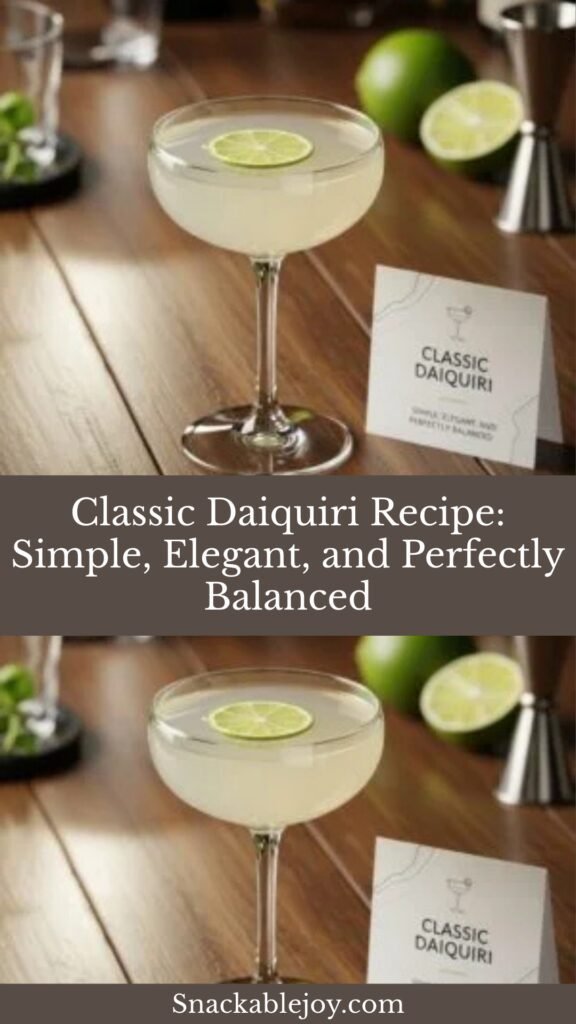
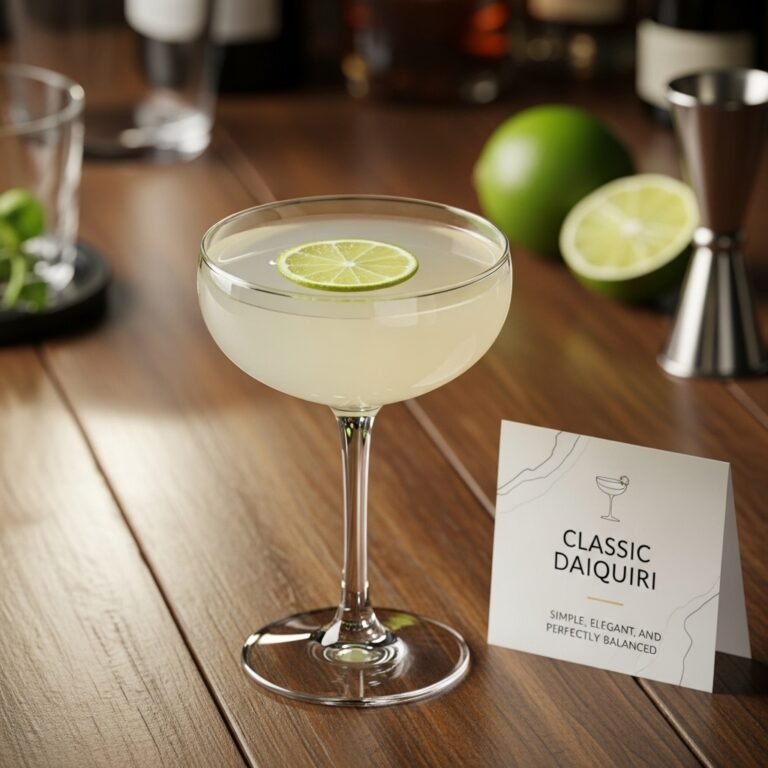
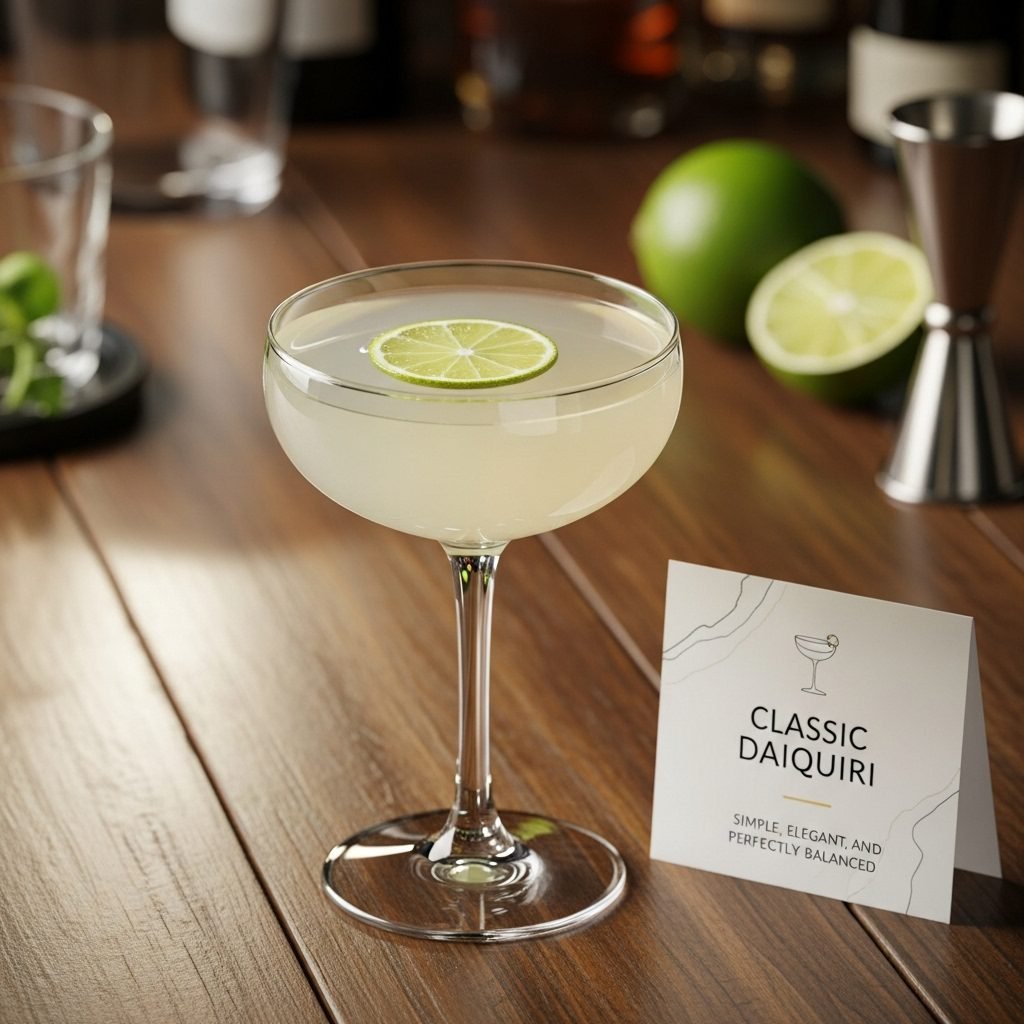
The classic daiquiri is an elegantly simple, perfectly balanced cocktail that combines smooth white rum with fresh lime juice and just a touch of sweetness, creating a refreshing drink that showcases the beauty of minimal ingredients done right! This authentic daiquiri recipe features a beautiful pale green-yellow color and that signature crisp, tart-sweet balance that has made it a favorite of cocktail connoisseurs and rum lovers for over a century. The combination of quality rum with bright citrus and subtle sweetness creates the perfect sipping cocktail that’s both sophisticated and refreshing. This easy daiquiri recipe is perfect for countless occasions: serve it at summer gatherings when you want something light and citrusy, make it for cocktail hour when you need an elegant pre-dinner drink, mix up a batch for intimate gatherings with friends who appreciate craft cocktails, offer it at dinner parties as a sophisticated alternative to wine, enjoy it on warm evenings when you’re craving something refreshing without being overly sweet, or simply make one when you want to experience one of the true classics of cocktail history. The beauty of this homemade daiquiri lies in its elegant simplicity—it requires just three ingredients (rum, lime juice, simple syrup), comes together in under 5 minutes, and delivers timeless sophistication that tastes like it came from a high-end cocktail bar. Whether you’re a rum enthusiast who appreciates Cuban classics, someone who loves citrus-forward cocktails, a home bartender building your classic cocktail repertoire, or simply anyone who believes the best drinks are the simplest ones, this classic daiquiri recipe delivers incredible flavor, beautiful balance, refreshing taste, and pure understated elegance that makes it one of the greatest cocktails ever created!
History / Background
The daiquiri has a fascinating history that’s deeply intertwined with Cuban culture, American imperialism, and the evolution of cocktail craftsmanship. Unlike many cocktails with murky origins, the daiquiri has a well-documented birth that traces back to a specific person, place, and moment in time.
The daiquiri was invented around 1898 in Daiquirí, a small mining town near Santiago de Cuba, by an American mining engineer named Jennings Cox. The story goes that Cox was entertaining American guests but ran out of gin. Having only rum available (Cuba being a major rum-producing nation), he mixed it with lime juice and sugar—ingredients readily available on the island. The result was so delicious that it quickly became popular among the American mining community.
The name “daiquiri” comes directly from the town where it was created, near the Daiquirí iron mines where Cox worked. The drink remained relatively local until Admiral Lucius W. Johnson, a U.S. Navy medical officer, brought the recipe back to the Army and Navy Club in Washington, D.C., around 1909, where it gained popularity among military and political circles.
The daiquiri’s rise to international fame accelerated in the 1920s and 1930s, particularly during Prohibition when Americans flocked to Cuba (where alcohol remained legal) for drinking vacations. Havana became a playground for American tourists, and Cuban bars perfected rum cocktails, including the daiquiri. The legendary El Floridita bar in Havana became known as the “cradle of the daiquiri,” with bartender Constantino Ribalaigua Vert creating numerous variations.
The daiquiri’s most famous devotee was Ernest Hemingway, who spent significant time in Cuba and became a regular at El Floridita. Hemingway loved daiquiris but preferred them without sugar and with double the rum—this variation became known as the “Hemingway Daiquiri” or “Papa Doble.” A bronze statue of Hemingway still stands at his favorite spot at El Floridita’s bar.
President John F. Kennedy was also a known daiquiri enthusiast, reportedly enjoying them in the White House. This presidential endorsement helped cement the daiquiri’s status as a sophisticated, refined cocktail in American culture.
It’s important to distinguish between the classic daiquiri and what many Americans think of as a “daiquiri.” The authentic Cuban daiquiri is a simple, elegant cocktail—just rum, lime juice, and sugar, served in a coupe glass. It’s NOT the frozen, fruit-flavored, often artificially sweetened slushy drinks that became popular in the 1970s and 1980s at chains like TGI Friday’s. Those strawberry daiquiri slushies, while delicious in their own right, are a completely different category of drink.
The classic daiquiri belongs to the “sour” family of cocktails—drinks that combine a base spirit, citrus juice, and sweetener. This simple template has created some of the world’s greatest cocktails: the Whiskey Sour, the Margarita (tequila sour), the Sidecar (brandy sour), and of course, the Daiquiri (rum sour).
During the craft cocktail renaissance of the 2000s and 2010s, bartenders reclaimed the daiquiri from its frozen, artificial reputation and returned it to its elegant roots. High-end cocktail bars began showcasing classic daiquiris made with premium rum, fresh lime juice, and careful attention to balance. The daiquiri has been restored to its rightful place as one of the essential cocktails every serious bartender and cocktail enthusiast should master.
Today, whether you’re sipping one in a Havana bar, at a craft cocktail lounge in Brooklyn, or in your own home, a well-made classic daiquiri represents the pinnacle of cocktail simplicity and balance. As the saying goes in bartending circles: “Anyone can make a complicated drink taste good, but it takes real skill to make a simple drink taste perfect.” The daiquiri is that perfect simple drink.
Why You’ll Love This Recipe
This classic daiquiri recipe shows you exactly how to achieve that perfect balance of sweet, tart, and boozy that makes this cocktail so timelessly elegant! While making daiquiris might seem straightforward with just three ingredients, there are actually specific techniques that separate mediocre from magnificent: using fresh lime juice (absolutely essential), understanding the proper proportions that create perfect balance, choosing quality rum that shines through, and shaking with proper technique for ideal dilution and temperature.
What makes this particular approach to the authentic daiquiri recipe special is the attention to ingredient quality and proper technique. We’re not using artificial sour mix or frozen concentrate—we’re working with fresh limes, quality white rum, and simple syrup in carefully calibrated proportions to create a cocktail that’s crisp, balanced, and genuinely refreshing like they make in Cuba. The result is an easy daiquiri that rivals anything you’d order at a high-end craft cocktail bar!
Here’s why this classic daiquiri will become your go-to sophisticated cocktail:
- Ready in 5 Minutes – As fast as pouring a glass of wine
- Only 3 Ingredients – White rum, fresh lime juice, simple syrup
- Elegantly Simple – Sophistication through minimalism
- Perfectly Balanced – The gold standard of sweet-tart harmony
- Showcases Quality Rum – Lets good rum shine
- Refreshing and Light – Perfect for any season
- Low Calorie – Lighter than creamy or frozen cocktails
- Naturally Gluten-Free – Safe for gluten-sensitive guests
- Classic Cocktail Education – Learn one of the essential cocktails
- Impresses Cocktail Enthusiasts – Serious drinkers respect this
- Endlessly Customizable – Foundation for many variations
- Timeless and Classy – Never goes out of style
Ingredient Notes
This cocktail uses minimal ingredients where quality is everything!
White Rum: The star spirit! White rum provides the backbone of the daiquiri with its clean sugarcane sweetness. Quality is crucial: This cocktail showcases rum, so use good stuff. Light/white/silver rum from Cuba or Puerto Rico is traditional. Banks 5 Island, Flor de Caña 4, Plantation 3 Stars, or Havana Club 3 are excellent. For premium, try Diplomático Planas or El Dorado 3. Amount: 2 ounces (standard). Purpose: Provides alcohol and subtle sweetness. Substitution: Aged rum (gold/añejo) creates richer, more complex daiquiri; cachaça makes a Caipirinha (Brazilian variation).
Fresh Lime Juice: The essential citrus! Freshly squeezed lime juice provides bright, tart acidity that defines the daiquiri. Freshness is everything: NEVER use bottled lime juice—it tastes flat and artificial and completely ruins this cocktail. Amount: ¾ ounce (about ½-1 lime depending on size). Why fresh: Real limes contain aromatic oils and vitamin C that disappear when bottled. Tip: Roll limes firmly on counter before juicing to release maximum juice. Substitution: Fresh lemon juice creates different flavor (sweeter, less tart) but works in a pinch.
Simple Syrup: The balanced sweetener! Simple syrup provides clean sweetness that dissolves instantly without graininess. What it is: Equal parts sugar and water, heated until sugar dissolves. Amount: ½ ounce (adjust to taste). Purpose: Balances lime’s tartness without altering flavor. Substitution: Demerara or turbinado syrup adds caramel notes; honey syrup creates “Bee’s Knees” style; agave nectar works but changes flavor; superfine sugar can work but doesn’t dissolve as easily.
Ice: Essential for shaking! You need plenty of cubed ice to shake vigorously and properly chill and dilute the drink.
Garnish: Lime wheel or lime twist adds visual appeal and aromatic oils when expressed.
Equipment Needed
This cocktail requires basic bar equipment!
- Cocktail shaker (Boston shaker or cobbler shaker)
- Jigger or measuring cup (precise measurements are crucial!)
- Coupe glass or martini glass (chilled for best presentation)
- Strainer (Hawthorne strainer if using Boston shaker)
- Citrus juicer (handheld or electric)
- Sharp knife (for cutting limes)
- Cutting board
- Fine mesh strainer (optional, for double-straining ultra-smooth texture)
That’s it! Classic cocktail equipment for timeless results.
-
Print

Daiquiri Recipe
Classic daiquiri with white rum, fresh lime juice, and simple syrup. Perfectly balanced, elegantly simple, and absolutely delicious!
- Total Time: 5 minutes
- Yield: 1 daiquiri 1x
Ingredients
Scale- 2 ounces white rum (light/silver rum)
- ¾ ounce fresh lime juice (about ½-1 lime)
- ½ ounce simple syrup (adjust to taste)
- Ice (for shaking)
- Lime wheel or twist (for garnish)
Instructions
Prepare:
- Chill Glass: Place your coupe or martini glass in the freezer for at least 5 minutes before making the drink. A chilled glass keeps the cocktail colder longer and looks elegant with that frosty appearance.
- Juice Fresh Limes: Cut limes in half and juice to get ¾ ounce (1½ tablespoons) of fresh juice. Strain out seeds if desired.
Mix the Cocktail:
- Fill Shaker with Ice: Fill your cocktail shaker about ¾ full with ice cubes. You want plenty of ice for thorough chilling and proper dilution.
- Add All Ingredients: Pour the white rum (2 ounces), fresh lime juice (¾ ounce), and simple syrup (½ ounce) into the shaker with ice.
- Shake Vigorously: Seal your shaker tightly and shake hard for 10-15 seconds. You want to shake until the outside of the shaker becomes frosty cold to the touch. The vigorous shaking properly chills the drink and creates the slight dilution that’s essential for perfect balance.
- Taste and Adjust (Optional): If you want to check the sweet-tart balance before serving, strain a tiny bit into a spoon to taste. Too tart? Add another ¼ ounce simple syrup and shake again. Too sweet? Add a small squeeze more lime. Perfect daiquiris balance sweet and tart beautifully.
Serve:
- Strain into Glass: Remove your chilled glass from the freezer. Using a Hawthorne strainer (or the built-in strainer if using cobbler shaker), carefully strain the daiquiri into the chilled glass. For ultra-smooth texture, double-strain through a fine mesh strainer to catch any small ice chips or lime pulp.
- Garnish: Add a lime wheel perched on the rim or express a lime twist over the drink (twist peel over surface to release aromatic oils), then drop it in or discard.
- Serve Immediately: Classic daiquiris are best enjoyed immediately while ice-cold and while all flavors are bright and fresh.
Notes
- Fresh Lime Juice is Essential: Never use bottled—the difference is night and day.
- Quality Rum Matters: This cocktail showcases the rum, so use good quality white rum.
- Adjust Sweetness: Standard is ½ oz simple syrup, but some prefer slightly sweeter (¾ oz) or more tart (¼ oz). Taste and adjust!
- Serve “Up” (No Ice): Classic daiquiris are strained and served without ice in the glass.
- Double-Strain Optional: For ultra-smooth texture, strain through fine mesh to remove ice chips.
- Batch for Parties: Multiply ingredients, mix in pitcher, shake individual portions with ice when serving
- Prep Time: 5 minutes
- Cook Time: 0 minutes
- Category: Cocktail, Drink
- Method: Shaken
- Cuisine: Cuban
- Diet: Gluten Free
Nutrition
- Serving Size: 1 daiquiri
- Calories: 170
- Sugar: 8g
- Sodium: 2mg
- Fat: 0g
- Saturated Fat: 0g
- Unsaturated Fat: 0g
- Trans Fat: 0g
- Carbohydrates: 9g
- Fiber: 0g
- Protein: 0g
- Cholesterol: 0mg
Tips & Variations
Hemingway Daiquiri: Add ½ oz grapefruit juice and ½ oz maraschino liqueur, reduce simple syrup to ¼ oz (Ernest Hemingway’s favorite variation).
Strawberry Daiquiri (Fresh): Muddle 3-4 fresh strawberries in shaker before adding other ingredients for natural strawberry flavor.
Frozen Daiquiri: Blend rum, lime juice, simple syrup, and 1 cup ice until smooth for frozen version.
Bank’s 5 Daiquiri: Use Banks 5 Island rum (blend of different rum styles) for more complex, layered flavor.
Aged Rum Daiquiri: Use añejo or gold rum for richer, more sophisticated flavor with caramel notes.
Demerara Daiquiri: Use demerara syrup (made with raw cane sugar) instead of simple syrup for deeper, molasses-like sweetness.
Honey Daiquiri: Replace simple syrup with honey syrup (honey + water) for floral sweetness.
Spiced Daiquiri: Add 2 dashes Angostura bitters for spice complexity.
Lower Sugar: Reduce simple syrup to ¼ oz for more tart, rum-forward version.
Lime Cordial Daiquiri: Use ¼ oz lime cordial (like Rose’s) in place of half the simple syrup for classic bar style.
Pro Chef Tips
Fresh Lime Juice is the Foundation: Professional bartenders at craft cocktail bars never, ever compromise on fresh lime juice. Bottled lime juice contains preservatives and tastes flat, chemical, and artificial—it completely ruins this simple, elegant cocktail. The bright, vibrant acidity and aromatic oils from fresh limes are what make daiquiris special. Always juice limes fresh, ideally right before making the drink.
The Proper Ratio is Personal: While the classic ratio is 2:¾:½ (rum:lime:syrup), bartenders know that perfect balance is somewhat personal. Some prefer 2:1:½ for more tart, others 2:¾:¾ for sweeter. The traditional Cuban style tends toward tart; American bars often sweeter. Start with the classic ratio, taste, and adjust to your preference. The beauty of mastering the classic daiquiri is learning your perfect balance.
Shake Hard and Cold: Professional bartenders shake daiquiris vigorously for 10-15 seconds until the shaker is frosty cold. This isn’t just mixing—it’s creating proper dilution that smooths the alcohol and balances flavors while thoroughly chilling. Under-shaking leaves harsh, unbalanced drinks. The dilution from properly melted ice is essential—it’s part of the recipe.
Quality Rum Makes the Cocktail: Since daiquiris have only three ingredients and the rum is the star, quality matters tremendously. Harsh, cheap rum creates harsh daiquiris. Smooth, quality white rum (even mid-range like Flor de Caña or Plantation) creates elegant, sippable cocktails. This is where to invest—one bottle makes many drinks and the difference is dramatic.
Double-Strain for Elegance: High-end cocktail bars double-strain daiquiris through a fine mesh strainer after the regular strainer. This catches any tiny ice chips and lime pulp, creating an ultra-smooth, crystal-clear cocktail with perfect texture. It’s a 5-second step that elevates presentation significantly.
Chill Your Glassware: Professional cocktail lounges always serve daiquiris in chilled coupe or martini glasses. The cold glass keeps the drink colder longer (crucial for “up” cocktails with no ice) and prevents rapid temperature change that throws off balance. Five minutes in the freezer makes a noticeable difference in the drinking experience.
Express the Lime Garnish: Bartenders don’t just drop lime garnish in—they “express” lime twists over the drink by holding the peel over the glass, skin side down, and giving it a firm twist to release aromatic citrus oils onto the drink’s surface. This adds incredible aroma that enhances the entire experience. Then either drop the twist in or discard and add a lime wheel.
Common Mistakes to Avoid
Using Bottled Lime Juice: The absolute worst mistake! Bottled lime juice tastes flat, artificial, preservative-heavy, and completely ruins this elegant cocktail. It transforms a refined classic into something that tastes like cleaning chemicals. Always squeeze fresh limes—this is the single most important rule for daiquiris. The 2 minutes it takes to juice fresh limes is the difference between mediocre and magnificent.
Making It Too Sweet: Over-sweetening with too much simple syrup (¾ oz or more) masks the beautiful rum flavor and lime brightness, creating something that tastes like alcoholic limeade rather than a balanced cocktail. Start with ½ ounce simple syrup—you can always add more after tasting, but you can’t remove it. The best daiquiris balance sweet and tart, not lean toward candy.
Not Shaking Long Enough: Gentle or brief shaking (just 5 seconds) doesn’t properly chill or dilute the drink. Daiquiris need vigorous shaking for 10-15 seconds until the shaker frosts. The dilution from properly melted ice is essential—it smooths the alcohol and balances flavors. Under-shaking creates harsh, unbalanced, overly strong drinks.
Using Cheap or Wrong Rum: Using harsh, bottom-shelf white rum or dark/spiced rum completely changes this cocktail. The daiquiri showcases rum—there’s nowhere to hide poor quality. Dark rum is too strong and changes the flavor profile entirely. Use smooth, quality white/light/silver rum for authentic daiquiris. Even mid-range rum creates infinitely better drinks than premium dark rum.
Serving in Wrong Glass or With Ice: Serving daiquiris in rocks glasses over ice (instead of “up” in a coupe) or in warm glassware changes the drinking experience entirely. Classic daiquiris are elegant cocktails served “up” (no ice in glass) in chilled coupe or martini glasses. The presentation, temperature, and drinking experience are crucial to what makes this cocktail special.
Wrong Proportions: Using equal parts of all three ingredients (1 oz each) creates an unbalanced drink that’s too sweet and not enough rum. The classic proportions matter: 2 oz rum, ¾ oz lime, ½ oz syrup. This ratio has been perfected over 125+ years for good reason—it creates perfect balance.
Storage & Meal Prep
Fresh Lime Juice Storage: If juicing limes ahead for a cocktail party, fresh lime juice can be refrigerated in an airtight container for up to 24 hours maximum. However, it starts losing brightness and aromatic qualities immediately, so fresher is always dramatically better. For longer storage, freeze in ice cube trays (up to 3 months), though quality decreases significantly.
Simple Syrup Storage: Make a batch of simple syrup (equal parts sugar and hot water, stirred until dissolved, then cooled) and store refrigerated for up to 1 month in a sealed container. Having it ready makes daiquiri-making faster and easier whenever the mood strikes.
Batching for Parties: For entertaining, you can pre-mix rum, lime juice, and simple syrup in a pitcher and refrigerate for up to 2 hours. When serving, shake individual portions with ice—never skip the shaking! Simply pouring from pitcher doesn’t create proper temperature or dilution.
No Long-Term Storage: Daiquiris don’t store well once made. They warm up, lose balance, and fresh lime flavor fades rapidly. Always make fresh to order for optimal flavor and experience.
Make-Ahead & Freezer Notes
Make-Ahead Limitations: Like all fresh citrus cocktails, daiquiris taste best made completely fresh. Bright lime flavor fades quickly, and the drink must be ice-cold immediately after shaking for proper experience. You cannot make them hours ahead without significant quality loss.
Party Prep Strategy: For entertaining multiple guests, prepare efficiently: chill glasses in freezer, juice limes and refrigerate (use within 24 hours, fresher is better), have simple syrup ready in squeeze bottle or pitcher, pre-measure rum into containers, and set up a shaking station. Each daiquiri takes only 2 minutes to shake and serve fresh—your guests can watch the craftsmanship!
Freezing Not Recommended: Never freeze pre-made daiquiris. Alcohol won’t freeze solid, lime juice degrades significantly in flavor, and you’ll have separated, unappetizing liquid when thawed. Always make fresh.
Batch Base Strategy: Some bartenders pre-mix rum, lime juice, and simple syrup in bottles for large events (keeping refrigerated), then shake individual portions with ice when ordered. This preserves reasonable quality while managing high volume, though fresh-mixed is always superior.
Serving Suggestions
When to Serve:
- Cocktail hour and happy hour
- Intimate dinner parties (pre-dinner aperitif)
- Summer gatherings and warm evenings
- Celebration toasts
- Craft cocktail education nights
- Cuban-themed gatherings
- Sophisticated entertaining
- Any time you want elegance and simplicity
Food Pairings:
- Fresh oysters and seafood
- Cuban cuisine (ropa vieja, moros y cristianos)
- Ceviche and aguachile
- Light appetizers (shrimp cocktail, prosciutto)
- Grilled fish or chicken
- Fresh salads with citrus vinaigrette
- Cheese plates (manchego, goat cheese)
- Tropical fruits (mango, papaya, pineapple)
Other Drinks to Serve:
- Mojitos for mint lovers
- Cuba Libres (rum and Coke) for casual option
- Dark and Stormys for ginger beer fans
- Wine for variety
- Classic martinis for gin drinkers
Creating the Atmosphere:
- Sophisticated, refined table settings
- Vintage Cuban music or classic jazz
- Proper coupe glasses for elegant presentation
- Fresh lime wedges displayed
- Dim, warm lighting for intimacy
FAQs Section
Q: What’s the difference between a daiquiri and a margarita?
A: Both are “sours” (spirit + citrus + sweetener) but use different base spirits and citrus. Daiquiris use white rum and lime juice; margaritas use tequila and lime juice (plus orange liqueur). Daiquiris are typically served “up” in coupe glasses; margaritas often served on the rocks with salt rim. Similar structure, different spirits and presentation.Q: Can you use bottled lime juice for daiquiris?
A: Absolutely not! This is the #1 rule: always use fresh lime juice. Bottled tastes flat, artificial, and chemical—it completely ruins this simple, elegant cocktail. The fresh lime juice is what makes daiquiris special. The 2-minute juicing time is non-negotiable for quality.Q: What rum is best for daiquiris?
A: Use quality white/light/silver rum—the daiquiri showcases rum, so quality matters! Traditional: Havana Club 3 (Cuban, hard to find in US). Excellent options: Flor de Caña 4, Banks 5 Island, Plantation 3 Stars. Premium: Diplomático Planas, El Dorado 3. Avoid dark rum (too strong) and cheap rum (too harsh). Mid-range quality white rum is the sweet spot.Q: Why is my daiquiri too sweet or too tart?
A: Balance is personal! Too sweet? Reduce simple syrup to ¼-⅜ oz. Too tart? Increase to ¾ oz. Classic ratio is 2 oz rum, ¾ oz lime, ½ oz syrup, but adjust to taste. Taste as you go—start conservative with sweetener and add more if needed. You can’t remove sweetness once added!Q: How do you make a frozen daiquiri?
A: Blend the same ingredients (2 oz rum, ¾ oz lime juice, ½ oz simple syrup) with 1 cup ice in a blender until smooth. Frozen daiquiris are a different style—fun and refreshing but less elegant than the classic shaken version. Both are legitimate but serve different purposes and occasions.Q: Can you batch daiquiris for a party?
A: Sort of! Pre-mix rum, lime juice, and simple syrup in a pitcher (refrigerate up to 2 hours). When serving, shake each individual portion with ice—this step is essential for proper temperature and dilution. Don’t skip shaking or you’ll have warm, harsh drinks. Batching the base saves measuring time while maintaining quality.Q: What’s a Hemingway daiquiri?
A: Ernest Hemingway’s favorite variation: add ½ oz grapefruit juice and ½ oz maraschino liqueur, reduce simple syrup to ¼ oz (Hemingway preferred less sweet). Also called “Papa Doble.” More complex and tart than classic daiquiri. Hemingway famously drank them at El Floridita bar in Havana—there’s even a bronze statue of him there!Conclusion
And there you have it—everything you need to make the most delicious, perfectly balanced, elegantly simple classic daiquiri that embodies the art of cocktail craftsmanship! While this iconic cocktail uses just three ingredients, the step-by-step guidance, ingredient insights, and professional techniques we’ve covered transform those simple components into something truly transcendent. From understanding why fresh lime juice is absolutely sacred to knowing the perfect proportions for ideal balance, you now have all the knowledge to make daiquiris that would make Hemingway proud.
This easy daiquiri recipe proves that the greatest cocktails are often the simplest ones—when executed with care, quality ingredients, and proper technique. With just white rum, fresh limes, simple syrup, and 5 minutes, you can create a drink that’s perfect for impressing cocktail enthusiasts, elevating dinner parties, or simply treating yourself to timeless elegance. This classic daiquiri connects you to over 125 years of cocktail history and Cuban culture!
Whether you’re making this authentic daiquiri recipe for cocktail hour, intimate gatherings, sophisticated entertaining, warm summer evenings, educational tasting sessions, or simply because you want to experience one of the true cocktail classics, this recipe delivers every single time. It’s balanced, elegant, refreshing, endlessly customizable, and genuinely represents cocktail perfection—everything a signature drink should be!
Now it’s your turn to shake up your own perfectly balanced, ice-cold classic daiquiri! I’d love to hear about your experience—did you achieve that ideal sweet-tart balance? What rum did you use? Have you experimented with variations? Share your thoughts, creative twists, and beautiful cocktail photos in the comments below! Your feedback and ideas inspire other readers and help build our cocktail enthusiast community.
Don’t forget to save this daiquiri recipe to your Pinterest boards—pin it to “Classic Cocktails,” “Rum Drinks,” “Cocktail Hour,” or “Cuban Recipes” so you can find it whenever you want cocktail perfection. If you know someone who loves rum, appreciates craft cocktails, or wants to learn the classics, share this article with them. And when you make your perfectly balanced, elegantly simple daiquiri, snap a photo and tag me on social media—I absolutely love seeing your cocktail creations!
Now go shake up this timeless classic and experience cocktail perfection in its purest form! 🍹🍋✨