Perfect Homemade Profiteroles (French Cream Puffs with Chocolate Sauce)
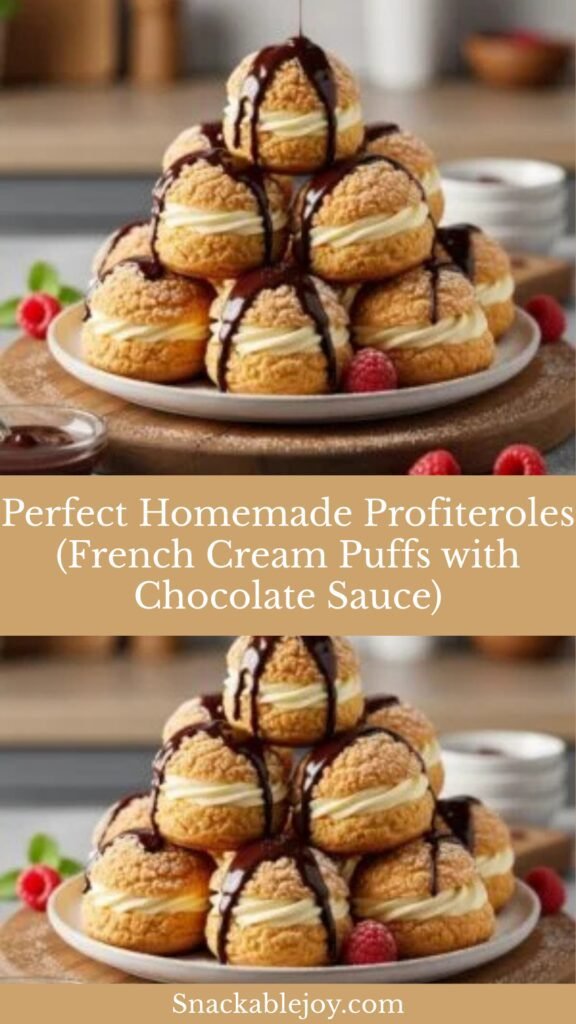
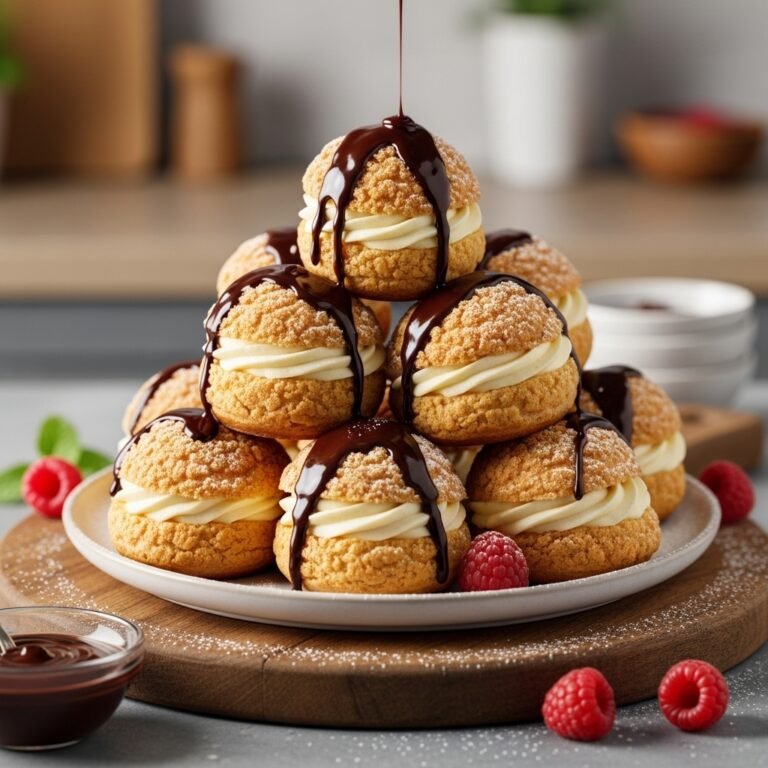
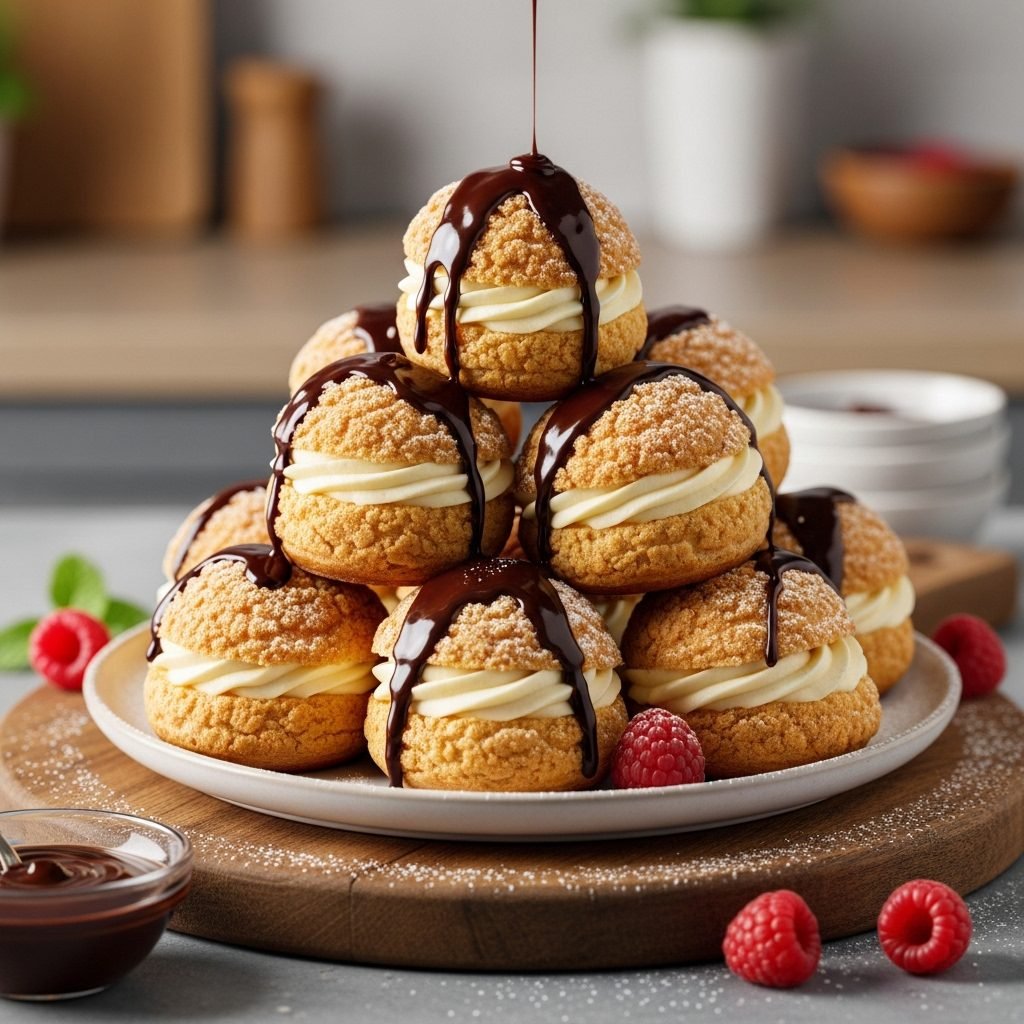
Profiteroles are those magical little French pastries that look incredibly fancy but are surprisingly simple to make at home! These delicate cream puffs are made from choux pastry—a light, airy dough that puffs up beautifully in the oven. Once baked to golden perfection, they’re filled with luscious vanilla cream or ice cream and drizzled with warm chocolate sauce. The result? An absolutely show-stopping dessert that’ll have everyone thinking you spent hours in the kitchen (but we’ll keep the secret that you didn’t!).
These elegant treats are perfect for dinner parties, holiday celebrations, or any time you want to impress your guests without the stress. The contrast of crispy pastry shells, creamy filling, and rich chocolate sauce creates a dessert experience that’s simply unforgettable. While profiteroles might seem intimidating if you’ve never made choux pastry before, I promise that with my step-by-step guidance, you’ll be piping perfect puffs like a French pâtissier in no time!
History / Background
Profiteroles have a fascinating history that spans several centuries and multiple countries! The name “profiterole” comes from the French word meaning “small profit” or “small gift,” which is fitting for these delightful little treats. The choux pastry that forms the base of profiteroles was actually invented in the 16th century, with some culinary historians crediting Italian chef Panterelli, who was working for Catherine de’ Medici when she married King Henry II of France. However, the pastry was refined and perfected in the 17th century by French chef La Varenne, who included it in his groundbreaking cookbook.
The concept of filling these airy pastries with cream and topping them with chocolate sauce became popular in 19th-century France, where they were served in elegant Parisian cafés and restaurants. The classic presentation—three cream puffs arranged in a pyramid, drizzled with warm chocolate ganache—became the signature style that’s still beloved today.
Interestingly, profiteroles became a symbol of French haute cuisine and were considered a hallmark of a skilled pastry chef’s repertoire. In French culinary schools, mastering pâte à choux (choux pastry) is one of the fundamental skills every aspiring chef must perfect. Today, profiteroles remain a staple in French bistros and have gained popularity worldwide, with variations appearing in bakeries from Tokyo to New York City. They’re particularly beloved in the United Kingdom, where they’re often served at weddings and special celebrations.
Why You’ll Love This Recipe
This profiterole recipe strikes the perfect balance between impressive presentation and manageable technique. I’ve tested this recipe countless times to ensure it works beautifully for home bakers, and the feedback from my readers has been absolutely amazing! Whether you’re new to pastry-making or an experienced baker looking to add a French classic to your repertoire, these profiteroles will become your go-to dessert for special occasions.
Here’s why this recipe is absolutely worth making:
- Surprisingly Simple: Despite looking like something from a fancy French bakery, choux pastry uses basic pantry ingredients and straightforward techniques
- Make-Ahead Friendly: You can bake the shells in advance and fill them just before serving, making entertaining stress-free
- Versatile Filling Options: Use pastry cream, whipped cream, or even ice cream—customize to your preference or what you have on hand
- Crowd-Pleasing: I’ve never met anyone who doesn’t love profiteroles—they’re universally adored by adults and kids alike
- Budget-Friendly Elegance: Create a restaurant-quality dessert using affordable everyday ingredients
- Portion-Controlled: Individual servings mean no messy slicing or serving drama
- Impressive Wow Factor: Your guests will be absolutely amazed when you tell them you made these from scratch
- Perfectly Textured: Crispy on the outside, hollow and light on the inside—exactly as profiteroles should be
Ingredient Notes
Understanding your ingredients is key to profiterole success! Here’s what you need and why each component matters:
For the Choux Pastry:
- Water & Butter: These combine to create the base liquid that gelatinizes the flour. The butter adds richness and helps with browning. Don’t substitute margarine—real butter is essential for flavor and proper texture.
- All-Purpose Flour: Provides structure through gluten development. Bread flour can be used for slightly chewier puffs, but all-purpose gives the classic tender texture.
- Eggs: The most critical ingredient! Eggs provide the steam that makes the pastry puff up dramatically. They also add richness, color, and structure. Use large eggs at room temperature for best incorporation.
- Salt & Sugar: A pinch of each enhances flavor without making the pastry sweet. The sugar also aids in browning.
For the Pastry Cream Filling:
- Whole Milk: Creates a rich, creamy base. You can use 2% milk, but whole milk gives the best texture and flavor.
- Vanilla Bean or Extract: Pure vanilla extract is essential—imitation vanilla won’t deliver the same aromatic quality.
- Egg Yolks: Thicken the cream and add luxurious richness. Save those whites for meringues!
- Cornstarch: Creates the perfect thick yet spoonable consistency. Substitute with equal parts all-purpose flour if needed, though the texture will be slightly different.
- Heavy Cream: Whipped and folded in at the end for an airy, lighter filling called crème diplomat.
For the Chocolate Sauce:
- Dark Chocolate: Use quality chocolate with 60-70% cocoa content for rich flavor without excessive bitterness.
- Heavy Cream: Creates a silky, pourable ganache consistency.
Substitution Notes: For a quicker version, use store-bought vanilla pudding or sweetened whipped cream instead of pastry cream. For the chocolate sauce, you can use prepared chocolate ganache or even hot fudge sauce in a pinch.
Equipment Needed
Having the right tools makes profiterole-making much easier! Here’s what you’ll need:
- Medium Saucepan: For cooking the choux pastry dough
- Wooden Spoon or Sturdy Spatula: Essential for vigorously mixing the hot dough
- Stand Mixer or Hand Mixer: Makes incorporating eggs much easier, though you can do it by hand
- Baking Sheets (2): For baking the profiteroles with space between each puff
- Parchment Paper or Silicone Baking Mats: Prevents sticking and ensures even baking
- Piping Bag with Round Tip: A ½-inch round tip (Ateco #806 or similar) gives perfectly shaped puffs
- Wire Cooling Rack: Allows air circulation around the baked puffs
- Whisk: For making smooth pastry cream
- Medium Saucepan: Another one for the pastry cream
- Fine-Mesh Strainer: Optional but helpful for silky-smooth pastry cream
- Sharp Paring Knife or Skewer: For making steam vents in the puffs
- Serving Platter: For that beautiful presentation
Print

Homemade Profiteroles
Classic French profiteroles featuring light and airy choux pastry puffs filled with vanilla pastry cream and topped with rich chocolate ganache. This elegant dessert looks impressive but is surprisingly simple to make at home!
- Total Time: 2 hours 5 minutes
- Yield: 24 profiteroles (8 servings) 1x
Ingredients
ScaleFor the Choux Pastry:
- 1 cup (240ml) water
- ½ cup (113g) unsalted butter, cut into pieces
- 1 tablespoon granulated sugar
- ¼ teaspoon salt
- 1 cup (125g) all-purpose flour
- 4 large eggs, at room temperature
For the Vanilla Pastry Cream:
- 2 cups (480ml) whole milk
- ½ cup (100g) granulated sugar, divided
- 1 vanilla bean (or 2 teaspoons pure vanilla extract)
- 5 large egg yolks
- 3 tablespoons cornstarch
- 2 tablespoons unsalted butter
- 1 cup (240ml) heavy cream, whipped to soft peaks
For the Chocolate Sauce:
- 8 ounces (225g) dark chocolate (60-70% cocoa), chopped
- 1 cup (240ml) heavy cream
- 2 tablespoons unsalted butter
- 1 tablespoon light corn syrup (optional, for shine)
Instructions
Make the Pastry Cream (Can be done a day ahead):
- Prepare the milk mixture: In a medium saucepan, combine milk and ¼ cup sugar. If using a vanilla bean, split it lengthwise, scrape out the seeds, and add both seeds and pod to the milk. Heat over medium heat until just simmering, then remove from heat and let steep for 10 minutes. Remove vanilla pod.
- Whisk the egg mixture: In a medium bowl, whisk together egg yolks, remaining ¼ cup sugar, and cornstarch until smooth and pale yellow, about 2 minutes.
- Temper the eggs: Slowly pour about ½ cup of the hot milk mixture into the egg mixture while whisking constantly. This gradually raises the temperature of the eggs without scrambling them.
- Cook the pastry cream: Pour the tempered egg mixture back into the saucepan with the remaining milk. Cook over medium heat, whisking constantly, until the mixture thickens and comes to a boil. Continue cooking for 1-2 minutes while whisking to cook out the starch taste.
- Finish and chill: Remove from heat and whisk in butter and vanilla extract (if not using vanilla bean). Strain through a fine-mesh sieve into a clean bowl. Press plastic wrap directly onto the surface to prevent a skin from forming. Refrigerate until completely cold, at least 2 hours or overnight.
Make the Choux Pastry:
- Preheat oven: Position racks in the upper and lower thirds of your oven and preheat to 425°F (220°C). Line two baking sheets with parchment paper.
- Make the dough: In a medium saucepan, combine water, butter, sugar, and salt. Bring to a rolling boil over medium-high heat, ensuring the butter is completely melted.
- Add flour: Remove from heat and add flour all at once. Stir vigorously with a wooden spoon until the mixture forms a ball and pulls away from the sides of the pan, about 1 minute.
- Cook the paste: Return the pan to medium heat and cook, stirring constantly, for 2 minutes. This dries out the dough slightly and cooks the flour. The dough should look slightly shiny and leave a thin film on the bottom of the pan.
- Transfer and cool briefly: Transfer the hot dough to the bowl of a stand mixer fitted with the paddle attachment (or a large bowl if using a hand mixer). Let cool for 3-4 minutes, stirring occasionally.
- Add eggs: Beat the dough on medium speed and add eggs one at a time, beating well after each addition. The dough will look separated at first but will come together. After all eggs are incorporated, the dough should be smooth, glossy, and fall from a spoon in a thick ribbon.
- Pipe the puffs: Transfer dough to a piping bag fitted with a ½-inch round tip. Pipe 1½-inch mounds onto prepared baking sheets, spacing them 2 inches apart (you should get about 24 puffs). Use a damp finger to gently smooth any peaks.
- Bake: Place both sheets in the oven and immediately reduce temperature to 375°F (190°C). Bake for 20 minutes without opening the oven door. After 20 minutes, rotate the pans and bake for an additional 10-15 minutes until puffs are golden brown and feel light and hollow.
- Create steam vents: Remove from oven and immediately use a paring knife or skewer to poke a small hole in the side or bottom of each puff to release steam. Return to the turned-off oven with the door slightly ajar for 10 minutes to dry out the interiors. Transfer to a wire rack to cool completely.
Make the Chocolate Sauce:
- Heat cream: In a small saucepan, bring heavy cream to a simmer over medium heat.
- Make ganache: Place chopped chocolate in a heatproof bowl. Pour hot cream over chocolate and let stand for 2 minutes. Add butter and corn syrup (if using), then whisk until smooth and glossy. Keep warm until serving.
Assemble the Profiteroles:
- Finish the filling: When ready to serve, whip the heavy cream to soft peaks and gently fold it into the chilled pastry cream to make crème diplomat.
- Fill the puffs: Cut each puff in half horizontally or use a piping bag fitted with a small tip to pipe filling through the steam vent hole. If cutting, place a generous dollop of cream in the bottom half and replace the top.
- Serve: Arrange 3 profiteroles per serving on dessert plates. Drizzle generously with warm chocolate sauce just before serving.
Notes
- Steam is crucial: Don’t open the oven door during the first 20 minutes of baking—the puffs need steady heat and steam to rise properly.
- Proper egg incorporation: The dough should be smooth and glossy. If it’s too stiff, add another egg yolk. If too runny, the puffs won’t hold shape.
- Fill just before serving: Profiteroles are best when assembled within 1-2 hours of serving to maintain the crispy shell texture.
- Altitude adjustments: If baking at high altitude, you may need to increase oven temperature by 25°F and reduce baking time slightly.
- Checking doneness: Puffs should feel very light when picked up and be deeply golden all over. Underbaked puffs will deflate.
- Prep Time: 30 minutes
- Cook Time: 35 minutes
- Category: Desert
- Method: Baking
- Cuisine: French
- Diet: Vegetarian
Nutrition
- Serving Size: 3 profiteroles with chocolate sauce
- Calories: 485
- Sugar: 28g
- Sodium: 165mg
- Fat: 32g
- Saturated Fat: 19g
- Unsaturated Fat: 11g
- Trans Fat: 0g
- Carbohydrates: 42g
- Fiber: 2g
- Protein: 9g
- Cholesterol: 245mg
Tips & Variations
Flavor Variations:
- Chocolate Cream Puffs: Add 3 tablespoons cocoa powder to the pastry cream for chocolate-filled profiteroles
- Coffee Profiteroles: Dissolve 2 tablespoons instant espresso powder in the milk for the pastry cream
- Raspberry Profiteroles: Fill with vanilla cream and add fresh raspberries, then drizzle with white chocolate instead
- Caramel Profiteroles: Replace chocolate sauce with homemade salted caramel sauce
- Lemon Cream Puffs: Add lemon zest to the pastry cream and top with lemon glaze instead of chocolate
Dietary Modifications:
- Gluten-Free: Substitute a 1:1 gluten-free flour blend for all-purpose flour in the choux pastry
- Dairy-Free: Use coconut cream and dairy-free butter alternatives, and fill with coconut whipped cream
- Lighter Version: Use vanilla-flavored Greek yogurt mixed with a little honey and whipped cream as filling
- Ice Cream Profiteroles: Skip the pastry cream and fill with your favorite ice cream for an easier version
Size Variations:
- Make mini profiteroles (½-inch) for elegant appetizer-sized bites—reduce baking time to 15-18 minutes
- Create giant profiteroles (3-inch) for individual dessert servings—increase baking time to 35-40 minutes
Pro Chef Tips
- Room Temperature Eggs Are Essential: Cold eggs won’t incorporate as smoothly into the hot dough. Set eggs out 30 minutes before baking, or place them in a bowl of warm water for 5 minutes.
- The “Ribbon Test” for Perfect Consistency: Your choux dough is ready when it falls from the spoon in a thick V-shaped ribbon that slowly dissolves back into the mass. Too thick and the puffs won’t rise; too thin and they’ll spread instead of puffing up.
- Use a Scale for Consistent Results: Weighing flour gives you the most accurate measurement. Too much flour creates dense, heavy puffs that won’t rise properly.
- Strategic Oven Positioning: Place baking sheets on the upper and lower racks (not middle) to ensure maximum heat circulation. This helps create that perfect crispy exterior.
- The Steam Vent Secret: Poking a hole immediately after baking releases interior steam that would otherwise make the shells soggy. This one step makes the difference between crispy and limp profiteroles.
- Patience with Pastry Cream: Don’t rush the cooking process. Pastry cream needs to reach a full boil to properly activate the cornstarch. Undercooked pastry cream will be thin and runny.
- Double Strain for Silky Texture: For ultra-smooth pastry cream worthy of a French pâtisserie, strain it twice—once after cooking and again after it’s chilled.
- The Professional Assembly Technique: Pastry chefs often use a small star tip to pipe pastry cream into the puff through the bottom hole. This keeps the exterior pristine and looks more polished than cutting them open.
Common Mistakes to Avoid
1. Opening the Oven Door Too Early
This is the number one mistake! Opening the door before the puffs have set causes them to deflate immediately. The sudden temperature drop stops the rising process. Always wait at least 20 minutes before checking, and when you do, work quickly.2. Not Cooking the Dough Paste Long Enough
The crucial 2-minute cooking step on the stovetop after adding flour isn’t just for show. This process gelatinizes the starch, which helps the puffs hold their structure when they rise. Skip it, and you’ll get flat, greasy puffs.3. Adding Eggs Too Quickly
If you dump all the eggs in at once, the dough will seize up and become lumpy. Add them one at a time, beating thoroughly after each addition. The dough will look broken at first—keep mixing and it will come together into a smooth, glossy paste.4. Underbaking the Puffs
Profiteroles that look “done” might not actually be done inside. They need to be deeply golden brown all over and feel very light when picked up. Pale puffs with wet interiors will collapse as they cool. When in doubt, bake 5 minutes longer.5. Filling Too Far in Advance
While you can bake the shells ahead, don’t fill them more than 2 hours before serving. The moisture from the cream will soften that beautiful crispy shell into a soggy mess. For best results, fill profiteroles just 30-60 minutes before guests arrive.Storage & Meal Prep
Storing Unfilled Choux Puffs:
Baked, cooled profiterole shells can be stored in an airtight container at room temperature for up to 2 days. To re-crisp before filling, place them in a 300°F oven for 5 minutes, then cool completely. This brings back that fresh-baked crunch!Storing Pastry Cream:
Keep pastry cream in an airtight container in the refrigerator with plastic wrap pressed directly against the surface (this prevents a skin from forming). It will stay fresh for up to 3 days. Give it a good whisk before using to restore smoothness.Storing Filled Profiteroles:
Once assembled, profiteroles should be eaten within 2-3 hours for best texture. Store them in the refrigerator if you need to hold them longer, but note that the shells will soften. The chocolate sauce should be drizzled on just before serving.Chocolate Sauce Storage:
Store ganache in an airtight container in the refrigerator for up to 1 week. Gently reheat in the microwave in 15-second intervals, stirring between each, or use a double boiler. Add a splash of cream if it’s too thick after reheating.Reheating Tips:
If your profiterole shells have softened, restore crispness by placing them (unfilled) on a baking sheet in a 300°F oven for 5-7 minutes. Let them cool completely before filling. Never microwave profiteroles—it makes them rubbery and soggy.Make-Ahead & Freezer Notes
Make-Ahead Timeline:
- 3 Days Ahead: Make the pastry cream and store covered in the refrigerator
- 2 Days Ahead: Bake the profiterole shells, cool completely, and store in an airtight container at room temperature
- Day Of: Make the chocolate sauce (or reheat if made earlier), whip the cream and fold into pastry cream, fill the puffs, and assemble
Freezing Unbaked Choux Paste:
You can freeze piped, unbaked choux mounds on parchment-lined baking sheets. Once frozen solid, transfer to freezer bags for up to 1 month. Bake directly from frozen, adding 5 extra minutes to the baking time. Don’t thaw first—they’ll become soggy.Freezing Baked Shells:
This is my favorite make-ahead method! Bake the profiterole shells completely, cool, and freeze in a single layer on a baking sheet. Once frozen, transfer to freezer bags for up to 2 months. To use, thaw at room temperature for 30 minutes, then re-crisp in a 300°F oven for 5-7 minutes.Freezing Pastry Cream:
While possible, I don’t recommend freezing pastry cream as it can become grainy when thawed. The texture never quite recovers. However, you can freeze whipped cream separately—just beat it lightly when thawed to restore volume.Freezing Assembled Profiteroles:
Yes, you can freeze filled profiteroles! This is perfect for parties. Arrange filled profiteroles on a baking sheet and freeze until solid. Transfer to an airtight container with parchment between layers. Freeze for up to 1 month. Thaw in the refrigerator for 2-3 hours before serving and drizzle with fresh chocolate sauce.Best Reheating Method:
For frozen baked shells, let them thaw at room temperature, then refresh in a 300°F oven for 5-7 minutes. For frozen filled profiteroles, thaw overnight in the refrigerator—don’t try to reheat them or the filling will melt and become a mess.Serving Suggestions
Profiteroles are incredibly versatile and can be served in various elegant presentations:
Classic Service:
Arrange three profiteroles on each dessert plate in a triangle. Drizzle generously with warm chocolate sauce at the table for that restaurant-quality experience. Add a small dollop of whipped cream and a fresh mint sprig for color.Croquembouche Tower:
For truly special celebrations, stack profiteroles in a cone shape using caramel as “glue” to create a traditional French wedding cake. This dramatic centerpiece is easier than it looks and makes a stunning impression!Profiterole Sundae:
Place profiteroles in a bowl, add a scoop of vanilla ice cream, drizzle with hot fudge, and top with whipped cream and chopped nuts. This American twist on a French classic is kid-friendly and delicious.Perfect Pairings:
- Coffee or Espresso: The slight bitterness cuts through the richness beautifully
- Dessert Wine: A glass of Sauternes or late-harvest Riesling complements the sweetness
- Fresh Berries: Serve alongside fresh strawberries, raspberries, or cherries for a pop of freshness
- Champagne: For celebrations, nothing beats profiteroles with a glass of bubbly
- Tea Service: Pair with Earl Grey or French Vanilla tea for an elegant afternoon treat
Dinner Party Menu Ideas:
- Serve after a light main course like grilled fish or roasted chicken
- Perfect ending to a French-themed dinner with coq au vin or beef bourguignon
- Ideal for holiday dinners when you want something special but manageable
FAQs Section
Q: Why didn’t my profiteroles puff up?
A: This usually happens for one of three reasons: (1) You opened the oven door too early and let out the steam, (2) The dough was too wet from adding too many eggs, or (3) Your oven temperature was too low. Make sure your oven is fully preheated to 425°F, don’t peek for at least 20 minutes, and check that your dough forms a thick ribbon when lifted.Q: Can I make profiteroles without a piping bag?
A: Absolutely! You can use two spoons to drop mounds of dough onto the baking sheet. Use one spoon to scoop the dough and another to push it off. The shapes won’t be quite as uniform, but they’ll still puff up beautifully and taste delicious. You can also use a zip-top bag with the corner snipped off.Q: My profiteroles deflated after baking—what went wrong?
A: Deflated puffs are usually underbaked. They might look golden on the outside, but if the interior walls aren’t completely dry and set, they’ll collapse as they cool. The solution is to bake them longer until they’re deeply golden all over and feel very light when picked up. Also, make sure to poke steam holes immediately after baking.Q: Can I use a different filling instead of pastry cream?
A: Yes! Profiteroles are wonderfully versatile. Popular alternatives include: sweetened whipped cream (the easiest option), vanilla ice cream (creates profiteroles glacées), chocolate mousse, lemon curd mixed with whipped cream, or even store-bought vanilla pudding lightened with whipped cream. Choose what works for your timeline and skill level.Q: How do I know when the choux pastry dough is the right consistency?
A: The dough should be smooth, glossy, and thick but pipeable. When you lift the beater or spoon, the dough should fall slowly in a thick V-shaped ribbon. If it’s too stiff and holds its shape firmly, add another egg yolk. If it’s too liquid and drips quickly, it has too many eggs—unfortunately, you’ll need to make a new batch as there’s no fix for over-thinned dough.Q: Can profiteroles be made gluten-free?
A: Yes! Use a 1:1 gluten-free flour blend (like Bob’s Red Mill or King Arthur) in place of all-purpose flour. The texture will be slightly different—possibly a bit more delicate—but they’ll still puff up nicely. Make sure your blend contains xanthan gum for proper structure. Some readers report that adding an extra egg helps with the rise.Q: Why is my pastry cream lumpy?
A: Lumps happen when the egg mixture isn’t properly tempered (added too quickly to the hot milk) or when the mixture isn’t whisked constantly while cooking. The good news is that even lumpy pastry cream can be saved! Strain it through a fine-mesh sieve while it’s still hot, pressing it through with a spatula. For extra insurance, you can even use an immersion blender to smooth it out before chilling.Conclusion
There you have it—everything you need to create gorgeous, bakery-worthy profiteroles right in your own kitchen! I know that choux pastry can seem intimidating at first, but I promise that once you’ve made these once or twice, you’ll feel like a French pastry chef. The keys to success are measuring accurately, not opening the oven door too early, and baking them long enough to develop that perfect crispy shell.
These elegant little cream puffs have been a showstopper at every dinner party I’ve served them at, and I can’t wait for you to experience that same joy when your guests take their first bite. The combination of light, crispy pastry, smooth vanilla cream, and rich chocolate sauce is absolutely divine—it’s no wonder profiteroles have remained a beloved classic for centuries!
Whether you’re making these for a special celebration, a holiday dinner, or just because you want to treat yourself and your loved ones to something spectacular, I hope this recipe brings a little bit of French elegance and magic to your table.
Now it’s your turn! Have you made profiteroles before? Are you planning to try this recipe? I’d love to hear about your experience in the comments below! And if you make these beauties, please snap a photo and share it on Pinterest—tag me so I can see your gorgeous creations and celebrate your baking success with you!
Don’t forget to pin this recipe to your dessert board so you can find it easily when you’re ready to impress! Happy baking, friends! 🥐✨