Amaretti Cookies Recipe: Authentic Italian Almond Cookies You’ll Love
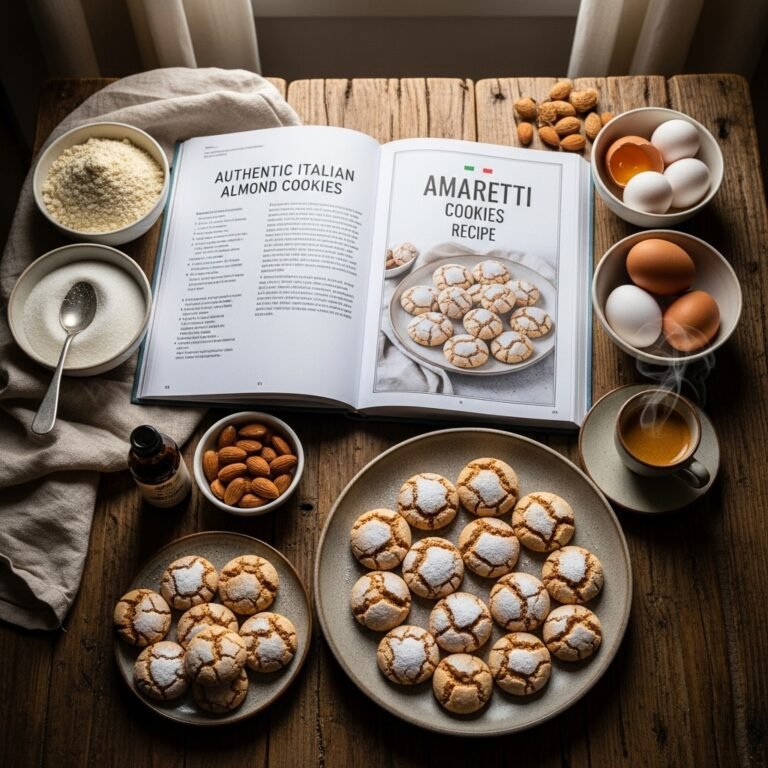
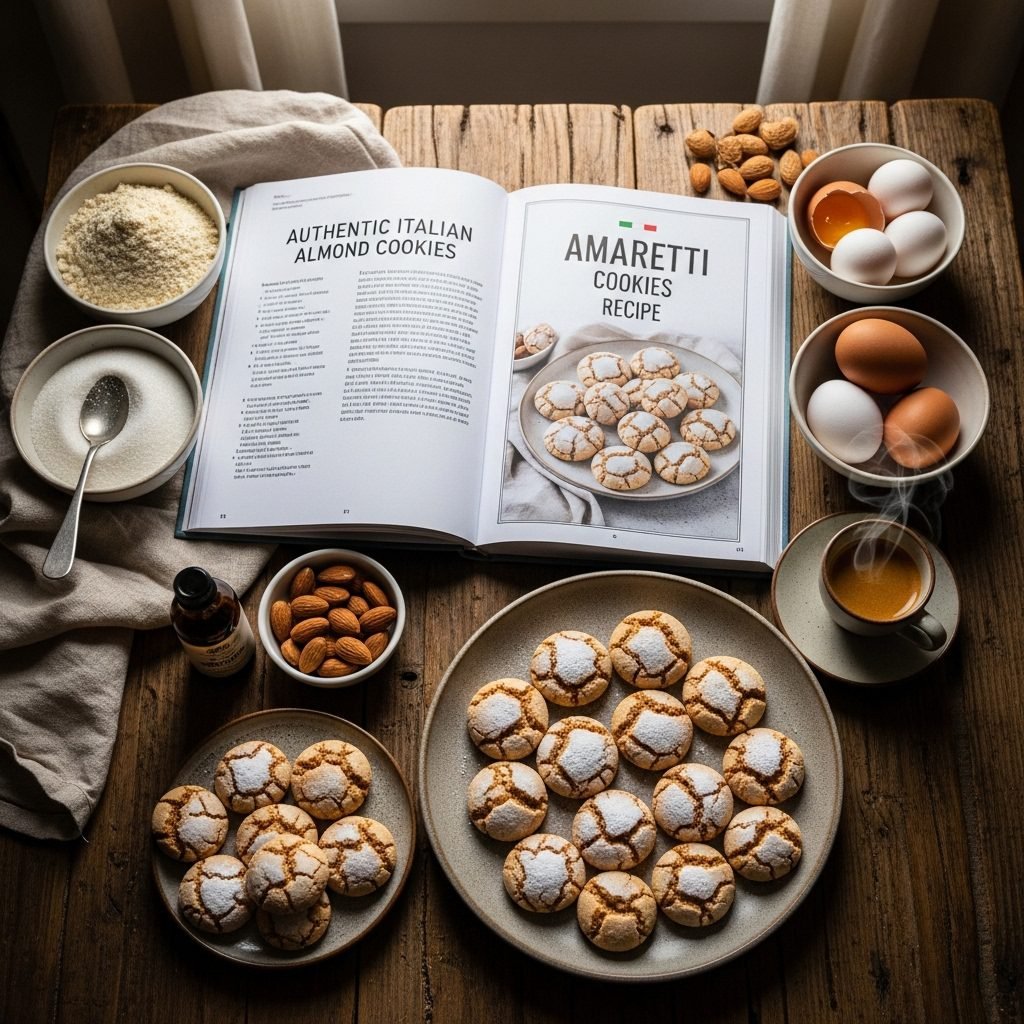
Amaretti cookies are iconic Italian almond cookies that have captured hearts worldwide with their irresistible combination of crispy exteriors and soft, chewy centers. These elegant little treats are instantly recognizable by their crackled, powdered sugar coating and intense almond aroma that fills your kitchen while baking. Originating from Italy, Amaretti (pronounced ah-mah-REH-tee) are naturally gluten-free cookies made primarily from almond flour, sugar, and egg whites, making them a sophisticated yet simple dessert that’s perfect for any occasion. Whether you’re hosting an Italian-themed dinner party, looking for a beautiful addition to your holiday cookie tray, need an elegant dessert to pair with your espresso, or simply want to impress your family with authentic European baking, these Amaretti cookies deliver every time. They’re wonderfully versatile enjoy them as an afternoon snack with tea, serve them alongside gelato, crumble them into parfaits, or package them as thoughtful homemade gifts that anyone would be thrilled to receive!
History / Background
Amaretti cookies boast a fascinating history that stretches back several centuries in Italian culinary tradition. The name “Amaretti” derives from the Italian word “amaro,” which means “bitter,” originally referring to the bitter almonds that were traditionally used in these cookies. While modern recipes typically use sweet almonds or almond extract for a more universally appealing flavor, traditional Italian versions sometimes still incorporate a small amount of bitter almond essence for that distinctive, slightly sharp undertone.
The exact origin of Amaretti is debated among different Italian regions, with multiple towns claiming to be the birthplace of these beloved cookies. The most famous story comes from Saronno, a small town in Lombardy, where legend tells of a young couple who created these cookies in 1718. According to folklore, a Cardinal was visiting Saronno, and a young innkeeper and his wife wanted to honor the distinguished guest. With limited ingredients on hand—just almonds, sugar, and egg whites—they crafted these simple yet delicious cookies. The Cardinal was so impressed that he blessed the couple, and their cookie recipe became famous throughout Italy.
Another popular origin story comes from the town of Sassello in Liguria, where Amaretti have been produced since the 1860s by the Romanengo family. Sicily also has its own version called “paste di mandorla,” which are similar but often more dense and chewy.
Regardless of their true birthplace, Amaretti cookies became deeply embedded in Italian culture and spread throughout the country and eventually worldwide. Italian monasteries and convents became known for their excellent Amaretti, as nuns had perfected the art of working with almonds and egg whites. These cookies became traditional offerings during religious festivals, weddings, Christmas, and Easter celebrations. Today, you’ll find Amaretti in every Italian bakery, and they remain one of Italy’s most exported and beloved sweet treats, cherished for their delicate balance of textures and pure, clean almond flavor.
Why You’ll Love This Recipe
This authentic Amaretti cookie recipe is about to become your new favorite go-to for impressive yet effortless baking! These cookies offer that magical textural contrast that cookie connoisseurs rave about—a delicate, crispy shell that gives way to a tender, slightly chewy center that practically melts in your mouth. The intense almond flavor is clean and sophisticated, not overly sweet, making these cookies feel special and elegant without being fussy or complicated to make.
What makes this recipe particularly wonderful is its simplicity and accessibility. You don’t need to be an experienced baker to achieve professional-looking results—the technique is straightforward, and the ingredient list is refreshingly short. Plus, these cookies are naturally gluten-free, which means you can confidently serve them to guests with dietary restrictions without having to make a separate batch of “special” treats. Everyone gets to enjoy the same delicious cookies!
Here’s what makes this Amaretti recipe absolutely irresistible:
- Authentic Italian Recipe – Traditional method that produces bakery-quality results at home
- Naturally Gluten-Free – Made entirely with almond flour, perfect for gluten-sensitive diets
- Ready in 30 Minutes – From mixing bowl to cooling rack in half an hour
- Only 5 Basic Ingredients – No butter, no flour, no complicated components
- Beautiful Presentation – Those signature cracks and powdered sugar coating look stunning
- Perfect for Gifting – Pack beautifully in tins or boxes for thoughtful homemade presents
- Light & Sophisticated – Not heavy or overly rich, perfect after dinner or with coffee
- Impressive Yet Simple – Guests will think you spent hours, but you’ll know the secret
- Long Shelf Life – Stay fresh for up to 10 days when stored properly
- Versatile Serving Options – Delicious on their own or paired with desserts, coffee, or wine
Ingredient Notes
Each ingredient in this Amaretti recipe plays a crucial role in creating those signature characteristics we love. Let’s break down what you need and why it matters.
Almond Flour (or Ground Almonds): This is your foundation ingredient! Almond flour creates the distinctive nutty flavor and gives these cookies their characteristic texture. Use blanched almond flour (made from almonds without skins) for the smoothest, most refined texture. The finer the grind, the more delicate your cookies will be. Substitution: You can make your own by processing blanched almonds in a food processor until finely ground, but be careful not to over-process or you’ll end up with almond butter!
Granulated Sugar: Works with the egg whites to create structure and that beautiful crackled exterior. Sugar also contributes to the crispy shell while keeping the interior moist. Substitution: Superfine (caster) sugar dissolves more easily and creates an even more delicate texture if you can find it.
Egg Whites: The magical binder that holds everything together! Egg whites create the characteristic chewy center and help form the crispy exterior. They must be completely free of any yolk traces. Pro tip: Room temperature egg whites whip up much better than cold ones, so take them out of the fridge 30 minutes before you start.
Almond Extract: This is what takes the almond flavor from good to absolutely incredible. Pure almond extract is worth the investment—avoid imitation extract if possible. Substitution: For an authentic bitter almond flavor, you can add 1-2 drops of bitter almond extract along with the regular almond extract, but use sparingly as it’s very potent.
Powdered Sugar (for coating): Creates that snowy exterior that cracks beautifully as the cookies bake, revealing the darker interior in an attractive pattern. This visual element is signature to Amaretti. Substitution: In a pinch, you can pulse granulated sugar in a blender to make your own powdered sugar.
Pinch of Salt: Essential for balancing the sweetness and enhancing all the other flavors. Never skip the salt—it makes everything taste better!
Optional: Vanilla Extract: While not traditional, a splash of vanilla (1/4 teaspoon) complements the almond beautifully and adds depth.
Equipment Needed
Gather these basic baking tools before you begin—having everything ready makes the process smooth and enjoyable:
- Large mixing bowl (for combining ingredients)
- Medium mixing bowl (for whipping egg whites)
- Electric hand mixer or stand mixer (makes whipping egg whites effortless, though you can do it by hand with a whisk and some arm power)
- Measuring cups and spoons (accurate measurements are important in baking)
- Rubber spatula or large spoon (for folding and mixing)
- Baking sheets (2-3 sheets for efficient batch baking)
- Parchment paper or silicone baking mats (prevents sticking and ensures even baking)
- Small shallow bowl (for the powdered sugar rolling station)
- Cookie scoop or tablespoon (ensures uniform-sized cookies)
- Wire cooling rack (allows air circulation for proper cooling)
- Oven thermometer (optional but helpful for baking accuracy)
Print

Amaretti Cookies Recipe
Classic Italian Amaretti cookies with crispy edges, chewy centers, and intense almond flavor. These elegant, naturally gluten-free cookies feature a beautiful crackled powdered sugar coating and are perfect with coffee or as a sophisticated dessert.
- Total Time: 30 minutes
- Yield: 20-24 cookies 1x
Ingredients
Scale- 2 cups (200g) almond flour (blanched, finely ground)
- 1 cup (200g) granulated sugar
- 2 large egg whites, room temperature
- 1 teaspoon pure almond extract
- 1/4 teaspoon vanilla extract (optional)
- 1/8 teaspoon fine sea salt
- 1 cup (120g) powdered sugar (for rolling)
Instructions
- Prepare Your Workspace: Preheat oven to 325°F (160°C). Line two large baking sheets with parchment paper or silicone baking mats. Set aside.
- Combine Dry Ingredients: In a large mixing bowl, whisk together the almond flour, granulated sugar, and salt until evenly combined with no lumps. Set aside.
- Whip the Egg Whites: In a separate clean, completely dry medium bowl, beat the egg whites using an electric mixer on medium-high speed. Whip for 2-4 minutes until soft peaks form—the whites should be foamy and hold their shape but the peaks should curl over when you lift the beaters. Don’t over-whip to stiff peaks.
- Add Flavorings: Gently stir the almond extract and vanilla extract (if using) into the whipped egg whites with a spatula.
- Fold Together: Pour the egg white mixture over the almond flour mixture. Using a spatula, gently fold everything together until fully combined and a sticky, cohesive dough forms. The dough will be soft and somewhat wet—this is exactly what you want!
- Chill if Needed: If the dough feels too sticky to handle, cover the bowl and refrigerate for 15-20 minutes to firm it up slightly. This step is optional but can make shaping easier.
- Prepare Sugar Station: Pour the powdered sugar into a small shallow bowl and set up your cookie-shaping station.
- Shape the Cookies: Scoop about 1 tablespoon of dough and roll it between slightly dampened palms to form a smooth ball (wetting your hands prevents excessive sticking). Immediately roll the ball completely in powdered sugar, coating it generously on all sides.
- Arrange for Baking: Place each sugar-coated dough ball on the prepared baking sheet, spacing them about 2 inches apart. They will spread slightly and develop cracks as they bake.
- Bake to Perfection: Bake for 12-15 minutes, until the cookies have spread, developed those characteristic cracks, and the edges look set with a hint of light golden color. The centers should still appear soft—don’t overbake!
- Cool Properly: Remove from oven and let cookies rest on the baking sheet for 5 full minutes without moving them (they’re fragile when hot and will firm up during this time). After 5 minutes, carefully transfer to a wire cooling rack to cool completely before serving or storing.
Notes
- Texture Tip: These cookies will seem soft straight from the oven but firm up significantly as they cool. For the signature chewy center, slightly underbake rather than overbake.
- Make Them Ahead: The dough can be made up to 48 hours in advance and stored covered in the refrigerator. Bring to room temperature before shaping.
- Sticky Hands Solution: Keep a small bowl of water nearby to dampen your hands as needed when rolling the dough into balls.
- Size Matters: Keep cookies uniform in size so they bake evenly. A cookie scoop helps with consistency.
- Storage: Keep in an airtight container at room temperature for up to 10 days. They actually improve in texture after 24 hours!
- Prep Time: 15 minutes
- Cook Time: 12-15 minutes
- Category: Desert
- Method: Baking
- Cuisine: American
- Diet: Gluten Free
Nutrition
- Serving Size: 1 cookie
- Calories: 85
- Sugar: 11g
- Sodium: 12mg
- Fat: 3.8g
- Saturated Fat: 0.3g
- Unsaturated Fat: 3.2g
- Trans Fat: 0g
- Carbohydrates: 12g
- Fiber: 1g
- Protein: 2g
- Cholesterol: 0mg
Tips & Variations
Chocolate-Dipped Amaretti: Once cookies are completely cool, dip the bottom half in melted dark chocolate and place on parchment paper to set. The chocolate-almond combination is absolutely divine!
Lemon Amaretti: Add 1 tablespoon of fresh lemon zest to the dough for a bright, citrusy twist that’s perfect for spring and summer gatherings.
Amaretto Liqueur Infusion: Replace the vanilla extract with 1/2 teaspoon of amaretto liqueur for an extra layer of sophisticated almond flavor with a subtle boozy note.
Orange Blossom Amaretti: Add 1/4 teaspoon of orange blossom water to the egg whites for a fragrant, Middle Eastern-inspired variation.
Espresso Amaretti: Mix 2 teaspoons of instant espresso powder into the almond flour for a mocha-flavored cookie that’s incredible with cappuccino.
Mini Amaretti: Shape smaller cookies (about 1/2 tablespoon each) for adorable bite-sized treats perfect for dessert platters. Reduce baking time to 10-12 minutes.
Amaretti with Pine Nuts: Press 2-3 pine nuts into the top of each cookie before baking for added texture and an elegant presentation.
Double Almond Amaretti: Fold 1/4 cup of chopped toasted almonds into the dough for extra crunch and visual interest.
Pro Chef Tips
Temperature is Critical: An oven thermometer is your best friend here. If your oven runs hot, your Amaretti will brown too quickly and become hard instead of maintaining that perfect chewy center. If it runs cool, they’ll spread too much. Aim for exactly 325°F.
The Two-Roll Technique: For maximum crack effect, roll each cookie in powdered sugar once, let it sit for 30 seconds, then roll again in fresh powdered sugar before placing on the baking sheet. This double coating creates the most dramatic, Instagram-worthy cracks.
Perfect Egg White Consistency: Soft peaks are the key—when you lift the beaters, the peaks should fold over at the tips. If you accidentally over-whip to stiff peaks, add 1/2 teaspoon of water and gently fold it in to soften them slightly.
Rest Your Dough: While optional, letting the dough rest for 10-15 minutes after mixing allows the almond flour to fully hydrate, resulting in a more cohesive dough that’s easier to shape and produces better texture.
Parchment is Essential: Don’t skip the parchment paper or silicone mat. These cookies are delicate and can stick, especially right out of the oven. Proper lining ensures easy removal.
Watch the Edges: Your visual cue for doneness is when the edges are set and just beginning to show the slightest golden tinge, while the centers still look soft. They continue cooking from residual heat after removal.
Improve with Age: Like many Italian cookies, Amaretti actually taste better after 24-48 hours of storage. The texture softens slightly and becomes more uniformly chewy, while the flavors meld beautifully. Make them a day or two before you need them!
Common Mistakes to Avoid
Over-Beating the Egg Whites: This is a common error that results in dry, crumbly cookies. You want soft peaks, not stiff peaks. Stop mixing when the whites are foamy and hold their shape loosely. Over-whipped whites can’t incorporate properly into the batter and will make tough cookies.
Baking at Too High a Temperature: Many home bakers are tempted to increase the oven temperature to speed things up, but this is a mistake with Amaretti. High heat causes the exterior to harden before the interior cooks, resulting in cookies that are hard all the way through instead of having that signature chewy center.
Not Letting Them Cool on the Sheet: These cookies are extremely delicate straight from the oven. If you try to transfer them to a cooling rack immediately, they’ll fall apart or stick to your spatula. The 5-minute rest on the hot baking sheet is crucial for allowing them to set properly.
Using Coarse Almond Meal: Almond meal (almonds with skins, coarsely ground) will give you grainy, less refined cookies. For authentic Amaretti, you need blanched almond flour that’s finely ground. The texture difference is significant!
Skimping on the Powdered Sugar Coating: A light dusting won’t give you those dramatic cracks that make Amaretti so visually appealing. Be generous with the coating—really roll them around until they’re completely white and thickly coated.
Making Them Too Large: Oversized Amaretti don’t bake properly—the outside gets too hard while the inside remains underdone. Stick to 1-tablespoon portions for the perfect balance of crispy exterior and chewy interior.
Storage & Meal Prep
Optimal Storage Conditions: Store completely cooled Amaretti in an airtight container at room temperature for up to 10 days. Layer them with parchment paper between each layer to prevent them from sticking together, especially in the first few days when they’re still slightly sticky from the powdered sugar coating.
Container Selection: Choose a container that’s not too large—you want minimal air space. Glass or metal tins work beautifully. Avoid plastic containers if possible, as they can sometimes trap moisture and affect the cookies’ texture.
Humidity Considerations: In very humid climates, the cookies may soften more quickly. If this happens, you can crisp them up by placing them in a 300°F oven for 3-5 minutes. Let them cool completely before serving.
Refrigeration: While not necessary, you can refrigerate Amaretti for up to 3 weeks if you want to extend their shelf life. Just bring them to room temperature before serving for the best flavor and texture.
Gift Storage: When packaging Amaretti as gifts, place them in decorative tins or boxes lined with parchment paper. They travel exceptionally well and maintain their texture during shipping, making them ideal for care packages.
Refreshing Older Cookies: If your Amaretti have been stored for a week or more and seem a bit stale, place them in an airtight container with half an apple overnight. The cookies will absorb just enough moisture to refresh their texture.
Make-Ahead & Freezer Notes
Advance Dough Preparation: You can make the dough up to 3 days ahead! Mix everything together, cover the bowl tightly with plastic wrap, and refrigerate. When ready to bake, let the dough sit at room temperature for 20-30 minutes to soften slightly, then shape and bake as directed.
Freezing Shaped, Unbaked Cookies: This is my favorite make-ahead method! Shape the cookies, roll them in powdered sugar, and place them on a parchment-lined baking sheet. Freeze until solid (about 2 hours), then transfer to a freezer bag or container. They’ll keep for up to 3 months. Bake directly from frozen, adding just 1-2 extra minutes to the baking time.
Freezing Baked Cookies: Amaretti freeze wonderfully after baking! Cool them completely, then layer in a freezer-safe container with parchment between layers. Freeze for up to 4 months. To serve, thaw at room temperature for 30-60 minutes. They’ll taste freshly baked!
Flash-Freezing Method: For best results with baked cookies, use the flash-freeze method: arrange cookies in a single layer on a baking sheet, freeze until solid, then transfer to containers. This prevents them from sticking together.
Emergency Cookie Stash: Keep a batch of shaped, unrolled cookie dough balls (without the powdered sugar) in your freezer. When unexpected guests arrive or a cookie craving hits, roll them in powdered sugar and bake—you’ll have fresh Amaretti in 20 minutes!
Best Thawing Practice: For the most authentic just-baked texture, thaw frozen cookies at room temperature rather than in the microwave or oven. Patience pays off with better texture.
Serving Suggestions
Amaretti cookies are wonderfully versatile and can be served in so many delicious ways!
Classic Italian Coffee Service: Serve these cookies alongside a strong espresso, cappuccino, or macchiato for an authentic Italian café experience. In Italy, it’s common to dip Amaretti directly into your coffee—try it! The cookies soften slightly and absorb the coffee flavor beautifully.
Dessert Wine Pairings: Amaretti are traditional with Vin Santo (Italian dessert wine), but they also pair wonderfully with Moscato d’Asti, Amaretto liqueur, or any sweet dessert wine. Serve 2-3 cookies per person with small glasses of wine for a sophisticated dessert course.
Gelato or Ice Cream Accompaniment: Crumble Amaretti over creamy vanilla gelato, almond ice cream, or chocolate ice cream for incredible texture contrast. You can also sandwich a small scoop of gelato between two cookies for an elegant ice cream sandwich.
Tiramisu Component: Use crushed Amaretti in place of some of the ladyfingers when making tiramisu for an extra almond flavor dimension that’s absolutely divine.
Affogato Enhancement: Make a simple affogato (gelato with hot espresso poured over it) and serve with Amaretti cookies on the side for dipping—pure Italian heaven!
Fruit and Cheese Pairing: Arrange Amaretti on a platter with fresh figs, grapes, pears, and soft cheeses like mascarpone or ricotta for an elegant dessert board.
Tea Time Treat: These cookies are lovely with afternoon tea—particularly Earl Grey, English Breakfast, or almond-flavored tea blends.
Dessert Garnish: Use Amaretti as a beautiful garnish on panna cotta, mousse, or custard-based desserts. They add visual appeal and textural interest.
FAQs Section
Q: What’s the difference between Amaretti and macarons?
A: While both cookies use almond flour and egg whites, they’re quite different! Amaretti have a rustic, crackled appearance and a chewy interior, while macarons are smooth, delicate, and sandwiched with filling. Amaretti are denser and have a more intense almond flavor. The techniques are also different—macarons require the more precise French or Italian meringue method.Q: Can I use almond extract instead of vanilla extract?
A: Absolutely! In fact, using only almond extract (about 1 to 1.5 teaspoons total) instead of a combination of almond and vanilla will give you an even more intense, authentic almond flavor. The vanilla is optional and just adds a subtle depth.Q: Why didn’t my cookies develop cracks?
A: The cracks develop from the contrast between the dry powdered sugar coating and the expanding cookie underneath. Make sure you’re coating the cookies very generously in powdered sugar—don’t be shy! Also, the cookies need to be baked at the correct temperature (325°F). Too low and they’ll spread without cracking; too high and they’ll set before cracks can form.Q: My cookies spread too much and became flat. What happened?
A: This usually means your dough was too wet or warm. Try refrigerating the dough for 20-30 minutes before shaping. Also make sure you’re measuring your almond flour correctly (spoon it into the measuring cup, don’t pack it). Finally, ensure your baking sheets aren’t hot when you place the cookies on them—use room temperature sheets.Q: Are Amaretti cookies the same as almond macaroons?
A: They’re similar but not identical! Amaretti are the Italian version, typically made with almond flour and having that characteristic crackled appearance. American-style almond macaroons often include coconut and have a different texture. Amaretti are more refined and less sweet than coconut macaroons.Q: Can I make these cookies vegan?
A: It’s tricky because egg whites are essential to the structure and texture. However, you can try using aquafaba (chickpea liquid) as a substitute. Use 6 tablespoons of aquafaba in place of the 2 egg whites, and whip it the same way. Results may vary slightly, but many bakers have had success with this substitution.Q: Do I need to use blanched almond flour, or can I use regular almond meal?
A: For the smoothest, most authentic texture, blanched almond flour (made from almonds without skins) is best. Regular almond meal will work, but it will give you a slightly coarser texture and brownish color. If you only have almond meal, try pulsing it in a food processor for a minute to make it finer.Q: Can I add cocoa powder to make chocolate Amaretti?
A: Yes! Replace 1/4 cup of the almond flour with unsweetened cocoa powder for chocolate Amaretti. You may need to add an extra tablespoon of egg white if the dough seems too thick. The chocolate version is delicious!Conclusion
Congratulations—you now have everything you need to create authentic, irresistibly delicious Amaretti cookies in your own kitchen! These Italian treasures are proof that the simplest recipes often produce the most memorable results. With just a handful of ingredients and straightforward techniques, you can bake cookies that rival anything you’d find in an Italian pasticceria.
What makes Amaretti so special is that perfect combination of textures—that satisfying crispy shell giving way to a tender, chewy center—along with the pure, intense almond flavor that makes each bite feel like a little taste of Italy. Whether you’re baking these for a special occasion, adding them to your holiday cookie repertoire, or simply treating yourself and your loved ones to something delicious, Amaretti never disappoint.
Now it’s your turn to bring this Italian classic to life! I’d absolutely love to hear about your Amaretti baking adventures. Did you try any of the flavor variations? What did you serve them with? How did your family and friends react when they tasted these beauties? Drop a comment below and share your experience—your feedback helps fellow bakers and creates a wonderful community of cookie lovers!
Don’t forget to save this recipe to your Pinterest boards so you can find it easily whenever the cookie mood strikes. Snap a gorgeous photo of your crackled, powdered sugar-dusted creations and tag me—I love seeing your baking successes! And if you know someone who would love this recipe, share it with them. After all, good cookies (and good recipes) are meant to be shared!
Buon appetito and happy baking! 🇮🇹✨