Mexican Wedding Cookies Recipe – Buttery Pecan Snowballs Perfect for Any Celebration

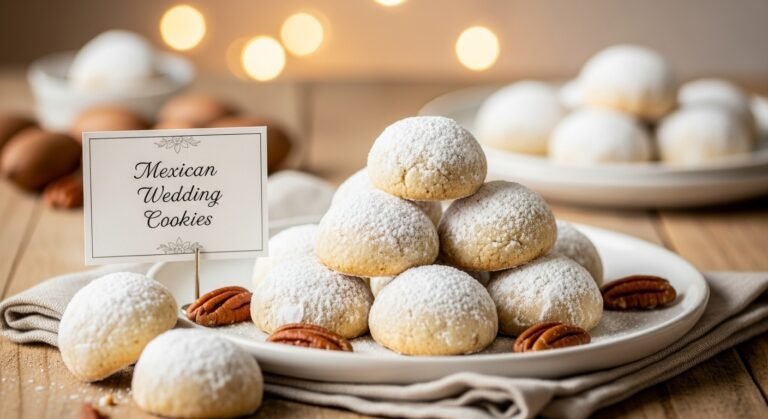
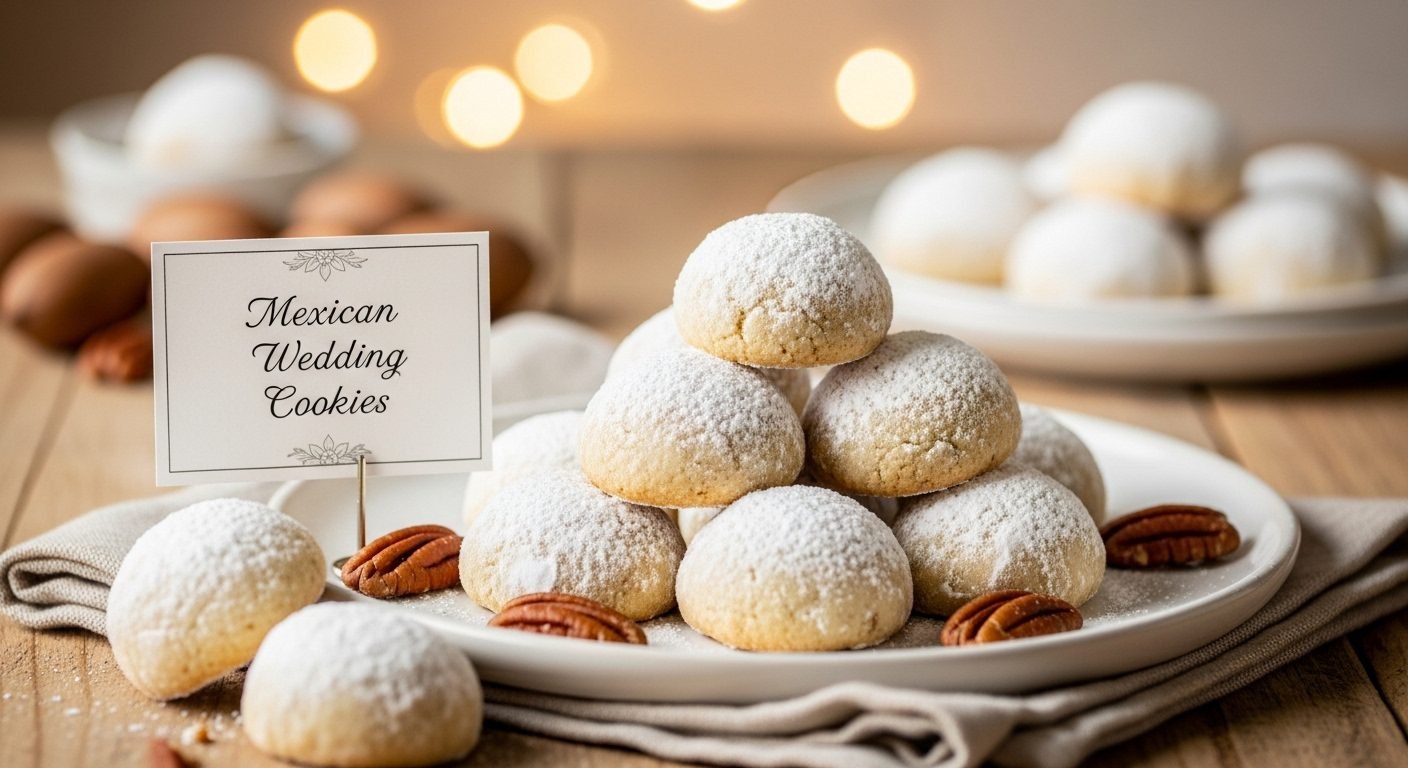
Mexican Wedding Cookies are tender, buttery shortbread-style cookies made with finely chopped pecans and generously coated in powdered sugar. Also known as Polvorones, Snowball Cookies, or Russian Tea Cakes, these delicate, melt-in-your-mouth treats are round, bite-sized spheres that literally dissolve on your tongue with each heavenly bite.
These beloved cookies are a staple at Mexican celebrations, especially weddings, quinceañeras, Christmas (Navidad), and Día de los Muertos. However, their popularity has spread far beyond Mexico, making them one of the most requested cookies at American holiday cookie exchanges, bridal showers, and special gatherings throughout the year. The combination of rich butter, sweet pecans, and snowy powdered sugar creates an irresistible flavor that keeps everyone reaching for just one more.
What makes Mexican Wedding Cookies particularly special is their simplicity and elegance. Despite looking like they came from a professional bakery, they require only six basic ingredients and no complicated techniques. They’re perfect for gift-giving, holiday celebrations, afternoon tea, or any occasion where you want to serve something that looks impressive but doesn’t require hours in the kitchen.
History / Background
Mexican Wedding Cookies have a rich and fascinating history that spans multiple continents and cultures. While they’re called “Mexican” Wedding Cookies in the United States, their true origin story is more complex and international than the name suggests.
The earliest versions of these cookies can be traced back to medieval Arabia and Persia, where nut-based confections rolled in powdered sugar were served at celebrations and special occasions. These treats traveled along ancient spice and trade routes to Europe, where different regions adapted them to local ingredients and customs.
In Spain, these cookies became known as polvorones, derived from the Spanish word “polvo” meaning dust or powder, referring to their crumbly texture and powdered sugar coating. Spanish nuns in convents became famous for baking polvorones for weddings and religious celebrations, establishing the connection between these cookies and matrimonial festivities.
When Spanish colonizers arrived in Mexico in the 16th century, they brought their baking traditions, including these beloved cookies. Mexican bakers embraced the recipe and made it their own by incorporating locally abundant pecans instead of the almonds commonly used in Spain. The rich, buttery flavor of pecans paired beautifully with the tender cookie base, and the recipe became deeply embedded in Mexican celebratory culture.
In Mexico, these cookies are traditionally called polvorones de boda (wedding powders) or simply polvorones. They became an essential part of wedding celebrations, where they symbolize good fortune and sweetness in marriage. Large platters of these snowy white cookies would be served at wedding receptions, and guests would take them home as favors, wrapped in delicate tissue paper.
The cookies also became associated with Christmas celebrations in Mexico, where they’re part of the traditional holiday cookie spread alongside other Mexican favorites like biscochitos and conchas. During Día de los Muertos, families place polvorones on ofrendas (altars) as offerings to deceased loved ones, as they were often a favorite treat of the departed.
Mexican Wedding Cookies gained immense popularity in the United States, particularly in the Southwest, during the mid-20th century. American homemakers discovered these delightful treats and embraced them enthusiastically, especially during the 1950s and 1960s when cookie exchanges became a popular social activity. The cookies were often featured in women’s magazines and community cookbooks, spreading their popularity across the country.
Interestingly, nearly identical cookies exist in many cultures worldwide under different names: Russian Tea Cakes in Eastern Europe, Greek kourabiedes, Austrian kipferl, and Swedish butter balls. Each culture claims them as their own, which speaks to how universally beloved this simple combination of butter, nuts, and sugar truly is.
Today, Mexican Wedding Cookies remain a cherished tradition in Mexican-American communities and have become a beloved part of American baking culture. Whether served at weddings, holidays, or everyday celebrations, these tender cookies continue to bring people together with their sweet, simple perfection.
Why You’ll Love This Recipe
This Mexican Wedding Cookie recipe creates the perfect balance of buttery richness, nutty pecan flavor, and delicate, crumbly texture. These aren’t just cookies – they’re little bites of celebration that happen to be surprisingly easy to make.
Here’s why this recipe will become a family favorite:
- Authentically delicious – Uses pecans for true Mexican Wedding Cookie flavor (not walnuts like Russian Tea Cakes)
- Melt-in-your-mouth texture – The high ratio of butter to flour creates the most tender cookies imaginable
- Simple ingredient list – Just 6 basic pantry staples create something truly special
- No fancy techniques required – If you can roll dough into balls, you can make these cookies
- Perfect for any celebration – Weddings, holidays, showers, graduations, or Tuesday afternoons
- Make-ahead friendly – Dough can be prepared days in advance, and cookies freeze beautifully for months
- Budget-friendly – Uses affordable ingredients with impressive results
- Naturally gluten-free adaptable – Easy to modify for dietary restrictions
- Kid-friendly baking project – Children love rolling cookies and coating them in powdered sugar
- Impressive presentation – That snowy coating makes them look bakery-professional
- Perfect for gifting – They travel well, look beautiful in tins, and everyone loves receiving them
- Better with age – Actually taste better after a day or two as flavors meld together
Whether you’re an experienced baker or a complete beginner, this recipe delivers consistent, delicious results that will have people begging for your secret.
Ingredient Notes
The beauty of Mexican Wedding Cookies lies in their simplicity. Let’s explore each ingredient and understand why it matters for achieving that signature texture and flavor.
Unsalted Butter – This is the star ingredient that creates the rich, tender, melt-in-your-mouth quality. Always use real unsalted butter (never margarine or spreads) at room temperature for proper creaming. Unsalted butter allows you to control the salt level precisely. The butter should be soft enough to leave an indent when pressed but still hold its shape – not melted or greasy.
Powdered Sugar (Confectioners’ Sugar) – You’ll need this twice: in the dough for sweetness and smooth texture, and for coating the finished cookies. The finely ground sugar dissolves completely into the dough, creating that characteristic fine, tender crumb. Make sure to sift it if it’s lumpy. Granulated sugar is not a substitute in this recipe.
All-Purpose Flour – Provides the structure for the cookies without making them tough. For accurate measurements, always use the spoon-and-level method: spoon flour into your measuring cup and level with a knife. Never scoop directly from the bag, as this packs in too much flour and creates dry, crumbly cookies.
Finely Chopped Pecans – This is what makes them authentically Mexican Wedding Cookies! Pecans have a sweeter, more buttery flavor than walnuts and are traditional in Mexican baking. The nuts should be very finely chopped – almost to a meal consistency but not ground into nut butter. You can chop by hand with a sharp knife or pulse carefully in a food processor (8-10 pulses). Raw pecans work perfectly, though some bakers prefer to toast them first for deeper flavor.
Vanilla Extract – Adds warmth and depth to the flavor profile. Always use pure vanilla extract, never imitation, for the best taste. Mexican vanilla, if you can find it, adds an authentic touch and slightly different flavor profile than standard vanilla.
Salt – Just a small pinch enhances all the other flavors and balances the sweetness. Even though we use unsalted butter, a touch of salt is essential for well-rounded flavor.
Optional addition: Some traditional Mexican recipes include a hint of cinnamon (1/2 teaspoon) in the dough for extra warmth and spice.
Equipment Needed
You’ll need just basic kitchen equipment to make perfect Mexican Wedding Cookies:
- Large mixing bowl – For combining all ingredients
- Electric hand mixer or stand mixer – Makes creaming butter easier, though you can mix by hand with a sturdy wooden spoon
- Measuring cups and spoons – Accurate measurements are crucial for baking success
- Food processor or sharp chef’s knife – For finely chopping pecans to the perfect consistency
- Baking sheets – Two or three for baking multiple batches
- Parchment paper or silicone baking mats – Prevents sticking and makes cleanup effortless
- Wire cooling racks – Essential for properly cooling cookies
- Small bowl – For holding powdered sugar when rolling cookies
- Cookie scoop (optional) – A 1-tablespoon scoop creates perfectly uniform cookies
- Airtight container – For storing your beautiful finished cookies
Print

Mexican Wedding Cookies Recipe
Traditional Mexican Wedding Cookies (Polvorones) made with butter, finely chopped pecans, and a generous coating of powdered sugar. These tender, melt-in-your-mouth cookies are perfect for weddings, holidays, and special celebrations.
- Total Time: 1 hour 20 minutes
- Yield: 48 cookies 1x
Ingredients
ScaleFor the Cookies:
- 1 cup (2 sticks or 226g) unsalted butter, softened to room temperature
- 1/2 cup (60g) powdered sugar, plus more for rolling
- 1 teaspoon vanilla extract
- 2 cups (240g) all-purpose flour
- 1/4 teaspoon salt
- 3/4 cup (85g) pecans, very finely chopped
For Coating:
- 1 to 1 1/2 cups powdered sugar (for rolling the finished cookies)
Instructions
- Prepare pecans: If not already done, very finely chop your pecans. For best results, pulse them in a food processor 8-10 times until they’re almost a meal consistency but not ground into butter. For extra flavor, toast pecans in a 350°F oven for 5-7 minutes first, then let cool completely before chopping. Set aside.
- Cream butter and sugar: In a large bowl, beat the softened butter and 1/2 cup powdered sugar together using an electric mixer on medium speed for 2-3 minutes. The mixture should become light, fluffy, and pale in color. Scrape down the sides of the bowl as needed for even mixing.
- Add vanilla: Beat in the vanilla extract for about 30 seconds until fully incorporated.
- Mix in flour and salt: Add the flour and salt to the butter mixture. Mix on low speed just until combined and no flour streaks remain. Don’t overmix or cookies will become tough. The dough should be soft but not sticky.
- Fold in pecans: Add the finely chopped pecans and mix on the lowest speed or fold in by hand with a wooden spoon until evenly distributed throughout the dough.
- Chill dough: Cover the bowl with plastic wrap and refrigerate for 30 minutes. This makes the dough easier to handle and helps cookies maintain their round shape during baking. (If you’re short on time, you can skip this, but chilling is recommended for best results.)
- Preheat oven: While dough chills, preheat your oven to 350°F (175°C). Line two baking sheets with parchment paper or silicone baking mats.
- Shape cookies: Using your hands or a small cookie scoop, roll the dough into 1-inch balls (about 1 tablespoon of dough per cookie). Place them on prepared baking sheets about 2 inches apart. These cookies don’t spread much, so you can fit quite a few on each sheet.
- Bake: Bake for 12-15 minutes until cookies are set and just barely beginning to turn golden on the bottom. The tops should remain pale – don’t let them brown. They may look slightly underdone, but they’ll firm up as they cool.
- First sugar coating: Let cookies cool on the baking sheet for exactly 5 minutes – they should be cool enough to handle but still warm. Place about 1/2 cup of powdered sugar in a small bowl. Gently roll each warm cookie in the powdered sugar until completely coated. Transfer to a wire cooling rack.
- Cool completely: Allow cookies to cool completely on the rack, about 30-45 minutes. They’ll continue to firm up as they cool.
- Second sugar coating: Once cookies are completely cool to the touch, roll them in fresh powdered sugar again for that signature thick, snowy coating. This double coating is what gives Mexican Wedding Cookies their beautiful appearance.
- Serve or store: Arrange on a serving platter or store in an airtight container. These cookies taste even better after sitting for 24 hours as the flavors meld together.
Notes
- Pecans must be very finely chopped but not ground into paste. Stop pulsing in the food processor before they become pecan butter.
- The double powdered sugar coating is essential – once while warm, once when cool. This creates that beautiful thick layer.
- Cookies should stay pale when baked. If they’re browning, reduce oven temperature by 25°F.
- Dough can be made 3 days ahead and refrigerated, or frozen for up to 3 months.
- For uniform cookies, use a cookie scoop to measure dough portions.
- If dough seems too crumbly, add 1-2 tablespoons softened butter and mix gently.
- These cookies are traditionally served at room temperature, not warm from the oven.
- Prep Time: 20 minutes (plus 30 minutes chilling time)
- Cook Time: 12-15 minutes per batch
- Category: Desert
- Method: Baking
- Cuisine: Mexican
- Diet: Vegetarian
Nutrition
- Serving Size: 1 cookie
- Calories: 85
- Sugar: 5g
- Sodium: 15mg
- Fat: 6g
- Saturated Fat: 3g
- Unsaturated Fat: 2.5g
- Trans Fat: 0g
- Carbohydrates: 8g
- Fiber: 0.5g
- Protein: 1g
- Cholesterol: 10mg
Tips & Variations
Mexican Wedding Cookies are wonderfully adaptable while still honoring their traditional roots. Here are ways to customize them:
Traditional Mexican Variations:
- Polvorones de Canela – Add 1 teaspoon ground cinnamon to the dough for a warm spice note
- Mexican Chocolate Version – Add 2 tablespoons unsweetened cocoa powder and a pinch of cayenne pepper
- Orange-Scented – Add 1 tablespoon orange zest to the dough
- Anise-Flavored – Replace vanilla with 1 teaspoon anise extract for a traditional Mexican flavor
Nut Variations:
- Traditional pecans – Authentic Mexican choice with sweet, buttery flavor
- Walnuts – Creates Russian Tea Cakes with earthier taste
- Almonds – Use finely chopped almonds for European-style cookies
- Mixed nuts – Combine equal parts pecans and walnuts
- Pistachio – Finely chopped pistachios create beautiful green-flecked cookies
Flavor Enhancements:
- Toasted Pecan Version – Toast pecans before chopping for intensified nutty flavor
- Vanilla Bean – Use seeds from 1 vanilla bean instead of extract for gourmet flavor
- Espresso – Add 2 teaspoons instant espresso powder for sophisticated depth
- Maple Pecan – Replace vanilla with maple extract and use maple sugar in the coating
- Coconut – Add 1/4 cup finely shredded unsweetened coconut to the dough
Coating Variations:
- Cinnamon-Sugar – Roll in a mixture of 1 cup powdered sugar and 1 tablespoon cinnamon
- Cocoa Dusting – Mix 2 tablespoons cocoa powder into the powdered sugar coating
- Vanilla Sugar – Keep a vanilla bean in your powdered sugar container for weeks before using
Dietary Modifications:
- Gluten-Free – Replace all-purpose flour with 1:1 gluten-free baking flour blend
- Vegan – Use plant-based butter (ensure it’s designed for baking) and verify powdered sugar is vegan
- Nut-Free – Replace pecans with 1/2 cup finely ground oats or sunflower seed meal, or omit and add 1/3 cup more flour
- Lower Sugar – Reduce sugar in dough to 1/3 cup (texture will be slightly different)
Shape Variations:
- Crescent shapes – Form into crescents for traditional Austrian-Mexican style
- Mini cookies – Use 1/2 tablespoon dough for bite-sized treats (bake 10-12 minutes)
- Larger cookies – Use 2 tablespoons dough (bake 15-18 minutes)
Pro Chef Tips
These professional techniques will elevate your Mexican Wedding Cookies from homemade to bakery-quality:
Toast your pecans for restaurant-quality depth. Spread pecans on a baking sheet and toast at 350°F for 5-7 minutes until fragrant, stirring once halfway through. Let them cool completely before chopping. This simple step intensifies the nutty flavor dramatically and is a secret many professional bakers use. Just watch carefully – the line between toasted and burnt is thin.
Achieve perfect butter temperature every time. Room temperature butter should be 65-67°F – soft enough to leave a clear fingerprint but still holding its shape, not greasy or shiny. If you forgot to soften butter, cut it into small cubes and let it sit for 15-20 minutes. Never microwave butter for these cookies, as uneven warming can create spots that are melted while others remain cold, leading to inconsistent texture.
Master the fine chop for pecans. The pecans should be finely chopped almost to a meal consistency, with pieces about the size of coarse sand. Too coarse and cookies will crack; too fine (like nut butter) and they’ll be greasy. In a food processor, pulse 8-10 times, checking frequently. You want distinct tiny pieces, not a paste.
Don’t skip the dough chill. That 30-minute rest isn’t just about making dough easier to handle – it allows flour to fully hydrate and butter to firm up, which helps cookies maintain their perfect round shape during baking. For even better results, shape the cookies first, then chill the formed balls on the baking sheet for 10 minutes before baking.
Embrace the pale cookie. The number one mistake people make is overbaking these delicate cookies. They should be just barely golden only on the bottom, with completely pale tops and sides. Set a timer for 12 minutes and check them – they should look just set but almost underdone. They’ll continue cooking on the hot pan and firm up perfectly as they cool.
Perfect the double sugar coating technique. The first coating while cookies are warm (about 5 minutes after baking) adheres to the cookie and creates a base layer. The second coating when completely cool creates that thick, gorgeous snowy layer. Use fresh powdered sugar for the second coating – not the same bowl you used for the first coating, which will have cookie crumbs mixed in.
Store strategically to maintain perfection. Place parchment or wax paper between layers in your storage container to keep the powdered sugar coating pristine. Store in a cool, dry place – humidity is the enemy of powdered sugar. If you live in a humid climate, add a food-safe silica gel packet to your container.
Let them rest before serving. While fresh cookies are tempting, Mexican Wedding Cookies actually taste better after resting for 24 hours. The flavors meld together, and the texture becomes even more tender as moisture from the butter distributes evenly throughout the cookie.
Common Mistakes to Avoid
Even experienced bakers can encounter issues with these delicate cookies. Here’s how to prevent common problems:
Using too-soft or melted butter causes flat, greasy cookies. If your butter is too warm, melted, or looks greasy, the cookies will spread excessively during baking and lose their round shape. The butter must be softened but still able to hold its shape. If your kitchen is very warm, you may need to chill the dough longer or even refrigerate the shaped balls before baking. In hot climates, some bakers keep butter slightly cooler than typical room temperature.
Overmixing the dough creates tough, dense cookies. Once you add the flour, mix only until no flour streaks remain – no longer. Continued mixing develops gluten strands, which make cookies tough and chewy instead of tender and crumbly. Use the lowest mixer speed or fold by hand with a wooden spoon once flour is added. The dough should look just combined, not smooth and uniform.
Chopping pecans incorrectly ruins texture. Pecan pieces that are too large create weak spots where cookies crack and crumble. Pieces that are ground too fine (into pecan butter) make cookies greasy and heavy. You want an almost meal-like consistency with distinct tiny pieces. If using a food processor, pulse carefully and stop frequently to check texture.
Overbaking makes them dry and crumbly in an unpleasant way. These cookies should melt in your mouth, which requires not overbaking them. They should be just set and barely golden only on the bottom. If the tops are browning or cookies look golden all over, you’ve gone too far. They may seem slightly underdone when you take them out, but they’ll firm up perfectly as they cool. Remember: pale is perfect for these cookies.
Rolling in powdered sugar only once looks sad. Single-coated cookies appear anemic and don’t have that signature thick, snowy coating that makes Mexican Wedding Cookies so appealing. The double coating – once while warm and again when cool – is absolutely essential. Each coating serves a purpose: the first sticks to the cookie, the second creates that beautiful thick layer.
Coating cookies when they’re the wrong temperature causes problems. If cookies are too hot during the first coating, the sugar melts and creates a glaze rather than a coating. If they’re completely cool, the sugar won’t stick. Wait exactly 5 minutes after removing from the oven. For the second coating, cookies must be completely cool or the sugar will dissolve and become sticky.
Storage & Meal Prep
Proper storage keeps Mexican Wedding Cookies fresh and maintains that beautiful powdered sugar coating.
Room Temperature Storage: Store completely cooled cookies in an airtight container at room temperature for up to 2 weeks. Place parchment paper or wax paper between layers to prevent the powdered sugar from being rubbed off and to keep cookies from sticking together. Mexican Wedding Cookies actually improve with age – after a day or two, the flavors meld beautifully and the texture becomes even more tender.
Protecting That Snowy Coating: The powdered sugar coating naturally absorbs into the cookies over time, especially in humid environments. This is normal and doesn’t affect flavor, but if you want them to look freshly made, give them a light dusting with fresh powdered sugar just before serving. Many bakers do this routinely for special occasions.
Humidity Considerations: In humid climates, powdered sugar can become sticky or dissolve. Store cookies in an airtight container with a small food-safe silica gel packet (not touching the cookies directly) to absorb excess moisture. Keep the container in a cool, dry place away from heat sources and direct sunlight.
Refrigerator Storage: While not necessary, you can refrigerate Mexican Wedding Cookies in an airtight container for up to 3 weeks. This is especially helpful in hot, humid weather. Let them come to room temperature for 20-30 minutes before serving for the best flavor and that characteristic melt-in-your-mouth texture. Cold cookies are harder and less flavorful.
Reviving Stored Cookies: If cookies have become slightly stale or the coating has mostly absorbed, refresh them in a 300°F oven for 3-5 minutes. Let them cool completely, then roll in fresh powdered sugar. This trick breathes new life into cookies that have been stored for a while and makes them taste freshly baked.
Packaging for Gifts: Mexican Wedding Cookies make beautiful gifts. Layer them in decorative tins or boxes with parchment paper between layers. Fill empty spaces with crumpled parchment to prevent shifting during transport. Properly packaged, they’ll stay fresh for 1-2 weeks and can even survive shipping through the mail.
Make-Ahead & Freezer Notes
Mexican Wedding Cookies are one of the best cookies for advance preparation, making them ideal for stress-free entertaining and holiday baking.
Make-Ahead Dough: Prepare the cookie dough up to 3 days in advance. After mixing, shape into a flat disk, wrap tightly in plastic wrap, and refrigerate. When ready to bake, let the dough sit at room temperature for 10-15 minutes to soften slightly, then roll into balls and bake as directed.
Freezing Unbaked Dough – Two Options:
- Freeze in bulk: Wrap the mixed dough disk tightly in plastic wrap, then place in a freezer bag. Label with the date and freeze for up to 3 months. Thaw overnight in the refrigerator, let it warm slightly at room temperature, then shape and bake.
- Freeze pre-shaped (highly recommended): Roll dough into balls, arrange on a baking sheet, and freeze until solid (about 1 hour). Transfer frozen dough balls to freezer bags, removing as much air as possible. Bake directly from frozen, adding 2-3 minutes to the baking time. This method is incredibly convenient for baking fresh cookies whenever you want them.
Freezing Baked Cookies: Baked and cooled cookies (before the final powdered sugar coating) freeze exceptionally well for up to 3 months. To freeze properly:
- Arrange cookies in a single layer on a baking sheet
- Freeze until completely solid (about 1 hour)
- Transfer to freezer bags or airtight containers with parchment between layers
- Label with the date
- Never apply powdered sugar before freezing
Thawing Frozen Baked Cookies: Remove cookies from the freezer and let them thaw at room temperature for about 1 hour, or overnight in the refrigerator. Once completely thawed to room temperature, roll them in fresh powdered sugar before serving. The coating will look perfect and freshly made.
Flash Freezing Technique: Whether freezing dough balls or baked cookies, always flash freeze them first on a baking sheet before transferring to bags. This prevents them from freezing together in a clump and allows you to remove just the quantity you need.
Best Practices for Quality: When freezing, remove as much air as possible from bags to prevent freezer burn. Use quality freezer bags or containers, and keep frozen items away from strong-smelling foods, as butter-based items can absorb odors. For best quality, use frozen dough within 3 months and frozen baked cookies within 2 months.
Holiday Baking Schedule:
- 3 months ahead: Make and freeze cookie dough (shaped balls or bulk)
- 1 month ahead: Bake cookies and freeze without final sugar coating
- 1 week ahead: Bake cookies and store in airtight containers at room temperature
- 2-3 days ahead: Bake cookies or thaw frozen cookies
- Day of event: Apply final powdered sugar coating for picture-perfect appearance
Cookie Exchange Success: For cookie exchanges or parties, bake cookies 2-3 days in advance and store in airtight containers. Give them a generous roll in fresh powdered sugar the morning of your event for the most beautiful presentation.
Serving Suggestions
Mexican Wedding Cookies are versatile treats that complement many beverages and work beautifully in various settings.
Traditional Mexican Celebrations: Serve these at weddings, quinceañeras, baptisms, or Christmas gatherings. Arrange them on decorative platters or place in small paper cups as wedding favors. In Mexican tradition, these cookies are often displayed on elaborate dessert tables alongside other sweets like buñuelos, churros, and tres leches cake.
Coffee and Hot Chocolate Pairing: These cookies pair beautifully with Mexican hot chocolate (chocolate caliente), café de olla (cinnamon-spiced coffee), or regular coffee. The buttery richness complements the beverages without overwhelming them. Serve them alongside coffee for breakfast, brunch, or afternoon merienda (snack time).
Holiday Cookie Platters: Mexican Wedding Cookies are essential for Christmas cookie assortments. Arrange them with gingerbread, chocolate crinkles, sugar cookies, and biscotti. Their white snowball appearance creates stunning visual contrast with darker cookies. Garnish platters with fresh cranberries, cinnamon sticks, or small evergreen sprigs.
Tea Service: Despite being called “wedding cookies” in English, they’re perfect for afternoon tea. Serve them on tiered stands with other petit fours, finger sandwiches, and scones. They pair especially well with Earl Grey, chamomile, or cinnamon tea.
Dessert Buffets and Wedding Receptions: Display Mexican Wedding Cookies on elegant platters or in crystal bowls at weddings, showers, or parties. Their small size makes them perfect for grazing, and guests appreciate a lighter option alongside richer desserts. Consider placing them in small decorative bags as take-home favors.
With Ice Cream: Serve 2-3 cookies alongside vanilla bean ice cream, dulce de leche gelato, or Mexican chocolate ice cream. The temperature and texture contrast is delightful. You can also crumble them over ice cream sundaes for added texture.
Beverage Pairings Beyond Coffee:
- Mexican hot chocolate – Traditional and perfect
- Champurrado – Thick Mexican chocolate atole
- Café con leche – Coffee with warm milk
- Sweet sherry or port – For elegant dinner parties
- Dessert wines – Moscato, late-harvest Riesling, or ice wine
- Horchata – Refreshing contrast to the rich cookies
Gift Boxes: Package Mexican Wedding Cookies in decorative tins or boxes lined with tissue paper or parchment. Tie with ribbons in festive colors – red and green for Christmas, pink and gold for quinceañeras, white and silver for weddings. Include a handwritten note with the recipe’s history or a personal message.
Children’s Parties: Kids love these cookies because of the powdered sugar and sweet flavor. They’re not too messy and are the perfect size for small hands. Serve with milk or hot chocolate for a special treat.
FAQs Section
What’s the difference between Mexican Wedding Cookies and Russian Tea Cakes?
They’re essentially the same cookie with different names based on cultural tradition. The main difference is that Mexican Wedding Cookies traditionally use pecans (which are native to Mexico and have a sweeter flavor), while Russian Tea Cakes typically use walnuts (which have a more earthy taste). Both feature butter, finely chopped nuts, and a powdered sugar coating. The recipes are virtually identical, though some Mexican versions include cinnamon.
Why are they called Mexican Wedding Cookies if they’re similar to cookies from other countries?
The name reflects their cultural significance in Mexican celebrations, particularly weddings. While similar butter-and-nut cookies exist worldwide (polvorones in Spain, kourabiedes in Greece, Russian Tea Cakes), the Mexican version specifically uses pecans and has been a wedding tradition in Mexico for centuries. The name became popular in the United States to distinguish the pecan version from other variations.
Can I make these without nuts?
While nuts are essential to authentic Mexican Wedding Cookies and provide their characteristic texture and flavor, you can make a nut-free version for allergies. Replace the pecans with 1/2 cup of finely ground rolled oats pulsed in a food processor, or simply omit them and add an additional 1/3 cup of flour. The texture will be more like pure shortbread rather than traditional wedding cookies, but they’ll still be delicious.
Why are my Mexican Wedding Cookies falling apart or too crumbly?
Excessive crumbling usually results from too much flour (measure carefully using the spoon-and-level method), overbaking (they should stay pale), or pecans that are too coarsely chopped (creating weak spots). The dough should hold together when gently pressed but still be slightly crumbly. If your dough seems too dry before baking, add 1-2 tablespoons of softened butter and mix gently until it holds together.
Do I have to roll them in powdered sugar twice?
Yes, the double coating is essential for authentic Mexican Wedding Cookies. Rolling them while still warm (about 5 minutes after baking) allows the sugar to stick and creates a base layer. Rolling them again when completely cool creates that signature thick, snowy coating that makes these cookies so beautiful. Single-coated cookies look pale and anemic in comparison.
Can I use salted butter instead of unsalted?
You can use salted butter in a pinch, but you must omit the salt called for in the recipe. The flavor may be slightly different, and you’ll have less control over the salt level. Professional bakers prefer unsalted butter for baking because it allows precise control of salt and ensures the butter is fresh (salt acts as a preservative, so salted butter may be older).
How do I keep the powdered sugar coating from disappearing?
The powdered sugar coating naturally absorbs into the cookies over time, especially in humid conditions. To maintain that snowy appearance, store cookies with parchment paper between layers in an airtight container in a cool, dry place. For the best presentation, give them a fresh dusting of powdered sugar within a few hours of serving. Many bakers routinely refresh the coating before special events.