Perfect Caramel Flan Recipe: Silky, Creamy Latin Dessert Magic
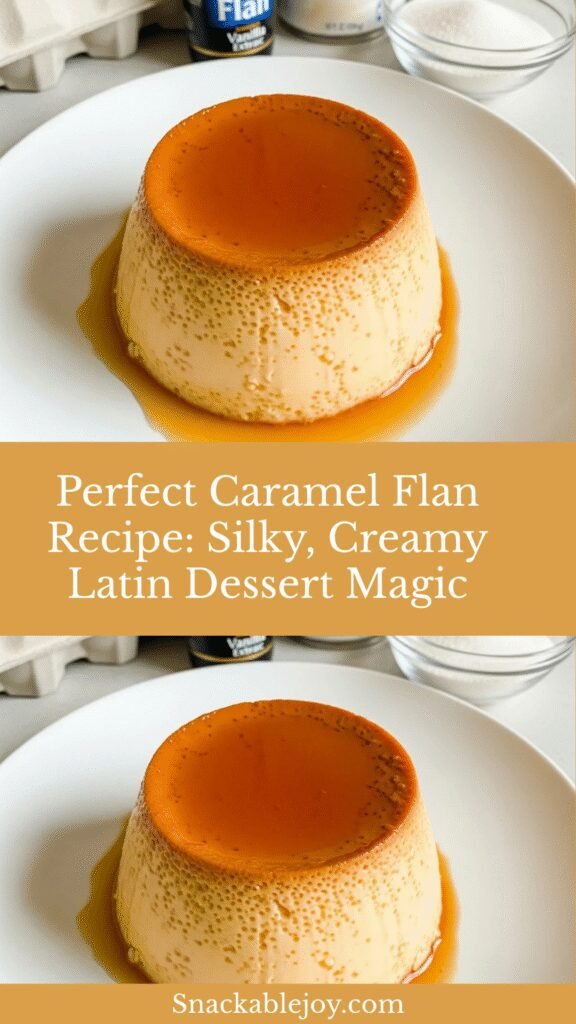
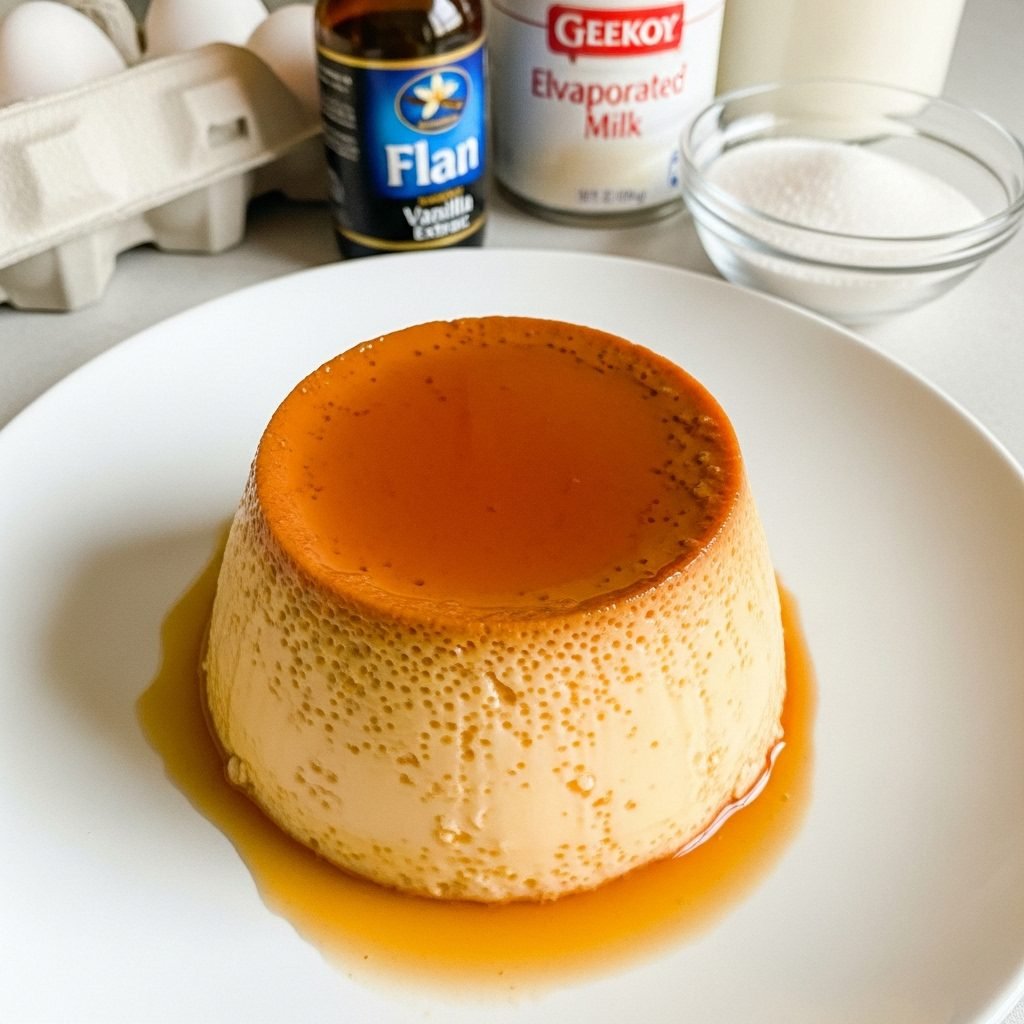
Get ready to discover the most luxurious, silky-smooth dessert you’ll ever make! Caramel flan (also known as flan de caramelo or crème caramel) is a stunning custard dessert featuring a rich, creamy base topped with a layer of glossy, bittersweet caramel sauce that cascades down the sides when you unmold it. This elegant dessert is surprisingly simple to make and delivers restaurant-quality results that will have everyone thinking you’re a professional pastry chef.
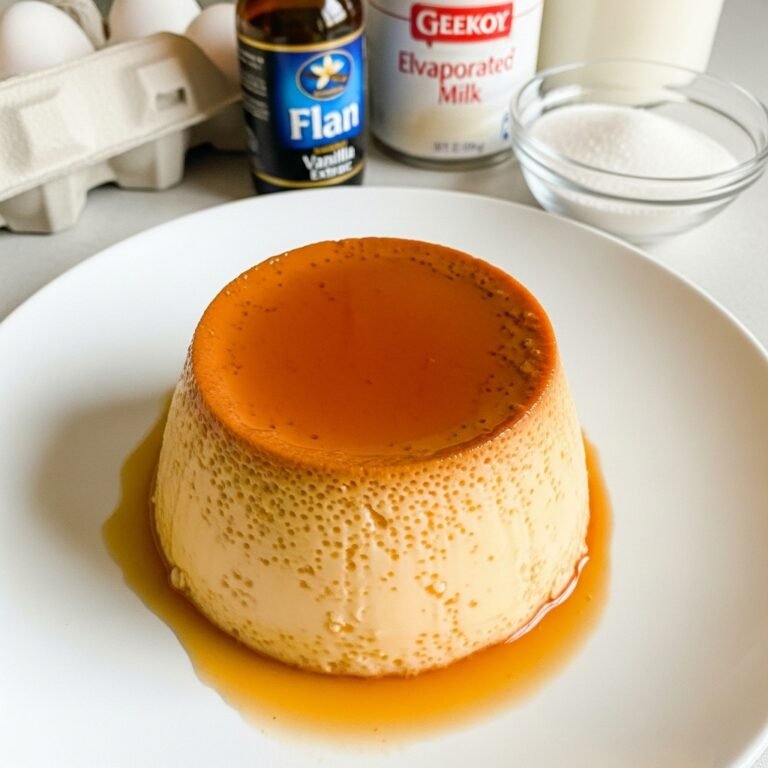
What makes flan so irresistible is its incredible texture—it’s impossibly smooth, creamy, and melts on your tongue like silk. The combination of sweet, eggy custard with that slightly bitter, deeply caramelized sugar creates a perfect balance of flavors that’s neither too sweet nor too rich. When you flip the flan onto a serving plate, that gorgeous amber caramel sauce pools around it, creating a dramatic presentation that’s absolutely Instagram-worthy.
Flan is the perfect make-ahead dessert for dinner parties, holiday gatherings, celebrations, or any time you want to end a meal with something truly special. It’s a beloved dessert throughout Latin America, Spain, and many other cultures, often served at weddings, quinceañeras, Christmas dinners, and family gatherings. The best part? Despite its elegant appearance, flan requires just a handful of simple ingredients and straightforward techniques. Whether you’re new to custard-making or an experienced baker, this foolproof recipe will help you create a dessert that looks and tastes absolutely spectacular!
History / Background
Flan has a fascinating history that spans continents and centuries, making it one of the world’s most internationally beloved desserts. The origins of flan can be traced back to ancient Rome, where early versions of egg-based custards were documented in the oldest known cookbook, “De re coquinaria” by Apicius, dating to the 1st century AD. The Romans discovered that eggs, when gently cooked, created a delicate, creamy custard texture, and they often flavored these custards with honey.
The word “flan” itself comes from the Old French “flaon,” derived from the Latin “flado,” which originally referred to a flat cake. During the Middle Ages, flan evolved throughout Europe, with each region developing its own variations. The Spanish embraced flan enthusiastically, and it became deeply embedded in their culinary tradition. Spanish cooks perfected the technique of caramelizing sugar to create that signature glossy coating, transforming the dessert into something truly special.
When Spanish conquistadors colonized Latin America in the 15th and 16th centuries, they brought flan with them, and it quickly became integrated into the cuisine of Mexico, Central America, South America, and the Caribbean. Each country and region added its own twist—Mexicans might add cinnamon or vanilla, Puerto Ricans created flan de coco with coconut, Filipinos (also colonized by Spain) developed leche flan with a denser, richer texture.
In Latin American culture, flan became more than just a dessert—it became a symbol of celebration, comfort, and home. It’s the dessert grandmothers make for special occasions, the treat that appears at every significant life event, and a taste of nostalgia for anyone who grew up eating it. The recipe is often passed down through generations, with each family having their own closely guarded secret for the “perfect” flan.
Today, flan remains one of the most popular desserts throughout the Spanish-speaking world and has gained widespread appreciation globally. Its enduring popularity speaks to its perfect simplicity—just eggs, milk, sugar, and vanilla transformed into something elegant and unforgettable. This recipe honors that beautiful tradition while making it accessible for home cooks everywhere.
Why You’ll Love This Recipe
This caramel flan recipe has been tested and perfected to deliver that restaurant-quality texture and flavor you’re dreaming of—silky smooth, perfectly sweet, and with a gorgeous caramel coating that never fails to impress. I’ve made this flan countless times for family gatherings and dinner parties, and it never fails to be the star of the dessert table!
Here’s what makes this recipe absolutely irresistible:
- Silky-smooth texture – Achieves that perfect custard consistency that melts on your tongue
- Foolproof method – Clear instructions that work every single time, even for beginners
- Make-ahead friendly – Actually required! Perfect for stress-free entertaining
- Impressive presentation – Looks like it came from a fancy restaurant
- Simple ingredients – Uses basic pantry staples you probably already have
- Gluten-free naturally – Perfect for guests with dietary restrictions
- Budget-friendly – Costs just a few dollars but tastes luxurious
- Serves a crowd – One flan serves 8-10 people generously
- Incredible flavor – Perfect balance of sweet custard and bittersweet caramel
- No special skills required – Easier than it looks, promise!
- Cultural authenticity – Tastes like traditional Latin American flan
Ingredient Notes
Understanding your ingredients and their roles helps you create the best possible flan. Let’s break down what makes this dessert so special.
Granulated Sugar: You’ll use sugar in two ways—first to make the caramel coating, then to sweeten the custard. The caramel requires careful attention as you melt and cook the sugar until it reaches that perfect amber color. For the custard, sugar provides sweetness and helps with texture. Don’t substitute with other sweeteners for the caramel—granulated white sugar caramelizes best.
Whole Milk: Provides the creamy base for your custard. Whole milk (full-fat) is essential—don’t use skim or low-fat milk as you need the fat content for proper richness and mouthfeel. The milk should be at room temperature when mixing to ensure smooth incorporation with eggs.
Sweetened Condensed Milk: This is the secret ingredient that gives flan its signature richness and ultra-smooth texture! Sweetened condensed milk adds concentrated dairy flavor, sweetness, and a velvety quality that regular milk alone can’t achieve. Don’t substitute with evaporated milk—they’re completely different products.
Eggs: The foundation of any custard, eggs provide structure and that silky texture. Use large eggs at room temperature for best results. The eggs should be fresh—fresher eggs create better custard. You’ll need whole eggs for this recipe, which create the perfect balance of richness and structure.
Vanilla Extract: Pure vanilla extract adds warmth and depth to the custard flavor. It’s worth using real vanilla extract rather than imitation—the flavor difference is noticeable in delicate desserts like flan. Mexican vanilla is particularly wonderful if you can find it!
Salt: Just a small pinch enhances all the flavors and balances the sweetness. Never skip salt in desserts—it’s the secret ingredient that makes everything taste better.
Equipment Needed
Having the right tools makes flan-making much easier and ensures better results. Here’s what you’ll need:
- Round flan mold or 9-inch round cake pan – Traditional flan molds have higher sides, but a cake pan works perfectly
- Large roasting pan – For the water bath (bain-marie) that ensures gentle, even cooking
- Medium saucepan – For making the caramel
- Large mixing bowl – For whisking the custard ingredients
- Whisk – For mixing the custard until smooth
- Fine-mesh strainer – Essential for removing any lumps and creating silky texture
- Measuring cups and spoons – Accuracy matters in custard-making
- Kettle or large pot – For heating water for the water bath
- Oven mitts – For safely handling hot pans
- Large plate or serving platter – For unmolding and serving the flan
- Aluminum foil – To cover the flan while baking
- Rubber spatula – For scraping and mixing
- Kitchen towel – To line the roasting pan bottom (prevents sliding)
Print

Caramel Flan Recipe
This classic Caramel Flan features an impossibly smooth, creamy custard base topped with glossy caramel sauce. It’s the perfect make-ahead dessert that’s elegant enough for special occasions yet simple enough for any home cook to master.
- Total Time: 4 hours 15 minutes (includes chilling)
- Yield: 8-10 servings 1x
Ingredients
ScaleFor the Caramel:
- 1 cup (200g) granulated sugar
- ¼ cup (60ml) water
For the Custard:
- 1 can (14 oz/397g) sweetened condensed milk
- 1½ cups (360ml) whole milk
- 5 large eggs, room temperature
- 1 tablespoon pure vanilla extract
- Pinch of salt
Instructions
Step 1: Preheat Oven and Prepare Water Bath
Preheat your oven to 350°F (175°C). Place a kitchen towel in the bottom of a large roasting pan (this prevents the flan mold from sliding). Set aside. Boil water in a kettle—you’ll need it for the water bath later.Step 2: Make the Caramel
In a medium saucepan, combine 1 cup sugar and ¼ cup water. Cook over medium heat, stirring gently just until the sugar dissolves. Once dissolved, STOP stirring. Let the mixture cook undisturbed, swirling the pan occasionally, until it turns a deep amber color (like the color of an old penny), about 8-12 minutes. Watch carefully—it goes from perfect to burnt quickly! The caramel is ready when it’s a rich golden-amber color and smells nutty and caramelized, not burnt.Step 3: Pour Caramel into Mold
Immediately and carefully pour the hot caramel into your flan mold or 9-inch round cake pan. Quickly tilt and swirl the pan to coat the bottom evenly and partially up the sides (the caramel will be VERY hot—use caution!). The caramel will harden as it cools—this is normal. Set aside to cool while you make the custard.Step 4: Blend the Custard
In a large mixing bowl, whisk together the sweetened condensed milk, whole milk, eggs, vanilla extract, and salt. Whisk thoroughly for about 1-2 minutes until completely smooth and well combined. You want everything fully incorporated without any streaks of egg white showing.Step 5: Strain the Custard
Pour the custard mixture through a fine-mesh strainer into another bowl or large measuring cup with a spout (this makes pouring easier). This crucial step removes any chalky bits from the eggs and ensures your flan will be impossibly smooth. Don’t skip it!Step 6: Pour Custard Over Caramel
Carefully pour the strained custard mixture over the hardened caramel in your prepared pan. The caramel layer will stay at the bottom (it will become the top when you flip the flan later!). If any bubbles form on the surface, gently pop them with a spoon or use a kitchen torch.Step 7: Create the Water Bath
Place the flan mold in the roasting pan (on top of the kitchen towel). Carefully pour hot water from your kettle into the roasting pan until it comes about halfway up the sides of the flan mold. Be very careful not to splash water into the custard! This water bath (bain-marie) ensures gentle, even cooking that prevents curdling.Step 8: Cover and Bake
Cover the entire roasting pan loosely with aluminum foil to prevent a skin from forming on the flan. Carefully transfer to the preheated oven. Bake for 50-60 minutes, until the flan is set around the edges but still has a slight jiggle in the center (about the size of a quarter). It should look like barely-set Jell-O in the middle. Don’t overbake—the custard will continue cooking from residual heat.Step 9: Cool and Chill
Carefully remove the roasting pan from the oven. Using oven mitts or tongs, remove the flan mold from the water bath and place on a wire rack. Let it cool to room temperature for about 1 hour. Once cooled, cover with plastic wrap and refrigerate for at least 4 hours, but preferably overnight. The flan needs this time to fully set and for flavors to develop.Step 10: Unmold and Serve
When ready to serve, run a thin knife around the edges of the flan to loosen it from the mold. Place a large serving plate or platter (with a rim to catch the caramel sauce) upside down over the mold. Holding both the plate and mold firmly together, quickly flip them over. Give the mold a gentle shake—the flan should release onto the plate. Lift off the mold to reveal your gorgeous flan with caramel sauce cascading down the sides. If any caramel remains in the pan, drizzle it over the top. Slice and serve immediately, spooning extra caramel sauce over each slice!Notes
- Watch the caramel carefully – It goes from perfect to burnt in seconds
- Don’t skip straining – This ensures silky-smooth texture
- Water bath is essential – Prevents curdling and ensures even cooking
- The jiggle test – Flan should wobble slightly in center when done
- Chill thoroughly – At least 4 hours, overnight is better
- Unmolding tip – Run knife around edges and use a quick, confident flip
- Caramel hardens – The hard caramel will melt into sauce as it bakes and chills
- Prep Time: 20 minutes
- Cook Time: 55 minutes
- Category: Desert
- Method: Baking (water bath)
- Cuisine: Latin American / Spanish
- Diet: Gluten Free
Nutrition
- Serving Size: 1 slice (1/10 of flan)
- Calories: 265
- Sugar: 38g
- Sodium: 115mg
- Fat: 8g
- Saturated Fat: 4g
- Unsaturated Fat: 3g
- Trans Fat: 0g
- Carbohydrates: 41g
- Fiber: 0g
- Protein: 8g
- Cholesterol: 125mg
Tips & Variations
Flavor Variations:
- Coffee Flan: Add 2 tablespoons instant espresso powder dissolved in the milk
- Coconut Flan: Replace ½ cup whole milk with coconut milk, add ½ teaspoon coconut extract
- Chocolate Flan: Add ⅓ cup melted dark chocolate to the custard mixture
- Orange Flan: Add 2 tablespoons orange zest and 1 teaspoon orange extract
- Rum Flan: Add 2-3 tablespoons dark rum to the custard for adult version
- Dulce de Leche Flan: Add ½ cup dulce de leche to custard for extra richness
Caramel Variations:
- Spiced Caramel: Add a cinnamon stick or star anise while making caramel (remove before pouring)
- Salted Caramel: Add a pinch of flaky sea salt to finished caramel
- Honey Caramel: Replace ¼ cup sugar with honey for more complex flavor
Size Variations:
- Individual Flans: Divide among 8-10 ramekins, reduce baking time to 30-35 minutes
- Large Flan: Use a 10-inch pan, increase baking time to 65-75 minutes
- Mini Flans: Use muffin tins, bake for 20-25 minutes
Dietary Modifications:
- Dairy-Free: Use coconut milk and coconut condensed milk (texture will differ slightly)
- Reduced Sugar: Reduce custard sugar by ¼ cup (flan will be less sweet but still delicious)
- Egg-Free: Unfortunately, eggs are essential for custard structure and cannot be substituted
Pro Chef Tips
The Perfect Caramel Color: Professional pastry chefs know that the key to great flan is getting the caramel to exactly the right color—a deep, rich amber that’s darker than golden but not burnt. The caramel should smell nutty and complex, never acrid. Pull it off the heat when it’s slightly lighter than you want, as it will continue darkening from residual heat. If you wait until it looks perfect, it will be too dark.
Room Temperature Eggs Prevent Curdling: Cold eggs don’t blend as smoothly and can cause temperature shock when mixed with room-temperature milk. Let your eggs sit at room temperature for 30 minutes before starting, or place them (still in shells) in a bowl of warm water for 10 minutes. This ensures smooth incorporation and reduces the risk of curdled custard.
The Gentle Water Bath Creates Silky Texture: The water bath (bain-marie) is absolutely non-negotiable for perfect flan. It creates a humid, gentle cooking environment that prevents the edges from overcooking while the center sets. Professional chefs know that custards cooked directly in the oven become grainy and develop an unpleasant texture. The water should come halfway up the sides of the mold for optimal heat distribution.
Strain for Restaurant-Quality Smoothness: Even when you think your custard is perfectly mixed, microscopic bits of cooked egg protein or chalazae (the white stringy bits in eggs) can create a less-than-silky texture. Professional pastry chefs always strain custard through a fine-mesh strainer—it’s the difference between good flan and spectacular flan. Press on solids with a spatula to push everything through.
The Jiggle Test Never Fails: Don’t rely solely on time to determine doneness—ovens vary dramatically. Gently shake the pan: if the entire flan wobbles like liquid, it needs more time. If only the very center jiggles (about a quarter-sized area) and the rest is set, it’s perfect. If nothing jiggles, it’s overbaked. The residual heat will finish cooking that jiggly center as it cools.
Overnight Chilling Develops Flavor: While you technically only need 4 hours of chilling time, professional chefs know that flan tastes significantly better after sitting overnight. The flavors meld, the texture becomes even more refined, and the caramel fully liquefies into that gorgeous sauce. Plan ahead and make your flan the day before serving for optimal results.
Common Mistakes to Avoid
Burning the Caramel: This is the most common mistake! Once sugar starts caramelizing, it can go from perfect to burnt in literally 10-15 seconds. Never walk away from caramelizing sugar. Watch it constantly, and pull it off the heat when it’s a shade lighter than you want—it continues cooking from residual heat. If it smells burnt (acrid, not nutty), start over. Burnt caramel will ruin your entire flan.
Overbaking the Custard: Flan should have a slight jiggle in the center when you remove it from the oven—it looks underdone, but it’s not! The custard continues cooking from residual heat as it cools. If you bake until the center is completely firm, you’ll end up with grainy, rubbery flan instead of silky-smooth custard. Trust the jiggle test and remove the flan when the center still wobbles.
Skipping the Water Bath: Some recipes claim you don’t need a water bath, but they’re wrong! Direct oven heat causes custards to cook unevenly—the edges overcook and curdle while the center stays liquid. The humid, gentle heat from a water bath ensures even cooking and that characteristic silky texture. Don’t skip this crucial step if you want restaurant-quality results.
Not Straining the Custard: I know it seems like an extra step, but straining removes any lumps, bits of cooked egg, or chalazae that would create an unpleasant grainy texture. Professional pastry chefs always strain custards—it takes 30 seconds and makes a dramatic difference. Even if your custard looks perfectly smooth, strain it anyway.
Unmolding Too Soon: Patience is essential! Flan must be completely chilled (at least 4 hours, preferably overnight) before unmolding, or it won’t hold its shape and could collapse into a puddle. The chilling time allows the custard to fully set and the caramel to liquify into sauce. If you try to unmold a warm or partially chilled flan, disaster awaits.
Storage & Meal Prep
Refrigerator Storage: Flan should always be stored in the refrigerator. If unmolded, cover it loosely with plastic wrap or place under a cake dome and refrigerate for up to 4 days. If still in the mold, cover tightly with plastic wrap and refrigerate for up to 5 days. The caramel sauce will continue to liquify and pool around the flan, which is normal and delicious!
Keeping Flan Fresh: Flan is actually best when made 1-2 days in advance. The texture becomes even more refined, flavors develop, and the caramel fully liquifies. Just keep it covered in the refrigerator—the cold temperature prevents any bacterial growth and maintains that perfect silky texture.
Individual Servings Storage: If you make individual flans in ramekins, you can leave them in their molds, cover each with plastic wrap, and refrigerate. Unmold just before serving for the freshest presentation. This is perfect for dinner parties where you want to serve each guest their own flan.
Make-Ahead & Freezer Notes
The Ultimate Make-Ahead Dessert: Flan is not just make-ahead friendly—it’s actually required! You must refrigerate it for at least 4 hours (preferably overnight) before serving, making it the perfect stress-free dessert for entertaining. Make it 1-2 days before your event, keep it covered in the refrigerator, and unmold just before serving. This frees you up to focus on other dishes on the day of your gathering.
Freezing Flan (Not Recommended): While technically possible, I don’t recommend freezing flan. The delicate custard texture doesn’t survive freezing and thawing particularly well—it can become slightly grainy or watery. Flan is best enjoyed fresh from the refrigerator. If you absolutely must freeze it, wrap it very tightly and freeze for up to 1 month, then thaw slowly in the refrigerator for 24 hours before serving.
Optimal Make-Ahead Timeline: For best results, make your flan 1-2 days before serving. This gives flavors time to fully develop, ensures the caramel is completely liquified, and allows the texture to reach peak creaminess. On the day of serving, simply unmold and serve—no last-minute stress!
The Day-Of Strategy: If you’re planning a dinner party, bake your flan the day before (or even two days before), refrigerate it overnight, and unmold it 10-15 minutes before serving. This timing ensures the flan is at the perfect temperature and the caramel sauce has fully liquified into that gorgeous glaze.
Serving Suggestions
Flan is stunning on its own, but thoughtful accompaniments can enhance the experience and create a more complete dessert presentation.
Classic Accompaniments:
- Whipped Cream: A dollop of lightly sweetened whipped cream adds lightness and textural contrast
- Fresh Berries: Strawberries, raspberries, or blackberries provide color and tart contrast to the sweet custard
- Sliced Tropical Fruit: Mango, papaya, or passion fruit echo Latin American flavors beautifully
- Dulce de Leche: An extra drizzle for caramel lovers who want more richness
- Toasted Coconut: Sprinkle toasted coconut flakes on top for tropical flair
Beverage Pairings:
- Espresso or Strong Coffee: The slight bitterness perfectly balances the sweet custard
- Café con Leche: Traditional Latin American coffee-milk beverage
- Dessert Wine: Late-harvest Riesling or Moscato d’Asti complement the caramel
- Brandy or Rum: Small glass alongside for adult dinners
- Horchata: For a full Latin American dessert experience
Plating Ideas:
- Serve each slice on a white plate with caramel sauce pooled around it
- Garnish with a fresh mint leaf for color contrast
- Add a few fresh berries on the side
- Dust the plate rim lightly with cinnamon or cocoa powder
- Include a small cookie (like a Mexican wedding cookie) alongside
Holiday Presentation:
- For Christmas: Garnish with pomegranate seeds and fresh mint
- For Cinco de Mayo: Serve with a small Mexican flag pick
- For Thanksgiving: Add a sprinkle of cinnamon and a cinnamon stick garnish
- For weddings: Individual flans with edible flowers
FAQs Section
Can I make flan without sweetened condensed milk?
While sweetened condensed milk is traditional and creates the best texture, you can substitute with a mixture of 1 cup whole milk + ¾ cup granulated sugar + 2 tablespoons cornstarch (for thickness). Heat until sugar dissolves, let cool, then proceed with recipe. The texture will be slightly different—less creamy and rich—but still delicious.Why did my caramel crystallize and become grainy?
Crystallization happens when sugar crystals from the sides of the pan fall back into the melting sugar. To prevent this: don’t stir once the sugar dissolves, use a wet pastry brush to wipe down the pan sides occasionally, and add a tablespoon of corn syrup or a squeeze of lemon juice to the sugar-water mixture at the beginning (this prevents crystallization).My flan has bubbles and holes—what went wrong?
Air bubbles in flan come from vigorous whisking or pouring. Whisk gently to combine ingredients without incorporating excess air, strain the custard to remove bubbles, and pour it slowly into the caramel-lined mold. If bubbles appear on the surface, gently pop them with a spoon or kitchen torch before baking.How do I know when flan is done baking?
Gently shake the pan—the flan is done when the edges are completely set (don’t move at all) but the center still jiggles slightly, about the size of a quarter. It should look like barely-set Jell-O in the middle. Another test: insert a knife near (not in) the center—if it comes out clean, the flan is done. Don’t wait for the center to be completely firm or it will be overbaked.Why won’t my flan release from the mold?
If your flan won’t unmold: make sure it’s completely chilled (at least 4 hours), run a thin knife around the entire edge to break the seal, dip the bottom of the mold in warm water for 10-15 seconds to slightly melt the caramel, then flip quickly and confidently. Give it a gentle shake—the flan should slide out. The caramel acts as a release agent once slightly warmed.Can I use a different size pan?
Yes! The recipe works in various pan sizes but baking time changes: 8-inch round (60-70 minutes), 10-inch round (45-50 minutes), individual 6-oz ramekins (30-35 minutes), or a loaf pan (55-65 minutes). Always use the jiggle test for doneness rather than relying solely on time. Deeper pans require longer baking.My flan is grainy instead of smooth—what happened?
Grainy texture indicates overcooked custard. The eggs curdled from too much heat, either because: the oven was too hot, there was no water bath (or not enough water), or the flan was overbaked. Always use a water bath, check oven temperature with a thermometer, and pull the flan when the center still jiggles. Straining the custard before baking also helps ensure smoothness.Conclusion
There you have it—everything you need to create the most incredible, restaurant-quality Caramel Flan right in your own kitchen! This classic Latin American dessert is pure magic with its silky-smooth custard and glossy caramel sauce that never fails to impress. Whether you’re making it for a special celebration, holiday dinner, or simply because you deserve something wonderful, this flan delivers elegance and deliciousness in every single bite.
The beauty of flan is that it looks and tastes like something from a fancy restaurant but comes together with simple ingredients and straightforward techniques. Once you’ve made it successfully (and you will!), you’ll find yourself making it again and again for every special occasion. It’s the kind of dessert that creates memories and becomes part of your signature recipe collection—the one everyone requests and raves about.
I’d absolutely love to hear how your Caramel Flan turns out! Are you making it for a special occasion or just treating yourself? Did you try any of the flavor variations? Drop a comment below and share your flan-making adventures—I read every comment and genuinely love connecting with fellow home cooks!
Please save this recipe to your Pinterest dessert board so you’ll have it ready for every celebration and dinner party (trust me, once people taste your homemade flan, they’ll request it constantly!). And if you snap a photo of your gorgeous flan with that beautiful caramel cascade, tag me on social media—I absolutely love seeing your stunning creations!
Now grab those eggs and get ready to make some dessert magic. Your kitchen is about to smell amazing, and you’re about to serve the most elegant, silky-smooth custard that’ll have everyone convinced you’re a professional pastry chef. Happy baking, friends! 🍮✨