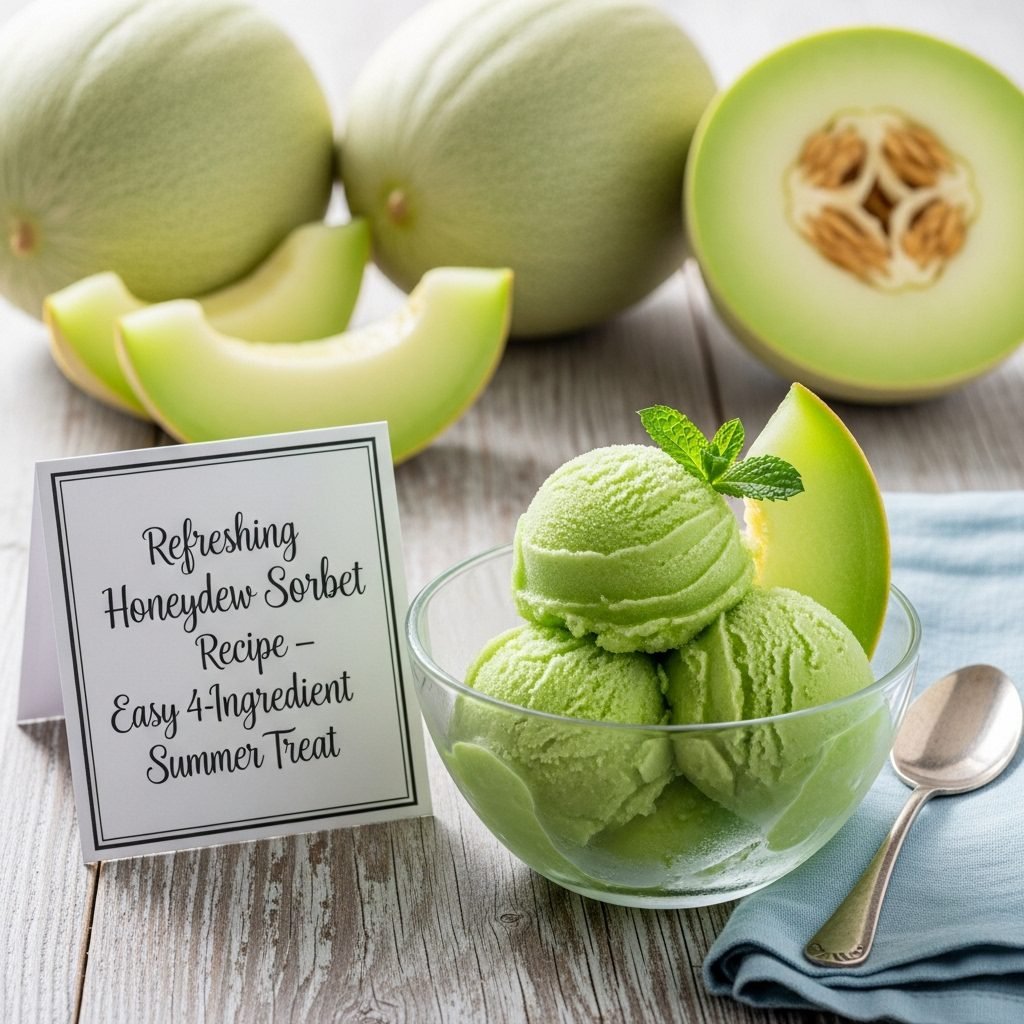
Refreshing Honeydew Sorbet Recipe – Easy 4-Ingredient Summer Treat
There’s something absolutely magical about Honeydew Sorbet that captures the essence of summer in the most elegant, refreshing way imaginable. This dreamy frozen dessert showcases the delicate sweetness of ripe honeydew melon in all its glory, transformed into a silky-smooth sorbet that’s both sophisticated and incredibly easy to make. With its gorgeous pale green color, naturally sweet flavor, and ultra-light texture, honeydew sorbet is like tasting a cool breeze on a hot summer day.
What makes this recipe particularly wonderful for home cooks is its beautiful simplicity—you need just four basic ingredients and about 20 minutes of hands-on time to create a dessert that looks and tastes like it came straight from a high-end restaurant or Italian gelateria. Unlike heavy ice cream that can weigh you down, this sorbet is naturally light, dairy-free, and allows the pure, sweet essence of honeydew to shine without any competition.
Honeydew sorbet is wonderfully versatile for any occasion. Serve it as an elegant palate cleanser between courses at formal dinner parties, scoop it into bowls for a guilt-free afternoon refreshment, blend it into morning smoothies for a nutritious breakfast, or even transform it into sophisticated cocktails by topping with sparkling wine. The mild, naturally sweet flavor pairs beautifully with everything from fresh berries and tropical fruits to delicate pastries, crispy cookies, or even savory dishes like prosciutto (a classic Italian pairing!). It’s refined enough for special celebrations yet simple enough to whip up whenever you spot gorgeous melons at your local market. Plus, it’s a brilliant way to use up those melons that are getting perfectly ripe before they go past their prime—that’s when they make the absolute best sorbet!
History / Background
The history of sorbet is a fascinating journey that spans thousands of years and crosses multiple continents. The earliest versions of frozen desserts date back to around 500 BC in ancient Persia and China, where resourceful cooks discovered that snow and ice from mountain peaks could be combined with fruit juices and honey to create refreshing treats. These early frozen delicacies were luxuries reserved exclusively for royalty and the extremely wealthy, as obtaining and storing ice was incredibly difficult and expensive.
The word “sorbet” itself has rich linguistic roots, derived from the Arabic word “sharba” (meaning “to drink”) and the Turkish “şerbet,” which originally referred to sweetened, chilled fruit beverages. As trade routes expanded and cultures intermingled along the Silk Road, these frozen treats traveled westward from the Middle East into Europe, evolving along the way.
When Marco Polo returned from his legendary travels in the 13th century, he brought back recipes and techniques for frozen desserts that would forever change European cuisine. By the Renaissance period, Italian chefs had refined sorbet-making into a true culinary art form, creating “sorbetto” that became a hallmark of sophisticated dining. The Medici family in Florence was particularly famous for serving elaborate frozen desserts at their grand feasts, and Catherine de’ Medici is credited with introducing sorbetto to France when she married King Henry II in 1533.
French chefs embraced these techniques enthusiastically, and by the reign of King Louis XIV in the 17th century, sorbet had become fashionable in royal courts throughout Europe. It was traditionally served between courses as a palate cleanser, a practice that continues in fine dining today.
Honeydew melons themselves have an interesting backstory. While honeydew is often grouped with other melons, it’s actually a cultivar of the Casaba melon and belongs to the Cucumis melo species. The modern honeydew as we know it was cultivated in France and Algeria in the early 1900s and introduced to the United States around 1915. The name “honeydew” perfectly captures the melon’s honey-sweet flavor and its characteristic dew-like juice.
The melon thrived in American growing climates, particularly in California, Arizona, and parts of Texas, where warm temperatures and irrigation allowed for abundant production. Today, the United States is one of the world’s largest producers of honeydew melons, with peak season running from June through October.
The pairing of Old World sorbet technique with relatively modern honeydew melon represents a beautiful fusion of ancient culinary wisdom and contemporary ingredients. Honeydew sorbet became particularly popular in the mid-to-late 20th century as home ice cream makers became accessible to everyday cooks, and the health-conscious movement encouraged lighter, fruit-based desserts. Modern chefs and home cooks alike celebrate honeydew sorbet for its clean flavor profile, natural sweetness, and stunning presentation—no artificial colors or flavors needed when nature provides such perfection.
Why You’ll Love This Recipe
This Honeydew Sorbet is about to become your summer go-to frozen dessert, and I’m excited to tell you why: it transforms humble, affordable melon into an elegant, restaurant-quality treat that tastes incredibly sophisticated while being remarkably simple to make. There’s something truly special about the way freezing concentrates honeydew’s delicate sweetness while maintaining that distinctive, refreshing melon character that’s both familiar and luxurious.
Unlike complicated desserts that require specialty ingredients, fancy equipment, or culinary school techniques, this sorbet celebrates beautiful simplicity. The honeydew does all the heavy lifting—your job is simply to blend, sweeten properly, and freeze. The result is a clean, bright flavor that’s never cloying, artificial, or overwhelming. It’s refreshing in the truest, most satisfying sense, leaving your palate feeling renewed and delighted rather than weighed down.
Here’s what makes this recipe absolutely perfect:
- Super Simple & Quick – If you can operate a blender and follow basic instructions, you can create gourmet sorbet at home
- Only 4 Ingredients – Honeydew, sugar, water, and lime juice—that’s literally all you need! No weird additives or hard-to-find ingredients
- Naturally Vegan & Dairy-Free – Perfect for guests with dietary restrictions without requiring any special substitutions or modifications
- Budget-Friendly Elegance – Honeydew melons are incredibly affordable, especially in season, making this an economical way to serve impressive dessert
- Kid & Adult Approved – The mild, naturally sweet flavor appeals to everyone from picky toddlers to sophisticated dinner guests
- Peak Summer Freshness – Captures the taste of summer at its absolute best and prevents ripe melons from going to waste
- Make-Ahead Dream – Prepare days or even weeks in advance and store in the freezer for completely stress-free entertaining
- Lower Calorie Indulgence – Significantly lower in calories and fat than ice cream while still feeling like a real, satisfying treat
- Incredibly Versatile – Enjoy it straight, with champagne, alongside desserts, in smoothies, with savory pairings, or in creative cocktails
- Stunning Presentation – The beautiful pale green color looks absolutely gorgeous in photos, on dessert tables, and in elegant glassware
- No Guilt Required – Made with real fruit and minimal added sugar, you can feel good about serving this to your family
Ingredient Notes
Let’s talk about the simple ingredients that create this spectacular frozen dessert. The beauty of sorbet is that there’s nowhere to hide—quality ingredients truly shine through, which means choosing a great melon makes all the difference in the world.
Ripe Honeydew Melon: This is your star ingredient, so choose wisely and your sorbet will be incredible! A ripe honeydew should feel heavy for its size (indicating juiciness), have a creamy yellow color (not greenish-white), yield slightly when you press the blossom end, and most importantly, smell sweet and fragrant. The surface should feel slightly waxy or sticky rather than slick and hard. You’ll need about 5-6 cups of cubed melon (from one medium to large honeydew, roughly 4-5 pounds whole). Even slightly overripe melons are perfect for sorbet—that super-soft, intensely sweet flesh makes incredible sorbet even if the texture isn’t ideal for eating fresh. Substitution: You can use cantaloupe, Crenshaw melon, or even a combination of different melons, though each will produce a different flavor profile and color. Cantaloupe creates a peachy-orange sorbet, while Crenshaw gives you a pink-hued dessert.
Granulated Sugar: Sugar plays a dual and critical role in sorbet—it provides sweetness to balance the mild melon flavor and prevents the sorbet from freezing into a solid block of ice. Sugar interferes with water molecules forming large ice crystals, which creates that smooth, scoopable, creamy texture we love in good sorbet. The amount of sugar you need varies depending on your melon’s natural sweetness—always taste and adjust! Substitution: Superfine (caster) sugar dissolves even more quickly and easily. You can replace up to half the granulated sugar with honey, agave nectar, or maple syrup, though this will slightly affect the final texture and create a softer sorbet with different flavor notes.
Water: Clean, filtered water creates the liquid base that gives sorbet its perfect consistency and light, refreshing character. It dilutes the honeydew just enough to create ideal texture—not too thick and smoothie-like, not too icy and popsicle-like, but just right for smooth scooping.
Fresh Lime Juice: This is your secret weapon that transforms good sorbet into absolutely extraordinary sorbet! Lime juice brightens the honeydew’s delicate flavor, adds complexity and depth, and enhances the natural sweetness without making the sorbet taste citrusy or tart. The acidity balances the sugar and prevents the sorbet from tasting flat, dull, or one-dimensional. Substitution: Fresh lemon juice works equally well and provides similar acidity and brightness. Always avoid bottled lime or lemon juice—the fresh stuff makes a truly noticeable difference in flavor quality.
Optional Enhancers: A tiny pinch of salt (just 1/8 teaspoon) enhances all the flavors and makes the melon taste more “melon-y.” A tablespoon of vodka, white rum, or gin creates a slightly softer, more scoopable texture because alcohol doesn’t freeze solid—this is a professional pastry chef trick!
Equipment Needed
Great news—you probably already have everything you need in your kitchen! Here’s what you’ll use:
- High-Powered Blender or Food Processor – Absolutely essential for pureeing the honeydew until silky smooth and perfectly creamy
- Fine-Mesh Strainer (Optional) – For ultra-smooth, restaurant-quality sorbet, though honestly most people skip this step
- Large Mixing Bowl – To hold your beautiful melon puree
- Measuring Cups and Spoons – For accurate measurements that ensure perfect results
- Small Saucepan – To make simple syrup if you choose that method (recommended for smoothest texture)
- Whisk or Wooden Spoon – For stirring your simple syrup
- Ice Cream Maker – Makes the smoothest, creamiest sorbet with minimal effort (most home models work great)
- Freezer-Safe Container with Tight-Fitting Lid – A loaf pan, plastic container, or metal container works perfectly for storage
- Ice Cream Scoop – For beautiful, professional-looking serving
- Rubber Spatula – To scrape every precious drop of delicious puree from your blender
Don’t have an ice cream maker? Don’t worry—you can absolutely make this! Use the still-freeze method: pour the mixture into a shallow metal baking pan, freeze for 45 minutes, then use a sturdy fork or whisk to scrape and vigorously break up ice crystals. Repeat this scraping process every 30-40 minutes for about 3-4 hours until smooth. It’s more labor-intensive and requires you to be home, but it totally works. Alternatively, freeze the mixture completely solid, then break it into chunks and blend in batches in a high-powered blender (like a Vitamix) right before serving for instant “soft-serve” style sorbet.
Print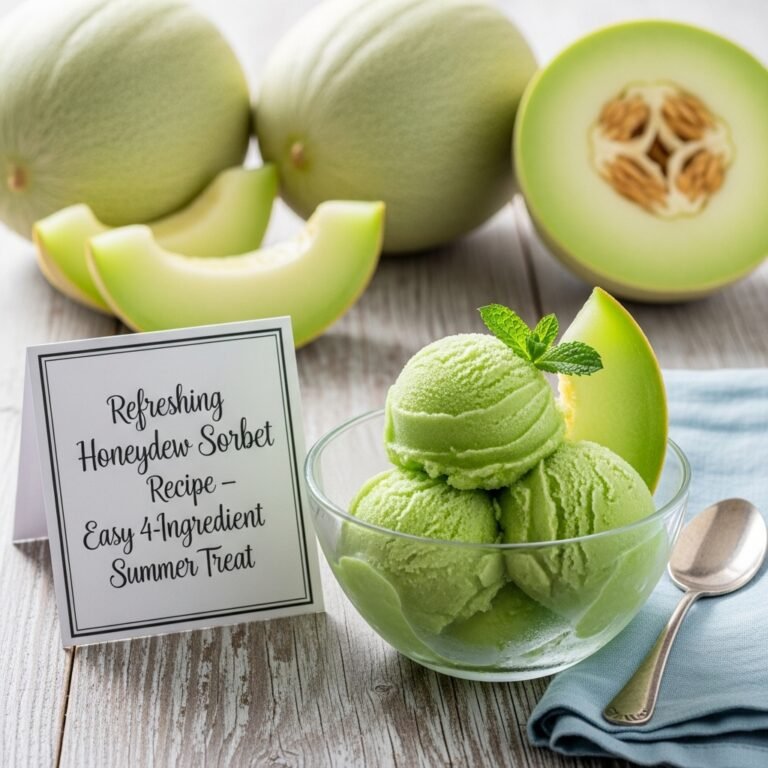
Honeydew Sorbet Recipe
This Easy Honeydew Sorbet is a refreshing, naturally sweet frozen dessert made with just four simple ingredients. Perfectly smooth, elegantly light, and bursting with fresh melon flavor, this gorgeous pale green sorbet is the ultimate summer treat that’s dairy-free, vegan-friendly, and absolutely delicious!
- Total Time: 5 hours
- Yield: 6 servings (about 1 quart) 1x
Ingredients
- 5-6 cups cubed ripe honeydew melon (from 1 medium-large melon, about 4-5 lbs whole)
- 2/3 cup granulated sugar (adjust based on melon sweetness)
- 1/2 cup water
- 3-4 tablespoons fresh lime juice (from about 2 limes)
- Pinch of fine sea salt (optional but highly recommended)
- 1 tablespoon vodka or white rum (optional, for softer texture)
Instructions
- Select and Prepare Your Honeydew: Choose a ripe honeydew that smells sweet, feels heavy, has a creamy yellow (not white-green) rind, and yields slightly when pressed at the blossom end. Cut the melon in half and scoop out all seeds and stringy membrane. Cut the flesh away from the rind and cube into chunks. You should have 5-6 cups of cubed melon. Taste a piece to assess sweetness—very sweet melons need less sugar, while mild melons need the full amount or slightly more.
- Make the Simple Syrup: In a small saucepan, combine the sugar and water over medium heat. Stir frequently until the sugar completely dissolves into a clear liquid (about 3-5 minutes). You don’t need to boil it—just heat until no sugar granules remain visible. Remove from heat and let cool completely to room temperature. This method creates the smoothest sorbet texture. (Alternative: You can add sugar directly to the blender with the melon if you prefer, though simple syrup yields better results.)
- Blend Until Silky Smooth: Add the honeydew cubes, cooled simple syrup (or sugar and water if not making syrup), lime juice, and pinch of salt to your high-powered blender or food processor. Blend on high speed for 1-2 minutes, stopping to scrape down sides if needed, until the mixture is completely smooth, creamy, and no chunks or fibrous bits remain. The mixture should be silky and pourable with a beautiful pale green color. Taste and adjust sweetness or lime juice to your preference—the flavor should be balanced, sweet but not cloying, with a bright finish.
- Strain for Extra Smoothness (Optional): For restaurant-quality, ultra-silky texture, pour the blended mixture through a fine-mesh strainer into a bowl, using a spatula to press and extract all the liquid. This removes any fibrous bits or tiny seeds. Honestly, most honeydew melons are smooth enough that you can skip this step unless you’re very particular about texture or making this for a special occasion.
- Chill Thoroughly: Cover the bowl tightly with plastic wrap and refrigerate for at least 4 hours, but preferably overnight or up to 24 hours. This step is absolutely crucial and non-negotiable! Cold mixture (40°F or below) churns faster and produces much smaller ice crystals, resulting in significantly smoother, creamier sorbet. Warm or room-temperature mixture makes icy, grainy sorbet no matter what.
- Churn the Sorbet: Remove your chilled mixture from the refrigerator and give it a quick stir. Pour into your ice cream maker and churn according to the manufacturer’s instructions, typically 20-25 minutes. The sorbet should reach a thick, soft-serve consistency—it should mound on a spoon and hold its shape but still be soft and creamy, not stiff. Don’t over-churn or it will become too airy and icy.
- Final Freeze: Transfer the freshly churned sorbet to a freezer-safe container with a tight-fitting lid. For the best texture and to prevent ice crystals, press a piece of plastic wrap, parchment paper, or wax paper directly onto the surface of the sorbet before sealing with the container lid—this creates a barrier against moisture and freezer burn. Freeze for at least 4-6 hours or until firm enough to scoop easily.
- Serve and Enjoy: Let the sorbet sit at room temperature for 5-10 minutes before scooping to soften slightly for easier scooping and optimal flavor (cold numbs taste buds). Scoop into chilled bowls, elegant glasses, or waffle cones and serve immediately. Garnish with fresh mint leaves, honeydew balls, lime zest, or fresh berries if desired.
Notes
- Sweetness Adjustment: Always taste your honeydew before measuring sugar. Very ripe, sweet melons may only need 1/2 cup sugar, while mild melons might need up to 3/4 cup. The mixture should taste slightly sweeter than you want the final sorbet since freezing dulls sweetness perception.
- Lime Juice is Essential: Don’t skip or reduce the lime juice—it’s critical for balanced, vibrant flavor even though you won’t taste it directly as citrus.
- No Ice Cream Maker Method: Freeze in a shallow pan, vigorously stirring every 30-45 minutes for 3-4 hours. Or freeze solid and blend in a high-powered blender just before serving.
- Alcohol for Better Texture: The optional tablespoon of alcohol creates noticeably softer, easier-to-scoop sorbet without affecting flavor. Professional trick!
- Storage Life: Homemade sorbet is best within 1-2 weeks but remains good for up to 1 month when properly stored.
- Perfect Ripeness: Slightly overripe, very soft melons make the absolute best, sweetest, most flavorful sorbet—don’t discard them!
- Prep Time: 20 minutes
- Cook Time: 5 minutes
- Category: Desert
- Method: Churning/Freezing
- Cuisine: Italian-American
- Diet: Gluten Free
Nutrition
- Serving Size: 2/3 cup (approximately 125g)
- Calories: 122
- Sugar: 28g
- Sodium: 25mg
- Fat: 0.2g
- Saturated Fat: 0g
- Unsaturated Fat: 0.1g
- Trans Fat: 0g
- Carbohydrates: 31g
- Fiber: 1g
- Protein: 1g
- Cholesterol: 0mg
Tips & Variations
Cantaloupe-Honeydew Swirl: Use 3 cups honeydew and 3 cups cantaloupe for a gorgeous two-toned sorbet with complex flavor and beautiful color contrast.
Cucumber-Honeydew Fusion: Replace 1-2 cups of honeydew with peeled, seeded cucumber for an incredibly refreshing, spa-like sorbet that’s perfect for hot days.
Fresh Mint Infusion: Add 1/4 cup loosely packed fresh mint leaves to the blender for an herbal, cooling dimension that’s absolutely divine with melon.
Basil Elegance: Blend in 2-3 tablespoons fresh basil leaves for a sophisticated, slightly peppery note that’s surprisingly wonderful with honeydew’s sweetness.
Ginger Zing: Add 1 tablespoon fresh grated ginger or 1/2 teaspoon ground ginger for warming spice that beautifully complements the sweet melon.
Coconut Cream Version: Stir in 1/4 cup coconut cream for a richer, slightly creamier sorbet with subtle tropical undertones.
Champagne Sorbet: Replace half the water with champagne or Prosecco for an elegant, celebratory adult version perfect for special occasions.
Berry Ribbon: After churning, gently swirl in 1/2 cup raspberry or strawberry puree for gorgeous color contrast and added fruity complexity.
Honey-Sweetened: Replace all the granulated sugar with 1/2 cup honey for a more complex sweetness and slightly softer texture.
Kiwi-Honeydew: Add 1-2 peeled kiwis to the blender for added tartness, beautiful green color, and vitamin C boost.
Lower Sugar Version: Reduce sugar to 1/2 cup if using very ripe, sweet melon, but expect slightly harder texture that requires more tempering time.
Pro Chef Tips
Melon Selection is Critical: The single most important factor in amazing sorbet is using perfectly ripe honeydew. A ripe melon should smell sweet and fragrant, have a creamy yellow (not greenish) rind, feel slightly sticky or waxy to touch, and yield to gentle pressure at the blossom end. If it smells like nothing, it’s not ripe. If it smells fermented, it’s overripe but still perfect for sorbet!
Temperature is Everything: Professional ice cream makers always chill their base mixture to 35-40°F before churning. The colder your mixture, the faster it freezes, which means smaller ice crystals and silkier, creamier texture. Overnight chilling is ideal and makes a noticeable difference in final quality.
Don’t Skimp on Sugar: Sugar isn’t just for sweetness—it’s structural. The right amount (usually around 20-25% of total volume) prevents sorbet from freezing into solid ice and creates that smooth, scoopable texture. If you significantly reduce sugar, add corn syrup or alcohol to maintain proper texture.
The Acid Factor is Non-Negotiable: Lime or lemon juice is absolutely essential for balanced, vibrant flavor. Without acid, honeydew sorbet tastes flat, dull, and one-dimensional. The citrus makes the melon flavor “pop” and sing even though you won’t directly taste citrus.
Vodka is a Professional Secret: Adding 1 tablespoon of vodka (or other clear spirits) keeps sorbet softer and more scoopable straight from the freezer because alcohol doesn’t freeze solid. It won’t affect the flavor at all but makes a huge difference in texture.
Pre-Freeze Your Container: While your sorbet churns, place your storage container in the freezer. Transferring freshly churned sorbet into an already ice-cold container minimizes temperature shock and prevents ice crystal formation during the crucial final freeze.
Proper Serving Temperature: Sorbet served too cold numbs your taste buds and you miss all those beautiful honeydew flavors. Always let it sit at room temperature for 8-10 minutes before scooping for optimal taste, texture, and scoopability.
Peak Season Priority: Make honeydew sorbet during peak season (June through October) when melons are sweetest, most flavorful, and most affordable. Off-season honeydew often lacks the intensity and sweetness needed for truly exceptional sorbet.
Salt Enhances Everything: A tiny pinch of salt (1/8 teaspoon) enhances every single flavor in the sorbet without tasting salty. Professional pastry chefs use this trick in virtually every dessert they make.
Blend Thoroughly: Make sure your mixture is completely smooth with no chunks or fibrous bits. Under-blending creates icy texture and unpleasant mouthfeel.
Common Mistakes to Avoid
Mistake #1: Using Underripe Honeydew – This is the number one sorbet killer! Greenish-white, hard, flavorless melon makes flavorless sorbet. No amount of sugar can fix underripe melon that lacks sweetness and flavor. Be patient and wait for those fragrant, yellow-tinted, sweet-smelling melons at peak ripeness. Your patience will be rewarded a thousandfold with incredible flavor.
Mistake #2: Churning Warm or Room-Temperature Mixture – This is the fastest route to icy, grainy, disappointing sorbet. Always, always, always chill your mixture thoroughly (minimum 4 hours, preferably overnight) before churning. Cold base equals smooth, creamy sorbet. Warm base equals icy disappointment. This rule is absolutely non-negotiable for quality results.
Mistake #3: Over-Churning Past Soft-Serve Stage – Stop churning when the sorbet reaches thick, soft-serve consistency. Over-churning incorporates too much air and paradoxically creates icier texture rather than creamier. The final freeze in your container will firm it up perfectly to scoopable consistency.
Mistake #4: Skipping or Reducing Lime Juice – It seems like a minor ingredient, but lime juice is absolutely critical for balanced, vibrant, delicious flavor. Without it, honeydew sorbet tastes dull, flat, and one-dimensional. The acid makes all the difference between okay sorbet and spectacular sorbet.
Mistake #5: Improper Storage Leading to Ice Crystals – Exposed sorbet develops freezer burn and large ice crystals shockingly fast. Always press plastic wrap, parchment, or wax paper directly onto the sorbet’s surface before covering with the container lid. This simple step maintains that smooth, fresh-churned quality for much longer and prevents those annoying ice crystals from forming.
Storage & Meal Prep
Refrigerator Storage (Pre-Churning): Your blended honeydew mixture can be stored covered in the refrigerator for up to 2-3 days before churning. In fact, overnight or 24-hour refrigeration actually improves the flavor as all the ingredients meld and harmonize together beautifully. Keep it tightly covered to prevent absorbing other refrigerator odors.
Freezer Storage: Once churned and properly frozen, honeydew sorbet keeps beautifully for 1-2 weeks at absolute peak quality and remains perfectly safe to eat for up to 1 month. The delicate flavor stays vibrant and true, though texture may become slightly grainier or icier after the 2-week mark as ice crystals slowly form over time.
Preventing Dreaded Ice Crystals: The key to maintaining smooth, creamy texture is preventing moisture from freezer air from condensing on your sorbet’s surface. Always press plastic wrap, parchment paper, or wax paper directly onto the sorbet before sealing with the container lid. This creates an effective barrier against freezer burn and ice crystal formation.
Texture Revival Techniques: If your sorbet has been frozen for a while and become too icy or rock-hard, let it soften at room temperature for 10-15 minutes before scooping. For severely icy sorbet that’s been stored too long, scoop it into a food processor and pulse 10-15 times until smooth, then re-freeze for 1-2 hours. This technique works remarkably well for restoring creamy texture to older sorbet.
Smart Portion Control: Consider freezing individual portions in small containers, silicone muffin cups, paper cups, or even ice cube trays. This makes serving incredibly easy and convenient, and prevents the entire batch from experiencing temperature fluctuations and ice crystal formation every single time you open the container to scoop some out.
Optimal Texture Window: For absolute peak texture, silky smoothness, and best flavor, enjoy your homemade honeydew sorbet within 5-7 days of churning. After this golden window, it’s still delicious and perfectly safe, but may require a few extra minutes of tempering at room temperature before scooping easily.
Make-Ahead & Freezer Notes
Perfect Make-Ahead Dessert: Honeydew sorbet is an entertainer’s absolute dream come true—it must be made in advance, which means zero last-minute stress, no rushing around, and no kitchen chaos when guests arrive. Prepare it 2-3 days before your event and it will be at absolutely perfect texture when you’re ready to serve.
Complete Make-Ahead Timeline:
- Up to 3 days ahead: Blend the honeydew mixture and store covered in the refrigerator, waiting to churn.
- 1-3 days ahead: Churn the sorbet and freeze until firm. This timing window yields the absolute best texture and flavor.
- Day of serving: Remove from freezer 8-10 minutes before scooping. Prepare your garnishes, serving dishes, and any accompaniments.
Long-Term Freezer Storage: When properly stored in an airtight container with surface protection, honeydew sorbet lasts 2-3 weeks at excellent, restaurant-quality texture and up to 1 month safely frozen. The delicate honeydew flavor remains bright, sweet, and true to the fresh fruit, though you may notice slight textural changes after week 2 as natural ice crystal formation occurs.
Best Container Choices: Use freezer-safe containers specifically designed for freezer storage with tight-fitting lids. Shallow, wide containers expose less surface area and develop fewer ice crystals than deep, narrow containers. Glass containers work beautifully if they’re explicitly freezer-safe (to prevent cracking), but plastic containers designed for freezer use are ideal and worry-free.
Batch Preparation for Stocking Up: This recipe doubles or triples easily and beautifully if you want to stock your freezer with multiple batches or create several different melon flavors at once. Honeydew sorbet also makes a wonderful, thoughtful homemade gift when packaged in pretty containers with decorative labels and ribbons—your friends and family will be absolutely thrilled!
No-Churn Method Timing: The still-freeze method requires you to be home and available for 3-4 hours to stir and scrape periodically every 30-45 minutes, so plan your schedule accordingly. Once it’s fully frozen solid, it keeps and stores exactly like churned sorbet with no differences.
Party-Ready Quick Serving: For dinner parties or gatherings, scoop individual portions ahead of time onto a parchment-lined baking sheet, freeze until rock-solid, then quickly transfer the pre-scooped portions to a container and return to freezer. At serving time, simply place the beautiful pre-scooped portions directly into bowls or glasses—no guests awkwardly waiting while you wrestle with an ice cream scoop, and perfectly uniform portions every time!
Seasonal Batch Making: When honeydew melons are at absolute peak season (mid-summer) and dirt cheap at farmers markets, make multiple large batches to stock your freezer and enjoy that perfect summer flavor all year long!
Serving Suggestions
Classic Elegant Presentation: Serve 2-3 generous, beautiful scoops in chilled glass dessert bowls, coupe glasses, or stemless wine glasses. The gorgeous pale green color looks absolutely stunning against clear glass and makes an impressive visual statement. Garnish artfully with fresh mint sprigs, thin lime wheels, and honeydew melon balls for restaurant-worthy presentation.
Prosciutto and Melon Reimagined: For a sophisticated, conversation-starting appetizer, serve small scoops of chilled honeydew sorbet alongside paper-thin slices of high-quality prosciutto. This classic Italian pairing of sweet melon and salty cured meat becomes an elegant, unexpected frozen bite that’s absolutely delicious—the temperature contrast and flavor combination is pure genius.
Prosecco or Champagne Float: Create an incredibly elegant, celebratory dessert cocktail by scooping sorbet into tall champagne flutes and topping with chilled Prosecco, champagne, or sparkling wine. The bubbles against the creamy sorbet create magical flavor fireworks and impressive visual drama perfect for special occasions.
Fresh Berry Medley: Serve alongside or atop a colorful mix of fresh berries—strawberries, blueberries, raspberries, and blackberries. The berries’ natural tartness and deeper flavors complement the mild, delicate sweetness of honeydew beautifully and create gorgeous color contrast.
With Lemon Pound Cake: A slice of buttery, dense lemon pound cake or vanilla pound cake with a scoop of cool honeydew sorbet melting alongside is simple summer perfection that needs nothing else. Add a dollop of lightly sweetened whipped cream if desired for extra indulgence.
Smoothie Bowl Base: Let sorbet soften slightly at room temperature, then use it as a thick, creamy smoothie bowl base. Top generously with crunchy granola, coconut flakes, chia seeds, fresh fruit, sliced almonds, and a drizzle of honey for a gorgeous, Instagram-worthy breakfast or healthy snack.
Sophisticated Palate Cleanser: Serve very small, delicate scoops (about 1/4 cup or less) in tiny bowls or shot glasses between courses at formal multi-course dinners, especially between seafood and meat courses, or before the final dessert course to refresh the palate.
Classic Waffle Cone: Sometimes simplicity is absolute perfection—scoop into crispy, fresh waffle cones for a classic ice cream parlor experience that kids and adults alike will love.
With Crispy Cookies: Serve alongside delicate butter cookies, Italian pizzelle, almond biscotti for dunking, or crisp wafer cookies for wonderful textural contrast against the smooth, creamy sorbet.
Tropical Fruit Salad Topping: Serve scoops of sorbet atop a fresh, colorful fruit salad featuring pineapple chunks, mango cubes, kiwi slices, and papaya for a spectacular, vibrant tropical dessert presentation that celebrates summer.
FAQs Section
Q: Can I make honeydew sorbet without an ice cream maker?
A: Absolutely, yes! Use the still-freeze method: pour your chilled mixture into a shallow metal baking pan and place in the freezer for 45 minutes. Remove and use a sturdy fork or whisk to vigorously scrape and break up any ice crystals that have formed. Return to freezer and repeat this scraping process every 30-45 minutes for 3-4 hours total until smooth and frozen. Alternatively, freeze the mixture completely solid, then break into chunks and blend in a high-powered blender like a Vitamix just before serving for instant soft-serve texture.
Q: How do I know if my honeydew melon is ripe enough for sorbet?
A: Look for these telltale ripeness signs: the rind has a creamy yellow color (not greenish-white), it feels heavy for its size indicating lots of juice, the surface feels slightly waxy or sticky rather than slick, the blossom end yields to gentle pressure, and most importantly it smells sweet and fragrant at the stem end. If there’s no aroma at all, it’s not ripe yet. A strong, almost fermented smell means it’s overripe—but still absolutely perfect for making sorbet!
Q: Why is my honeydew sorbet icy and grainy instead of smooth and creamy?
A: This frustrating problem usually results from one of three issues: insufficient sugar (which prevents proper ice crystal formation control), churning warm or room-temperature mixture instead of thoroughly chilled, or improper storage allowing ice crystals to form. Make sure your base mixture is thoroughly chilled to 40°F or below before churning, use the full amount of sugar recommended (or add corn syrup/alcohol), and always press plastic wrap directly onto the surface before storing in the freezer.
Q: Can I reduce the sugar to make healthier, lower-calorie sorbet?
A: You can reduce sugar slightly (down to 1/2 cup) if your melon is exceptionally sweet and ripe, but understand that sugar serves a crucial structural purpose beyond just sweetness. It prevents sorbet from freezing into solid, unscoopable ice and creates that smooth, creamy texture. Significantly less sugar means much harder, icier texture. If you want to reduce sugar for health reasons, add 1-2 tablespoons of vodka or light corn syrup to help maintain proper scoopable consistency.
Q: What’s the actual difference between sorbet and sherbet?
A: Great question! Sorbet is made exclusively with fruit, sugar, and water—it’s completely dairy-free, vegan, and intensely fruity. Sherbet (also spelled “sherbert”) contains 1-2% dairy in the form of milk or cream, making it slightly richer and creamier but less intensely fruity. This honeydew recipe is true sorbet—100% dairy-free and vegan-friendly, allowing the pure melon flavor to shine through brilliantly.
Q: Can I use other types of melons instead of honeydew?
A: Absolutely! Cantaloupe makes gorgeous peachy-orange sorbet with slightly sweeter flavor. Crenshaw melon creates beautiful pink-hued sorbet with complex flavor. Even watermelon works, though it has much higher water content and needs less added water and more lime juice to balance its mildness. You can also mix different melons—half honeydew and half cantaloupe creates beautiful color swirls and complex flavor.
Q: My sorbet came out too soft and won’t firm up—what happened?
A: Sorbet that stays too soft usually means too much alcohol was added (if you used that option), not enough sugar, or the mixture wasn’t cold enough before churning. Make sure to chill thoroughly to 40°F or below, use only 1 tablespoon maximum of alcohol, and ensure you’re using the full amount of recommended sugar. Give it adequate time in the final freeze—at least 4-6 hours or overnight for proper firmness.
Q: Can I add alcohol to make adult-only, more sophisticated sorbet?
A: Yes, definitely! Add 1-2 tablespoons of vodka, white rum, gin, or even Prosecco for slightly softer texture and subtle adult sophistication. Don’t exceed 2 tablespoons total or the sorbet won’t freeze properly—alcohol has a much lower freezing point than water. The alcohol won’t add noticeable flavor but will create noticeably better, more scoopable texture straight from the freezer.
Conclusion
There you have it—everything you need to create absolutely perfect Honeydew Sorbet right in your own home kitchen! This recipe beautifully proves that sometimes the most impressive, elegant desserts are built on the simplest foundations. With just four basic, wholesome ingredients and minimal effort, you can transform affordable summer melons into an sophisticated frozen treat that rivals anything from fancy gelaterias, upscale restaurants, or gourmet ice cream shops.
The true beauty of this sorbet lies in its incredible versatility and wonderful approachability. Whether you’re hosting an elegant formal dinner party, searching for a light refreshing dessert after a heavy summer meal, treating your family to a healthy frozen treat they’ll actually love, or simply using up that perfectly ripe melon sitting on your kitchen counter, this recipe delivers stunning results every single time. The naturally sweet flavor, gorgeous pale green color, and wonderfully refreshing quality make it an absolute winner for all ages, occasions, and taste preferences.
I truly hope you’ll give this recipe a try and experience the pure joy, satisfaction, and deliciousness of homemade sorbet! There’s something wonderfully magical and rewarding about creating something so elegant, beautiful, and delicious from such simple, humble ingredients. Once you make it and taste that first spoonful, you’ll find yourself returning to this recipe every summer when those gorgeous honeydew melons are in peak season.
Ready to capture summer’s sweetness in a scoop? Save this recipe to your Pinterest dessert board right now so you can easily find it whenever honeydew season arrives or inspiration strikes! And after you make it, I’d absolutely love to hear all about your experience—leave a comment below sharing how it turned out, any creative variations or flavor twists you tried, questions you might have, or just general feedback. Did you add fresh mint? Serve it with prosciutto? Make it for a special celebration? Your feedback, photos, and personal experiences inspire other home cooks and help build our wonderful, supportive cooking community!
Happy churning, and enjoy every refreshing, sweet, perfectly smooth spoonful of summer! 🍈🍦✨💚