Homemade Lime Sorbet Recipe – Refreshing 4-Ingredient Citrus Sorbet
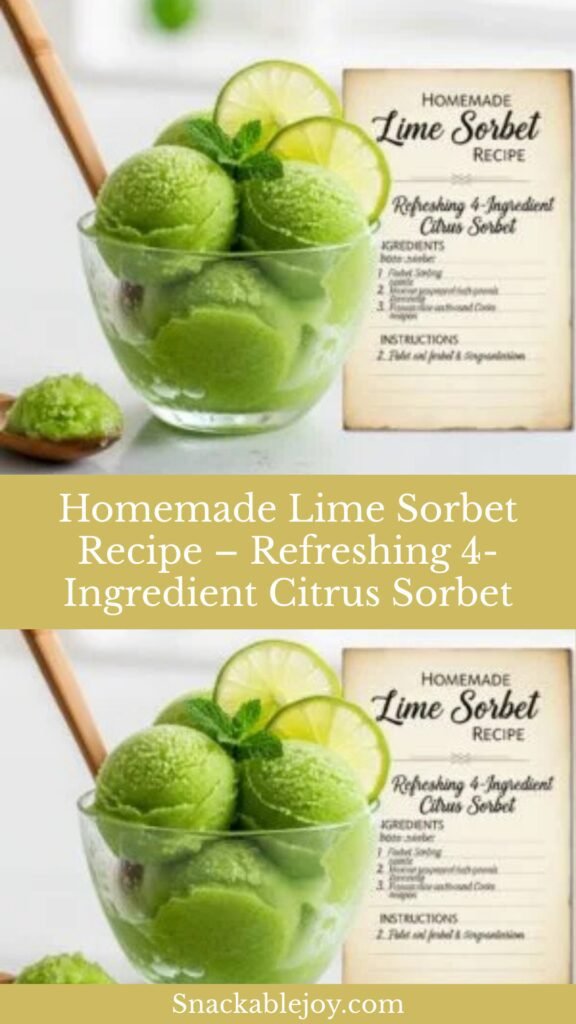
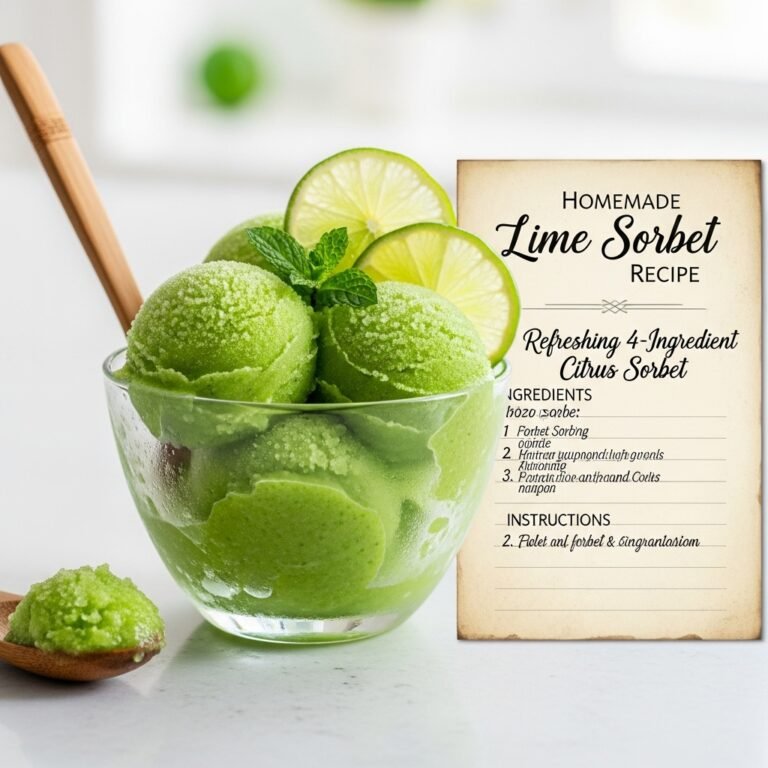
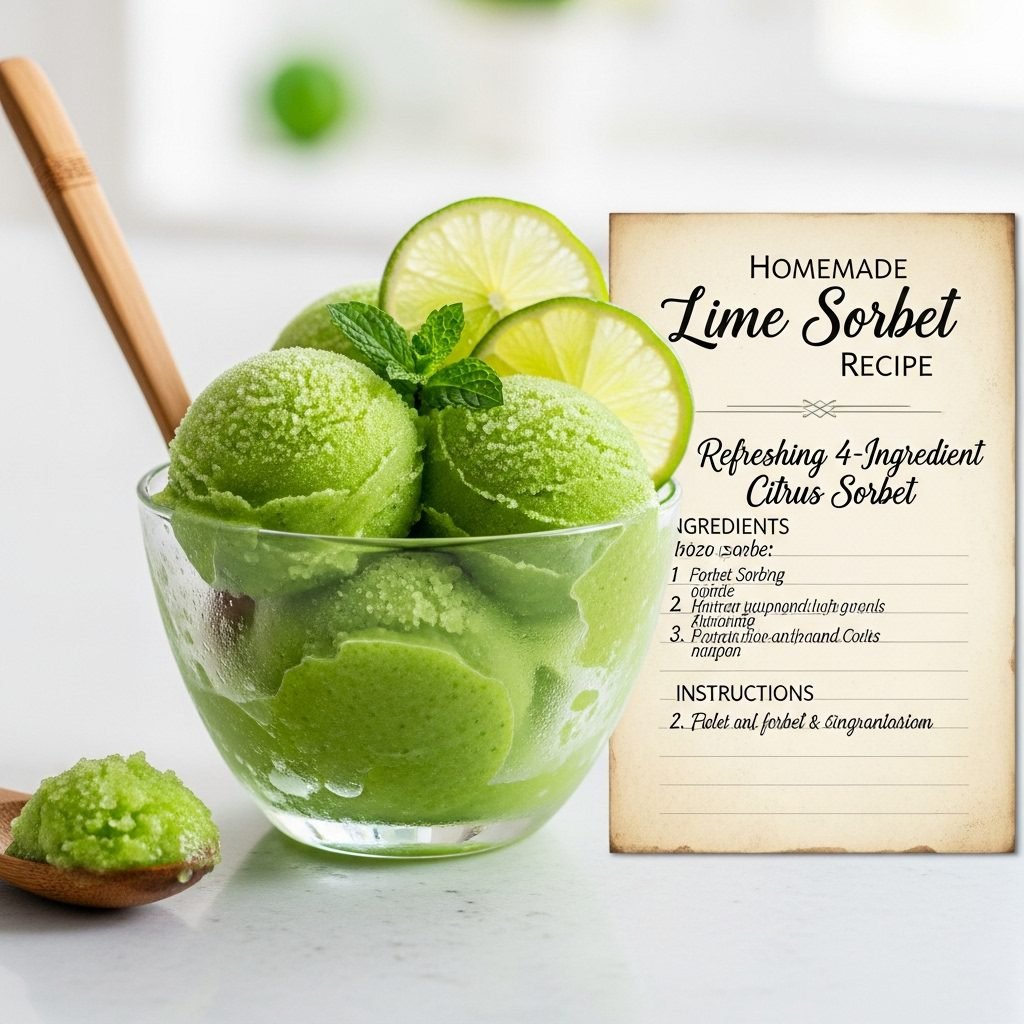
This lime sorbet is the epitome of simple elegance. Made with just four basic ingredients—fresh lime juice, sugar, water, and a hint of lime zest—it creates a vibrant green sorbet that tastes like sunshine frozen into the perfect scoop. Unlike heavy ice cream or cream-based desserts, lime sorbet is light, refreshing, and palate-cleansing, making it the ideal choice when you want something sweet but not too rich.
The beauty of lime sorbet lies in its versatility. Serve it as an elegant palate cleanser between courses at dinner parties, enjoy it poolside on sweltering summer days, pair it with spicy Mexican or Thai dishes to cool the heat, use it as a sophisticated dessert after heavy meals, or simply indulge in a bowl whenever you crave something bright and refreshing. It’s naturally dairy-free, vegan, gluten-free, and fat-free, making it perfect for guests with virtually any dietary restriction.
This recipe creates sorbet with that perfect balance—tangy enough to make your taste buds dance, sweet enough to satisfy dessert cravings, and smooth enough to rival any professional gelateria. Whether you’re using Persian limes from the grocery store or Key limes from Florida, this foolproof recipe transforms fresh citrus into frozen perfection. Let’s dive into making the most refreshing lime sorbet you’ve ever tasted!
History / Background
Sorbet’s history stretches back thousands of years, with lime sorbet holding a special place in the evolution of frozen desserts. The concept of mixing fruit juices with ice and sweeteners originated in ancient Persia around 400 BCE, where snow from mountain peaks was flavored with fruit syrups and enjoyed by royalty. The word “sorbet” comes from the Turkish “şerbet” and Arabic “sharbat,” both referring to sweetened fruit drinks that were eventually frozen.
As trade routes expanded, these frozen treats traveled westward. The Romans enjoyed similar concoctions, sending runners to mountain peaks to retrieve snow that would be mixed with honey and fruit juices. However, it was the Arabs who truly mastered the art of creating smooth, scoopable frozen fruit desserts during the Middle Ages, establishing techniques that remain foundational today.
Citrus-based sorbets became particularly popular when lemons and limes were introduced to Europe through Arabic trade routes. Limes, originally from Southeast Asia, spread throughout tropical regions via Spanish and Portuguese explorers. By the 16th century, citrus fruits were prized not just for flavor but for their high vitamin C content, which prevented scurvy during long sea voyages. British sailors became so associated with lime consumption that they earned the nickname “limeys.”
Lime sorbet specifically gained prominence in two distinct culinary traditions. In French haute cuisine, “sorbet citron vert” became a classic palate cleanser served between courses at elaborate dinners. The intense acidity and cold temperature refreshed diners’ palates, preparing them for the next course. Meanwhile, in Latin American and Caribbean cultures, lime-based frozen desserts evolved alongside regional cuisine, where bright citrus flavors naturally complemented spicy, rich foods.
The Key lime, a smaller, more aromatic variety native to the Florida Keys, created its own sorbet tradition in American Southern cuisine. While Key lime pie became famous, Key lime sorbet offered a lighter alternative that showcased the fruit’s distinctive floral notes and intense tartness.
Today, lime sorbet represents the perfect marriage of ancient tradition and modern technique. While our ancestors relied on mountain ice and manual churning, we have freezers and ice cream makers—but the core principle remains unchanged: capturing the pure, bright essence of fresh lime in frozen form. Making lime sorbet at home connects you to centuries of culinary history while creating something that tastes utterly contemporary and refreshing.
Why You’ll Love This Recipe
This homemade lime sorbet is one of those magical recipes that delivers maximum impact with minimal effort. There’s something deeply satisfying about transforming a handful of fresh limes into a sophisticated frozen dessert that looks and tastes like it came from an upscale restaurant.
Here’s why this lime sorbet recipe will become your go-to refreshing dessert:
- Intensely Refreshing – The bright, tangy lime flavor is incredibly invigorating and palate-cleansing
- Simple Ingredients – Just 4 basic ingredients create something extraordinary
- Quick Active Time – Only 15 minutes of hands-on work, then the ice cream maker does everything
- Naturally Healthy – Dairy-free, fat-free, vegan, and gluten-free without even trying
- Budget-Friendly – Costs far less than premium store-bought sorbet and tastes infinitely better
- Gorgeous Color – That natural pale green hue is simply beautiful in any serving dish
- Universally Loved – Even people who don’t usually like citrus desserts adore this
- Perfect Palate Cleanser – Professional chefs serve this between courses for good reason
- Impressive Yet Easy – Looks gourmet but requires no special skills
- Versatile Serving Options – Works as dessert, palate cleanser, or cocktail accompaniment
- No Artificial Anything – Pure, real ingredients you can actually pronounce
- Great Year-Round – Refreshing in summer, bright pick-me-up in winter
- Pairs Beautifully – Complements spicy foods, chocolate desserts, and tropical flavors
Ingredient Notes
Let’s examine each ingredient and understand its crucial role in creating perfect lime sorbet:
Fresh Lime Juice: This is absolutely the star ingredient, and quality matters enormously. You’ll need about 1 cup of fresh-squeezed lime juice, which typically requires 8-10 Persian limes (the regular grocery store variety) or 15-20 Key limes (the smaller, more aromatic Florida variety). Always use fresh-squeezed juice, never bottled—the difference in flavor is dramatic. Fresh lime juice has bright, complex flavors with aromatic oils and natural acidity that bottled juice simply can’t match. The juice should be strained to remove pulp and seeds. Persian limes are more readily available and provide reliable, tangy flavor. Key limes offer more aromatic, slightly sweeter, more complex flavor if you can find them. Substitution: In a pinch, you could use half lime and half lemon juice for a different citrus profile, though it won’t be authentic lime sorbet.
Lime Zest: Don’t skip this! The zest contains aromatic oils that intensify the lime flavor and add subtle complexity. You’ll need about 1-2 tablespoons of finely grated zest from 2-3 limes. Use a microplane or fine grater and only take the green outer layer—the white pith underneath is bitter. Zest the limes before juicing them; it’s much easier. The essential oils in the zest provide that “lime” aroma that makes the sorbet smell as amazing as it tastes. Substitution: If you absolutely must skip it, the sorbet will still work but with less aromatic depth.
Granulated Sugar: Provides sweetness and, crucially, affects texture. Sugar isn’t just about taste—it lowers the freezing point, keeping sorbet scoopable rather than rock-hard. You’ll need ¾ to 1 cup depending on how tart you like your sorbet and how tart your limes are. Limes are naturally quite tart, so this recipe uses enough sugar to balance that acidity while still letting the lime flavor shine. Substitution: Superfine sugar dissolves more easily; you can also use ¾ cup honey or agave nectar, though this changes the flavor slightly and makes the color more golden.
Water: Creates the base liquid and helps achieve the perfect consistency. Too little water makes overly thick, icy sorbet; too much creates bland, watery results. The 1½ cups in this recipe is carefully calibrated for ideal texture and flavor intensity. Substitution: You can replace up to ½ cup of the water with vodka or white rum for an adult version that stays softer (alcohol doesn’t freeze), or use coconut water for subtle tropical notes.
Optional – Light Corn Syrup or Vodka: These are professional additions that aren’t essential but dramatically improve texture. Adding 1-2 tablespoons of light corn syrup or 1-2 tablespoons of vodka helps prevent large ice crystals and keeps the sorbet smoother and more scoopable straight from the freezer. Corn syrup provides smoothness without altering flavor. Vodka keeps sorbet softer because alcohol doesn’t freeze, but it does make the dessert adults-only.
Pinch of Salt: Just a tiny pinch (⅛ teaspoon) enhances all the other flavors without making the sorbet taste salty. Salt is a flavor enhancer that makes sweet taste sweeter and brings out the complexity in citrus.
Equipment Needed
Having the right tools makes lime sorbet preparation smooth and ensures professional results:
- Citrus Juicer – Manual or electric; makes extracting juice from 8-10 limes much easier and faster
- Microplane or Fine Grater – Essential for creating fine lime zest without bitter white pith
- Medium Saucepan – For making the sugar syrup; stainless steel works best
- Wooden Spoon or Silicone Spatula – For stirring the syrup
- Fine-Mesh Strainer – Removes pulp, seeds, and any zest pieces for ultra-smooth sorbet
- Large Mixing Bowl – For combining all ingredients
- Measuring Cups and Spoons – For precise ingredient amounts (accuracy matters in sorbet-making)
- Whisk – For thoroughly mixing the lime juice and syrup
- Ice Cream Maker – Strongly recommended for the smoothest, creamiest texture; freezer-bowl or compressor models both work
- Freezer-Safe Container with Lid – A loaf pan or shallow container works best (shallow = faster, more even freezing)
- Parchment Paper or Plastic Wrap – For pressing against the sorbet surface during storage
- Ice Cream Scoop – For serving perfect portions
Optional but Helpful:
- Large bowl of ice water for quickly chilling the syrup
- Cutting board and sharp knife for cutting limes
- Small bowl for collecting zest
- Tequila or Mezcal: A natural pairing—drizzle with a teaspoon for adult indulgence
- Prosecco or Champagne: Drop a scoop in a flute for an elegant sorbet float
- Coconut Water: Serve alongside for hydrating tropical vibes
- Sparkling Water:Ladle for easier pouring
Print

Lime Sorbet Recipe
Bright, tangy homemade lime sorbet made with fresh-squeezed lime juice and zest. This refreshing frozen dessert is incredibly smooth, intensely citrusy, and perfect for hot days or as an elegant palate cleanser. Naturally dairy-free and vegan with just 4 simple ingredients.
- Total Time: 2 hours 45 minutes
- Yield: 6-8 servings (about 1 quart) 1x
Ingredients
Scale- 1 cup fresh lime juice (from 8-10 Persian limes or 15-20 Key limes)
- 1-2 tablespoons lime zest (from 2-3 limes, finely grated)
- ¾ to 1 cup granulated sugar (start with ¾ cup; adjust to taste)
- 1½ cups water
- ⅛ teaspoon salt
- Optional: 1-2 tablespoons light corn syrup or 1-2 tablespoons vodka (for smoother texture)
Instructions
Step 1: Zest and Juice the Limes
Before juicing, zest 2-3 limes using a microplane or fine grater, removing only the green outer layer and avoiding the bitter white pith. You should have about 1-2 tablespoons of zest. Set aside. Cut all limes in half and juice them using a citrus juicer, yielding approximately 1 cup of juice. Strain the juice through a fine-mesh strainer into a bowl to remove seeds and large pulp pieces. Small amounts of pulp are fine.Step 2: Make the Simple Syrup
In a medium saucepan, combine sugar, water, and salt. Heat over medium heat, stirring occasionally with a wooden spoon or spatula, until the sugar completely dissolves and the liquid becomes clear, about 3-5 minutes. You don’t need to boil it—just heat until there are no sugar granules visible when you stir. Remove from heat.Step 3: Add Lime Zest
Stir the lime zest into the hot simple syrup. Let it steep for about 5 minutes as the syrup cools slightly. This infuses those aromatic lime oils into the base, intensifying the lime flavor.Step 4: Combine and Strain
Pour the warm syrup mixture into the bowl with the fresh lime juice. Whisk together until thoroughly combined. Pour everything through a fine-mesh strainer into a clean bowl or container to remove the zest pieces and any remaining pulp. You want a completely smooth liquid. If using corn syrup or vodka for improved texture, stir it in now.Step 5: Taste and Adjust
This is crucial! Taste the mixture at room temperature. It should taste quite sweet and quite tart—almost too intense. Remember that freezing dulls both sweetness and acidity by about 30%, so the mixture needs to be bold. If it tastes weak or watery, add more lime juice (1 tablespoon at a time). If it’s too tart and puckering, add 1-2 more tablespoons of sugar and stir until dissolved. If it’s too sweet, add more lime juice.Step 6: Chill Thoroughly
Cover the bowl with plastic wrap and refrigerate for at least 2 hours, or until completely cold (40°F or below). For faster chilling, place the bowl in a larger bowl filled with ice water and stir occasionally until cold. The colder your mixture, the faster it will churn and the smoother your sorbet will be. Overnight chilling is even better if you have time.Step 7: Churn the Sorbet
Once thoroughly chilled, give the mixture a good stir, then pour it into your ice cream maker. Churn according to the manufacturer’s instructions, typically 20-25 minutes. The sorbet is ready when it reaches a thick, slushy consistency similar to soft-serve and holds its shape when you lift the dasher. It should be pale green (almost white-green) and look smooth and glossy.Step 8: Freeze Until Firm
Transfer the churned sorbet to a freezer-safe container using a rubber spatula, smoothing the top. Press a piece of parchment paper or plastic wrap directly onto the surface to prevent ice crystals from forming. Cover tightly with a lid. Freeze for at least 4 hours or until firm enough to scoop properly.Step 9: Serve
Remove the sorbet from the freezer 5-10 minutes before serving to soften slightly. It should be firm enough to hold a scoop shape but soft enough to scoop easily. Serve in chilled bowls or glasses for the best experience.Notes
- Lime Varieties: Persian limes (regular grocery store limes) are widely available and work perfectly. Key limes provide more aromatic, complex flavor if you can find them, but require more fruits since they’re smaller.
- Sweetness: Start with ¾ cup sugar and taste. Limes vary in tartness, so adjust sweetness to your preference. The mixture should taste too sweet and too tart at room temperature—freezing dulls flavors significantly.
- Smooth Texture: Straining is essential for removing zest and pulp that would create grainy texture. Don’t skip this step!
- Color: Natural lime sorbet is pale green to almost white. If you want vibrant green color, add 1-2 drops of natural green food coloring (though I prefer the natural look).
- No Ice Cream Maker?: Pour the chilled mixture into a shallow metal pan, freeze, and vigorously stir with a fork every 30-45 minutes for 3-4 hours to break up ice crystals. Texture won’t be as smooth but will still be delicious.
- Storage: Best within 1-2 weeks. After that, ice crystals may form though flavor remains good.
- Prep Time: 15 minutes
- Cook Time: 5 minutes
- Category: Desert
- Method: Stovetop + Ice Cream Maker
- Cuisine: French/Caribbean
- Diet: Gluten Free
Nutrition
- Serving Size: ½ cup (approximately 85g)
- Calories: 90
- Sugar: 22
- Sodium: 40mg
- Fat: 0g
- Saturated Fat: 0g
- Unsaturated Fat: 0g
- Trans Fat: 0g
- Carbohydrates: 23g
- Fiber: 0g
- Protein: 0g
- Cholesterol: 0mg
Tips & Variations
Flavor Variations:
- Mint-Lime Sorbet: Add 10-12 fresh mint leaves to the hot simple syrup, steep for 10 minutes, then strain out before adding lime juice
- Coconut-Lime Sorbet: Replace ½ cup water with coconut milk for creamy tropical notes (no longer fat-free)
- Ginger-Lime Sorbet: Add 2 tablespoons freshly grated ginger to the simple syrup, steep, then strain
- Lime-Basil Sorbet: Steep 6-8 fresh basil leaves in the hot syrup for sophisticated herbal notes
- Margarita Sorbet: Add 3 tablespoons tequila and 2 tablespoons orange liqueur (Cointreau or Triple Sec)
- Spicy Lime Sorbet: Add ½-1 jalapeño (seeded and sliced) to the hot syrup, steep, then strain
- Lemongrass-Lime Sorbet: Bruise 2 stalks of lemongrass, steep in syrup, strain for Thai-inspired flavor
Texture Adjustments:
- For extra smooth sorbet: Add 2 tablespoons light corn syrup or glucose syrup
- For easier scooping: Add 1-2 tablespoons vodka (keeps it softer)
- For sherbet-style: Fold in 2 tablespoons sweetened condensed milk or coconut cream after churning
Sweetness Modifications:
- Less Sugar: Reduce to ½ cup, but expect firmer, harder-to-scoop sorbet
- Alternative Sweeteners: Use ⅔ cup honey or agave (dissolve in warm water); color will be more golden
- Lower Calorie: Use ½ cup sugar plus ¼ cup erythritol or other sugar substitute
Creative Serving Ideas:
- Lime Sorbet Float: Scoop into a glass, pour Sprite or ginger ale over top
- Adult Margarita Bowl: Serve sorbet in a chilled margarita glass with a salted rim
- Sorbet Shots: Serve small scoops in shot glasses for elegant mini desserts
- Layered Parfait: Alternate layers with raspberry or mango sorbet
Pro Chef Tips
1. Perfect Your Lime Selection and Juice Extraction
Professional pastry chefs know that lime quality dramatically affects final flavor. Choose limes that feel heavy for their size (more juice), have thin, smooth skin (easier to juice), and give slightly when squeezed gently (riper = sweeter). Before juicing, roll each lime firmly on the counter with your palm—this breaks up the internal membranes and releases more juice. For maximum yield, microwave whole limes for 10-15 seconds to warm them slightly, which makes juice flow more freely. You’ll get significantly more juice this way.2. Master the Sugar-to-Acid Balance
The secret to professional-quality sorbet lies in achieving perfect balance between sweet and tart. Professional sorbet makers use refractometers to measure sugar content (called Brix), aiming for 25-30% for lime sorbet. At home, use your taste buds: the cold, unstrained mixture should make you pucker slightly from tartness while also tasting quite sweet. If it tastes perfectly balanced at room temperature, it will taste bland and flat when frozen. Don’t be afraid to adjust boldly—add sugar or lime juice in tablespoon increments until the mixture tastes almost too intense.3. Utilize Temperature Control for Optimal Texture
Temperature affects every stage of sorbet-making. First, dissolve sugar in warm syrup completely—undissolved sugar creates grainy texture. Second, chill the base to below 40°F before churning; warm bases take longer to churn and create larger ice crystals (= grainy sorbet). Third, freeze churned sorbet quickly in a shallow container placed in the coldest part of your freezer. Fast freezing creates smaller ice crystals and smoother texture. Finally, serve at 10-15°F, not frozen solid—this temperature allows flavors to express themselves fully.4. Employ the “Zest Infusion” Technique
Here’s a pro technique most home cooks don’t know: steeping lime zest in hot simple syrup extracts far more aromatic oils than just adding raw zest to the final mixture. The heat opens up the zest’s oil glands, releasing intense lime essence into the syrup. Let it steep for 5-10 minutes, then strain completely—you want the flavor but not the textured bits. This creates sorbet with incredible lime aroma that hits your nose before your tongue, making each bite more satisfying.5. Understand the Role of Alcohol and Corn Syrup
Professional gelato and sorbet makers always add small amounts of alcohol or invert sugar (like corn syrup) for texture improvement. Alcohol doesn’t freeze, so adding 1-2 tablespoons of vodka keeps sorbet from freezing rock-hard, making it easier to scoop and creating a smoother mouthfeel. Corn syrup prevents large ice crystal formation and adds body without sweetness. These aren’t just nice extras—they’re the difference between amateur and professional results. Just remember: alcohol makes the dessert adults-only, while corn syrup keeps it family-friendly.6. Perfect Your Churning Technique
Stop churning at exactly the right moment—when the sorbet reaches soft-serve consistency and the machine starts working harder. Over-churning incorporates too much air, creating icy texture. Under-churning leaves the sorbet soupy. The perfect moment is when the sorbet pulls away from the sides of the bowl slightly and when you lift the dasher, the sorbet holds soft peaks for a second before slowly settling. Transfer immediately to your storage container and freeze without delay.Common Mistakes to Avoid
1. Using Bottled Lime Juice Instead of Fresh
This is the most common mistake that completely undermines the entire recipe. Bottled lime juice tastes nothing like fresh-squeezed—it’s flat, sometimes metallic, and lacks the bright, aromatic complexity that makes lime sorbet special. Those aromatic oils that give limes their distinctive flavor deteriorate rapidly after juicing, which is why bottled juice (often reconstituted from concentrate) tastes dull. Yes, juicing 8-10 limes takes 10 extra minutes, but those 10 minutes make the difference between mediocre sorbet and spectacular sorbet. There are no shortcuts here—always use fresh juice.2. Not Chilling the Base Cold Enough Before Churning
Pouring a merely cool or room-temperature mixture into your ice cream maker is a recipe for disaster. The base must be thoroughly cold—40°F or below—before churning. A warm base takes much longer to freeze, giving ice crystals more time to form and grow large, creating that grainy, icy texture nobody wants. Your ice cream maker also has to work much harder, potentially damaging the motor. Always chill for at least 2 hours, but overnight is even better. When you think it’s cold enough, wait another 30 minutes. Patience at this stage prevents disappointment later.3. Getting Sugar Proportions Wrong
Sugar in sorbet serves two crucial purposes: sweetness and texture. Too little sugar (attempting to make it “healthier”) creates rock-hard sorbet that’s impossible to scoop and icy in texture. Too much sugar prevents the sorbet from freezing properly—it’ll remain slushy even after hours in the freezer. The ¾ to 1 cup range in this recipe is carefully calculated for both flavor and scoopable texture. If you want less sweetness, the minimum is about ½ cup, but expect to wait 15-20 minutes for it to soften before serving. Don’t dramatically alter sugar without understanding the textural consequences.4. Skipping the Taste-and-Adjust Step
Many home cooks dutifully follow recipes without tasting along the way, which is particularly problematic for sorbet because limes vary enormously in acidity and sweetness. A batch made in January with imported limes might need different proportions than August limes from your farmers market. Always taste your mixture before churning. It should taste almost aggressively tart-sweet—if it tastes “just right” at room temperature, it will taste bland when frozen. Adjust confidently with more sugar or more lime juice until the flavor intensity is borderline too much. Trust your palate.5. Improper Storage Creating Ice Crystals
You worked hard to create smooth sorbet, then you store it poorly and three days later it’s covered in ice crystals and tastes freezer-burned. This happens when you don’t press plastic wrap or parchment paper directly onto the sorbet surface before sealing the container. Air exposure causes moisture to crystallize on the surface. Additionally, storing sorbet in a tall, narrow container means you dig down every time you want some, exposing the entire batch to warm air repeatedly. Use a shallow, wide container so you scoop from the top and quickly re-cover. These small storage details dramatically extend your sorbet’s quality.Storage & Meal Prep
Freezer Storage (Finished Sorbet):
Lime sorbet stores beautifully in the freezer for up to 2 weeks at peak quality, though it remains safe and tasty for up to 1 month. The key to preventing ice crystals is proper storage: use an airtight, freezer-safe container (loaf pans or shallow rectangular containers work wonderfully), press plastic wrap or parchment paper directly onto the sorbet surface before sealing with the lid, and store in the coldest part of your freezer (back corner, away from the door where temperature fluctuates with opening and closing).Texture Over Time:
Because homemade sorbet lacks the commercial stabilizers and emulsifiers found in store-bought versions, it will gradually develop small ice crystals after 7-10 days due to temperature fluctuations in home freezers. The lime flavor actually intensifies slightly over the first few days as flavors meld, but texture is best within the first week. If you notice ice crystals forming on the surface after a week, simply scrape them off—the sorbet underneath is usually still perfect.Refrigerator Storage (Base):
The un-churned lime sorbet base can be refrigerated for up to 3 days before churning, making this an excellent make-ahead option. In fact, letting the base sit for 24 hours allows the lime oils and flavors to fully infuse the syrup, often resulting in even better flavor. Store in an airtight container in the refrigerator. Give it a good whisk before churning since slight separation is natural.Softening for Serving:
Lime sorbet is best served at about 10-12°F—firm enough to hold its shape but soft enough to scoop easily. Remove from the freezer 5-10 minutes before serving and let it temper at room temperature. The exact time depends on your freezer temperature and room temperature. In hot weather, 5 minutes might be enough; in winter, you might need 10-15 minutes. You’ll know it’s ready when you can scoop it smoothly but it still holds a clean ball shape on the scoop.Portioning for Convenience:
If you’re making this for entertaining or know you won’t finish it quickly, consider portioning the freshly churned sorbet into individual servings using small containers, silicone molds, or even muffin tins lined with plastic wrap. Once frozen solid, pop them out and store in a freezer bag. This way you can remove single servings without exposing the entire batch to temperature changes, significantly extending quality.Preventing Freezer Burn:
Always ensure your container is truly airtight. If your container doesn’t seal perfectly, double-protect by pressing plastic wrap on the surface, then adding the lid. Label containers with the date so you know when you made it. Keep your freezer at 0°F or below for best results.Make-Ahead & Freezer Notes
Make-Ahead Timeline:
3 Days Before: Make the lime base (syrup + juice), chill in refrigerator. This extended chilling time actually improves flavor as everything melds together beautifully.
1 Day Before: Churn the sorbet and freeze. It will be at perfect consistency the next day and for several days after.
Day Of: Remove from freezer 8-10 minutes before serving to reach optimal scooping temperature.
Complete Freezer-Friendliness:
Sorbet is inherently a frozen dessert, so yes, it’s completely freezer-friendly by definition! The real question is how to maintain optimal quality over time. Lime sorbet maintains excellent quality for about 2 weeks when stored properly (airtight container, plastic wrap touching surface, coldest part of freezer). It’s still perfectly safe and tasty up to a month, though texture may become slightly icier as time passes.Best Serving Method:
The Italian gelato masters serve frozen desserts at warmer temperatures than Americans typically do, and there’s wisdom in this approach. Lime sorbet served frozen solid tastes muted and icy; lime sorbet served at 10-15°F (just slightly softened) tastes vibrant, citrusy, and has a smooth, almost creamy mouthfeel despite being fat-free. The proper serving temperature unlocks flavors your taste buds can’t perceive when the dessert is too cold. Remove from freezer, wait 8-10 minutes, then scoop. If it’s melting and slumping, it’s too warm; if you can’t get the scoop in, it needs more time.Refreshing Icy Sorbet:
If your sorbet has been in the freezer for a while and developed ice crystals, you can refresh it: let it soften until it’s nearly melted but still cold, then blend briefly in a food processor or blender to break up ice crystals. Re-churn in your ice cream maker for 5-10 minutes if possible, or simply return directly to the freezer. This won’t make it quite as smooth as fresh, but it significantly improves texture. Think of it as “re-making” the sorbet.Alternative Freezing Methods:
This lime mixture works beautifully frozen in various forms: popsicle molds (usually takes 4-6 hours to freeze completely), ice cube trays (perfect for adding to cocktails or sparkling water), small silicone molds for individual portions, or even as a granita (freeze in a shallow pan, scraping with a fork every 30 minutes for fluffy, icy texture). Each form offers a different textural experience with the same great flavor.Serving Suggestions
Lime sorbet’s bright, refreshing flavor makes it incredibly versatile for pairing and presentation:
Classic Elegant Presentations:
- Palate Cleanser: Serve small scoops in chilled shot glasses or espresso cups between courses at dinner parties
- Coupe Service: Present in stemmed coupe glasses with a thin lime wheel garnish for sophisticated appeal
- Trifecta Presentation: Serve alongside mango and raspberry sorbet for a colorful trio
- Hollowed Lime Shells: Scoop sorbet into hollowed-out lime halves (freeze shells first) for Instagram-worthy presentation
- Simple Perfection: A perfect scoop in a white bowl with fresh mint sprig—sometimes simplicity is most elegant
Dessert Pairings:
- Chocolate Contrast: Serve alongside flourless chocolate cake or chocolate lava cake—the lime cuts through richness beautifully
- Tropical Trio: Pair with coconut cream pie or mango sticky rice
- Tart Pairing: Serve with key lime pie or lemon tart for citrus lovers
- Meringue Base: Top pavlova or Eton mess with lime sorbet and fresh berries
- Cookie Sandwiches: Sandwich between two gingersnap cookies or thin chocolate wafers
Savory Meal Pairings:
- Mexican Cuisine: Perfect after spicy tacos, enchiladas, or chile rellenos
- Thai Food: Cleanses the palate beautifully after pad thai, curries, or tom yum soup
- Seafood: Serves alongside or after fish tacos, ceviche, or grilled shrimp
- Sparkling Water:Add a small scoop to sparkling water for a refreshing lime spritzer
- Mojitos: Serve alongside or float a small scoop in the cocktail for frozen twist
- Grilled Meats: Refreshing follow-up to barbecued ribs, jerk chicken, or carne asada
Creative Serving Ideas:
- Margarita Presentation: Serve in salt-rimmed margarita glasses with a lime wedge
- Sorbet Float: Scoop into a tall glass, pour ginger ale or Sprite over top
- Layered Parfait: Alternate with coconut sorbet or vanilla ice cream in clear glasses
- Dessert Nachos: Serve scoops alongside cinnamon-sugar tortilla chips and chocolate sauce
- Fruit Salad Topper: Crown a tropical fruit salad with a scoop of lime sorbet
Garnishes That Shine:
- Fresh lime wheels or zest curls
- Fresh mint, basil, or cilantro leaves (yes, cilantro works!)
- Toasted coconut flakes
- Fresh berries (raspberries, blueberries, or blackberries)
- Candied ginger slices
- Edible flowers (pansies, nasturtiums)
- A drizzle of honey or agave
- Graham cracker crumbs for “deconstructed pie” vibes
- White chocolate shavings for color contrast
Party Presentation Ideas:
- Set up a sorbet bar with various toppings and sauces
- Serve in hollowed-out pineapple or coconut halves for luau themes
- Create a “build-your-own” margarita bowl station
- Offer mini scoops in tasting spoons for cocktail parties
FAQs Section
Q: Can I make this without an ice cream maker?
A: Yes, though the texture won’t be quite as smooth. Pour the chilled mixture into a shallow metal pan (9×13 works well) and freeze. Every 30-45 minutes for 3-4 hours, remove from the freezer and vigorously scrape and stir with a fork, breaking up any ice crystals. The result will be slightly more granular (closer to granita texture) but still delicious. For better results, you can also partially freeze it, then blend it in a food processor and refreeze.Q: Why is my lime sorbet too icy/grainy?
A: Several factors cause icy texture: (1) insufficient sugar (sugar lowers freezing point and prevents large ice crystals), (2) the base wasn’t cold enough before churning, (3) temperature fluctuations during storage, or (4) not enough churning time. Make sure you’re using the full amount of sugar, chill the base thoroughly, churn until it reaches soft-serve consistency, and store properly with plastic wrap touching the surface.Q: Can I use Key limes instead of Persian limes?
A: Absolutely! Key limes create a more aromatic, slightly sweeter, more complex sorbet. Because they’re smaller, you’ll need about 15-20 Key limes to yield 1 cup of juice. Key limes are also more tart, so you might want to use the full cup of sugar. The resulting sorbet will have a slightly more yellow-green color and incredible floral notes. If you can find fresh Key limes, they’re definitely worth trying!Q: How do I know if I’ve added enough sugar?
A: Taste the mixture before churning at room temperature. It should taste both noticeably sweet AND noticeably tart—almost borderline too intense. If it tastes perfectly balanced at room temperature, it will taste bland when frozen because cold temperatures dull our perception of both sweetness and acidity by about 30%. The mixture should make you pucker slightly from tartness while also being quite sweet. Don’t be afraid to adjust boldly.Q: Can I reduce the sugar to make it healthier?
A: You can reduce sugar to about ½ cup minimum, but understand the consequences: lower sugar means the sorbet will freeze much harder and be difficult to scoop, even after sitting out for 15+ minutes. Sugar isn’t just for sweetness—it’s a crucial structural ingredient that keeps sorbet scoopable. If you reduce sugar, you’ll also need to reduce your expectations for texture. Consider that sorbet is naturally fat-free and relatively low-calorie as desserts go, so the sugar isn’t excessive.Q: Why is my sorbet not freezing properly/staying slushy?
A: This usually means there’s too much sugar or too much alcohol in the mixture. Sugar and alcohol both lower the freezing point—too much and the mixture won’t solidify properly. If you added alcohol (vodka, tequila, etc.), make sure it’s no more than 2 tablespoons per batch. If you added significantly more sugar than the recipe calls for, that’s likely the culprit. Unfortunately, once churned, there’s not much you can do except serve it as a “frozen cocktail” in glasses rather than scoopable sorbet.Q: Can I make this ahead for a party?
A: This is actually an ideal make-ahead dessert! You can make the base up to 3 days in advance and store it in the refrigerator, then churn it 1-2 days before your party. The sorbet actually tastes best after sitting in the freezer for 24 hours, as the flavors continue to develop. Just remember to remove it from the freezer 8-10 minutes before serving to reach optimal scooping temperature. You can even pre-scoop portions onto a parchment-lined baking sheet, freeze them solid, then transfer to a container for easy serving.Q: How is lime sorbet different from lime sherbet?
A: Sorbet is dairy-free and made only with fruit, sugar, and water. Sherbet contains a small amount of dairy (milk or cream), typically 1-2%, which makes it slightly creamier and gives it a softer texture. Sorbet has a more intense, pure fruit flavor because there’s no dairy to mellow it. Sorbet is also naturally vegan, while sherbet is not. Both are delicious, just different!Conclusion
There’s something almost magical about transforming a handful of fresh limes into this brilliant, refreshing frozen dessert. From that first burst of bright citrus when you zest the limes, to the satisfying moment when you taste the perfectly balanced base, to that incredible feeling when you take your first spoonful of smooth, tangy sorbet—every step of this process is rewarding and fun.
This lime sorbet recipe proves that you don’t need complicated techniques, expensive ingredients, or professional training to create something truly spectacular. Just four simple ingredients, a little patience, and attention to detail result in sorbet that rivals (and often surpasses!) what you’d find in upscale restaurants or artisan gelato shops. The pure, intense lime flavor, that gorgeous pale green color, and the refreshing lightness make this one of those recipes you’ll return to again and again, year-round.
Whether you’re serving this as an elegant palate cleanser at a dinner party, enjoying it poolside on a scorching summer day, pairing it with spicy Mexican food to cool the heat, offering a dairy-free option to guests with dietary restrictions, or simply treating yourself to something bright and refreshing, homemade lime sorbet never disappoints. It’s proof that sometimes the simplest recipes, executed with fresh ingredients and care, create the most memorable experiences.
Ready to bring a taste of the tropics to your freezer? Grab those limes and let’s get started! I’d love to hear how your lime sorbet turns out—leave a comment below sharing your experience, any creative flavor variations you tried, or questions you have. And if this recipe brightened your day (and your palate!), please give it a five-star rating and save it to your Pinterest dessert board so you can find it easily whenever you need a refreshing treat!
Don’t forget to snap a photo of your beautiful lime sorbet and share it on social media—tag me so I can see your creations and celebrate your success! There’s nothing I love more than seeing these recipes come to life in kitchens around the world.
Now grab your citrus juicer and let’s create some frozen sunshine. Happy scooping! 🍋💚✨