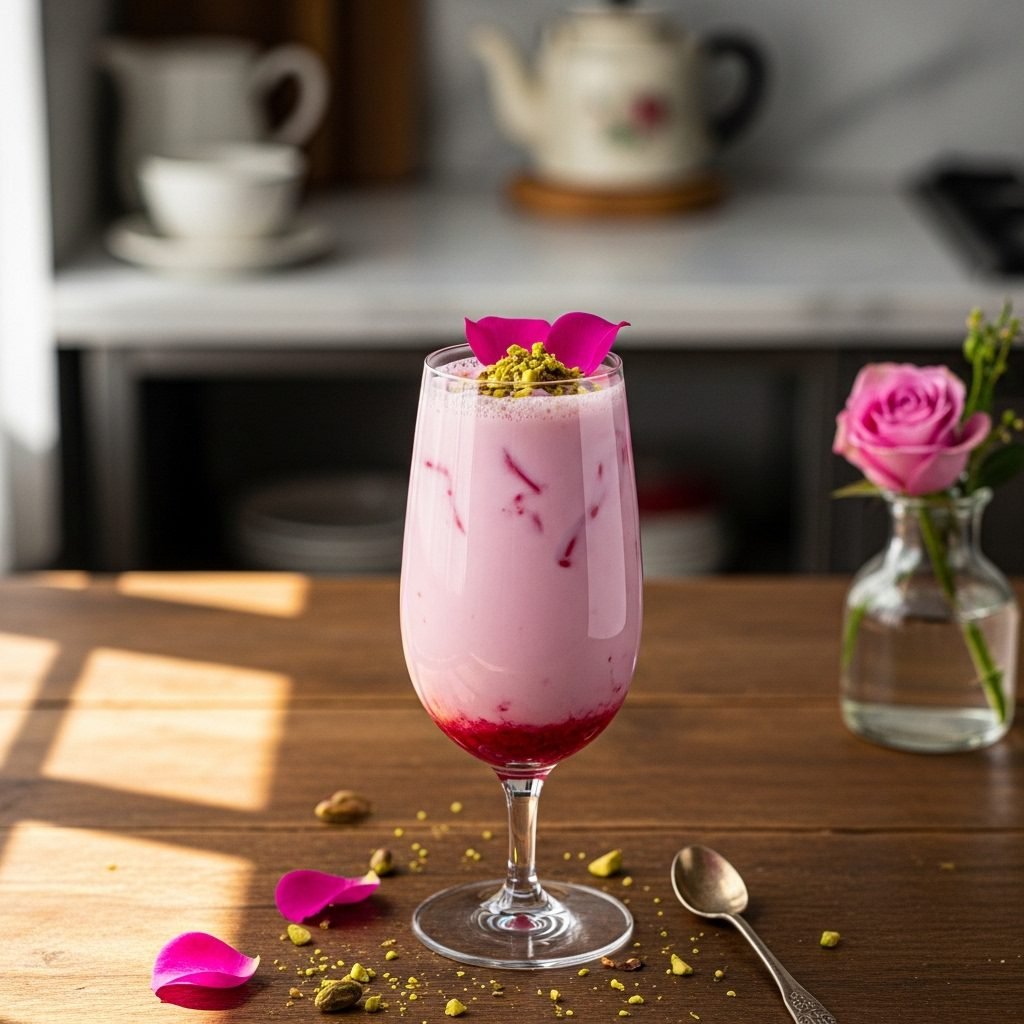
Fragrant Rose Milk Recipe: A Beautiful Pink Drink That Tastes Like Love

Imagine a drink that’s equal parts nostalgic, elegant, and absolutely delicious—that’s rose milk! This gorgeous pink beverage is a beloved treat across India, the Middle East, and Southeast Asia, and once you try it, you’ll understand why it’s captured hearts for generations. Rose milk is essentially cold milk sweetened and flavored with rose syrup, creating a floral, fragrant drink that’s both refreshing and comforting.
What makes rose milk so special is its unique flavor profile—delicate rose notes that aren’t overpowering, a gentle sweetness, and that creamy milk base that ties everything together beautifully. It’s not overly perfumy or artificial tasting when made right; instead, it’s subtly floral with a sophisticated sweetness that feels special without being complicated.
Rose milk is incredibly versatile in terms of when you can enjoy it. Serve it as a cooling summer refreshment, a soothing bedtime drink, a special treat for celebrations, or alongside desserts at dinner parties. In India, it’s a popular drink at weddings and festivals, often served in beautiful glasses to honor guests. Kids absolutely love the pretty pink color, while adults appreciate the elegant, grown-up flavors. Whether you’re hosting a bridal shower, looking for a unique beverage to impress guests, or simply want to treat yourself to something special, rose milk delivers every single time.
The best part? You can make this cafe-worthy drink at home in just 5 minutes with only a few simple ingredients. No special skills required—just mix, stir, and enjoy!
History / Background
Rose milk has a rich and romantic history that spans several cultures and centuries. The use of roses in food and beverages dates back thousands of years, with ancient civilizations recognizing both the culinary and medicinal properties of this beloved flower. Rose water and rose essence have been prized ingredients in Persian, Indian, Turkish, and Middle Eastern cuisines since ancient times.
In India, where rose milk is perhaps most popular today, the drink has deep cultural and historical roots. The Mughal Empire, which ruled India from the 16th to 19th centuries, had a profound influence on Indian cuisine, introducing Persian culinary traditions that included the use of rose water in both sweet and savory dishes. The Mughals were known for their lavish courts and sophisticated palates, and they elevated rose-flavored foods and drinks to an art form. Rose water was used in everything from biryanis to desserts, and rose-flavored beverages were served in elegant silver cups to royalty and nobility.
The evolution from rose water to rose syrup happened as sugar became more accessible and preservation techniques improved. Rose syrup—a concentrated blend of rose essence, sugar, and often a touch of color—made it easier to create rose-flavored drinks quickly. This innovation helped rose milk become accessible beyond royal courts and into everyday homes and street vendors’ stalls.
In South India, particularly in states like Tamil Nadu and Karnataka, rose milk became a staple offering at small roadside shops and restaurants. You’ll still find it served in distinctive cone-shaped steel tumblers at traditional establishments. The drink became associated with celebrations, special occasions, and hospitality—offering rose milk to guests was (and still is) a sign of warmth and welcome.
Rose milk also holds a special place in the hearts of the South Asian diaspora around the world. For many Indian and Pakistani families who immigrated to other countries, rose milk represents a taste of home, a connection to childhood memories, and a way to share their culture with new generations. It’s become a bridge between cultures—exotic enough to feel special, but approachable enough that anyone can enjoy it.
The drink has also gained popularity in recent years among wellness enthusiasts, as roses contain antioxidants and are believed in traditional medicine systems like Ayurveda to have cooling properties that calm the body and mind. Whether you believe in these health benefits or simply enjoy the taste, there’s no denying that rose milk has earned its place as a beloved beverage across cultures.
Why You’ll Love This Recipe
This rose milk recipe is about to become your secret weapon for impressing guests and treating yourself to something special. It’s the kind of drink that makes ordinary moments feel extraordinary—and here’s why you’re going to fall in love with it.
First, let me just say that this recipe is ridiculously easy. We’re talking easier than making a cup of tea. Yet the result looks and tastes like something you’d order at an upscale Indian restaurant or trendy cafe. That’s the magic of rose milk—maximum impact with minimum effort.
Here’s what makes this rose milk recipe absolutely irresistible:
- Ready in 3 minutes – Seriously, this might be the fastest “fancy” drink you’ll ever make
- Only 3 essential ingredients – Rose syrup, milk, and sweetener (and even the sweetener is optional!)
- Stunning presentation – That gorgeous pink color is completely Instagram and Pinterest-worthy
- Kid and adult approved – Children love the pretty color and sweet taste; adults appreciate the sophisticated floral notes
- Naturally calming – Rose is traditionally believed to have stress-relieving properties, making this perfect for unwinding
- Budget-friendly – A bottle of rose syrup lasts for months and costs less than a single fancy coffee drink
- No cooking or heating required – Perfect for hot days when you don’t want to turn on the stove
- Infinitely customizable – Adjust sweetness, thickness, and intensity to your exact preferences
- Impressive but easy – Guests will think you went to great lengths, but you’ll know the truth!
- Culturally rich – This is a chance to experience and share a beverage with centuries of history
- Naturally gluten-free – Safe for those with gluten sensitivities
- Perfect for entertaining – Scales easily to serve a crowd and stays fresh in a pitcher
Whether you’re looking to expand your beverage repertoire, want something special to serve at your next gathering, or simply love trying new flavors, this rose milk recipe is a winner. It’s elegant enough for special occasions but easy enough for everyday enjoyment.
Ingredient Notes
The beauty of rose milk lies in its simplicity, but choosing the right ingredients makes all the difference between a mediocre drink and something truly magical. Let’s break down what you need:
Rose Syrup (Rooh Afza or Similar): This is the star ingredient and the one that gives rose milk its signature flavor and color. Rooh Afza is the most famous brand, originating from India over a century ago. It’s a concentrated syrup made from roses, herbs, fruits, and vegetables, with a complex flavor that’s floral, slightly citrusy, and beautifully aromatic. You can find it at Indian, Pakistani, or Middle Eastern grocery stores, or online through Amazon. Other brands like Hamdard, Sharbat-e-Gulab, or Monin Rose Syrup work well too. Each brand has slightly different flavor profiles—some are more intensely rose-forward, others have more herbal notes. Start with Rooh Afza if you can find it, as it’s the gold standard. If you absolutely can’t find rose syrup, you can substitute with rose water (but you’ll need to add more sugar and pink food coloring separately—more on this in the variations section).
Cold Milk: The base of your drink! Whole milk creates the richest, most luxurious rose milk with a beautiful creamy texture. It’s what I recommend for the most authentic experience. However, 2% milk works perfectly fine if you prefer something lighter. Skim milk is okay but will taste noticeably thinner. For a non-dairy version, full-fat coconut milk creates a wonderfully creamy rose milk with a subtle tropical undertone that actually complements the rose beautifully. Oat milk is another excellent dairy-free choice as it has a naturally creamy texture and mild sweetness. Almond milk works but can taste a bit watery—if using it, opt for the “barista” or “extra creamy” versions. Whatever milk you choose, make sure it’s very cold for the best drinking experience.
Sugar or Sweetener (Optional): Many rose syrups are already quite sweet, so additional sweetener is totally optional. However, some people prefer their rose milk a bit sweeter, and that’s where white sugar, honey, maple syrup, or even condensed milk come in. White sugar dissolves quickly in cold milk if you stir well. Honey adds a lovely depth and additional floral notes that complement the rose. Maple syrup creates a more complex sweetness with caramel undertones. Condensed milk is traditional in many regions and creates an extra-rich, almost dessert-like rose milk—if using this, start with just 1-2 tablespoons as it’s very sweet and thick.
Ice Cubes: Not technically necessary, but highly recommended! Ice-cold rose milk is infinitely more refreshing than room-temperature rose milk. Use regular ice cubes, or for an extra fancy touch, freeze milk in ice cube trays so your drink doesn’t get watered down as the ice melts.
Optional Additions: While not traditional, a tiny pinch of ground cardamom (we’re talking 1/8 teaspoon or less) adds warmth and complexity. A few drops of pure vanilla extract can round out the flavors beautifully. Some people like adding a tablespoon of falooda (vermicelli noodles) and basil seeds for texture, turning simple rose milk into the more elaborate drink called falooda.
Equipment Needed
One of the best things about making rose milk is that you need absolutely minimal equipment—most of which you definitely already own:
- Tall glasses: Rose milk looks most beautiful in clear glasses where you can appreciate that gorgeous pink color. Highball glasses, Collins glasses, or even mason jars work perfectly. Traditional steel tumblers give an authentic touch if you have them.
- Measuring spoons: For accurate measurements of rose syrup, especially when you’re making the recipe for the first time
- Measuring cup: To measure your milk
- Long spoon or stirrer: For mixing everything together thoroughly—rose syrup can settle at the bottom if not stirred well
- Ice cube trays: If you’re pre-making ice cubes (especially those fancy milk ice cubes!)
- Small pitcher or jug (optional): If you’re making a larger batch to serve guests
- Blender (optional): Not necessary at all, but if you want an extra frothy, cafe-style rose milk, a quick 10-second blend works wonders
That’s literally it! No expensive gadgets, no specialty tools—just some basic kitchen items you use every day. This is the definition of an accessible, no-fuss recipe.
Print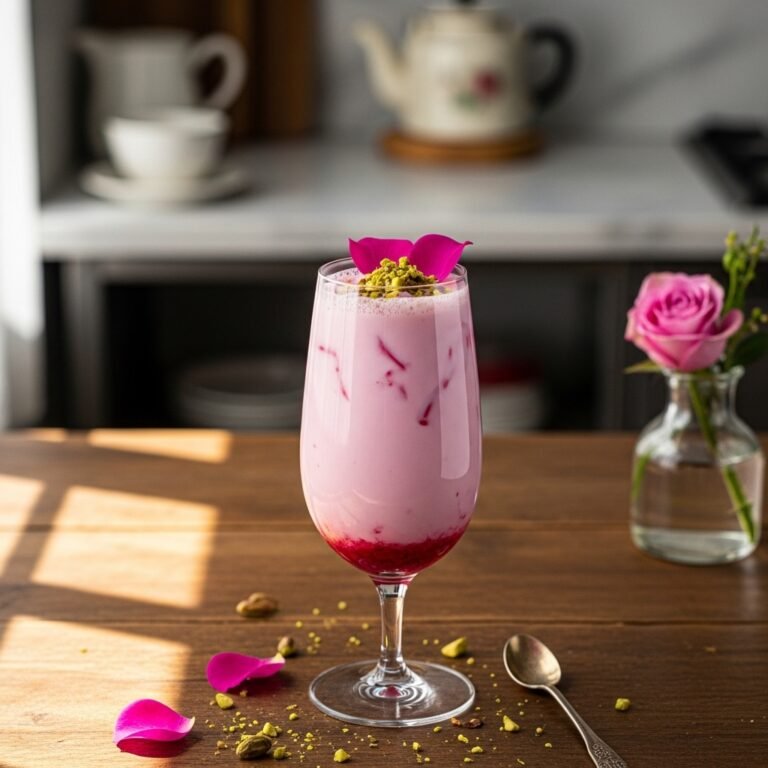
Rose Milk Recipe
This beautiful Rose Milk is a fragrant, sweet, and refreshing Indian beverage made with rose syrup and cold milk. It’s ready in just 3 minutes and perfect for hot summer days, special celebrations, or anytime you want to treat yourself to something special!
- Total Time: 3 minutes
- Yield: 1 large serving (can easily be multiplied) 1x
Ingredients
- 1½ cups cold whole milk (or milk of choice)
- 2-3 tablespoons rose syrup (Rooh Afza or similar brand)
- 1-2 teaspoons sugar or honey (optional, to taste)
- 6-8 ice cubes
- Pinch of ground cardamom (optional)
- Dried rose petals for garnish (optional)
- Crushed pistachios for garnish (optional)
Instructions
- Prepare your glass: Fill a tall glass with ice cubes, leaving enough room for the milk. Using a chilled glass makes the drink even more refreshing, so if you have time, pop your glass in the freezer for 5-10 minutes beforehand.
- Add the rose syrup: Pour 2-3 tablespoons of rose syrup over the ice cubes. Start with 2 tablespoons if you’re new to rose milk or prefer subtle flavors. You can always add more, but you can’t take it away! The syrup will pool at the bottom initially, which actually creates a beautiful layered effect if you serve it immediately.
- Pour in the cold milk: Slowly pour the cold milk over the ice and syrup. Pour gently to maintain that pretty layered look if you want to present it that way, or pour directly for immediate mixing.
- Stir thoroughly: Using a long spoon, stir the mixture well from bottom to top, making sure all the rose syrup is completely incorporated into the milk. The color should be uniform and a beautiful pale to medium pink, depending on how much syrup you used. Keep stirring for at least 15-20 seconds—rose syrup can be stubborn and likes to hide at the bottom!
- Taste and adjust: Take a small sip. Does it need more rose flavor? Add another half tablespoon of syrup and stir. Not sweet enough? Add your sweetener of choice and stir until dissolved. Too sweet? Add a splash more milk. This is your drink—make it perfect for your palate!
- Optional garnishes: If you want to make it extra special, sprinkle a tiny pinch of ground cardamom on top, add a few dried rose petals, or garnish with crushed pistachios. These aren’t just pretty—they add wonderful complementary flavors and textures.
- Serve immediately: Rose milk is best enjoyed fresh and very cold. Serve with a straw or long spoon, and sip slowly to appreciate all those beautiful flavors!
Notes
- Syrup strength varies: Different brands of rose syrup have different concentrations and sweetness levels. Rooh Afza is quite concentrated, so start with less and add more as needed. Other brands might require more syrup for the same intensity of flavor.
- For a frothy texture: Blend all ingredients in a blender for 10-15 seconds instead of stirring. This creates a light, airy texture with a foamy top that’s absolutely delightful.
- Make it dairy-free: Coconut milk (full-fat from a can) or oat milk work beautifully as dairy-free alternatives.
- Scaling up: To make a pitcher for guests, multiply the recipe by the number of servings needed. Mix everything except ice in a pitcher, stir well, refrigerate until serving time, then pour over ice in individual glasses.
- Don’t skip the stirring: Rose syrup is heavy and dense—it will settle at the bottom if not stirred properly, resulting in an overly sweet bottom and flavorless top.
- Prep Time: 3 minutes
- Cook Time: 0 minutes
- Category: Beverage, Drink
- Method: Stirring, Mixing
- Cuisine: Indian, Middle Eastern, South Asian
- Diet: Gluten Free
Nutrition
- Serving Size: 1 large glass (about 12 oz)
- Calories: 185
- Sugar: 26g
- Sodium: 115mg
- Fat: 8g
- Saturated Fat: 5g
- Unsaturated Fat: 2.5g
- Trans Fat: 0g
- Carbohydrates: 28g
- Fiber: 0g
- Protein: 8g
- Cholesterol: 24mg
Tips & Variations
Rose milk is wonderfully adaptable, and there are so many creative ways to customize it to your preferences or dietary needs:
Rose Falooda: Transform your simple rose milk into the elaborate dessert drink called falooda by adding cooked vermicelli noodles (about 2 tablespoons), soaked basil seeds (sabja seeds—1 teaspoon dry seeds soaked in water for 10 minutes), and top with a scoop of vanilla ice cream. It becomes a dessert in a glass!
Rose Milkshake: Blend rose milk with 2-3 scoops of vanilla ice cream for an indulgent milkshake that’s absolutely divine. The vanilla enhances the rose flavor beautifully.
Vegan rose milk: Use full-fat coconut milk, cashew milk, or oat milk instead of dairy milk. Coconut milk is my top recommendation as it creates the creamiest result.
Sugar-free version: Use unsweetened almond milk and add a few drops of liquid stevia or monk fruit sweetener. Many rose syrups are already sweet, so you might not need much additional sweetener at all.
Saffron rose milk: Add 4-5 strands of saffron soaked in 1 tablespoon of warm milk to your rose milk. Let it sit for a few minutes, then stir. The saffron adds golden flecks, a subtle earthy flavor, and makes it even more luxurious.
Iced rose latte: Add a shot of espresso or strong cold brew coffee to your rose milk for a floral twist on an iced latte. Coffee and rose are an unexpectedly wonderful combination!
Rose milk popsicles: Pour your rose milk mixture into popsicle molds and freeze for a refreshing summer treat that kids will love.
Adult version: Add a shot of vodka, rum, or rose liqueur for a sophisticated cocktail that’s perfect for brunch or evening entertaining.
Protein-packed rose milk: Add a scoop of vanilla protein powder and blend everything together for a post-workout drink that tastes like dessert.
If you can’t find rose syrup: Combine 1 cup water with 1 cup sugar in a saucepan, heat until dissolved, cool completely, then add 2-3 teaspoons of rose water and a few drops of red food coloring. This homemade syrup won’t be quite as complex as commercial versions, but it works in a pinch!
Pro Chef Tips
After making countless glasses of rose milk (and drinking my fair share at restaurants), I’ve learned some tricks that elevate this simple drink to something truly special:
Layer it beautifully: For a stunning presentation, don’t stir immediately. Pour the rose syrup into the glass first, add ice gently, then slowly pour milk over the back of a spoon so it floats on top. When you bring it to the table, the beautiful gradient from deep pink at the bottom to white at the top is absolutely gorgeous. Let your guests stir their own drinks and watch the colors swirl together.
Chill everything: The colder your ingredients, the better your rose milk will taste. Keep your milk refrigerated until the last minute, use frozen milk cubes instead of regular ice, and even chill your glasses in the freezer. Temperature makes a huge difference in refreshment factor.
Quality matters with rose syrup: Not all rose syrups are created equal. Rooh Afza is worth seeking out because it has a more complex, authentic flavor with herbal and citrus notes alongside the rose. Cheaper versions can taste artificial or overly perfumy. If your first attempt with one brand doesn’t wow you, try a different brand before giving up on rose milk entirely.
Use the “bloom” technique: Before adding rose syrup to cold milk, mix it with just 2 tablespoons of milk first, stirring until completely smooth. This “blooming” helps the syrup incorporate more easily and prevents those stubborn clumps that sometimes stick to the bottom of your glass.
Add a fat source for richness: If using low-fat or skim milk, add 1-2 tablespoons of heavy cream or a teaspoon of coconut oil blended in. The fat carries the rose flavor beautifully and creates a much more satisfying mouthfeel.
Make rose milk ice cubes: Freeze leftover rose milk in ice cube trays. When you want a quick glass, blend these cubes with fresh milk for an instant, perfectly flavored, extra-thick rose milk.
The cardamom trick: If adding cardamom, use freshly ground cardamom from whole pods rather than pre-ground. The flavor difference is remarkable—it’s more aromatic, less dusty-tasting, and adds a sophisticated warmth. Crush 1-2 green cardamom pods and use just a few of the tiny seeds.
Garnish strategically: Crushed pistachios and dried rose petals aren’t just pretty—they add textural contrast and complementary flavors. Toast your pistachios lightly in a dry pan before crushing for even better flavor.
Common Mistakes to Avoid
Even with such a simple recipe, there are a few pitfalls that can prevent your rose milk from being as delicious as it should be:
Using too much rose syrup: This is the #1 mistake beginners make. It’s easy to think “more rose = better,” but rose syrup is intensely concentrated. Too much creates an overwhelming, perfumy flavor that tastes medicinal rather than delicate and floral. Always start with less (2 tablespoons) and add more gradually. Remember, you can always add more, but you can’t take it away!
Not stirring thoroughly enough: Rose syrup is thick and dense—it wants to settle at the bottom of your glass. If you don’t stir well enough, you’ll end up with intensely sweet, thick syrup at the bottom and plain milk at the top. Stir for at least 15-20 seconds, making sure to scrape the bottom of the glass, and your drink will be uniformly delicious from first sip to last.
Using warm or room temperature milk: Rose milk should be served cold—that’s when it’s most refreshing and the flavors shine best. Warm milk with rose syrup just doesn’t hit the same way and can taste oddly heavy. Always use cold milk straight from the refrigerator, and add ice liberally.
Choosing the wrong type of rose syrup: Be careful not to accidentally buy “rose water” when you’re shopping—that’s a completely different product! Rose water is much more dilute and isn’t sweetened. You need rose syrup (sometimes called “sharbat”) which is thick, sweet, and concentrated. Also avoid rose-flavored syrups meant for coffee drinks—they won’t have the authentic flavor.
Over-complicating it: Some people try to add too many flavors or ingredients, thinking it will make their rose milk better. Vanilla, cardamom, and saffron are lovely additions, but adding too many things at once can muddy the delicate rose flavor. Keep it simple, especially for your first attempt.
Storage & Meal Prep
Rose milk is definitely a “make and drink” kind of beverage—it’s so quick that there’s rarely a need to prepare it far in advance. That said, here’s what you need to know about storage:
Refrigerator storage: If you have leftover rose milk (which is rare, but it happens!), store it in an airtight container or covered glass jar in the refrigerator for up to 24 hours. The mixture may separate slightly as it sits, with the milk and syrup settling into layers. This is completely normal and not a sign that it’s gone bad.
Before drinking stored rose milk: Give it a vigorous shake or stir, or pour it back into a blender for a quick 5-second pulse to re-emulsify everything. The flavor will still be good, though you’ll notice it’s less vibrant than freshly made.
Don’t store with ice: If you’re making rose milk ahead of time, don’t add ice to the storage container—it will melt and dilute your drink. Store the milk-syrup mixture separately, then add fresh ice when serving.
Batch preparation: If you’re entertaining and want to make a large batch, mix the rose syrup and milk together in a pitcher, stir very well, and keep refrigerated. Give it a good stir right before serving, then pour over ice in individual glasses. This works great for parties!
Not recommended beyond 24 hours: Because rose milk is a dairy-based drink, it doesn’t keep as long as plain milk. The added sugar from the rose syrup can actually speed up spoilage slightly. After 24 hours, the flavor starts to change and it’s best to make a fresh batch.
Make-Ahead & Freezer Notes
While rose milk itself doesn’t freeze and thaw particularly well (the milk can become grainy), there are some smart make-ahead strategies:
Pre-measure your syrup: If you make rose milk frequently, pre-portion your rose syrup into ice cube trays—each cube being about 1 tablespoon. Freeze these, then pop 2-3 cubes into your milk when you want a quick rose milk. As they melt, they flavor and chill your drink simultaneously. Genius!
Freeze rose milk as popsicles: Make your rose milk mixture and pour it into popsicle molds. Freeze for at least 4 hours or overnight. These are incredible on hot summer days and make a wonderful treat for kids’ parties or pool days. They’ll keep in the freezer for up to 2 months.
Rose milk ice cream base: Freeze rose milk in a shallow pan, then break it into chunks and blend in a food processor with a little extra cream for a quick rose-flavored ice cream or “nice cream.” It’s not traditional ice cream, but it’s delicious!
Rose syrup stays fresh forever: The good news is that rose syrup itself has an incredibly long shelf life due to its high sugar content. Once opened, it keeps in the refrigerator for 6-12 months or even longer. So you can always have it on hand for whenever the craving strikes.
Quick assembly strategy: Keep your milk cold, your rose syrup in the fridge, and pre-made ice cubes ready to go. With this setup, you can literally make rose milk in under 60 seconds—faster than waiting for coffee to brew!
Not recommended for freezing and thawing: Don’t try to freeze prepared rose milk and thaw it later for drinking. The milk separates badly when frozen and thawed, resulting in a grainy, unpleasant texture. Stick to fresh preparation or the popsicle/ice cream methods.
Serving Suggestions
Rose milk is wonderfully versatile and pairs beautifully with so many different foods and occasions:
For breakfast or brunch: Serve rose milk alongside warm parathas, toast with butter and jam, breakfast sandwiches, or fresh fruit. It’s especially lovely with Middle Eastern breakfast spreads featuring labneh, olives, and flatbreads.
With desserts: This is where rose milk truly shines! Serve it alongside Indian sweets like gulab jamun, jalebi, barfi, or kheer. It’s also wonderful with baklava, kunafa, or any Middle Eastern dessert. Western desserts work too—try it with vanilla cake, sugar cookies, or berry tarts.
Afternoon tea time: Rose milk makes an elegant alternative to regular tea or coffee during afternoon tea service. Pair it with scones, finger sandwiches, or petit fours.
With spicy food: Like lassi, rose milk is wonderful for cooling down your palate after spicy dishes. Serve it alongside biryani, curries, tandoori dishes, or spicy kebabs.
Special occasions: Rose milk is perfect for celebrations! Serve it at bridal showers (the pink color is so fitting!), baby showers, Ramadan iftars, Diwali celebrations, Eid gatherings, or any special event where you want to offer something unique and beautiful.
As a dinner drink: While not traditional in Western dining, rose milk makes a lovely dinner beverage, especially with Indian, Pakistani, Middle Eastern, or Persian meals.
Popular pairings:
- Biryani (chicken, lamb, or vegetable)
- Samosas and pakoras
- Kabobs and grilled meats
- Fresh fruit platters
- Baklava and Middle Eastern pastries
- Indian mithai (sweets) assortment
- Nan bread or roti
- Rice pudding or kheer
- Pistachio or cardamom desserts
FAQs Section
What does rose milk taste like?
Rose milk has a delicate, floral flavor that’s sweet and fragrant without being overwhelming. It tastes like roses smell—soft, romantic, and slightly perfumed, but in the best possible way. The milk tempers the intensity of the rose, creating a creamy, smooth drink with subtle floral notes. If you’ve ever had Turkish delight or rose macarons, the flavor is similar but lighter and more refreshing. It’s sweet but not cloying, floral but not soapy (when made correctly), and absolutely unique.
Is rose milk healthy?
Rose milk has both benefits and considerations. On the positive side, it provides protein and calcium from the milk, and roses are believed in traditional medicine to have antioxidant and anti-inflammatory properties. However, rose syrup is high in sugar, so rose milk is definitely a treat rather than an everyday health drink. You can make it healthier by using low-fat milk, reducing the amount of syrup, and skipping any additional sweeteners. As an occasional indulgence, it’s absolutely fine and arguably better than soda or other sugary drinks!
Where can I buy rose syrup?
Rose syrup (especially Rooh Afza brand) is available at Indian, Pakistani, Middle Eastern, and some Asian grocery stores. In the USA, you’ll find it in specialty markets in areas with large South Asian populations. Online, it’s readily available on Amazon, Walmart.com, ethnic food websites, and even some regular grocery delivery services. A bottle typically costs $5-10 and lasts for months since you only use a couple tablespoons per drink.
Can kids drink rose milk?
Absolutely! Rose milk is very popular among children in South Asian countries. Kids love the pretty pink color and sweet taste. There’s no caffeine, no alcohol, and no ingredients harmful to children—it’s basically flavored milk. Just be mindful of the sugar content, and consider making a less-sweet version for regular consumption. Many parents serve rose milk as a special treat or celebration drink.
Is rose milk the same as rose water?
No, they’re quite different! Rose milk is a beverage made by mixing rose syrup with milk. Rose water is just water infused with rose essence—it’s a liquid flavoring ingredient used in cooking and baking. You wouldn’t drink rose water on its own (it would taste too intense and perfumy), but you can use it to make rose syrup if you can’t find commercial rose syrup. Rose syrup is thick, sweet, and concentrated, while rose water is thin, unsweetened, and more subtle.
Why is my rose milk too perfumy tasting?
This almost always means you’ve used too much rose syrup. Rose is a delicate flavor—when there’s too much, it crosses the line from floral to perfume-like. Next time, use less syrup (start with just 1½ tablespoons) and add more gradually. Also, make sure you’re using rose syrup meant for food/beverages, not rose essential oil or cosmetic rose water. The quality of your rose syrup matters too—premium brands like Rooh Afza have a more balanced, authentic flavor than cheaper versions.
Can I make rose milk without dairy?
Yes, absolutely! Full-fat coconut milk makes the creamiest, most delicious dairy-free rose milk with a subtle tropical flavor that actually complements the rose beautifully. Oat milk is another excellent option—it has a naturally creamy texture and mild flavor. Cashew milk also works wonderfully. Almond milk is okay but can taste a bit thin—if using it, opt for the unsweetened “extra creamy” or “barista” versions. The rose syrup itself is typically vegan (just sugar, rose essence, and sometimes fruit/herb extracts), but check your specific brand to be sure.
Conclusion
There you have it—everything you need to know to make the most beautiful, fragrant, and delicious rose milk right in your own kitchen! This stunning pink drink is proof that sometimes the simplest recipes are the most special. With just a couple of ingredients and literally minutes of effort, you can create a beverage that’s been cherished for centuries across multiple cultures.
Whether you make it for a special celebration, serve it to impressed guests, enjoy it as an afternoon treat, or share it with your children, rose milk is guaranteed to bring a touch of elegance and joy to your day. There’s something almost magical about that first sip—the way the floral notes dance with the creamy milk, the beautiful pink color that makes you smile, and the knowledge that you’ve just made something truly unique.
Don’t be intimidated by the exotic flavor profile—rose milk is surprisingly approachable and almost universally loved once people try it. Start with the basic recipe, then feel free to experiment with the variations and make it your own. Some people like theirs sweeter, some prefer it less intense, some add cardamom or saffron—there’s no single “right” way to enjoy rose milk.
I’d absolutely love to hear about your rose milk experience! Did you fall in love with it like I predicted? Did you try any of the variations? What did your family think? Leave a comment below and let me know! And if this recipe brought a smile to your face (or you know it would brighten someone else’s day), please pin it to your Pinterest boards and share it with your friends. Help spread the rose milk love!
Now grab that rose syrup, pour yourself a glass of cold milk, and treat yourself to something special. You deserve it! 🌹💕