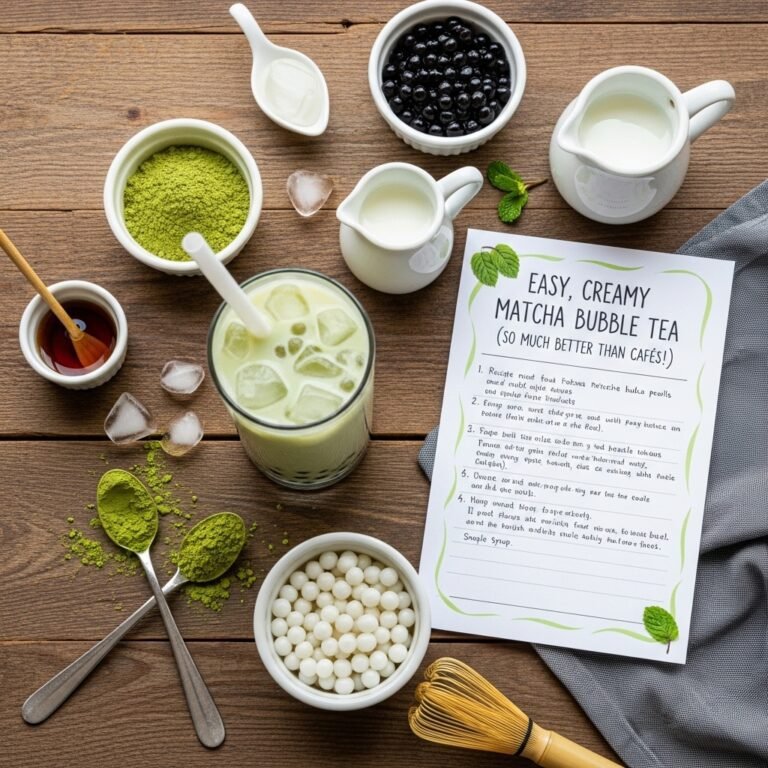
Homemade Matcha Bubble Tea Recipe (Easy, Creamy & So Much Better Than Cafés!)
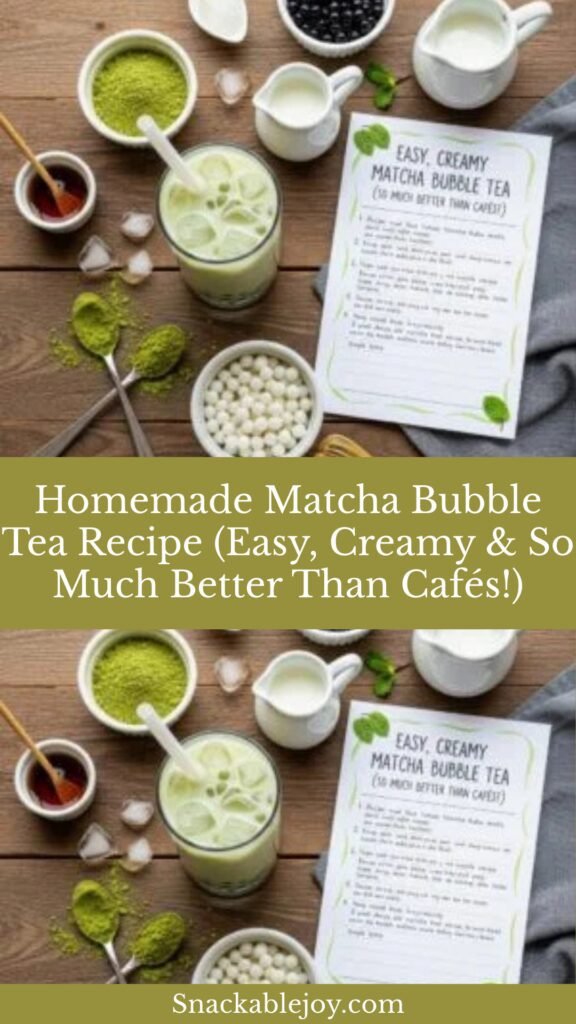
Get ready to discover how to make the ultimate Matcha Bubble Tea at home—that gorgeous green drink with chewy tapioca pearls that’s been taking over Instagram feeds and boba shop menus everywhere! If you’ve been spending $7-9 every time you crave that earthy-sweet, creamy matcha flavor with those addictive chewy pearls, I’m about to save you a fortune while giving you an even better version you can customize exactly how you like it.
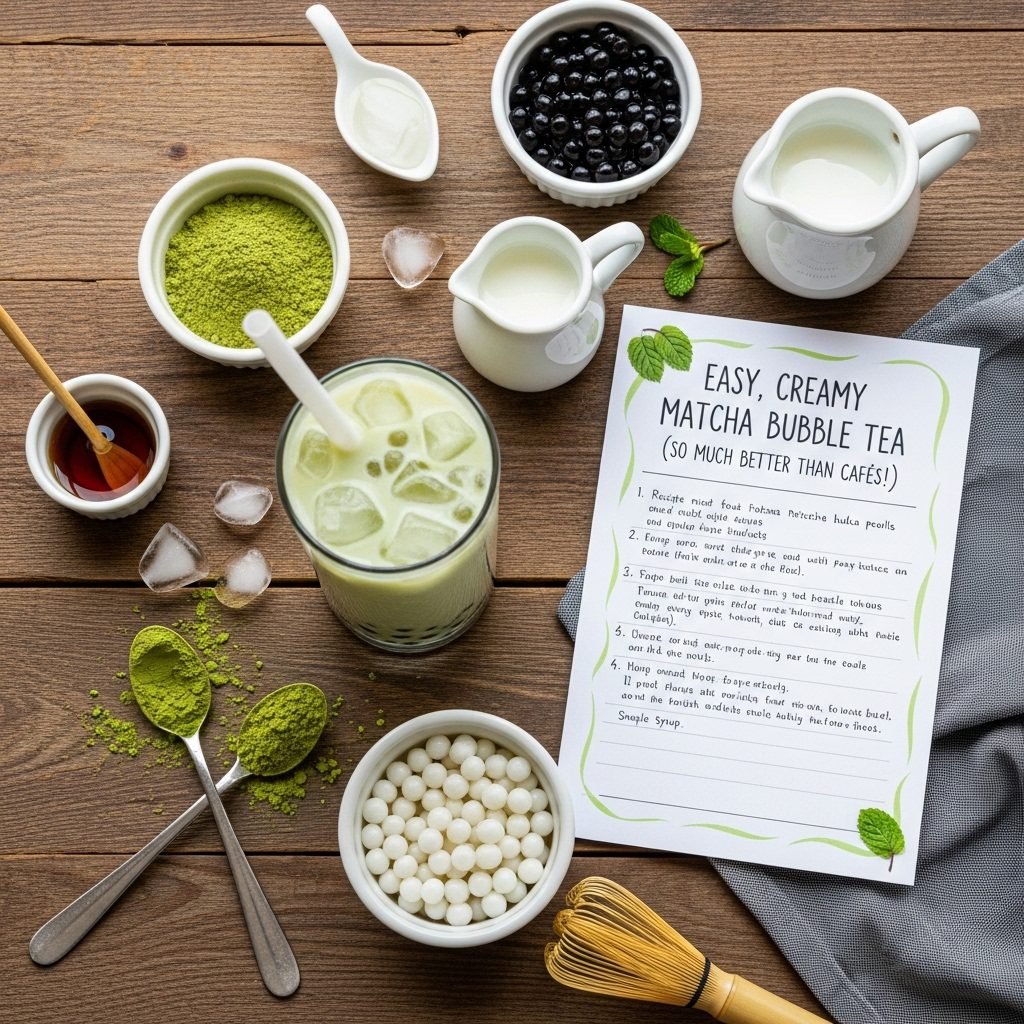
Matcha Bubble Tea (also called Matcha Boba or Matcha Milk Tea) is a vibrant green drink made with high-quality matcha powder, milk, sweetener, and those iconic black tapioca pearls that make every sip an adventure. The flavor is unique and sophisticated—earthy and slightly grassy from the matcha, balanced with creamy sweetness from milk and sugar, with a subtle bitterness that keeps it from being cloying. When you add those chewy, slightly sweet boba pearls, you get a drink that’s both refreshing and indulgent, energizing yet comforting.
This incredible beverage is perfect for those mornings when you want caffeine but something cooler than hot tea, as an afternoon pick-me-up that feels like a treat but provides focused energy, when you’re craving bubble tea but want to control the quality and sweetness, for impressing guests with your boba-making skills, or simply when you want that café experience without leaving home or spending $8+. Matcha bubble tea has become phenomenally popular in Western countries over the past decade, combining Japanese tea tradition with Taiwanese bubble tea innovation.
What makes this homemade version truly special is the quality control—you choose premium matcha (not the dusty stuff), adjust sweetness to your preference, select your favorite milk, and control the boba quantity. Plus, making it at home costs approximately $2-3 per drink versus $7-9 at cafés. You can prep components ahead, keep matcha mixture ready in your fridge, and have bubble tea anytime without the commute or wait!
History / Background
Matcha Bubble Tea represents a beautiful collision of two distinct Asian culinary traditions—ancient Japanese tea ceremony culture and modern Taiwanese bubble tea innovation. Understanding this drink’s background means exploring both matcha’s thousand-year heritage and bubble tea’s recent explosive rise.
Matcha (抹茶, meaning “powdered tea”) has roots stretching back to the Tang Dynasty in China (7th-10th centuries), where tea leaves were steamed and formed into bricks for storage and trade. During the Song Dynasty (10th-13th centuries), these tea bricks were ground into powder and whisked with hot water—the earliest form of matcha preparation. Buddhist monks discovered that this powdered tea helped them stay alert during long meditation sessions while promoting a calm, focused state rather than jittery energy.
Japanese Buddhist monk Eisai brought tea seeds and the powdered tea tradition to Japan in 1191 CE, where it evolved into something uniquely Japanese. Over centuries, matcha became central to the Japanese tea ceremony (茶道, chadō or sadō), a ritualized practice emphasizing mindfulness, aesthetics, and respect. The tea ceremony elevated matcha from a simple beverage to an art form with deep cultural and spiritual significance.
Traditional matcha is made from shade-grown tea leaves. About 3-4 weeks before harvest, farmers cover tea plants with bamboo mats or tarps, blocking 70-90% of sunlight. This stress response causes the plants to produce more chlorophyll (creating vibrant green color) and L-theanine (an amino acid that promotes calm alertness). After harvest, leaves are steamed to prevent oxidation, dried, de-veined, de-stemmed, then stone-ground into the finest powder imaginable—it takes about an hour to grind 30 grams! This labor-intensive process explains why quality matcha is expensive.
Meanwhile, on the other side of the East China Sea, Taiwan was developing bubble tea. As we’ve discussed in previous recipes, bubble tea (珍珠奶茶, literally “pearl milk tea”) was invented in Taiwan in the 1980s, combining cold tea with milk and chewy tapioca pearls. The innovation spread like wildfire across Asia throughout the 1990s.
Matcha bubble tea emerged when these two traditions merged, likely in Taiwan during the late 1990s or early 2000s as bubble tea shops began experimenting with different tea bases beyond traditional black tea. Someone had the brilliant idea of whisking matcha powder with milk and ice, then adding tapioca pearls. The result was revelation—the earthy, complex flavor of matcha paired beautifully with creamy milk and provided a sophisticated alternative to sweeter bubble tea flavors. The vibrant green color was also stunning and highly photogenic.
The drink gained traction across East Asia through the 2000s, then exploded in Western markets during the 2010s as both matcha and bubble tea became trendy. Several cultural forces converged: wellness culture embraced matcha as a “superfood” packed with antioxidants, millennials and Gen Z embraced bubble tea as a fun, customizable beverage experience, and social media made the vibrant green color incredibly shareable.
By 2015-2020, matcha bubble tea had become a staple at nearly every bubble tea shop in the United States. Its appeal crossed demographics—health-conscious consumers loved the antioxidants and sustained energy from matcha, coffee lovers appreciated the caffeine without coffee’s acidity or jitters, and aesthetic-focused young people loved how photogenic the bright green drink looked on Instagram.
Interestingly, this fusion drink has become more popular in the West than in Japan, where traditional tea ceremony culture views sweet, iced matcha drinks with some skepticism. However, younger Japanese generations are embracing these modern matcha applications, and you’ll now find matcha lattes and matcha bubble tea even in Tokyo, though they’re seen as contemporary fusion drinks rather than traditional tea.
The homemade matcha bubble tea movement emerged as prices at cafés climbed to $7-9 per drink. Home cooks realized that with quality matcha powder, tapioca pearls, and a pot for cooking boba, they could recreate (and customize!) these drinks for a fraction of the cost. Today, making matcha bubble tea at home represents both significant savings and quality control—you ensure premium matcha rather than cheap powder, adjust sweetness precisely, and enjoy the meditative process of whisking matcha and cooking boba.
Why You’ll Love This Recipe
This homemade Matcha Bubble Tea recipe is about to transform your relationship with both matcha and bubble tea, and I’m thrilled to explain why! Not only does it taste phenomenal—earthy, creamy, perfectly balanced, with that beautiful green color and addictive chewy pearls—but it’s surprisingly simple to make once you understand the basic techniques. No barista training required, just good ingredients and about 20 minutes!
Making matcha bubble tea at home means you control the matcha quality (use ceremonial or culinary grade—your choice!), sweetness level (many cafés make it too sweet, drowning the delicate matcha flavor), milk choice (dairy, oat, almond, soy—whatever you love), and boba quantity (want extra pearls? load them up!). You’ll save a massive amount of money—we’re talking $2-3 per drink at home versus $7-9 at specialty cafés. Over a summer of regular bubble tea consumption, that’s hundreds of dollars saved!
Here’s why this recipe will become your new favorite:
- Authentic Café Quality: Tastes as good as (or better than!) expensive bubble tea shops
- Incredibly Budget-Friendly: Costs $2-3 per serving versus $7-9 at cafés
- Stunning Vibrant Green: That gorgeous, Instagram-worthy jade color
- Packed with Antioxidants: Matcha provides powerful catechins and EGCG for health benefits
- Smooth, Sustained Energy: Caffeine + L-theanine = focused alertness without jitters or crashes
- Completely Customizable: Control sweetness, milk type, matcha intensity, and boba amount
- Simple Equipment: Just basic kitchen tools you already own
- Prep Components Ahead: Make matcha concentrate, cook boba in advance for quick assembly
- Uses Premium Ingredients: Choose quality matcha rather than accepting whatever cafés use
- Naturally Gluten-Free: Perfect for those avoiding gluten
- Fun & Meditative: The process of whisking matcha and cooking boba is genuinely relaxing
- Impressive Presentation: Wow guests with your boba-making prowess
- Healthier Alternative: Control sugar content, use quality ingredients, know exactly what you’re drinking
- Year-Round Enjoyment: Delicious hot or iced, any season
- Perfect for Productivity: That unique matcha energy boost is ideal for work or study sessions
Ingredient Notes
Let’s explore the key ingredients that create this beautiful green drink!
Matcha Powder: This is your star ingredient—the vibrant green tea powder that provides flavor, color, caffeine, and health benefits! Matcha comes in different grades:
Ceremonial Grade: The highest quality, most expensive ($20-40+ per ounce), made from the youngest tea leaves. It’s vibrant jade green, smooth, naturally sweet, with minimal bitterness. This grade is traditionally used for tea ceremonies and drinking straight (just matcha whisked with hot water). While you CAN use ceremonial grade for bubble tea, it’s honestly overkill—the milk and sweetener mask some of its delicate nuances.
Culinary Grade: Perfect for lattes, smoothies, baking, and bubble tea! It’s more affordable ($10-20 per ounce), made from slightly older leaves, and has a stronger, more robust flavor that stands up beautifully to milk and sweetener. The color is still bright green (though slightly less vibrant than ceremonial), and the earthier taste actually works better in milk-based drinks. This is what I recommend for bubble tea.
You’ll need 1-2 teaspoons per serving, depending on how intense you want the matcha flavor. Look for: bright, vibrant green color (not dull yellow-green—that’s old matcha), fine, silky powder (not grainy), and reputable brands like Mizuba, Ippodo, Encha, or Jade Leaf. Store matcha in an airtight container in the refrigerator to preserve freshness—it degrades with air, light, and heat exposure.
Milk of Choice: Creates the creamy base that balances matcha’s earthiness. Options:
Whole Milk: Traditional, creates the richest, creamiest texture with beautiful foam when shaken Oat Milk: Trendy, naturally sweet, froths beautifully, and complements matcha’s earthy notes perfectly Soy Milk: Traditional in Asian cafés, neutral flavor, good protein content Almond Milk: Light and nutty, though can be thin—choose “barista blend” for better texture Coconut Milk: Adds subtle tropical notes, very creamy Cashew Milk: Incredibly creamy and rich without overwhelming matcha flavor
You’ll need about 1 cup per serving. Tip: Warmer milk helps matcha dissolve more easily!
Tapioca Pearls (Boba): Those iconic black pearls that make bubble tea special! Made from tapioca starch (cassava root), they’re naturally off-white but dyed black with brown sugar or caramel coloring. The texture is QQ (bouncy-chewy-slightly sticky in the most addictive way).
You’ll need about ¼ cup dried pearls per serving (they expand 3-4x when cooked). Buy “black tapioca pearls” or “boba” specifically labeled for bubble tea at Asian markets or online. Quick-cook versions take 5-10 minutes; traditional ones take 20-30 minutes. Brands like Wu Fu Yuan, Bossen, or Fanale are reliable.
Sweetener: Matcha has natural bitterness and earthiness that needs sweetness for balance. Options:
Simple Syrup: Equal parts sugar and water, dissolved. Blends seamlessly into cold drinks Honey: Natural sweetness with floral notes that complement matcha beautifully Agave Nectar: Neutral sweetness, dissolves easily Brown Sugar Syrup: Traditional for bubble tea, adds caramel notes Maple Syrup: Works but adds distinct flavor Stevia or Monk Fruit: For sugar-free versions
Start with 1-2 tablespoons and adjust to taste. Remember: matcha should taste earthy and slightly sweet, not sugary!
Hot Water: Essential for properly whisking matcha. You’ll need about 2-4 tablespoons of hot (but not boiling!) water to create a matcha paste or concentrate. Ideal temperature is 160-175°F—boiling water can make matcha taste bitter.
Ice: For cold matcha bubble tea, you’ll need 1-1½ cups of ice per serving.
Optional Add-ins: Vanilla extract (⅛ teaspoon enhances sweetness perception without adding sugar), coconut cream (2 tablespoons for extra richness), or a pinch of sea salt (balances bitterness).
Equipment Needed
Making matcha bubble tea requires minimal equipment!
For Cooking Boba:
- Medium saucepan: For boiling tapioca pearls
- Strainer or slotted spoon: For draining cooked pearls
- Timer: Boba cooking time is crucial!
For Preparing Matcha:
- Matcha whisk (chasen): Traditional bamboo whisk with fine prongs, ideal for smooth matcha ($8-15 online)
- Small bowl: For whisking matcha
- OR: Milk frother: Handheld or electric frother works excellently for smooth matcha
- OR: Blender: Also creates perfectly smooth matcha mixture
- Fine-mesh sieve: For sifting matcha powder to remove clumps (optional but helpful)
For Assembly:
- Tall glasses: 16-20 oz clear glasses show off the beautiful green color and pearls
- Wide boba straws: Essential! Regular straws won’t work—pearls can’t fit through
- Long spoon: For stirring and scooping pearls
- Measuring cups and spoons: For precise ingredient ratios
- Cocktail shaker (optional): For that authentic bubble tea shop foam
Print

Matcha Bubble Tea Recipe
This homemade Matcha Bubble Tea tastes just like your favorite boba shop but costs a fraction of the price! Made with premium matcha powder, creamy milk, sweetener, and chewy tapioca pearls, it’s vibrant green, perfectly balanced, energizing, and completely customizable. The ultimate treat for matcha lovers!
- Total Time: 30 minutes
- Yield: 1 large serving (16-20 oz) or 2 small servings 1x
Ingredients
ScaleFor the Tapioca Pearls (Boba):
- ¼ cup dried black tapioca pearls (per serving—cook extra for multiple drinks!)
- 4 cups water (for boiling)
- 2 tablespoons brown sugar or honey
- 2 tablespoons warm water (to dissolve sugar for coating)
For the Matcha Milk Tea:
- 1-2 teaspoons matcha powder (culinary grade recommended)
- 2-3 tablespoons hot water (160-175°F, not boiling)
- 1 cup milk of choice (whole, oat, almond, or soy)
- 1-2 tablespoons sweetener (simple syrup, honey, or agave)
- 1-1½ cups ice cubes
- Optional: ⅛ teaspoon vanilla extract
Instructions
Step 1: Cook the Tapioca Pearls
- Bring 4 cups of water to a rapid, rolling boil in a medium saucepan over high heat. The water must be actively bubbling.
- Add ¼ cup dried tapioca pearls to the boiling water, stirring immediately to prevent sticking. The pearls will initially sink, then gradually float as they cook and expand.
- Maintain a steady boil over medium-high heat. Cook for 15-20 minutes (follow package directions—timing varies by brand). Quick-cook pearls: 5-10 minutes; traditional pearls: 20-30 minutes. Stir occasionally to prevent clumping or sticking to the pot bottom.
- Test doneness: Remove one pearl and cut it in half. It should be completely black/dark throughout with NO white center. The texture should be soft, chewy, and bouncy (QQ texture).
- Once cooked, turn off heat, cover the pot, and let pearls steep for 5-10 minutes. This resting period perfects the QQ texture.
- Drain pearls through a strainer, then rinse briefly under cold water to remove excess starch.
Step 2: Sweeten the Boba
- In a small bowl, mix 2 tablespoons brown sugar with 2 tablespoons warm water, stirring until completely dissolved into syrup.
- Add your cooked, drained tapioca pearls to this brown sugar syrup and toss gently to coat. This sweetens the pearls and prevents them from sticking together. Set aside while you prepare your matcha.
Step 3: Prepare the Matcha Concentrate
- Sift 1-2 teaspoons of matcha powder through a fine-mesh sieve into a small bowl. This removes any clumps and ensures smooth texture.
- Add 2-3 tablespoons of hot water (160-175°F—not boiling! Boiling water makes matcha bitter). The water should be hot enough to help dissolve the matcha but not so hot it burns the delicate tea.
- Whisk vigorously using a matcha whisk (in zigzag or circular motion), milk frother, or small regular whisk for 20-30 seconds until the matcha is completely dissolved and no lumps remain. You should see a thin layer of foam forming on top—this indicates proper whisking. The mixture should be smooth, uniform green, and slightly frothy. This is your matcha concentrate.
Step 4: Mix the Matcha Milk Tea
- In a separate container, cocktail shaker, or blender, combine: your whisked matcha concentrate, 1 cup of milk, and 1-2 tablespoons of sweetener (adjust to taste—start with less, you can always add more).
- If using a shaker: Seal tightly and shake vigorously for 15-20 seconds until well-mixed and slightly frothy. If using a blender: Blend on medium speed for 10-15 seconds. If mixing by hand: Whisk vigorously for 30 seconds.
- Taste and adjust: Add more sweetener if needed, more milk if too strong, or more matcha if you want more intense green tea flavor.
Step 5: Assemble Your Matcha Bubble Tea
- Using a spoon, scoop the sweet tapioca pearls from their brown sugar syrup and place them in the bottom of your tall glass. Add as many as you like—typically 3-4 tablespoons of cooked pearls per 16 oz drink.
- Fill your glass about ¾ full with ice cubes, leaving room at the top for the matcha mixture.
- Pour the matcha milk mixture over the ice, filling to about 1 inch from the rim. The green color against the ice and black pearls is absolutely stunning!
- Optional: For that café-style presentation, drizzle extra brown sugar syrup along the inside walls of the glass before adding matcha—creates beautiful streaks!
Step 6: Stir and Enjoy
- Insert your wide boba straw all the way to the bottom, reaching the pearls.
- Give everything a gentle stir to distribute pearls and ensure matcha is evenly mixed with ice.
- Sip slowly, enjoying the earthy-sweet matcha flavor, the creamy milk, and those addictive chewy pearls with every sip! The first taste should be refreshing, balanced, and energizing.
- Enjoy immediately while pearls are at their peak QQ texture (within 2-3 hours of cooking).
Notes
🍵✨ Homemade Matcha Bubble Tea Recipe (Easy, Creamy & So Much Better Than Cafés!)
Introduction of Recipe
Get ready to discover how to make the ultimate Matcha Bubble Tea at home—that gorgeous green drink with chewy tapioca pearls that’s been taking over Instagram feeds and boba shop menus everywhere! If you’ve been spending $7-9 every time you crave that earthy-sweet, creamy matcha flavor with those addictive chewy pearls, I’m about to save you a fortune while giving you an even better version you can customize exactly how you like it.
Matcha Bubble Tea (also called Matcha Boba or Matcha Milk Tea) is a vibrant green drink made with high-quality matcha powder, milk, sweetener, and those iconic black tapioca pearls that make every sip an adventure. The flavor is unique and sophisticated—earthy and slightly grassy from the matcha, balanced with creamy sweetness from milk and sugar, with a subtle bitterness that keeps it from being cloying. When you add those chewy, slightly sweet boba pearls, you get a drink that’s both refreshing and indulgent, energizing yet comforting.
This incredible beverage is perfect for those mornings when you want caffeine but something cooler than hot tea, as an afternoon pick-me-up that feels like a treat but provides focused energy, when you’re craving bubble tea but want to control the quality and sweetness, for impressing guests with your boba-making skills, or simply when you want that café experience without leaving home or spending $8+. Matcha bubble tea has become phenomenally popular in Western countries over the past decade, combining Japanese tea tradition with Taiwanese bubble tea innovation.
What makes this homemade version truly special is the quality control—you choose premium matcha (not the dusty stuff), adjust sweetness to your preference, select your favorite milk, and control the boba quantity. Plus, making it at home costs approximately $2-3 per drink versus $7-9 at cafés. You can prep components ahead, keep matcha mixture ready in your fridge, and have bubble tea anytime without the commute or wait!
History / Background
Matcha Bubble Tea represents a beautiful collision of two distinct Asian culinary traditions—ancient Japanese tea ceremony culture and modern Taiwanese bubble tea innovation. Understanding this drink’s background means exploring both matcha’s thousand-year heritage and bubble tea’s recent explosive rise.
Matcha (抹茶, meaning “powdered tea”) has roots stretching back to the Tang Dynasty in China (7th-10th centuries), where tea leaves were steamed and formed into bricks for storage and trade. During the Song Dynasty (10th-13th centuries), these tea bricks were ground into powder and whisked with hot water—the earliest form of matcha preparation. Buddhist monks discovered that this powdered tea helped them stay alert during long meditation sessions while promoting a calm, focused state rather than jittery energy.
Japanese Buddhist monk Eisai brought tea seeds and the powdered tea tradition to Japan in 1191 CE, where it evolved into something uniquely Japanese. Over centuries, matcha became central to the Japanese tea ceremony (茶道, chadō or sadō), a ritualized practice emphasizing mindfulness, aesthetics, and respect. The tea ceremony elevated matcha from a simple beverage to an art form with deep cultural and spiritual significance.
Traditional matcha is made from shade-grown tea leaves. About 3-4 weeks before harvest, farmers cover tea plants with bamboo mats or tarps, blocking 70-90% of sunlight. This stress response causes the plants to produce more chlorophyll (creating vibrant green color) and L-theanine (an amino acid that promotes calm alertness). After harvest, leaves are steamed to prevent oxidation, dried, de-veined, de-stemmed, then stone-ground into the finest powder imaginable—it takes about an hour to grind 30 grams! This labor-intensive process explains why quality matcha is expensive.
Meanwhile, on the other side of the East China Sea, Taiwan was developing bubble tea. As we’ve discussed in previous recipes, bubble tea (珍珠奶茶, literally “pearl milk tea”) was invented in Taiwan in the 1980s, combining cold tea with milk and chewy tapioca pearls. The innovation spread like wildfire across Asia throughout the 1990s.
Matcha bubble tea emerged when these two traditions merged, likely in Taiwan during the late 1990s or early 2000s as bubble tea shops began experimenting with different tea bases beyond traditional black tea. Someone had the brilliant idea of whisking matcha powder with milk and ice, then adding tapioca pearls. The result was revelation—the earthy, complex flavor of matcha paired beautifully with creamy milk and provided a sophisticated alternative to sweeter bubble tea flavors. The vibrant green color was also stunning and highly photogenic.
The drink gained traction across East Asia through the 2000s, then exploded in Western markets during the 2010s as both matcha and bubble tea became trendy. Several cultural forces converged: wellness culture embraced matcha as a “superfood” packed with antioxidants, millennials and Gen Z embraced bubble tea as a fun, customizable beverage experience, and social media made the vibrant green color incredibly shareable.
By 2015-2020, matcha bubble tea had become a staple at nearly every bubble tea shop in the United States. Its appeal crossed demographics—health-conscious consumers loved the antioxidants and sustained energy from matcha, coffee lovers appreciated the caffeine without coffee’s acidity or jitters, and aesthetic-focused young people loved how photogenic the bright green drink looked on Instagram.
Interestingly, this fusion drink has become more popular in the West than in Japan, where traditional tea ceremony culture views sweet, iced matcha drinks with some skepticism. However, younger Japanese generations are embracing these modern matcha applications, and you’ll now find matcha lattes and matcha bubble tea even in Tokyo, though they’re seen as contemporary fusion drinks rather than traditional tea.
The homemade matcha bubble tea movement emerged as prices at cafés climbed to $7-9 per drink. Home cooks realized that with quality matcha powder, tapioca pearls, and a pot for cooking boba, they could recreate (and customize!) these drinks for a fraction of the cost. Today, making matcha bubble tea at home represents both significant savings and quality control—you ensure premium matcha rather than cheap powder, adjust sweetness precisely, and enjoy the meditative process of whisking matcha and cooking boba.
Why You’ll Love This Recipe
This homemade Matcha Bubble Tea recipe is about to transform your relationship with both matcha and bubble tea, and I’m thrilled to explain why! Not only does it taste phenomenal—earthy, creamy, perfectly balanced, with that beautiful green color and addictive chewy pearls—but it’s surprisingly simple to make once you understand the basic techniques. No barista training required, just good ingredients and about 20 minutes!
Making matcha bubble tea at home means you control the matcha quality (use ceremonial or culinary grade—your choice!), sweetness level (many cafés make it too sweet, drowning the delicate matcha flavor), milk choice (dairy, oat, almond, soy—whatever you love), and boba quantity (want extra pearls? load them up!). You’ll save a massive amount of money—we’re talking $2-3 per drink at home versus $7-9 at specialty cafés. Over a summer of regular bubble tea consumption, that’s hundreds of dollars saved!
Here’s why this recipe will become your new favorite:
- Authentic Café Quality: Tastes as good as (or better than!) expensive bubble tea shops
- Incredibly Budget-Friendly: Costs $2-3 per serving versus $7-9 at cafés
- Stunning Vibrant Green: That gorgeous, Instagram-worthy jade color
- Packed with Antioxidants: Matcha provides powerful catechins and EGCG for health benefits
- Smooth, Sustained Energy: Caffeine + L-theanine = focused alertness without jitters or crashes
- Completely Customizable: Control sweetness, milk type, matcha intensity, and boba amount
- Simple Equipment: Just basic kitchen tools you already own
- Prep Components Ahead: Make matcha concentrate, cook boba in advance for quick assembly
- Uses Premium Ingredients: Choose quality matcha rather than accepting whatever cafés use
- Naturally Gluten-Free: Perfect for those avoiding gluten
- Fun & Meditative: The process of whisking matcha and cooking boba is genuinely relaxing
- Impressive Presentation: Wow guests with your boba-making prowess
- Healthier Alternative: Control sugar content, use quality ingredients, know exactly what you’re drinking
- Year-Round Enjoyment: Delicious hot or iced, any season
- Perfect for Productivity: That unique matcha energy boost is ideal for work or study sessions
Ingredient Notes
Let’s explore the key ingredients that create this beautiful green drink!
Matcha Powder: This is your star ingredient—the vibrant green tea powder that provides flavor, color, caffeine, and health benefits! Matcha comes in different grades:
Ceremonial Grade: The highest quality, most expensive ($20-40+ per ounce), made from the youngest tea leaves. It’s vibrant jade green, smooth, naturally sweet, with minimal bitterness. This grade is traditionally used for tea ceremonies and drinking straight (just matcha whisked with hot water). While you CAN use ceremonial grade for bubble tea, it’s honestly overkill—the milk and sweetener mask some of its delicate nuances.
Culinary Grade: Perfect for lattes, smoothies, baking, and bubble tea! It’s more affordable ($10-20 per ounce), made from slightly older leaves, and has a stronger, more robust flavor that stands up beautifully to milk and sweetener. The color is still bright green (though slightly less vibrant than ceremonial), and the earthier taste actually works better in milk-based drinks. This is what I recommend for bubble tea.
You’ll need 1-2 teaspoons per serving, depending on how intense you want the matcha flavor. Look for: bright, vibrant green color (not dull yellow-green—that’s old matcha), fine, silky powder (not grainy), and reputable brands like Mizuba, Ippodo, Encha, or Jade Leaf. Store matcha in an airtight container in the refrigerator to preserve freshness—it degrades with air, light, and heat exposure.
Milk of Choice: Creates the creamy base that balances matcha’s earthiness. Options:
Whole Milk: Traditional, creates the richest, creamiest texture with beautiful foam when shaken Oat Milk: Trendy, naturally sweet, froths beautifully, and complements matcha’s earthy notes perfectly Soy Milk: Traditional in Asian cafés, neutral flavor, good protein content Almond Milk: Light and nutty, though can be thin—choose “barista blend” for better texture Coconut Milk: Adds subtle tropical notes, very creamy Cashew Milk: Incredibly creamy and rich without overwhelming matcha flavor
You’ll need about 1 cup per serving. Tip: Warmer milk helps matcha dissolve more easily!
Tapioca Pearls (Boba): Those iconic black pearls that make bubble tea special! Made from tapioca starch (cassava root), they’re naturally off-white but dyed black with brown sugar or caramel coloring. The texture is QQ (bouncy-chewy-slightly sticky in the most addictive way).
You’ll need about ¼ cup dried pearls per serving (they expand 3-4x when cooked). Buy “black tapioca pearls” or “boba” specifically labeled for bubble tea at Asian markets or online. Quick-cook versions take 5-10 minutes; traditional ones take 20-30 minutes. Brands like Wu Fu Yuan, Bossen, or Fanale are reliable.
Sweetener: Matcha has natural bitterness and earthiness that needs sweetness for balance. Options:
Simple Syrup: Equal parts sugar and water, dissolved. Blends seamlessly into cold drinks Honey: Natural sweetness with floral notes that complement matcha beautifully Agave Nectar: Neutral sweetness, dissolves easily Brown Sugar Syrup: Traditional for bubble tea, adds caramel notes Maple Syrup: Works but adds distinct flavor Stevia or Monk Fruit: For sugar-free versions
Start with 1-2 tablespoons and adjust to taste. Remember: matcha should taste earthy and slightly sweet, not sugary!
Hot Water: Essential for properly whisking matcha. You’ll need about 2-4 tablespoons of hot (but not boiling!) water to create a matcha paste or concentrate. Ideal temperature is 160-175°F—boiling water can make matcha taste bitter.
Ice: For cold matcha bubble tea, you’ll need 1-1½ cups of ice per serving.
Optional Add-ins: Vanilla extract (⅛ teaspoon enhances sweetness perception without adding sugar), coconut cream (2 tablespoons for extra richness), or a pinch of sea salt (balances bitterness).
Equipment Needed
Making matcha bubble tea requires minimal equipment!
For Cooking Boba:
- Medium saucepan: For boiling tapioca pearls
- Strainer or slotted spoon: For draining cooked pearls
- Timer: Boba cooking time is crucial!
For Preparing Matcha:
- Matcha whisk (chasen): Traditional bamboo whisk with fine prongs, ideal for smooth matcha ($8-15 online)
- Small bowl: For whisking matcha
- OR: Milk frother: Handheld or electric frother works excellently for smooth matcha
- OR: Blender: Also creates perfectly smooth matcha mixture
- Fine-mesh sieve: For sifting matcha powder to remove clumps (optional but helpful)
For Assembly:
- Tall glasses: 16-20 oz clear glasses show off the beautiful green color and pearls
- Wide boba straws: Essential! Regular straws won’t work—pearls can’t fit through
- Long spoon: For stirring and scooping pearls
- Measuring cups and spoons: For precise ingredient ratios
- Cocktail shaker (optional): For that authentic bubble tea shop foam
📋 Recipe Card
Prep Time: 10 minutes
Cook Time: 20 minutes (for cooking boba)
Total Time: 30 minutes
Yield: 1 large serving (16-20 oz) or 2 small servings
Category: Beverage
Method: Stovetop (boba), Whisking/Blending
Cuisine: Japanese-Taiwanese Fusion
Diet: Vegetarian, Can be Vegan, Gluten-FreeDescription
This homemade Matcha Bubble Tea tastes just like your favorite boba shop but costs a fraction of the price! Made with premium matcha powder, creamy milk, sweetener, and chewy tapioca pearls, it’s vibrant green, perfectly balanced, energizing, and completely customizable. The ultimate treat for matcha lovers!
Ingredients
For the Tapioca Pearls (Boba):
- ¼ cup dried black tapioca pearls (per serving—cook extra for multiple drinks!)
- 4 cups water (for boiling)
- 2 tablespoons brown sugar or honey
- 2 tablespoons warm water (to dissolve sugar for coating)
For the Matcha Milk Tea:
- 1-2 teaspoons matcha powder (culinary grade recommended)
- 2-3 tablespoons hot water (160-175°F, not boiling)
- 1 cup milk of choice (whole, oat, almond, or soy)
- 1-2 tablespoons sweetener (simple syrup, honey, or agave)
- 1-1½ cups ice cubes
- Optional: ⅛ teaspoon vanilla extract
Instructions
Step 1: Cook the Tapioca Pearls
- Bring 4 cups of water to a rapid, rolling boil in a medium saucepan over high heat. The water must be actively bubbling.
- Add ¼ cup dried tapioca pearls to the boiling water, stirring immediately to prevent sticking. The pearls will initially sink, then gradually float as they cook and expand.
- Maintain a steady boil over medium-high heat. Cook for 15-20 minutes (follow package directions—timing varies by brand). Quick-cook pearls: 5-10 minutes; traditional pearls: 20-30 minutes. Stir occasionally to prevent clumping or sticking to the pot bottom.
- Test doneness: Remove one pearl and cut it in half. It should be completely black/dark throughout with NO white center. The texture should be soft, chewy, and bouncy (QQ texture).
- Once cooked, turn off heat, cover the pot, and let pearls steep for 5-10 minutes. This resting period perfects the QQ texture.
- Drain pearls through a strainer, then rinse briefly under cold water to remove excess starch.
Step 2: Sweeten the Boba
- In a small bowl, mix 2 tablespoons brown sugar with 2 tablespoons warm water, stirring until completely dissolved into syrup.
- Add your cooked, drained tapioca pearls to this brown sugar syrup and toss gently to coat. This sweetens the pearls and prevents them from sticking together. Set aside while you prepare your matcha.
Step 3: Prepare the Matcha Concentrate
- Sift 1-2 teaspoons of matcha powder through a fine-mesh sieve into a small bowl. This removes any clumps and ensures smooth texture.
- Add 2-3 tablespoons of hot water (160-175°F—not boiling! Boiling water makes matcha bitter). The water should be hot enough to help dissolve the matcha but not so hot it burns the delicate tea.
- Whisk vigorously using a matcha whisk (in zigzag or circular motion), milk frother, or small regular whisk for 20-30 seconds until the matcha is completely dissolved and no lumps remain. You should see a thin layer of foam forming on top—this indicates proper whisking. The mixture should be smooth, uniform green, and slightly frothy. This is your matcha concentrate.
Step 4: Mix the Matcha Milk Tea
- In a separate container, cocktail shaker, or blender, combine: your whisked matcha concentrate, 1 cup of milk, and 1-2 tablespoons of sweetener (adjust to taste—start with less, you can always add more).
- If using a shaker: Seal tightly and shake vigorously for 15-20 seconds until well-mixed and slightly frothy. If using a blender: Blend on medium speed for 10-15 seconds. If mixing by hand: Whisk vigorously for 30 seconds.
- Taste and adjust: Add more sweetener if needed, more milk if too strong, or more matcha if you want more intense green tea flavor.
Step 5: Assemble Your Matcha Bubble Tea
- Using a spoon, scoop the sweet tapioca pearls from their brown sugar syrup and place them in the bottom of your tall glass. Add as many as you like—typically 3-4 tablespoons of cooked pearls per 16 oz drink.
- Fill your glass about ¾ full with ice cubes, leaving room at the top for the matcha mixture.
- Pour the matcha milk mixture over the ice, filling to about 1 inch from the rim. The green color against the ice and black pearls is absolutely stunning!
- Optional: For that café-style presentation, drizzle extra brown sugar syrup along the inside walls of the glass before adding matcha—creates beautiful streaks!
Step 6: Stir and Enjoy
- Insert your wide boba straw all the way to the bottom, reaching the pearls.
- Give everything a gentle stir to distribute pearls and ensure matcha is evenly mixed with ice.
- Sip slowly, enjoying the earthy-sweet matcha flavor, the creamy milk, and those addictive chewy pearls with every sip! The first taste should be refreshing, balanced, and energizing.
- Enjoy immediately while pearls are at their peak QQ texture (within 2-3 hours of cooking).
Notes
- Matcha quality matters: Bright green, fine powder = fresh, quality matcha. Dull yellow-green, grainy texture = old or low-quality. Invest in decent culinary-grade matcha for best flavor.
- Don’t use boiling water: Water above 180°F makes matcha taste bitter and destroys beneficial compounds. Let boiling water cool for 2-3 minutes before whisking matcha.
- Sift your matcha: This simple step prevents clumps and creates silky-smooth texture.
- Adjust matcha intensity: 1 teaspoon = mild green tea flavor; 2 teaspoons = bold, earthy matcha taste. Find your sweet spot!
- Cook extra boba: It’s annoying to cook in small batches. Cook 1 cup dried pearls (enough for 4-6 drinks) and use within 2-3 hours.
- Sweetness is personal: Start with 1 tablespoon sweetener, taste, then adjust. Matcha should taste earthy-sweet, not sugary.
- Make it hot: In cold weather, use hot steamed milk, skip ice, and serve pearls warm for a cozy matcha latte with boba!
- Prep Time: 10 minutes
- Cook Time: 20 minutes (for cooking boba)
- Category: Beverage
- Method: Stovetop (boba), Whisking/Blending
- Cuisine: Japanese-Taiwanese Fusion
- Diet: Gluten Free
Nutrition
- Serving Size: 1 large Matcha Bubble Tea (16 oz, made with whole milk)
- Calories: 280
- Sugar: 38g
- Sodium: 90mg
- Fat: 8g
- Saturated Fat: 5g
- Unsaturated Fat: 2.5g
- Trans Fat: 0g
- Carbohydrates: 48g
- Fiber: 1g
- Protein: 8g
- Cholesterol: 245mg
Tips & Variations
Customize Your Perfect Matcha Bubble Tea:
- Iced Matcha Latte (No Boba): Skip the tapioca pearls for a simple, smooth matcha latte. Still delicious, less work, quicker prep!
- Hot Matcha Bubble Tea: Use hot steamed milk instead of cold, skip the ice, and serve pearls warm (keep in warm syrup). Perfect for cold weather—cozy and comforting!
- Matcha Smoothie Bowl with Boba: Blend matcha with frozen banana, milk, and ice until thick. Pour into a bowl, top with granola, fresh fruit, and a handful of boba pearls. Breakfast perfection!
- Dirty Matcha: Add a shot of espresso or strong coffee to your matcha milk tea for a caffeine powerhouse. The coffee and matcha flavors complement each other beautifully!
- Brown Sugar Matcha: Drizzle brown sugar syrup generously along the inside of your glass before adding matcha for those Instagram-worthy streaks (inspired by brown sugar boba trend).
- Coconut Matcha: Use coconut milk and add ½ teaspoon coconut extract for tropical vibes. Tastes like a green paradise!
- Vanilla Matcha: Add ½ teaspoon vanilla extract to your matcha mixture for subtle sweetness and depth.
- Matcha Frappuccino with Boba: Blend matcha, milk, sweetener, and ice until smooth and slushy, then add boba pearls. Like a frozen green smoothie with bonus pearls!
- Protein Matcha Bubble Tea: Add a scoop of vanilla or unflavored protein powder for a post-workout treat that’s energizing and nutritious.
- Less Sweet Version: Use unsweetened almond or oat milk, reduce or eliminate added sweetener, and rely on matcha’s natural subtle sweetness. Still delicious!
- Matcha with Fruit Boba: Replace traditional tapioca with fruit-flavored popping boba (strawberry, mango, lychee) for bursts of fruity juice with every sip.
- Ceremonial Matcha Experience: For special occasions, use ceremonial-grade matcha, premium whole milk, and minimal sweetener to let the tea’s delicate flavors shine.
Pro Chef Tips
Professional Secrets for Perfect Matcha Bubble Tea:
- Sift Your Matcha Always: This single step separates amateur from professional-looking matcha drinks. Matcha powder clumps easily due to static electricity and moisture absorption. Even brand-new, quality matcha needs sifting! Use a fine-mesh sieve to sift your matcha into your bowl before adding water. This removes clumps and creates that silky-smooth, uniform green color without any lumps floating in your drink. Professional tea masters and cafés do this for every single serving—it only takes 10 seconds and makes a dramatic difference in texture and appearance.
- Water Temperature is Critical: This cannot be overstated—boiling water (212°F) ruins matcha! It makes the tea taste bitter, destroys delicate flavor compounds, reduces beneficial catechins, and creates an unpleasant astringency. The ideal temperature is 160-175°F—hot enough to help matcha dissolve and release flavors, but gentle enough to preserve its sweetness and complexity. Here’s the easy method: bring water to a boil, then let it cool for 2-3 minutes before using. Professional tea ceremonies are meticulous about water temperature for good reason!
- The Whisking Technique Matters: Traditional matcha preparation uses a specific whisking motion for a reason! Hold your whisk (or frother) vertically and whisk in rapid zigzag or “W” motions, not circular stirring. This motion incorporates maximum air, creating that signature thin layer of foam on top and ensuring complete dissolution. Whisk for a full 20-30 seconds—longer than you think necessary. You should see fine bubbles forming on the surface. This foam (called “crema” in some circles) indicates properly prepared matcha and adds to the sensory experience.
- Build Your Matcha Paste First: Professional baristas never dump matcha powder directly into a full glass of cold milk—it creates clumps and uneven color. Always start by whisking matcha with a small amount of hot water (2-3 tablespoons) to create a smooth, concentrated paste. This paste fully activates the matcha, releases its flavors, and dissolves completely. Then gradually add your cold milk and sweetener. This two-step method ensures uniform color and flavor distribution throughout your drink.
- Fresh Matcha is Everything: Matcha oxidizes rapidly once exposed to air, light, and heat, losing its vibrant green color, delicate flavor, and beneficial compounds. Quality matcha should be bright, vibrant jade green—if it’s dull, yellow-green, or brownish, it’s old or improperly stored. Store opened matcha in an airtight, opaque container in the refrigerator (not freezer—condensation is bad). Use within 1-2 months of opening for best quality. Yes, it’s more expensive than regular tea, but a little goes a long way, and fresh matcha makes all the difference in taste and appearance.
- The Foam Factor: Professional bubble tea shops shake their drinks vigorously in cocktail shakers for 15-20 seconds before serving. This isn’t just for show—shaking incorporates tiny air bubbles that create a light, frothy texture on top that makes the drink feel more luxurious and café-quality. The foam also helps blend flavors more thoroughly. If you don’t have a shaker, blend on medium speed for 10-15 seconds, or whisk very vigorously. That layer of foam on top is the hallmark of a professionally-made drink!
- Boba Timing is An Art: The difference between perfect QQ boba and disappointing boba is literally 2-3 minutes of cooking time. Undercooked pearls have hard, white centers and gummy texture; overcooked pearls become mushy and fall apart. The perfect pearl is uniformly dark throughout (no white center), bouncy when you press it, slightly sticky on the outside, and chewy without being tough. Test ONE pearl before draining the entire batch—cut it in half to check for white centers. And never forget the 5-10 minute resting period with heat off after boiling—this is when magic happens!
Common Mistakes to Avoid
- Using Boiling Water on Matcha: This is the #1 mistake that ruins homemade matcha drinks! Water that’s too hot (above 180°F) causes matcha to taste bitter, astringent, and unpleasantly grassy. It also destroys the delicate amino acids (especially L-theanine) that create matcha’s signature calm energy. The heat also reduces antioxidant content. Always let boiling water cool for 2-3 minutes before whisking matcha, bringing it down to the ideal 160-175°F range. Your matcha should taste earthy-sweet with subtle umami, not bitter or harsh. Temperature control is the difference between café-quality and disappointing matcha!
- Not Sifting Matcha Powder: Skipping this step creates clumpy, lumpy matcha with uneven color—some parts bright green, others with dark green chunks floating around. No amount of whisking will break up clumps once they form in liquid! Matcha powder naturally clumps due to static and moisture. Always sift through a fine-mesh sieve before whisking. It takes literally 10 seconds and transforms your drink from amateur to professional-looking. Professional cafés do this for every single drink without exception. The result should be smooth, uniform, jade-green liquid with no visible particles.
- Using Low-Quality or Old Matcha: Cheap matcha (under $10 for a large container) is usually made from older, tougher tea leaves, contains stems and veins, and tastes very bitter and grassy without the natural sweetness of quality matcha. Old matcha (even if it was once good quality) oxidizes, losing its vibrant color and developing flat, stale flavors. Signs of poor matcha: dull yellow-green color (should be vibrant jade), grainy texture (should be silky-fine powder), and harsh bitterness (should be earthy with natural sweetness). Invest in decent culinary-grade matcha from reputable brands—it costs more upfront but a little goes a long way, and the flavor difference is dramatic!
- Adding Matcha to Cold Milk Directly: Dumping matcha powder straight into cold milk creates a clumpy, streaky mess with poor dissolution. Matcha needs heat to properly dissolve and release its flavors. Always whisk matcha with hot water FIRST to create a smooth concentrate/paste, then add cold milk and ice. This two-step process ensures uniform color, smooth texture, and full flavor extraction. Professional baristas never skip this step—it’s the foundation of quality matcha drinks.
- Letting Cooked Boba Sit Too Long: Tapioca pearls are incredibly time-sensitive! They’re at peak QQ texture for only 2-3 hours after cooking. After that, they progressively harden, lose chewiness, and become unpleasantly gummy or tough. By the next day, they’re basically inedible. You cannot “meal prep” cooked boba the way you can other foods. If you must store them briefly, keep them submerged in brown sugar syrup at room temperature (NOT refrigerator—cold makes them hard instantly) for up to 4 hours maximum. But honestly, it’s better to cook fresh boba each time you want bubble tea. Yes, it takes 20 minutes, but the texture difference between fresh and stored is night and day!
Storage & Meal Prep
Storing Your Matcha Bubble Tea Components:
- Matcha Concentrate: Whisked matcha (matcha + hot water, no milk) can be stored in an airtight container in the refrigerator for 24 hours maximum. The color will dull slightly and flavors will fade, but it’s usable. Shake or stir before using as sediment settles.
- Matcha Milk Mixture: The full matcha milk mixture (matcha + milk + sweetener, WITHOUT ice or pearls) stores in the refrigerator for up to 2 days in an airtight container. Shake vigorously before using as ingredients separate. This is your best meal prep strategy—make a pitcher of matcha milk mixture and have it ready for quick assembly!
- Cooked Tapioca Pearls: As we’ve discussed, cooked boba has a very short shelf life—2-3 hours at peak texture. Store in brown sugar syrup at room temperature for up to 4 hours maximum. Do NOT refrigerate—cold makes them hard and unpleasant immediately.
- Dried Tapioca Pearls: Unopened packages last 6-12 months in a cool, dry pantry. Once opened, transfer to an airtight container and use within 3-6 months.
- Matcha Powder: This is crucial! Unopened matcha lasts 1-2 years in a cool, dark place. Once opened, transfer to an airtight, opaque container and store in the refrigerator (not freezer) for maximum freshness. Use within 1-2 months for best color, flavor, and antioxidant content. Matcha oxidizes quickly once exposed to air!
- Fully Assembled Drinks: Once you’ve assembled your matcha bubble tea with ice and boba, consume within 1-2 hours for best quality. Ice melts and dilutes everything, boba hardens as it cools, and the beautiful green color fades.
Make-Ahead & Freezer Notes
Smart Preparation Strategies:
- Batch Make Matcha Concentrate: The smartest meal prep approach! Whisk a large batch of matcha concentrate (multiply the recipe by 4-6x: 4-8 teaspoons matcha whisked with ½-¾ cup hot water). Store in an airtight container in the refrigerator for up to 24 hours. When you want bubble tea, just mix your pre-made concentrate with cold milk, sweetener, and ice—cuts your prep time in half! The concentrate will separate slightly, so shake well before using.
- Pre-Mix Dry Ingredients: Measure individual servings of matcha powder (1-2 teaspoons each) into small containers or paper envelopes. When you’re ready to make bubble tea, just dump one portion into your bowl, add hot water, whisk, and go. This is especially handy if you’re making bubble tea at work or school—bring your pre-portioned matcha and just add hot water!
- Make Matcha Milk Base in Advance: Combine whisked matcha, milk, and sweetener (everything EXCEPT ice and boba) and store in a pitcher in the refrigerator for up to 2 days. When you want a drink, cook fresh boba (20 minutes), pour your pre-made matcha milk over ice, add boba, done! This reduces your active time to about 5 minutes plus hands-off boba cooking.
- Freeze Matcha Ice Cubes: Brilliant hack! Whisk matcha with hot water and a bit of milk, then freeze in ice cube trays. Use 4-5 matcha ice cubes instead of regular ice in your bubble tea—as they melt, they add more matcha flavor instead of diluting your drink. Genius for maintaining strong matcha taste from first sip to last! These keep for up to 1 month in the freezer.
- Can You Freeze Cooked Boba?: Technically yes, but with significant texture trade-offs. Freeze cooked tapioca pearls in their brown sugar syrup in an airtight container for up to 1 month. To use: thaw at room temperature for 30 minutes, then briefly reheat in simmering water for 2-3 minutes to restore some softness. The texture will never be quite as QQ as fresh, but it’s acceptable if you cooked way too many. Honestly, it’s better to cook fresh boba each time.
- Sweetener Prep: Make a big batch of simple syrup (1 cup sugar + 1 cup water, heated until dissolved) and store in the refrigerator for up to 2 weeks. Or make brown sugar syrup (1 cup brown sugar + 1 cup water) for traditional bubble tea sweetness. Having sweetener ready means one less step when making drinks!
- Tea for Hot Versions: If you’re adding brewed tea to your matcha bubble tea (some people like the extra complexity), brew a large batch of green or jasmine tea, chill it, and store in the refrigerator for up to 1 week.
Best Make-Ahead System for Regular Bubble Tea Drinkers:
Sunday Prep Session:
- Make a pitcher of matcha milk mixture (matcha concentrate + milk + sweetener) and store in fridge
- Portion dried tapioca pearls into individual servings (¼ cup each) in containers
- Make simple syrup or brown sugar syrup for sweetening pearls
- Ensure you have wide boba straws ready
When You Want Bubble Tea (any day of the week):
- Cook your pre-portioned boba (20 minutes, mostly hands-off)
- Pour pre-made matcha milk over ice
- Add freshly cooked boba
- Total active time: 5 minutes!
This system gives you the convenience of almost-instant bubble tea while maintaining fresh boba texture and vibrant matcha flavor.
Serving Suggestions
Matcha Bubble Tea is wonderful on its own, but here’s how to create a complete experience:
Perfect Food Pairings:
- Japanese-Inspired: Serve alongside onigiri (rice balls), taiyaki (fish-shaped pastries), dorayaki (red bean pancakes), or mochi
- Asian Snacks: Pair with Pocky, shrimp chips, seaweed snacks, rice crackers, or dried fruit
- Light Meals: Enjoy with sushi, ramen, udon, pho, banh mi, or rice bowls
- Sweet Treats: Pair with matcha cookies, green tea ice cream, sesame cookies, or almond cookies
- Breakfast/Brunch: Serve alongside Japanese egg sandwiches, matcha pancakes, or avocado toast
Occasion Ideas:
- Morning Energy Boost: Perfect alternative to coffee with sustained, calm energy
- Afternoon Study Sessions: That focused matcha energy is ideal for productivity
- Post-Workout: Antioxidant-rich, hydrating, and energizing recovery drink
- Meditation or Yoga: Matcha’s L-theanine promotes calm focus—perfect pre- or post-practice
- Hot Summer Days: Ultimate cooling, refreshing beverage
- Asian Cuisine Nights: Authentic beverage when cooking Japanese, Korean, or Taiwanese food
- Boba Shop Replacement: Satisfy cravings at home without the drive or expense
- Afternoon Tea Reimagined: Modern twist on traditional tea time
Create a Matcha Bubble Tea Bar (Perfect for Parties!):
Set up a DIY station with:
- Matcha Base: Pre-whisked matcha concentrate in a pitcher
- Milk Options: Whole milk, oat milk, almond milk, soy milk
- Sweetener Station: Simple syrup, honey, brown sugar syrup, agave
- Add-ins: Vanilla extract, coconut extract, cocoa powder
- Toppings: Tapioca pearls, popping boba, lychee jelly, grass jelly, red bean
- Garnishes: Matcha powder for dusting, whipped cream, chocolate shavings
Let guests customize their perfect matcha creation! This is especially fun for birthdays, bridal showers, or gatherings where you want an interactive beverage experience.
FAQs Section
Q: How much caffeine is in matcha bubble tea?
A: A typical matcha bubble tea contains about 70-80mg of caffeine per serving (using 1-2 teaspoons of matcha powder). For comparison, that’s roughly the same as a cup of coffee (80-100mg) but less than a double shot espresso (160mg). However, matcha’s caffeine works differently—the L-theanine in matcha creates “calm alertness” rather than jittery energy. You get sustained focus and energy without the crash that coffee often causes. The combination of caffeine + L-theanine is why many people prefer matcha for productivity—it provides alertness while maintaining mental calmness. If you’re sensitive to caffeine, use just 1 teaspoon of matcha, or enjoy it earlier in the day.
Q: What’s the difference between ceremonial and culinary grade matcha?
A: Ceremonial grade is the highest quality matcha, made from the youngest, most tender tea leaves, harvested from the first flush. It’s vibrant jade green, naturally sweet, smooth, and minimally bitter—intended to be enjoyed straight (just matcha whisked with hot water) in traditional tea ceremonies. It’s expensive ($20-40+ per ounce) and its delicate flavors are somewhat wasted when mixed with milk and sweetener. Culinary grade is made from slightly older leaves, has a stronger, more robust flavor that stands up beautifully to milk, is more affordable ($10-20 per ounce), and is specifically designed for lattes, smoothies, baking, and bubble tea. For bubble tea, culinary grade is perfect—it’s what most cafés use! Save ceremonial grade for traditional tea drinking experiences where you can appreciate its subtle nuances.
Q: Can I make matcha bubble tea without a bamboo whisk?
A: Absolutely! While the traditional bamboo whisk (chasen) creates beautiful foam and is meditative to use, you have excellent alternatives: a handheld milk frother ($10-15, creates smooth matcha with lovely foam in 15-20 seconds), a regular small whisk (takes more elbow grease and 30-45 seconds of vigorous whisking but works!), a small blender or magic bullet (blend for 10 seconds—perfectly smooth), or even a sealed jar (add matcha and hot water, seal tightly, shake vigorously for 30 seconds). All of these methods create smooth, well-dissolved matcha. The bamboo whisk is traditional and lovely, but absolutely not required for excellent results!
Q: Why is my matcha bitter?
A: Bitter matcha usually means one of three problems: (1) Water too hot—boiling water makes matcha taste bitter and astringent. Use water at 160-175°F (let boiling water cool for 2-3 minutes). (2) Low-quality or old matcha—cheap matcha or matcha that’s been opened for 3+ months tastes bitter, grassy, and harsh. Invest in decent culinary-grade matcha and store it properly in the fridge. (3) Not enough sweetener—matcha has natural bitterness that needs balancing with sweetness. Don’t be afraid to add 1-2 tablespoons of sweetener. The drink should taste earthy-sweet, not bitter. Also, adding milk helps mellow any bitterness significantly!
Q: Can kids drink matcha bubble tea?
A: Yes, with some considerations! Matcha contains caffeine (about 70-80mg per serving), which is roughly equivalent to a cup of coffee. This is more caffeine than most children should consume regularly. However, you can make kid-friendly versions: use only ½-1 teaspoon of matcha (reduces caffeine to 35-40mg—about the same as a cup of black tea), add extra milk and sweetener to mellow the flavor and make it sweeter and more kid-appealing, or make a matcha smoothie with banana, milk, and a touch of matcha for milder flavor. The tapioca pearls are the fun part for kids—they love the chewy texture and wide straws! Many kids enjoy matcha bubble tea as a special treat. Just monitor caffeine intake and avoid serving it late in the day.
Q: Is matcha bubble tea healthy?
A: Matcha itself is incredibly healthy—it’s packed with antioxidants (especially EGCG catechins), provides sustained energy from caffeine + L-theanine, supports metabolism, contains chlorophyll (detoxifying), and provides vitamins and minerals. However, bubble tea as a whole is more of a “healthier treat” than a health food. The tapioca pearls are essentially pure carbohydrates with minimal nutritional value, and added sugar increases calories. That said, homemade matcha bubble tea is healthier than most café drinks because you control ingredients! Make it healthier by: using unsweetened plant milk, reducing or eliminating added sugar (matcha has subtle natural sweetness), skipping boba or using less, adding protein powder, or making it a matcha latte without pearls. A homemade version can be as low as 100-150 calories versus 300-400 at shops!
Q: How do I store leftover matcha powder?
A: Proper storage is crucial for maintaining matcha’s vibrant color, delicate flavor, and beneficial compounds! Once opened, transfer matcha to an airtight, opaque container (oxygen and light degrade it rapidly). Store in the refrigerator (not freezer—temperature fluctuations cause condensation which ruins matcha). Keep it away from strong-smelling foods (matcha absorbs odors easily). Use within 1-2 months of opening for best quality—after that, it progressively loses vibrancy and develops flat, stale flavors. Signs your matcha has gone bad: dull yellow-green color (should be bright jade), clumpy texture, flat or stale taste. Quality matcha is expensive, so proper storage protects your investment! Unopened matcha lasts 1-2 years in a cool, dark pantry.
Q: Can I make hot matcha bubble tea instead of iced?
A: Absolutely! Hot matcha bubble tea (matcha latte with boba) is delicious and comforting, especially in cold weather. Make everything the same but: use hot milk instead of cold (heat gently to 150-160°F—don’t boil), skip the ice entirely, and serve the tapioca pearls warm (keep them in warm brown sugar syrup instead of letting them cool). The pearls stay soft and chewy when warm. Some people actually prefer hot matcha lattes with boba—the warmth enhances the earthy matcha flavor and makes it feel more like a comforting tea experience. Many boba shops offer hot versions of all their drinks. It’s equally delicious as iced, just a completely different vibe—cozy rather than refreshing!
Conclusion
And there you have it—your complete, detailed guide to making authentic, delicious, café-quality Matcha Bubble Tea right in your own kitchen! This recipe isn’t just about saving money (though you’ll save a small fortune—we’re talking $5-6 per drink!), it’s about taking control of quality, customization, and the entire bubble tea experience. You now have the knowledge to create one of the world’s most beloved drinks exactly how you want it, whenever the craving strikes!
The real magic of homemade matcha bubble tea is the empowerment it brings. You choose premium matcha that’s vibrant green and full of antioxidants rather than accepting whatever powder cafés use. You control sweetness—making it perfectly balanced rather than syrupy. You select your favorite milk and adjust the matcha intensity to your taste. And you get to experience the meditative, satisfying process of whisking matcha and cooking those perfect QQ boba pearls. There’s genuine joy in creating something beautiful and delicious with your own hands!
Remember the essential keys to success: sift your matcha powder for smooth texture, use hot (not boiling!) water at 160-175°F to preserve matcha’s delicate flavors, whisk vigorously to create that signature foam and ensure complete dissolution, cook boba in plenty of water until no white center remains, and let them rest with heat off for perfect QQ texture. Follow these principles and you’ll create bubble tea that rivals or exceeds what you’d get at expensive cafés!
Now it’s time to whisk up your own matcha magic! I’m genuinely excited to hear about your matcha bubble tea journey. Did you use ceremonial or culinary grade matcha? How did your boba cooking adventure go—did you achieve that perfect QQ texture? What’s your preferred sweetness and milk combination? Are you already planning flavor variations? Drop a comment below and share your experience—I read every single comment and absolutely love hearing about your bubble tea successes (and challenges!). And if you successfully created that gorgeous green drink with perfectly chewy pearls and that calm, focused energy matcha provides, please pin this recipe to your favorite Pinterest board so your friends can discover the joy of homemade matcha bubble tea too. Your shares help our community grow and spread the boba love!
Here’s to vibrant green drinks that energize and calm simultaneously, to chewy pearls that make every sip an adventure, to money saved without sacrificing quality, to the ancient wisdom of Japanese tea culture meeting modern bubble tea innovation, and to the pure satisfaction of saying “I made this myself—and it’s amazing!” May your matcha be bright green, your water be the perfect temperature, your boba be perfectly QQ, and your bubble tea always bring you that signature calm focus and delicious joy. Happy whisking and sipping, matcha lovers! 🍵✨💚