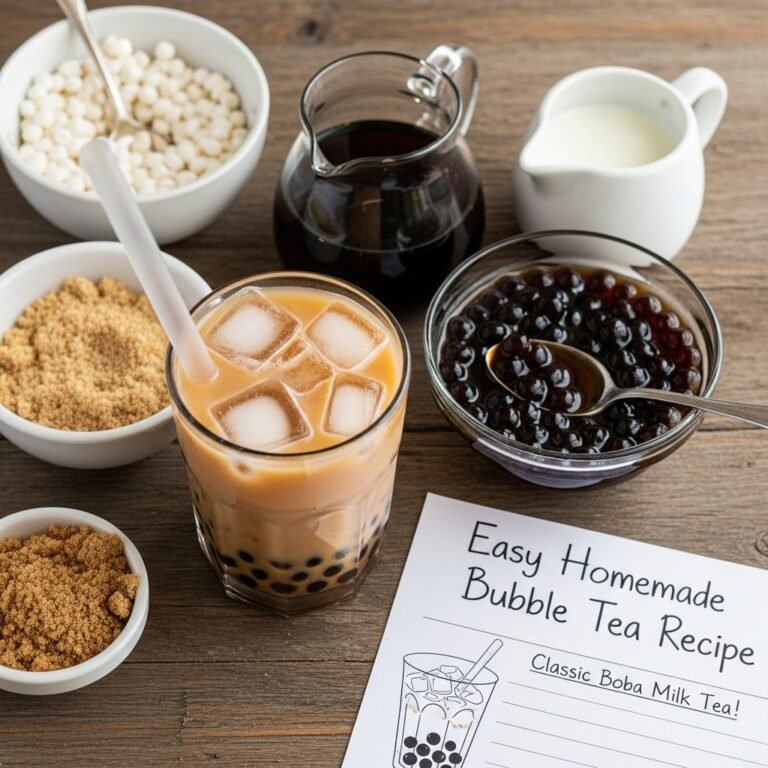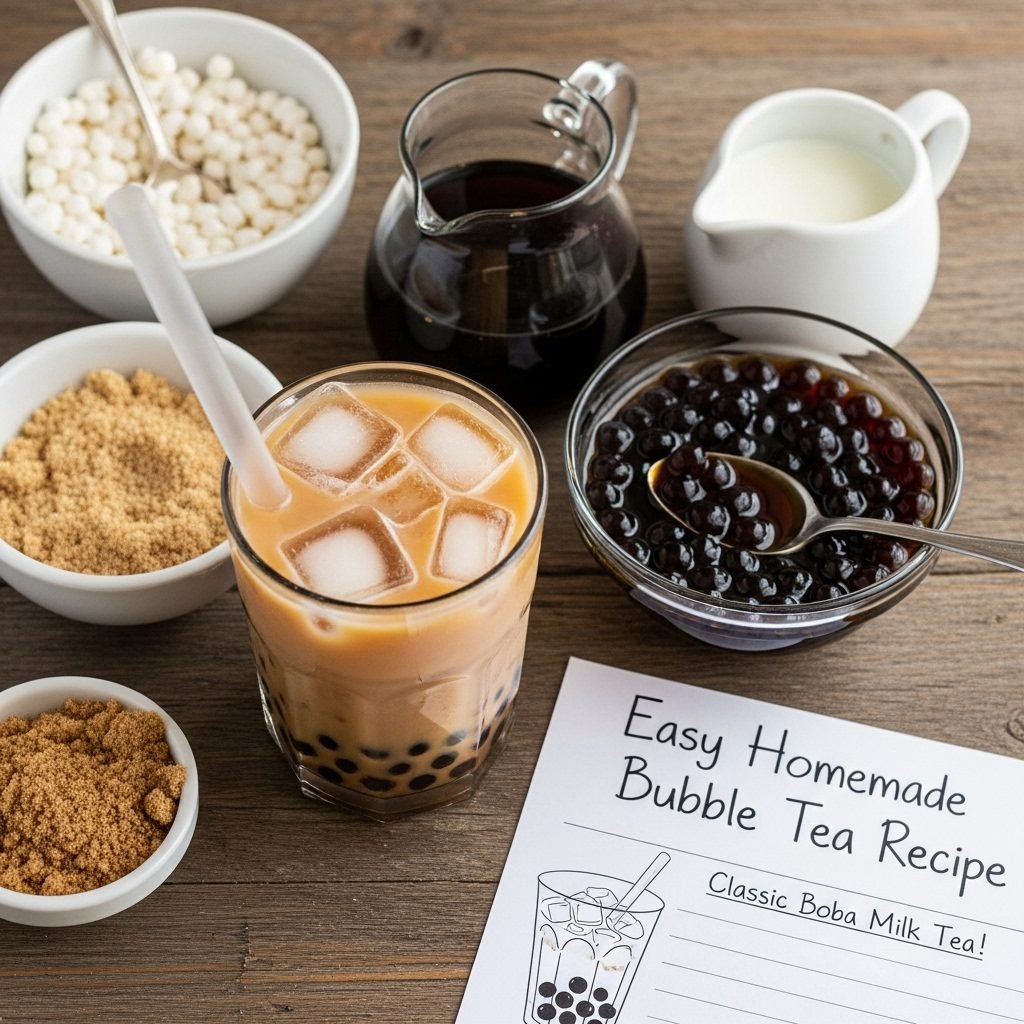
Easy Homemade Bubble Tea Recipe (Classic Boba Milk Tea!)
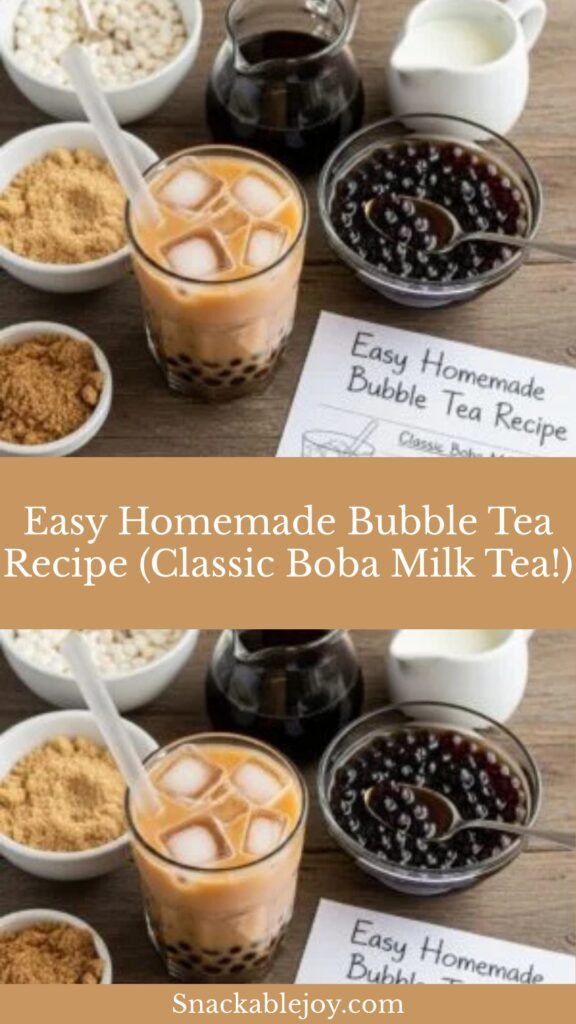
If you’ve ever sipped a creamy, sweet bubble tea through an oversized straw and experienced the delightful surprise of chewy tapioca pearls hitting your lips, you understand why this Taiwanese drink has taken the world by storm. That magical combination of smooth milk tea and bouncy boba creates a drinking experience unlike anything else — it’s a beverage and a snack all in one, and it’s absolutely addictive in the best way possible.
The great news? You don’t need to hunt down a specialty tea shop or spend $7 per drink to enjoy this beloved treat. Making bubble tea at home is surprisingly simple, incredibly fun, and allows you to customize every element to your exact preferences. Want it less sweet? You’ve got it. Prefer extra boba? Go wild. Craving a different tea flavor? The possibilities are endless.
Bubble tea (also called boba tea, pearl milk tea, or simply boba) has evolved from a Taiwanese street drink into a global phenomenon with devoted fans across every continent. Whether you first discovered it at an Asian mall food court, a trendy tea shop in your city, or through social media, once you’ve tried it, you understand the obsession.
This recipe walks you through creating classic milk tea bubble tea from scratch — from cooking perfect tapioca pearls to brewing the ideal tea base to assembling a drink that rivals (and likely surpasses) what you’d get at your favorite boba shop. It’s the perfect activity for a weekend afternoon, a fun project to do with kids, or simply a way to treat yourself to something special without leaving home.
History and Background
The story of bubble tea begins in Taiwan in the 1980s, though the exact origin is the subject of friendly debate between two tea shops, both of which claim to have invented this iconic drink. What we know for certain is that bubble tea emerged from Taiwan’s thriving tea culture and quickly became a beloved part of the island’s culinary identity.
One popular origin story credits Liu Han-Chieh, owner of Chun Shui Tang teahouse in Taichung, who began serving Chinese tea cold in the early 1980s after observing how the Japanese served iced coffee. The addition of tapioca pearls reportedly came later, in 1988, when his product development manager, Lin Hsiu Hui, playfully added some tapioca balls from her dessert into her iced tea during a staff meeting. The combination was an instant hit, and bubble tea was born.
The alternative claim comes from the Hanlin Tea Room in Tainan, where owner Tu Tsong-he says he was inspired by white tapioca balls he saw at a local market. He added them to tea, creating what he called “pearl tea.” The white pearls were eventually replaced with the black tapioca pearls we know today, which get their dark color from brown sugar or caramel coloring.
Regardless of who created it first, bubble tea spread rapidly throughout Taiwan and then across Asia during the 1990s. Taiwanese immigrants and entrepreneurs brought the drink to Chinese communities in the United States, Canada, and Europe, where it initially catered primarily to Asian customers before crossing over into mainstream popularity.
The name “bubble tea” actually has two possible origins. Some say it refers to the frothy bubbles created when the tea is shaken with ice, while others believe it describes the tapioca pearls that resemble bubbles sitting at the bottom of the cup. In Chinese, the drink is often called “zhēnzhū nǎichá” (pearl milk tea) or “bōbà nǎichá” (boba milk tea), with “boba” being a playful Taiwanese slang term.
Today, bubble tea has evolved into an art form with countless variations — from fruit teas to cheese foam toppings to brown sugar tiger milk tea. But the classic milk tea with tapioca pearls remains the foundational drink that started it all, and that’s exactly what we’re making today.
Why You’ll Love This Recipe
After perfecting this recipe through many batches (and happily drinking every one), I’m confident it delivers authentic bubble tea shop quality right from your kitchen. Here’s why this recipe works so well:
Making bubble tea at home gives you complete control over every element — the tea strength, the sweetness level, the creaminess, and the amount of boba in each drink. You can adjust everything to suit your preferences and dietary needs, and you’ll save a significant amount of money compared to buying it out. Plus, there’s something deeply satisfying about cooking those tapioca pearls yourself and watching them transform from hard little balls into chewy, glossy spheres of deliciousness.
Here’s what makes this recipe absolutely worth trying:
- Surprisingly easy: The process is straightforward once you understand the basic steps
- Incredibly customizable: Control sweetness, tea strength, milk type, and boba quantity to your exact preferences
- Budget-friendly: Make multiple drinks for the cost of a single boba shop purchase
- Fun activity: Cooking tapioca pearls is genuinely enjoyable and great to do with kids or friends
- Authentic taste: This recipe produces genuine bubble tea flavor, not a watered-down imitation
- Dietary flexibility: Easily adapted for dairy-free, vegan, or lower-sugar versions
- Impressive results: Homemade bubble tea makes a great offering when entertaining guests
- Endless variations: Once you master the basics, you can experiment with countless flavors and styles
- Fresh quality: Homemade boba has the perfect chewy texture that shop boba can sometimes lack
Ingredient Notes
Understanding your ingredients is key to bubble tea success. Let’s explore each component and your options:
Tapioca Pearls (Boba): These are the signature element that makes bubble tea special. Tapioca pearls are made from tapioca starch, which comes from the cassava root. For authentic bubble tea, look for black tapioca pearls (often labeled “boba” or “bubble tea pearls”) at Asian grocery stores or online. The black color comes from brown sugar or caramel added during production. Quick-cooking pearls (5-minute cooking time) are convenient, while traditional pearls take longer but some feel they have superior texture. Avoid the tiny tapioca pearls used for puddings — you want the larger ones, typically about 8-10mm in diameter.
Black Tea: Strong black tea forms the classic base for milk tea. Assam tea is traditional and offers a malty, robust flavor that stands up well to milk and sweetener. Ceylon tea or English Breakfast also work beautifully. The key is using a tea that’s bold enough to shine through the milk rather than getting lost. Loose-leaf tea gives you more control over strength, but quality tea bags work perfectly well.
Milk or Creamer: This adds the creamy richness that defines milk tea. Traditional Taiwanese bubble tea often uses non-dairy creamer for an extra-smooth, slightly sweet result, but whole milk, half-and-half, oat milk, coconut milk, or any milk alternative you prefer will work. The choice affects both flavor and texture — creamer and half-and-half create the richest result, while lighter milks produce a less heavy drink.
Sweetener: Brown sugar syrup is classic and adds depth of flavor beyond simple sweetness. You can make your own by dissolving brown sugar in water over heat, or use honey, simple syrup, or your preferred sweetener. Many people also sweeten their boba directly by soaking the cooked pearls in brown sugar syrup — this creates those gorgeous tiger stripe patterns and gives the boba extra flavor.
Ice: Essential for serving, unless you prefer your bubble tea warm (which is also delicious!). Standard ice cubes work fine, but larger cubes or coffee-shop-style ice melts more slowly and keeps your drink from diluting quickly.
Equipment Needed
You don’t need specialized equipment to make bubble tea at home — just some basic kitchen tools:
- Medium saucepan: For boiling the tapioca pearls — they need plenty of water and room to move around
- Small saucepan: For making brown sugar syrup and brewing tea
- Slotted spoon or spider strainer: For removing cooked boba from the water
- Fine mesh strainer: For straining brewed tea
- Measuring cups and spoons: For consistent results
- Tall glasses: 16-20 ounce glasses are ideal for serving
- Wide/boba straws: Essential for drinking bubble tea — regular straws won’t let the pearls through. Available at Asian grocery stores, online, or many regular grocery stores now
- Cocktail shaker or jar with lid (optional): For shaking the tea to create frothiness, though stirring works too
- Timer: Important for cooking boba to the right texture
Print

Bubble Tea Recipe
This classic homemade bubble tea features perfectly chewy tapioca pearls in creamy, sweetened milk tea. Made from scratch with simple ingredients, it rivals your favorite boba shop and lets you customize every element to your taste. A fun, delicious project that the whole family will love!
- Total Time: 40 minutes
- Yield: 2 servings (16 oz each) 1x
Ingredients
ScaleFor the Tapioca Pearls:
- ½ cup dried black tapioca pearls (boba)
- 6 cups water (for boiling)
- ¼ cup brown sugar
- ¼ cup water (for the syrup)
For the Milk Tea:
- 2 cups water
- 3 tablespoons loose-leaf Assam black tea (or 4 tea bags)
- ½ cup whole milk, half-and-half, or non-dairy creamer
- 2-4 tablespoons brown sugar syrup (adjust to taste)
- Ice cubes for serving
For Brown Sugar Syrup:
- ½ cup brown sugar (dark or light)
- ½ cup water
Instructions
- Boil water: Bring 6 cups of water to a vigorous, rolling boil in a medium saucepan. The water needs to be actively boiling before you add the pearls.
- Add tapioca pearls: Pour the tapioca pearls into the boiling water while stirring gently. Keep stirring for the first 1-2 minutes to prevent sticking.
- Cook the pearls: Once the pearls float to the surface, reduce heat to medium and continue cooking. For quick-cook pearls, this takes about 5 minutes; for traditional pearls, 15-25 minutes. The pearls are done when they’re completely translucent with no white center remaining.
- Rest the pearls: Turn off heat, cover the pot, and let the pearls rest in the hot water for another 15-20 minutes. This step is crucial for achieving the right chewy texture.
- Drain and rinse: Drain the pearls through a strainer and rinse briefly with cool water to stop the cooking process.
Make the Brown Sugar Syrup:
- Combine sugar and water: While the pearls cook, combine ½ cup brown sugar and ½ cup water in a small saucepan.
- Heat until dissolved: Cook over medium heat, stirring constantly, until the sugar completely dissolves. Simmer for 2-3 minutes until slightly thickened. Remove from heat.
- Coat the pearls: Transfer the drained tapioca pearls to a bowl and pour half of the brown sugar syrup over them. Stir gently to coat. Let them soak while you prepare the tea.
Brew the Tea:
- Boil water: Bring 2 cups of fresh water to a boil.
- Steep the tea: Add the tea leaves or bags and steep for 3-5 minutes for a strong brew. You want it stronger than you’d normally drink since it will be diluted with milk and ice.
- Strain and cool: Strain out the tea leaves (or remove bags) and let the tea cool to room temperature, then refrigerate until cold. For faster cooling, steep the tea stronger with 1 cup of water, then add 1 cup of cold water.
Assemble the Bubble Tea:
- Add boba to glasses: Spoon 3-4 tablespoons of the syrup-coated tapioca pearls into each serving glass.
- Add remaining syrup: Drizzle 1-2 tablespoons of the remaining brown sugar syrup into each glass (this creates beautiful tiger stripes if you drizzle it down the inside walls).
- Add ice: Fill the glasses about two-thirds full with ice cubes.
- Combine tea and milk: In a shaker or pitcher, combine the cooled tea with milk. Add additional brown sugar syrup to taste if desired. Shake or stir vigorously.
- Pour and serve: Pour the milk tea over the ice and boba. Insert a wide boba straw and serve immediately.
Notes
- Boba timing is crucial: Tapioca pearls are best consumed within 4 hours of cooking. They harden as they sit, so make only what you’ll drink soon.
- Adjust sweetness: The sweetness levels here are moderate. Adjust the brown sugar syrup to your taste — some prefer it quite sweet, others like it barely sweetened.
- Tea strength matters: Brew your tea strong! It should taste a bit too intense on its own because the milk and ice will mellow it significantly.
- Quick-cook vs. traditional pearls: Follow your package instructions as cooking times vary between brands.
- Keep boba warm: If not serving immediately, keep the cooked boba in the brown sugar syrup over very low heat or in a warm water bath to maintain their soft texture.
- Prep Time: 10 minutes
- Cook Time: 30 minutes
- Category: Beverage, Dessert
- Method: Stovetop
- Cuisine: Taiwanese, Asian
- Diet: Gluten Free
Nutrition
- Serving Size: 16 fl oz (1 drink)
- Calories: 335
- Sugar: 45g
- Sodium: 55mg
- Fat: 4g
- Saturated Fat: 2.5g
- Unsaturated Fat: 1g
- Trans Fat: 0g
- Carbohydrates: 72g
- Fiber: 0g
- Protein: 3g
- Cholesterol: 12mg
Tips and Variations
Once you’ve mastered classic milk tea, a whole world of bubble tea variations awaits! Here are some delicious directions to explore:
Brown Sugar Tiger Milk Tea: Drizzle extra brown sugar syrup dramatically down the inside of the glass before adding ice and milk (no tea). The dark stripes against white milk create the “tiger stripe” effect that’s become hugely popular. Use fresh, warm boba still glistening with syrup for the most authentic version.
Taro Bubble Tea: Add 2-3 tablespoons of taro powder or taro paste to your milk tea for that distinctive purple color and sweet, nutty flavor that taro fans adore.
Matcha Bubble Tea: Replace black tea with 1-2 teaspoons of matcha powder whisked into hot water. The earthy green tea flavor creates a completely different but equally delicious drink.
Thai Tea Boba: Use Thai tea mix instead of black tea for that signature orange color and distinctive spiced, sweet flavor. Thai tea is traditionally quite sweet and very creamy.
Fruit Tea Boba: Skip the milk entirely and use fruit tea or fruit juice as your base. Passion fruit, mango, strawberry, and peach are all popular options. These are lighter and more refreshing than milk tea versions.
Honey Bubble Tea: Replace brown sugar syrup with honey for a different sweetness profile. Particularly lovely with lighter teas like oolong or jasmine.
Low-Sugar Version: Reduce or eliminate the brown sugar syrup and use unsweetened milk. The boba itself will still have some sweetness. You can also find reduced-sugar boba at some specialty stores.
Dairy-Free Version: Use oat milk (my top recommendation for creaminess), coconut milk, almond milk, or any plant-based milk. Full-fat coconut milk creates an especially rich, indulgent drink.
Different Toppings: Beyond tapioca pearls, bubble tea shops offer many toppings you can make or buy: grass jelly, aloe vera, coconut jelly, red bean, pudding, or popping boba (juice-filled spheres that burst in your mouth).
Pro Chef Tips
Want to elevate your homemade bubble tea to professional quality? These insider techniques make all the difference:
Use plenty of water for cooking boba: Tapioca pearls release starch as they cook and need room to move freely. Using too little water results in gummy, stuck-together pearls. A good ratio is at least 10 parts water to 1 part dried pearls.
Don’t skip the resting time: After the pearls float and finish their active cooking, letting them rest in the covered pot is essential. This passive cooking phase allows the heat to penetrate fully to the center, eliminating any hard, uncooked core.
Test a pearl before draining: Before committing to draining your batch, fish out one pearl and cut it in half. It should be completely translucent throughout with no white, chalky center. If there’s any white remaining, continue cooking and resting.
Keep boba in syrup until serving: Once cooked and drained, tapioca pearls begin to harden within hours. Storing them in brown sugar syrup slows this process significantly and keeps them glossy and flavorful. Some people keep them over very low heat in a syrup bath.
Shake your tea: For that authentic bubble tea shop experience, shake your tea vigorously before pouring. This aerates the tea, creating a frothy layer on top and ensuring everything is well-combined. A cocktail shaker works perfectly, or use a jar with a tight lid.
Layer for visual impact: For the most beautiful presentation, add boba first, then drizzle syrup, then ice, then pour the milk tea slowly. This creates distinct layers that look gorgeous in a clear glass before the drinker stirs everything together.
Common Mistakes to Avoid
Even experienced home cooks can stumble with bubble tea. Here’s how to avoid the most common pitfalls:
Adding boba to water that isn’t boiling: If you add tapioca pearls to water that’s not at a full, rolling boil, they’ll become mushy and fall apart. Make sure you see big, active bubbles before adding the pearls, and keep the heat high enough to return to a boil quickly.
Not stirring when you add the pearls: Tapioca pearls are coated in starch and will stick to each other and the pot bottom if you dump them in without stirring. Stir constantly for the first couple of minutes until they’re floating freely.
Skipping the resting period: It’s tempting to drain the pearls as soon as they float and look translucent from the outside. But without the resting phase, the centers often remain hard and undercooked. Be patient — this step is crucial.
Using the wrong size straws: Regular drinking straws are too narrow for tapioca pearls to fit through, leaving you unable to actually drink your bubble tea properly. Invest in wide boba straws — they’re inexpensive and make all the difference.
Making boba too far in advance: Tapioca pearls have a short window of optimal texture. They’re best within 4 hours of cooking and will become increasingly hard and unpleasant after that. Cook only what you’ll consume soon.
Storage and Meal Prep
Let’s be honest about storage — bubble tea has a limited window of optimal enjoyment, but there are ways to work with this:
Cooked tapioca pearls: These are best consumed within 4 hours. To extend their life slightly, keep them submerged in brown sugar syrup at room temperature (not refrigerated — cold makes them harden faster). Some people keep them over a very low heat source, which can extend usability to 6-8 hours. Refrigerated boba hardens significantly and won’t return to its original texture.
Brewed tea base: Can be made ahead and stored in the refrigerator for up to 5 days. Keep it in an airtight container or pitcher. This is the best component to prep in advance.
Brown sugar syrup: Stores beautifully in the refrigerator for up to one month in a sealed container or squeeze bottle. Having this ready makes assembly quick and easy.
Assembled bubble tea: Does not store well. Once the ice is added, the clock is ticking on dilution. The milk can also begin to separate from the tea. Make and drink fresh for best results.
Practical approach: Make your tea base and brown sugar syrup in advance (both keep well). Cook fresh boba when you’re ready to drink, which only takes 20-30 minutes and most of that time is passive.
Make-Ahead and Freezer Notes
While bubble tea itself isn’t well-suited to advance preparation, strategic component prep makes enjoying it much more convenient:
Tea base make-ahead: Brew a large batch of strong black tea and refrigerate in a pitcher for up to 5 days. When craving strikes, you’re already halfway there.
Brown sugar syrup: Make a double or triple batch and refrigerate. It keeps for weeks and eliminates one step on bubble tea day.
Frozen boba option: Some specialty stores sell frozen pre-cooked tapioca pearls that you simply boil briefly to heat through. These are a convenient shortcut that still yields decent results, though fresh-cooked is superior.
Dried boba storage: Unopened dried tapioca pearls keep for months in a cool, dry pantry. Once opened, store in an airtight container and use within a few months.
Not recommended for freezing: Homemade cooked tapioca pearls, assembled milk tea, or the complete drink. The texture of frozen then thawed boba is unpleasantly hard and rubbery, and the milk tea separates and becomes unappetizing.
Serving Suggestions
Bubble tea is wonderful on its own, but here are some fun ways to serve and enjoy it:
Casual afternoon treat: Serve in tall clear glasses with boba straws for a fun pick-me-up that feels special but casual.
Bubble tea party: Set up a DIY boba bar with cooked pearls, different tea bases (black, green, Thai), various milks, syrups, and toppings. Let guests customize their perfect drinks.
Dessert course: Bubble tea makes a fun, interactive dessert option after an Asian-inspired meal. The sweetness satisfies dessert cravings while feeling lighter than cake or pie.
Movie night companion: The snacky quality of boba — chewing those pearls while sipping — makes it perfect for movie watching.
Pairing with food: Bubble tea pairs beautifully with Asian cuisines and makes a great complement to dim sum, sushi, Korean barbecue, Vietnamese pho, or Taiwanese street food. It also pairs well with light desserts like mochi, egg tarts, or fruit.
Kid-friendly activity: Making bubble tea is a wonderful kitchen project to do with children. They love watching the pearls cook and transform, and they can help with assembly.
Frequently Asked Questions
Where can I buy tapioca pearls? Black tapioca pearls are available at most Asian grocery stores, usually in the tea or dessert section. They’re also widely available online through Amazon and specialty food retailers. Look for brands like WuFuYuan, Bossen, or E-Fa. Many regular grocery stores now carry them in the international foods aisle.
How do I know when the boba is done cooking? The pearls should float to the surface after a few minutes of cooking, but that’s just the beginning. They’re truly done when they’re completely translucent throughout — no white, opaque center remaining. The best test is to cut one in half and check visually. They should also feel pleasantly chewy, not hard or crunchy.
Why did my boba turn out hard? Hard boba usually results from undercooking (skipping the resting period), using water that wasn’t boiling vigorously enough, or letting the cooked pearls sit too long without being submerged in syrup. Refrigeration also causes hardening.
Can I make bubble tea without boba? Absolutely! The milk tea itself is delicious even without tapioca pearls. You can also use alternative toppings like grass jelly, coconut jelly, aloe vera pieces, or popping boba for different textures and flavors.
Is bubble tea healthy? Bubble tea is a treat rather than a health food — the combination of sugar in the syrup and carbohydrates in the tapioca means it’s relatively high in calories and sugar. However, you can make healthier versions at home by reducing sweeteners, using unsweetened milk alternatives, and controlling portion sizes.
Can I use green tea instead of black tea? Yes! Jasmine green tea and oolong are both popular bases for bubble tea. Green tea creates a lighter, more delicate flavor profile. Adjust sweetness accordingly since the tea flavor will be subtler.
How long will leftover boba last? Cooked tapioca pearls are best within 4 hours and acceptable up to about 8 hours if kept in sugar syrup at room temperature. After that, they begin to harden irreversibly. It’s best to cook only what you’ll consume.
Conclusion
And there you have it — your complete guide to making authentic, delicious bubble tea right in your own kitchen! I hope this recipe opens up a whole new world of boba enjoyment for you. There’s something truly special about sipping homemade milk tea, feeling those perfectly chewy pearls travel up the straw, and knowing you created the whole thing yourself.
Making bubble tea at home has become one of my favorite weekend activities. It’s the perfect balance of simple enough to be relaxing but involved enough to feel rewarding. Plus, once you’ve experienced the quality of fresh-cooked tapioca pearls, you’ll understand why home boba enthusiasts become a little obsessed.
Don’t be intimidated if your first batch isn’t perfect — like any skill, making great bubble tea gets easier with practice. Pay attention to your boba texture, play with sweetness levels, and have fun experimenting with different tea bases and variations. Before long, you’ll have your personal recipe dialed in exactly to your preferences.
I would absolutely love to hear about your bubble tea adventures! If you try this recipe, please drop a comment below and let me know how it turned out. Did you try any fun variations? What’s your favorite flavor combination? And if this recipe brought a little bubble tea joy to your kitchen, I’d be so grateful if you’d share it on Pinterest so other boba lovers can discover it too. Happy sipping!