The Perfect Irish Coffee Recipe – Warm, Rich & Authentically Irish

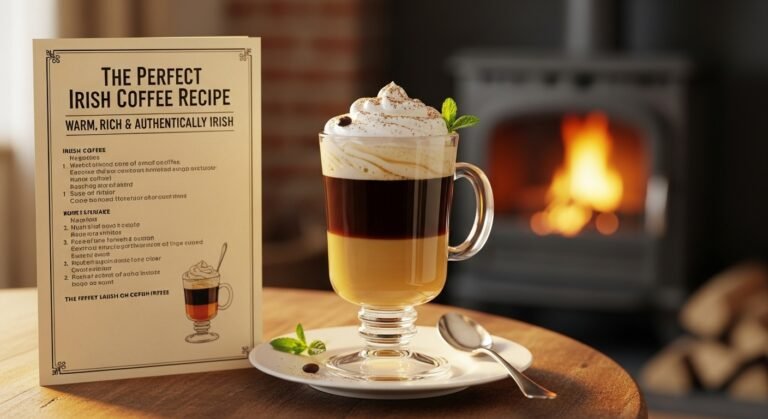
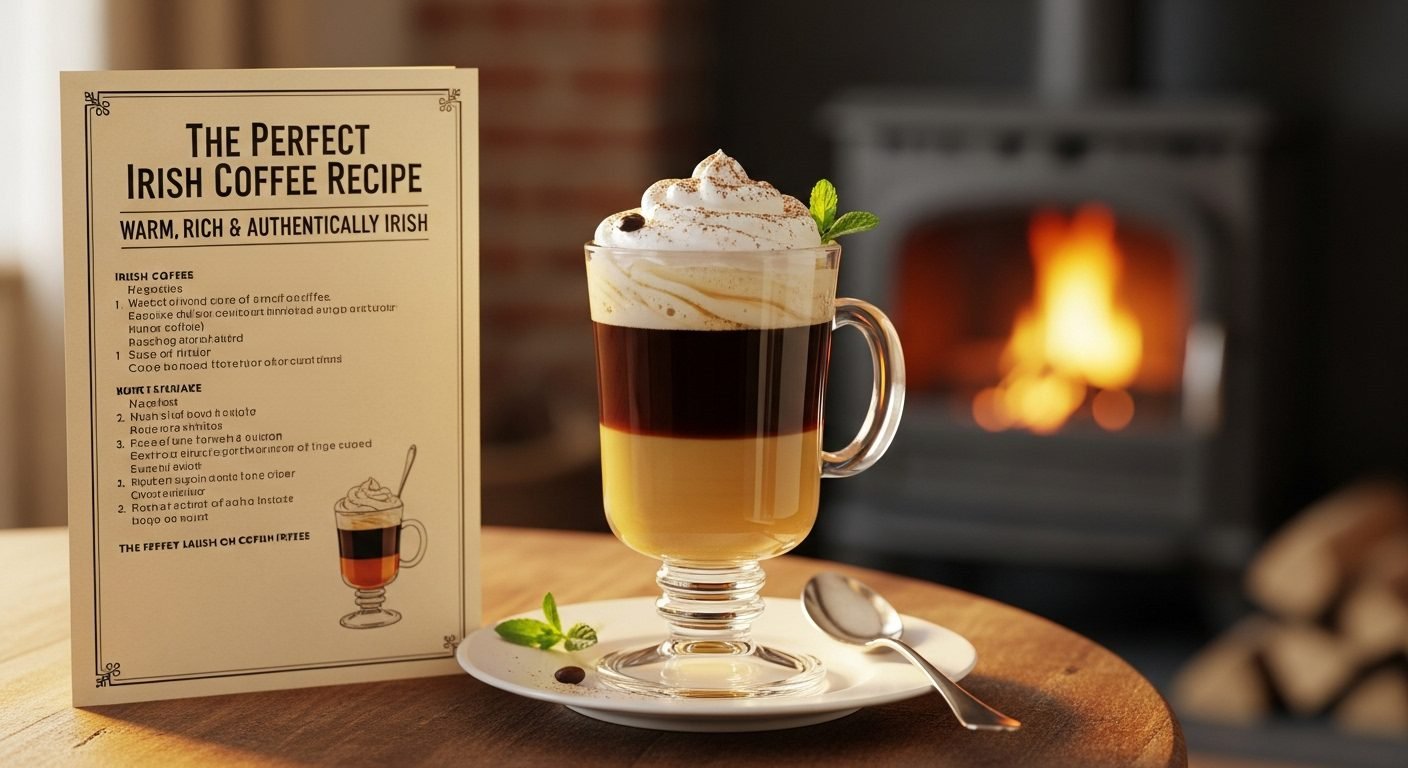
Irish Coffee is the ultimate cold-weather cocktail, a luxurious combination of hot coffee, Irish whiskey, brown sugar, and a cloud of lightly whipped heavy cream that floats on top. This iconic drink is more than just coffee with alcohol—it’s a perfectly balanced experience where each sip delivers the warmth of whiskey, the richness of coffee, and the silky smoothness of cream all at once. Unlike typical coffee drinks that mix everything together, Irish Coffee is sipped through the cream, creating a unique multi-layered tasting experience.
This beloved beverage is perfect for cozy winter evenings, holiday gatherings, after-dinner treats, or any time you want something warming and indulgent. Irish Coffee has remained popular since the 1940s because it strikes the perfect balance—it’s sophisticated enough for special occasions yet comforting enough for everyday enjoyment. Whether you’re celebrating St. Patrick’s Day, wrapping up a dinner party, or simply want to elevate your evening coffee ritual, an authentic Irish Coffee delivers warmth, elegance, and that unmistakable Irish charm in every sip.
History / Background
The Irish Coffee has a remarkably well-documented origin story, unlike many cocktails shrouded in mystery. It was created in 1943 by Joe Sheridan, a chef at the Foynes Airbase restaurant in County Limerick, Ireland. Foynes was a major flying boat terminal in the 1930s and 1940s, serving as the last European stop for transatlantic flights to North America before Shannon Airport was built.
On a particularly cold and miserable winter night in 1943, a Pan Am flying boat bound for New York was forced to turn back to Foynes due to terrible weather. The cold, disappointed, and exhausted passengers returned to the terminal seeking warmth and comfort. Joe Sheridan, working in the terminal’s restaurant, decided to create something special to lift their spirits. He added Irish whiskey to hot coffee, sweetened it with sugar, and topped it with cream—creating the first Irish Coffee.
When one of the American passengers asked if this was Brazilian coffee, Sheridan famously replied, “No, that’s Irish Coffee!” The drink was an instant hit with travelers, and word spread quickly. For years, Irish Coffee remained a specialty of Foynes and later Shannon Airport after the terminal moved there in 1945.
The drink made its way to America in 1952 when Stanton Delaplane, a travel writer for the San Francisco Chronicle, encountered it at Shannon Airport. He was so impressed that he brought the recipe to his friend Jack Koeppler, owner of the Buena Vista Cafe in San Francisco. Together, they worked to recreate the drink, reportedly failing numerous times before finally getting the cream to float properly. The key was to lightly whip the cream just enough to give it body without turning it into whipped cream.
The Buena Vista Cafe popularized Irish Coffee in America, and they claim to serve over 2,000 Irish Coffees daily. The drink became a San Francisco institution and spread across America throughout the 1950s and 1960s. In 1952, the Buena Vista actually flew Joe Sheridan himself from Ireland to San Francisco to train their bartenders in the authentic preparation method.
What makes Irish Coffee special is that it represents Irish hospitality at its finest—it was literally created to comfort weary travelers and warm their spirits on a cold night. The drink embodies the Irish tradition of welcoming guests with warmth, generosity, and a touch of the good stuff. It’s not just a cocktail; it’s a hug in a glass.
Today, Irish Coffee is enjoyed worldwide, though purists insist that authentic versions must follow Joe Sheridan’s original specifications: hot coffee, Irish whiskey, sugar, and cream floated on top—never mixed, never shaken, never adorned with whipped cream from a can.
Why You’ll Love This Recipe
This authentic Irish Coffee recipe follows the traditional method created by Joe Sheridan himself, ensuring you get the real deal—not the sugar-bomb, whipped-cream-topped impostor often served in restaurants. The magic happens when you sip hot coffee and whiskey through cold cream, creating temperature and texture contrasts that make every sip an experience.
Here’s why this recipe will become your cold-weather favorite:
- Authentically Irish – Follows the original 1940s recipe from creator Joe Sheridan
- Surprisingly Simple – Just four ingredients and five minutes to make
- Perfectly Balanced – Not too sweet, with coffee, whiskey, and cream in harmony
- Elegant Presentation – The floating cream layer looks stunning and impressive
- Cozy & Warming – Perfect for cold nights and winter gatherings
- After-Dinner Excellence – Functions as both coffee and dessert in one
- Customizable Strength – Easy to adjust whiskey and coffee to your preferences
- Special Occasion Ready – Sophisticated enough for entertaining guests
- Quick Enough for Everyday – Simple enough to make on a Tuesday night
- Budget-Friendly Luxury – Creates a luxurious experience with affordable ingredients
Ingredient Notes
Irish Coffee’s beauty lies in its simplicity, but each ingredient must be chosen with care since there’s nowhere for inferior components to hide.
Hot Coffee – Strong, freshly brewed coffee is essential. You want robust, flavorful coffee that can stand up to the whiskey and cream without being overwhelmed. Use medium to dark roast coffee for best results—think rich and bold, not light and delicate. French press, pour-over, or drip coffee all work beautifully. The coffee should be freshly brewed and very hot (around 160-180°F). Avoid coffee that’s been sitting on a warmer for hours, as it will taste stale and bitter. Some purists insist on Irish-roasted coffee, but any quality coffee works well. Make it strong—use slightly more coffee grounds than you normally would.
Irish Whiskey – This is non-negotiable for authentic Irish Coffee. Irish whiskey is smoother and slightly sweeter than Scotch, bourbon, or rye, with a clean finish that complements coffee beautifully. Traditional choices include Jameson (the most popular and accessible), Bushmills, Tullamore Dew, or Powers. All are excellent, though Jameson is the classic choice. Joe Sheridan himself used whichever Irish whiskey was on hand. Do not substitute Scotch, bourbon, or other whiskeys—they have different flavor profiles that clash with the coffee. Irish whiskey’s smoothness is what makes this drink work.
Brown Sugar – Demerara sugar or light brown sugar is traditional and provides a subtle molasses flavor that complements both the coffee and whiskey. The brown sugar adds depth that white sugar lacks. You can use white sugar in a pinch, but brown sugar creates a richer, more complex drink. Some recipes call for 1-2 teaspoons, others up to 2 tablespoons—start with 1-2 teaspoons and adjust to taste. Remember that sweetness is personal preference.
Heavy Cream (Not Whipped) – This is crucial and where many people go wrong. You need heavy cream (also called heavy whipping cream), not half-and-half, not milk, and definitely not canned whipped cream. The cream should be cold from the refrigerator and lightly whipped just enough to thicken slightly—it should still pour but have enough body to float on the coffee. The texture should be like thick paint, not fluffy whipped cream. This is the signature element of Irish Coffee, and getting it right is essential.
Equipment Needed
Making authentic Irish Coffee requires some specific equipment, though most of it’s probably already in your kitchen:
- Irish Coffee Glass or Heat-Safe Glass Mug – Traditional stemmed Irish coffee glasses are ideal (6-8 oz capacity), but any heat-safe glass mug or thick-walled glass works
- Coffee Maker – French press, pour-over, drip machine, or any method for brewing strong coffee
- Small Whisk or Spoon – For lightly whipping the cream
- Mixing Bowl – Small bowl for preparing the cream
- Teaspoon – For measuring sugar and stirring
- Bar Spoon or Regular Spoon – For floating the cream
- Jigger or Shot Glass – For measuring whiskey (1-1.5 oz)
- Kettle or Coffee Pot – For hot coffee
Print

Irish Coffee Recipe
This authentic Irish Coffee recipe combines hot strong coffee with Irish whiskey and brown sugar, topped with a layer of lightly whipped cold cream that floats on top. Sipped through the cream, it’s the ultimate warming cocktail for cold weather.
- Total Time: 5 minutes
- Yield: 1 serving 1x
Ingredients
Scale- 6 oz hot strong coffee (180 ml), freshly brewed
- 1½ oz Irish whiskey (45 ml), such as Jameson or Bushmills
- 1-2 teaspoons brown sugar or demerara sugar (adjust to taste)
- 2-3 tablespoons heavy cream (30-45 ml), cold
- Optional: Freshly grated nutmeg for garnish
Instructions
- Warm Your Glass – Fill your Irish coffee glass or heat-safe mug with hot water and let it sit for 30-60 seconds. This pre-warms the glass so the coffee stays hot longer. Pour out the water right before building the drink.
- Brew Strong Coffee – Make 6 oz of strong, hot coffee using your preferred method. The coffee should be freshly brewed and very hot (160-180°F). Use slightly more coffee grounds than normal to ensure it’s robust enough.
- Add Sugar – Place 1-2 teaspoons of brown sugar in the bottom of your warmed glass. Start with 1 teaspoon if you prefer less sweet drinks.
- Add Coffee – Pour the hot coffee into the glass over the sugar, leaving about 1 inch of space at the top for the cream. Stir well until the sugar is completely dissolved. The stirring is important—undissolved sugar sits at the bottom and makes the drink inconsistent.
- Add Whiskey – Pour 1½ oz of Irish whiskey into the hot coffee and stir briefly to integrate. The drink should now be hot, aromatic, and unified in flavor.
- Prepare the Cream – In a small bowl, add 2-3 tablespoons of cold heavy cream. Using a small whisk or spoon, whisk the cream for about 10-15 seconds—just enough to thicken it slightly. The cream should still pour but have the consistency of thick paint. It should not be fluffy or form peaks like whipped cream. This is the most critical step for authentic Irish Coffee.
- Float the Cream – There are two methods:
- Spoon Method: Hold a bar spoon or regular spoon upside down just above or touching the surface of the coffee. Slowly pour the cream over the back of the spoon, letting it gently cascade onto the coffee surface. The cream should float and create a distinct layer on top.
- Pour Method: Very carefully and slowly pour the cream directly onto the coffee surface over the back of a spoon, allowing it to float. Practice makes perfect with this technique.
- Garnish (Optional) – For a traditional touch, lightly grate fresh nutmeg over the cream layer.
- Serve Immediately – Serve the Irish Coffee without stirring. The traditional way to drink it is to sip the hot coffee and whiskey through the cold cream layer, experiencing the temperature and texture contrast with each sip. Do not use a straw—drink directly from the glass.
Notes
Cream Consistency is Critical: The cream must be thickened just enough to float but not whipped stiff. If it’s too thin, it will sink into the coffee. If it’s too thick, it won’t flow properly. Aim for the consistency of thick paint—it should coat the back of a spoon but still pour smoothly. This takes practice, so don’t be discouraged if your first attempt doesn’t float perfectly.
Glass Temperature: Pre-warming the glass is essential for keeping the drink hot. Cold glasses will immediately cool your coffee. If you don’t warm the glass, your Irish Coffee will be lukewarm before you finish it.
Sugar Adjustment: Sweetness is highly personal. Traditional recipes range from 1 teaspoon to 2 tablespoons of sugar. Start with 1-2 teaspoons and adjust in future servings. The whiskey and coffee both have natural bitterness, so some sweetness is necessary for balance.
Whiskey Quantity: Traditional recipes use 1-1.5 oz of whiskey. Use 1 oz for a lighter version, 1.5 oz for traditional strength, or up to 2 oz if you really want to taste the whiskey. More than 2 oz overwhelms the coffee.
Don’t Stir After Adding Cream: The whole point of Irish Coffee is sipping the hot coffee through the cold cream. If you stir everything together, you just have spiked coffee with cream mixed in—not the same experience at all.
- Prep Time: 5 minutes
- Cook Time: 0 minutes
- Category: Beverage, Cocktail, Coffee
- Method: Assembled, Layered
- Cuisine: Irish
- Diet: Gluten Free
Nutrition
- Serving Size: 1 Irish Coffee (approximately 8 oz)
- Calories: 175
- Sugar: 6g
- Sodium: 10mg
- Fat: 7g
- Saturated Fat: 4.5g
- Unsaturated Fat: 2g
- Trans Fat: 0g
- Carbohydrates: 8g
- Fiber: 0g
- Protein: 1g
- Cholesterol: 25mg
Tips & Variations
Baileys Irish Coffee: Add 1 oz of Baileys Irish Cream along with the whiskey for extra richness and sweetness. Reduce the sugar to compensate for Baileys’ sweetness.
Decaf Irish Coffee: Use decaffeinated coffee for an evening treat that won’t keep you awake. All other components remain the same—still delicious without the caffeine.
Mexican Coffee: Replace Irish whiskey with tequila or coffee liqueur (Kahlúa), add a pinch of cinnamon, and garnish with a cinnamon stick. This creates a completely different but delicious warming drink.
Nutty Irish Coffee: Add ½ oz of Frangelico (hazelnut liqueur) or Amaretto along with the whiskey for nutty complexity.
Spiced Irish Coffee: Add a pinch of cinnamon, nutmeg, or cardamom to the coffee before adding whiskey. These warming spices complement the drink beautifully.
Honey Irish Coffee: Replace brown sugar with honey for a different type of sweetness. Use slightly less as honey is sweeter than sugar.
Skinnier Irish Coffee: Use half-and-half instead of heavy cream (it won’t float as well but still tastes good), reduce sugar to 1 teaspoon or use sugar substitute, and use only 1 oz whiskey.
Mint Irish Coffee: Add a few drops of peppermint extract or ½ oz crème de menthe for a minty twist perfect for the holidays.
Iced Irish Coffee: Brew strong coffee, sweeten it, let it cool completely, pour over ice, add whiskey, and top with lightly whipped cream. Not traditional, but refreshing in warm weather.
Pro Chef Tips
The Cream Temperature and Technique: The secret to floating cream successfully is having it very cold (straight from the fridge) and lightly whipping it to exactly the right consistency. Professional bartenders often keep cream just above freezing and whisk it for exactly 10-15 seconds—no more, no less. The cream should be thickened but still pourable, like thick paint or heavy syrup. If you over-whip, it becomes too thick and won’t pour smoothly. If you under-whip, it sinks. This is the skill that separates good Irish Coffee from great Irish Coffee.
Coffee Strength Matters: The coffee must be strong enough to taste through the whiskey and cream. Use about 50% more coffee grounds than you normally would, or brew it slightly stronger. Weak coffee gets lost in the mix and makes the drink taste only of whiskey and cream. The coffee should be robust and flavorful—think espresso-adjacent in strength, not regular drip coffee strength.
The Spoon-Float Method: To float cream like a pro, hold the back of a bar spoon just touching the surface of the coffee, positioned so the cream flows over the curved back of the spoon. Pour the cream very slowly onto the spoon back, letting it cascade gently onto the coffee surface. The spoon disperses the cream and slows its entry, allowing it to float. This technique takes practice—your first few might not be perfect, but you’ll get the hang of it.
Pre-Warm Everything: Professional establishments pre-warm their Irish coffee glasses constantly by keeping them filled with hot water. At home, fill your glass with hot water while you brew the coffee and prepare other ingredients. Empty it just before building the drink. This single step dramatically improves the final temperature and keeps your Irish Coffee hot for much longer.
Sugar Dissolution is Essential: The sugar must be completely dissolved before adding whiskey and cream, or you’ll have a grainy, inconsistent drink with sweetness only at the bottom. Stir the coffee and sugar vigorously for 15-20 seconds until you can’t feel any grains when you stir. Hot coffee dissolves sugar easily, but you must take the time to stir properly.
Use Quality Ingredients: With only four ingredients, quality matters enormously. Fresh coffee (not stale beans or old grounds), good Irish whiskey (not the cheapest bottle), real heavy cream (not substitute products), and proper sugar make the difference between “okay” and “exceptional.” This is not the drink to make with day-old coffee or bottom-shelf whiskey.
The Right Ratio: The traditional ratio is roughly 3 parts coffee to 1 part whiskey, with just enough cream to create a layer. This balance allows all components to shine—you should taste coffee, whiskey, and cream in every sip without one overwhelming the others. Adjust slightly to personal preference, but don’t stray too far or it becomes something else entirely.
Common Mistakes to Avoid
Using Canned Whipped Cream: This is the number one mistake that ruins Irish Coffee. Canned whipped cream is full of air, stabilizers, and often sugar. It doesn’t float properly, it doesn’t create the right texture, and it tastes wrong. You must use real heavy cream that you lightly whip yourself. There are no shortcuts here. The cream is what makes Irish Coffee special—don’t ruin it with aerosol cans.
Over-Whipping the Cream: The second most common mistake is whipping the cream too much until it forms peaks like regular whipped cream. This makes it too thick to pour properly and creates the wrong texture. Irish Coffee cream should be lightly thickened—still pourable, like thick paint or heavy syrup. It should coat the back of a spoon but flow smoothly. Whisk for only 10-15 seconds, just until you feel slight resistance. Stop before it gets fluffy.
Using Cold Coffee or Not Hot Enough Coffee: Irish Coffee is supposed to be a hot drink that warms you from the inside. Using lukewarm coffee or coffee that’s been sitting around creates a disappointing, tepid drink. The coffee should be freshly brewed and very hot—around 160-180°F. Also, pre-warm your glass or the temperature will drop immediately. Hot coffee is essential for the drink to work properly.
Stirring After Adding the Cream: The entire point of Irish Coffee is drinking hot coffee through cold cream, experiencing the temperature and texture contrast with each sip. If you stir everything together, you just have spiked coffee with cream mixed in—completely different and much less special. Never stir after floating the cream. Instruct guests to drink it as-is, sipping through the cream layer.
Using the Wrong Whiskey: Irish Coffee requires Irish whiskey—not Scotch, not bourbon, not rye, not Jack Daniel’s. Irish whiskey has a smooth, slightly sweet, clean flavor that complements coffee beautifully. Scotch is too peaty and smoky. Bourbon is too sweet and heavy. Other whiskeys have wrong flavor profiles. The drink is called Irish Coffee for a reason—the whiskey must be Irish. Popular options include Jameson, Bushmills, Tullamore Dew, or Powers. Don’t substitute.
Storage & Meal Prep
Coffee Preparation: You can brew a pot of strong coffee ahead if making multiple Irish Coffees. Keep it hot in a thermal carafe or on a warmer, but use it within 30-60 minutes for best flavor. Coffee that sits for hours becomes bitter and stale-tasting.
Pre-Measured Whiskey: For parties, you can pre-measure 1.5 oz shots of whiskey into small containers, making assembly faster when guests want drinks.
Cream Storage: Heavy cream keeps in the refrigerator for 7-10 days after opening. Always check the expiration date. The cream must be cold from the refrigerator to float properly—don’t let it sit at room temperature.
Sugar Prep: You can measure sugar portions ahead into small containers if making multiple drinks, saving time during preparation.
Irish Coffee Doesn’t Store: Irish Coffee must be made fresh and consumed immediately. Once prepared, the drink begins cooling, the cream layer starts to break down, and within 10-15 minutes it’s no longer at its peak. Never try to make Irish Coffee ahead of time or save leftover portions. Always make it fresh to order.
Leftover Ingredients: Store coffee beans in an airtight container in a cool, dark place. Keep whiskey at room temperature with the cap sealed tightly. Refrigerate heavy cream and sugar in their original containers. All these ingredients store well separately for future Irish Coffees.
Make-Ahead & Freezer Notes
Coffee Can Be Brewed Ahead: For parties, you can brew a large pot of strong coffee and keep it hot in a thermal carafe for up to 1 hour. After that, the flavor deteriorates significantly. This allows you to make multiple Irish Coffees quickly without brewing individual cups.
Pre-Whisk Multiple Cream Portions: If making several Irish Coffees, you can whisk a larger portion of cream (say, ½ cup) to the right consistency, then use it for multiple drinks within 15-20 minutes. After that, the texture begins to change and you should re-whisk or start fresh.
Pre-Warm Multiple Glasses: Fill all your Irish coffee glasses with hot water 10 minutes before service. When ready to make drinks, dump the water and build drinks in the warm glasses. This is essential for parties.
Sugar Portions: Measure out individual portions of sugar (1-2 teaspoons per serving) into small cups or containers ahead of time for faster assembly.
Ingredient Setup: For entertaining, set up a “station” with hot coffee in a carafe, measured whiskey portions, pre-measured sugar, cold cream in a bowl with a whisk nearby, and warmed glasses. This assembly-line approach lets you make multiple Irish Coffees efficiently.
Not Freezer-Friendly: Irish Coffee cannot be frozen or made ahead in any complete form. The drink relies on hot coffee, cold cream layers, and immediate serving. Always prepare fresh.
Whipped Cream Cannot Be Pre-Made: Don’t try to whip the cream hours ahead. Lightly whipped cream (as needed for Irish Coffee) will either break down or stiffen over time. Whisk it fresh within 10-15 minutes of making each drink.
Serving Suggestions
Irish Coffee is traditionally an after-dinner drink, functioning as both dessert and coffee in one warming package. It’s the perfect ending to a meal, especially on cold evenings.
Perfect Pairings:
Irish Coffee pairs beautifully with desserts, particularly those with chocolate, caramel, or coffee flavors. Excellent accompaniments include chocolate cake, tiramisu, crème brûlée, brownies, chocolate chip cookies, shortbread, or Irish soda bread. The coffee and whiskey complement rich, sweet desserts without being overwhelmed.
It also works well with cheese courses—particularly aged cheddar, Gruyère, or blue cheeses. The whiskey cuts through rich, fatty cheeses while the coffee provides a pleasant bitter contrast.
For a traditional Irish experience, serve Irish Coffee with Irish desserts like Irish cream cheesecake, Bailey’s chocolate mousse, or whiskey bread pudding.
Occasion Ideas:
- St. Patrick’s Day: The obvious choice for Irish celebrations
- Christmas and Holiday Gatherings: Warming and festive for winter holidays
- After-Dinner Drinks: Perfect conclusion to dinner parties
- Cold Winter Evenings: Ultimate cozy drink for fireside relaxing
- Brunch Gatherings: Elevated brunch cocktail that’s sophisticated
- New Year’s Eve: Warm and celebratory for winter celebrations
- Book Club Meetings: Sophisticated beverage for evening gatherings
- Dessert Replacement: When you want something sweet but not solid food
Serving Style:
Serve Irish Coffee in traditional stemmed Irish coffee glasses (6-8 oz) to showcase the beautiful cream layer. If you don’t have these, any heat-safe glass mug or clear mug works—just make sure it’s transparent so guests can see the layers.
Never serve with a straw—Irish Coffee is meant to be sipped directly from the glass so you taste the hot coffee through the cold cream. Provide spoons only for stirring the sugar initially, not for stirring after the cream is added.
For dinner parties, consider making Irish Coffee at the table so guests can watch the preparation—it’s impressive and theatrical when done well.
FAQs Section
Can I use regular whipped cream instead of lightly whipped heavy cream?
No, and this is the most common mistake people make. Regular whipped cream (the fluffy kind with peaks) is too airy and thick. It doesn’t pour properly, doesn’t float correctly, and creates the wrong texture and taste. You need heavy cream that’s been lightly whisked for just 10-15 seconds until it thickens slightly but still pours like thick paint. Canned whipped cream is even worse—it’s full of stabilizers and air and tastes completely wrong. Always use real heavy cream that you lightly whip yourself.
What makes Irish whiskey different from other whiskeys?
Irish whiskey is typically triple-distilled (most whiskeys are double-distilled), making it exceptionally smooth. It’s made from malted and unmalted barley and aged in oak barrels for at least three years. The result is a clean, slightly sweet whiskey without the smoky peat flavors of Scotch or the heavy sweetness of bourbon. This smoothness is essential for Irish Coffee—other whiskeys have flavor profiles that clash with coffee. Scotch tastes too smoky, bourbon too sweet and heavy. Irish whiskey’s clean, smooth character complements coffee perfectly.
Why won’t my cream float on top?
Several factors affect cream floating. First, the cream might not be cold enough—it must be refrigerator-cold. Second, you might not have whisked it enough to thicken it slightly. Third, you might be pouring it too quickly or aggressively. Fourth, your coffee might not be hot enough (the temperature difference helps). Finally, make sure you’re using heavy cream, not half-and-half or milk—they’re too thin to float. Try the spoon-back method: pour slowly over the back of a spoon held just above the coffee surface. Practice makes perfect!
Can I make Irish Coffee with decaf?
Absolutely! Use decaffeinated coffee prepared the exact same way—strong, hot, and fresh. Everything else remains identical. Decaf Irish Coffee is perfect for evening enjoyment when you want the warmth and flavor without the caffeine keeping you awake. Many people make decaf versions after dinner specifically for this reason.
Is Irish Coffee supposed to be sweet?
Traditional Irish Coffee is moderately sweet—not cloying, but with enough sweetness to balance the bitterness of coffee and whiskey. Original recipes use 1-2 teaspoons of brown sugar, creating a balanced drink where you taste coffee, whiskey, and cream without excessive sweetness. Adjust sugar to your preference—start with 1 teaspoon if you prefer less sweet drinks, or go up to 2 teaspoons if you have a sweet tooth. The sugar also helps bind the drink together and enhances the whiskey’s natural sweetness.
What’s the correct way to drink Irish Coffee?
Sip it directly from the glass without stirring after the cream is added. The traditional experience involves tasting hot coffee and whiskey through the cold cream layer, creating temperature and texture contrasts with each sip. Start drinking from one spot on the rim to create a “channel” through the cream. Don’t use a straw and don’t stir—these destroy the layered effect that makes Irish Coffee special. The cream gradually mixes with the coffee as you drink, creating an evolving flavor experience.
Can I use a different type of sugar?
Brown sugar or demerara sugar is traditional and provides subtle molasses notes that enhance the drink. White granulated sugar works but creates a simpler, less complex sweetness. Turbinado or raw sugar works well. Honey can substitute but use less as it’s sweeter. Sugar substitutes work if needed for dietary reasons, though they don’t dissolve quite as smoothly. Avoid powdered sugar—it creates the wrong texture. The type of sugar does affect the final flavor, so brown sugar or demerara is worth seeking out for authenticity.
Conclusion
Irish Coffee is one of those rare drinks that’s simultaneously simple and sophisticated, comforting and impressive. With just four ingredients and five minutes, you can create a warming cocktail that has brought comfort to travelers, closed countless dinner parties, and warmed hearts for over 80 years. The beauty lies in the details—the hot coffee sipped through cold cream, the smoothness of Irish whiskey, the gentle sweetness that ties everything together.
Making authentic Irish Coffee is a skill worth mastering. Once you nail the technique of floating that cream layer and achieving the perfect balance of components, you’ll have a signature drink that impresses guests and provides genuine comfort on cold evenings. It’s not just coffee with whiskey thrown in—it’s a carefully composed experience where every element plays its part.
So warm your glass, brew strong coffee, pour generous Irish whiskey, and practice that cream float. When you take that first sip—hot coffee and smooth whiskey through silky cold cream—you’ll understand why Joe Sheridan’s creation has endured for generations. Here’s to cold nights, warm drinks, and the simple pleasure of perfectly crafted Irish Coffee. Sláinte! ☕🥃