The Perfect Manhattan Cocktail Recipe – Classic, Smooth & Timeless
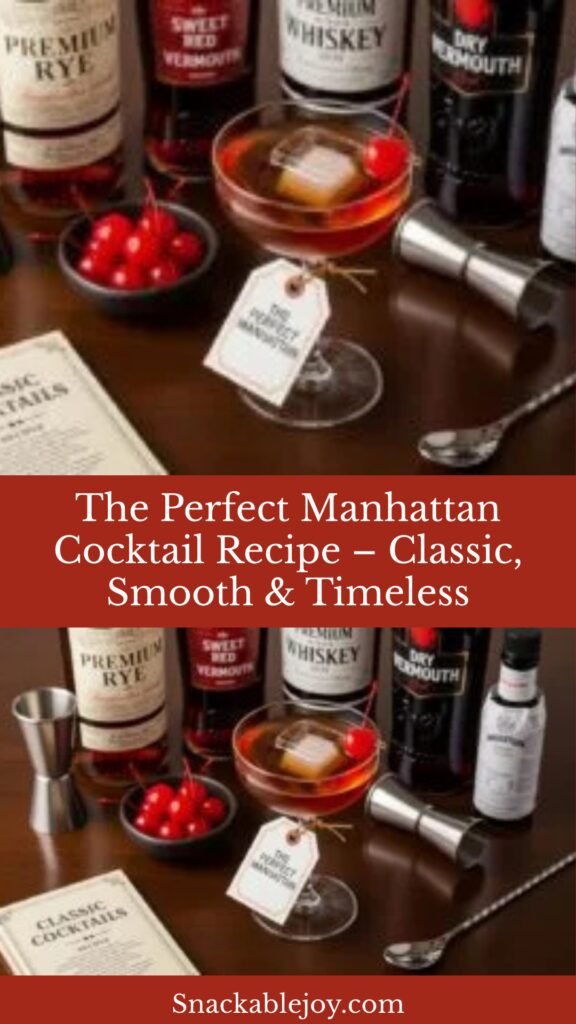
The Manhattan is one of the most iconic cocktails in American history, and for good reason. This elegant drink combines the warmth of whiskey with the herbal complexity of sweet vermouth and a dash of aromatic bitters, creating a perfectly balanced cocktail that’s both sophisticated and approachable. Whether you’re hosting a dinner party, celebrating a special occasion, or simply want to enjoy a well-crafted drink at home, the Manhattan is your go-to recipe.
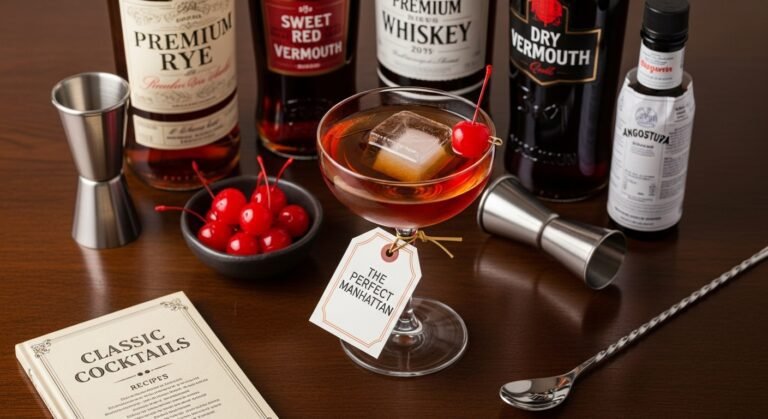
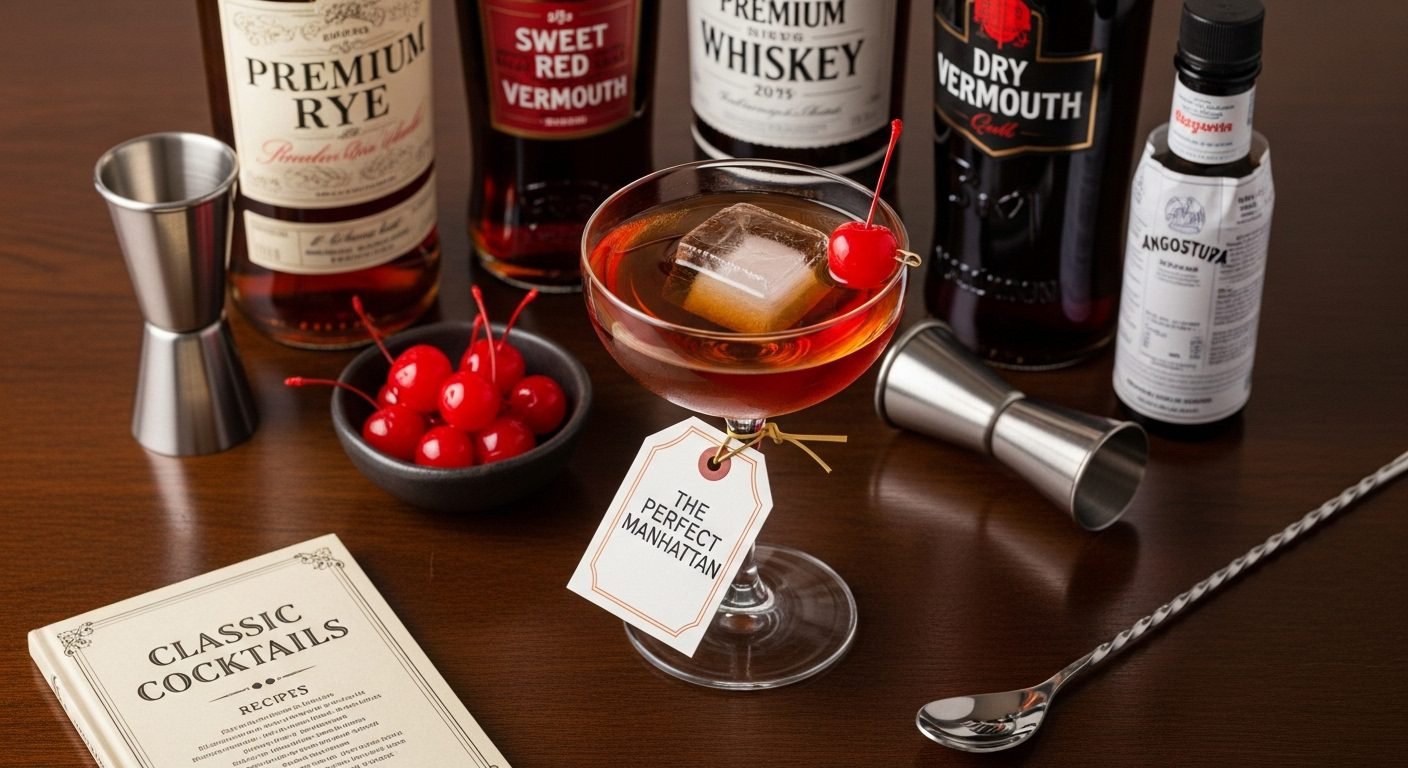
This classic cocktail is typically served in a chilled coupe or martini glass, garnished with a luxurious maraschino cherry. It’s the perfect pre-dinner drink that stimulates the appetite while providing a moment of refined relaxation. The Manhattan has stood the test of time because it’s simple to make yet impressively complex in flavor, making it ideal for both cocktail beginners and seasoned enthusiasts.
History / Background
The Manhattan cocktail has a rich and storied history that dates back to the 1870s in New York City. While the exact origin remains debated among cocktail historians, the most popular legend attributes its creation to a banquet hosted by Lady Randolph Churchill (Winston Churchill’s mother) at the Manhattan Club in New York City. However, most historians believe this story is apocryphal, as Lady Churchill was in England at the time.
A more likely origin story credits a bartender named Black in a Broadway bar during the 1860s or 1870s. What we do know for certain is that the Manhattan appeared in cocktail books by the 1880s and quickly became a fixture in American drinking culture.
The cocktail’s name is a tribute to Manhattan, the heart of New York City, which was rapidly becoming America’s cultural and economic center during the Gilded Age. The drink embodies the sophistication and elegance of the era, when cocktail culture was flourishing in upscale hotel bars and gentlemen’s clubs.
Over the decades, the Manhattan has remained remarkably consistent in its basic formula, though variations have emerged. The classic version uses rye whiskey, though bourbon became popular during the mid-20th century. During Prohibition, Canadian whisky often substituted for American varieties. Today, the Manhattan is considered one of the five foundational cocktails every bartender should know, alongside the Martini, Old Fashioned, Daiquiri, and Margarita.
The Manhattan represents more than just a drink—it’s a piece of American cultural heritage that has influenced countless other cocktails and continues to be served in bars worldwide.
Why You’ll Love This Recipe
The Manhattan is a cocktail that delivers complexity without complication. It’s deceptively simple to make, requiring just three main ingredients and basic stirring technique, yet it produces a drink that tastes like it came from a high-end cocktail bar. This recipe cuts through the confusion you might find in other versions and gives you the classic proportions that have made this cocktail legendary.
Here’s why this Manhattan recipe deserves a permanent spot in your cocktail repertoire:
- Incredibly Quick – Mix up a perfect Manhattan in under 5 minutes from start to finish
- Minimal Ingredients – Just whiskey, vermouth, bitters, and a cherry—no complicated syrups or rare ingredients needed
- Impressive Yet Easy – Looks and tastes sophisticated but requires no special bartending skills
- Customizable – Easily adjust sweetness and strength to match your personal preferences
- Budget-Friendly – One bottle of whiskey and vermouth will make dozens of cocktails
- Perfect for Entertaining – Can be batched ahead for parties or made to order for guests
- Timeless Classic – A cocktail that never goes out of style and impresses every generation
- Versatile Occasion – Equally appropriate for formal dinners, casual gatherings, or quiet evenings at home
Ingredient Notes
Understanding your ingredients is key to making an exceptional Manhattan. Each component plays a specific role in creating the cocktail’s signature balance.
Whiskey (Rye or Bourbon) – This is your base spirit and the star of the show. Traditional Manhattans use rye whiskey, which provides a spicier, drier profile that balances beautifully with the sweet vermouth. Rye brands like Rittenhouse, Bulleit Rye, or Wild Turkey Rye work wonderfully. However, bourbon creates a sweeter, smoother Manhattan that many people prefer. Try Maker’s Mark, Woodford Reserve, or Buffalo Trace for excellent bourbon Manhattans. The whiskey should be at least 80 proof (40% ABV) for proper balance. Avoid anything too expensive—save your $100 bottles for sipping neat. A quality mid-range whiskey ($25-40) is perfect here.
Sweet Vermouth – This fortified wine adds sweetness, herbal complexity, and body to the cocktail. Italian sweet vermouth is traditional, with Carpano Antica Formula being the gold standard (though pricey). More accessible options include Dolin Rouge, Cocchi Vermouth di Torino, or Martini & Rossi Rosso. Fresh vermouth is crucial—it’s a wine product and will oxidize. Store opened bottles in the refrigerator and use within 1-2 months. If your vermouth smells flat or vinegary, replace it. This single change will dramatically improve your Manhattans.
Angostura Bitters – Just a couple dashes of these aromatic bitters add incredible depth and complexity. The bitter botanicals help tie the whiskey and vermouth together while adding layers of spice, citrus, and herbal notes. Angostura is the classic choice and widely available. Don’t skip this ingredient—it’s essential.
Maraschino Cherry – The garnish isn’t just decorative. A quality maraschino cherry (look for Luxardo or Amarena brands) adds a touch of sweetness and a beautiful visual finish. Avoid the bright red grocery store variety if possible—they’re artificially colored and flavored. The darker, more natural cherries have better flavor and look more elegant.
Ice – While not technically an ingredient that ends up in the glass, large ice cubes are essential for proper stirring. They chill and dilute the cocktail to the perfect consistency without over-watering it.
Equipment Needed
Making a Manhattan doesn’t require an elaborate home bar setup, but having the right tools makes the process smoother and more enjoyable:
- Mixing Glass or Cocktail Shaker Base – A tall glass vessel for stirring the cocktail with ice
- Bar Spoon – A long-handled spoon for stirring (a regular spoon works in a pinch)
- Jigger or Measuring Tool – For accurate measuring (1 oz and 2 oz measurements needed)
- Hawthorne Strainer or Julep Strainer – To strain the cocktail into the serving glass
- Coupe Glass or Martini Glass – For serving (a rocks glass works if serving over ice)
- Ice Cubes – Large cubes or standard ice cubes for stirring
Print

Manhattan Cocktail Recipe
The Perfect Manhattan is a classic whiskey cocktail that combines rye or bourbon with sweet vermouth and aromatic bitters for a smooth, sophisticated drink. This timeless recipe delivers bar-quality results in your own home with minimal effort and maximum flavor.
- Total Time: 3 minutes
- Yield: 1 cocktail 1x
Ingredients
Scale- 2 oz rye whiskey or bourbon (60 ml)
- 1 oz sweet vermouth (30 ml)
- 2-3 dashes Angostura bitters
- 1 maraschino cherry for garnish
- Ice cubes for stirring
- Optional: orange peel for additional garnish
Instructions
- Chill Your Glass – Place your coupe or martini glass in the freezer for at least 10 minutes before making the cocktail. Alternatively, fill it with ice water while you prepare the drink.
- Add Ice to Mixing Glass – Fill your mixing glass about two-thirds full with large ice cubes. Larger cubes are better as they melt more slowly and provide optimal dilution.
- Measure and Pour Whiskey – Using a jigger, measure 2 oz of your chosen whiskey and pour it over the ice in the mixing glass.
- Add Sweet Vermouth – Measure 1 oz of sweet vermouth and add it to the mixing glass with the whiskey.
- Add Bitters – Hold your bitters bottle at an angle and add 2-3 dashes directly into the mixing glass. Two dashes provides classic balance, while three gives a more pronounced bitter note.
- Stir Properly – Insert your bar spoon and stir the mixture smoothly for 20-30 seconds. You should stir in a circular motion, letting the spoon glide along the inside of the glass. The goal is to chill and dilute the cocktail to perfection without aerating it (which is why we stir rather than shake).
- Prepare Your Serving Glass – If you chilled your glass with ice water, discard the water and any ice. Your glass should be frosty cold.
- Strain into Glass – Place your strainer over the mixing glass and carefully strain the cocktail into your chilled serving glass. The drink should have a beautiful amber-red color.
- Garnish – Drop a maraschino cherry directly into the cocktail. For an extra touch of elegance, you can express an orange peel over the drink (squeeze it over the surface to release the oils) and then either discard or add it as additional garnish.
- Serve Immediately – The Manhattan is best enjoyed right away while properly chilled. Sip slowly and savor the layers of flavor.
Notes
Ratio Adjustments: The classic 2:1 ratio of whiskey to vermouth is a great starting point, but feel free to adjust. If you prefer a drier Manhattan, use less vermouth (try 3:4 or 3:1). For a sweeter version, increase the vermouth slightly.
Stirring Time: Proper stirring is crucial. Under-stirred Manhattans taste too strong and alcoholic, while over-stirred ones become watery. Aim for 20-30 seconds of smooth, consistent stirring. The outside of your mixing glass should feel very cold to the touch when it’s ready.
Serving Style: While traditionally served “up” (without ice) in a coupe or martini glass, you can also serve a Manhattan “on the rocks” in a rocks glass over a large ice cube. This keeps it colder longer and provides gradual dilution.
Perfect Manhattan Variation: For a “Perfect Manhattan,” use equal parts sweet and dry vermouth (½ oz of each) instead of 1 oz sweet vermouth. This creates a drier, more complex cocktail.
Dry Manhattan: Use dry vermouth instead of sweet vermouth, and garnish with a lemon twist instead of a cherry.
- Prep Time: 3 minutes
- Cook Time: 0 minutes
- Category: Cocktail, Drinks
- Method: Stirred
- Cuisine: American
- Diet: Gluten Free
Nutrition
- Serving Size: 1 cocktail (approximately 3.5 oz)
- Calories: 185
- Sugar: 4g
- Sodium: 5mg
- Fat: 0g
- Saturated Fat: 0g
- Unsaturated Fat: 0g
- Trans Fat: 0g
- Carbohydrates: 6g
- Fiber: 0g
- Protein: 0g
- Cholesterol: 0mg
Tips & Variations
Make It Spicier: Use a high-rye bourbon or 100% rye whiskey like Rittenhouse Rye for more pronounced spice notes. You can also add 1-2 dashes of orange bitters alongside the Angostura for additional complexity.
Sweeten It Up: Increase the vermouth to 1.25 oz, or add a barspoon (about ¼ teaspoon) of maraschino cherry syrup to the mixing glass before stirring. Some people love adding a sugar cube soaked in bitters for extra sweetness and aromatics.
Rob Roy (Scotch Manhattan): Substitute the whiskey with a quality blended Scotch whisky for a smoother, slightly smoky variation. This Scottish version is slightly gentler and pairs beautifully with dinner.
Black Manhattan: Replace the sweet vermouth with Averna amaro for a more bitter, herbal cocktail with incredible depth. This modern variation has gained serious popularity in craft cocktail bars.
Smoked Manhattan: Add a few drops of liquid smoke or use a smoking gun to infuse the cocktail with smoky aromatics. This works especially well with bourbon.
Brooklyn Variation: Add ¼ oz dry vermouth and ¼ oz maraschino liqueur along with the sweet vermouth, and use a lemon twist instead of cherry. Reduce the sweet vermouth to ½ oz to maintain balance.
Holiday Manhattan: Add a splash of cranberry juice and garnish with fresh cranberries and a rosemary sprig for a festive winter variation.
Lower ABV Version: For a lighter cocktail, increase the vermouth to 1.5 oz and reduce whiskey to 1.5 oz. This creates a more balanced, less boozy drink perfect for afternoon sipping.
Pro Chef Tips
Temperature Is Everything: Professional bartenders know that proper dilution and temperature are what separate a good Manhattan from a great one. Your cocktail should be ice-cold but not watery. If you’re making multiple Manhattans, keep your mixing glass and serving glasses in the freezer between batches.
Quality of Vermouth Matters More Than Whiskey: Many home bartenders invest in expensive whiskey but use cheap, oxidized vermouth. This is backwards. The vermouth comprises nearly one-third of your cocktail and significantly impacts the flavor profile. Buy mid-range whiskey and good, fresh vermouth rather than the opposite. Store your vermouth in the fridge and date it when you open it.
The Stirring Technique: Don’t just swirl the spoon around. Use the back of the spoon against the inside of the glass, creating a smooth circular motion that rotates the ice and liquid together efficiently. This method chills faster and provides better control over dilution. Watch professional bartenders—their stirring is smooth, controlled, and rhythmic.
Taste Your Vermouth First: Before making your Manhattan, taste your vermouth straight. If it doesn’t taste good on its own (should be rich, slightly sweet, with complex herbal notes), it won’t taste good in your cocktail. Replace it if it’s flat, sour, or past its prime.
Express the Cherry Before Adding: Before dropping your cherry into the finished cocktail, give it a gentle squeeze over the drink to release some of its syrup. This adds an extra layer of flavor and aroma. Don’t skip the garnish—it’s an integral part of the cocktail experience.
Batch for Parties: Manhattans batch beautifully. Multiply the recipe by however many servings you need, combine whiskey, vermouth, and bitters in a bottle or pitcher, and store in the fridge. When ready to serve, pour 3.5 oz per person over ice in a mixing glass, stir briefly (15 seconds since it’s already cold), and strain into chilled glasses. This allows you to serve a crowd without making each drink individually.
Match Your Whiskey to Your Occasion: Rye creates a drier, spicier Manhattan perfect before dinner as an apéritif. Bourbon makes a sweeter, rounder Manhattan that works well as an after-dinner drink. Choose based on when you’re serving it.
Common Mistakes to Avoid
Using Old or Improperly Stored Vermouth: This is the number one mistake home bartenders make. Vermouth is a fortified wine and will oxidize and spoil just like regular wine. If your vermouth has been sitting open in your liquor cabinet for six months, throw it out. Always refrigerate opened vermouth and use within 1-2 months for best results. Bad vermouth makes bad Manhattans—period.
Shaking Instead of Stirring: Manhattans should always be stirred, never shaken. Shaking introduces air bubbles and creates a cloudy appearance. It also chips the ice, causing excessive dilution. Stirring creates a silky-smooth texture and crystal-clear appearance that’s essential to this cocktail. Remember James Bond’s famous line about shaken martinis? He was wrong. Stirred is superior for spirit-forward cocktails.
Wrong Proportions: The classic 2:1 ratio exists for a reason—it creates perfect balance between the strong whiskey and the sweet, herbal vermouth. Going too heavy on whiskey makes the drink harsh and unbalanced. Too much vermouth makes it cloying and overly sweet. Measure your ingredients precisely, especially when you’re learning. Once you understand the balance, you can adjust to personal preference.
Not Chilling Your Glass: Serving a Manhattan in a warm glass is like serving ice cream in a hot bowl—it immediately starts warming up and losing its optimal temperature. The cocktail will be disappointing before you finish half of it. Always chill your serving glass, either in the freezer or with ice water.
Under-Stirring or Over-Stirring: Both are problems. Under-stirred Manhattans are too strong, too warm, and taste harsh. Over-stirred Manhattans become watery and lose their character. The sweet spot is 20-30 seconds of smooth, consistent stirring. Your mixing glass should feel ice-cold to the touch, and tiny ice crystals should be barely visible on the surface of the cocktail when properly stirred.
Storage & Meal Prep
Leftover Cocktail: While it’s always best to make Manhattans fresh, if you’ve made too much, you can store the strained, finished cocktail in the refrigerator in an airtight container or bottle for up to 24 hours. The flavors will continue to mellow and blend, though some of the bright, fresh qualities will diminish. When ready to drink, simply pour over fresh ice in a mixing glass, give it a few stirs to re-chill, and strain into a chilled glass. Do not store with the cherry, as it will continue to release flavor and make the drink overly sweet.
Ingredient Storage: Store your whiskey at room temperature in a cool, dark place—it’s shelf-stable indefinitely. Sweet vermouth must be refrigerated after opening and will maintain quality for 1-2 months, though it remains safe to drink for up to 3 months. For best results, purchase smaller bottles of vermouth (375ml) if you don’t make many cocktails. Bitters are shelf-stable and last years at room temperature. Keep maraschino cherries in the refrigerator after opening and follow the jar’s use-by date.
Extending Vermouth Life: To maximize vermouth freshness, minimize air exposure. Transfer to a smaller bottle as you use it, or use a wine preserver spray (inert gas) before refrigerating. Some bartenders vacuum-seal their vermouth to extend its life. These methods can stretch vermouth’s prime quality to 2-3 months.
Make-Ahead & Freezer Notes
Pre-Batching for Parties: Manhattans are one of the best cocktails for pre-batching because they don’t contain citrus juice or other ingredients that degrade quickly. To pre-batch, multiply the whiskey, vermouth, and bitters by your desired number of servings. Add about 1 oz of water per cocktail to account for dilution that would normally occur during stirring. Mix everything in a bottle or pitcher and refrigerate for up to 3 days. When serving, pour 4-4.5 oz directly into chilled glasses without stirring—it’s already perfectly diluted and chilled. Garnish with cherries just before serving.
Freezer Method: For the ultimate make-ahead Manhattan, try the freezer method used by professional bars. Batch your cocktails with water as described above, then store the mixture in the freezer in a sealed bottle. The alcohol content prevents it from freezing solid, creating a slightly viscous, perfectly chilled cocktail that’s ready to pour directly into chilled glasses. This method keeps for weeks and delivers exceptional consistency. Simply pour 4-4.5 oz into each glass and garnish.
Individual Portions: You can also prepare individual Manhattans in small jars or bottles, combining whiskey, vermouth, bitters, and water. Store in the refrigerator for up to 3 days or the freezer for up to 2 weeks. This is perfect for having a pre-made cocktail ready when you get home from work.
Ice Considerations: Never batch cocktails with ice or freeze them with cherries. Add garnishes fresh when serving. If pre-batching for an event, keep your batch refrigerated until 30 minutes before serving, then transfer to a pitcher with ice for a stunning presentation.
Serving Suggestions
The Manhattan is traditionally served as an apéritif—a before-dinner drink meant to stimulate the appetite. However, its versatility makes it appropriate for numerous occasions.
Perfect Pairings:
Serve your Manhattan alongside a charcuterie board featuring aged cheeses like sharp cheddar, aged gouda, or manchego, along with cured meats such as prosciutto, salami, or soppressata. The cocktail’s sweetness and herbal notes complement the rich, salty flavors beautifully.
For a more substantial pairing, Manhattans work wonderfully with steak dinners, grilled lamb chops, or duck breast. The whiskey’s robust character stands up to rich meats, while the vermouth’s herbal qualities cut through the fattiness.
Surprisingly, Manhattans pair excellently with dark chocolate desserts, especially flourless chocolate cake or chocolate truffles. The slight bitterness in both the cocktail and the chocolate create a harmonious flavor experience.
Occasion Ideas:
- Cocktail Hour: Serve Manhattans during the cocktail hour before a dinner party, alongside simple appetizers like mixed nuts, olives, or cheese straws
- Holiday Entertaining: The Manhattan’s sophisticated profile makes it perfect for Thanksgiving, Christmas, or New Year’s Eve celebrations
- Date Night: Impress your partner with expertly crafted Manhattans before heading to dinner or as part of an at-home dining experience
- Cigar Pairings: If you enjoy cigars, a Manhattan is a classic pairing, especially with medium-bodied cigars
- After Work Wind-Down: Shed the stress of the day with a well-made Manhattan and your favorite relaxing music
Garnish Upgrades:
While a cherry is traditional, consider these elegant garnish alternatives: expressed orange peel with the peel left in the drink, brandied cherries instead of maraschino, a lemon twist for a drier presentation, or for special occasions, a flamed orange peel (express the oils over a flame for a dramatic presentation and caramelized citrus aroma).
FAQs Section
Can I use bourbon instead of rye whiskey?
Absolutely! While purists often insist on rye whiskey for its traditional spicy character, bourbon creates an equally delicious Manhattan that’s sweeter and smoother. Many people actually prefer bourbon Manhattans because they’re less dry and more approachable. The choice comes down to personal preference—try both and see which you prefer. Rye gives you a drier, spicier cocktail, while bourbon provides a rounder, sweeter profile.
Why does my Manhattan taste watery?
Watery Manhattans usually result from over-stirring or using ice that’s too small or too broken up. Small ice cubes and ice chips melt quickly, over-diluting the cocktail. Use larger ice cubes and stir for only 20-30 seconds. If you’re stirring longer and it’s still not cold enough, your ice might not be cold enough—make sure your freezer is set properly. Some bartenders also keep their mixing glass in the freezer between uses to help achieve proper temperature faster.
How long does sweet vermouth last after opening?
Sweet vermouth lasts 1-2 months in the refrigerator after opening, though it remains safe to drink for up to 3 months. After that, it begins to oxidize and lose its complex flavors, becoming flat, dull, or even slightly vinegary. To test if your vermouth is still good, smell and taste it—it should be aromatic, slightly sweet, and have clear herbal notes. If it smells musty or tastes flat, replace it. Store it properly in the fridge and date the bottle when you open it.
Can I make a Manhattan without bitters?
While you technically can make a Manhattan without bitters, they’re essential to the cocktail’s flavor profile and complexity. Bitters act as the “seasoning” that ties the whiskey and vermouth together, adding aromatic depth and balancing the sweetness. A Manhattan without bitters will taste flat and one-dimensional. If you don’t have Angostura bitters, you can substitute orange bitters or any aromatic bitters, though the flavor profile will change slightly. Bitters bottles last for years and are inexpensive, so it’s worth keeping them stocked.
What’s the difference between a Manhattan and an Old Fashioned?
While both are whiskey-based cocktails, they’re quite different. A Manhattan combines whiskey with sweet vermouth and bitters, is stirred with ice and served up (without ice) or on the rocks, and has a smoother, more complex flavor profile due to the vermouth. An Old Fashioned uses whiskey, sugar, and bitters (no vermouth), is built in the glass over ice with a muddled sugar cube, and is served on the rocks with an orange peel. The Old Fashioned is stronger and simpler, while the Manhattan is more sophisticated and herbaceous.
Can I make a Manhattan in advance for a party?
Yes! Manhattans are one of the best cocktails for pre-batching. Multiply the whiskey, vermouth, and bitters by your number of guests, add about 1 oz of water per cocktail to account for dilution, and mix everything in a bottle or pitcher. Refrigerate for up to 3 days or freeze for up to 2 weeks. When ready to serve, pour 4-4.5 oz directly into chilled glasses and garnish with cherries. This method ensures consistency and allows you to serve guests quickly without making individual cocktails.
What type of glass should I use?
Traditionally, Manhattans are served “up” (without ice) in a coupe glass or a martini glass. A coupe glass is the classic choice—it’s elegant, holds about 5-6 oz, and has a wide bowl that allows the aromatics to develop. A martini glass (also called a cocktail glass) works well too, though it’s slightly more formal. If you prefer your Manhattan “on the rocks,” serve it in a rocks glass (old fashioned glass) over one large ice cube. Whatever glass you choose, make sure it’s well-chilled before serving.
Conclusion
There’s something truly special about a perfectly crafted Manhattan. This iconic cocktail has survived over a century because it delivers exactly what a great cocktail should—balance, complexity, and sophistication without pretension. Whether you’re new to cocktail making or a seasoned home bartender, mastering the Manhattan opens up a world of classic cocktail culture and gives you a reliable go-to drink for any occasion.
The beauty of the Manhattan lies in its simplicity. With just three main ingredients and basic stirring technique, you can create a bar-quality cocktail in your own kitchen. Once you’ve made your first few Manhattans and understand the fundamentals, you’ll find yourself experimenting with different whiskeys, adjusting ratios to suit your taste, and perhaps exploring the many variations this cocktail has inspired.
So grab your whiskey, chill your glasses, and treat yourself to this timeless classic. Whether you’re unwinding after a long day, entertaining guests, or celebrating a special moment, a well-made Manhattan is always the right choice. Mix one up tonight and discover why this cocktail has been America’s favorite whiskey drink for over 140 years.
Here’s to you, and to the perfect Manhattan. Cheers!